Last year, I commissioned another custom-built instrument. I was in the market for a ukulele I could take out to gigs, as my existing concert sized one did not have a pickup or preamp attached. Knowing Neil McHardy in Cumbria has built a few ukes recently, I asked if he would consider making a tenor sized electro-acoustic model for me. McHardy guitars operate from a village in Cumbria, making acoustic instruments out of recycled wood. Some of you may remember built his first ever classical guitar at my request, mainly out of an old table (you can read the full review by clicking here).
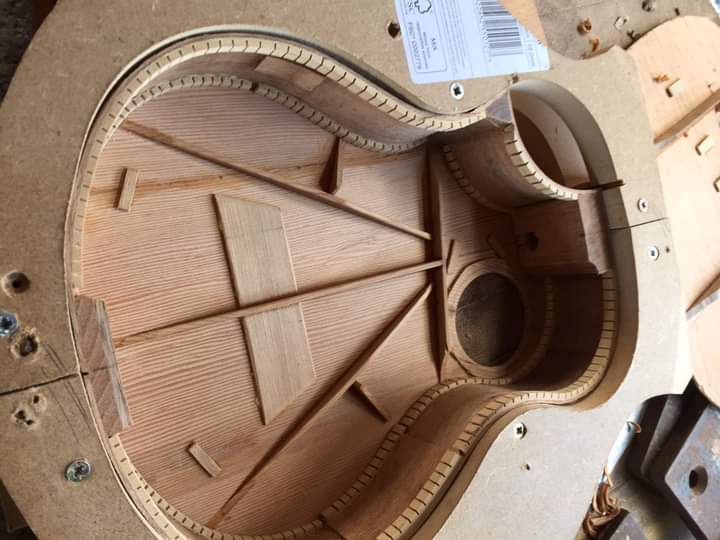
This time around, I was happy to let Neil design it pretty much however he wished. I am a fan of his signature offset sound holes, and my only stipulation was to include a preamp so the ukulele could be used for concerts and recording. As always, Neil sent regular updates on how the build was progressing (see pictures) and was always happy to impart gems of guitar and uke building knowledge.
The start of the build (credit: Neil McHardy)
Size matters
So what is the difference between a concert and tenor sized ukulele? A tenor is larger than a concert, sometimes up to four inches longer, but they are tuned the same. In fact, soprano, concert and tenor ukuleles can all be tuned the same (G4, C4, E4, A4). The main difference is volume and depth of bass response which the larger bodied instruments benefit from.
An example of the size and scale differences between different types of ukulele
With tenor ukuleles, some players also use a G string which sounds an octave lower (G3), effectively making he open strings sound exactly the same as the highest four strings of a guitar at the fifth fret. I can see how some players might find this easier, especially if they are migrating to the ukulele from the guitar. Personally, if I needed that sound, I’d put a capo on one of my guitars, so I have opted for the more traditional uke tuning.
Progress updates I received from Neil as the build continued (credit: Neil McHardy)
Specifications
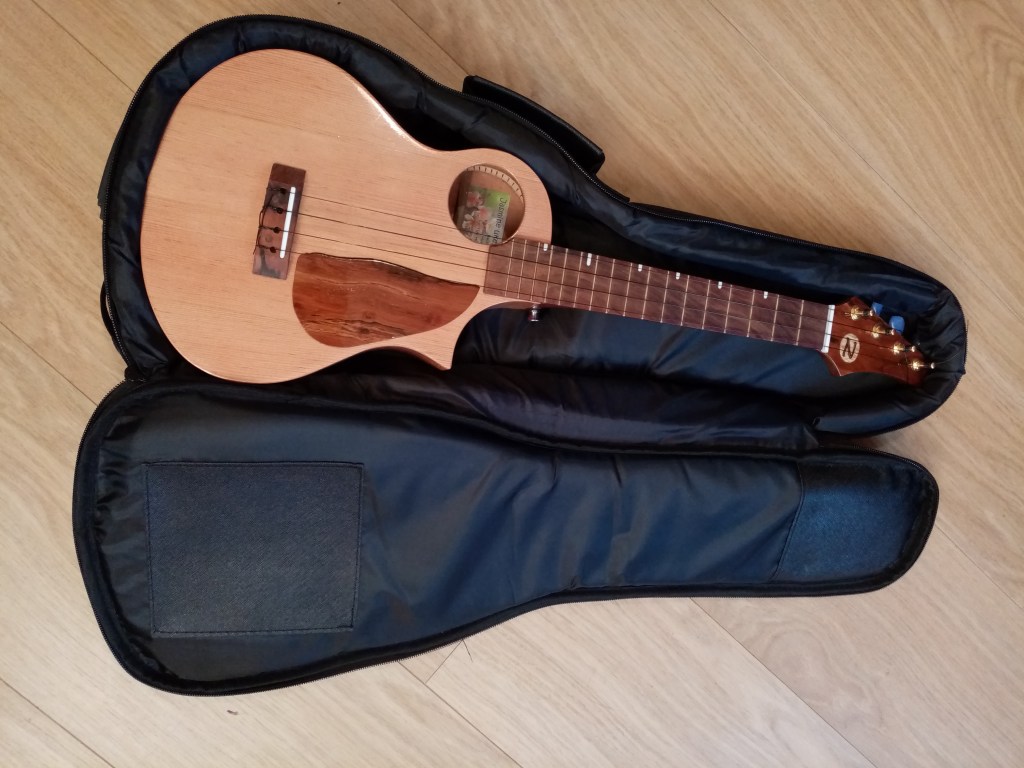
The finished instrument is made from recycled Douglas Fir and Spanish Cedar. The face plate and scratchplate (or golpe) are made from fallen trees Neil found on a walk, and feature the most stunning grain, on which Neil has placed the tuning pegs in a line (rather than two per side, as is traditional).
Finished at last(credit: Neil McHardy)
With the addition of a good value preamp (powered by an easily removable 9 volt battery), this new uke was fitted with strings and Neil contacted me to collect it.
I love the look of the grain on the golpe and faceplate, and was impressed with the instrument’s volume when strumming it unplugged for the first time. Plugged in, it sounded the same as it did acoustically, just with the potential to go a lot louder – which is exactly what I would expect.
Family photo with my previous McHardy build, my gorgeous classical guitar
Unfortunately, I haven’t had the chance to try it out onstage yet, but I plan to use it in an upcoming recording project (more details on that to follow). But when that material comes to the stage, this uke will be out on the road with me. I can’t wait.
Inspired by my drive home along the Military Road, which runs alongside (and sometimes on top of) the route of Hardrian’s Wall in Northumberland. The remains of this wall, once the boundary between Roman-occupied Southern half of Britannia and the untamed Northern half (mostly made up of modern-day Scotland), provides an additional element to an already dramatic landscape.
This evening, as I drove eastward at sunset, I noticed the beautifully strange golden glow alighting on the grazing land on both sides of the road (and the ruins of the ancient wall). Beautiful, strange, but rare. About as rare as my Haiku efforts, at least…
Image copyright David Head (from the Visit Northumberland Facebook page)
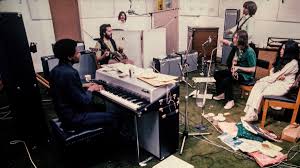
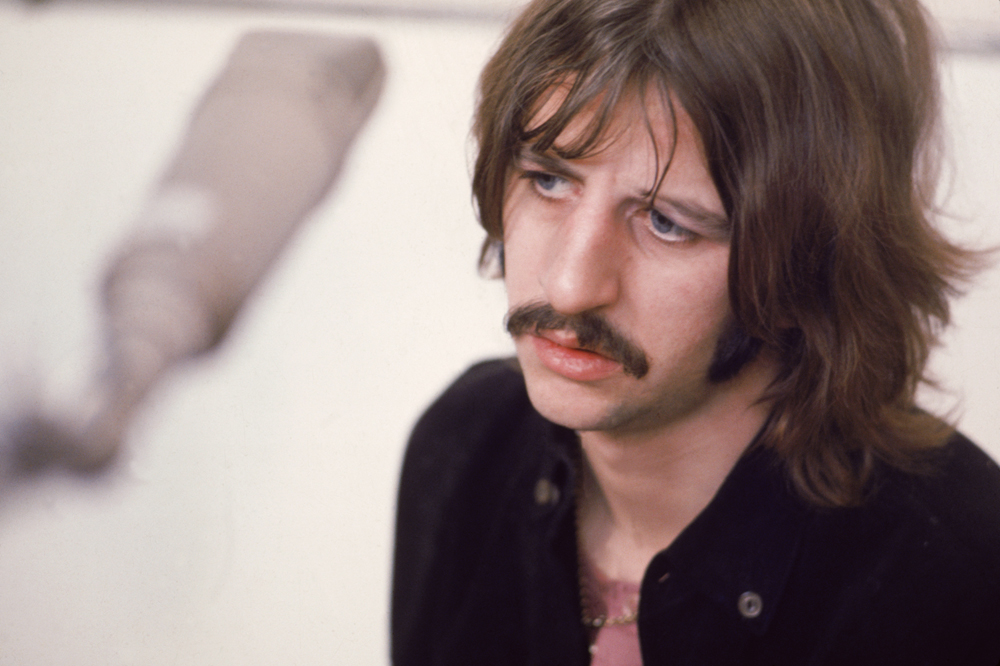
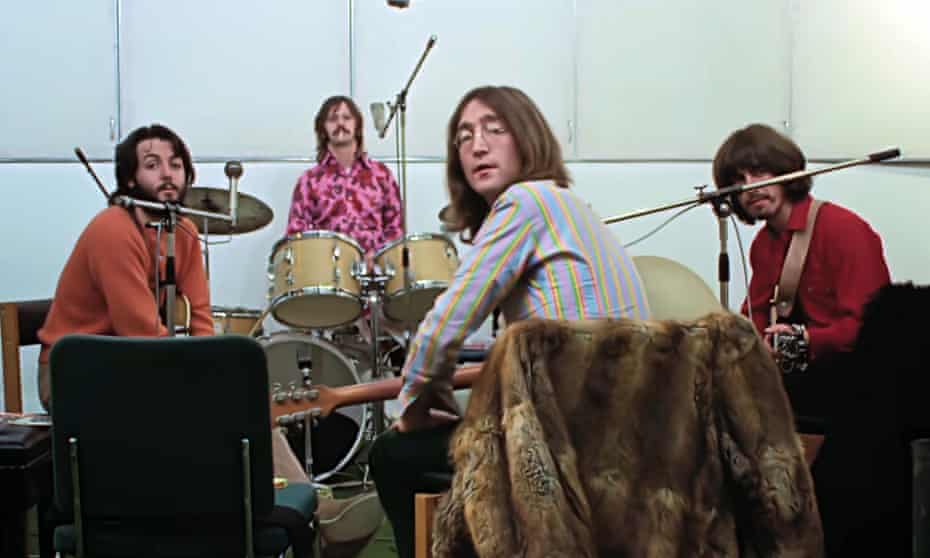
I’m a little late to the party, but I finally managed to watch The Beatles: Get Back. While it was incredibly interesting, I wonder if many casual fans were deterred by its duration. I’ll provide a little background then highlight the main takeaway points I found from this miniseries. If you have watched this, please let me know your thoughts!
Background
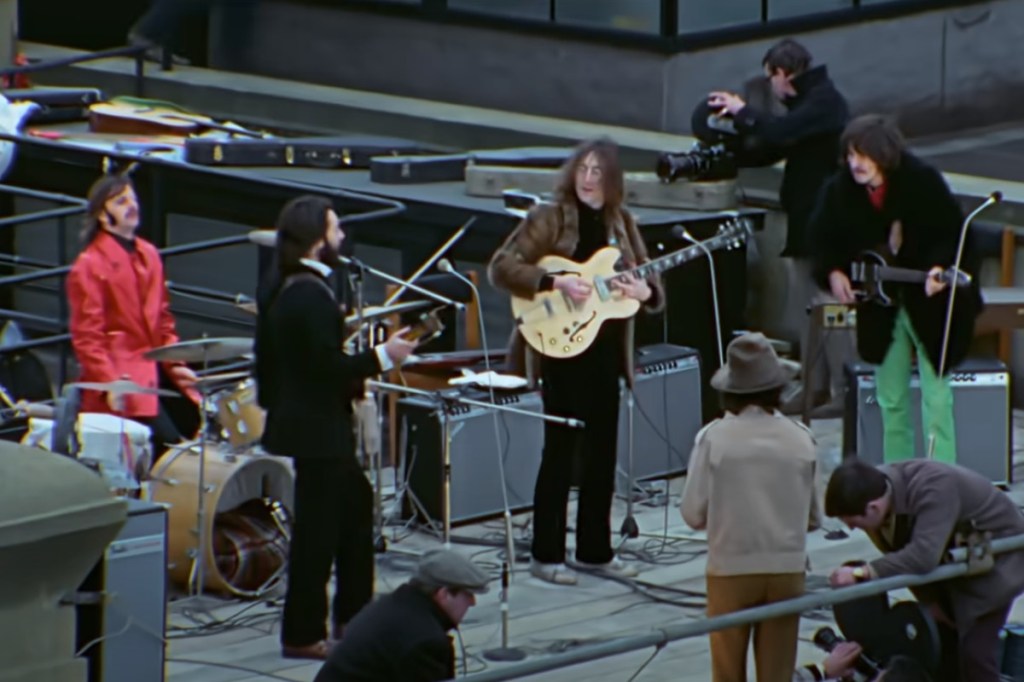
Peter Jackson’s documentary launched at the very end of November last year, in three 2+ hour installments. It covers most of January 1969, when The Beatles, assistants and tech crew assembled in a large recording sounds stage with a documentary film crew in tow. The original plan was to record an album of brand new music, written from scratch and performed live in some form. In the end, sessions were strained before the group love to the new studios in the basement of the Apple Corps (their own record label) offices on Savile Row. The project culminates in a half hour performance on the roof of this building before the police arrive to shut it down.
The music from these sessions was eventually released shortly after The Fab Four had split up. Legendary and infamous American producer Phil Spector was hired to make an album out of the material available, which had been largely worked on by regular Beatles producer George Martin and engineer Glyn Johns prior to the abandonment of the project. The resulting album (Martin later said that he produced it, and “then Spector over produced it” ), now called Let It Be, was released in 1970, seemingly against The Beatles’ wishes. Indeed, Paul McCartney eventually stripped the record of the elements Spector had added – the choir, stings, horns, etc, and re-released the record as Let It Be… Naked in 2003, hoping to finally covey the project’s original direct-to-tape aesthetic.
Parts of the film footage was released in a documentary film of the same name. But 50 years later, after hundreds of hours of footage was discovered intact, Jackson (director of the Epic Lord of the Rings film trilogy and a self proclaimed Beatles super fan) stepped in to create a new documentary which told the full story of this short period in Beatles history. It includes a vast swathe of footage never seen before, including moments when The Beatles did not realise they were being recorded (such as a microphone hidden in a canteen flower pot which picks up John Lennon and Paul McCartney frankly discussing how their own egos getting in the way of their music). Overall, it’s fascinating and many musicians I know have marvelled at being able to see how The Beatles worked out songs such as Get Back and Dig A Pony. Here’s a few other things I observed…
Paul doesn’t seem to know what he wants
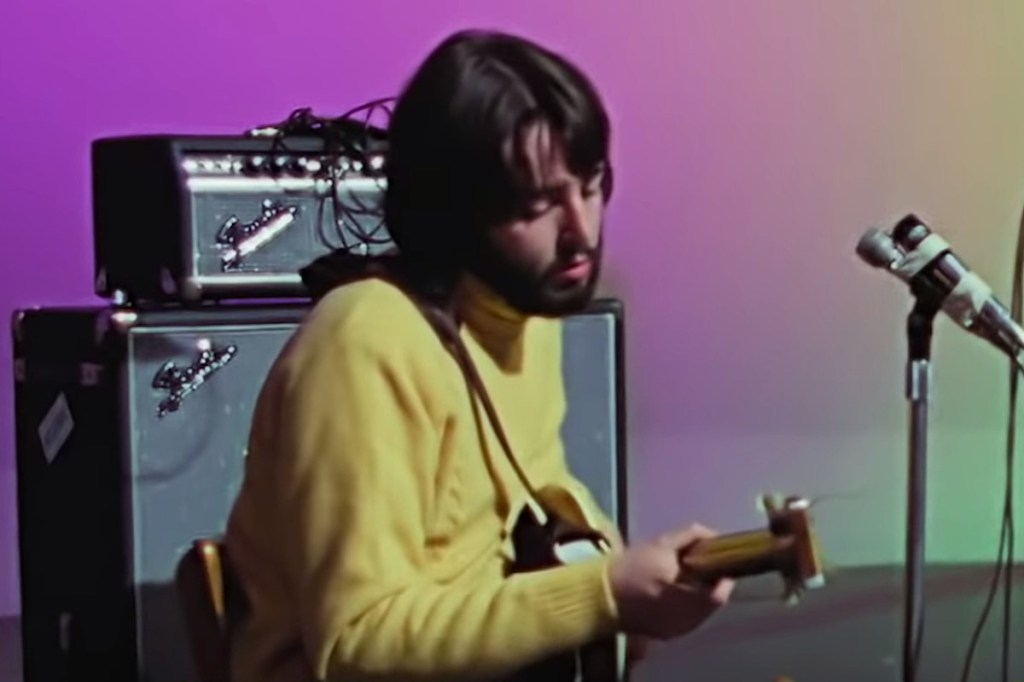
Most of the Get Back project appears to be McCartney’s idea. He is the driving force behind the ‘live’ aesthetic, either in the form of performing to a live audience or recording without overdubs. However, he also seems a little lost and unsure of what he actually wants to look like. Sometimes it seemed like he was genuinely running out of inspiration (while simultaneously writing some great songs seemingly from scratch), and on other occasions he appears to have ore of a plan than he lets on, but is hesitant to force it onto the rest of the group. Perhaps he feared a mutiny if he pressed his ideas too forcefully. This does indeed happen in Episode 1 when Harrison reaches the end of his patience for having his playing criticised by McCartney (often without him providing a clear idea of what he wants George to play). Seeing McCartney’s indecision, or fear of being too forthright with his ideas, shows us a project that is doomed from the start.
Yet McCartney is not lacking in songwriting inspiration. He brings in Let It Be and The Long And Winding Road to be rehearsed by the band, having apparently written both if these songs almost to completion at home. I was left with the feeling that these were ‘back pocket’ songs; perhaps ones McCartney had considered keeping for a future solo album? However, when it becomes clear that the group don’t have enough material, he puts them forward, and of course, they end up being among the highlights of the subsequent album.
There is small but telling detail which emerges very near the end of Episode 3, after the rooftop concert has been finished and the band are recording the final takes for the album. During a moment listening back to a recent take of The Long and Winding Road, regular producer George Martin mentions McCartney having discussed adding a sting ensemble to fill out the sound on the record. The moment goes by quickly, and McCartney is very noncommittal in his acknowledgement of this statement, but it goes very much against the straight-to-tape aesthetic pursued by none other than McCartney himself. It indicates to me that perhaps his stated intentions and private desires have not always been the same.
Two things saved the session from an even earlier end
The huge soundstage The Beatles start in gives them acoustically-related problems from the outset, and appears to prove a hindrance to their creativity. Speaking from my own experience, it is hard to really dig into new songs, or even your own playing, if you’re struggling to hear everything around you clearly. Their decision to relocate to their just-completed basement studio in the Apple Corps office gives them the opportunity to work on the songs they have started in a more familiar and better sounding environment. You can see in Episode two how much more quickly things come together for the group after the move. But there is anoter factor which helped things along considerably, and arguably saved the project altogether…
The arrival of Billy Preston to the sessions is the real turning point in the Get Back sessions. The Beatles had first met Preston in their early days of performing in Hamburg. Preston was part of Little Richard’s band and was in London performing with Ray Charles when he ran into George Harrison and popped into the sessions to say hello. Once invited to sit in on electric piano and organ, something clearly changes for the better in the atmosphere of the sessions. This happened once before during the recording of their previous album, 1968’s The Beatles (also known as ‘The White Album’ due to it’s blank cover). Harrison has spoken about having fond memories recording While My Guitar Gently Weeps with Eric Clapton providing an (at the time anonymous) guest solo, because the band were all on best behaviour in the presence of a guest and friend. In a similar way, things seems much less acrimonious or stressful once Preston starts adding to the Get Back sessions. It is clear that the group enjoy his contributions. Lennon even suggests recruiting him officially, to which McCartney counters that it is hard enough reaching agreements between the four of them already! The value which TheBeatles themselves placed on Preston’s presence is evidenced in the initial release of the song Get Back as a single – it is credited to “The Beatles with Billy Preston”. High praise indeed.
Ringo seems to play no part in the decision making process
The Get Back sessions are full of decisions, indecisions, wrong decisions and changed decisions. Arguments, conflicts, reflections on their egos and statements of intent. But none of them come from drummer Ringo Starr. Although jokey and stylish as ever, once he sits behind the drum kit, Starr quietly listens as the three remaining members pf the band discuss arrangements or argue. Sometimes suggestions or directions are given to him on how he should play. Interestingly, he is more often than not left to create his parts based on what he hears, showing a high level of trust his band mates place in his abilities.
Yet I still found it striking how – in these sessions at least – it is Starr who is the real ‘quiet one’ of The Beatles.
Several elements precipitated the breakup of The Beatles, but Yoko Ono probably wasn’t one of them
Yoko Ono is a presence throughout this documentary series. But it doesn’t appear disruptive. Sure, during some of the downtime moments, she joins in the free-spirited jams by wailing down a microphone, but most of the time she sits by Lennon, supporting him silently in a way I think he obviously needed at the time. She is seen chatting amiably with the wives and girlfriends of the other members of the band, but nothing we see of her in this series, either voiced aloud or whispered into Lennon’s ear, gives any indication that she was responsible for the tensions the band faced, or their eventual breakup later in the same year.
Those tensions, and those decisions, came from the same place they had since the passing of the band’s manager Brian Epstein a few years before – they came from the four members of The Beatles themselves.
Final thoughts
It was fascinating to see how big the team around The Beatles had become by this point in the life of the band. From the arguments and arrangements to the songwriting and even the business side of The Beatles rearing its head again and again, we are given a clear picture of a small group of people hemmed in by their own success and unsure the best way to continue. Although their main team is comprised of trusted individuals, long term partners and even old friends from their days in Liverpool, the heart of this miniseries is the four members of The Beatles themselves. Many were close – very close. But the only four who really knew what it meant to be a Beatle were John, Paul, George and Ringo. Somehow, it seemed to keep the together, against everything and everyone else. At least, that is, for a time.
Overall, this is a truly fascinating insight into the end of one of the most influential, if not the most influential, musical groups in popular music history. The famous rooftop concert might be one of the less interesting things in this entire series, though this might be because many of us have seen or heard this before (indeed, a few of the live tracks from this concert were used in the final album). It was so much ore enlightening to see the group at work, crafting and recording songs, just like musicians across the world still do today. It is worth watching, but be warned, it’s a long, deep dive…
Here we are, racing into yet another new year already! I hope everyone is settled into their routines and is tackling January as best as they can.
Last year seemed to get busier as we progressed through to Christmas for me. Some of it therapy related, some of it music related (on that note, keep your eyes peeled for a new announcement by the end of the month about an exciting new project). It seems like reading time was well and truly diminished. My New Year’s resolution is to always make time for reading! Nevertheless, here are my customary reviews of the titles I did manage to read from October to the end of the year…
Child I by Steve Tasane (2018, Faber & Faber)
Lauded novelist and performance poet Steve Tasane is the son of a refugee himself. He wrote this story to highlight that which us desired by all children: the want to beling;the want to not be hungry”; the want “just to be able to laugh and play”.
The novel, aimed at young adults, focuses in a small group of unaccompanied children in a mud-soaked refugee camp. It is a sparse, poetically written and moving tale about children without any proof of identity, stateless and lost. But what caught my eye was the presentation of this book, starting as it does right at the beginning, on the very front cover…
Such an unusual stylistic choice shouldn’t have caught me so off-guard, but I found myself a page or in before I realised it wasn’t merely a text-heavy cover page. Yet, it makes sense. Why would a refugee used to precious few resources waste paper?
Leah Price wrote about the layout of books in her book about books, reviewed here. Similarly, this short story (just 186 pages) certainly made me reconsider the accepted form most of our books are packaged in, and nowadays taken for granted. Why exactly do we need those introductory leaves in the same order each time?
However, the real thought-provoking issue isn’t the format in which the text is presented but the way it gives life to paperless, and in this book, nameless (each child is assigned initials, used throughout the book, as the authorities are unable to confirm their real names), children such as Child I, our eponymous narrator. This brief but beautiful book is not just for young adults, but for all.
Confronting the classics: traditions, adventures and innovations by Mary Beard (2013, Profile)
Following last month’s special instalment on Roman history titles, I found myself picking this collection of essays off the shelf of a local charity shop. And once again, it’s not a typical book. Rather, it is a series of Beard’s book reviews from the last couple of decades, collated here along with her ‘manifesto’ on whether the classics have a future, and her rationale for using reviews a means of widening historical debate. On that score, Beard will find no argument from me – as one who publishes succinct reviews of every book I read every quarter, who am I to judge?
In previous installments, I have recommended essay collections. I find them an enjoyable way to learn something on a subject where an entire book might dissuade you from reading about it altogether. They are also perfect for shorter time frames, where one chapter or subject can be finished in one sitting. In this collection, Beard praises, critiques, questions and in some cases outright savages the work of her peers,but maintains her vivid style of wit and enthusiasm throughout. She regularly highlights how source material can be selectivity interpreted when authors are attempting to make a particular argument, forcing one to rethink how we read history.
After reading Beard’s reviews, I came away with a very good sense of what the original book was getting at, without having to read it. In a sense, this books gives you over thirty for the price of one! Even the most casual fans of classical history should cast their eye over this collection.
The Monk of Mokka by Dave Eggers (2016,)
I actually read this over the summer, but as it was the only book that wasn’t in some way related to Roman history, I decided to hold back my review until this installment.
Eggers brings us a tale on behalf of Mokhtar, a Yemini raised in San Francisco. Almost through chance, an aimless Mokhtar develops a passion for coffee and sets off on a mission to bring coffee from Yemen back to the global market – just as civil war breaks out in his homeland. As well as learning about the process the beans go through before they reach our cups, we follow Makhtar’s attempts to escape the country, not only with both his shipment of coffee beans, but with his life.In all honesty, the book is propelled by the story. The narrative is engaging where the writing is sometimes not, and it is string enough to keep one reading. Recommended mainly for coffee aficionados. You can read more about Mokhtar and his foundation at his Port of Mokha website.
Scandinavians: in search of the soul of the North by Robert Ferguson (2017, Head Zeus)
Ferguson looks back through the history of the Swedes, Danes and Norwegians to draw out what links them and what gives them their unique cultural personality. These dives into history are intersected with vignettes from the author’s own life, having travelled around and lived in various parts of Scandinavia in the last five decades.
Ferguson seeks to ascertain the origins of the Scandinavian character. In terms of the ‘brooding melancholia’ one might associate with the land of long winters nights and Scandi-noir drama, he points to various moments in their history, from the cultural drought brought about by Sweden’s reformation in the medieval period to the time of (playwright) Isben and (artist) Munch and their creative work full of intense angst. Ferguson examines not just the culture itself, but the effect on how outside nations perceive these three separate but interlinked nations.
Ferguson certainly a few interesting arguments. However, there doesn’t seem to be a definitive conclusion, and the book feels somewhat unfinished as a result. Worth a read for those interested in Scandinavian culture and history. It also highlights a few interesting locations to visit if you find yourself travelling there anytime soon.
My favourites from 2021
I was surprised by how much I enjoyed the Themis Files trilogy. I recommend it to any fans if science fiction looking for something a little different.I also enjoyed and recommend Yevgeny Zamyatin’s distopian tale We. These two were standouts in another good year of reading(both reviews can be read here).
I have noticed that I have shied away from music books in recent years, perhaps as they represent something of a busman’s holiday. However, there are a few music titles making their way into my to read pile along all the history and fiction, so watch this space…
As always, let me know what you’ve been reading, as well as your favourite books of 2021. In the meantime, stay safe and happy, until next time…
Here’s two haiku to start the year off. The first distills my hope that I’ll get out more and meet my friends more often this coming year. But of course, it all depends on this ongoing pandemic:
Twenty Twenty-two
Might I see more friends this year?
Coming months will tell
And one on the unseasonably warm weather we had on New Year’s Day here in Northumberland:
No wind, mild and bright
Warmest New Year on record
It didn’t last long
Wherever you are, make the best you can of 2022 and go easy on yourself. It’s been hard at times, we all know, but there is light at the end of the tunnel. Just take care of yourself in the mean time.
Hi all and welcome to 2022! You may have noticed that things have been a little quiet on this blog for the last few months. This is for a number of reasons, but don’t panic – I’m fine, just incredibly busy! Expect more posts in this new year, as well as updates on exciting new projects I’ve been working on. In the meantime, here’s a slightly rejigged post on New Year’s resolutions from a few years back. I hope you enjoy it! Until next time...
As a general rule, I don’t believe in New Year’s resolutions. My philosophy is that changes can be made at any time, so why wait until January?
However, there is something about the end of a year which causes us all to reflect on the previous twelve months and start focusing on our plans for the next twelve. For us working musicians, this would usually mean that we have reached the end of one of our peak times, the ‘Christmas Party Season’. For over a decade (pre-pandemic), I ended the year with a NYE gig. However, for obvious reasons, things have been a little quieter by comparison, which gives us time to ponder on the gigs we’ve enjoyed, what we didn’t enjoy, and what we hope to change for the new year.
So, with that in mind, here are a few of my suggestions for guitar-related resolutions for musicians looking to grow as better musicians in the coming year:
Learn a new style
Always wanted to start learning those jazz chord voicings? Perhaps you keep meaning to work on your reggae & ska rhythm playing? Or your country picking? Blues slide? The list goes on…
Take the time to work on these new genres & styles of playing. We are very fortunate to live in a time where we can access a world of free tutorials on the Internet, or videos in YouTube. However, don’t rule out the possibility of taking lessons to focus on specific areas – working one to one with an experienced guitar tutor does wonders for improving your playing!
Mix things up
Learning a style doesn’t mean you have to abandon all you know & travel the world playing strictly Django/gypsy jazz for the rest of your life (though I imagine there are plenty of worse ways to live)!
Have you found that the majority if your playing has been on acoustic guitar? Trying swapping to electric more often (or vice versa). Do you always practise at the same time of day? If possible, can you change to a different time? Your brain operates differently throughout the day – you may well find yourself going down very different musical avenues simply by switching from a morning to an afternoon practice session.
Sometimes learning to play a song you are very familiar with in a new style works brilliantly in helping your playing. Not only do you freshen up material which might be getting a bit stale, but you’ll have a safer means of exploring new options in your guitar playing.
One area of guitar playing I can’t recommend highly enough is solo performance. By this, I don’t mean the lead guitar solo in a song, but playing the melody, harmony, rhythms, etc on one unaccompanied guitar. It’s something a piano player wouldn’t think twice about, but I’m frequently amazed at how many guitarists simply haven’t tried it properly! If you’re unsure about how to start doing this, there are several books, online tutorials (like this blog!), and of course YouTube videos to help inspire you. Which brings us nicely in to…
Widen your horizons
Music is a language. Even when playing on your own, you are creating sounds for yourself to hear, effectively taking to yourself. But there’s only so long you can do that before you end up going round in circles, or going crazy!
Set yourself the following challenge for the year: discover a new artist each month. Learn from what you hear. Take examples of their playing & try to incorporate it into your own. It can only make you a better guitarist! The beauty of this is that you don’t have to focus on other guitar players. In fact, it might be better not to! Many of the jazz & Blues guitarists I admire take inspiration for their improvisational playing from horn players, translating their melodies & ideas into their own instrument. Try it!
It also helps to get out amongst other musicians, jam, join or start a new band, particularly in a new style. It also goes further than this – always wanted to sing while playing? Start! Learning a new instrument? Do it! The best way out of a rut is to climb upwards!
Get your music ‘out there’
…And if you’re meeting new musicians & launching new projects, you’re already doing this. Go to more live gigs and make sure you perform live yourself more often (when you can), especially new and original music. I know all too well how easy it is to get stuck in one ‘world’ for longer than you might like, finding it hard to make the time to do other things, but I promise it’s worth the effort.
Remember to have fun while you’re out there expanding your guitar playing horizons!
To finish off, allow me to wish you all the very best of health & happiness for the New Year! Let’s make 2022 – like every year – a great year for music, for the guitar, and for you!
Please do get in touch to tell me what your own guitar/music new year resolutions are, and stay in touch to let me know how you’re getting on with them! Tim xx
Well, here we are again. This summer has been very busy and at times, very difficult. But there were books, just not as many as I liked. I didn’t mean to take such a deep dive into Roman history in the last few months, but the first book on my list set me off down a path where the (rare) free reading time I had over the summer was largely spent in the Mediterranean past…
Ancient Rome: the rise and fall of an empire by Simon Baker (BBC Books, 2006)
Something of a primer for those new to the subject, this book nonetheless features plenty of interesting information for everyone. Originally published to accompany a BBC series, Baker moves from one period to another, with little linking these areas of focus, which can feel a little disjointed at times.
Baker devotes each chapter to one life in particular, such as Julius Caesar or Constantine. Here, we see a classic example of the Great Man theory of history, in which stories of the past are told through the prism of one man. The downside of this is that readers can be left with the feeling that these individuals were predestined for greatness, which is almost never a forgone conclusion, and indeed only a stance that one can take when looking back on a life that has long since ended.
Nowadays, I prefer books which can take into account the lives of the society in which these so-called ‘great men’ were able to rise to power. Luckily, the following titles have tried to steer more closely to the ‘bigger picture’ approach, to varying degrees of success…
Rubicon: the triumph and tragedy of the Roman Republicby Tom Holland (2003, Abacus)
This one was a welcome re-read. Rubicon is one of my favourite books on Roman history, and Holland one of my favourite historical writers. This books centres in the era Ancient Rome moved from a republic almost half a millennium old to a dictatorship, then empire under the rule of one man for the first time since their hated olden days of kings.
Interwoven into this narrative history are the letters of famous orator Cicero, accounts of the civil wars that gave rise to Augustus (Rome’s first ever First Citizen – Julius Ceasar was only ever ‘dictator for life’), the surrounding empire, wives, slaves, lovers and celebrity chefs. There’s humour and reasoning beyond the usual ‘dates & battles’ format many of us might be used to in history books.
Holland has a knack for presenting his well researched stories in an engaging manner (I have previously reviewed one of his shorter books on Atherstan of England here). However, I mainly read this book again to refresh myself of the historical circumstances in which the next book commences…
Dynasty: the rise and fall of the house of Ceasar by Tom Holland (2015, Abacus)
Rome’s shift from republic to monarchy-in-all-but-name was more piecemeal than some might think. From the pretentions of Julius Ceasar to the encroaching laws which gradually secured the long-term ambitions of Augustus, the path to a (sort of) hereditary title of Emperor, took a few generations to form. This book examines the family line from Julius to Nero. Six rulers who changed the way Rome was governed – the Julio-Claudian Dynasty.
In relating the key events, relationships and bizarre behaviour of these first emporors, Holland also shows us a reflection of the people of Rome itself. He reminds us that the outrageous rumours surrounding the Ceasars survive because that was what the public and historians of the era wanted to believe and disseminate. To some extent, he argues that the lives of the Ceasars, as we know them today through surviving sources, offers a glimpse into the psyche of the empire’s people, and fleshed out the book’s six chapters with examples of customs and lifestyles which changed alongside – or as a result of – their changed system of government.
As always, Holland wears background and humour into the classical sources, making this another riveting and informative read fom the mater of narrative history. Highly recommended.
A note on early sources
The books I am reading were all published this millenium, and rely on scant surving materials from many centuries ago. These few works (or parts thereof) are likely to represent less than 1% of the writng that was made at the time during or following the lives of the Ceasers and thir contemporaries. Can you imagine how differenty these lives would be iewed if we had a less narrow picture through which to study them?
However, it is worth mentioning at this point are three histories widely used as sources again and again for works on the Roman Empire around the time the Caesars. Despite their political or personal biases, they are fascinating reading in and of themselves. Additionally, apart from surviving correspondence written by prominent men of the time – poets and statesman alike – they remain the closest writings to the actual events being chronicled. You should check them out. They are:
Tacitus: Roman historian AND politian (lived 56CE-120CE). His Histories and Annals cover Emporors Tiberius to Nero, as well as the year of the four Emporors which followed Nero’s death. He pays particular attention to the invasions of Britain in the 1st century CE, possibly because his father-in-law was a prominent general serving on the island at this time, but overall considered one of the more reliable sources.
Suetonius: Some-time clerk for the Emporors Trajan & Hadrian and historian (lived circa 69CE-122CE). His position gave him access to various letters and documents on which he based his famous history of the first twelve Princeps of Rome, from Julius Ceasar to Domitian. However, he was likely mindful to flatter the living ruler and focus heavily on the gossip and salacious rumours about these Ceasars. So not necessarily reliable, but the parts which survive make for entertaining reading.
Cassius Dio: Another Roman statesman (lived circa 155CE-235CE) who wrote a huge history of Rome – in Greek – from it’s mythical foundation to the times he lived in,and published a few years before his death. The first sections are mere summaries up until around the 1st century BC, but sadly only parts of his Histories survive to our time.Dr
The restoration of Rome: barbarian pipes & imperial pretenders by Peter Heather (2013, Pan/MacMillan)
Can you tell that I’ve been on something of a Roman history jaunt? Following two books from Holland about the collapse of the Roman republic, it seemed fitting to follow up with a book on what happened next.
From Visigoths reigning as Emporors of the Western Roman Empire, to the rise of the papacy and the empire’s ‘rebirth’ as the Holy Roman Empire under Charlemagne. The story ends with Pope Innocent III cementing the Vatican as the Kingmaker of medieval Europe. It’s well written and highly informative. There are lots of battles and political double deals, with extensive notes and directions to further reading, if this isn’t enough (although I would strongly recommend Norwich’s brilliant history of the papacy, The Popes, reviewed here).
That’s it for this time, folks.
I mentioned I’d review a book about coffee in this instalment. However, although I read and enjoyed David Egger’s The Monk of Mocha this summer, it didn’t fit in with the Roman theme of this review, so I have moved my summary of that book to the next instalment.
Also next time, an actual novel! And more history, as well as books about other books! I’ll also mention a few of my favourites from this year at the end too. Until then…
Well, we finally got there. After delays and set backs, date changes and continued COVID cases making life difficult for all of us, The Nick Gladdish Band finally reached the day of their album launch gig.
The launch gig, on the 12th of September 2021, brought a year’s worth of writing, recording, mixing, printing and promotion to a close – at least, until I get to work finalising our next short tour, scheduled for Spring 2022.
Also playing were local singer songwriter Jenny Lascelles, performing a beautiful solo set from the piano, and The Baltics, a new indie group on the Newcastle local live music scene. Both acts were well received and it was great to be at a live show again. Our only other performance since the start of the pandemic was a warm up show in Stockton in August, in support of another talented young band, Gone Tomorrow. Safe to say the next generation of bands looks full of promise…
As for our set, we had a blast! We’d spent the best part of a year waiting to play the new songs live and our hour onstage seemed to fly by in a blur of smiles and camaraderie. Personally, I thought the guys in the band played a blinder. If there were any wrong notes played that night I certainly didn’t hear them.
Nick Gladdish onstage (credit: John Timney).
The album is available in full on Band camp here. We’d love your support!
We’re having something of a break for the rest of the year. Everyone in this band has other projects to focus on, and it gives Nick time to write the songs for the next album (he could release a new album each year if he wanted to – I don’t know how he does it!). In the meantime, stay tuned for news of other fun things happening soon.
The Nick Gladdish Band (L-R): John Timney, Nick Gladdish, Adam Cornell, Tim Higgins & Shannon Powell, after the album launch.
The last few months have been incredibly busy. Live performances might still be few and far between (only one so far this year) but upcoming changes to my music therapy work have kept me in the office more than usual. I found myself lacking the energy or will to read at times, but lie most things in life, this too passed…
Here are the books I did manage to read in the last three months. They’re a bit of a mixed bag. More than ever, they made me think about other books I’ve read, some of which I have recommended below at appropriate points. Let’s dive in…
A moveable feast by Ernest Hemingway (1964, Vintage)
Hemingway’s account of his time in Paris, from around 1920-1926, was written in the last years of his life, at a distance of over three decades. It gives some insight into his method of working, at least at the time, as well as his opinions on other famous figures whom he came into contact with, including Scott F. Fitzgerald, Gertrude Stein and Sylvia Beach (proprietor of the famous Shakespeare & Co. bookstore on Paris’ Left Banke).
This memoir is an interesting dive into one period of the life of a man considered to be one of the Great American Novelists. It paints a strong picture of the streets and scenes of the City of Light during the so-called ‘Roaring Twenties’. However, don’t rely on it as a guide book. Almost a century on, Paris has changed, making this book of short, descriptive chapters something of a time capsule.
This book is one of many I’ve read about Paris, the ‘City of Light’. Despite their proximity to Britain and the intertwining histories of both nations, there’s so much to be learned from looking into the past of one of the UK’s closest neighbours. Other books on France and Paris which might be worth your time:
For a more up to date and light-hearted look at France’s wonderful capital, try Paris Revealed byStephen Clarke. Chapters are divided by subject such as food, addrosiments, apartments and the Parisiennes themselves, all from the loving but bemused perspective of a Brit who has lived there for years (2011, Black Swan)
The LittlePleasures of Paris, meanwhile, is more of a small coffee-table book. Author Leslie Jonath divides the things she adores about the City of Light into four sections; one for each season. Each entry is short, but accompanied by beautifully chic illustrations by Lizzie Stewart (2016, Chronicle)
Jeremy Mercer’s Bedbugs and Baguettes is partly the memoirs of his time in Paris, and partly the history of where he ends up staying, the famous Left Banke bookshop Shakespeare & Co (named after the original shop, which had closed years before), as well as its colourful owner, George. One for bibliophiles (2007, Magna)
For a more general overview of the nation’s history, Modern France by Jonathan Fenbyoffers a fascinating insight into the how France got to where it is now, starting with the revolution of 1789 (2015, Simon and Schuster)
I am Pilgrim by Terry Hayes (2013, Transworld)
Loaned to me by a friend, this fast-paced thriller is the debut novel of the screenwriter behind Mad Max 2,Dead Calm, Payback and From Hell, among many others. Two quotes from John Le Carre and Raymond Chandler at the preface of this book highlight Hayes’ influences in the world of espionage and detective fiction. View these alongside the many Clancy/Grisham style thrillers (which often end up being remade into the sort of film he’d write the screenplay for) and you have the measure of this novel.
Saying that, this is a good book. It’s 888 pages are divided into four parts, each of which is made up of short chapters that left me wanting to read ‘just one more’ before setting the book down for the night. Part one features a lot of flashback or scene-setting chapters that initially made me wonder exactly where this book was going. However, Hayes does a good job of tying up pretty much every thread in this novel. Very little is remains a mystery by the end of the book. If that’s something you like to see in your thrillers, give this book a go. Don’t expect a deep examination into the soul of humanity, or even genuine development of any of the side characters (or even the main protagonist narrating in first-person, for that matter). But be assured that the story is gripping.
Shylock is my name by Howard Jacobson (2016, Vintage)
Another Shakespeare adaptation, this time retelling The Merchant of Venice. Shylock is a challenging antagonist for modern audiences uncomfortable (and rightly so) with the antisemitism throughout the Bard’s original play. Jacobson won the Man Booker prize in 2010 for The Finkler Question, a novel which explores the author’s experience as a British Jew (you can read my short review for that book here), but has also written on heroes from Shakespeare’s plays. Perhaps this reimagining of Shylock was the next logical step?
As you may have read previously, I had mixed feelings about The Finkler Question, and this novel leaves me with a similar feeling of dissatisfaction. It’s an interesting concept and a good story with lovely, funny moments in it, but overall, it felt like it wasn’t quite good enough. Fans of Jacobson will love this book, but it’s not high on my list of recommendations.
England’s forgotten past by RichardTames (2010, Thames & Hudson)
The full title of this small (185 pages), fact-filled book is almost a chapter in itself: England’s forgotten past: the unsung heroes & heroines, valiant Kings, great battles & other generally overlooked episodes in our nation’s glorious history. It’s eight chapters are subdivided further, with various ‘fact boxes’ and illustrations along the way. As well as bringing lesser known characters and events from English history to light, Tames also sets the record straight on some common misconceptions. Worth a read for the casual history fan, although it’s brevity might make one feel as if they are reading a collection of factoids, such as those published by the BBC factual/comedy quiz QI (or Quite Interesting, to give the show’s full title).
Publisher Thames & Hudson have a wealth of interesting titles which, similarly to England’s Forgotten Past, offer brief glimpses into less well-examined areas of history. Of those I have read (and there several more on my ‘to buy list), personal favourites include:
Shakespeare’s London on 5 Groats a Day, also by Tames (2018), looks at the alehouses and streetlife of London during the Bard’s lifetime. Taking in everyone from “courtiers to cut-throats” and of course, the dramatists and actors who were Shakespeare’s colleagues and contemporaries, we get the interesting perspective of medieval history from street level
Histories of Nations: how their identities were forged (Ed. Peter Furtado, 2012) features contributions from numerous writers, usually focusing on one small facet of a country’s history and how it helped create, or reflects, the nation we might recognise today
The Great Cities in History (Ed. John Jules Norwich, 2009) is another brilliant collection of short essays by various writers. Divided into four parts (ancient, medieval, early modern & modern), each chapter focuses on a city in its heyday, from Thebes in the Golden Age of Egypt to present day Shanghai as “China’s Super-City”
Finally, History Day By Day (Peter Furtado, 2019) is a collection of quotes from history for every day of the year. The 366 voices compiled range from Joan of Arc to JFK, and Galileo to Gandhi, bringing history to life through the words of those who lived it
The algebraist by Iain M. Banks (2004, Orbit)
Banks was well known for holding down two slightly different fiction writing careers: ‘regular’ fiction such as debut novel The Wasp Factory as Iain Banks, and science fiction with the middle initial ‘M’. Most of his sci-fi output was his epic & complex Culture series. But this novel is one of his few standalone sci-fi stories.
Having read most of the Culture novels, I knew roughly what to expect and everything which makes that series so popular is present here, except for artificial intelligence (which is illegal in this story). Instead we get a very descriptive sort-of thriller inside a space opera, centered around varying species of life: the “quick”, who’ve only been round for mere thousands of years such as us, and the “slow” – jellyfish-like creatures inhabiting gas giants and almost as old as the galaxy itself. If you can get on board with that concept and the speculation which comes with it, then you’ll probably enjoy this book. I can see similarities between this and I Am Pilgrim, although this sci-fi novel has considerably longer chapters and isn’t quite as quick a read.
So there we are for now. As always, get in touch with your own thoughts and recommendations for future reading. I’ve had some great book chats with a few folk since I started cataloguing my ‘fun reading’ and my list of books to read is getting longer every week.
I’m already into the books which will be featured next time. Expect music, history, travel and an extraordinary adventure in search of a good coffee…















 Tim Higgins, Guitarist
You must be logged in to post a comment.