Upcycled music: Neil McHardy ukulele review

Guitars & Gear

Last year, I commissioned another custom-built instrument. I was in the market for a ukulele I could take out to gigs, as my existing concert sized one did not have a pickup or preamp attached. Knowing Neil McHardy in Cumbria has built a few ukes recently, I asked if he would consider making a tenor sized electro-acoustic model for me. McHardy guitars operate from a village in Cumbria, making acoustic instruments out of recycled wood. Some of you may remember built his first ever classical guitar at my request, mainly out of an old table (you can read the full review by clicking here).

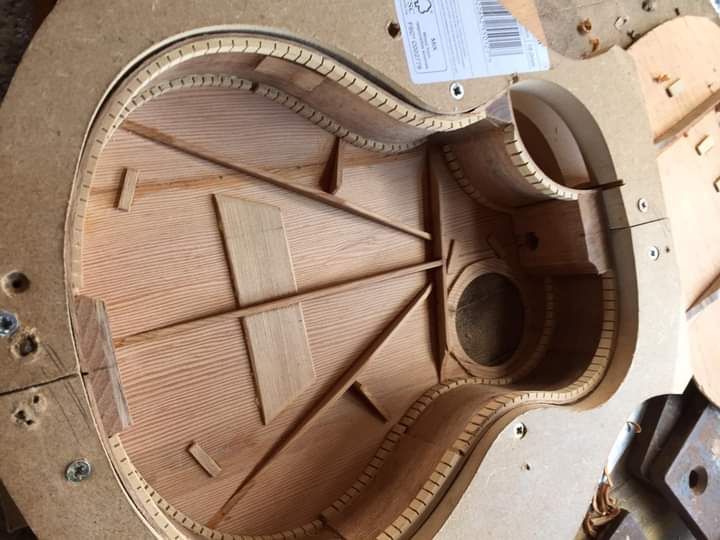
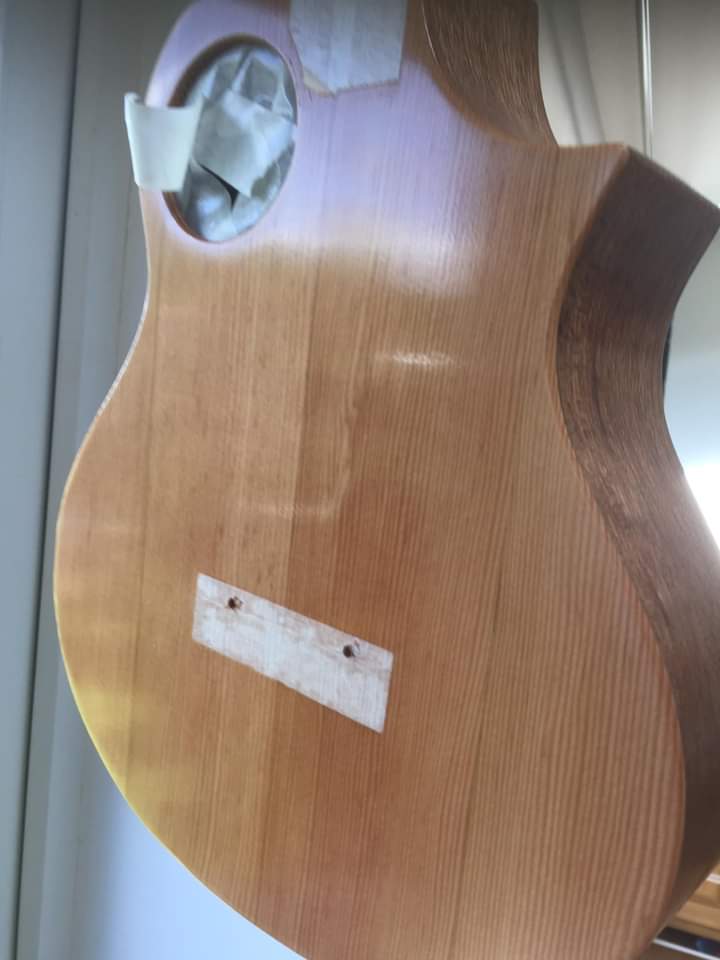
This time around, I was happy to let Neil design it pretty much however he wished. I am a fan of his signature offset sound holes, and my only stipulation was to include a preamp so the ukulele could be used for concerts and recording. As always, Neil sent regular updates on how the build was progressing (see pictures) and was always happy to impart gems of guitar and uke building knowledge.

Size matters

So what is the difference between a concert and tenor sized ukulele? A tenor is larger than a concert, sometimes up to four inches longer, but they are tuned the same. In fact, soprano, concert and tenor ukuleles can all be tuned the same (G4, C4, E4, A4). The main difference is volume and depth of bass response which the larger bodied instruments benefit from.

An example of the size and scale differences between different types of ukulele

With tenor ukuleles, some players also use a G string which sounds an octave lower (G3), effectively making he open strings sound exactly the same as the highest four strings of a guitar at the fifth fret. I can see how some players might find this easier, especially if they are migrating to the ukulele from the guitar. Personally, if I needed that sound, I’d put a capo on one of my guitars, so I have opted for the more traditional uke tuning.

Specifications

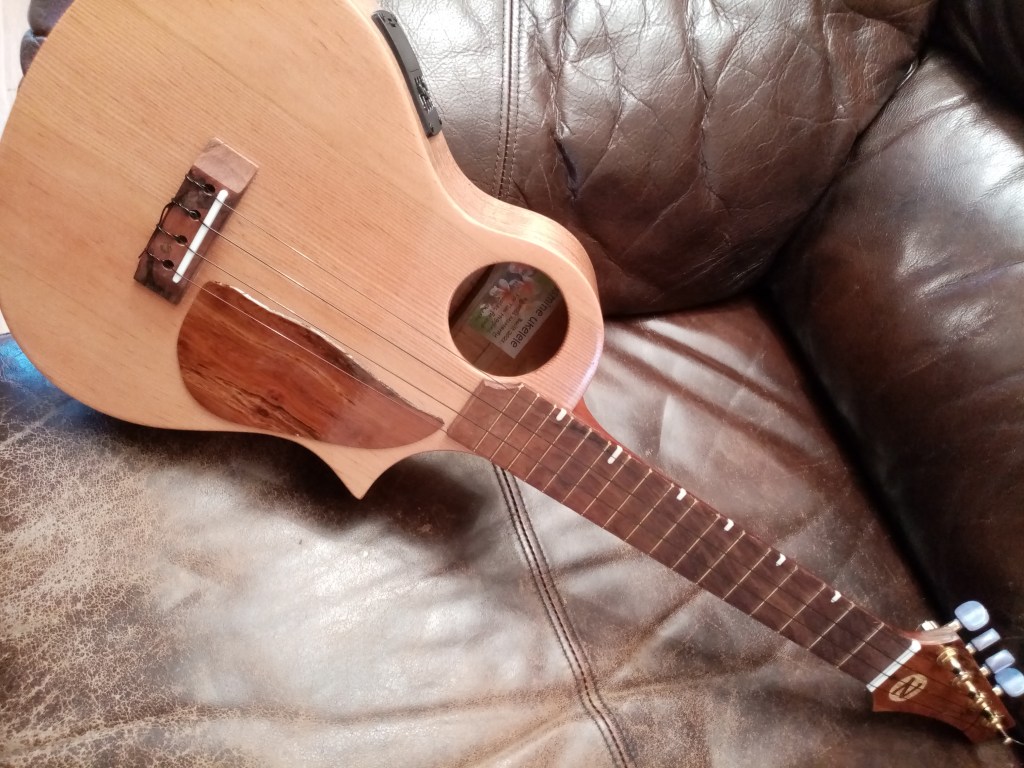
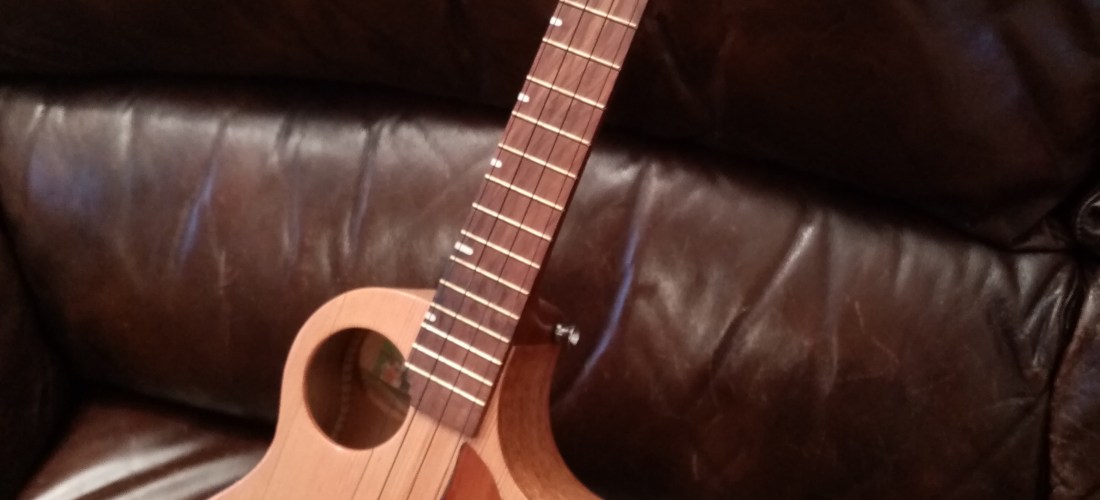
The finished instrument is made from recycled Douglas Fir and Spanish Cedar. The face plate and scratchplate (or golpe) are made from fallen trees Neil found on a walk, and feature the most stunning grain, on which Neil has placed the tuning pegs in a line (rather than two per side, as is traditional).
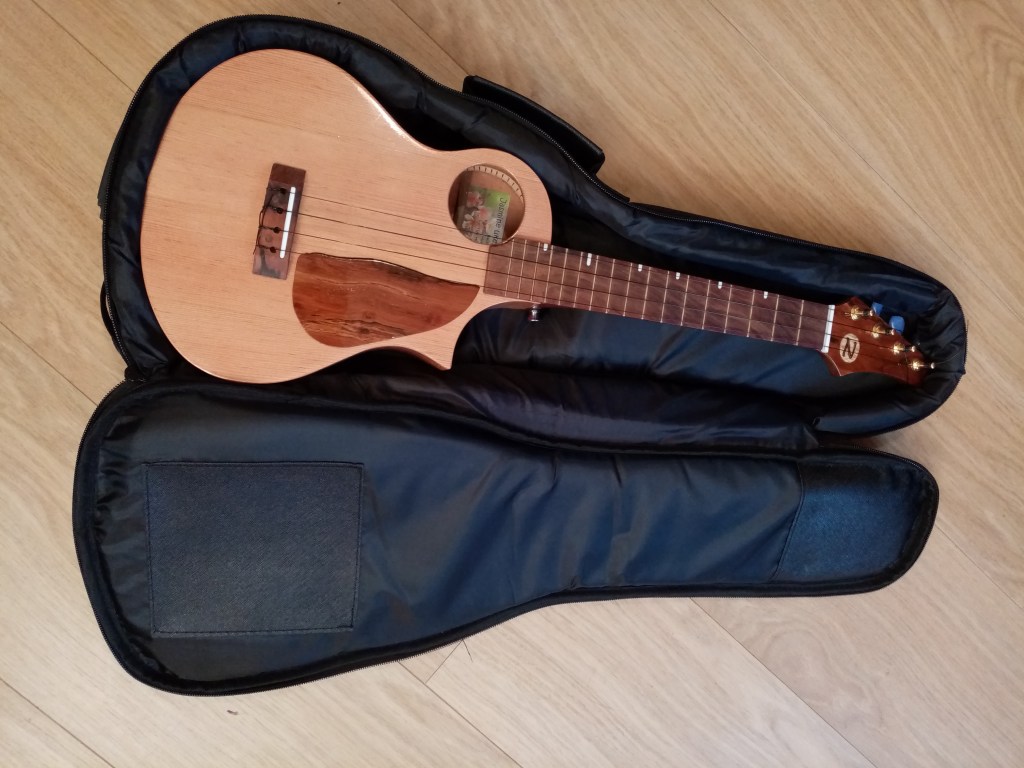
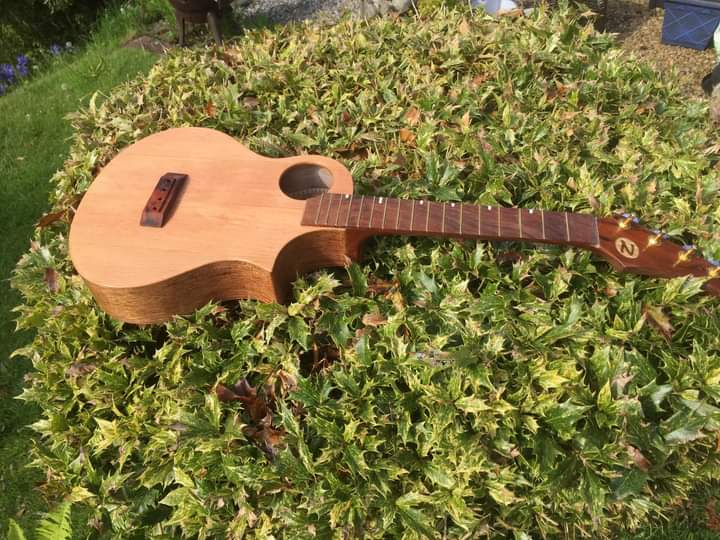
With the addition of a good value preamp (powered by an easily removable 9 volt battery), this new uke was fitted with strings and Neil contacted me to collect it.

I love the look of the grain on the golpe and faceplate, and was impressed with the instrument’s volume when strumming it unplugged for the first time. Plugged in, it sounded the same as it did acoustically, just with the potential to go a lot louder – which is exactly what I would expect.

Family photo with my previous McHardy build, my gorgeous classical guitar

Unfortunately, I haven’t had the chance to try it out onstage yet, but I plan to use it in an upcoming recording project (more details on that to follow). But when that material comes to the stage, this uke will be out on the road with me. I can’t wait.

Ukulele playing: pick or fingers?

Advice & Tips

One question I was asked fairly regularly by ukulele students in the past was:

Which is better for playing ukulele – fingers or pick*?

This blog post will hopefully go some way to explain why both are equally viable options. There – if you came to this article solely for reassurance on your preferred method of playing, I’ve saved you the hassle of reading any further!

[*NB – when I say ‘pick’, I of course mean a plectrum, like those used for guitar playing. If you’re here to learn about the kind if pick you dig holes with, you’re very much in the wrong place!]

If you’re looking for more information on picks, this rather informative article here from liveukulele.com may prove to be of use. But for now, let’s dive into our two options…

Pick (plectrum)

A pick is an easy option to start with, as even the nylon strings if a ukulele (as opposed to the steel strings used on a typical acoustic guitar) can have an effect on your fingers; this is particularly true of your nails and cuticles (the skin directly under your finger nails). You also get a louder, more direct sound when using a regular guitar plectrum, which are generally made of plastic or synthetic materials such as nylon & tortex (fake tortoise shell).

If you’re used to picking & strumming a guitar, you don’t have to make any changes to your right hand style at all. Although the same could be said if you’re primarily a fingerstyle player…

Fingerpicking

If you’re adept at fingerpicking guitar, you’ll be completely at home on the ukulele. In fact, it has two strings less, which should make it easier! I often find myself using my thumb for the G & C strings (the two closest to your face) and only making use of my index and middle finger for the E & A strings respectively.

I’ve also noticed that I perform finger rakes with any finger, and use my thumb in a greater variety of ways. Also, any guitar picking technique, from muting to string slapping & body tapping, all work equally well on a uke. If anything, my ukulele picking technique is more akin to how I play flamenco guitar!

Finally, you may notice that the tone of a fingerpicked uke is less harsh than when plucked with a pick. It’s certainly possible to obtain a greater range of sounds by adjusting which part of your fingers and nails pluck or strike the strings than could be managed with a plectrum.

Is there a middle way?

Well, yes. There are a few alternatives. Firstly, there’s felt plectrums. These are fairly common in ukulele playing and provide three ease of using a pick without the harsher tone. However, they’re less useful for more intricate playing, such as plucking individual strings.

There’s also a type of pick which sits on your fingers, popular in bluegrass styles.

Thumb & finger picks, popular in bluegrass banjo & guitar playing

These thumb & finger picks originated banjo playing, and offer the attack of a plectrum while still using fingerstyle hand & finger movement. Having said that, they do take a bit of getting used to! Many players use only the thumb pick in combination with their fingers. I’d recommend experimenting to see what works best for you.

But which is better?

As always in articles of this nature, I can’t give you a definitive answer, other than telling you my personal preference. For me, I don’t use picks at all in ukulele playing. I prefer the tone & versatility of using my fingers. But that’s just me – I encourage you to try both and see which one feels right for you.

Finally, don’t worry about sounding amazing if you’re new to trying a new playing style. Consider what feels most comfortable, and what has the best potential for you to continue improving in your playing. Let me know how you get on!