High Sun burns the blooms
Midsomer passes in heat
Giving. And taking.

High Sun burns the blooms
Midsomer passes in heat
Giving. And taking.

Well, here we are again. This summer has been very busy and at times, very difficult. But there were books, just not as many as I liked. I didn’t mean to take such a deep dive into Roman history in the last few months, but the first book on my list set me off down a path where the (rare) free reading time I had over the summer was largely spent in the Mediterranean past…
Ancient Rome: the rise and fall of an empire by Simon Baker (BBC Books, 2006)
Something of a primer for those new to the subject, this book nonetheless features plenty of interesting information for everyone. Originally published to accompany a BBC series, Baker moves from one period to another, with little linking these areas of focus, which can feel a little disjointed at times.
Baker devotes each chapter to one life in particular, such as Julius Caesar or Constantine. Here, we see a classic example of the Great Man theory of history, in which stories of the past are told through the prism of one man. The downside of this is that readers can be left with the feeling that these individuals were predestined for greatness, which is almost never a forgone conclusion, and indeed only a stance that one can take when looking back on a life that has long since ended.
Nowadays, I prefer books which can take into account the lives of the society in which these so-called ‘great men’ were able to rise to power. Luckily, the following titles have tried to steer more closely to the ‘bigger picture’ approach, to varying degrees of success…
Rubicon: the triumph and tragedy of the Roman Republic by Tom Holland (2003, Abacus)
This one was a welcome re-read. Rubicon is one of my favourite books on Roman history, and Holland one of my favourite historical writers. This books centres in the era Ancient Rome moved from a republic almost half a millennium old to a dictatorship, then empire under the rule of one man for the first time since their hated olden days of kings.
Interwoven into this narrative history are the letters of famous orator Cicero, accounts of the civil wars that gave rise to Augustus (Rome’s first ever First Citizen – Julius Ceasar was only ever ‘dictator for life’), the surrounding empire, wives, slaves, lovers and celebrity chefs. There’s humour and reasoning beyond the usual ‘dates & battles’ format many of us might be used to in history books.
Holland has a knack for presenting his well researched stories in an engaging manner (I have previously reviewed one of his shorter books on Atherstan of England here). However, I mainly read this book again to refresh myself of the historical circumstances in which the next book commences…
Dynasty: the rise and fall of the house of Ceasar by Tom Holland (2015, Abacus)
Rome’s shift from republic to monarchy-in-all-but-name was more piecemeal than some might think. From the pretentions of Julius Ceasar to the encroaching laws which gradually secured the long-term ambitions of Augustus, the path to a (sort of) hereditary title of Emperor, took a few generations to form. This book examines the family line from Julius to Nero. Six rulers who changed the way Rome was governed – the Julio-Claudian Dynasty.
In relating the key events, relationships and bizarre behaviour of these first emporors, Holland also shows us a reflection of the people of Rome itself. He reminds us that the outrageous rumours surrounding the Ceasars survive because that was what the public and historians of the era wanted to believe and disseminate. To some extent, he argues that the lives of the Ceasars, as we know them today through surviving sources, offers a glimpse into the psyche of the empire’s people, and fleshed out the book’s six chapters with examples of customs and lifestyles which changed alongside – or as a result of – their changed system of government.
As always, Holland wears background and humour into the classical sources, making this another riveting and informative read fom the mater of narrative history. Highly recommended.
A note on early sources
The books I am reading were all published this millenium, and rely on scant surving materials from many centuries ago. These few works (or parts thereof) are likely to represent less than 1% of the writng that was made at the time during or following the lives of the Ceasers and thir contemporaries. Can you imagine how differenty these lives would be iewed if we had a less narrow picture through which to study them?
However, it is worth mentioning at this point are three histories widely used as sources again and again for works on the Roman Empire around the time the Caesars. Despite their political or personal biases, they are fascinating reading in and of themselves. Additionally, apart from surviving correspondence written by prominent men of the time – poets and statesman alike – they remain the closest writings to the actual events being chronicled. You should check them out. They are:
The restoration of Rome: barbarian pipes & imperial pretenders by Peter Heather (2013, Pan/MacMillan)
Can you tell that I’ve been on something of a Roman history jaunt? Following two books from Holland about the collapse of the Roman republic, it seemed fitting to follow up with a book on what happened next.
From Visigoths reigning as Emporors of the Western Roman Empire, to the rise of the papacy and the empire’s ‘rebirth’ as the Holy Roman Empire under Charlemagne. The story ends with Pope Innocent III cementing the Vatican as the Kingmaker of medieval Europe. It’s well written and highly informative. There are lots of battles and political double deals, with extensive notes and directions to further reading, if this isn’t enough (although I would strongly recommend Norwich’s brilliant history of the papacy, The Popes, reviewed here).
That’s it for this time, folks.
I mentioned I’d review a book about coffee in this instalment. However, although I read and enjoyed David Egger’s The Monk of Mocha this summer, it didn’t fit in with the Roman theme of this review, so I have moved my summary of that book to the next instalment.
Also next time, an actual novel! And more history, as well as books about other books! I’ll also mention a few of my favourites from this year at the end too. Until then…

We hoped for sunshine
But rain soaked Welsh Poppies brought
Sun-yellow petals
You don’t always get the weather you want, especially in the UK.
Yet the gorgeous buttercup yellow of a flower, thought of by many as a weed, certainly adds brightness on a day with less sunshine than we might have hoped for. But then, a weed is simply a plant you don’t want, which means the definition certainly doesn’t apply in our garden.

Ironically, or perhaps fittingly, I’ve spent most of today – the longest day in the northern hemisphere – at work. I therefore didn’t get to enjoy my garden at all today.
Still, there is always tomorrow…

Cow Parsley grown tall
Scent of roadside wild garlic
Drowned Spring yields lush greens
…at least, this has certainly been the case here in Northumberland. Here, an incredibly wet April and May have finally given way to a gloriously hot and sunny June.
Both the cultivated and wild plant life have all responded well. I have even heard one keen gardener tell me that his Himalayan Blue Poppy has flowered for the first time in thirty years! Clearly this is the combination of months of rain to sunshine it requires!
What are your garden stories? Leave a comment or drop me a message. Until next time…

It’s hard to believe that we’re in the final three months of the year. What a year it’s been! I’m sure no one could have reliably predicted the majority of changes which most of us have had to undergo, hopefully on a temporary basis, because of this pandemic. I hoped that it might offer more time to get through my oft-mentioned (and ever increasing) ‘to read’ pile. However, if 2020 has taught us anything, it’s that life doesn’t always go the way you expect it to.
Still, there has been some reading since the last installment (which you can read about here), and here is a brief review of it…
The Italians by John Hooper (2015, Penguin)
An affectionate and sometimes amusing look at the characteristics common to Italians, and why that might be the case. Hooper also reiterates that Italy is a relatively new country (as a unified whole), and spends almost as much time highlighting what separates Italians from different regions; north and south; Romans and Sicilians; mountain dwellers and those who reside by the country’s ample coastline, and so on. Hooper regularly interjects anecdotes from his extensive time living and working in Italy as a journalist. These passages give the book a greater cohesion, in that the presumed reader (and Englishman) sees the situations unfold through the eyes of the author, and with similar inherent sensibilities. However, Hooper restrains himself from writing this as a straightforward memoir, which I expect that has increased it’s potential readership.
I read this book during lockdown in England. Of course, Italy had imposed one of the most stringent lockdowns of any country in the world, and the Italians have seemingly been obedient and compliant. This seemed to go against one of the common reoccurring themes in Hooper’s observations; that Italians will regularly bend the rules to suit their needs or preferences. The reports I was hearing on the news in 2020 didn’t sit with this assessment, until I considered another of the books themes – the emphasis and commitment Italians place on family. From this angle, undertaking the strictest measures, which seemed like virtual home arrest to some, made sense, as it gave your elderly relatives a fighting chance of making it through this madness alive. And that, argues Hooper five years before any of this was upon us, is a key characteristic of Italians. Recommended for anyone with an interest in staying in Italy for longer than an average-length holiday.
The Finkler Question by Howard Jacobson (2010, Bloomsbury)
Jacobson’s 2010 comic novel about three male friends – two of them Jewish and a third man who suddenly feels that he might be, won the Booker Prize for Fiction in 2010. This sudden interest in the religion of his friends is the author’s way of examining the universal themes of life and society. It is amusing in places, and the characters are interesting and well-written. Yet I certainly wasn’t gripped by it as much as I had been led to believe the reviewers who had gushed over this novel upon it’s release. Humorous and touching, yes, but also confused in places, and ultimately, slightly underwhelming.
Athelstan by Tom Holland (2016, Penguin)
A recent addition to the Penguin Monarchs series (that is, books on British monarchs published by Penguin books, although there’s a pun about Emporer Penguins in there somewhere), this book examines one of the lesser-known pre-1066 Kings (who wasn’t Alfred the Great).
I enjoy Holland’s writing, having read several of his books previously – in particular, I thoroughly recommend Rubicon, about the last gasp of the Roman Republic. At 160 pages, this is a quick read, but it covers what is known about Athelstan, from the few sources available. Personally, I’m pleased that Holland resisted the temptation to pad the book out with unnecessary additional information or unfounded presumptions.
Utopia for realists by Rutger Bregman (2016, Bloomsbury)
Alternate subtitles for this book, depending on country of publication, include and how we can get there (UK) and the slightly less pithy sounding the case for a universal basic income, open borders, and a 15-hour workweek (Holland). Although the latter of these two subtitles is somewhat unwieldly, it must be said that it up this book’s subject matter much more effectively. The book originated as a series of articles for the Dutch online news site De Correspondent by Bregman, a popular historian, and was later complied and translated. It has quickly became a bestseller, which ringing endorsements from a wide range of economists and politicians across the world.
The text centres on the three polices highlighted in the original subtitle, along with the principle that ideas can change the world, according to Bregman, who states “people are the motors of history and ideas the motors of people”. Of course, there are many who have said that Bergman strays into idealism, and it will certainly prove more popular with readers of a more left-leaning political persuasion. But Bergman is only aiming to issue a challenge, or a promise, of what could be possible but I doubt if the title Utopia for Idealists would have sold quite as well. A manifesto for a brighter future? Maybe not by itself, but a good place to start.
Goshawk Squadron by Derek Robinson (1971, Cassell)
In the afterword section of the book, Robinson recounts his inspiration for writing the story. He read a former R.A.F. pilot describe the tactic of the world’s first fighter pilots during WWI as “to sneak in unobserved behind his opponent and then shoot him in the back”. Hardly the cavaliers of the clouds they have often been immortalized as in tales such as the Biggles series, amongst many others.
This Booker Prize shortlisted book paints it’s fictitious characters in a more truthful light, based on the diaries and letters of real WWI pilots. The book was met with anger from veterans of the Royal Flying Corps (the forerunner to the Royal Air Force) when it was first released, but reading it in 2020, it feels much less controversial now – the idea of a ‘lovely war’ has remained a 20th century concept – but the story is no less gripping for that fact. At just over two hundred pages, it’s a relatively fast read, but I found that the story stayed with me long after I had replaced the book on the shelf.
The next and final installment of this series (due in late December) will feature two novels I have been looking forward to reading. You can also expect updates on some upcoming studio dates and an in-depth review of a new guitar built for me recently. Until next time…

It happens each year
September brings us sunshine
More than in August
Yes, I know we’re only three days in…

Golden eventide
The Sun sets on Summertime
Warmth gives way to chill

Wet English summers
It always rains in August
Dark evenings advance
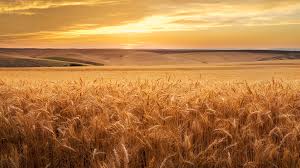
The wheat it rises fast by summer late
Honey yellow melting into rich gold
Yet now, streaking through the swaying barley
Comes ex-P.M. from Euro state of old
Fleeing worldly problems and past mistakes
With childish abandon and youth-lost glee
Surprised, then angry; next, aloud thinks I:
“Well, that’s stained this golden moment for me!”

Somehow, this silly little poem (about former UK Prime Minister Theresa May running through one of the fields of wheat outside my home) felt best suited to the sonnet form (of somewhat loosely – see below).
For context, here is May’s past form, regarding running through fields of wheat.
Please don’t judge my efforts too harshly. It is my first attempt at writing in this form since secondary school (twenty years ago). I most definitely haven’t adhered to the ‘galloping’ rhythm of traditional Iambic Pentameter (5 pairs of syllables per lone, going weak-strong each time). This would have been a strict requirement for stage actors reciting these lines (usually as dialogue) in Elizabethan age plays, most famously those penned by William Shakespeare.
However, I’m not Shakespeare, Marlowe or any sonnet writer of any note, by any stretch – that much should be clear by now! I’m just a bored dad trying to get his youngest child (currently teething) to sleep by taking them out in the buggy for an evening walk…
 Tim Higgins, Guitarist
You must be logged in to post a comment.