Reblog: Three things we can learn from Sir George Martin (1926-2016)

Advice & Tips

Legendary producer of The Beatles, Sir George Martin, passed away on this day, five years ago. The following day, I wrote this article on a now-defunct page. Reposting here to mark this sad anniversary:

Sir George Martin, most famous for acting as the producer of all but one of The Beatles’ albums, passed away yesterday, aged 90.

Beatles_and_George_Martin_in_studio_1966

Already, reports and obituaries have been published, quoting Martin and highlighting his amazing achievements with and without The Beatles. Though Martin was a producer for over a decade before meeting them, it is undoubtedly his work with this music-changing band, the very Zeitgeist  of musical development in the nineteen-sixties and beyond, for which he will be best remembered and discussed for years to come.

There’s been plenty of debate on whether or not The Beatles succeeded artistically because of suggestions made by Martin, or if he was simply very effective in channelling their natural talent. In reality, it was probably a mix of the two. That in itself is not a bad legacy to leave behind.

Though Martin now sadly has passed away, we can still learn something valuable from the work he left behind. Here are my three things which we can learn from the life and career of George Martin:

Have an open mind

I’ve mentioned this in several previous posts, but an open mind and a willing pair of ears is without a shadow of a doubt the most important tool for any artist. This is especially true for musicians and producers, and a sentiment to which Martin himself prescribed more than once, including in his own books.

It is well established in rock history canon that The Beatles were been turned down by several record companies prior to being signed by Martin to EMI. Think about this for a moment: every almost ‘industry expert’ had refused to take on another guitar band, believing them to be going out of fashion. Fair enough, it is called the music business for a reason. Money has to be made and trends will always be followed. This is as true today as it was in the nineteen fifties and sixties. However, ‘following the money’ is a great way to be a follower, but you are default already a follower from the start, and not a leader.

The best leaders, artists, teachers, and indeed the best in any profession listen first. In seeing the potential that The Beatles had, Martin was able to continue listening to them throughout their eight years working together making hit after hit, and classic album after classic album. This is especially noticeable when at the point mid-sixties where the band stopped performing live altogether, becoming a studio band only. The resulting works, Revolver, Sgt. Pepper’s Lonely Heart’s Club Band, The Beatles and Abbey Road, are unique in sounding very much of their time, but still fresh and exciting in 2016.

And it wasn’t just Martin doing all of the listening. The Beatles themselves were avid consumers of art and music. In being open to anything interesting, they brought elements of avant-garde, atonalism, looping, sampling and a whole world of musical styles to their music. By opening your ears, and combining the sounds you love, it is entirely possible to produce a new work, which speaks to the future while recognising that which has gone before.

Know your limits, and push them

Looping, you say? Sampling? In the nineteen-sixties?! It is worth noting that the vast majority of The Beatles’ recorded output was recorded on a four-track (or, at very best towards the seventies, eight-track) tape machine. This was state of the art back then, but lacking in the limitless options of the digital recording software in use everywhere. Leaving aside all the other technological innovations and improvisations Martin would conjure up to accommodate the visions of The Beatles in their songwriting, there is the question of the sheer number of instruments and sounds on some songs. The solution to squeezing so many different elements onto a four-track recorder? Multi-tracking.

Multi-tracking was first developed by guitarist Les Paul some decades before Martin made such effective use of the technique. Put simply, the process involves recording onto three of the available tracks, then ‘bouncing’ that mix onto the fourth track. The process can be repeated using tracks one and two, then bouncing to the third. Then it can (if needed) be taken even further by mixing tracks three & four onto one of the other tracks, meaning there are now three left to add on more parts (and here is where I start to go cross-eyed myself!).

The biggest issue with this method of recording is the physical degradation of the tape onto which the sound was being copied. By layering track upon track, the overall mix becomes more dense, and done incorrectly, can leave with a muddy sounding, uninspiring record. George Martin, however, seems to have been perfectly capable of getting clean, crisp recordings of individual mixes, which hold their brightness as they get ‘bounced’ and mixed into a deeper and more complicated arrangement. Even with Martin’s confident ‘know how’, there was still a limit to how many additions could me made. In these days of endless tracks and almost any possible sound available to laptops worldwide, I personally don’t see the same level of mechanical creativity. Sometimes working with what you have, pushing the limits, is better than having no limits at all…

Have a sense of humour

There’s a famous anecdote – which Martin was often fond of telling – detailing the first time The Beatles first met their producer (retold once more in the Washington Post’s obituary of George Martin today). After Martin had spoke at length about the recording process, he asked the Fab Four is there was anything they didn’t like. The response, from George Harrison, was “Well, I don’t like your tie for a start…”. From there, Martin knew that they would get along famously.

A sense of humour can not only ease any tensions rising in the studio, which can be high-pressure for some acts expected to produce hit after hit. It can also serve to bridge the gap between generations. In that respect, Martin must have impressed the Beatles from the start, having quite an extensive background in comedy and novelty recordings – some of which became unexpected hits – including John Lennon’s comedy heroes, The Goons. In quite a lot of interview footage from the early sixties, The Beatles were set apart from their questioners, an exclusive club with a shared sense of humour and in-jokes which created a barrier to those outside of the group. Martin, I believe, was very much inside their ‘circle of trust’, otherwise they would not have allowed him such authority in the studio. A shared sense of humour must have been a major in-road to gaining the trust of these young Liverpudlians.

lightbox

Final Thoughts

As a musician, producer and in some ways, mentor, Martin helped the Fab Four to realise the sounds they heard in their heads. His creative, yet critical thinking fuelled The Beatles’ insatiable appetite for art, and helped their music transcend to heights which otherwise may have remained untouched. Though I have spoken mostly about Martin’s work with the Fab Four, we should be no means overlook all of the other artists he worked with & film scores he wrote/arranged. Without Martin, popular music, and therefore the world we live in today, would be very different indeed…

R.I.P. Sir George Henry Martin (1926-2016).

Making of ‘Last One Get The Lights’ by the Nick Gladdish Band (part one)

Music

You may remember that I spent a few days in the studio with the Nick Gladdish Band late last year. If not, you can read about it here.

We’ve been releasing singles from the newly finished and mastered record, Last One Get The Lights, which you can see & hear on my media page, and buy online from all the usual platforms.

Here’s part one of the mini documentary made by Torn Apart TV. Part two, and the full album, will be released in a few months time.

The latest single by the Nick Gladdish Band, Ain’t The Way I Work, is available to download now.

New single ‘Freeze’ released this Sunday (20.12.20)

Music

The Nick Gladdish Band are finally releasing the second single from our upcoming album, Last One Get The Lights, after a little over two months of recording, overdubbing, mixing and mastering!

The song is called Freeze, and will be available via all the usual online streaming outlets such as Spotify, Amazon, iTunes, Deezer, etc…

This record has been delayed because of COVID19. The first lead single for this album was released last year! But somehow, in the middle of a pandemic (and adhering to social distancing rules), we managed to get the other ten tracks compeleted. I can’t wait to start sharing them with you!

In fact, after you’ve searched for Nick Gladdish and found the song, why not save him / follow him? We’ll have a new single coming out on the last Friday of the month for the first part of 2021, until the album Last One Get The Lights is released in April or May!

Listen to the first single, Blurry Lines, here on Spotify.

Back in the studio (part 4)

Music

The final piece of the album is now in place. Backing vocalist Shannon Powell has added her amazing talents to the new Nick Gladdish Band album.

Those of you who are unfamiliar with Shannon’s vocal prowess would do well to check out her project YUMA (a collaboration with NG Band drummer & producer John Timney)

Cover art

Nick also revealed the main painting being used for the album cover, created by Kristin Designs

Album cover art for ‘Last One Get The Lights’

Next steps

We’ve already reviewed the ‘first pass’ of the mixed tracks, and discussed changes. The second attempt is currently ongoing, now with Shannon’s vocals added, which gives us the full picture. To my ears, these tracks need very little fixing now. Most of the big tweaks & redos have already been taken care of.

Once the mixing is finalised, the next step is mastering the overall album. After this, the first single can be released. Details to follow soon…

At the same time, the cover art and lyric booklet are being designed and formatted. However, this is a slightly less pressing issue because the album won’t be released until the start of 2021.

Earlier installments in this mini series

More updates as they happen…

Back in the studio (part 3)

Music

Last night, we got the final session of tracking done (on a new album for The Nick Gladdish Band), with a day left until lockdown #2 comes into effect across the UK.

Nick met drummer & producer John Timney at TRAXX Studios in North Tyneside for five hour. They didn’t just tracked all the vocal parts to the band songs. They also recorded the two solo songs which will ‘bookend’ the album.

Now comes the mixing…

I’ve already heard a few early mixes on a couple of the songs. Even in their rough, unmastered state, they sound rather promising. As always, I’ll keep you updated as the record progresses…

Back in the studio (part 2)

Music

With a second full national lockdown upon us in a few day’s time, we had a very small window to finish the bulk of the tracking for Last One Get The Lights, the in-progress LP from the Nick Gladdish Band. John Timney (drums, engineering and production on this record) and I met at The Space rehearsal studios in Carlisle with some guitars, a laptop, and a sense of urgency which wasn’t entirely helpful…

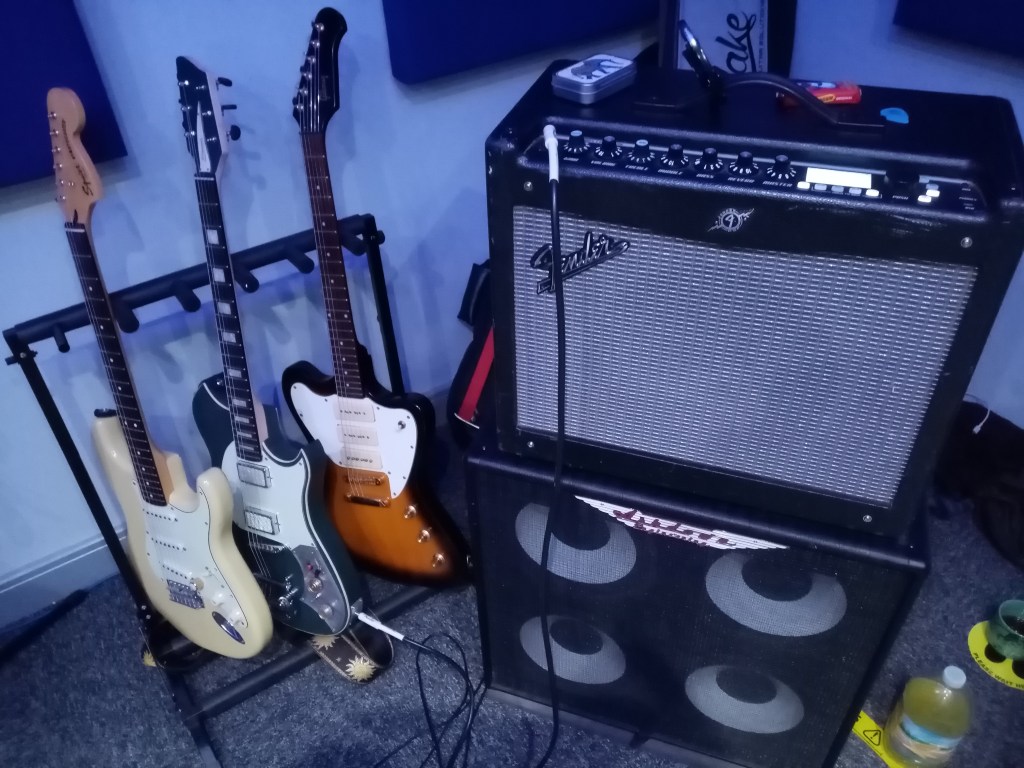
We managed to get several small bits done in just two hours. These included the few remaining rhythm/textural guitar parts, lead parts and full-on guitar solos over five different tracks. As well as borrowing John’s beautiful 12-string acoustic for a small part in one of the songs, I also used my Artisan lapsteel, Squier Strat and the new custom made Elderwood semi-hollow (read about that one here), all going through my Fender Mustang III amplifier. We might find there’s a few bits which need fixing, but if there is, we’ll have to wait until after lockdown!

Tomorrow, John will record the vocals (and a few other bits) with Nick back at Traxx Studios in North Tyneside (where the main chunk of the LP has been recorded, as documented in part one). Nick has lived with these songs for a most of this year, and in some cases even longer, so should be able to get the vast majority of them down tomorrow.

After that, it’s a case of adding Shannon’s backing vocals remotely, then mixing…

Still, at least we have all of lockdown to do that part!

More updates to follow, as and when they occur. Until then,take care of yourselves out there…

Back in the studio (part 1)

Music

Last Thursday & Friday, I was back in the studio with the Nick Gladdish Band, as we finally started work on his new album Last One Get The Lights.

In normal times, this would have taken place in April, and by now, we’d be on another tour supporting the finished product. In fact, we already released the lead single Blurry Lines last last year (listen to it here). However, the pandemic and subsequent lockdowns have held everything up. More recently, we’ve been able to get back on track.

The process

To start with, Nick shared demos of the songs, and we started listening and thinking of suitable parts. A few weeks ago, we held two days of rehearsals where we tried out different things to see what worked. These were recorded as draft ‘rough cuts’ and the best arrangement shared amongst ourselves, so we could refine our parts further. It also gave me time to consider the best way to record the guitars, and which instruments to use.

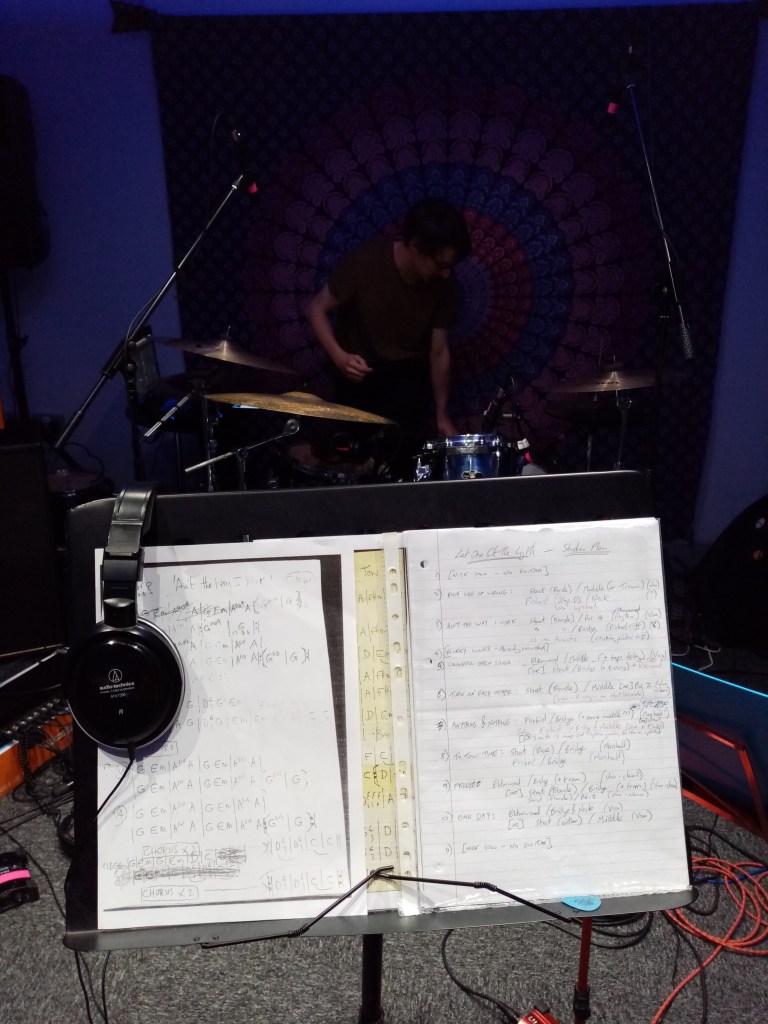
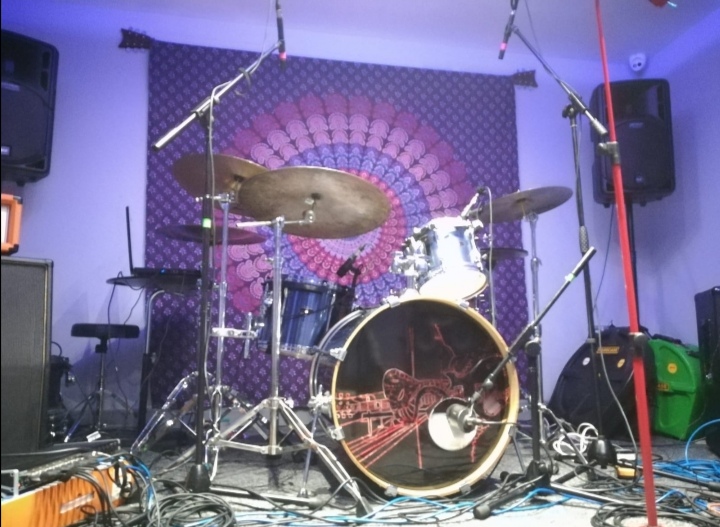
Here’s a few pictures from the two eight-hour days at Traxx Studios in North Tyneside. We spent these days recording the main backing tracks of drums, bass, most rhythm guitars, keys and guide vocals. The credits belong to everyone in the band (I’m not sure exactly who took which picture in some cases):

The whole recording process came together really quickly. In two days, we manged to get all the backing for the eight ‘full band’ tracks down, as well as additional rhythm guitar parts. Having rehearsed and arranged this set of songs in a live room setting, the guitar parts were quite simple to arrange and organise for tracking.

What happens next?

The initial plan was for John (Timney, drummer and engineer for this LP) to crew te rough mixes from what we had before we started on overdubs. However, the government’s announcement at the weekend, telling us we’ll be back in lockdown from Thursday, prompted a change of tack.

Instead, I will be going back into the studio with John to lay down all the guitar overdubs and solos tonight.

Tomorrow, Nick will record all of his vocals and a few additional piano & acoustic guitar parts. Shannon Powell, our backing singer at the live shows, will add her final parts remotely in the next week or so. That way, John has the whole period of lockdown to mix and master the record, and we can have the entire album finished in time for release at the start of 2021.

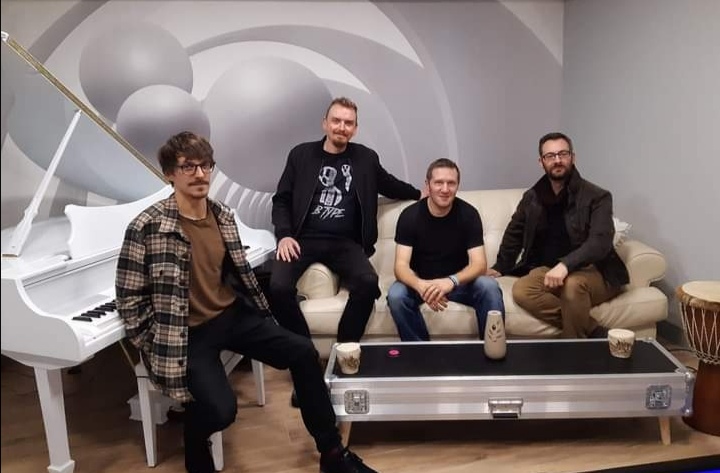
The Nick Gladdish Band. L-R: John Timney (drums, production), Adam Cornell (bass), Nick Gladdish (lead vocals, keyboards, acoustic guitar) and myself (guitars, lapsteel).

I’ll post some more pictures from tonight’s session, as well as further updates, in due course. Until next time…

New projects, despite lockdown

Music

As well as using Twitter to announce new projects, or update people on ongoing ones, I sometimes reminisce about ones from years ago, such as this one…

For some reason, I kept thinking of this, and on top of everything else I have planned (post-COVID), I’d quite like to explore what a power trio can do in terms of extended instrumentals (which aren’t based largely around improvisation); something more progressive in nature…

Having played in a rock trio format before, it can be a new challenge to fill the space adequately without the music sounding thin. Conversely, one has to avoid the temptation to stick to the more blues based method of sharing riffs, in union (or octaves) with the bass player.

Bear in mind that I currently have…

  • 3 music therapy jobs
  • A solo classical(ish) EP to finish
  • Another Nick Gladdish Band album to finish & tour to plan
  • My next band project (world/blues/Latin) to start rehearsing
  • A music therapy case study series to complete by the autumn
  • A small portfolio of compositions to develop

…and we’re still in a time of lockdown here in the UK, with no concrete sign of progress regarding indoor gigs (although the news today implies that this might change very soon).

Still, if you want something doing, ask a busy person, right?

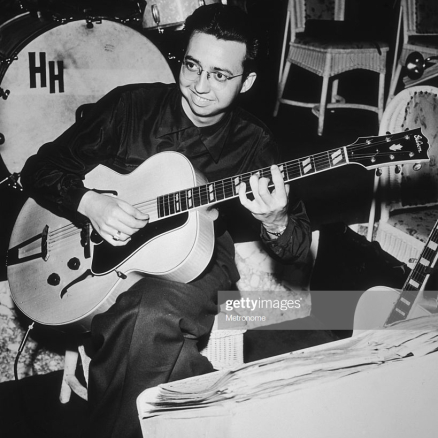
Great Guitarists #2: Barney Kessel

Great Guitarists

Welcome back to my Great Guitarists mini series (you can read my previous piece, on Earl Klugh, here). Today, allow me to introduce you to my favourite guitar player of all time. You might not recognise the name, but you’ve certainly heard him on recordings from the jazz greats to The Beach Boys. Introducing…

Barney Kessel

Born in Muskogee, Oklahoma, in 1923, Kessel was known by early bandmates for practising up to 16 hours a day. Judging by the amount of work he had, those hours of practice clearly paid off – and I haven’t even touched upon the countless records he released under his own name, not to mention his film scores, world tours with other legendary jazz guitarists or his regular guitar advice column!

While Kessel might not be the most recognisable face or name to many, his prolific session work over several decades means you are guaranteed to have heard his guitar playing. Early gigs for Kessel included the bands of Chico Marx, Artie Shaw, Charlie ‘Bird’ Parker and Oscar Peterson.

Later, he was one of the regular LA session players known collectively (and famously) as The Wrecking Crew. Around the same time, Kessel found ample work as an accompanist. His most recognisable song is Julie London’s definitive version of ‘Cry Me A River’ (from her 1955 album Julie Is Her Name – worth checking out for Kessel’s guitar arrangements alone). He also provided similar guitar backing for several other great jazz singers, such as Billie Holiday, Ella Fitzgerald and Anita O’Day.

One of the most heard examples of his session work comes at the very start of Brian Wilson’s classic and sixties-defining record with The Beach Boys. The opening harp-like notes of track one, Wouldn’t It Be Nice, are actually Kessel playing something called a Mando-guitar (sometimes mid-credited as a 12-string guitar). In Situations such as this, session players such as Kessel could call on their training and in-depth knowledge of their instrument and technique to quickly provide the sound that producers and artists such as Wilson were searching for, often when this was not very clearly defined.

In terms of a definitive track, where do I start? Pick up any album led by him and you’ll be rewarded with his amazing jazz guitar playing, from choral soloing through to wonderfully fluid single note lines. Kessel played hollowbody electrics almost exclusively, and although he moved around from various Gibson guitars to Kay models (including variations of a signature model at different price points) and back again, his thick tone with a piano-like clarity rings through. Perhaps we should begin with his beautiful version of the jazz standard Autumn Leaves, performed live in this video from 1979. Enjoy!

As always, do tell me what you think. The full list of guitar players featured in this week’s series aren’t set in stone yet, so if you have any suggestions (ideally with a jazz bent for this week’s run), please do get in touch. I love hearing what you guys think!

Until next time…