Last night, we got the final session of tracking done (on a new album for The Nick Gladdish Band), with a day left until lockdown #2 comes into effect across the UK.
Nick met drummer & producer John Timney at TRAXX Studios in North Tyneside for five hour. They didn’t just tracked all the vocal parts to the band songs. They also recorded the two solo songs which will ‘bookend’ the album.
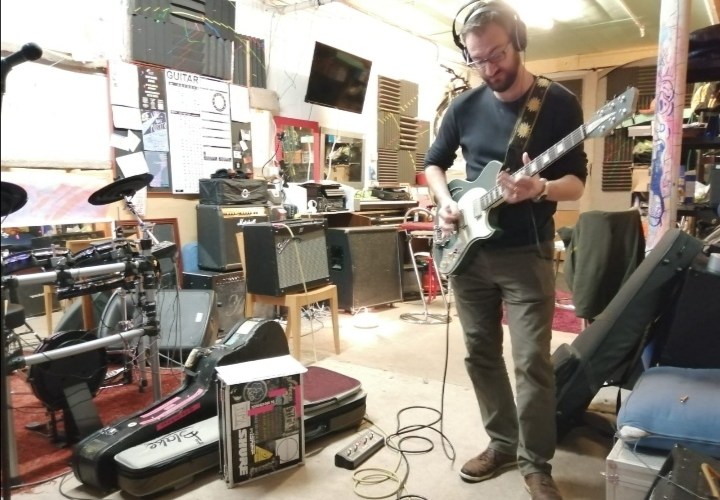
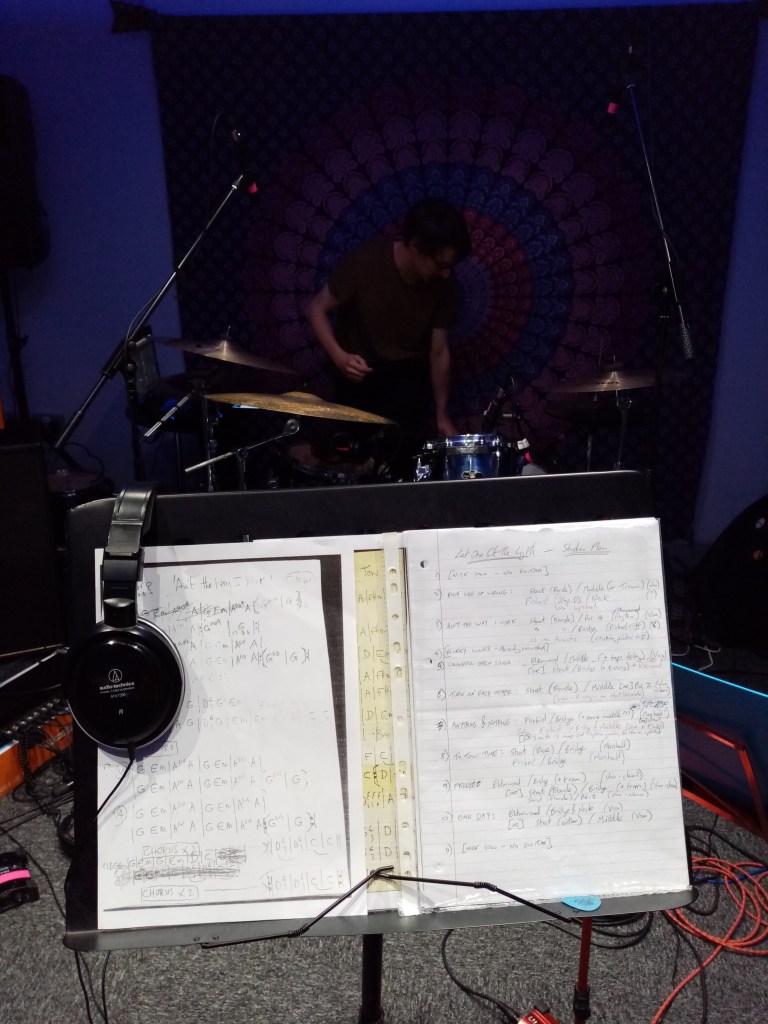
Nick working hard in the studio (picture courtesy of John Timney)
Now comes the mixing…
I’ve already heard a few early mixes on a couple of the songs. Even in their rough, unmastered state, they sound rather promising. As always, I’ll keep you updated as the record progresses…
With a second full national lockdown upon us in a few day’s time, we had a very small window to finish the bulk of the tracking for Last One Get The Lights, the in-progress LP from the Nick Gladdish Band. John Timney (drums, engineering and production on this record) and I met at The Space rehearsal studios in Carlisle with some guitars, a laptop, and a sense of urgency which wasn’t entirely helpful…
Recording lapsteel and 12-string acoustic at The Space, Carlisle (credit: John Timney)
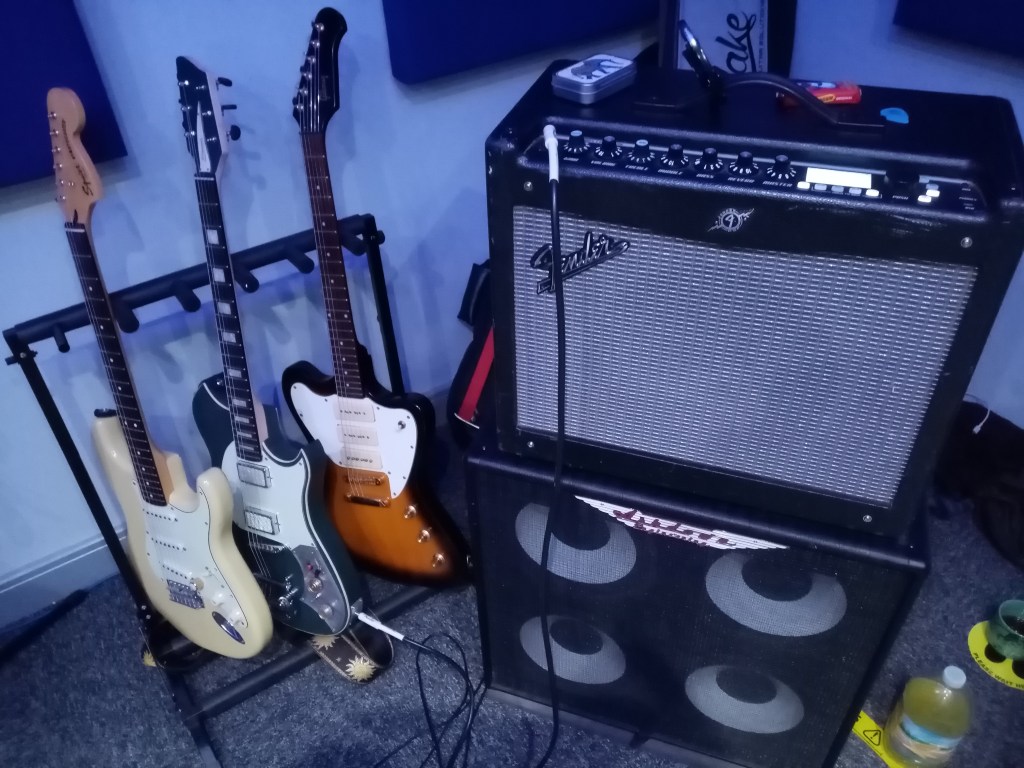
We managed to get several small bits done in just two hours. These included the few remaining rhythm/textural guitar parts, lead parts and full-on guitar solos over five different tracks. As well as borrowing John’s beautiful 12-string acoustic for a small part in one of the songs, I also used my Artisan lapsteel, Squier Strat and the new custom made Elderwood semi-hollow (read about that one here), all going through my Fender Mustang III amplifier. We might find there’s a few bits which need fixing, but if there is, we’ll have to wait until after lockdown!
Tomorrow, John will record the vocals (and a few other bits) with Nick back at Traxx Studios in North Tyneside (where the main chunk of the LP has been recorded, as documented in part one). Nick has lived with these songs for a most of this year, and in some cases even longer, so should be able to get the vast majority of them down tomorrow.
After that, it’s a case of adding Shannon’s backing vocals remotely, then mixing…
Still, at least we have all of lockdown to do that part!
More updates to follow, as and when they occur. Until then,take care of yourselves out there…
Last Thursday & Friday, I was back in the studio with the Nick Gladdish Band, as we finally started work on his new album Last One Get The Lights.
In normal times, this would have taken place in April, and by now, we’d be on another tour supporting the finished product. In fact, we already released the lead single Blurry Lines last last year (listen to it here). However, the pandemic and subsequent lockdowns have held everything up. More recently, we’ve been able to get back on track.
The process
To start with, Nick shared demos of the songs, and we started listening and thinking of suitable parts. A few weeks ago, we held two days of rehearsals where we tried out different things to see what worked. These were recorded as draft ‘rough cuts’ and the best arrangement shared amongst ourselves, so we could refine our parts further. It also gave me time to consider the best way to record the guitars, and which instruments to use.
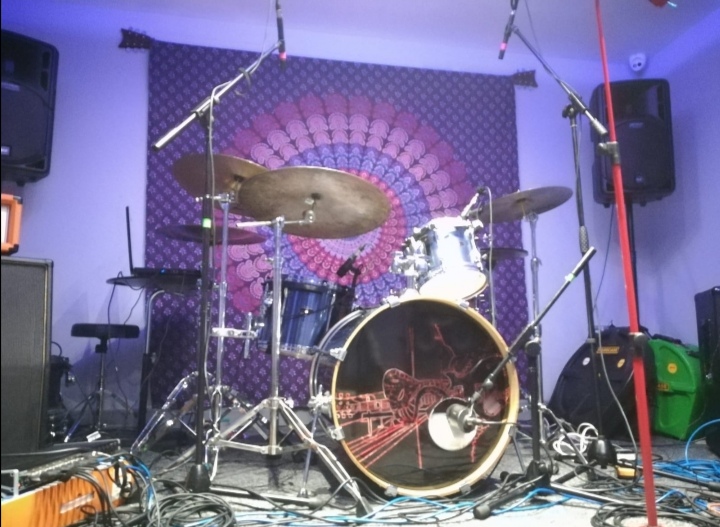
Here’s a few pictures from the two eight-hour days at Traxx Studios in North Tyneside. We spent these days recording the main backing tracks of drums, bass, most rhythm guitars, keys and guide vocals. The credits belong to everyone in the band (I’m not sure exactly who took which picture in some cases):
The whole recording process came together really quickly. In two days, we manged to get all the backing for the eight ‘full band’ tracks down, as well as additional rhythm guitar parts. Having rehearsed and arranged this set of songs in a live room setting, the guitar parts were quite simple to arrange and organise for tracking.
What happens next?
The initial plan was for John (Timney, drummer and engineer for this LP) to crew te rough mixes from what we had before we started on overdubs. However, the government’s announcement at the weekend, telling us we’ll be back in lockdown from Thursday, prompted a change of tack.
Instead, I will be going back into the studio with John to lay down all the guitar overdubs and solos tonight.
Tomorrow, Nick will record all of his vocals and a few additional piano & acoustic guitar parts. Shannon Powell, our backing singer at the live shows, will add her final parts remotely in the next week or so. That way, John has the whole period of lockdown to mix and master the record, and we can have the entire album finished in time for release at the start of 2021.
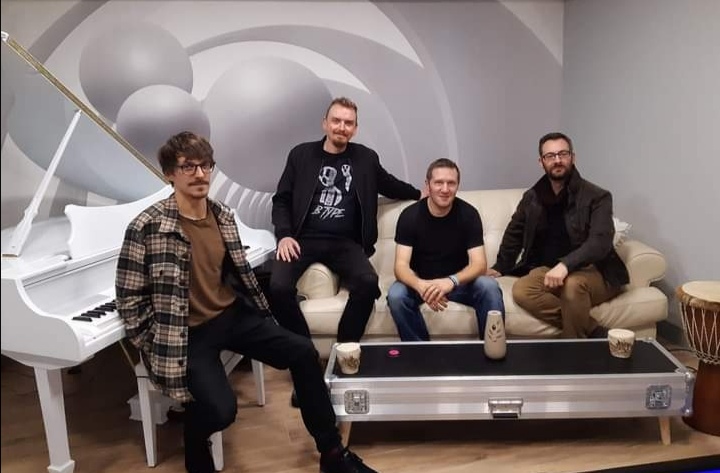
The Nick Gladdish Band. L-R: John Timney (drums, production), Adam Cornell (bass), Nick Gladdish (lead vocals, keyboards, acoustic guitar) and myself (guitars, lapsteel).
I’ll post some more pictures from tonight’s session, as well as further updates, in due course. Until next time…
Welcome back to theGreat Guitarists series. We’re continuing along a jazz theme for now, with a sometimes underrated master of understated single line guitar soloing…
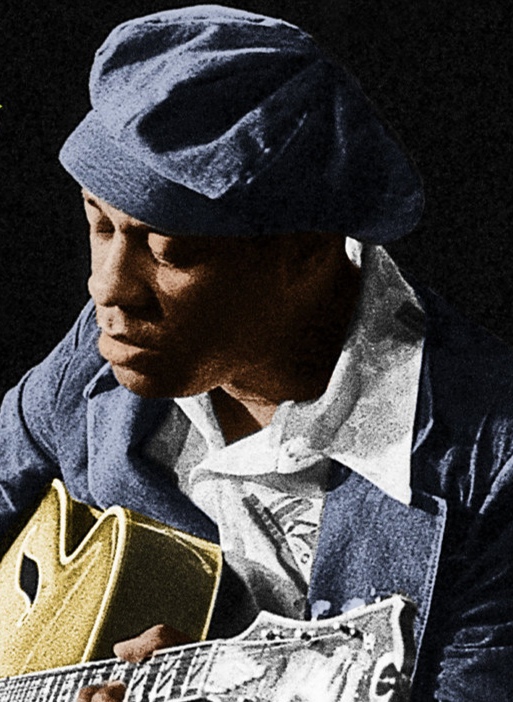
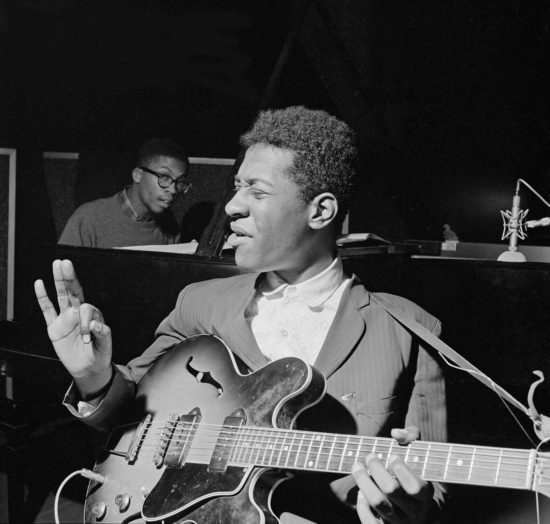
Grant Green
Green was born in St. Louis, Missouri, in 1935, and died in 1979, aged just 43. In his all-too-short career, he played on hundreds of records, including numerous solo titles – almost thirty cuts for Blue Note Records alone. Many of these were played as part of an organ trio (organ, guitar, drums) in a style known as Soul Jazz. This style was sometimes sniffed at by jazz purists, but has since gone on to be something of a cherished gem, and ripe pickings for sampling, especially in hip ho and acid jazz (Read Jorge Cervera’s defence of Grant Green and soul jazz here).
Although less well known than some of his contemporaries, such as Wes Montgomery, his friend George Benson and his main guitar influence Charlie Christian, Green nonetheless possessed a highly recognisable guitar sound, which can be heard in the playing of many guitarists today, myself included. Indeed, his mix of blues, soul and hard bop licks over a funky back beat has become the quintessential sound of upbeat jazz guitar playing.
Equipment and guitar sound
Green most famously used a Gibson ES-330, which is essentially the same shape as the brand’s better-known 335, but with P90 single coil pickups (not unlike an Epiphone Casino). Later on in his career, he played a Gibson L7, Epiphone Emperor and custom-made D’Aquisto guitars, all of which featured similar P90 style pickups. This type of pickup was one of the first kinds added to hollowbody guitars, and Green obviously enjoyed the full, clear sound they provided.
Interestingly, for a guitar player known for his fluid single line style, Green was known to roll the treble and bass entirely off on his amplifiers, to better emphasise the midrange for more bite and attack in his tone – try it with a P90 neck pickup, and see if you can recreate Green’s sound!
Essential listening
Idle Moments (1963) is a great place to start. It’s a slow, contemplative masterclass in cool jazz guitar,and one of my favourite jazz guitar records, along with Midnight Blue by Kenny Burrell (more about that here).
There’s a couple of good options for live cuts, but the recently released collection Funk in France, From Paris to Antibes (1969-1970) (2018, Resonance) captures Green at his best. A few of the tracks see the trio lineup complimented by none other than the legendary Barney Kessel, which makes it essential listening for me!
It’s also worth seeking out some of Greenvs funkier efforts, such as… He also made an interesting album of Latin music (The Latin Bit from 1963, on Blue Note again), in which the main theme (the ‘heads’) were played in the usual samba or bossa nova style, but the solos are swung – give it a listen and make of it what you will!
As a sideman, he played on hundreds of recording sessions. Among my personal favourites are Herbie Hancock’s My Point Of View (1963, Blue Note) and Art Blakey’s Hold On I’m Coming (1966, Limelight). However, each record in Green’s expansive discography features great playing and lead lines that we guitarists would benefit from adding to our repertoire!
Just as Green (and countless other great jazz guitarists) did with Charlie Christian’s recordings, listen, learn, then find a way of making it your own…
As well as using Twitter to announce new projects, or update people on ongoing ones, I sometimes reminisce about ones from years ago, such as this one…
For some reason, I kept thinking of this, and on top of everything else I have planned (post-COVID), I’d quite like to explore what a power trio can do in terms of extended instrumentals (which aren’t based largely around improvisation); something more progressive in nature…
Having played in a rock trio format before, it can be a new challenge to fill the space adequately without the music sounding thin. Conversely, one has to avoid the temptation to stick to the more blues based method of sharing riffs, in union (or octaves) with the bass player.
Bear in mind that I currently have…
3 music therapy jobs
A solo classical(ish) EP to finish
Another Nick Gladdish Band album to finish & tour to plan
My next band project (world/blues/Latin) to start rehearsing
A music therapy case study series to complete by the autumn
A small portfolio of compositions to develop
…and we’re still in a time of lockdown here in the UK, with no concrete sign of progress regarding indoor gigs (although the news today implies that this might change very soon).
Still, if you want something doing, ask a busy person, right?
I love artists who create works that cross the boundaries of genre, style, and in some cases, medium. Most people do.
Others, of course, are faithful purists to their favourite genre. But for the rest of us who take our influences from all manner of avenues, how do we categorise our music?
There’s a good argument that genres are only useful to music journalists and lazy audiences. Why should everything be boxed up and potentially limited by increasingly narrower definitions? However, the key argument for explaining how your music sounds is simple: to build an audience.
Pick a genre (or three)
Truth be told, there is strong chance that your music could probably be catogorised under one of these common genres:
Classical
Jazz
Rock/Pop
Soul
Hip Hop
Gospel
Country
World/roots
Metal
Blues
Indie
These terms are wide catch-all umbrellas, into which various sub-genres fall – just think of all the different kinds of Classical music or Jazz which exist! Try zooming out and imagining where you’d expect to find your music in a retail store. If you feel your music crosses between these larger genres, use more than one – but no more than three.
There exists another category, increasingly referred to as a genre, called singer-songwriter. This usually refers to a pop or indie artist performing acoustically. If that’s you, say so. If you’re in a band and you don’t know where you sit on the scale of rock to pop, and fear losing potential listeners, perhaps stick to the safe option, and go with Indie?
Of course, it can work the other way too. For every Gospel/Soul artist, there will be one solely residing in the musical world of Minimalist Math-Rock. In which case…
Find your niche
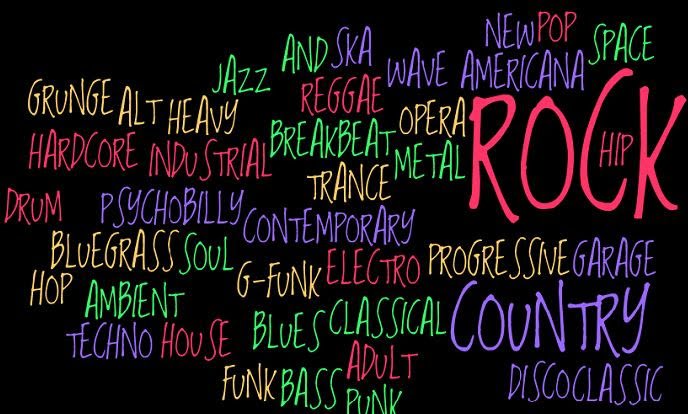
Picture credit: Fossbytes.com
The above image (from an interesting article you can read here) barely scratches the surface of the wide, weird & wonderful world of sub-genres.
You might worry about being too niche when describing your sound, but each of these categories has a huge number of fans around the world. If you insist on being ultra-specific when describing your music, you might as well to tap into existing markets such as these…
Remember: You don’t have to stay in one genre forever
The best artists started out doing one style, usually very well, and growing from there. The Beatles were a ‘beat’ group (guitar pop rooted in rhythm & blues), but they soon went far beyond this. Even the famously ever-changing David Bowie’s first few albums from the sixties were of the classic singer-songwriter + band vibe. Without a base to jump from, you can’t expect to get much further than where you are right now.
True, the music industry is very different now. Artists aren’t given the opportunity to find their voice over the course of several albums. But there is still the option of playing live* to an audience, as well as other bands on the bill.
(*or, should I say, there WILL be the opportunity to play live again once we are all out of lockdown – TH, writing in April 2020)
Regular gigging allows you to work on your songs and develop your sound with each passing gig. It should also bring you into contact with new fans, who will be able to describe your music (in terms of genre) much more efficiently than you may be able to yourself. You never know, they might even invent a brand new sub-genre just for you!












 Tim Higgins, Guitarist
You must be logged in to post a comment.