Companies and apps have a new habit of ‘wrapping’ the last year. The whole thing is a document in your own consumerism, from the songs you listen to the most to how many minutes you spent staring at a screen trying to improve your Portuguese (or is that just me?).
We all buy into it, taking joy from the evidence of our every move online (or at least on our phones) being mined and researched so someone else can profit from it. We even share the findings, further doing the marketing work of these huge corporations for them.
But sometimes, it’s a good thing to look back over the previous twelve months and assess how far we’ve come – and consider where we’re going…
The most important things
Ask yourself the following questions:
What am I most proud of this year?
How did I affect the lives of others?
What made me happy?
What could I have done better?
For me, I feel like 2024 was the year that the original music projects I’m involved with finally got back up to speed. I’ve spent the years since the pandemic prioritising my work as a Music Therapist and live performer. But this year, I worked on two records for dear friends and my new band, Solcade, has had a successful year of shows, with plans to hit the studio at the very start of January next year.
Solcade have been well recieved this year
In terms of live shows, 2024 has felt quite varied. My gigs have been a mix of grassroots slots, concerts and of course, lots of weddings and parties. I feel that I’ve been able to maintain a healthy balance between original and covers gigs recently, and with thirty dates already booked in for next year with a variety of acts, 2025 looks set to continue that trend.
Of course, there have been setbacks, but nothing that hasn’t left me (or the acts I work with) stronger. My therapy work has changed too, with some contracts coming to an end as exciting new opportunities begin. My plan for next year is to build upon these to grow the service I provide to children, adolescents and young people in my region.
Quite a lot of this is still in the planning stages, but if the network of specialist creative therapists I’m trying to establish continuesnto grow, we will be able to reach even more people and help a vulnerable group build the life-changing mental resources needed to lead fulfilling and enriching lives. Wish me luck!
So that’s me. What about you?
The next steps
Now, having asked yourself about the year which is coming to an end, ask yourself:
What do I want to achieve in 2025?
And what do I need in place to make this happen?
As always, let me know your thoughts, as well as your plans and hopes for 2025. My main suggestion would be to look after yourselves and each other.
Go easy on yourself and forgive yourself when things don’t go according to plan – then get back up and carry on.
Surround yourself with people who make you feel as happy and fulfilled and you are trying to make others feel. None of us can get very far through life on our own.
Guitarist at work, live & in the studio
Now, I’m about to set up for me final show of the year – and because it’s a New Year’s Eve party, it will also be my first show of 2025. So since I’ll be busy at midnight here in the UK, allow me to take the time now to thank you all for reading these posts (as well as contributing your comments and messages) and wish you nothing but the best for 2025, and beyond!
Is tone more important than technique? That’s a great debate to have, but not today…
Yet when most people listen to music, it is the tone of an instrument such as a guitar which catches and holds our attention first, so tone is pretty important. But how do we improve our tone? To do this, we need to understand what makes the tone we hear when we play guitar.
Tone knobs. Also available on dishwashers
In this article, I will list the various various factors that impact the tone of your instrument, starting from the last one in the chain before the sound reaches our ears, all the way back to where the notes come from…
Amplification
As the last step in the signal chain, the sounds that come out of your amplifier (or PA speaker if you’re using an amp simulator, etc) if what you and the audience hear. Everything that comes before this will be coloured by the natural sound of the speaker, it’s valves/circuitry and whatever tones you dial in.
It’s so common to see guitar players spending most of their money on a guitar, while skimping on amplification. While it’s certainly true that it’s a good idea to have the best equipment you can afford, that super-expensive Deluxe Strat would actually sound too different to the Squier Bullet Strat if you’re playing them through the same amp.
Image credit: Fender.com
A good amp can adapt your sound. Weaker, thinner-sounding pickups (such as single coils) can be ‘beefed up’, while humbuckers with too much push can be fixed with a mid-range cut. And that’s before we look at overdrive, distinction, reverb and effects such as chorus, flange, phaser, etc, all of which further colour the natural tone of the guitar. There is dangers here, too. Overuse of EQ or effects can lead to something which sounds over-processed, or just plain bad (think of the infamous ‘wasp in a jam jar’ sound attained from too much fuzz and treble).
Luckily, the market is full of affordable amplification options. There are also various digital modelling amps and units that can recreate the classic tones of famous (and incredibly expensive) vintage and boutique amps. To have so many genuinely realistic sounds available in one place, at an affordable price, is a relatively new luxury that all guitarists should be taking advantage of.
Pickups
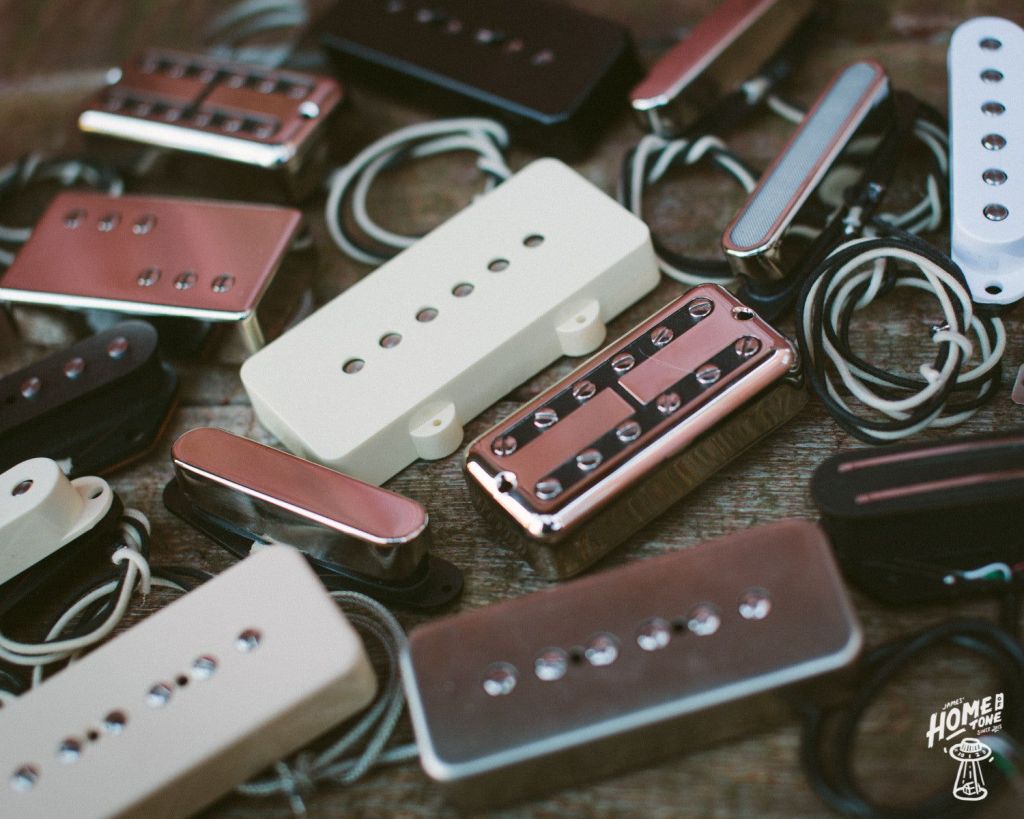
After amplification, the second most crucial factor affecting the sound of an electric guitar is the pickups. These devices, magnets wrapped in wire, convert the vibration of the guitar’s strings into an electrical signal to send onwards in the chain.
I have spoken in earlier posts about the differences in pickup type and how some may be more versatile than others (see the articles in question here and here), but to sum up, keep in mind these basic points:
– The lower the output of a pickup is, the cleaner it will sound as you increase volume – Humbuckers can handle higher-gain settings with much less extraneous noise (hence the name, a reference to their hum-cancelling qualities) – Different types of pickups will naturally sound different (i.e., those made with individual magnet ‘slugs’ for each string, as opposed to ceramic bars which run the length of the pickup); do plenty of research before you commit to buying!
Volume
As hinted at above, some pickups will retain their ‘natural’ tone more easily than others, depending on their strength. However, in many cases, judicious use of the volume control(s) on your guitar can help find the sweet spot in terms of sound. Unless there is a treble-bleed circuit installed within the circuitry of your guitar, most pickups lose a little top end as the volume is turned down. I find that rolling back the master volume on my Strats to around 7 or 8 takes out some of the harsher treble frequencies for a nicer, more rounded-out sound. It also leaves a little headroom to boost your volume and cut-through for lead lines.
Similarly, turning down the gain on the front end of an amp or overdrive pedal can allow for a cleaner sounding boost instead. On a pedal like a Tubescreamer (or the many brilliant clones available), turning down the gain allows you to use the volume to amplify the tone of your guitar/pickups without colouring it too much – and a cleaner sound usually cuts through more effectively than drenching your tone in distortion. Listen to those classic Led Zeppelin and Deep Purple records, and notice how there is surprisingly little distortion on the guitar most of the time. The power comes from the volume.
Strings
We’ve now reached one of the cheapest things which affects the sound of your guitar: strings.
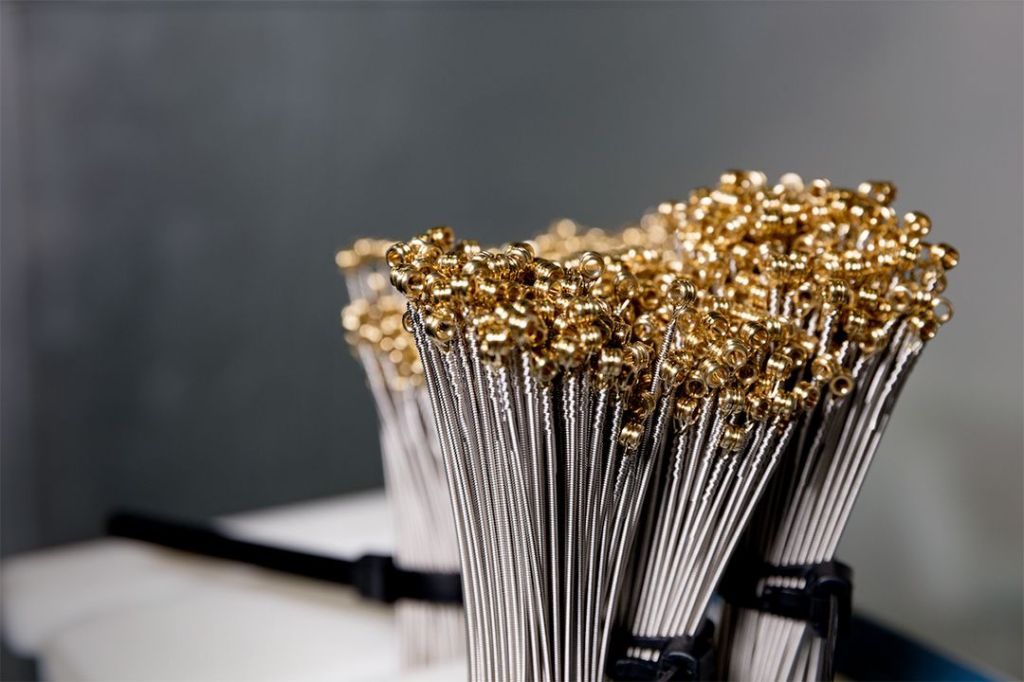
Generally speaking, most people experiment with different thicknesses and brands when starting out as a guitarist, eventually settling on the ones which feel most comfortable under their fingers and break as infrequently as possible. But not all strings are alike. Their material (usually a type of metal or alloy) and various coatings have an effect on how the string vibrates, and therefore how it transfers sound to the pickups. Also, a strings that feel different will result in us adjusting the way we play, perhaps without meaning to.
Image credit: ErnieBall.com
Many guitarists used to believe that thicker strings meant more tone. Think of Stevie Ray Vaughan’s gauge 13 strings and the huge bluesy tone he achieved. Yet also bear in mind that the Texan guitarist used heavy strings because he had large hands and and had developed a heavy-handed playing style; he used thicker strings to try and keep them from snapping all the time (and there’s lots of evidence from live footage of his performances to suggest he wasn’t entirely successful in this aim). Foe a while, I had one of my Strats set up with gauge 11 strings and down-tuned a half-step to Eb (as I have been told the late, great Jeff Beck used to do). This was largely a practical setup for the band I was working with at the time, but any guitar players believe doing this allowed the thicker strings to vibrate a little more ‘loosely’, which led to an improvement in tone. I can’t say I noticed much of a difference in the heat of a live show.
As a counter argument, B.B. King and Billy Gibbons used gauge 8 strings, and still managed to achieve great sounds from their instruments. For Gibbons, this may have been down to the famous ‘pearly gates’ humbuckers on his Les Paul, as well as his amplifier tone. As for the King of the Blues…
Fingers (and picks)
B.B. King would have sounded like B.B. King on any guitar. Indeed, Jeff Beck, Jimi Hendrix, Jimmy Page did always manage to sound uniquely like themselves on any guitar they played. The same can be said of virtually any famous guitarist you can think of, and indeed the rest of us. Why? Fingers.
The most overlooked area affecting the tone of your guitar (and following the rough cost-order of this list, the cheapest!) is the parts of your hands which make contact with the strings and create the sounds in the first place. This goes for either hand, but the fretting hand is the one which is holding the strings and notes in place.
Obviously, there can be a huge difference between picking with your fingers or using a plectrum, and the type of material you use for picks should be taken into account and experimented with until you find what works best for you. However, for your fretting hand, there’s not much we can do to change how this affects the sound overall. The good news is, that’s okay! You have been using the same hands since first picking up the instrument and your sound will always take this into account, if you didn’t realise you were doing it. Embrace who you are! Also, as your fingers are the first stage in the ‘sound chain’, there’s plenty of ways to change the sound as we go through pickups, effects, amps, etc… Take some time to explore the huge range of options and see what works for you!
From all of the elements described above, which one would I single out as the most useful for tone shaping? That’s a tough call, and ultimately a very subjective topic. However, for me, I think volume is the most underratedelement in the signal chain, and one I’ve taken years to master in terms of my own guitar sound and playing.
In my early days of playing guitar, I sometimes strove to change the sound of my guitar tone, frustrated that I could only go so far without seriously reprocessing the sound into something which might end up sounding synthetic. Yet as I performed live more often, I noticed that out of all of the comments people would make to me about my playing, tone was only ever mentioned in a positive light (the same could not be said for technique, unfortunately). Records capture faithful reproductions of the sounds I started with when tracking them. No one has ever said I have a bad tone. The only person who (sometimes) wanted to change it was me.
One of my modified Stratocasters
Maybe guitar players worry about this too much? Maybe we’ve been conditioned to overthink our tone because it serves the interests of the musical instrument industry? Thousands of companies, from instrument makers to amplifier manufactures, and creators of effects or inventors of accessories, rely on our need for more gear, to finally find that one product that will fix the problem in our sound. But it rarely does. Luckily, there’s always another thing to buy…
I’m sometimes prone to this line of thinking too. That’s the side-effect of living in a capitalist economy, I suppose. I’s never been easier to get purchase anything we need, but we have to be careful not to lose ourselves in the process, and hold on to the simple joy of music-making which got us started in the first place. I came to be happy with the sounds I produce from my fingers. I think it’s had a positive effect on the music I create. It can do the same for you too. Just remember to pay attention to the various stops along your signal chain to ensure everything is working in the best possible way for your sound, and you won’t go far wrong.
I an article earlier this year, I weighed-up which two guitars in my collection would be the ultimate top two – the two I could take along to any gig any be comfortable they would cover (almost) any style of music being played. This is especially useful for me at studio dates, where surprise requests can often occur, and I don’t usually have capacity to take my entire guitar collection along to every session!
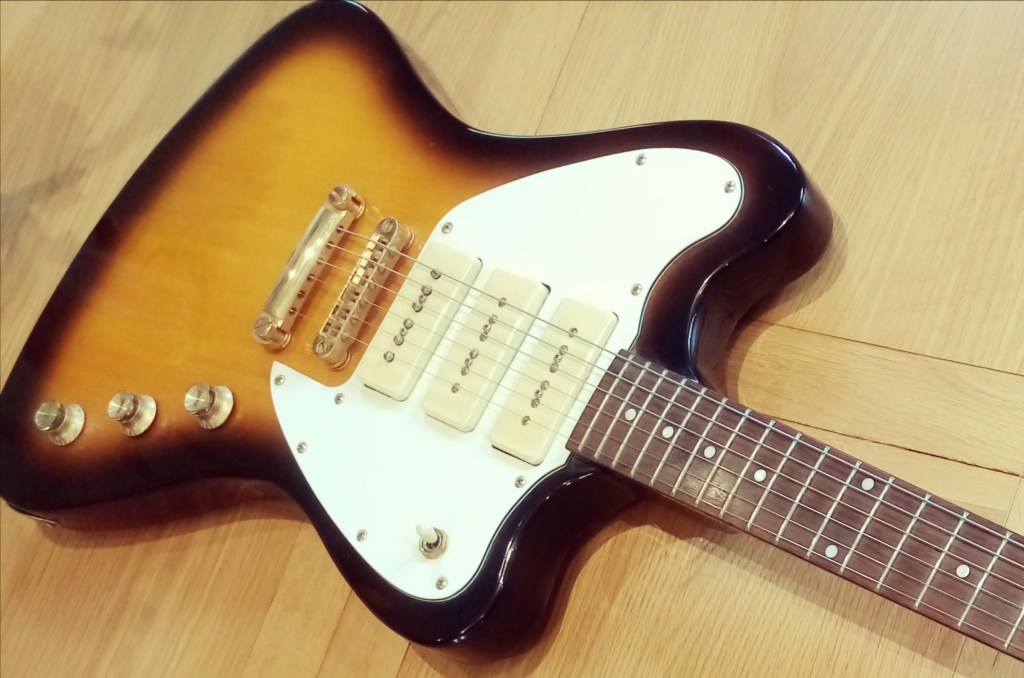
In the end, after examining different types of guitar (differentiated largely by their pickups), I concluded that – for me – one of my Stratocasters and a p90-type guitar (in my case this Gould Stormbird) made a winning combination in terms of tones and range of genres. With these two, I could cover everything from jazz and funk to classic rock and noisy indie, and everything in-between.
But what if you could only take one guitar out? Which one would it be?
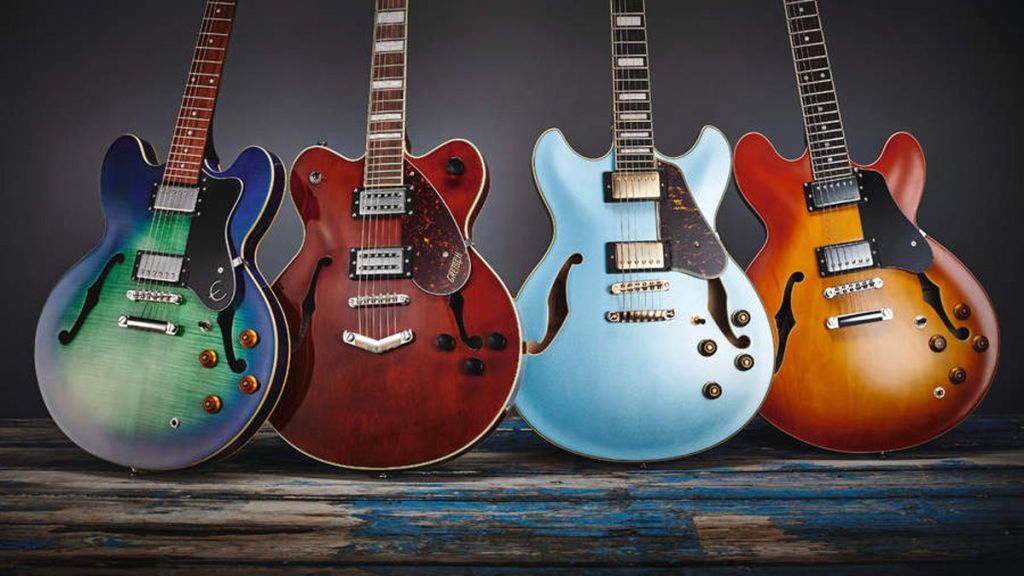
In the original post, I sang the praises of the 335-type guitar, which only just missed out on making it into the ‘top two’. I love my own 335 copy, but I felt more confident taking a Strat to a gig with multiple (or unknown) genres on the go, mainly because the single-pickup solid body cleans up better, is far less prone to feedback onstage (especially when playing heavier styles), and offers more tonal options. Also, I think the fact that I’ve played Strats since I was sixteen likely played a part in my thought process. I sometimes take a job where I don’t know exactly what I’ll be asked to play until I arrive, so familiarity with an instrument I trust is crucial.
However, I might have been a little unfair to the 335, and feel like I’ve changed my opinion in the last few months. I’ve certainly been using one as my main guitar for 80% of my gigs this year so far, and it performed perfectly at my most recent studio bookings – but would I be happy with it as my only guitar for any gig?
Let’s look at the three types of guitar by pickup type again, with a summary of what I use them for, as well as a few examples of where I use them professionally.
Single-coil solid body guitars (Strat, Tele, Danelectro, etc)
Classic guitar tones – bright and clear with lots of twang or spank to their sound Sound great overdriven, but retain some of their original character Sit well in a mix with other instruments/guitars Reliable, solid instruments which are easy to mod Perfect for: pop, funk, country, blues, rock, indie Can be noisy, especially in high-gain settings
P90 solid body guitars (Stormbird, Some PRS models, some Teles, etc)
Beefed-up version of a classic single-coil sound Beautifully warm, yet still clear, distorted sound Great ‘best of both worlds’ between a single-coil and humbucking pickup Covers most styles (but volume has to be rolled back slightly for cleaner sounds) Can be very noisy in certain settings
Humbucker solid body guitars (Les Paul, SG, PRS)
The classic overdriven guitar sound, warm but aggressive Warm, full sound for jazz (with the volume rolled back a little) Perfect for: Rock of all types, jazz and blues Not as good as single-coils for those iconic glassy clean sounds
A humbucking guitar with a slightly airier sound Lighter than a Les Paul (to save your poor back!) Capable to playing most styles imaginable Perfect for: jazz, funk, soul, blues, classic rock Neck & Bridge pickups together gives a wonderful funk tone Prone to feedback onstage, especially in higher-gain settings
Picture credit: Music Radar
Final thoughts
Which would I choose? I still couldn’t say for certain. It depends so much on the gig in question, but if I wasn’t sure what I was going to asked to play, I expect it would be the Strat or the 335 I’d be reaching for. I guess it comes down to a choice between a solid body or (semi) hollow bodied guitar; whether I’m seeking the thicker snap of the Strat, or the airier sound of the 335.
And of course, bear in mind that we’ve only been discussing electric guitar options here – if I was really unsure about the requirements for a studio date, I’d have an acoustic packed into the car too!
But what about you? Obviously, what works for me doesn’t necessarily work for everyone, which is why I’d love to hear your thoughts – get in touch!
As the rain sets in here in the UK, for what looks like a prolonged period, it seems that summer is well and truly over.
The last few months have been pretty busy, so I thought I’d quickly let you in on what I’d been up to…
…aside from the usual, that is
My main working week is still taken up with the music therapy service I provide in a range of settings. Most of my therapy work is with children and young people, and one of the best things about my job is seeing how music helps to communicate feelings which, for some of my clients, can be hard to articulate with words. It makes the more difficult aspects about this work (such as the seemingly endless stream of reports) worthwhile.
Wedding season is coming to an end
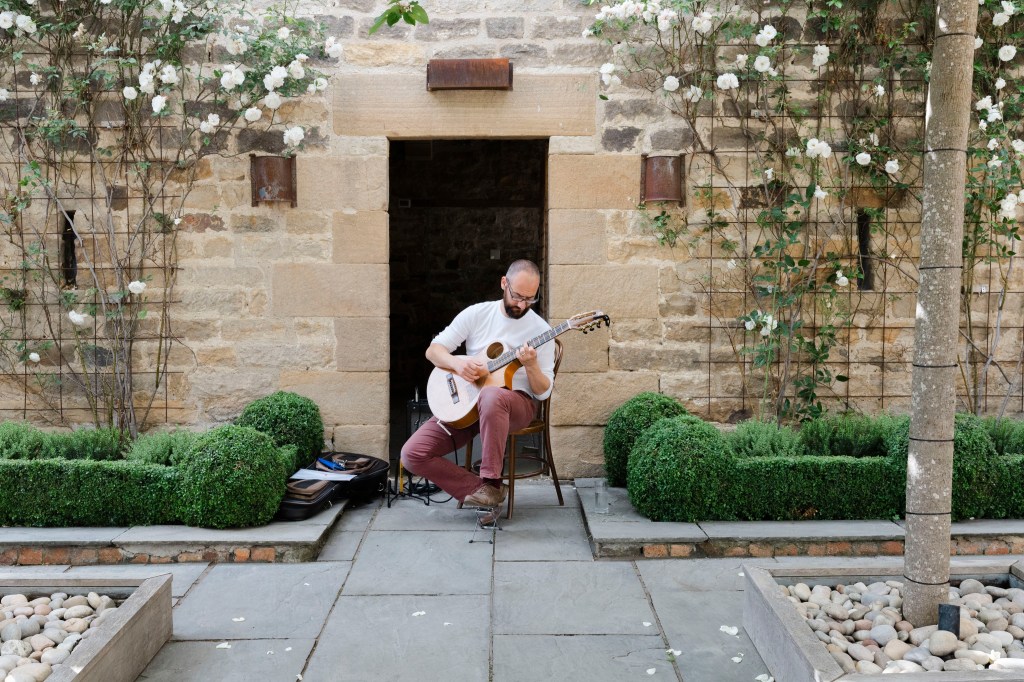
In terms of live music, it is the covers bands that continue to make up majority of my professional output. However, I enjoyed playing more solo guitar gigs, performing at wedding services and receptions.
Credit: Imogenkate Photography (2023).
It’s nice to see this type of work coming back through into my diary again. After Covid, I feared that live classical guitar may have been an expense too far for couples planning their big day, but this summer has thankfully proven my fears to be unfounded. I’ve already got several dates in my diary for 2024 (if you are looking for a solo guitarist for your own big day please get in touch via my contact page).
Nick Gladdish is recording his next LP
In August, Nick called his usual crew into the studio to lay down baking tracks for his new album, he follow-up to 2021’s Last One Get The Lights. Although we all (Nick included) expected this record to feel like a companion piece to LOGTL, we soon discovered a slightly more rock-orientated edge to the arrangements. This may be a result of the tighter arrangements, as Nick told us he was consciously trying to keep the tunes on this record shorter than his usual fare. With John Timey back in the joint producer/drummer chair, and the brilliant Adam Cornell on bass guitar, this felt like one of the smoothest recording sessions I’ve ever been involved with.
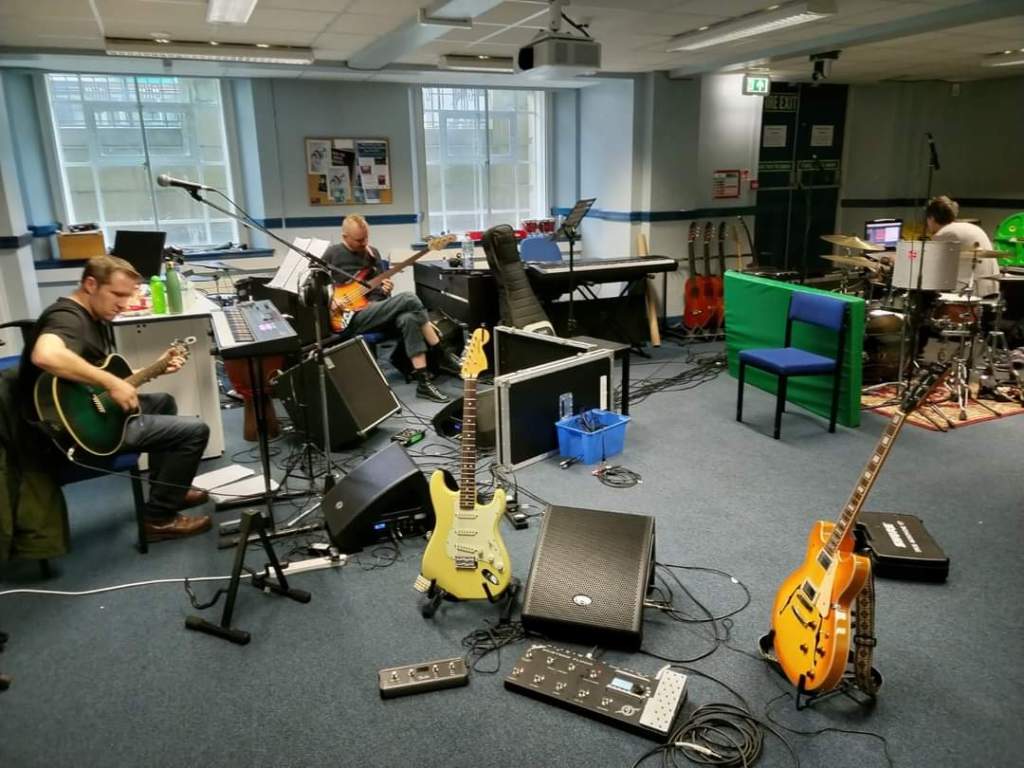
NG Band in-studio.Positive feedback?
The results so far are promising; ten pop-rock songs about love, loss, disillusionment and corruption. I certainly enjoyed writing and layering rhythm guitar tracks. There’s not many guitar solos this time around, but there is some interesting experimentation going on, from drowning out the end of one song in multi-tracked guitar feedback, to a bluesy ukulele solo on the opening track! Next come the overdubs, editing and mastering…
New original project finally ready to launch
Finally, despite various obstacles thrown at me, I am pleased to announce that I have a new original music project about to start performing live. Solcade began as an outlet for music I was writing which didn’t fit anywhere else – too jazzy, bluesy or indeed too varied for many of the ensembles I have been working with.
After recruiting a stable five-piece lineup, the project quickly became much more of a democratic process, and the music is all the better as a result. With each member having an equal credit in writing and arranging, everyone involved has been bringing their ‘A game’ and making some amazing contributions. If you’re a fan of psychedelic funk, Jazz, soul and rythym & blues, then watch this space for upcoming details about our forthcoming debut record (likely scheduled for completion & release in 2025).
We have some live shows coming up in the autumn, too. Follow us on Instagram to hear the latest updates.
But what have you been up to?
Let me know! Also, I’m planning on writing a Q&A article so if you have any guitar, composition, music therapy or psychotherapy-based questions, get in touch and I may well include it!
2022 has come to a close and I’ve had a stinking cold and been on the verge of losing my voice for the last few days. My final gig of the year was a New Year’s Eve show with Nick Gladdish, where I luckily don’t have to do much singing!
Next year brings more gigs of various kinds, on top of my ongoing Music Therapy work. I’m also looking forward to getting back into the studio to rehearse and record my old pal Nick’s next album at the start of 2023.
Speaking of studio time, next year will also see a couple of new projects from me, including a few releases of original instrumental material, both for solo guitar (under the working title Sketches) as well as some jazzier stuff with a small group of friends (still working out the details for that one). These pieces have been clogging up my drafts folder for ages, so I plan to record and release them before the end of 2023, meaning that I never have to think about them again!
I’ll keep you all updated via this blog. I’ll also try to keep up the musical articles, including more entries to the Great Guitarists series. In addition, keep an eye out for my round up of my favourite books read in 2022, coming sometime this month.
So enjoy the rest of your festive season, look after each other, and all the very best for the coming New Year. See you at a gig soon…
Hi all and welcome to 2022! You may have noticed that things have been a little quiet on this blog for the last few months. This is for a number of reasons, but don’t panic – I’m fine, just incredibly busy! Expect more posts in this new year, as well as updates on exciting new projects I’ve been working on. In the meantime, here’s a slightly rejigged post on New Year’s resolutions from a few years back. I hope you enjoy it! Until next time...
As a general rule, I don’t believe in New Year’s resolutions. My philosophy is that changes can be made at any time, so why wait until January?
However, there is something about the end of a year which causes us all to reflect on the previous twelve months and start focusing on our plans for the next twelve. For us working musicians, this would usually mean that we have reached the end of one of our peak times, the ‘Christmas Party Season’. For over a decade (pre-pandemic), I ended the year with a NYE gig. However, for obvious reasons, things have been a little quieter by comparison, which gives us time to ponder on the gigs we’ve enjoyed, what we didn’t enjoy, and what we hope to change for the new year.
So, with that in mind, here are a few of my suggestions for guitar-related resolutions for musicians looking to grow as better musicians in the coming year:
Learn a new style
Always wanted to start learning those jazz chord voicings? Perhaps you keep meaning to work on your reggae & ska rhythm playing? Or your country picking? Blues slide? The list goes on…
Take the time to work on these new genres & styles of playing. We are very fortunate to live in a time where we can access a world of free tutorials on the Internet, or videos in YouTube. However, don’t rule out the possibility of taking lessons to focus on specific areas – working one to one with an experienced guitar tutor does wonders for improving your playing!
Mix things up
Learning a style doesn’t mean you have to abandon all you know & travel the world playing strictly Django/gypsy jazz for the rest of your life (though I imagine there are plenty of worse ways to live)!
Have you found that the majority if your playing has been on acoustic guitar? Trying swapping to electric more often (or vice versa). Do you always practise at the same time of day? If possible, can you change to a different time? Your brain operates differently throughout the day – you may well find yourself going down very different musical avenues simply by switching from a morning to an afternoon practice session.
Sometimes learning to play a song you are very familiar with in a new style works brilliantly in helping your playing. Not only do you freshen up material which might be getting a bit stale, but you’ll have a safer means of exploring new options in your guitar playing.
One area of guitar playing I can’t recommend highly enough is solo performance. By this, I don’t mean the lead guitar solo in a song, but playing the melody, harmony, rhythms, etc on one unaccompanied guitar. It’s something a piano player wouldn’t think twice about, but I’m frequently amazed at how many guitarists simply haven’t tried it properly! If you’re unsure about how to start doing this, there are several books, online tutorials (like this blog!), and of course YouTube videos to help inspire you. Which brings us nicely in to…
Widen your horizons
Music is a language. Even when playing on your own, you are creating sounds for yourself to hear, effectively taking to yourself. But there’s only so long you can do that before you end up going round in circles, or going crazy!
Set yourself the following challenge for the year: discover a new artist each month. Learn from what you hear. Take examples of their playing & try to incorporate it into your own. It can only make you a better guitarist! The beauty of this is that you don’t have to focus on other guitar players. In fact, it might be better not to! Many of the jazz & Blues guitarists I admire take inspiration for their improvisational playing from horn players, translating their melodies & ideas into their own instrument. Try it!
It also helps to get out amongst other musicians, jam, join or start a new band, particularly in a new style. It also goes further than this – always wanted to sing while playing? Start! Learning a new instrument? Do it! The best way out of a rut is to climb upwards!
Get your music ‘out there’
…And if you’re meeting new musicians & launching new projects, you’re already doing this. Go to more live gigs and make sure you perform live yourself more often (when you can), especially new and original music. I know all too well how easy it is to get stuck in one ‘world’ for longer than you might like, finding it hard to make the time to do other things, but I promise it’s worth the effort.
Remember to have fun while you’re out there expanding your guitar playing horizons!
To finish off, allow me to wish you all the very best of health & happiness for the New Year! Let’s make 2022 – like every year – a great year for music, for the guitar, and for you!
Please do get in touch to tell me what your own guitar/music new year resolutions are, and stay in touch to let me know how you’re getting on with them! Tim xx
Well, we finally got there. After delays and set backs, date changes and continued COVID cases making life difficult for all of us, The Nick Gladdish Band finally reached the day of their album launch gig.
The launch gig, on the 12th of September 2021, brought a year’s worth of writing, recording, mixing, printing and promotion to a close – at least, until I get to work finalising our next short tour, scheduled for Spring 2022.
Also playing were local singer songwriter Jenny Lascelles, performing a beautiful solo set from the piano, and The Baltics, a new indie group on the Newcastle local live music scene. Both acts were well received and it was great to be at a live show again. Our only other performance since the start of the pandemic was a warm up show in Stockton in August, in support of another talented young band, Gone Tomorrow. Safe to say the next generation of bands looks full of promise…
As for our set, we had a blast! We’d spent the best part of a year waiting to play the new songs live and our hour onstage seemed to fly by in a blur of smiles and camaraderie. Personally, I thought the guys in the band played a blinder. If there were any wrong notes played that night I certainly didn’t hear them.
Nick Gladdish onstage (credit: John Timney).
The album is available in full on Band camp here. We’d love your support!
We’re having something of a break for the rest of the year. Everyone in this band has other projects to focus on, and it gives Nick time to write the songs for the next album (he could release a new album each year if he wanted to – I don’t know how he does it!). In the meantime, stay tuned for news of other fun things happening soon.
The Nick Gladdish Band (L-R): John Timney, Nick Gladdish, Adam Cornell, Tim Higgins & Shannon Powell, after the album launch.
You might have noticed that recent posts have featured poems (especially Haiku) rather than my usual guitar or music-related topics. Well, you don’t have to worry about this site turning away from it’s main focus. For one thing, my efforts aren’t very good!
Due to COVID19, almost no one is gigging at the moment. Since March, I have managed one socially distanced gig in a garden with the Nick Gladdish Band, but otherwise have found myself with more free time on my hands, particularly on weekend evenings. All future gigs and musical projects are postponed. Also, not having much means (or space) to embark on live streaming or recording projects from home, I found my creative juices were becoming pent up, and seem to have manifested themselves via written ideas, rather than musical ones.
I decided not to be embarrassed about my poems any more
I recently discovered that a good friend has a passion for a very niche form of short story writing, which was as pleasing to learn as it was unexpected. The fact that I was happy for my friend made me realise that I shouldn’t have any shame in putting my own silly little rhymes and Haiku out into the world.
I enjoy writing them
Surely that’s the most important thing? I mentioned in my recent post about using the recent lockdown as a reminder to do the things you enjoy, when you can. For me, this is one of those things. Like a Sudoku, they serve to keep my sharp, in a creative sense, until I can start rehearsing my own musical compositions and playing gigs again.
This blog will still continue to be about guitar. music, music therapy and all sorts of arts-related subjects. Writing these articles are another way of channeling my creative urges, and if someone learns a little extra knowledge as a result, fantastic. In time, I will start to announce new tours, projects, albums, etc, as they start to emerge from our cultural hibernation – but expect to see the odd poem thrown in there as well, from time to time!
This year has seen the most use of the word ‘unprecedented’ that I have ever seen, and probably for good reason.
Do what you can now, and if you can’t do it now, plan for later
Getting started on something can often be hard. During lockdown, I’ve found myself exhausted after a full day of childcare, and in those few rare moments I had for me, working on a new composition seemed ridiculous.
Do what you can, in small steps. In fact…
Make a list
List what your daily tasks are, as well as goals for the medium term (i.e., the next few weeks) and long term (post-lockdown, or even post-COVID altogether). It will help you focus, and evaluate what is important.
List making sure was already an occasional habit of mine, mainly because I am aware of my own poor short-term memory. Going forward, I’ll be sticking to daily lists, as they seem to have made me more productive than when I worked from home in pre-pandemical times.
Speaking of lists…
Bring back the ‘weekly shop’
We must have gotten out of the habit of doing the ‘big shop’ only once a week. Lockdown forced us back into this habit, and although it somehow felt more expensive at first, it seems to be better value across the week, especially when it was harder to nip out on a whim for a treat. Give it a try, if you can, and see how it works for you.
Don’t compare yourself to others
Whether it’s FOMO (fear of missing out) or a kind of professional jealousy when another person seems to be working fine at home – you know, the one with all the recording gear in their spare room (or their parents) and no children.
Social media only shows you what people want you to see. Most of the time, it only shows what those people think everyone else wants or expects to see.
Some of it is real. Some of it is less than genuine. All of it is someone else, in a different set of circumstances (however slight that might appear).
Beware of fatigue
Some of my friends have been locked down at home by themselves, working from one room during day, then zoning out in front of the TV in the evening. They told me that even committing to an online quiz via Zoom felt like too much effort. Staring at a screen all day, even for leisure or socially distant socialising, is incredibly tiring. Give yourself time to reset, and do absolutely nothing. Just remember when you do…
Don’t be to hard on yourself
If the fatigue did’t get you, the guilt surely did – right?
This is connected to my earlier heading, Don’t compare yourself to others, but it’s worth looking at again from a slightly different angle.
We’re going through unprecedented times. No one in our lifetime has experienced this, on this scale, before. Survive. Look after yourself and those around you. Don’t feel guilty for doing less.
In fact, don’t feel guilty at all for how you are managing to get through a pandemic.
Do what you love, if you can (and if you can’t make a plan for doing it in the future)
You might have noticed that a few of my recent posts have been short Hailku form poems, or observations from walks with my family. I enjoy writing them. Since I can’t perform live at the moment, they give me some creative output while everything else is on hold.
If you have recently discovered a new passion, embrace it and enjoy it. Share it with the world. And if COVID19 is stopping you from doing what you love and enjoy (as it has for me with my love of playing guitar live), make another list; this time, make it a plan to get your passion up and running again soon, once all of this is – hopefully – a distant memory of an unpleasant time, now disappearing.
Best of luck, and let me know how you get on! Also, let me know what lessons you have learned from the last few months of lockdown by leaving a comment or getting in touch via my usual channels – I look forward to chatting to you!
As well as using Twitter to announce new projects, or update people on ongoing ones, I sometimes reminisce about ones from years ago, such as this one…
For some reason, I kept thinking of this, and on top of everything else I have planned (post-COVID), I’d quite like to explore what a power trio can do in terms of extended instrumentals (which aren’t based largely around improvisation); something more progressive in nature…
Having played in a rock trio format before, it can be a new challenge to fill the space adequately without the music sounding thin. Conversely, one has to avoid the temptation to stick to the more blues based method of sharing riffs, in union (or octaves) with the bass player.
Bear in mind that I currently have…
3 music therapy jobs
A solo classical(ish) EP to finish
Another Nick Gladdish Band album to finish & tour to plan
My next band project (world/blues/Latin) to start rehearsing
A music therapy case study series to complete by the autumn
A small portfolio of compositions to develop
…and we’re still in a time of lockdown here in the UK, with no concrete sign of progress regarding indoor gigs (although the news today implies that this might change very soon).
Still, if you want something doing, ask a busy person, right?









 Tim Higgins, Guitarist
You must be logged in to post a comment.