Iconic Northumberland landmark, The Sycamore Gap, has been destroyed. Vandalism believed to be the cause.

Poetry & Writing

The residents of Northumberland, and fans of the county’s stunning scenery around Hadrian’s Wall, woke up to devastating news this morning, as they discovered that the Sycamore Tree nestled in a dip along the wall near Twicebrewed has been felled.

The tree, which led to the spot it stood in becoming known as The Sycamore Gap, was discovered on it’s side, lying across the ancient ruins of the Roman Wall, by Amanda Marks, an author who happened to be staying nearby. Her Facebook post (below) soon went viral among local interest groups focused on the Wall and local towns of Hexham and Haltwhistle.

Pictures courtesy of Amanda Marks, Author (via Facebook.com).

Believed to have been 300 years old, the Sycamore tree (Acer pseudoplatanus) is the surviving member of what was once a small cluster of trees in that spot along the Wall, the ancient border between Roman Britain and Scotland. It was named ‘Britain’s Favourite Tree’ in 2016 and was the subject of countless photographs, both amateur and professional. You can read more about history of the tree here.

The tree became a much more famous landmark following this scene in the 1991 blockbuster Robin Hood: Prince of Thieves, a Hollywood retelling of the Robin Hood legends starring Kevin Costner, Morgan Freeman, Mary Elizabeth Mastrantonio and Alan Rickman.

The film brought even more tourism to an already popular spot for walkers and fans of Romano-British history.

Copyright Warner Brothers.

At present, it is claimed hat the tree was damaged by the winds from Storm Agnes, which blew through the region on Wednesday night and into the early hours of Thursday morning. As a result, the tree may have had to be cut down for safety purposes. Yet looking at the pictures of the felled tree above, many argue that the truck is not showing any signs of storm damage. In fact, the only damage that CAN be determined is the very clean chainsaw cut running through the centre of the trunk.

Furthermore, several local residents are questioning why the tree has been left lying on top of the Wall itself? Historic England, who manage and maintain the sections of Hadrian’s Wall which remain, have long asked walkers and visitors to refrain from walking on to of the wall itself, to prevent further wear and damage to the monument, and the route has more than one sign reminding people of this fact.

Consequently, many believe that the tree has bee cut don in a mindless act of vandalism. As soon as more information becomes available, I will update this post.

Update (5th of October 2023): It has been confirmed that this incident was a deliberate act if vandalism. Local police arrested a 16 year old boy and a man in his sixties in the days following the felling. Both were released, without any charges being pressed at this point, and their investigation continues.

Whatever the reason, it’s a truly sad day for Northumberland. Already, the loss of this iconic tree has provoked sadness and rage amongst those who live close to it, and those who have walked past it on their route along the Wall. Hopefully we will find out exactly why this tree was felled, and if it was a mindless act of vandalism, then suitable measures are taken.

Trees were an important part of Celtic culture (indeed, the alphabet system used trees to differentiate and help organise their letters). In cultures all over the world, trees play an important part, from the Trees if Life & Knowledge in the Garden of Eden to the World Tree in Norse mythology. I believe trees have continued to play an important part in our psyche, hence the huge outpouring of grief in the local area and around the United Kingdom, and even among fans of Hadrian’s Wall around the world.

What happens to the felled tree now, and what might replace it at the Gap itself, remain to be decided. Memories can be shared at a special room set up at The Sill, a local visitor centre very close to the site of Sycamore Gap. More information can be found here.

Picture credit: Simon Bradfield.

2021 in books (October – December)

Books

Here we are, racing into yet another new year already! I hope everyone is settled into their routines and is tackling January as best as they can.

Last year seemed to get busier as we progressed through to Christmas for me. Some of it therapy related, some of it music related (on that note, keep your eyes peeled for a new announcement by the end of the month about an exciting new project). It seems like reading time was well and truly diminished. My New Year’s resolution is to always make time for reading! Nevertheless, here are my customary reviews of the titles I did manage to read from October to the end of the year…

Child I by Steve Tasane (2018, Faber & Faber)

Lauded novelist and performance poet Steve Tasane is the son of a refugee himself. He wrote this story to highlight that which us desired by all children: the want to beling;the want to not be hungry”; the want “just to be able to laugh and play”.

The novel, aimed at young adults, focuses in a small group of unaccompanied children in a mud-soaked refugee camp. It is a sparse, poetically written and moving tale about children without any proof of identity, stateless and lost. But what caught my eye was the presentation of this book, starting as it does right at the beginning, on the very front cover

Such an unusual stylistic choice shouldn’t have caught me so off-guard, but I found myself a page or in before I realised it wasn’t merely a text-heavy cover page. Yet, it makes sense. Why would a refugee used to precious few resources waste paper?

Leah Price wrote about the layout of books in her book about books, reviewed here. Similarly, this short story (just 186 pages) certainly made me reconsider the accepted form most of our books are packaged in, and nowadays taken for granted. Why exactly do we need those introductory leaves in the same order each time?

However, the real thought-provoking issue isn’t the format in which the text is presented but the way it gives life to paperless, and in this book, nameless (each child is assigned initials, used throughout the book, as the authorities are unable to confirm their real names), children such as Child I, our eponymous narrator. This brief but beautiful book is not just for young adults, but for all.

Confronting the classics: traditions, adventures and innovations by Mary Beard (2013, Profile)

Following last month’s special instalment on Roman history titles, I found myself picking this collection of essays off the shelf of a local charity shop. And once again, it’s not a typical book. Rather, it is a series of Beard’s book reviews from the last couple of decades, collated here along with her ‘manifesto’ on whether the classics have a future, and her rationale for using reviews a means of widening historical debate. On that score, Beard will find no argument from me – as one who publishes succinct reviews of every book I read every quarter, who am I to judge?

In previous installments, I have recommended essay collections. I find them an enjoyable way to learn something on a subject where an entire book might dissuade you from reading about it altogether. They are also perfect for shorter time frames, where one chapter or subject can be finished in one sitting. In this collection, Beard praises, critiques, questions and in some cases outright savages the work of her peers,but maintains her vivid style of wit and enthusiasm throughout. She regularly highlights how source material can be selectivity interpreted when authors are attempting to make a particular argument, forcing one to rethink how we read history.

After reading Beard’s reviews, I came away with a very good sense of what the original book was getting at, without having to read it. In a sense, this books gives you over thirty for the price of one! Even the most casual fans of classical history should cast their eye over this collection.

The Monk of Mokka by Dave Eggers (2016,)

I actually read this over the summer, but as it was the only book that wasn’t in some way related to Roman history, I decided to hold back my review until this installment.

Eggers brings us a tale on behalf of Mokhtar, a Yemini raised in San Francisco. Almost through chance, an aimless Mokhtar develops a passion for coffee and sets off on a mission to bring coffee from Yemen back to the global market – just as civil war breaks out in his homeland. As well as learning about the process the beans go through before they reach our cups, we follow Makhtar’s attempts to escape the country, not only with both his shipment of coffee beans, but with his life.In all honesty, the book is propelled by the story. The narrative is engaging where the writing is sometimes not, and it is string enough to keep one reading. Recommended mainly for coffee aficionados. You can read more about Mokhtar and his foundation at his Port of Mokha website.

Scandinavians: in search of the soul of the North by Robert Ferguson (2017, Head Zeus)

Ferguson looks back through the history of the Swedes, Danes and Norwegians to draw out what links them and what gives them their unique cultural personality. These dives into history are intersected with vignettes from the author’s own life, having travelled around and lived in various parts of Scandinavia in the last five decades.

Ferguson seeks to ascertain the origins of the Scandinavian character. In terms of the ‘brooding melancholia’ one might associate with the land of long winters nights and Scandi-noir drama, he points to various moments in their history, from the cultural drought brought about by Sweden’s reformation in the medieval period to the time of (playwright) Isben and (artist) Munch and their creative work full of intense angst. Ferguson examines not just the culture itself, but the effect on how outside nations perceive these three separate but interlinked nations.

Ferguson certainly a few interesting arguments. However, there doesn’t seem to be a definitive conclusion, and the book feels somewhat unfinished as a result. Worth a read for those interested in Scandinavian culture and history. It also highlights a few interesting locations to visit if you find yourself travelling there anytime soon.

My favourites from 2021

I was surprised by how much I enjoyed the Themis Files trilogy. I recommend it to any fans if science fiction looking for something a little different. I also enjoyed and recommend Yevgeny Zamyatin’s distopian tale We. These two were standouts in another good year of reading (both reviews can be read here).

I have noticed that I have shied away from music books in recent years, perhaps as they represent something of a busman’s holiday. However, there are a few music titles making their way into my to read pile along all the history and fiction, so watch this space…

As always, let me know what you’ve been reading, as well as your favourite books of 2021. In the meantime, stay safe and happy, until next time…

2021 in books: Roman history special (July-September)

Books

Well, here we are again. This summer has been very busy and at times, very difficult. But there were books, just not as many as I liked. I didn’t mean to take such a deep dive into Roman history in the last few months, but the first book on my list set me off down a path where the (rare) free reading time I had over the summer was largely spent in the Mediterranean past…

Ancient Rome: the rise and fall of an empire by Simon Baker (BBC Books, 2006)

Something of a primer for those new to the subject, this book nonetheless features plenty of interesting information for everyone. Originally published to accompany a BBC series, Baker moves from one period to another, with little linking these areas of focus, which can feel a little disjointed at times.

Baker devotes each chapter to one life in particular, such as Julius Caesar or Constantine. Here, we see a classic example of the Great Man theory of history, in which stories of the past are told through the prism of one man. The downside of this is that readers can be left with the feeling that these individuals were predestined for greatness, which is almost never a forgone conclusion, and indeed only a stance that one can take when looking back on a life that has long since ended.

Nowadays, I prefer books which can take into account the lives of the society in which these so-called ‘great men’ were able to rise to power. Luckily, the following titles have tried to steer more closely to the ‘bigger picture’ approach, to varying degrees of success…

Rubicon: the triumph and tragedy of the Roman Republic by Tom Holland (2003, Abacus)

This one was a welcome re-read. Rubicon is one of my favourite books on Roman history, and Holland one of my favourite historical writers. This books centres in the era Ancient Rome moved from a republic almost half a millennium old to a dictatorship, then empire under the rule of one man for the first time since their hated olden days of kings.

Interwoven into this narrative history are the letters of famous orator Cicero, accounts of the civil wars that gave rise to Augustus (Rome’s first ever First Citizen – Julius Ceasar was only ever ‘dictator for life’), the surrounding empire, wives, slaves, lovers and celebrity chefs. There’s humour and reasoning beyond the usual ‘dates & battles’ format many of us might be used to in history books.

Holland has a knack for presenting his well researched stories in an engaging manner (I have previously reviewed one of his shorter books on Atherstan of England here). However, I mainly read this book again to refresh myself of the historical circumstances in which the next book commences…

Dynasty: the rise and fall of the house of Ceasar by Tom Holland (2015, Abacus)

Rome’s shift from republic to monarchy-in-all-but-name was more piecemeal than some might think. From the pretentions of Julius Ceasar to the encroaching laws which gradually secured the long-term ambitions of Augustus, the path to a (sort of) hereditary title of Emperor, took a few generations to form. This book examines the family line from Julius to Nero. Six rulers who changed the way Rome was governed – the Julio-Claudian Dynasty.

In relating the key events, relationships and bizarre behaviour of these first emporors, Holland also shows us a reflection of the people of Rome itself. He reminds us that the outrageous rumours surrounding the Ceasars survive because that was what the public and historians of the era wanted to believe and disseminate. To some extent, he argues that the lives of the Ceasars, as we know them today through surviving sources, offers a glimpse into the psyche of the empire’s people, and fleshed out the book’s six chapters with examples of customs and lifestyles which changed alongside – or as a result of – their changed system of government.

As always, Holland wears background and humour into the classical sources, making this another riveting and informative read fom the mater of narrative history. Highly recommended.

A note on early sources

The books I am reading were all published this millenium, and rely on scant surving materials from many centuries ago. These few works (or parts thereof) are likely to represent less than 1% of the writng that was made at the time during or following the lives of the Ceasers and thir contemporaries. Can you imagine how differenty these lives would be iewed if we had a less narrow picture through which to study them?

However, it is worth mentioning at this point are three histories widely used as sources again and again for works on the Roman Empire around the time the Caesars. Despite their political or personal biases, they are fascinating reading in and of themselves. Additionally, apart from surviving correspondence written by prominent men of the time – poets and statesman alike – they remain the closest writings to the actual events being chronicled. You should check them out. They are:

  • Tacitus: Roman historian AND politian (lived 56CE-120CE). His Histories and Annals cover Emporors Tiberius to Nero, as well as the year of the four Emporors which followed Nero’s death. He pays particular attention to the invasions of Britain in the 1st century CE, possibly because his father-in-law was a prominent general serving on the island at this time, but overall considered one of the more reliable sources.
  • Suetonius: Some-time clerk for the Emporors Trajan & Hadrian and historian (lived circa 69CE-122CE). His position gave him access to various letters and documents on which he based his famous history of the first twelve Princeps of Rome, from Julius Ceasar to Domitian. However, he was likely mindful to flatter the living ruler and focus heavily on the gossip and salacious rumours about these Ceasars. So not necessarily reliable, but the parts which survive make for entertaining reading.
  • Cassius Dio: Another Roman statesman (lived circa 155CE-235CE) who wrote a huge history of Rome – in Greek – from it’s mythical foundation to the times he lived in,and published a few years before his death. The first sections are mere summaries up until around the 1st century BC, but sadly only parts of his Histories survive to our time.Dr

The restoration of Rome: barbarian pipes & imperial pretenders by Peter Heather (2013, Pan/MacMillan)

Can you tell that I’ve been on something of a Roman history jaunt? Following two books from Holland about the collapse of the Roman republic, it seemed fitting to follow up with a book on what happened next.

From Visigoths reigning as Emporors of the Western Roman Empire, to the rise of the papacy and the empire’s ‘rebirth’ as the Holy Roman Empire under Charlemagne. The story ends with Pope Innocent III cementing the Vatican as the Kingmaker of medieval Europe. It’s well written and highly informative. There are lots of battles and political double deals, with extensive notes and directions to further reading, if this isn’t enough (although I would strongly recommend Norwich’s brilliant history of the papacy, The Popes, reviewed here).

That’s it for this time, folks.

I mentioned I’d review a book about coffee in this instalment. However, although I read and enjoyed David Egger’s The Monk of Mocha this summer, it didn’t fit in with the Roman theme of this review, so I have moved my summary of that book to the next instalment.

Also next time, an actual novel! And more history, as well as books about other books! I’ll also mention a few of my favourites from this year at the end too. Until then…

2021 in books (April – June)

Books

Where does the time go?

The last few months have been incredibly busy. Live performances might still be few and far between (only one so far this year) but upcoming changes to my music therapy work have kept me in the office more than usual. I found myself lacking the energy or will to read at times, but lie most things in life, this too passed…

Here are the books I did manage to read in the last three months. They’re a bit of a mixed bag. More than ever, they made me think about other books I’ve read, some of which I have recommended below at appropriate points. Let’s dive in…

A moveable feast by Ernest Hemingway (1964, Vintage)

Hemingway’s account of his time in Paris, from around 1920-1926, was written in the last years of his life, at a distance of over three decades. It gives some insight into his method of working, at least at the time, as well as his opinions on other famous figures whom he came into contact with, including Scott F. Fitzgerald, Gertrude Stein and Sylvia Beach (proprietor of the famous Shakespeare & Co. bookstore on Paris’ Left Banke).

This memoir is an interesting dive into one period of the life of a man considered to be one of the Great American Novelists. It paints a strong picture of the streets and scenes of the City of Light during the so-called ‘Roaring Twenties’. However, don’t rely on it as a guide book. Almost a century on, Paris has changed, making this book of short, descriptive chapters something of a time capsule.

This book is one of many I’ve read about Paris, the ‘City of Light’. Despite their proximity to Britain and the intertwining histories of both nations, there’s so much to be learned from looking into the past of one of the UK’s closest neighbours. Other books on France and Paris which might be worth your time:

  • For a more up to date and light-hearted look at France’s wonderful capital, try Paris Revealed by Stephen Clarke. Chapters are divided by subject such as food, addrosiments, apartments and the Parisiennes themselves, all from the loving but bemused perspective of a Brit who has lived there for years (2011, Black Swan)
  • The Little Pleasures of Paris, meanwhile, is more of a small coffee-table book. Author Leslie Jonath divides the things she adores about the City of Light into four sections; one for each season. Each entry is short, but accompanied by beautifully chic illustrations by Lizzie Stewart (2016, Chronicle)
  • Jeremy Mercer’s Bedbugs and Baguettes is partly the memoirs of his time in Paris, and partly the history of where he ends up staying, the famous Left Banke bookshop Shakespeare & Co (named after the original shop, which had closed years before), as well as its colourful owner, George. One for bibliophiles (2007, Magna)
  • For a more general overview of the nation’s history, Modern France by Jonathan Fenby offers a fascinating insight into the how France got to where it is now, starting with the revolution of 1789 (2015, Simon and Schuster)

I am Pilgrim by Terry Hayes (2013, Transworld)

Loaned to me by a friend, this fast-paced thriller is the debut novel of the screenwriter behind Mad Max 2, Dead Calm, Payback and From Hell, among many others. Two quotes from John Le Carre and Raymond Chandler at the preface of this book highlight Hayes’ influences in the world of espionage and detective fiction. View these alongside the many Clancy/Grisham style thrillers (which often end up being remade into the sort of film he’d write the screenplay for) and you have the measure of this novel.

Saying that, this is a good book. It’s 888 pages are divided into four parts, each of which is made up of short chapters that left me wanting to read ‘just one more’ before setting the book down for the night. Part one features a lot of flashback or scene-setting chapters that initially made me wonder exactly where this book was going. However, Hayes does a good job of tying up pretty much every thread in this novel. Very little is remains a mystery by the end of the book. If that’s something you like to see in your thrillers, give this book a go. Don’t expect a deep examination into the soul of humanity, or even genuine development of any of the side characters (or even the main protagonist narrating in first-person, for that matter). But be assured that the story is gripping.

Shylock is my name by Howard Jacobson (2016, Vintage)

Another Shakespeare adaptation, this time retelling The Merchant of Venice. Shylock is a challenging antagonist for modern audiences uncomfortable (and rightly so) with the antisemitism throughout the Bard’s original play. Jacobson won the Man Booker prize in 2010 for The Finkler Question, a novel which explores the author’s experience as a British Jew (you can read my short review for that book here), but has also written on heroes from Shakespeare’s plays. Perhaps this reimagining of Shylock was the next logical step?

As you may have read previously, I had mixed feelings about The Finkler Question, and this novel leaves me with a similar feeling of dissatisfaction. It’s an interesting concept and a good story with lovely, funny moments in it, but overall, it felt like it wasn’t quite good enough. Fans of Jacobson will love this book, but it’s not high on my list of recommendations.

England’s forgotten past by Richard Tames (2010, Thames & Hudson)

The full title of this small (185 pages), fact-filled book is almost a chapter in itself: England’s forgotten past: the unsung heroes & heroines, valiant Kings, great battles & other generally overlooked episodes in our nation’s glorious history. It’s eight chapters are subdivided further, with various ‘fact boxes’ and illustrations along the way. As well as bringing lesser known characters and events from English history to light, Tames also sets the record straight on some common misconceptions. Worth a read for the casual history fan, although it’s brevity might make one feel as if they are reading a collection of factoids, such as those published by the BBC factual/comedy quiz QI (or Quite Interesting, to give the show’s full title).

Publisher Thames & Hudson have a wealth of interesting titles which, similarly to England’s Forgotten Past, offer brief glimpses into less well-examined areas of history. Of those I have read (and there several more on my ‘to buy list), personal favourites include:

  • Shakespeare’s London on 5 Groats a Day, also by Tames (2018), looks at the alehouses and streetlife of London during the Bard’s lifetime. Taking in everyone from “courtiers to cut-throats” and of course, the dramatists and actors who were Shakespeare’s colleagues and contemporaries, we get the interesting perspective of medieval history from street level
  • Histories of Nations: how their identities were forged (Ed. Peter Furtado, 2012) features contributions from numerous writers, usually focusing on one small facet of a country’s history and how it helped create, or reflects, the nation we might recognise today
  • The Great Cities in History (Ed. John Jules Norwich, 2009) is another brilliant collection of short essays by various writers. Divided into four parts (ancient, medieval, early modern & modern), each chapter focuses on a city in its heyday, from Thebes in the Golden Age of Egypt to present day Shanghai as “China’s Super-City”
  • Finally, History Day By Day (Peter Furtado, 2019) is a collection of quotes from history for every day of the year. The 366 voices compiled range from Joan of Arc to JFK, and Galileo to Gandhi, bringing history to life through the words of those who lived it

The algebraist by Iain M. Banks (2004, Orbit)

Banks was well known for holding down two slightly different fiction writing careers: ‘regular’ fiction such as debut novel The Wasp Factory as Iain Banks, and science fiction with the middle initial ‘M’. Most of his sci-fi output was his epic & complex Culture series. But this novel is one of his few standalone sci-fi stories.

Having read most of the Culture novels, I knew roughly what to expect and everything which makes that series so popular is present here, except for artificial intelligence (which is illegal in this story). Instead we get a very descriptive sort-of thriller inside a space opera, centered around varying species of life: the “quick”, who’ve only been round for mere thousands of years such as us, and the “slow” – jellyfish-like creatures inhabiting gas giants and almost as old as the galaxy itself. If you can get on board with that concept and the speculation which comes with it, then you’ll probably enjoy this book. I can see similarities between this and I Am Pilgrim, although this sci-fi novel has considerably longer chapters and isn’t quite as quick a read.

So there we are for now. As always, get in touch with your own thoughts and recommendations for future reading. I’ve had some great book chats with a few folk since I started cataloguing my ‘fun reading’ and my list of books to read is getting longer every week.

I’m already into the books which will be featured next time. Expect music, history, travel and an extraordinary adventure in search of a good coffee…

A year of books (July – September)

Books

It’s hard to believe that we’re in the final three months of the year. What a year it’s been! I’m sure no one could have reliably predicted the majority of changes which most of us have had to undergo, hopefully on a temporary basis, because of this pandemic. I hoped that it might offer more time to get through my oft-mentioned (and ever increasing) ‘to read’ pile. However, if 2020 has taught us anything, it’s that life doesn’t always go the way you expect it to.

Still, there has been some reading since the last installment (which you can read about here), and here is a brief review of it…

The Italians by John Hooper (2015, Penguin)

An affectionate and sometimes amusing look at the characteristics common to Italians, and why that might be the case. Hooper also reiterates that Italy is a relatively new country (as a unified whole), and spends almost as much time highlighting what separates Italians from different regions; north and south; Romans and Sicilians; mountain dwellers and those who reside by the country’s ample coastline, and so on. Hooper regularly interjects anecdotes from his extensive time living and working in Italy as a journalist. These passages give the book a greater cohesion, in that the presumed reader (and Englishman) sees the situations unfold through the eyes of the author, and with similar inherent sensibilities. However, Hooper restrains himself from writing this as a straightforward memoir, which I expect that has increased it’s potential readership.

I read this book during lockdown in England. Of course, Italy had imposed one of the most stringent lockdowns of any country in the world, and the Italians have seemingly been obedient and compliant. This seemed to go against one of the common reoccurring themes in Hooper’s observations; that Italians will regularly bend the rules to suit their needs or preferences. The reports I was hearing on the news in 2020 didn’t sit with this assessment, until I considered another of the books themes – the emphasis and commitment Italians place on family. From this angle, undertaking the strictest measures, which seemed like virtual home arrest to some, made sense, as it gave your elderly relatives a fighting chance of making it through this madness alive. And that, argues Hooper five years before any of this was upon us, is a key characteristic of Italians. Recommended for anyone with an interest in staying in Italy for longer than an average-length holiday.

The Finkler Question by Howard Jacobson (2010, Bloomsbury)

Jacobson’s 2010 comic novel about three male friends – two of them Jewish and a third man who suddenly feels that he might be, won the Booker Prize for Fiction in 2010. This sudden interest in the religion of his friends is the author’s way of examining the universal themes of life and society. It is amusing in places, and the characters are interesting and well-written. Yet I certainly wasn’t gripped by it as much as I had been led to believe the reviewers who had gushed over this novel upon it’s release. Humorous and touching, yes, but also confused in places, and ultimately, slightly underwhelming.

Athelstan by Tom Holland (2016, Penguin)

A recent addition to the Penguin Monarchs series (that is, books on British monarchs published by Penguin books, although there’s a pun about Emporer Penguins in there somewhere), this book examines one of the lesser-known pre-1066 Kings (who wasn’t Alfred the Great).

I enjoy Holland’s writing, having read several of his books previously – in particular, I thoroughly recommend Rubicon, about the last gasp of the Roman Republic. At 160 pages, this is a quick read, but it covers what is known about Athelstan, from the few sources available. Personally, I’m pleased that Holland resisted the temptation to pad the book out with unnecessary additional information or unfounded presumptions.

Utopia for realists by Rutger Bregman (2016, Bloomsbury)

Alternate subtitles for this book, depending on country of publication, include and how we can get there (UK) and the slightly less pithy sounding the case for a universal basic income, open borders, and a 15-hour workweek (Holland). Although the latter of these two subtitles is somewhat unwieldly, it must be said that it up this book’s subject matter much more effectively. The book originated as a series of articles for the Dutch online news site De Correspondent by Bregman, a popular historian, and was later complied and translated. It has quickly became a bestseller, which ringing endorsements from a wide range of economists and politicians across the world.

The text centres on the three polices highlighted in the original subtitle, along with the principle that ideas can change the world, according to Bregman, who states “people are the motors of history and ideas the motors of people”. Of course, there are many who have said that Bergman strays into idealism, and it will certainly prove more popular with readers of a more left-leaning political persuasion. But Bergman is only aiming to issue a challenge, or a promise, of what could be possible but I doubt if the title Utopia for Idealists would have sold quite as well. A manifesto for a brighter future? Maybe not by itself, but a good place to start.

Goshawk Squadron by Derek Robinson (1971, Cassell)

In the afterword section of the book, Robinson recounts his inspiration for writing the story. He read a former R.A.F. pilot describe the tactic of the world’s first fighter pilots during WWI as “to sneak in unobserved behind his opponent and then shoot him in the back”. Hardly the cavaliers of the clouds they have often been immortalized as in tales such as the Biggles series, amongst many others.

This Booker Prize shortlisted book paints it’s fictitious characters in a more truthful light, based on the diaries and letters of real WWI pilots. The book was met with anger from veterans of the Royal Flying Corps (the forerunner to the Royal Air Force) when it was first released, but reading it in 2020, it feels much less controversial now – the idea of a ‘lovely war’ has remained a 20th century concept – but the story is no less gripping for that fact. At just over two hundred pages, it’s a relatively fast read, but I found that the story stayed with me long after I had replaced the book on the shelf.

The next and final installment of this series (due in late December) will feature two novels I have been looking forward to reading. You can also expect updates on some upcoming studio dates and an in-depth review of a new guitar built for me recently. Until next time…

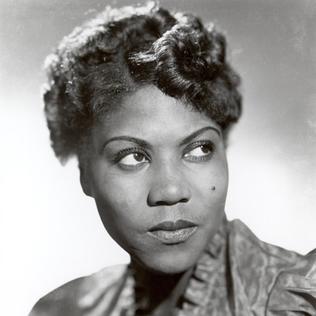
Great Guitarists #11: Sister Rosetta Tharpe

Great Guitarists

In this installment, a singer and guitar player who took the blues, folk and gospel and created what could arguably be considered the forerunner to rock’n’roll…

Sister Rosetta Tharpe

Born in 1915, Tharpe (born Rosetta Nubin) started playing guitar and singing in church at the young age of just four years old. Touring with an evangelical church troupe from the age of six, she settled in Chicago. Her stage name comes from her first marriage to preacher Thomas Tharpe at the age of 19; she carried on using the name Tharpe professionally after their divorce in 1984 , up until her death from a stroke in 1973 (during which time she remarried twice).

Tharpe is perhaps best remembered as a singer, with a loud clear singing style. But something about her singing, combined with her foot stomping and blues-tinged guitar picking – not to mention some cool lead lines – stirred the interest in many young listeners who would go on to be the next generation of musicians. Little Richard and Johnny Cash both called Tharpe their favourite singer, she is cited as a crucial influence to artists such as Aretha Franklin, Jerry Lee Lewis, Tina Turner, Isaac Hayes, Meatloaf and Karen Carpenter. Tharpe’s appearance on a British TV special about the Blues and Gospel Caravan, a European tour of US musicians that also included Muddy Waters, Otis Span and Sonny Terry, amongst many others, brought her to the attention of British audiences, including future guitar superstars like Eric Clapton.

“Tharpe’s guitar style blended melody-driven urban blues with traditional folk arrangements and incorporated a pulsating swing that was a precursor of rock and roll”

Biography.com (‘Sister Rosetta Tharpe’, 2015)

Tharpe’s guitar playing is said to have directly influenced the vocals/guitar style of Chuck Berry and Elvis Presley – and if the first rock’n’rollers such as Berry, Presley and Richard call Tharpe an influence, she must the foundation of all that followed…

Tharpe’s career was curtailed by a stroke in 1970, and she died just three years later. Nowadays, her influence is often unfairly overlooked, and sometimes forgotten entirely. However, Tharpe played a crucial role in the history of American music of the 20th century, not to mention the birth of rock’n’roll. Furthermore, in this brilliant article by Erin White, Tharpe is hailed as a Queer Icon too, largely due to speculation over her affair with singer Marie Knight.

Here she is on a TV show in the mid-sixties, singing a gospel song with a gospel choir, but playing a slightly overdriven Gibson Les Paul Custom (although we know these as a Gibson SG nowadays) with it’s three humbuckers. She also pops in a blues-based solo in the middle!

When I think of three humbucker guitars, I recall Neil Young’s ‘Black Beauty’ Les Paul, or the rock band KISS. As for the SG guitar shape, Angus Young of AC/DC and Tony Iommi of Black Sabbath are the first two players who spring to most people’s minds – not a lady in her fifties singing a combination of blues and gospel. It must be remembered that for many, Sister Rosetta Tharpe was the first black woman they’d ever seen playing an electric guitar, and she could play! But what else should we expect from the Tharpe – one of a small handful who can truly claim to be the start, or inspiration, of rock’n’roll?

Recommended listening

Tharpe’s 1944 single Strange Things Happening Every Day, is considered one of the first rock’n’roll singles, and is the first ever Gospel record to make it onto Billboard’s Harlem Hit Parade (now called their R&B chart). One her most acclaimed studio albums is Gospel Train (Mercury, 1956). This record marks the stylistic change, backed by New York session musicians, and is considered highly influential on later rock’n’roll artists.

With a career that took place from the 30’s to the early 70’s, it is sometimes best to seek out compilation albums in order to have all of Tharpe’s most well-known releases in one place. To that end, I would recommend Bring Back Those Happy Days: Greatest Hits and Selected Recordings (Jasmine, 2018), or the 4-CD set The Original Soul Sister (Proper, 2002).

As with each installment in the Great Guitarists series, I have only touched upon the surface of these influential players. I’d love to hear your thoughts on them, as well as recommendations on who should be featured (I have another four or five lined up already – I wonder if anyone can guess who is coming next?). Until next time…

Great Guitarists #10: Mary Osborne

Great Guitarists

In this, the tenth installment of my Great Guitarists series, I’m a little ashamed to say we have only looked at male guitar players so far. So, to round off my first ‘dectet’ of influential guitar players (and keeping in a jazz theme, like the previous installments), let me introduce to you Mary Osborne…

Picture Credit: Gretsch, 1959

Osborne was born into a musical family in North Dakota, 1921. Both her parents were musicians and her father’s barbershop was a known gathering place for local players. Already playing live by the time she was a teenager, Osborne was influenced by the playing of early jazz pioneers Django Reinhardt and Eddie Lang. However, it was Charlie Christian who first captivated her, and mentored her for a while, fine tuning her great sense of swing.

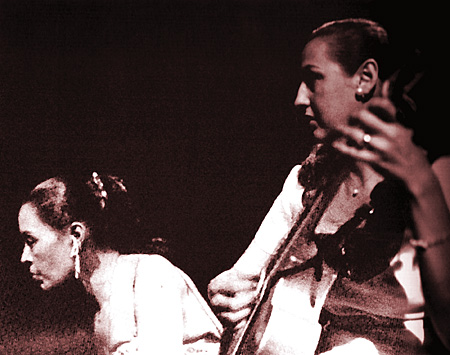
Osborne’s career ranged from trios (her own, and the Winifred McDonnell Trio near the start of her professional career), as well as some work as a sideman (or sidewoman) for the likes of Buddy Rogers, Joe Venuti (whose act included vocalists Kay Starr and The Andrews Sisters), amog many others. In the first of two spells in New York, she was the guitarist in Minton’s house band, where bebop was invented during the jams the legends of jazz had there. Her career continued throughout her life, and she was still performing live up until her death in 1992, at the age of seventy.

Osborne (R), with Billie Holiday (L), 1958. Picture Credit: Nancy Miller Elliot

Equipment

Osborne purchased the same model of Gibson archtop that Charlie Christian played – the ES-150, an early version of the classic archtop ‘jazz boxes’ we know and love today. It came with a large spruce body and a single-coil pickup near the neck, itself containing a large magnet that helped deliver good definition and attack. She later played other guitars by Gibson, as well as models by Gretsch, such as the White Falcon. In the 1970’s, Osborne founded her own guitar company, Osborne Sound Laboratories, formed from the ashes of the Mosrite Guitar Company (whom her husband had worked for at the end of the 1960’s). Osborne Sound Laboratories made amplifiers personally tested by Mary herself, as well as a selection if interesting instruments (including funky looking solid bodies such as in the picture below). Sadly, they couldn’t penetrate the market due to the dominance of the big manufactures, such as Fender (despite their well-known quality issues in this decade) and the company folded in 1980.

Osborne Sound Laboratories guitars from the 1970’s. Picture Credit: VintageGuitar.com

Recommended listening

Osborne’s 1959 LP A Girl And Her Guitar (Warwick) stands testament to her talents in a golden era for jazz guitar. Her later record Now And Then (Stash, 1981) shows a player who survived longer than most of her contemporaries, and continued to play beautifully.

Also, check out The Mighty Two (1963, Roulette), an LP by the two legendary drummers Louis Bellson and Gene Krupa. Although this was conceived as an instructional album for budding drummers, several tracks feature six musicians accompanying both drummers through nine of the songs on the record. As well as featuring Osborne on guitar, you can hear Milt Hinton (bass), Joe Wilder and Joe Newman (trumpet), Phil Woods (alto sax), Dick Hymen (piano) and Tyree Glenn (trombone) – something of a who’s who in sidemen for the time. The ensemble playing is tight, and the entire LP is a unique artefact of jazz history.

A year of books (Apr-Jun)

Books

It’s been three months since my last article on the books I am reading in 2020 (which you can read here). At the end of March, the UK was officially in lockdown, and throughout April many of us got used to new ways of working (or not working), as well as working out what to do with the extra time spent at home. At times, it felt like I was trying to make time for reading – but that’s a story for another blog. Suffice to say, I haven’t gotten through anywhere near as much of my to-read pile as I would have liked. Indeed, it has taken me over a month just to finish writing and editing this article!

As promised, I aim to log and write very brief reviews of every book (fiction & non-fiction) which I have read this year. The only exception to this is the academic texts I have to research as part of my work as a music therapist (which has partly continued during lockdown through working online). These books and papers will only appeal to a small audience, so it makes sense to create a specialist article to discuss them at a later date. For now, here are the books I have managed to read in the last three months:

The age of genius: the seventeenth century and the birth of the modern mind by Professor AC Grayling (2016, Bloomsbury)

The title might seem like a mouthful, but the premise is simple: Philosopher-historian Grayling puts forth the argument that the seventeenth century (i.e. the 1600’s) was the ‘epoch’ in human history in which we (or rather the leading minds of the day) began moving away from what we now call superstition, and finding confidence in scientific inquiry separate to religious belief. Grayling believes that this is what made us modern humans. His argument is compelling and very well written, with scores of examples. However, a book with so much detail obviously means many references are fleeting, and surely many more are (for any number of reasons) omitted altogether.

This book is worth looking into if the subject even remotely interests you. It’s surprisingly accessible and doesn’t get too weighed down in any particular area for too long, although that is also a downside for many. Would-be scholars to this subject should view this book as a primer, before moving onto the texts which have greater detail on certain areas – Galileo, The Holy Roman Empire and the Papacy, to name just a few – without the overall breadth Grayling is able to present here. Those looking for an introduction to philosophy would be best served by some of Grayling’s other excellent books on the subject.

Shakespeare for grown-ups: everything you need to know about the bard by E. Foley & B. Coates (2015, Penguin)

Written by the two in-house editors behind Penguin’s Homework For Grown-ups, this book offers a light-hearted and accessible look into the greatest (or at least most famous) playwright of all time. Filled with fascinating historical and contextual nuggets, no portion of this book is overlong, and serves equally well as a reference for fans of the Bard, as well as ‘cheat sheet’ for newbies. Among the many useful sections it covers are guides to the language (including examples of the many, many words and phrases coined by Shakespeare, which are still in common use today) and a very brief overview of each play, reduced to a handful of lines in one section for super-quick, and rather pithy) reference. The larger sections examine examples of Shakespeare’s, comedies, histories, tragedies and poetry, highlighting key themes and use of language. The authors are good at reminding the reader about what an Elizabethan audience would have understood or expected from the performances of these plays too, which is particularly useful when things appear a trifle anachronistic to modern readers and audiences. By no means the final word on Shakespeare, but a great place to start for many, and a welcome addition to the collection of more committed fans.

The Ickabog by JK Rowling (2020, online at theickabog.com; print publication on 10th November 2020 by Hachette)

Based on a story JK Rowling used to tell her children, years before the publication (and phenomenal success) of her Harry Potter series and wider franchise, The Ickabog is a fairy tale brought into the public eye, it seems, because of the COVID19 pandemic. A chapter or two was released every week between March and July this year, seemingly as a distraction for people during lockdown. However, Rowling has stated that a print version of the book will be released in November this year, with some of the proceeds going towards a charity helping young people affected by the pandemic. Cynics might argue that it takes attention away from the negative press Rowling has received this year for her personal views on certain subjects, but a good deed is still a good deed. And anyway, what about the story?

Th story is the form of a fable, told by an omnipotent narrator, about a fictional country with a weak and vain king, whose closest advisors manipulate in an increasingly elaborate version of The Emperor’s New Clothes, with a strong dash of the legend of The Lambton Worm (an ancient local tale of an apparently un-killable dragon-like creature which stole sheep from a town in the far north of England) thrown into the mix. The 60 chapters of the story move fast, taking in various characters and sweeping across the entire fictional land, as well as a timescale of around a decade, without feeling too rushed – at least for the most part. The ending is both unexpected and rather typical of Rowling’s more famous work, but doesn’t quite wrap up the character arcs in a satisfying way, save a bittersweet epilogue involving the first characters mentioned in the book.

The Ickabog is a quick read, once the installments were available. It was rather interesting reading a serialised story, the way many famous works, such as those by Dickens, first appeared. It is written, like most of Rowling’s books, for children, and uses easy language with little in the way of hidden themes. In fact, my biggest problem with the book was the lack of subtlety altogether – Rowling tells you everything, including in one particularly frustrating instance, what four different characters (most of them minor) or thinking, without feeling the need to back any of these pronouncements up with dialogue or actions by the characters – this person loves that person because Rowling says so, and that has to be good enough. I understand that this is a story aimed at younger readers, but credit them with some insight!

Life by Keith Richards with James Fox (2010, Little, Brown & Company)

The back cover of this autobiography reads: “This is the life. Believe it or not, I haven’t forgotten any of it”. Perhaps the contributions from journalist Fox helped fill the gaps in the extraordinary life and career of one of rock’s least likely survivors. ‘Keef’ is one of the founders and driving force behind The Rolling Stones, as well as it’s main songwriter with frontman Mick Jagger, a partnership equally famous for it’s stories of hellraising over the years. The book covers everything you’d hope for – the music, the drugs, the women, his relationship with Jagger over the years, as well as numerous stories from the early days of The Stones and through their classic albums (and some of the many well-known faces they’ve encountered on the way).

At times, this book felt a little bit like an extension of the Stones Brand, and Fox has certainly steered these memoirs into something more coherent, but the book is no less enjoyable for these factors. It’s a funny and insightful read, and will definitely appeal to fans of the band, as well as those with even a smidgeon of interest. My advice would be to buy the paperback, as the hardback (as is often the way, especially with biographies) takes up a fair amount of shelf space!

Bring up the bodies by Hilary Mantel (2012, Fourth Estate)

This one was a re-read. I first read Bring up the bodies a few years ago, having come late to the party – a theatre and TV adaptation of this book, and it’s predecessor, Wolf Hall (2009), had already been produced by the time I started reading Mantel’s ‘Thomas Cromwell Trilogy’. I loved the writing in both books, especially how Mantel fleshed out the life of a prominent historical character, of whom so little biographical information remains. Both books won the Booker Prize for fiction for Mantel (the first time a female writer has ever won the award twice). The long-awaited final installment, The Mirror and the light, was finally released this year, and has already been added to the shortlist for the 2020 Booker Prize – could it be an unprecedented third win for Mantel (and the trilogy)?

Before starting The Mirror and the light, I decided to refresh my memory and immerse myself in Cromwell’s world once again – not least because I have heard that the third book picks up the story precisely from where this one ends. The story was just as wonderful to read for the second time as the first. Now, with my appetite well and truly whetted, I have made my transition from Bring up the bodies to The Mirror and the light just as June slipped into July, so expect my review on this final installment in my next blog in this series…

Any others?

As I mentioned at the start of this article, I have dipped into a few academic texts as part of my work. I’ve also been reading plenty of magazines and periodicals, which I have listed in a separate article that you can read here.

What have you guys been reading? Drop me a comment and let me know!

A year of books: every title I read in 2020 (Jan-Mar)

Books

Every year is a year of books for me. I am an unashamedly committed bibliophile.

However, I rarely review the books I read, preferring to make recommendations in conversation with other book lovers.

This year is different. For those who don’t already know, the UK (like many countries) has been under a kind of lockdown since the end of March this year, due to the COVID19 pandemic. Although I’m still kept fairly busy, I’m making a conscious effort to post blogs & articles more regularly. With that in mind, I have decided to provide a quick summary & review of all the books I read in 2020.

Obviously, since it’s already April, this first installment will be looking back at the year (more or less) to date. I’ll post follow ups every couple of months throughout the year, with a pick of my favourites as 2020 draws to a close.

Picture taken from this interesting article by Literary Hub.

So, without further ado, here’s what I have read from January to the end of March, this year…

The book smugglers of Timbuktu by Charlie English (2017, William Collins)

The subtitle to this book, the quest for this storied city and the race to save its treasures, sums up the book perfectly. This once fabled city in Mali was home to thousands of manuscripts on poetry, history, religion, science and all manner of learned subjects. The takeover of the country by jihadists in 2012 threatened these ancient libraries.

The book weaves two threads in alternating chapters. The first chronicles the efforts made to smuggle as many texts to safety. The second is a history of Timbuktu, seen through the eyes of Western Europe’s expeditions to locate it, starting in 1788, and ending in 2003, almost bringing us up to date with the first narrative. Part history and part account of an ongoing operation, English brings the main protagonists to life, and provides enough historical detail to make you feel you’ve learned something. Highly recommended.


The accidental further adventures of the hundred-year-old man by Jonas Jonasson (English translation by Rachel Wilson-Broyles) (2018, HarperCollins)

This is the sequel to Jonasson’s hilarious comic novel The hundred-year-old man who climbed out of the window and disappeared. It’s funny and entertaining to meet the title character again, a cantankerous old man, Allan Karlsson, with a penchant for explosives and a knack for meeting (and enraging) a large cast of world leaders from recent history.

Where this sequel falls down is that it takes place roughly within one year, while it’s predecessor featured flashbacks through Karlsson’s long life, giving the book a fast paced feel which is still full of interesting detail, this follow-up feels a trifle forced. Jonasson said he felt compelled to write the sequel because he felt Karlsson’s voice talking to him about current events, such as Russian interference in worldwide elections and social media. While there is opportunity for humour and warning on this subject, story about Karlsson’s further adventures suffers slightly as a result. Best left for the enjoyment of die-hard fans of the original story.

The Popes: a history by John Julius Norwich (2011,Vintage Books)

A superb history of the papacy, from it’s Apostolic and Ancient Roman origins, through to Benedict XVI (this book was published in 2011, two years before Pope Benedict’s abdication, and the subsequent election of the Vatican’s current incumbent, Pope Francis).

Sometimes very detailed when discussing ‘dark ages’ popes, and on occasion it was difficult remembering who was who (there are a lot of cardinals, popes, kings and pretenders with the same name in some chapters), it nonetheless provides a thrilling insight into this millennia-old institution, the political crises it has faced – both within and against the rest of Europe and the world – as well as how it has survived and evolved over the centuries.

Norwich had an impressive career as a author of history books. This book is just one of many where he has skillfully brought his subjects to life. Also, despite having access to the Vatican library as part of his research, Norwich does not shy away from the seedier aspects of the papacy – a fitting subtitle might well have been Schism, simony and sodomy. However, it rises above gossipy, ‘Lives of the Caesars’ style titillation, and presents a fair light, good, bad and worst, on the men (and possibly one woman) who have held the position of Pontifex Maximus since St Peter. Worth a read, but only if you’re interested in the subject – casual fans of European Medieval history might prefer another of Norwich’s tomes, such as  Four Princes, which is on my to-read pile, awaiting me…


How to stop time by Matt Haig (2017, Canongate)

Haig is carving something of a niche in fantastical novels which certainly don’t qualify for a place in the Fantasy genre. This book is told from the viewpoint of a man of abnormally long life, one of a very small and secretive group known as ‘Albatrosses’. Frequently moving around the world to avoid arousing suspicion, not getting too close to others, having lost lost loved ones centuries earlier, what should happen if he fell in love again? So far, so Highlander, but told with Haig’s usual warmth and wit. It’s also very easy to read. I found myself finishing it almost before I was ready to. However, I found myself making comparisons to one of Haig’s earlier books, The Humans, which similarly deals with a man on the outside learning to love (or in that case, an alien sent to prevent humans progressing before their time). Of the two, I prefer the earlier novel, but How to stop time stands up well on it’s own merits, and is well worth a read.


Africa: by Richard Dowden (2008, Granta Books)

A well-written history of modern Africa, told by a journalist who has lived and returned to the continent several times in his life. At times delving into nearly-memoir, Dowden is able to pull back and maintain a journalistic eye on the wider events taking place in various countries through the later end of the 20th century onward. The book covers the Nations of Africa’s stories of post-colonialism, civil wars, economic growth and failings, as well as the AIDS epidemic, all told fairly and engagingly. The only downside was that no one book (even a 600+ page tome such as this) can truly cover the full history – even of just the 20th century – of such a large continent. Dowden’s book left me yearning to know more, and already I have more books on Africa ready in my to-read pile!

Any others?

Five books doesn’t feel like very many, even if two of them (The Popes & Africa) were quite long reads. However, my therapy work is (and must be) my priority, and there have been a few work-related books taking up my time this year too. As part of my work, I’ve been researching mentalisation and dissociation, specifically in relation to therapy with children, and have been dipping in and out of three or four very helpful books on these subjects recently. However, these titles are best left for an entirely separate article, one centered around music therapy and child psychotherapy. Expect that later in the year!


The next installment will cover April to the early summer [UPDATE – you can now read the April-June installment here]. It may well cover only the ‘lockdown months’, depending on how long that period turns out to be. Until then, stay safe and keep reading…