It almost seems too obvious to even require mentioning, but it’s the best advice I was ever given as a young musician:
Do less, and do it well
If in doubt, leave it out goes the old adage about instrumental soloing. It equally applies to composition as well – but what else is improvisation, if not instantaneous composition?
Think about what you’re trying to say, and be sure to communicate that message in a way listeners will be able to understand.
Imagine trying to listen to someone give a lecture, but the speaker in question spoke incredibly fast and never paused for breath. It’s exhausting to listen to. And sometimes, when you are trying to be get your point across, it can be better to say less.
This is why all those flashy million-notes-per-second solos are generally only preferred by other musicians. The best solos carry a song without filling the entire sonic pallete, leaving room for the listener to hear the context in which the solo exists.
“The most important thing I look for in a musician is whether he knows how to listen”
Duke Ellington
The great jazz improvisers such ad Miles Davies referred to this as ‘hot space’ and valued it as highly as – if not higher than – the notes being played in solos.
However, that’s not to say that the noodling doesn’t have its place. Of course it does. It’s certainly true that speed and long, winding melody lines have their place, but they need to be used sparingly, like spices which might otherwise overpower the dish when you’re cooking.
Naturally, there’s no clearly defined correct way to improvise. The whole point of improvisation is we literally making it up as we go along! Go out there and take risks – just leave room for everybody else!
During lockdown, I wrote a piece featuring only a starting and ending theme, leaving the space in between entirely free for the performers (taking turns) to improvise. Players had complete freedom of expression in how they choose to navigate from one theme to the other. The notes they chose, how long they took, and style were entirely at the discretion of each performer.
I approached a few of my musician friends to test this conceptual piece out. When faced with no rules and no harmonic foundation on which they could improvise against, many of them struggled. I found this surprising, especially from performers I know to be excellent jazz improvisers.
However, my friends who are classical musicians failed the task entirely. Why?
Improvisation seems to have all but disappeared not just from the repertoire of classical music, but from the skill set of classical performers. Audiences attending classical concerts and recitals generally expect to hear faithful renditions of the pieces they know, and doubtless have in their music collections at home. Deviation from the score is seen as a failure, perhaps even an insult to the express will of the composer.
It wasn’t always this way. Many early pieces were based around a framework where improvisation would be expected, not just on the main theme (similar to a jazz ‘head’ followed by solos nowadays), but in the accompanymeny itself. Thebassocontinuo parts in Baroque scores (usually played by the harpsichord) were loose fragments, using a special shorthand (known as figured bass) to highlight the expected harmony at certain points in the piece. It was up to the player to fill in the gaps. Similarly, soloists were given freedom of expression in their performance, often at the end of a piece in a completely improvised coda known as a cadanza:
It was the performer’s job to “finish” the composition for the audience (in the same way, today, that an interior decorator finishes the work of an architect and a builder)
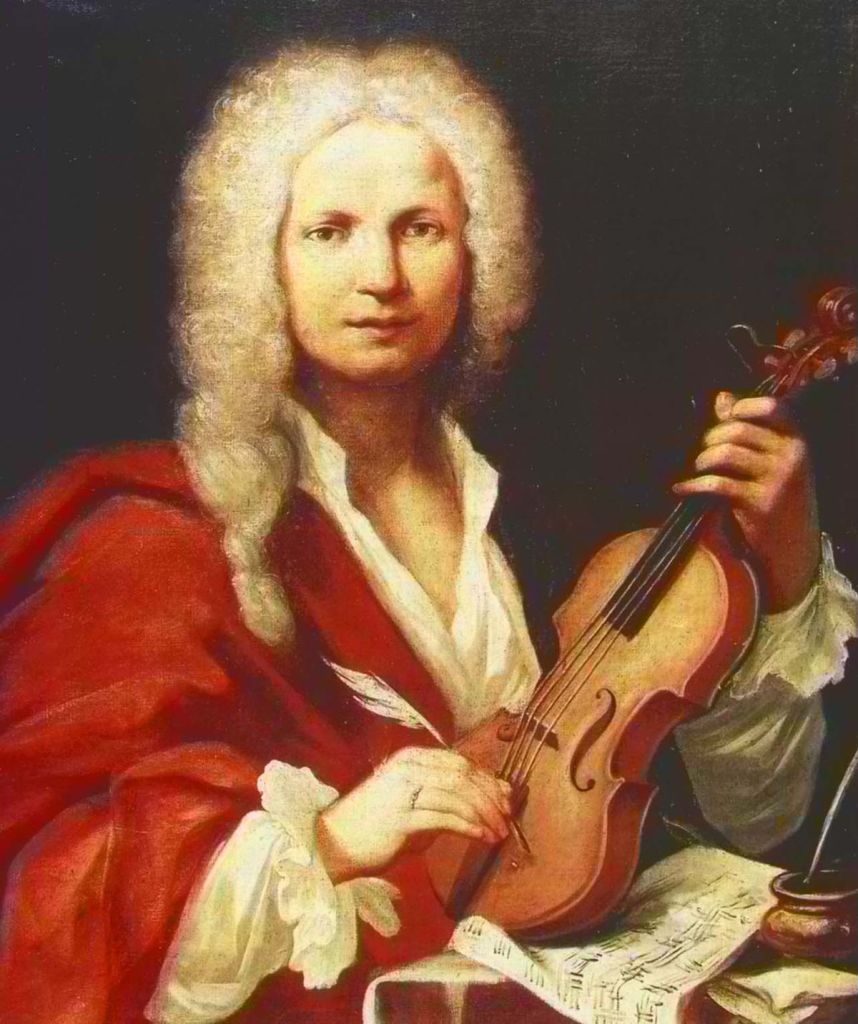
Composer & violin pioneer Antonio Vivaldi was renowned (and even feared by his peers) for the virtuosity of his improvised cadenzas (picture credit: Eboracum Baroque)
Nowadays, there is almost no improvisation to be heard at a classical concert or recital. Sticking strictly to the notes on the page has become convention.
Did the beginning of the end start with Beethoven? His fifth and final piano concerto, the so-called ‘Emporer Concerto’, features a unique instruction at the end of the first movement: “Do not make a cadenza, but immediately proceed to the following” (usually marked on the score as Non si fa una cadenza, ma s’attacca subito il seguente).
At this time in his life, Beethoven once one of the most celebrated piano improviser of his time, if it the best among his contemporaries, was now struggling with his hearing to the extent that he was no longer able to improvise when playing alongside an orchestra.
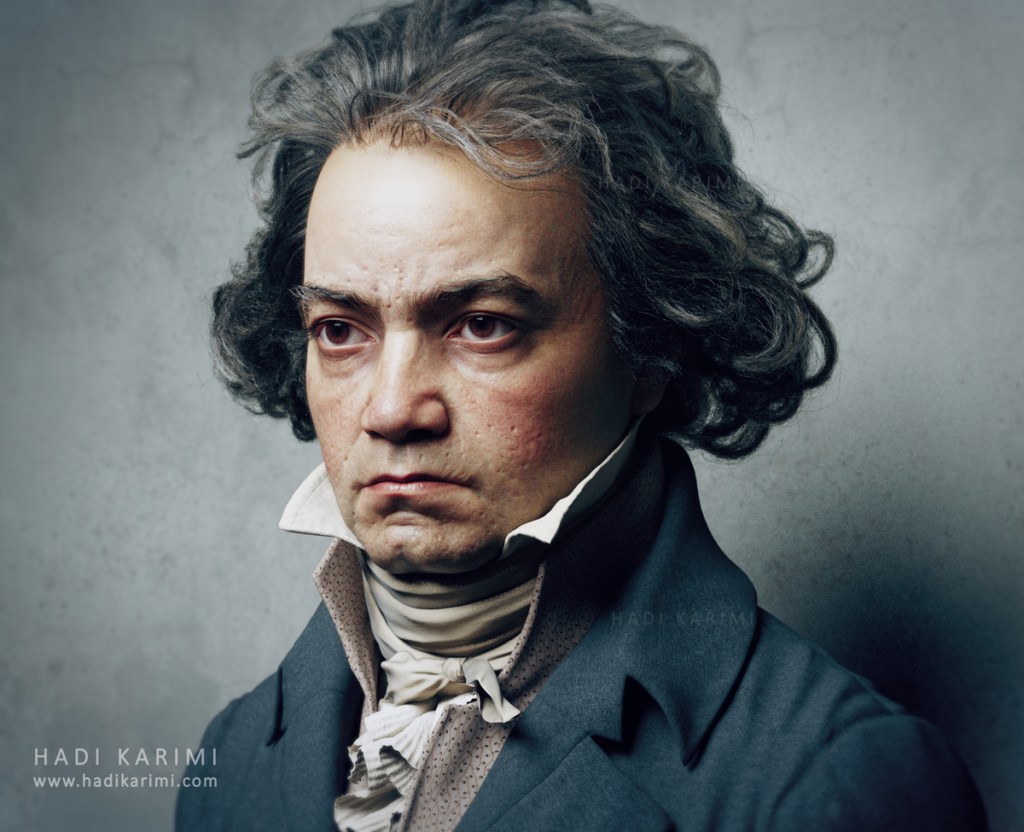
A wonderfully striking 3D interpretation of Beethoven’s portrait, circa 1812 (picture credit: Hadi Karimi)
Some believe that he decided to formally write a cadenza to be played as written, which was very rare for the time, almost out of a sense of spite; frustration at not being able to improvise the way he wanted to led to the instruction specifying that no other performer could either.
At the same time, pieces were becomg more elaborate, orchestras were increasing in size and composers were becoming more experimental and imaginative. This left little room for the spontanetny of one individual’s instantaneous composing. Similarly the widening of audiences themselves to include more of the emerging middles classes led to an increased formalisation of concert going etiquette, much like the ever-expanding rules of dining (which fork to use, passing the port from the left). Invented rules designed to separate the ‘old money’ from the ‘neveau riche’ soon became simply the way things are done. Instruction because convention. Convention became tradition.
So how do we come back from this? There are those who argue that without the skill of improvisation, you’re not a complete musician.
When we repeat music we have learned by rote, are we repeating memorised phrases in a foreign language in which we are unable to actually converse? Music is, after all, the oldest language. We don’t exchange information and ideas solely through the quotation of famous speeches (at least, not most of the time), so why does this still such a strong convention in western classical music performance?
That’s just how things are done around here.
There is something stultifying about a tradition where millions of pianists are all playing the same 100 compositions… everyone has to play a Bach prelude and fugue, a Beethoven sonata, a Chopin nocturne, and we’ll do that until the end of the world, something in our soul dies
Real art is about breaking the rules and going against convention. Perhaps it is time classical performers took back their right to own their own performance and interpretation. Audiences won’t mind (according to this relatively recent research). Beethoven and the Old Masters won’t mind. They’re dead, but their music doesn’t have to be…
You may remember that I spent a few days in the studio with the Nick Gladdish Band late last year. If not, you can read about it here.
We’ve been releasing singles from the newly finished and mastered record, Last One Get The Lights, which you can see & hear on my media page, and buy online from all the usual platforms.
Here’s part one of the mini documentary made by Torn Apart TV. Part two, and the full album, will be released in a few months time.
The latest single by the Nick Gladdish Band, Ain’t The Way I Work, is available to download now.
The final piece of the album is now in place. Backing vocalist Shannon Powell has added her amazing talents to the new Nick Gladdish Band album.
Those of you who are unfamiliar with Shannon’s vocal prowess would do well to check out her project YUMA (a collaboration with NG Band drummer & producer John Timney)
Shannon Powell (of YUMA) recording harmony vocals for the new Nick Gladdish record
Cover art
Nick also revealed the main painting being used for the album cover, created by Kristin Designs…
Album cover artfor ‘Last One Get The Lights’
Next steps
We’ve already reviewed the ‘first pass’ of the mixed tracks, and discussed changes. The second attempt is currently ongoing, now with Shannon’s vocals added, which gives us the full picture. To my ears, these tracks need very little fixing now. Most of the big tweaks & redos have already been taken care of.
Once the mixing is finalised, the next step is mastering the overall album. After this, the first single can be released. Details to follow soon…
At the same time, the cover art and lyric booklet are being designed and formatted. However, this is a slightly less pressing issue because the album won’t be released until the start of 2021.
Last night, we got the final session of tracking done (on a new album for The Nick Gladdish Band), with a day left until lockdown #2 comes into effect across the UK.
Nick met drummer & producer John Timney at TRAXX Studios in North Tyneside for five hour. They didn’t just tracked all the vocal parts to the band songs. They also recorded the two solo songs which will ‘bookend’ the album.
Nick working hard in the studio (picture courtesy of John Timney)
Now comes the mixing…
I’ve already heard a few early mixes on a couple of the songs. Even in their rough, unmastered state, they sound rather promising. As always, I’ll keep you updated as the record progresses…
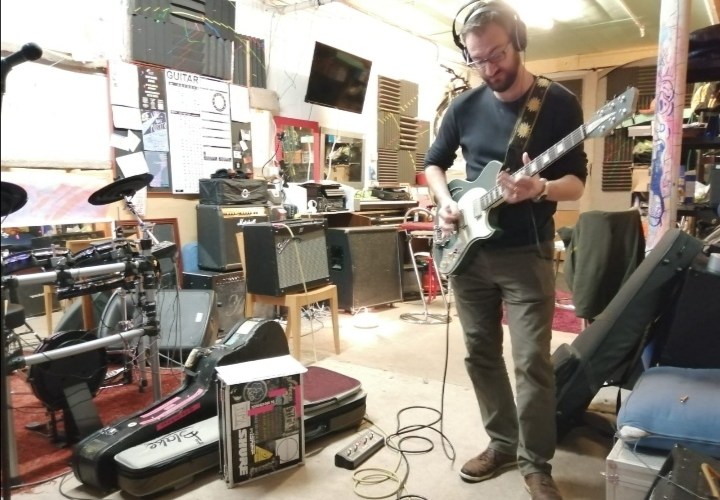
With a second full national lockdown upon us in a few day’s time, we had a very small window to finish the bulk of the tracking for Last One Get The Lights, the in-progress LP from the Nick Gladdish Band. John Timney (drums, engineering and production on this record) and I met at The Space rehearsal studios in Carlisle with some guitars, a laptop, and a sense of urgency which wasn’t entirely helpful…
Recording lapsteel and 12-string acoustic at The Space, Carlisle (credit: John Timney)
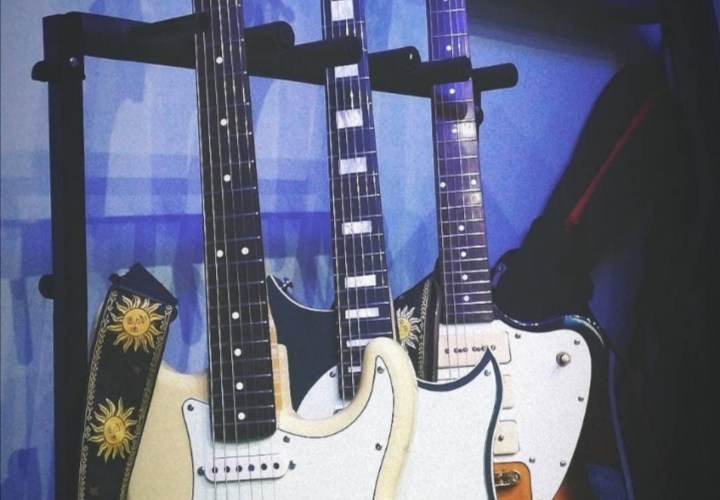
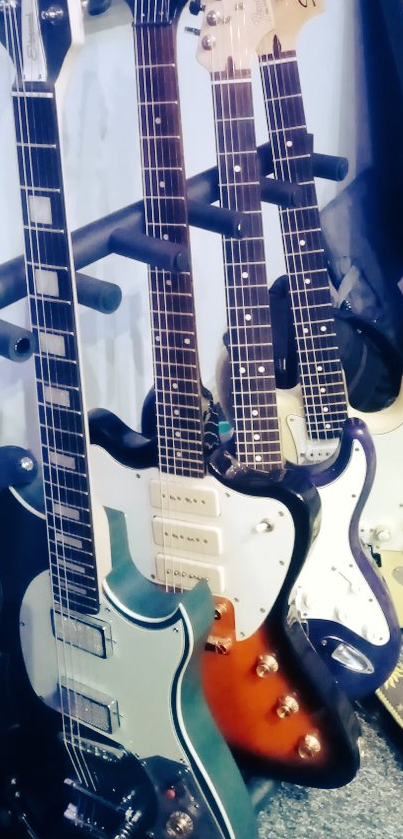
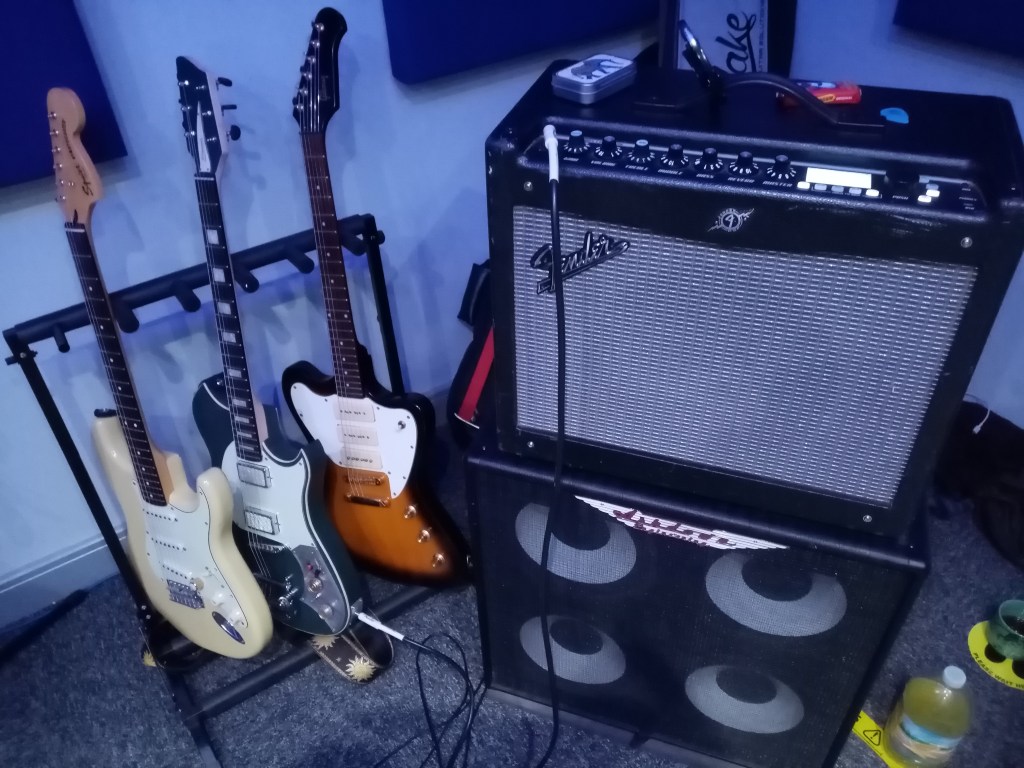
We managed to get several small bits done in just two hours. These included the few remaining rhythm/textural guitar parts, lead parts and full-on guitar solos over five different tracks. As well as borrowing John’s beautiful 12-string acoustic for a small part in one of the songs, I also used my Artisan lapsteel, Squier Strat and the new custom made Elderwood semi-hollow (read about that one here), all going through my Fender Mustang III amplifier. We might find there’s a few bits which need fixing, but if there is, we’ll have to wait until after lockdown!
Tomorrow, John will record the vocals (and a few other bits) with Nick back at Traxx Studios in North Tyneside (where the main chunk of the LP has been recorded, as documented in part one). Nick has lived with these songs for a most of this year, and in some cases even longer, so should be able to get the vast majority of them down tomorrow.
After that, it’s a case of adding Shannon’s backing vocals remotely, then mixing…
Still, at least we have all of lockdown to do that part!
More updates to follow, as and when they occur. Until then,take care of yourselves out there…
Last Thursday & Friday, I was back in the studio with the Nick Gladdish Band, as we finally started work on his new album Last One Get The Lights.
In normal times, this would have taken place in April, and by now, we’d be on another tour supporting the finished product. In fact, we already released the lead single Blurry Lines last last year (listen to it here). However, the pandemic and subsequent lockdowns have held everything up. More recently, we’ve been able to get back on track.
The process
To start with, Nick shared demos of the songs, and we started listening and thinking of suitable parts. A few weeks ago, we held two days of rehearsals where we tried out different things to see what worked. These were recorded as draft ‘rough cuts’ and the best arrangement shared amongst ourselves, so we could refine our parts further. It also gave me time to consider the best way to record the guitars, and which instruments to use.
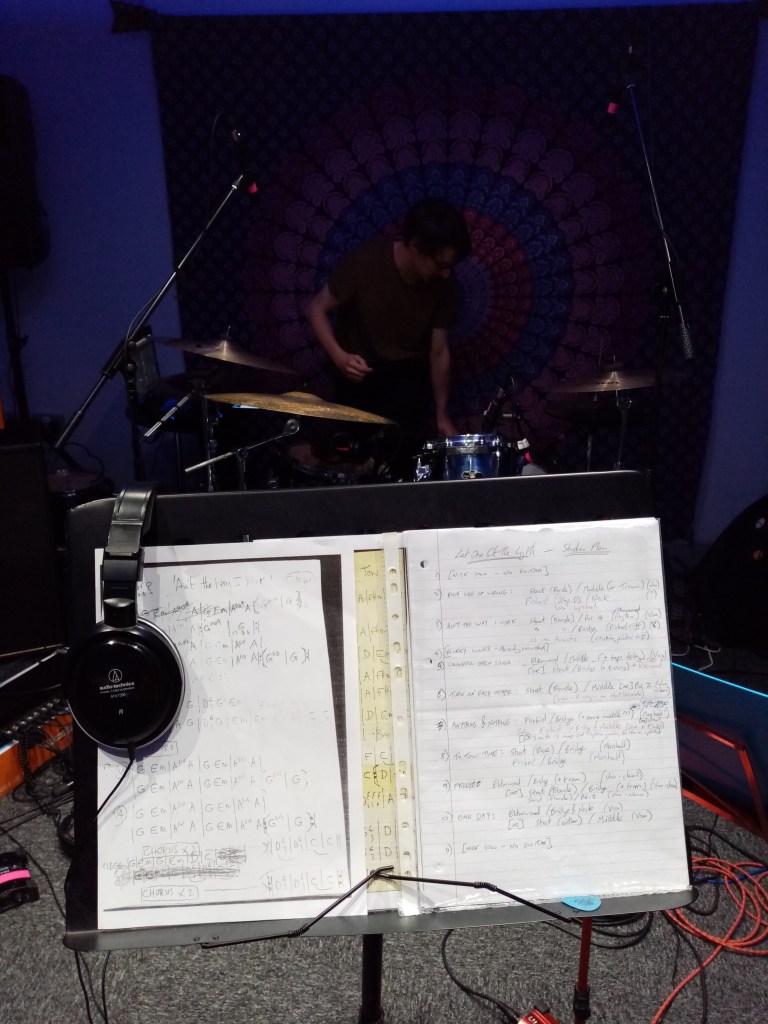
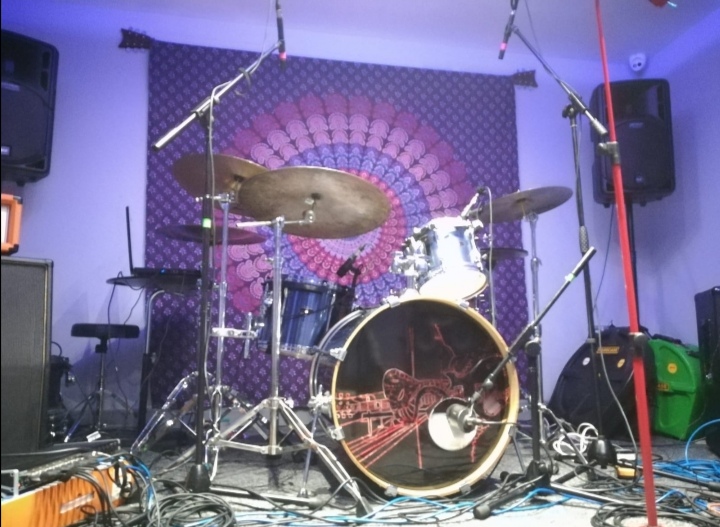
Here’s a few pictures from the two eight-hour days at Traxx Studios in North Tyneside. We spent these days recording the main backing tracks of drums, bass, most rhythm guitars, keys and guide vocals. The credits belong to everyone in the band (I’m not sure exactly who took which picture in some cases):
The whole recording process came together really quickly. In two days, we manged to get all the backing for the eight ‘full band’ tracks down, as well as additional rhythm guitar parts. Having rehearsed and arranged this set of songs in a live room setting, the guitar parts were quite simple to arrange and organise for tracking.
What happens next?
The initial plan was for John (Timney, drummer and engineer for this LP) to crew te rough mixes from what we had before we started on overdubs. However, the government’s announcement at the weekend, telling us we’ll be back in lockdown from Thursday, prompted a change of tack.
Instead, I will be going back into the studio with John to lay down all the guitar overdubs and solos tonight.
Tomorrow, Nick will record all of his vocals and a few additional piano & acoustic guitar parts. Shannon Powell, our backing singer at the live shows, will add her final parts remotely in the next week or so. That way, John has the whole period of lockdown to mix and master the record, and we can have the entire album finished in time for release at the start of 2021.
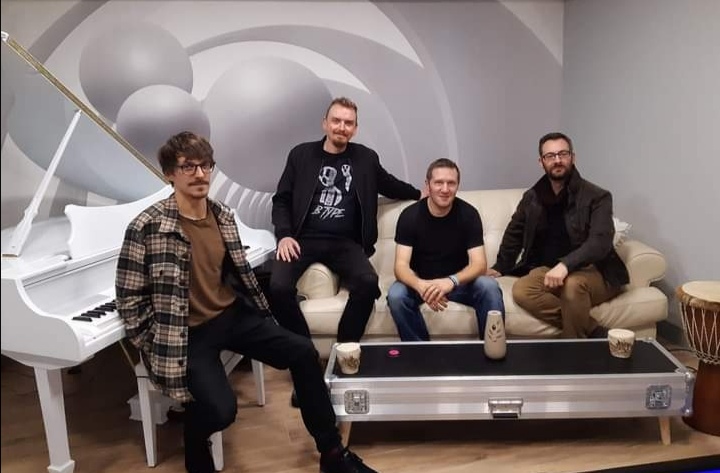
The Nick Gladdish Band. L-R: John Timney (drums, production), Adam Cornell (bass), Nick Gladdish (lead vocals, keyboards, acoustic guitar) and myself (guitars, lapsteel).
I’ll post some more pictures from tonight’s session, as well as further updates, in due course. Until next time…
As well as using Twitter to announce new projects, or update people on ongoing ones, I sometimes reminisce about ones from years ago, such as this one…
For some reason, I kept thinking of this, and on top of everything else I have planned (post-COVID), I’d quite like to explore what a power trio can do in terms of extended instrumentals (which aren’t based largely around improvisation); something more progressive in nature…
Having played in a rock trio format before, it can be a new challenge to fill the space adequately without the music sounding thin. Conversely, one has to avoid the temptation to stick to the more blues based method of sharing riffs, in union (or octaves) with the bass player.
Bear in mind that I currently have…
3 music therapy jobs
A solo classical(ish) EP to finish
Another Nick Gladdish Band album to finish & tour to plan
My next band project (world/blues/Latin) to start rehearsing
A music therapy case study series to complete by the autumn
A small portfolio of compositions to develop
…and we’re still in a time of lockdown here in the UK, with no concrete sign of progress regarding indoor gigs (although the news today implies that this might change very soon).
Still, if you want something doing, ask a busy person, right?













 Tim Higgins, Guitarist
You must be logged in to post a comment.