The making of ‘Last One Get the Lights’ (part two)

Music

You might remember Part One of the NG Band mini-documentary, which was released a few weeks ago. If not, you can watch it here.

Here’s part two. Let me know what you think.

New singles Right Side of Wrong and Anything and Nothing will be released as a double A-side this Sunday (11th April) and will be available on all the usual online and steaming platforms

2021 in books: Science-fiction special (January-March)

Books

Well, here we are, three months into 2021 already. How’s this year looking for you, compared to it’s predecessor? Already it seems that there are reasons to be hopefully optimistic.

Last year, I made brief notes on every book I read (excluding the academic texts I had to consult as part of my psychotherapy work) and published mini reviews in four different blogs; one every quarter. You can find the most recent one by clicking here. I enjoy the process of revisiting what I had read and thinking about it a little more, so I have decided to do it all again this year.

Here are the titles I have read from the start of the year, up until the end of March. It was only in March itself that I realized that every title in this article could be considered science fiction. This was not intentional, not least as I had recently written about the genre of Mundane science-fiction – a category that would not include many of the novels I speak about here…

The second sleep by Robert Harris (2019, Arrow)

Set in the future, in a society which has reverted to a more middle-ages style of living, thanks to an unnamed disaster which has apparently happened around the time of our own present. Harris paints an England without electricity, and where the church has once again become a force of power, and science is labelled as heresy. We follow a young priest sent to bury an older priest in a remote parish in Exmoor, only to discover the deceased parson’s collection of ‘pre-Armageddon’ artifacts, which set him down a path which makes him question what he has been taught. This book provides mystery, thought experiment, sexual tension and archaeology – all in a little over 400 pages!

I’ve read a few of Harris’s novels, and found them all to be similarly fast-paced. Easy read they may be, but not for lack of detail. I heartily recommend this book, and if you find you enjoy it, perhaps try Fatherland (similar to this novel, in that it is an alternate version of 20th century history, with one major difference!) Conclave (set during a papal election) and Pompeii (the days leading up to the eruption of Mount Vesuvius, followed by the aftermath). Like The second sleep, these novels take place over a short period of time, usually about a week, which helps keep the plot moving quickly. Sometimes we need a nice, quick & easy read in our lives, and Harris is a great author for that.

On the steel breeze and Poseidon’s wake by Alastair Reynolds (2013 & 2015, Gollancz)

I read the first part of this sci-fi trilogy, Blue remembered Earth, towards the end of last year (read about it here). I decided to read both sequels back to back, to avoid forgetting too much of the detail, and in order to stay fully immersed in the world Reynolds has created in this story. That said, both of these books do enough of a job reintroducing you to recurring characters that they almost work as standalone novels, not least because the protagonists change with each novel, as time shifts forward a century or so with each installment.

Time-hops like this can be tricky to pull off, but Reynolds manages it here, without having to resort to Isaac Asimov’s method of using something akin to a chain of short stories in his excellent Foundation novels (the original first three, anyway). The story flows well, with enough science fantasy to be interesting, but not too much that it bogs the book down – plot is still very much the main driver of these books, especially as the final novel looked like it might wrap up some of the mysteries set out in the previous installments. However, there were a few minor errors in the paperback versions I was reading; really simple things which could have easily been avoided with more thorough proof-reading. Other than that, very enjoyable.

The Themis Files trilogy (Sleeping Giants; Waking Gods and Only Human) by Sylvain Neuvel (2016, 2017 & 2019, Del Ray)

Sleeping giants must have been on my bookshelf for a while, perhaps purchased as part of a 3-for-2 offer at one of the more well-known bookstores. At 376 pages, it seemed a nice short book to enjoy after finishing the Poseidon’s Wake trilogy by Alastair Reynolds (see above). But as I started I realized – dammit! – it’s another trilogy! What happened to the good old standalone sci-fi book? Still, since each book is just over 300 pages or so, at least it didn’t take long to get through the entire trilogy…

These are a series of epistolary novels, meaning that the story is told in a series of documents, usually collections of letters, through which the wider plot is gleaned along with the insight of the characters. In the case of this trilogy, the short chapters include log entries and articles. However, they mostly take the form of transcribed interviews between the characters of the story, often with an anonymous, CIA-style interviewer. This can be a useful device for driving the plot forward, as well as maintaining suspense. However, at times I felt that the exposition was forced. At times, the characters seemed to be saying things which would have been unnecessary. It would have been more interesting to leave certain pieces of information out, to be revealed more subtly in later chapters. But here lies the biggest problem in composing a novel this way. How can one attempt to follow the golden writing rule of ‘show, don’t tell’ when a epistolary novel places so much emphasis on the tell, with very little show?

Despite this, the story was interesting and the entire trilogy was a very quick read. I found that I had settled into Neuvel’s style and enjoyed the story he spun over three short books. If you’ve never read a novel composed this way, I would recommend you give these books a go. They also serve as a way of stepping into science-fiction for those who haven’t really tried out the genre before.

We by Yevgeny Zamyatin (1924, This edition 2020, Penguin Classics Science Fiction)

The life story of Zamyatin is as interesting as this story, recognized as the inspiration for Orwell’s 1984 and Huxley’s Brave New World. Escaping prison in his native Russia (for being anti-Tsar), Zamyatin finished his engineering studies, worked in England then returned back to his homeland in time for the 1918 October Revolution. However, he had a strong belief in allowing artists to have creative freedom. We is set in OneState, where the only ‘true’ happiness can come from a kind of subjugation in this futuristic communist state, where the inhabitants have numbers instead of names (such as the narrator and protagonist, D-503). Although he might not have been the first to write dystopian fiction (H.G. Wells and Jack London can both lay claim to getting there first), We served as an inspiration (direct or otherwise) for many future writers.

The first manuscript was smuggled out of Soviet Russia, and a translation by E.P. Dutton was published in New York in 1924. The republished edition I read was based on the more recent translation by Clarence Brown in 1993. It captures the dry, characteristically Russian humour that appears throughout the novel, as well as the slightly otherworldly sequences that help to confuse the readers – D-503 doesn’t know for sure if certain sections in his ‘notes’ (the novel) actually took place, or are merely dreams brought on by his ‘mental illness’ (referred to as ‘imagination’ and ‘developing a soul’). It is an interesting book, and slightly wacky in places. The only thing that didn’t sit comfortably with me was his regular reference to his friend’s ‘African lips’, hinting at non-Russian features which, while not immediately offensive, feel very much like a product of Zamyatin’s age that hasn’t stood the test of time very well. But read as a social criticism on one-party states and human nature, it continues to resonate.

The penultimate truth by Philip K. Dick (1964, Gollancz)

Less well-known than some of his other works, I found The Penultimate Truth surprisingly difficult to get into. At only 191 pages, it shouldn’t have been a slog, and the characters inhabit the story well. The story itself is an interesting one – most of humanity is living underground, believing World War Three continues to rage over them. In truth, the war only lasted two years and a small elite work to maintain the illusion to the masses in their ‘ant tanks’ while living in palacial villas on the surface. This much is on the back cover’s synopsis, so no real spoilers here. However, I spent most of the first half of he book with the feeling that it might have been better to withhold the ‘truth’ of the surface, adding a greater mystery element. A simple rearranging of the chapter order might have achieved this. Perhaps Dick was more concerned with the other themes which emerge towards the end of the story, and I’m sure this book has many fans. However, it took a while for me to get into this novel, which I considered abandoning.

Final thoughts

I mentioned at the start of this article that I had not intended for every book to be a work of science-fiction, and as enjoyable as it has been escaping to other fantastical lands, I feel the need to dive into a non-fiction book soon! I also noticed shifs in my initial expectations with some of these titles. I did not think I would enjoy the Themis Files series as much as I did, and I ended up a little disappointed with The Penultimate Truth. Similarly, We was a lot more trippy than I expected it to be, but that was no bad thing in and of itself.

These are, of course, my own opinions. As always, do let me know if you have read any of these titles, what your thoughts were, or even if you have any recommendations for me. I always love discovering new books and authors!

Reblog: Three things we can learn from Sir George Martin (1926-2016)

Advice & Tips

Legendary producer of The Beatles, Sir George Martin, passed away on this day, five years ago. The following day, I wrote this article on a now-defunct page. Reposting here to mark this sad anniversary:

Sir George Martin, most famous for acting as the producer of all but one of The Beatles’ albums, passed away yesterday, aged 90.

Beatles_and_George_Martin_in_studio_1966

Already, reports and obituaries have been published, quoting Martin and highlighting his amazing achievements with and without The Beatles. Though Martin was a producer for over a decade before meeting them, it is undoubtedly his work with this music-changing band, the very Zeitgeist  of musical development in the nineteen-sixties and beyond, for which he will be best remembered and discussed for years to come.

There’s been plenty of debate on whether or not The Beatles succeeded artistically because of suggestions made by Martin, or if he was simply very effective in channelling their natural talent. In reality, it was probably a mix of the two. That in itself is not a bad legacy to leave behind.

Though Martin now sadly has passed away, we can still learn something valuable from the work he left behind. Here are my three things which we can learn from the life and career of George Martin:

Have an open mind

I’ve mentioned this in several previous posts, but an open mind and a willing pair of ears is without a shadow of a doubt the most important tool for any artist. This is especially true for musicians and producers, and a sentiment to which Martin himself prescribed more than once, including in his own books.

It is well established in rock history canon that The Beatles were been turned down by several record companies prior to being signed by Martin to EMI. Think about this for a moment: every almost ‘industry expert’ had refused to take on another guitar band, believing them to be going out of fashion. Fair enough, it is called the music business for a reason. Money has to be made and trends will always be followed. This is as true today as it was in the nineteen fifties and sixties. However, ‘following the money’ is a great way to be a follower, but you are default already a follower from the start, and not a leader.

The best leaders, artists, teachers, and indeed the best in any profession listen first. In seeing the potential that The Beatles had, Martin was able to continue listening to them throughout their eight years working together making hit after hit, and classic album after classic album. This is especially noticeable when at the point mid-sixties where the band stopped performing live altogether, becoming a studio band only. The resulting works, Revolver, Sgt. Pepper’s Lonely Heart’s Club Band, The Beatles and Abbey Road, are unique in sounding very much of their time, but still fresh and exciting in 2016.

And it wasn’t just Martin doing all of the listening. The Beatles themselves were avid consumers of art and music. In being open to anything interesting, they brought elements of avant-garde, atonalism, looping, sampling and a whole world of musical styles to their music. By opening your ears, and combining the sounds you love, it is entirely possible to produce a new work, which speaks to the future while recognising that which has gone before.

Know your limits, and push them

Looping, you say? Sampling? In the nineteen-sixties?! It is worth noting that the vast majority of The Beatles’ recorded output was recorded on a four-track (or, at very best towards the seventies, eight-track) tape machine. This was state of the art back then, but lacking in the limitless options of the digital recording software in use everywhere. Leaving aside all the other technological innovations and improvisations Martin would conjure up to accommodate the visions of The Beatles in their songwriting, there is the question of the sheer number of instruments and sounds on some songs. The solution to squeezing so many different elements onto a four-track recorder? Multi-tracking.

Multi-tracking was first developed by guitarist Les Paul some decades before Martin made such effective use of the technique. Put simply, the process involves recording onto three of the available tracks, then ‘bouncing’ that mix onto the fourth track. The process can be repeated using tracks one and two, then bouncing to the third. Then it can (if needed) be taken even further by mixing tracks three & four onto one of the other tracks, meaning there are now three left to add on more parts (and here is where I start to go cross-eyed myself!).

The biggest issue with this method of recording is the physical degradation of the tape onto which the sound was being copied. By layering track upon track, the overall mix becomes more dense, and done incorrectly, can leave with a muddy sounding, uninspiring record. George Martin, however, seems to have been perfectly capable of getting clean, crisp recordings of individual mixes, which hold their brightness as they get ‘bounced’ and mixed into a deeper and more complicated arrangement. Even with Martin’s confident ‘know how’, there was still a limit to how many additions could me made. In these days of endless tracks and almost any possible sound available to laptops worldwide, I personally don’t see the same level of mechanical creativity. Sometimes working with what you have, pushing the limits, is better than having no limits at all…

Have a sense of humour

There’s a famous anecdote – which Martin was often fond of telling – detailing the first time The Beatles first met their producer (retold once more in the Washington Post’s obituary of George Martin today). After Martin had spoke at length about the recording process, he asked the Fab Four is there was anything they didn’t like. The response, from George Harrison, was “Well, I don’t like your tie for a start…”. From there, Martin knew that they would get along famously.

A sense of humour can not only ease any tensions rising in the studio, which can be high-pressure for some acts expected to produce hit after hit. It can also serve to bridge the gap between generations. In that respect, Martin must have impressed the Beatles from the start, having quite an extensive background in comedy and novelty recordings – some of which became unexpected hits – including John Lennon’s comedy heroes, The Goons. In quite a lot of interview footage from the early sixties, The Beatles were set apart from their questioners, an exclusive club with a shared sense of humour and in-jokes which created a barrier to those outside of the group. Martin, I believe, was very much inside their ‘circle of trust’, otherwise they would not have allowed him such authority in the studio. A shared sense of humour must have been a major in-road to gaining the trust of these young Liverpudlians.

lightbox

Final Thoughts

As a musician, producer and in some ways, mentor, Martin helped the Fab Four to realise the sounds they heard in their heads. His creative, yet critical thinking fuelled The Beatles’ insatiable appetite for art, and helped their music transcend to heights which otherwise may have remained untouched. Though I have spoken mostly about Martin’s work with the Fab Four, we should be no means overlook all of the other artists he worked with & film scores he wrote/arranged. Without Martin, popular music, and therefore the world we live in today, would be very different indeed…

R.I.P. Sir George Henry Martin (1926-2016).

Italy in small details (2)

Poetry & Writing

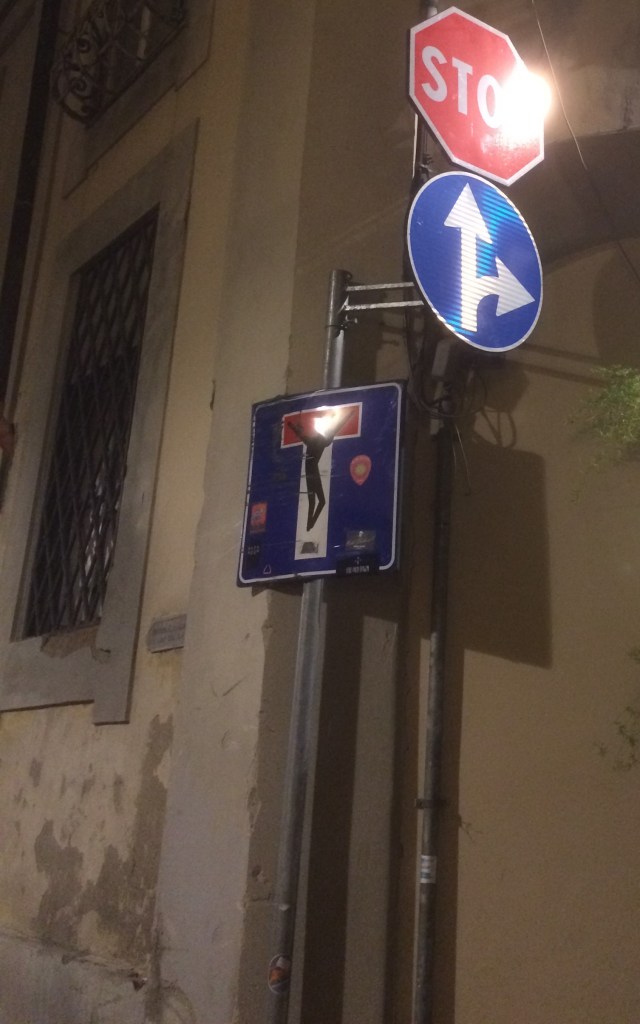
Here in the UK, 2021, we still can’t travel anywhere, so here are a few more images of Italy, focusing on the small details. These images were taken in Lucca, Florence and Rome around summer/autumn, 2016. Enjoy…

I have a few more sets of photographs from other cities around the world, which may find their way into a new post in the future. In the meantime, I’d love for you to share your travel stories with me. Get in touch…

Mundane Science Fiction – taking the fantasy out of the future

Books

Ok, so I’m a music writer first and foremost. The vast majority of my posts are firmly in the Music or Music Therapy camps. However, I do occasionally venture away from music and enter the wider world, focusing on my other favourite subjects: history, politics, travel and of course, books (you can see the latest of my quarterly book reviews here).

Like most people who write, I’ve tried my hand at fiction. I’ve started around five or six ideas for stories, only three of which were long enough to become novels. Two of these were science fiction. My love of sci-fi comes from a childhood spent reading the greats such as Asimov, Dick, Clarke, Banks and many, many more. Anyone who states that the genre isn’t proper literature has most likely not read the right books. The imagination required to conjure up these worlds and peoples goes fast beyond the standard writing advice of ‘writing what you know’.

Critics of sci-fi do have one valid gripe: in all of the grandiose settings and fantastical elements of the genre, characterisation can sometimes suffer. It is certainly true that only the very best sci-fi combines the huge space-opera backdrop with the human elements of character-driven plot lines. In that regard, can too much imagination be a bad thing?

Enter the relatively new sub-genre of mundane science fiction, a term first coined by Geoff Ryman and others in 2004. Those of you who follow my music blogs will no doubt be aware I have a dislike of genres and labelling. Good music is good music – shouldn’t the same be true for fiction? Well, perhaps with a focus on characters and more believable conflicts, it can.

The best way to achieve this? Remove the supernova-sized set pieces; the spaceships travelling at light speed; aliens from other worlds; time travel; in fact, anything considered to be outside of our current understanding of physics and the universe as we perceive it.

The Guardian newspaper wrote an excellent piece in 2008 introducing readers to the genre, which you can read here. This article and the original blog by SFGenics explain mundane sci-fi so much better than I can, but the basics involve a lack of the ‘fantastical’ elements mentioned previously, focusing instead on human stories and character-driven plot/conflict.

Interestingly, I have noticed that most of the books considered part of this movement (if you want to call it that) are set in the present day, near or approaching future. There is almost no likelihood of seeing a mundane sci-fi novel taking place in the year 30,212 A.D. because who knows what the world will look like then, and how could such ignorance be presented as mundane?

Another noteworthy feature is a focus the dwindling resources of this planet. In forcing themselves to look inwards, rather than to the stars, many mundane sci-fi writers imagine a future where food is scare, or climate change has irreparably damaged our ecosystem. Their stories focus on how these environmental perils being either fought against, or survived through by the protagonists.

In the full Mundane Manifesto blog, (which can be found here), a few classic works are included, including ‘Do Androids dream Of Electric Sheep?’ by Philip K. Dick, which became the classic movie Blade Runner, and ‘1984’ by George Orwell. These two contrasting examples of a near dystopian future should tell you that even without the wider galaxy to play with, there is plenty of interesting topics to be mined here on Earth.

To finish off, I’ll return to music an anecdote from Peter Gabriel. When working on one of his classic albums, he instructed the drummer not to play cymbals for the entire recording sessions. Effectively, he forbade cymbals from the entire album. While some might balk at such a draconian measure and say it’s a fast way to ruin his music, the end results were quite surprising. Forced out of his usual default playing patterns and styles, the drummer at these recording sessions had to entirely rethink his drum kit. Approaching it in this fresh manner brought out rhythms he would have never dreamt up otherwise.

As well as this, I have previously written on the amazing results pulled off by the late record producer George Martin in a previous blog post. Martin had severe limitations on the equipment he was using, but with The Beatles, created the most technically astonishing music, certainly for their time. Some might use that example of ‘removing the safety net’, but to me, it stands as proof that sometimes creativity works better within limitations. As I said earlier, what applies to music can also apply to fiction. Sometimes to ‘think outside of the box’, one has to be in a box to start with!

So what do you think? Get in touch and let me know!

In praise of The Animals

Music

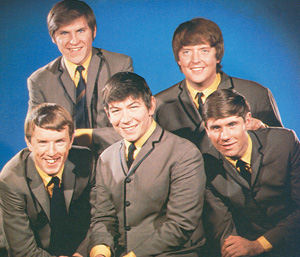
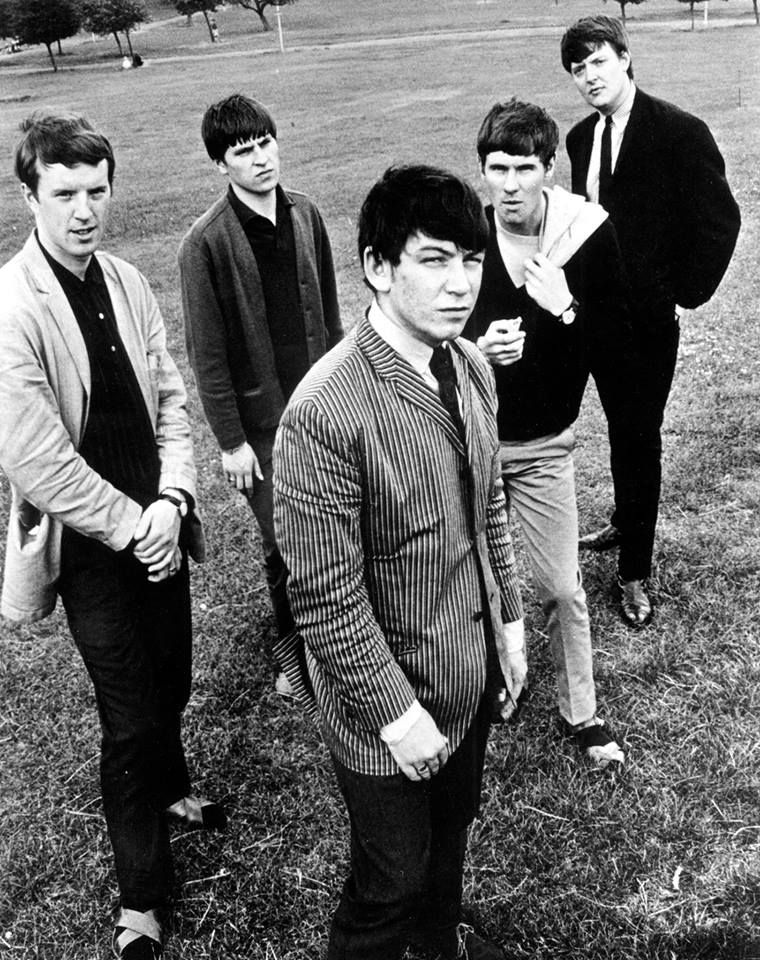
I recently read about the passing of Hilton Valentine, the original guitarist for The Animals, who has died, aged 77.

Valentine’s simple arpeggiated riff in the band’s version of the traditional tune House of the Rising Sun remains one of the most recognisable guitar parts in the history of rock’n’roll.

Valentine’s passing caused me to reflect on the wider influence of The Animals. The original lineup split by 1966, but in that time they recorded some memorable songs, including the huge hits We Gotta Get Out of This Place and their uptempo cover of (Don’t let me be) Misunderstood, originally written for and recorded by Nina Simone.

The Animals were one of the British groups from the early 1960s who took the R&B of the (predominantly black) artists in the US and repackaged it in a form that brought the genre – and its original performers – to a larger audience. A number of groups were part of this ‘wave’, including The Beatles, The Rolling Stones and The Yardbirds, to name but a few. While it might make one baulk to think that it took the playing of ‘black music’ by white performers to make the style palatable to white audiences in America (racial segregation still existed in some states in the early 1960s), it is worth remembering that these same audiences later turned to the original artists themselves. This created career-changing opportunities for artists such as BB King, Muddy Waters, Howlin’ Wolf and so many, many more.

Yet their influence on the artists who followed in their footsteps shouldn’t be underestimated. They were more than just local heroes in the north east of England; their activities after the breakup of the original group in 1966 led to a few significant ripples through the music world…

As well as the countless musicians who picked up a guitar to try and play House of the Rising Sun, or to start their own rhythm & blues outfit, The Animals also raised the profile of several well-known acts, one way or another.

Lead singer Eric Burdon became well respected for his soulful, yet gravelly, voice. After initially attempting to create a new version of The Animals (with only Burdon as the surviving founder member), he was soon teamed up with an up and coming R&B band. The resulting outfit – Eric Burdon and War – had success with the single Spill the Wine, and two albums together.

However, Burdon unexpectedly left the group halfway through a European tour. The band continued without Burdon, creating some very well-known hits in the 1979s, including Cisco Kid, Low Rider and Why Can’t We Be Friends?

Alan Price, keyboard player for the animals, had something if a dual career after the group disbanded. He worked with fellow 60s star George Fame for many years, while also writing film & theatre scores. He also released a few solo albums, and in his songs choices, became one of the first performers to bring the music of American songwriter Randy Newman (later famous for songs such as Short People and You’ve Got a Friend In Me) to a wider audience.

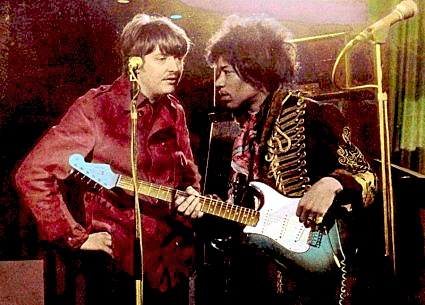
Meanwhile, Animals bassist Chad Chandler discovered a young Jimi Hendrix performing in Greenwich Village, New York, and became his manager. He set up the legendary guitar player with Mitch Mitchell and Noel Redding to form The Jimi Hendrix Experience, but used his connections to secure gigs in the UK for the group, and introduce him to contemporaries on the sixties music scene in London, such as The Beatles and Eric Clapton. In fact, the last time Hendrix performed live was onstage in London with Eric Burdon & War, the day before his tragic early death.

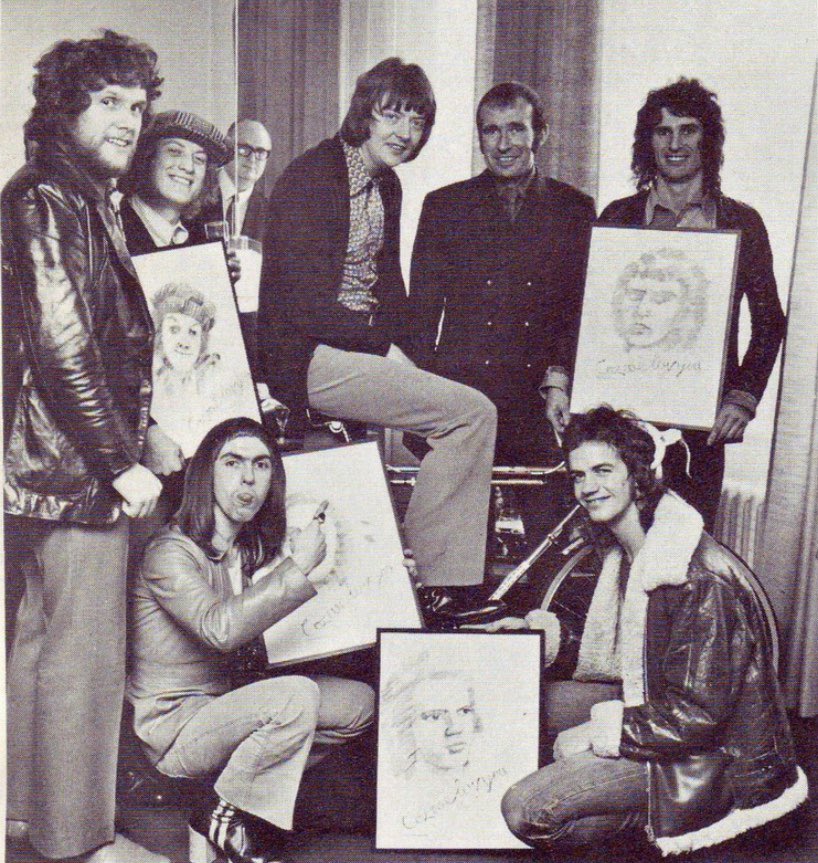
Chandler went on to manage the British glam-rock group Slade, who had several hits through the seventies (including one of the most well-known Christmas songs in pop music). His other business interests helped to build the Newcastle Arena, a sport and large capacity concert venue, which meant those of us in the region now got to see more of the bigger artists when they came around on tour!

I’m sure similar ‘family trees’ can be found throughout the history of rock’n’roll, and maybe it is the shared home region which fuels my fondness for them, but The Animals were much more than a few catchy songs and one incredibly famous guitar riff.

Rest in peace, Hilton Valentine (1943 – 2021). The music lives on.

Making of ‘Last One Get The Lights’ by the Nick Gladdish Band (part one)

Music

You may remember that I spent a few days in the studio with the Nick Gladdish Band late last year. If not, you can read about it here.

We’ve been releasing singles from the newly finished and mastered record, Last One Get The Lights, which you can see & hear on my media page, and buy online from all the usual platforms.

Here’s part one of the mini documentary made by Torn Apart TV. Part two, and the full album, will be released in a few months time.

The latest single by the Nick Gladdish Band, Ain’t The Way I Work, is available to download now.

Italy – in small details (1)

Poetry & Writing

These photographs were taken in September 2016, around the cities of Rome, Florence and Lucca. I guess since we aren’t currently allowed to travel anywhere, I thought it might be nice to reminisce about happier times…

One of the pictures below (top left) shows some small detail on a statue in Florence. Tortoises are a common motif of artwork commissioned by the Medici family, but you don’t notice them until you spot four or five in a single morning!

There’s something about the small, sometimes missed, details – in backstreets, doorways, or looking down on you from the corners old old buildings – that I find intriguing. Individually, they are a curiosity. Collectively, they form interesting insights into the cities they have inhabited for years – or in some cases, centuries.

So be sure to keep your eye out for the small details, next time you find yourself somewhere new!

Snow (double haiku)

Poetry & Writing

Snow on the Dyke-backs

Prophesying its return

And see, it comes now

For those who might not know, the dyke-backs are the sides of the short hills or ditches which, in winter, never get direct sunlight. As a result, snow takes longer to melt on these small sections of Northumbrian landscape. Around here, is taken almost as a given that seeing the snow remain on the dyke-backs, when it has melted everywhere else, means that it will likely snow again before the weather improves and the world gets warmer on it’s path towards the spring.

And while it stays cold, the frost can do strangely wonderful feats to your car…

Frosting cold and white

Nature’s stencil on metal

Accidental art