Albêniz’s ‘Leyenda’- open to interpretation

Music

A few years ago, I was hired to perform (quite specifically) Spanish guitar music at a wedding service. Amongst other choices was Leyenda (meaning ‘legend’). Originally written by Spanish composer Isaac Albêniz (1860-1909) for piano, but transcribed for guitar within Albêniz’s lifetime, Leyenda is one of the more well-known pieces in the classical guitar repertoire.

Isaac Albêniz (1860-1909), looking rather stylish in a portrait, circa 1900

Typically, the opening section is played quite fast. Sometimes this makes it feel like an exercise in machismo by the performer, who may be working on the assumption that faster = more impressive to listen to.

However, the most famous transcription of this piece is by Andrés Segovia. Segovia is considered the Godfather of modern classical guitar, having mentored several well-known players in the generation that followed (including Australian guitarist John Williams and the UK’s own Julian Bream). Brazillian composer Heitor Villa-Lobos dedicated his Etudes for Classical Guitar (1929) to Segovia, whom he had kept in mind while composing them. Segovia had similar close working relationships with several other 20th Century composers, such as Federico Moreno Torroba, Mario Castelnuovo-Tedesco and Joaquin Rodrigo, and his transcriptions of certain works originally written for other instruments have become the standard in how they should be performed on guitar.

Hear the great man himself performing Leyenda on this YouTube video. You may notice that Segovia’s interpretation is slower than you might hear on most other recorded versions of this piece.

I’ve had some pretty interesting discussions with guitarists in the last few weeks and months regarding artistic interpretation. In almost all of these chats, the focus has been on the interpretation of the performer. However, what we hadn’t considered is the interpretation of the arranger. When I say arranger, I mean one who transcribes music for other musicians to perform, rather than a player making interpretive changes solely for their own performance.


Composer & arranger Stanley Yates created a new arrangement of Leyenda, which is still available to download for free via this link to his website. This version differs more from Segovia’s than you might expect. The chief differences for me are the absence of sixteenth triplets in the opening section, which was Segovia’s invention (be honest, how many of you knew that?!) and a few differences to the interval of certain ‘grace notes’.

The source for Yates’ arrangement is the original published piano work. He argues that he has attempted to stay true to the original piece without being pressured by the subsequent traditions of this piece which have grown over the last century. It is worth checking Yates’ arrangement out in order to see these differences for yourself and experience a piece many classical guitarists thought they knew intimately in a rather different light.

Interpretation, whether it is that of an arranger or the in-the-moment feelings of the performer, is key to making music more than mere sounding out notes written down by someone else. It plays a large part in how an audience experiences the piece; even subtle changes to a performance can alter how the listener might feel in response. I’ve long been fascinated with interpretation as a subject, and note with a small degree of frustration that it remains a factor of performance that often goes overlooked, sometimes by guitarists who really should know better.

This brief examination of Leyenda is but one example from which we can learn the importance of interpretation. I believe that neglecting to give it the consideration it deserves might end up becoming something which hinders your growth as a musician. Make of that what you will.

Art is life’s dream interpretation

– Otto Rank (psychoanalyst & philosopher)
2024 wrapped

Advice & Tips

Companies and apps have a new habit of ‘wrapping’ the last year. The whole thing is a document in your own consumerism, from the songs you listen to the most to how many minutes you spent staring at a screen trying to improve your Portuguese (or is that just me?).

We all buy into it, taking joy from the evidence of our every move online (or at least on our phones) being mined and researched so someone else can profit from it. We even share the findings, further doing the marketing work of these huge corporations for them.

But sometimes, it’s a good thing to look back over the previous twelve months and assess how far we’ve come – and consider where we’re going…

The most important things

Ask yourself the following questions:

  • What am I most proud of this year?
  • How did I affect the lives of others?
  • What made me happy?
  • What could I have done better?

For me, I feel like 2024 was the year that the original music projects I’m involved with finally got back up to speed. I’ve spent the years since the pandemic prioritising my work as a Music Therapist and live performer. But this year, I worked on two records for dear friends and my new band, Solcade, has had a successful year of shows, with plans to hit the studio at the very start of January next year.

Solcade have been well recieved this year

In terms of live shows, 2024 has felt quite varied. My gigs have been a mix of grassroots slots, concerts and of course, lots of weddings and parties. I feel that I’ve been able to maintain a healthy balance between original and covers gigs recently, and with thirty dates already booked in for next year with a variety of acts, 2025 looks set to continue that trend.

Of course, there have been setbacks, but nothing that hasn’t left me (or the acts I work with) stronger. My therapy work has changed too, with some contracts coming to an end as exciting new opportunities begin. My plan for next year is to build upon these to grow the service I provide to children, adolescents and young people in  my region.

Quite a lot of this is still in the planning stages, but if the network of specialist creative therapists I’m trying to establish continuesnto grow, we will be able to reach even more people and help a vulnerable group build the life-changing mental resources needed to lead fulfilling and enriching lives. Wish me luck!

So that’s me. What about you?

The next steps

Now, having asked yourself about the year which is coming to an end, ask yourself:

  • What do I want to achieve in 2025?
  • And what do I need in place to make this happen?

As always, let me know your thoughts, as well as your plans and hopes for 2025. My main suggestion would be to look after yourselves and each other.

Go easy on yourself and forgive yourself when things don’t go according to plan – then get back up and carry on.

Surround yourself with people who make you feel as happy and fulfilled and you are trying to make others feel. None of us can get very far through life on our own.

Guitarist at work, live & in the studio

Now, I’m about to set up for me final show of the year – and because it’s a New Year’s Eve party, it will also be my first show of 2025. So since I’ll be busy at midnight here in the UK, allow me to take the time now to thank you all for reading these posts (as well as contributing your comments and messages) and wish you nothing but the best for 2025, and beyond!

Until next time. I’ll see you on the flipside…

One to rule them all – which guitar is the best all-rounder?

Guitars & Gear

I an article earlier this year, I weighed-up which two guitars in my collection would be the ultimate top two – the two I could take along to any gig any be comfortable they would cover (almost) any style of music being played. This is especially useful for me at studio dates, where surprise requests can often occur, and I don’t usually have capacity to take my entire guitar collection along to every session!

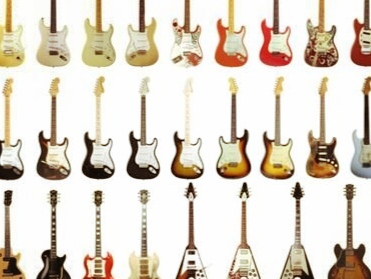
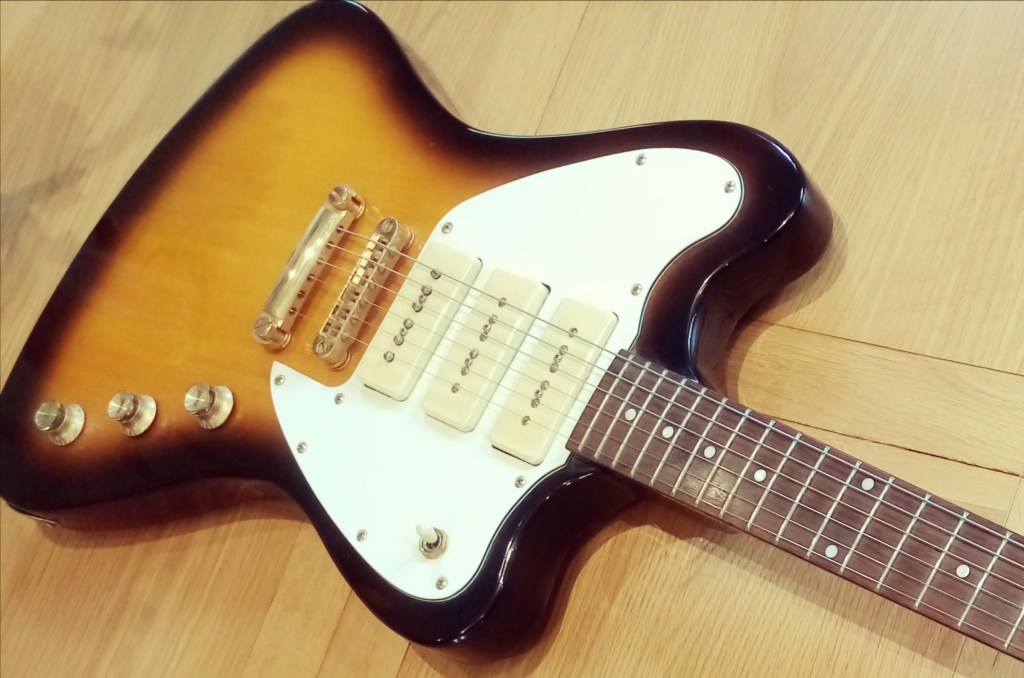
In the end, after examining different types of guitar (differentiated largely by their pickups), I concluded that – for me – one of my Stratocasters and a p90-type guitar (in my case this Gould Stormbird) made a winning combination in terms of tones and range of genres. With these two, I could cover everything from jazz and funk to classic rock and noisy indie, and everything in-between.

But what if you could only take one guitar out? Which one would it be?

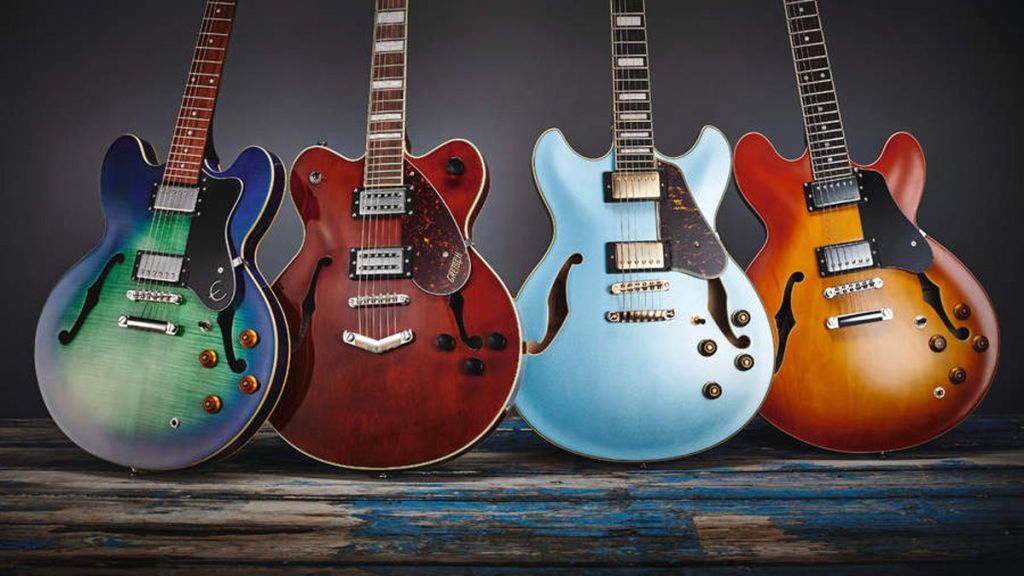
In the original post, I sang the praises of the 335-type guitar, which only just missed out on making it into the ‘top two’. I love my own 335 copy, but I felt more confident taking a Strat to a gig with multiple (or unknown) genres on the go, mainly because the single-pickup solid body cleans up better, is far less prone to feedback onstage (especially when playing heavier styles), and offers more tonal options. Also, I think the fact that I’ve played Strats since I was sixteen likely played a part in my thought process. I sometimes take a job where I don’t know exactly what I’ll be asked to play until I arrive, so familiarity with an instrument I trust is crucial.

However, I might have been a little unfair to the 335, and feel like I’ve changed my opinion in the last few months. I’ve certainly been using one as my main guitar for 80% of my gigs this year so far, and it performed perfectly at my most recent studio bookings – but would I be happy with it as my only guitar for any gig?

Let’s look at the three types of guitar by pickup type again, with a summary of what I use them for, as well as a few examples of where I use them professionally.

Single-coil solid body guitars (Strat, Tele, Danelectro, etc)

Classic guitar tones – bright and clear with lots of twang or spank to their sound
Sound great overdriven, but retain some of their original character
Sit well in a mix with other instruments/guitars
Reliable, solid instruments which are easy to mod
Perfect for: pop, funk, country, blues, rock, indie
Can be noisy, especially in high-gain settings

P90 solid body guitars (Stormbird, Some PRS models, some Teles, etc)

Beefed-up version of a classic single-coil sound
Beautifully warm, yet still clear, distorted sound
Great ‘best of both worlds’ between a single-coil and humbucking pickup
Covers most styles (but volume has to be rolled back slightly for cleaner sounds)
Can be very noisy in certain settings

Humbucker solid body guitars (Les Paul, SG, PRS)

The classic overdriven guitar sound, warm but aggressive
Warm, full sound for jazz (with the volume rolled back a little)
Perfect for: Rock of all types, jazz and blues
Not as good as single-coils for those iconic glassy clean sounds

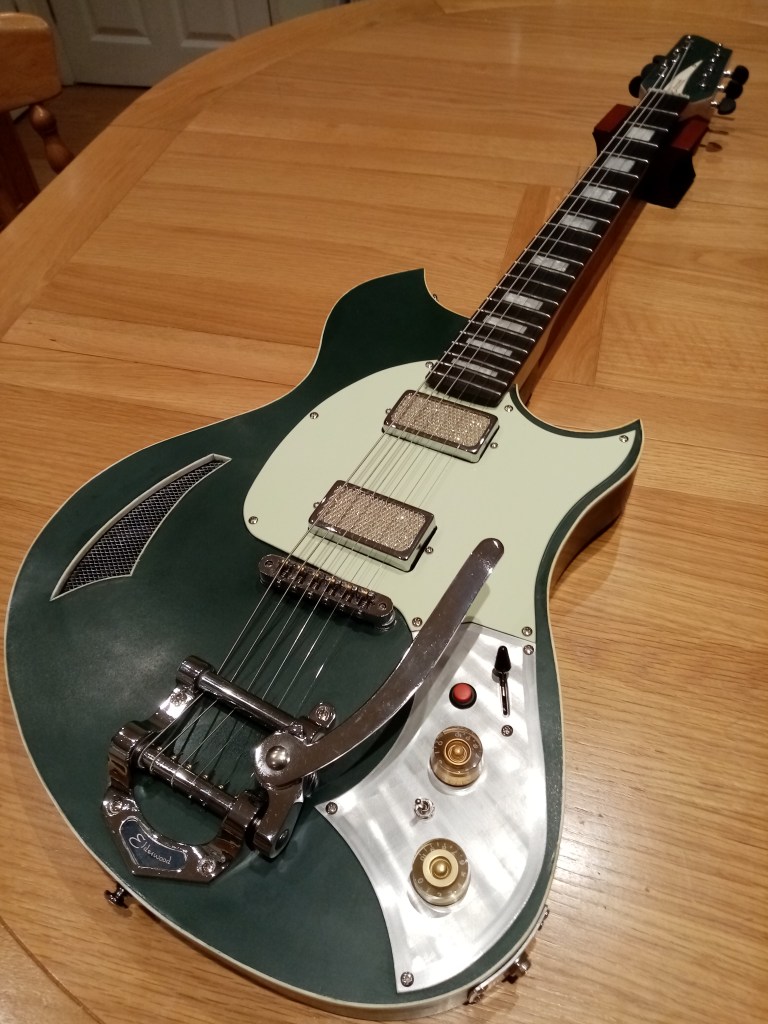
Humbucker semi-hollow guitars (335, Elderwood, etc)

A humbucking guitar with a slightly airier sound
Lighter than a Les Paul (to save your poor back!)
Capable to playing most styles imaginable
Perfect for: jazz, funk, soul, blues, classic rock
Neck & Bridge pickups together gives a wonderful funk tone
Prone to feedback onstage, especially in higher-gain settings

Picture credit: Music Radar

Final thoughts

Which would I choose? I still couldn’t say for certain. It depends so much on the gig in question, but if I wasn’t sure what I was going to asked to play, I expect it would be the Strat or the 335 I’d be reaching for. I guess it comes down to a choice between a solid body or (semi) hollow bodied guitar; whether I’m seeking the thicker snap of the Strat, or the airier sound of the 335.

And of course, bear in mind that we’ve only been discussing electric guitar options here – if I was really unsure about the requirements for a studio date, I’d have an acoustic packed into the car too!

But what about you? Obviously, what works for me doesn’t necessarily work for everyone, which is why I’d love to hear your thoughts – get in touch!

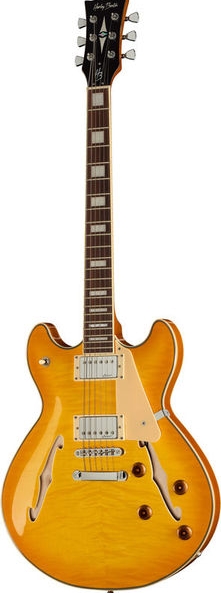
Harley Benton HB-35 Plus Top Semi-hollow Guitar Review

Guitars & Gear

At the end of last year, I acquired a new second-hand guitar. It even shipped with a hard case included as part of the sale! The guitar in question is a budget 335-style copy, made by Harley Benton, the in-house grand for the German musical instrument retailing giant Thomann. Or rather, I should say the Harley Benton HB-35 Plus

What does plus mean?

Harley Benton already have the HB-35, their budget version of a 335-style guitar. Selling for just £175, they get good reviews and are an affordable way to try out Semi-hollow guitars for the first time. The HB-35 Plus retails at approximately £220 new, but has features which mark it out as a considerable upgrade on it’s cheaper sibling.

So what does that extra £45 get you? Block inlays, for a start, which look very classy. You also get more specialised vintage-voiced humbucking pickups (which can be split for a single-coil sound) and an arched maple top (hence the plus top moniker) in fancier colour options, such as the lemon drop colour reviewed here.

Image from Harley Benton’s website – note the original placement of the pickup selector

I love this colour, which appears more of a light orange-yellow to my eyes.

Furthermore, it seems that the nut is slightly more narrow (42mm to the original HB-35’s 43mm) and a slightly more curved fingerboard (12″ radius, compared to the older model’s 13.5″ or thereabouts), making this guitar feel a little more like the classic ‘jazz boxes’ of old.

Specifications & build quality

Having bought this guitar from another player, I received an instrument which had already been set up, and indeed, modified. This means I don’t know how this guitar would have arrived ‘from the box’, although I hear that like most guitars, a simple set up would be enough to get it in shape.

The guitar I received felt well balanced across the fretboard and is really comfortable to play. The classic Gibson scale length feels familiar and the neck is comfortable in my hand. In fact, it feels like they have copied the dimensions of the classic 335 very closely, which is no bad thing.

What’s more, the previous owner had moved the pickup selector switch from the top shoulder (where you would find it on a Les Paul) to a sit with the other controls, which is much more typical on a 335-style guitar. The only negative is that the original hole is still there (it was covered with a giant sticker when it arrived, which I quickly and carefully removed).

Here are the full specs of the guitar, according the Harley Benton:

  • Semi-hollow design with mahogany sustain block (Entandrophragma cylindricum)
  • Maple body with AAAA flamed maple archtop
  • Set-in maple neck
  • Pau Ferro fretboard with block fretboard inlays
  • Fretboard radius: 12 inches
  • 22 medium jumbo Frets
  • Scale: 24.75 inches
  • Nut width: 42 mm
  • 2 Roswell LAF Alnico-5 vintage-style humbucker pickups
  • 2 Volume controls with push/pull function for split coil
  • Individual tone controls for each pickup
  • 3-Way pickup toggle switch
  • Tune-O-Matic bridge

The main thing on my list to change, and indeed the only upgrade I feel this guitar needs, is to swap the plastic nut for one made of bone. I’ll probably get round to doing this later in the year, and for now it’s working fine and holding its tuning well.

How does it sound?

Before even plugging into an amp, this guitar sounds good (and surprisingly loud) completely acoustic, which is useful for playing at home.

Plugged in – it sounds exactly as a 335 should.

Played clean, single notes and chords ring out loud & clear, sounding even across the entire fretboard. The pickups, combined with the tone controls, allow for everything from jazz and blues to soul, pop, country and an almost Gretsch-like Chet Atkins vibe. Using the push-pull volume to split the humbuckers down to single-coils beings out an airier version of a Telecaster sound.

Throwing a little overdrive in makes this a very enjoyable guitar to play. As well as offering grittier takes on all the styles and sounds mentioned above, you also get some of the best classic rock tones out there. Add more distortion and it continues to sound very good and play incredibly well. The semi-hollow body allowing gentle feedback which helps add to note sustain.

Putting the HB-35+ through it’s paces at home

This guitar not only took any style I threw at it in its stride, but excelled across the board, even in higher-gain settings. Admittedly, I don’t play the more extreme metal genres, but even then, if you can work out the likely feedback issue, I have a feeling this guitar would surprise you…

Does it hold up well at live shows?

Since acquiring this guitar at the end of autumn last year, I’ve gigged it pretty regularly. It performed brilliantly when I put it through its paces at a recent soul review show, covering Steve Cropper style licks and jazzier solos and choral work. With one of my main covers acts, this quickly became my first choice guitar, covering everything from jangle and early 60s pop to classic rock, punk and Britpop, all in the space of one show. It is comfortable both to play and also to wear standing up for two hours.

Ask most professional session guitarists what the best ‘cover all bases’ guitars are, for studio work and live, and they will probably tell you to have a 335 handy. Obviously, this applies to any decent 335-style guitar, if not the gold standard Gibson original. But it certainly makes sense to snap up this significantly cheaper tribute, especially when it looks classy sounds fantastic and plays so well. It may be that they take a little post-purchase work to reach the decent playing standard I seem to have, but in my opinion, it’s worth it.

This guitar is quickly becoming a firm favourite in my small stable of electric guitars (which includes Stratocasters, a triple P90 non-reverse Firebird copy, and my other, less traditional semi-hollow). In fact, it’s already become my main guitar for covers gigs, playing weddings and corporate functions.

Final Thoughts

This guitar surprised me. I’d heard really good things about Harley Benton, but I still wasn’t prepared to be blown away as much as I was by this guitar. I’ve used it in various settings and with several different acts in the last couple of months, covering styles from Kuti to Kasabian and BB to The Buzzcocks, and I’m very impressed with how it’s handled everything I’ve thrown at it.

Nowadays, the term ‘budget guitar’ doesn’t mean the same as it did twenty or even ten years ago, and shouldn’t arouse the kind of stigma which cling to those older, poorly constructed guitars. The quality on this instrument is very high, and I can’t stress enough just how fantastic those Roswell pickups sound!

After years (decades, even) of using Stratocasters as my main go-to guitar while others have come and gone from my collection, I might have found another guitar that I love just as much. I might even have to buy another of these, just in case something happens to this one – which at this price point, is an affordable prospect.

Highly recommended. Go and give one a try now.

Creativity v Convention: What happened to improvisation in classical music?

Music

During lockdown, I wrote a piece featuring only a starting and ending theme, leaving the space in between entirely free for the performers (taking turns) to improvise. Players had complete freedom of expression in how they choose to navigate from one theme to the other. The notes they chose, how long they took, and style were entirely at the discretion of each performer.

I approached a few of my musician friends to test this conceptual piece out. When faced with no rules and no harmonic foundation on which they could improvise against, many of them struggled. I found this surprising, especially from performers I know to be excellent jazz improvisers.

However, my friends who are classical musicians failed the task entirely. Why?

Improvisation seems to have all but disappeared not just from the repertoire of classical music, but from the skill set of classical performers. Audiences attending classical concerts and recitals generally expect to hear faithful renditions of the pieces they know, and doubtless have in their music collections at home. Deviation from the score is seen as a failure, perhaps even an insult to the express will of the composer.

It wasn’t always this way. Many early pieces were based around a framework where improvisation would be expected, not just on the main theme (similar to a jazz ‘head’ followed by solos nowadays), but in the accompanymeny itself. The basso continuo parts in Baroque scores (usually played by the harpsichord) were loose fragments, using a special shorthand (known as figured bass) to highlight the expected harmony at certain points in the piece. It was up to the player to fill in the gaps. Similarly, soloists were given freedom of expression in their performance, often at the end of a piece in a completely improvised coda known as a cadanza:

It was the performer’s job to “finish” the composition for the audience (in the same way, today, that an interior decorator finishes the work of an architect and a builder)

Rhode Island Philharmonic, THE STORY BEHIND… (2021)
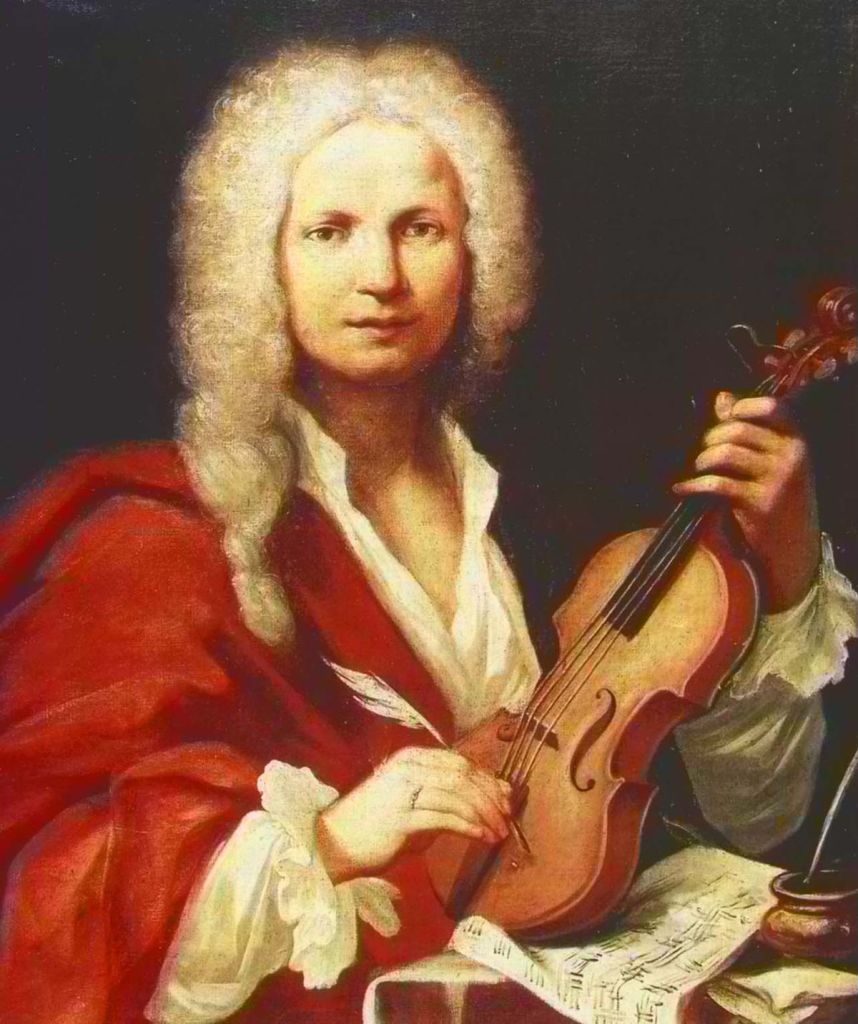
Composer & violin pioneer Antonio Vivaldi was renowned (and even feared by his peers) for the virtuosity of his improvised cadenzas (picture credit: Eboracum Baroque)

Nowadays, there is almost no improvisation to be heard at a classical concert or recital. Sticking strictly to the notes on the page has become convention.

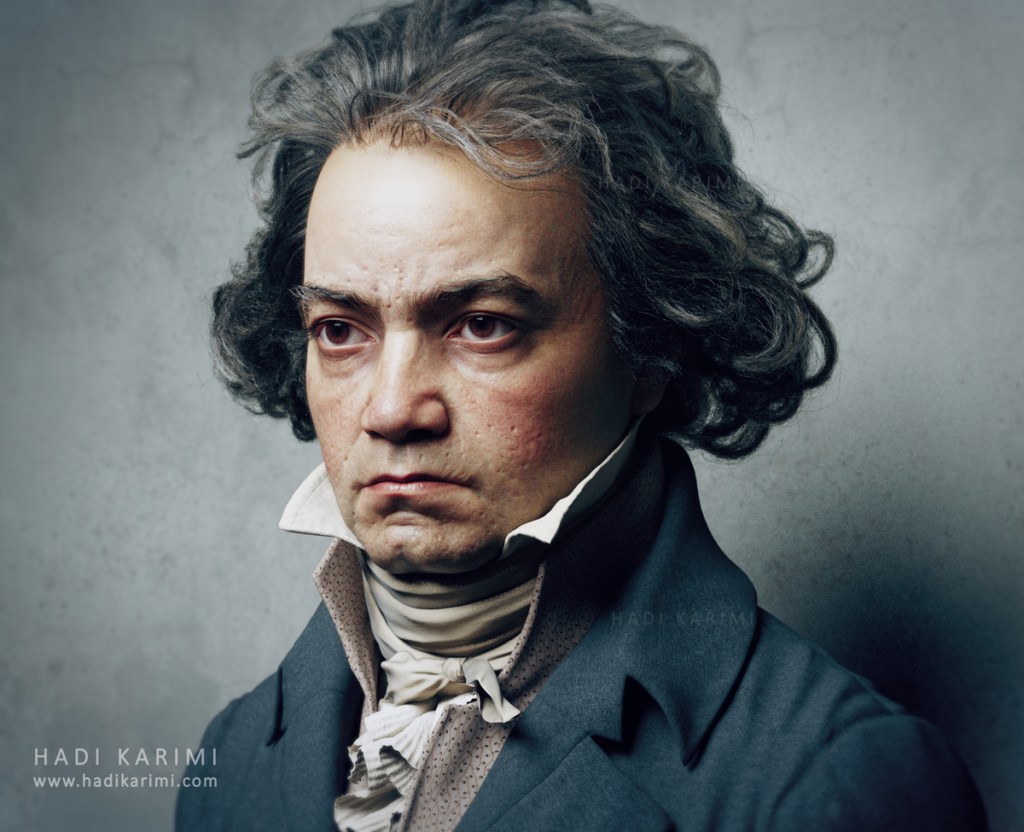
Did the beginning of the end start with Beethoven? His fifth and final piano concerto, the so-called ‘Emporer Concerto’, features a unique instruction at the end of the first movement: “Do not make a cadenza, but immediately proceed to the following” (usually marked on the score as Non si fa una cadenza, ma s’attacca subito il seguente).

At this time in his life, Beethoven once one of the most celebrated piano improviser of his time, if it the best among his contemporaries, was now struggling with his hearing to the extent that he was no longer able to improvise when playing alongside an orchestra.

A wonderfully striking 3D interpretation of Beethoven’s portrait, circa 1812 (picture credit: Hadi Karimi)

Some believe that he decided to formally write a cadenza to be played as written, which was very rare for the time, almost out of a sense of spite; frustration at not being able to improvise the way he wanted to led to the instruction specifying that no other performer could either.

At the same time, pieces were becomg more elaborate, orchestras were increasing in size and composers were becoming more experimental and imaginative. This left little room for the spontanetny of one individual’s instantaneous composing. Similarly the widening of audiences themselves to include more of the emerging middles classes led to an increased formalisation of concert going etiquette, much like the ever-expanding rules of dining (which fork to use, passing the port from the left). Invented rules designed to separate the ‘old money’ from the ‘neveau riche’ soon became simply the way things are done. Instruction because convention. Convention became tradition.

So how do we come back from this? There are those who argue that without the skill of improvisation, you’re not a complete musician.

When we repeat music we have learned by rote, are we repeating memorised phrases in a foreign language in which we are unable to actually converse? Music is, after all, the oldest language. We don’t exchange information and ideas solely through the quotation of famous speeches (at least, not most of the time), so why does this still such a strong convention in western classical music performance?

That’s just how things are done around here.

There is something stultifying about a tradition where millions of pianists are all playing the same 100 compositions… everyone has to play a Bach prelude and fugue, a Beethoven sonata, a Chopin nocturne, and we’ll do that until the end of the world, something in our soul dies

John Mortensen, quoted in The Guardian (2020)

But it doesn’t necessarily have to be this way.

Real art is about breaking the rules and going against convention. Perhaps it is time classical performers took back their right to own their own performance and interpretation. Audiences won’t mind (according to this relatively recent research). Beethoven and the Old Masters won’t mind. They’re dead, but their music doesn’t have to be…

‘Last One Get the Lights’ Album Launch, 12.09.21

Music

Well, we finally got there. After delays and set backs, date changes and continued COVID cases making life difficult for all of us, The Nick Gladdish Band finally reached the day of their album launch gig.

This journey started almost a year ago, with rehearsals for group arrangements and recording taking place in October 2020. If you want to refresh your memory, you can look for previous posts, starting with Back in the studio (part 1) and continuing with Back in the studio (part 2), Back in the studio (part 3) and Back in the studio (part 4).

The launch gig, on the 12th of September 2021, brought a year’s worth of writing, recording, mixing, printing and promotion to a close – at least, until I get to work finalising our next short tour, scheduled for Spring 2022.

Also playing were local singer songwriter Jenny Lascelles, performing a beautiful solo set from the piano, and The Baltics, a new indie group on the Newcastle local live music scene. Both acts were well received and it was great to be at a live show again. Our only other performance since the start of the pandemic was a warm up show in Stockton in August, in support of another talented young band, Gone Tomorrow. Safe to say the next generation of bands looks full of promise…

As for our set, we had a blast! We’d spent the best part of a year waiting to play the new songs live and our hour onstage seemed to fly by in a blur of smiles and camaraderie. Personally, I thought the guys in the band played a blinder. If there were any wrong notes played that night I certainly didn’t hear them.

Nick Gladdish onstage (credit: John Timney).

The album is available in full on Band camp here. We’d love your support!

We’re having something of a break for the rest of the year. Everyone in this band has other projects to focus on, and it gives Nick time to write the songs for the next album (he could release a new album each year if he wanted to – I don’t know how he does it!). In the meantime, stay tuned for news of other fun things happening soon.

The Nick Gladdish Band (L-R): John Timney, Nick Gladdish, Adam Cornell, Tim Higgins & Shannon Powell, after the album launch.

Until next time…

Examples of using intervals in guitar playing, part 1: thirds, sixths and tenths

Advice & Tips

Single line lead guitar playing is great. But when you have six strings and four fingers to hold them down, why limit your playing to one note at a time? Throughout the history of guitar, players have used two notes (or more) at once, resulting in something halfway between a single note line and a full guitar chord. We do this for a few reasons:

  • It adds depth (useful in trio settings, for example)
  • To create a certain feel (which we will touch upon below)
  • To imply a chord through highlighting certain scale tones
  • To make certain phrases stand out

What is an interval?

An interval is he distance between two notes, in terms of pitch. Thinking of the C major scale (visualize the white keys on a piano), the root note (C) is 1, and the next note (D) is therefore 2, so the interval between C and D is known as a 2nd. More specifically, it is called a major 2nd because it is a whole tone away from C (whereas Db, only a semitone higher, is known as a minor 2nd). The next note in the C major scale would be E, which is called a major third (and Eb is the minor 3rd). I won’t bog us down in theory for this article, but if you need a more in-depth explanation, check out this video from Victoria Williams of mymusictheory.com.

It’s possible to use any interval when playing, especially lead lines. However, some are more effective than others. In this article, I’m going to stick to three types of interval: thirds, sixths and tenths, along with a few well-known examples in music. Go give some of these a listen and see if you can spot the intervals in use.

Thirds

Common in any music with a Spanish in Latin twist, particularly on acoustic guitar. Try going up and down a major scale by playing each note with another note ‘two places higher’ in the scale on the next string up. For example, starting with a C by fretting the G string at the fifth fret, you ‘think up two notes’, skipping D, and playing E by fretting the B string at the fifth fret. The next note in the scale (D) would be played at the same time as F. Going up the fret board/scale, the notes should match up above each other like this:

  • EFGABCDE (thirds)
  • CDEFGABC (base notes of the C major scale)
Picture Credit: GUITARHABITS.com

Check out this useful video by Pete Farrugia, which covers thirds and sixths in greater detail (see below).

It is also the most commonly used interval for twin guitar harmonies, such as:

  • Thin Lizzy – The Boys Are Back In Town (recurring twin lead line after the choruses)
  • The Eagles – Hotel California (harmony lines at the very end, during fade-out)

Sixths

One of my personal favourites, which I use a lot in my guitar playing. Sixths are essentially an inverted third, where the base note (eg, C) is played highest (such as one the E string at the 8th fret), while the harmony note (E or Eb) is played two strings lower (in this case, the G string, at the 9th fret for E, or the 8th fret for Eb).

Picture Credit: NZMusician.com

They can highlight major and minor chords, and sound great when you slide into them up and down the scales you’re using, as well as chromatically (think of the stereotypical blues ‘ending’). They’re great for soul playing too, implying a chord or scale with only two notes (as with tenths – see below). I’m not alone in this – examples exist across the various genres that the guitar is used for, including:

  • Steve Cropper’s guitar intro to the classic Sam & Dave song Soul Man
  • Chuck Berry on the intro to You Never Can Tell

Steve Cropper’s guitar playing uses this time and time again, on many classic recordings from Otis Redding to The Blues Brothers. He had a knack for finding the right guitar line that complimented the songs he played on, without overpowering them, and rightly deserves his own article looking into his style in greater detail (watch this space)!

Tenths

Tenths are essentially thirds, but with an additional octave between the two notes. This has the interesting effect of creating the impression of a chord, while still leaving a sense of space. It is the interval used in the opening phrase of the well-known classical guitar standard Lagrima. Here’s a chart to demonstrate where the tenth harmony for Bb (played alongside a D, two notes then one additional octave higher) across the guitar fretboard:

Picture Credit: PlayTheAxe.com

There has been a few examples of this in big singles recently. In each case, t tenths are used for the main guitar park in the songs:

  • Scar Tissue by The Red Hot Chilli Peppers
  • Love Yourself by Justin Bieber
  • Hold Back The River by James Bay

Tenths are also used in jazz. They provide a nice open-sounding stretch which is easy to play on guitar; they implied the chordal harmony while still leaving space for other instruments.

In summary

One thing that all three of these interval types have in common is their ability to reflect a major or minor chord. I think of them as the same interval, using a base note of C as an example again:

  • Third: C, played with an E (2 tones higher)
  • Sixth: An inverted third; C is played with an E a sixth lower (4 tones)
  • Tenth: A third, plus one additional octave between both notes; C, plus E (8 tones higher)

Each has it’s own feel and characteristic, and they are not always as interchangeable as you might think. Try playing around with them, across major and minor scales, then in your solos, and let me know how you get on!

Coming next: Part two of this subject will focus on intervals which can utilised over major and minor chords – fourths and fifths.

Why is there so much poetry in my blogs now?

Poetry & Writing

You might have noticed that recent posts have featured poems (especially Haiku) rather than my usual guitar or music-related topics. Well, you don’t have to worry about this site turning away from it’s main focus. For one thing, my efforts aren’t very good!

Yet, in these uncertain times, I find myself composing small poems in my head and decided to try and write more of them down. I also recalled previous advice about writing one Haiku per day, in order to become better at distilling an idea into a short, succinct form. Now seemed as good of a time as any to put some of my poems out into the world, from those celebrating recent guitar purchases, or the bizarre thoughts that strike me while out walking. There were also a few other reasons, such as…

I’m not performing live at the moment

Due to COVID19, almost no one is gigging at the moment. Since March, I have managed one socially distanced gig in a garden with the Nick Gladdish Band, but otherwise have found myself with more free time on my hands, particularly on weekend evenings. All future gigs and musical projects are postponed. Also, not having much means (or space) to embark on live streaming or recording projects from home, I found my creative juices were becoming pent up, and seem to have manifested themselves via written ideas, rather than musical ones.

I decided not to be embarrassed about my poems any more

I recently discovered that a good friend has a passion for a very niche form of short story writing, which was as pleasing to learn as it was unexpected. The fact that I was happy for my friend made me realise that I shouldn’t have any shame in putting my own silly little rhymes and Haiku out into the world.

I enjoy writing them

Surely that’s the most important thing? I mentioned in my recent post about using the recent lockdown as a reminder to do the things you enjoy, when you can. For me, this is one of those things. Like a Sudoku, they serve to keep my sharp, in a creative sense, until I can start rehearsing my own musical compositions and playing gigs again.

This blog will still continue to be about guitar. music, music therapy and all sorts of arts-related subjects. Writing these articles are another way of channeling my creative urges, and if someone learns a little extra knowledge as a result, fantastic. In time, I will start to announce new tours, projects, albums, etc, as they start to emerge from our cultural hibernation – but expect to see the odd poem thrown in there as well, from time to time!

Lessons learned from lockdown

Advice & Tips

This year has seen the most use of the word ‘unprecedented’ that I have ever seen, and probably for good reason.

Do what you can now, and if you can’t do it now, plan for later

Getting started on something can often be hard. During lockdown, I’ve found myself exhausted after a full day of childcare, and in those few rare moments I had for me, working on a new composition seemed ridiculous.

Do what you can, in small steps. In fact…

Make a list

List what your daily tasks are, as well as goals for the medium term (i.e., the next few weeks) and long term (post-lockdown, or even post-COVID altogether). It will help you focus, and evaluate what is important.

List making sure was already an occasional habit of mine, mainly because I am aware of my own poor short-term memory. Going forward, I’ll be sticking to daily lists, as they seem to have made me more productive than when I worked from home in pre-pandemical times.

Speaking of lists…

Bring back the ‘weekly shop’

We must have gotten out of the habit of doing the ‘big shop’ only once a week. Lockdown forced us back into this habit, and although it somehow felt more expensive at first, it seems to be better value across the week, especially when it was harder to nip out on a whim for a treat. Give it a try, if you can, and see how it works for you.

Don’t compare yourself to others

Whether it’s FOMO (fear of missing out) or a kind of professional jealousy when another person seems to be working fine at home – you know, the one with all the recording gear in their spare room (or their parents) and no children.

Social media only shows you what people want you to see. Most of the time, it only shows what those people think everyone else wants or expects to see.

Some of it is real. Some of it is less than genuine. All of it is someone else, in a different set of circumstances (however slight that might appear).

Beware of fatigue

Some of my friends have been locked down at home by themselves, working from one room during day, then zoning out in front of the TV in the evening. They told me that even committing to an online quiz via Zoom felt like too much effort. Staring at a screen all day, even for leisure or socially distant socialising, is incredibly tiring. Give yourself time to reset, and do absolutely nothing. Just remember when you do…

Don’t be to hard on yourself

If the fatigue did’t get you, the guilt surely did – right?

This is connected to my earlier heading, Don’t compare yourself to others, but it’s worth looking at again from a slightly different angle.

We’re going through unprecedented times. No one in our lifetime has experienced this, on this scale, before. Survive. Look after yourself and those around you. Don’t feel guilty for doing less.

In fact, don’t feel guilty at all for how you are managing to get through a pandemic.

Do what you love, if you can (and if you can’t make a plan for doing it in the future)

You might have noticed that a few of my recent posts have been short Hailku form poems, or observations from walks with my family. I enjoy writing them. Since I can’t perform live at the moment, they give me some creative output while everything else is on hold.

If you have recently discovered a new passion, embrace it and enjoy it. Share it with the world. And if COVID19 is stopping you from doing what you love and enjoy (as it has for me with my love of playing guitar live), make another list; this time, make it a plan to get your passion up and running again soon, once all of this is – hopefully – a distant memory of an unpleasant time, now disappearing.

Best of luck, and let me know how you get on! Also, let me know what lessons you have learned from the last few months of lockdown by leaving a comment or getting in touch via my usual channels – I look forward to chatting to you!

New projects, despite lockdown

Music

As well as using Twitter to announce new projects, or update people on ongoing ones, I sometimes reminisce about ones from years ago, such as this one…

For some reason, I kept thinking of this, and on top of everything else I have planned (post-COVID), I’d quite like to explore what a power trio can do in terms of extended instrumentals (which aren’t based largely around improvisation); something more progressive in nature…

Having played in a rock trio format before, it can be a new challenge to fill the space adequately without the music sounding thin. Conversely, one has to avoid the temptation to stick to the more blues based method of sharing riffs, in union (or octaves) with the bass player.

Bear in mind that I currently have…

  • 3 music therapy jobs
  • A solo classical(ish) EP to finish
  • Another Nick Gladdish Band album to finish & tour to plan
  • My next band project (world/blues/Latin) to start rehearsing
  • A music therapy case study series to complete by the autumn
  • A small portfolio of compositions to develop

…and we’re still in a time of lockdown here in the UK, with no concrete sign of progress regarding indoor gigs (although the news today implies that this might change very soon).

Still, if you want something doing, ask a busy person, right?