Reblog: Three things we can learn from Sir George Martin (1926-2016)

Advice & Tips

Legendary producer of The Beatles, Sir George Martin, passed away on this day, five years ago. The following day, I wrote this article on a now-defunct page. Reposting here to mark this sad anniversary:

Sir George Martin, most famous for acting as the producer of all but one of The Beatles’ albums, passed away yesterday, aged 90.

Beatles_and_George_Martin_in_studio_1966

Already, reports and obituaries have been published, quoting Martin and highlighting his amazing achievements with and without The Beatles. Though Martin was a producer for over a decade before meeting them, it is undoubtedly his work with this music-changing band, the very Zeitgeist  of musical development in the nineteen-sixties and beyond, for which he will be best remembered and discussed for years to come.

There’s been plenty of debate on whether or not The Beatles succeeded artistically because of suggestions made by Martin, or if he was simply very effective in channelling their natural talent. In reality, it was probably a mix of the two. That in itself is not a bad legacy to leave behind.

Though Martin now sadly has passed away, we can still learn something valuable from the work he left behind. Here are my three things which we can learn from the life and career of George Martin:

Have an open mind

I’ve mentioned this in several previous posts, but an open mind and a willing pair of ears is without a shadow of a doubt the most important tool for any artist. This is especially true for musicians and producers, and a sentiment to which Martin himself prescribed more than once, including in his own books.

It is well established in rock history canon that The Beatles were been turned down by several record companies prior to being signed by Martin to EMI. Think about this for a moment: every almost ‘industry expert’ had refused to take on another guitar band, believing them to be going out of fashion. Fair enough, it is called the music business for a reason. Money has to be made and trends will always be followed. This is as true today as it was in the nineteen fifties and sixties. However, ‘following the money’ is a great way to be a follower, but you are default already a follower from the start, and not a leader.

The best leaders, artists, teachers, and indeed the best in any profession listen first. In seeing the potential that The Beatles had, Martin was able to continue listening to them throughout their eight years working together making hit after hit, and classic album after classic album. This is especially noticeable when at the point mid-sixties where the band stopped performing live altogether, becoming a studio band only. The resulting works, Revolver, Sgt. Pepper’s Lonely Heart’s Club Band, The Beatles and Abbey Road, are unique in sounding very much of their time, but still fresh and exciting in 2016.

And it wasn’t just Martin doing all of the listening. The Beatles themselves were avid consumers of art and music. In being open to anything interesting, they brought elements of avant-garde, atonalism, looping, sampling and a whole world of musical styles to their music. By opening your ears, and combining the sounds you love, it is entirely possible to produce a new work, which speaks to the future while recognising that which has gone before.

Know your limits, and push them

Looping, you say? Sampling? In the nineteen-sixties?! It is worth noting that the vast majority of The Beatles’ recorded output was recorded on a four-track (or, at very best towards the seventies, eight-track) tape machine. This was state of the art back then, but lacking in the limitless options of the digital recording software in use everywhere. Leaving aside all the other technological innovations and improvisations Martin would conjure up to accommodate the visions of The Beatles in their songwriting, there is the question of the sheer number of instruments and sounds on some songs. The solution to squeezing so many different elements onto a four-track recorder? Multi-tracking.

Multi-tracking was first developed by guitarist Les Paul some decades before Martin made such effective use of the technique. Put simply, the process involves recording onto three of the available tracks, then ‘bouncing’ that mix onto the fourth track. The process can be repeated using tracks one and two, then bouncing to the third. Then it can (if needed) be taken even further by mixing tracks three & four onto one of the other tracks, meaning there are now three left to add on more parts (and here is where I start to go cross-eyed myself!).

The biggest issue with this method of recording is the physical degradation of the tape onto which the sound was being copied. By layering track upon track, the overall mix becomes more dense, and done incorrectly, can leave with a muddy sounding, uninspiring record. George Martin, however, seems to have been perfectly capable of getting clean, crisp recordings of individual mixes, which hold their brightness as they get ‘bounced’ and mixed into a deeper and more complicated arrangement. Even with Martin’s confident ‘know how’, there was still a limit to how many additions could me made. In these days of endless tracks and almost any possible sound available to laptops worldwide, I personally don’t see the same level of mechanical creativity. Sometimes working with what you have, pushing the limits, is better than having no limits at all…

Have a sense of humour

There’s a famous anecdote – which Martin was often fond of telling – detailing the first time The Beatles first met their producer (retold once more in the Washington Post’s obituary of George Martin today). After Martin had spoke at length about the recording process, he asked the Fab Four is there was anything they didn’t like. The response, from George Harrison, was “Well, I don’t like your tie for a start…”. From there, Martin knew that they would get along famously.

A sense of humour can not only ease any tensions rising in the studio, which can be high-pressure for some acts expected to produce hit after hit. It can also serve to bridge the gap between generations. In that respect, Martin must have impressed the Beatles from the start, having quite an extensive background in comedy and novelty recordings – some of which became unexpected hits – including John Lennon’s comedy heroes, The Goons. In quite a lot of interview footage from the early sixties, The Beatles were set apart from their questioners, an exclusive club with a shared sense of humour and in-jokes which created a barrier to those outside of the group. Martin, I believe, was very much inside their ‘circle of trust’, otherwise they would not have allowed him such authority in the studio. A shared sense of humour must have been a major in-road to gaining the trust of these young Liverpudlians.

lightbox

Final Thoughts

As a musician, producer and in some ways, mentor, Martin helped the Fab Four to realise the sounds they heard in their heads. His creative, yet critical thinking fuelled The Beatles’ insatiable appetite for art, and helped their music transcend to heights which otherwise may have remained untouched. Though I have spoken mostly about Martin’s work with the Fab Four, we should be no means overlook all of the other artists he worked with & film scores he wrote/arranged. Without Martin, popular music, and therefore the world we live in today, would be very different indeed…

R.I.P. Sir George Henry Martin (1926-2016).
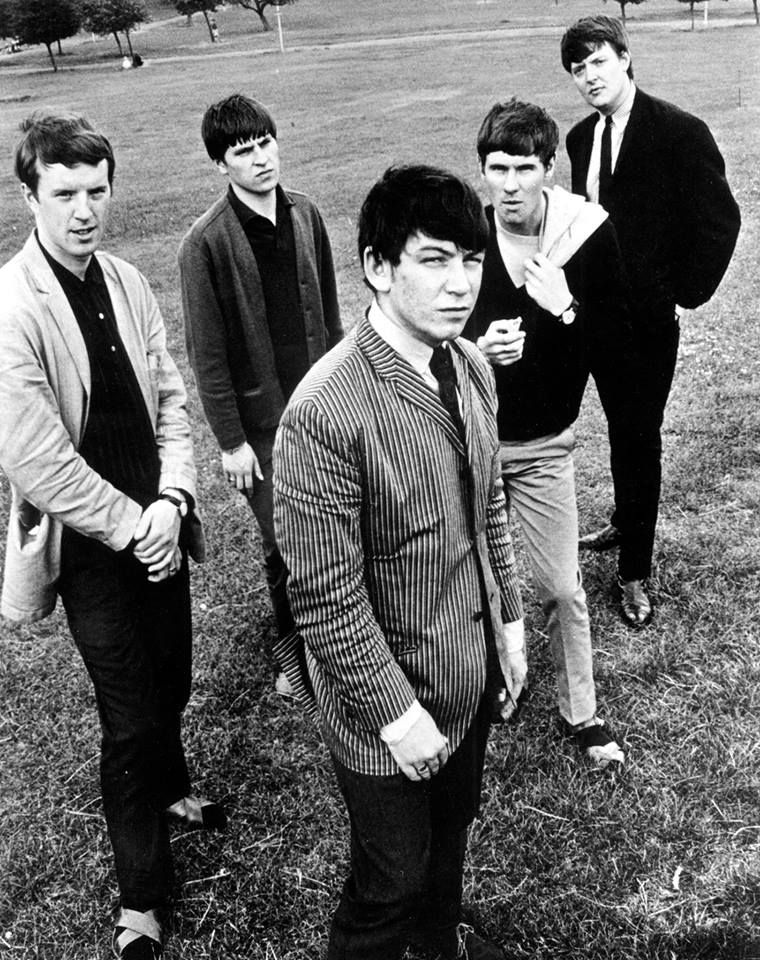
In praise of The Animals

Music

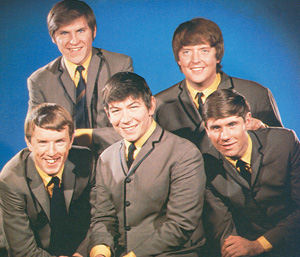
I recently read about the passing of Hilton Valentine, the original guitarist for The Animals, who has died, aged 77.

Valentine’s simple arpeggiated riff in the band’s version of the traditional tune House of the Rising Sun remains one of the most recognisable guitar parts in the history of rock’n’roll.

Valentine’s passing caused me to reflect on the wider influence of The Animals. The original lineup split by 1966, but in that time they recorded some memorable songs, including the huge hits We Gotta Get Out of This Place and their uptempo cover of (Don’t let me be) Misunderstood, originally written for and recorded by Nina Simone.

The Animals were one of the British groups from the early 1960s who took the R&B of the (predominantly black) artists in the US and repackaged it in a form that brought the genre – and its original performers – to a larger audience. A number of groups were part of this ‘wave’, including The Beatles, The Rolling Stones and The Yardbirds, to name but a few. While it might make one baulk to think that it took the playing of ‘black music’ by white performers to make the style palatable to white audiences in America (racial segregation still existed in some states in the early 1960s), it is worth remembering that these same audiences later turned to the original artists themselves. This created career-changing opportunities for artists such as BB King, Muddy Waters, Howlin’ Wolf and so many, many more.

Yet their influence on the artists who followed in their footsteps shouldn’t be underestimated. They were more than just local heroes in the north east of England; their activities after the breakup of the original group in 1966 led to a few significant ripples through the music world…

As well as the countless musicians who picked up a guitar to try and play House of the Rising Sun, or to start their own rhythm & blues outfit, The Animals also raised the profile of several well-known acts, one way or another.

Lead singer Eric Burdon became well respected for his soulful, yet gravelly, voice. After initially attempting to create a new version of The Animals (with only Burdon as the surviving founder member), he was soon teamed up with an up and coming R&B band. The resulting outfit – Eric Burdon and War – had success with the single Spill the Wine, and two albums together.

However, Burdon unexpectedly left the group halfway through a European tour. The band continued without Burdon, creating some very well-known hits in the 1979s, including Cisco Kid, Low Rider and Why Can’t We Be Friends?

Alan Price, keyboard player for the animals, had something if a dual career after the group disbanded. He worked with fellow 60s star George Fame for many years, while also writing film & theatre scores. He also released a few solo albums, and in his songs choices, became one of the first performers to bring the music of American songwriter Randy Newman (later famous for songs such as Short People and You’ve Got a Friend In Me) to a wider audience.

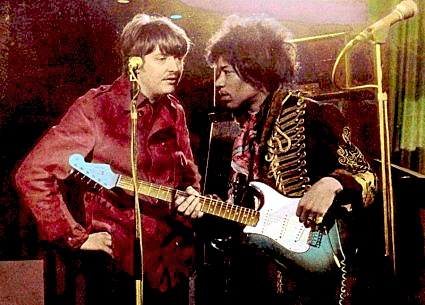
Meanwhile, Animals bassist Chad Chandler discovered a young Jimi Hendrix performing in Greenwich Village, New York, and became his manager. He set up the legendary guitar player with Mitch Mitchell and Noel Redding to form The Jimi Hendrix Experience, but used his connections to secure gigs in the UK for the group, and introduce him to contemporaries on the sixties music scene in London, such as The Beatles and Eric Clapton. In fact, the last time Hendrix performed live was onstage in London with Eric Burdon & War, the day before his tragic early death.

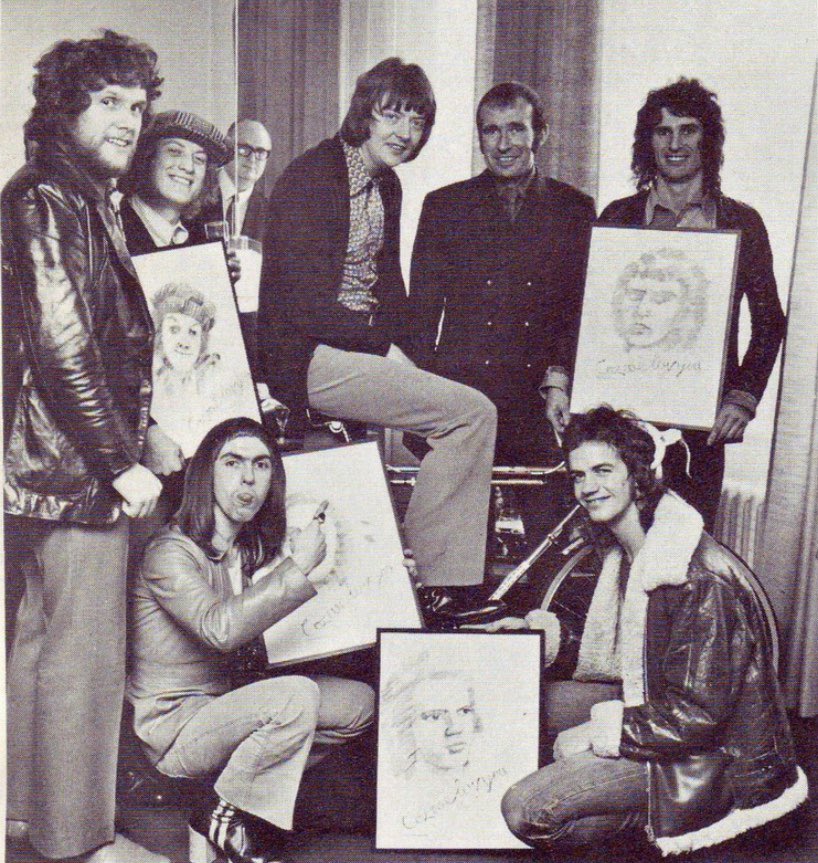
Chandler went on to manage the British glam-rock group Slade, who had several hits through the seventies (including one of the most well-known Christmas songs in pop music). His other business interests helped to build the Newcastle Arena, a sport and large capacity concert venue, which meant those of us in the region now got to see more of the bigger artists when they came around on tour!

I’m sure similar ‘family trees’ can be found throughout the history of rock’n’roll, and maybe it is the shared home region which fuels my fondness for them, but The Animals were much more than a few catchy songs and one incredibly famous guitar riff.

Rest in peace, Hilton Valentine (1943 – 2021). The music lives on.

Great Guitarists #10: Mary Osborne

Great Guitarists

In this, the tenth installment of my Great Guitarists series, I’m a little ashamed to say we have only looked at male guitar players so far. So, to round off my first ‘dectet’ of influential guitar players (and keeping in a jazz theme, like the previous installments), let me introduce to you Mary Osborne…

Picture Credit: Gretsch, 1959

Osborne was born into a musical family in North Dakota, 1921. Both her parents were musicians and her father’s barbershop was a known gathering place for local players. Already playing live by the time she was a teenager, Osborne was influenced by the playing of early jazz pioneers Django Reinhardt and Eddie Lang. However, it was Charlie Christian who first captivated her, and mentored her for a while, fine tuning her great sense of swing.

Osborne’s career ranged from trios (her own, and the Winifred McDonnell Trio near the start of her professional career), as well as some work as a sideman (or sidewoman) for the likes of Buddy Rogers, Joe Venuti (whose act included vocalists Kay Starr and The Andrews Sisters), amog many others. In the first of two spells in New York, she was the guitarist in Minton’s house band, where bebop was invented during the jams the legends of jazz had there. Her career continued throughout her life, and she was still performing live up until her death in 1992, at the age of seventy.

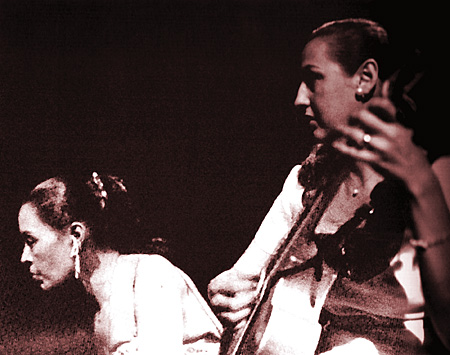
Osborne (R), with Billie Holiday (L), 1958. Picture Credit: Nancy Miller Elliot

Equipment

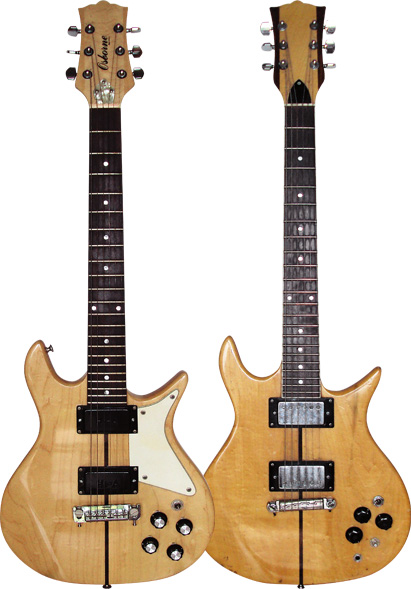
Osborne purchased the same model of Gibson archtop that Charlie Christian played – the ES-150, an early version of the classic archtop ‘jazz boxes’ we know and love today. It came with a large spruce body and a single-coil pickup near the neck, itself containing a large magnet that helped deliver good definition and attack. She later played other guitars by Gibson, as well as models by Gretsch, such as the White Falcon. In the 1970’s, Osborne founded her own guitar company, Osborne Sound Laboratories, formed from the ashes of the Mosrite Guitar Company (whom her husband had worked for at the end of the 1960’s). Osborne Sound Laboratories made amplifiers personally tested by Mary herself, as well as a selection if interesting instruments (including funky looking solid bodies such as in the picture below). Sadly, they couldn’t penetrate the market due to the dominance of the big manufactures, such as Fender (despite their well-known quality issues in this decade) and the company folded in 1980.

Osborne Sound Laboratories guitars from the 1970’s. Picture Credit: VintageGuitar.com

Recommended listening

Osborne’s 1959 LP A Girl And Her Guitar (Warwick) stands testament to her talents in a golden era for jazz guitar. Her later record Now And Then (Stash, 1981) shows a player who survived longer than most of her contemporaries, and continued to play beautifully.

Also, check out The Mighty Two (1963, Roulette), an LP by the two legendary drummers Louis Bellson and Gene Krupa. Although this was conceived as an instructional album for budding drummers, several tracks feature six musicians accompanying both drummers through nine of the songs on the record. As well as featuring Osborne on guitar, you can hear Milt Hinton (bass), Joe Wilder and Joe Newman (trumpet), Phil Woods (alto sax), Dick Hymen (piano) and Tyree Glenn (trombone) – something of a who’s who in sidemen for the time. The ensemble playing is tight, and the entire LP is a unique artefact of jazz history.

Why is there so much poetry in my blogs now?

Poetry & Writing

You might have noticed that recent posts have featured poems (especially Haiku) rather than my usual guitar or music-related topics. Well, you don’t have to worry about this site turning away from it’s main focus. For one thing, my efforts aren’t very good!

Yet, in these uncertain times, I find myself composing small poems in my head and decided to try and write more of them down. I also recalled previous advice about writing one Haiku per day, in order to become better at distilling an idea into a short, succinct form. Now seemed as good of a time as any to put some of my poems out into the world, from those celebrating recent guitar purchases, or the bizarre thoughts that strike me while out walking. There were also a few other reasons, such as…

I’m not performing live at the moment

Due to COVID19, almost no one is gigging at the moment. Since March, I have managed one socially distanced gig in a garden with the Nick Gladdish Band, but otherwise have found myself with more free time on my hands, particularly on weekend evenings. All future gigs and musical projects are postponed. Also, not having much means (or space) to embark on live streaming or recording projects from home, I found my creative juices were becoming pent up, and seem to have manifested themselves via written ideas, rather than musical ones.

I decided not to be embarrassed about my poems any more

I recently discovered that a good friend has a passion for a very niche form of short story writing, which was as pleasing to learn as it was unexpected. The fact that I was happy for my friend made me realise that I shouldn’t have any shame in putting my own silly little rhymes and Haiku out into the world.

I enjoy writing them

Surely that’s the most important thing? I mentioned in my recent post about using the recent lockdown as a reminder to do the things you enjoy, when you can. For me, this is one of those things. Like a Sudoku, they serve to keep my sharp, in a creative sense, until I can start rehearsing my own musical compositions and playing gigs again.

This blog will still continue to be about guitar. music, music therapy and all sorts of arts-related subjects. Writing these articles are another way of channeling my creative urges, and if someone learns a little extra knowledge as a result, fantastic. In time, I will start to announce new tours, projects, albums, etc, as they start to emerge from our cultural hibernation – but expect to see the odd poem thrown in there as well, from time to time!

Reblog: Ukulele tuning problems

Advice & Tips

Another reblog, this time from early 2016. For some reason, this article has been widely read in Indonesia and the Philippines (according to my stats on WordPress). Either many people route their Internet through these countries, or they have a serious ukulele addiction (or tuning problem)! Either way, hello and thanks for reading – feel free to comment and share these articles!

So you’ve bought your first ukulele & learned a few chords. But now you’ve noticed that it’s gone out of tune. No matter, you have a tuner, you tune up. Done. But after a pretty short time, it’s out of tune again. Why?

I get this query a lot from new ukulele students. Just as they are getting started with their first steps into music-making on this instrument, they become frustrated with it’s apparent lack of tuning stability.

New ukuleles come with new strings, which haven’t been ‘played in’. Just like a new set of strings of a guitar, they need to be ‘stretched’. As ukulele strings are made from nylon, which is a very flexible material, this is even more apparent.

The quickest way to to this is following these basic steps:

  • Tune your ukulele
  • Take a hold of the strings & gently pull them up, away from the fingerboard, repeating across a few different parts of the string (see an example video here)
  • Re-tune the ukulele
  • Repeat steps 2 & 3 until re-tuning is no longer required

Hey presto! problem solved! Your ukulele should now not only remain stable after playing, but also hold it’d tuning better when travelling (though extreme changes in temperature will still cause the strings to expand and contract).

This video is one of many available online to help you better visualize what I mean by stretching the strings. It’s not as difficult as you might think!

(pic courtesy of ukulelemusichawaii.com)

Other things to remain mindful of:

While stretching the strings is by far the most common solution to fixing a consistently out of tune uke, you may still notice occasional tuning issues. Perhaps simple, mostly open chords sound correct, but those with three or four fretted notes, or barre chords, have one or two out of tune strings when played. More perplexing, this can happen when the open strings are still correctly tuned up.

The problem? In this case, it’s intonation.

Provided you have a decent instrument, where the frets are set up and spaced correctly (watch out for the false economy of the bottom range ‘budget models’), then this can easily be fixed by paying close attention to how you fret the notes.

You may find, on new or more interestingly shaped chords, that you are pressing down too hard on certain strings, pushing that note slightly out of tune with the rest of the chord. Some positions might require you to stretch or bend a finger in a way which means it is not sitting behind the fret as per the standard method. This too, can be fixed with a little bit of practice, and a small amount of mindfulness.

Happy Uke-ing!

Advice for young musicians

Advice & Tips

While in the process of editing and revising my WordPress site, I’ve one across a few older articles which might be of interest to some readers. In particular, those of us who are practising or recording more at home during the COVID19 lockdown [still in place this month] might find something they can take away from this blog, first published in 2015.

New articles and a few more reblogs coming in the next week or so. Until then, stay safe – Tim

We all know how it is. You want to prove yourself and show the world (and your peers) that you ‘have what it takes’ to work in music; Self assured and not in need of any advice of pointers from anyone else. How would they know your ‘story’ anyway? How could someone advise you when your style, your sound, your ‘voice’, is unique to you.

True, confidence can be a great asset to our chosen profession. Even in an industry where we work together because it’s the fundamental nature of how music operates, it can get lonely out there sometimes. But a false confidence, or bluff, will leave you alienated and likely to make the same sorts of mistakes thousands of musicians have made before you.

So swallow your pride, take a seat, and listen to a few words of wisdom from those who have made music work – and pay – for themselves.

Keybaord player and composer Ben Folds wrote some advice a few years ago on his Facebook page. Boiled down to the essentials, I found three things especially true:

Work on finding your own voice

However much you try, you will always be you. Stop trying to be anyone else and accept this fact. Once you have come to terms with this, work on being the best ‘you’ that you can be.

Learn your technique, then forget it

Learn as much as you can, as widely as you can. Read about it & practise it. Then follow the advice of the previous point and learn to present these techniques in your own, unique way.

Before you can express yourself in words, you first have to learn the language; it’s vocabulary & grammar. But think of how many books & poems were all the more interesting for their yearning up of the rules? The same applies to music first. However, to reach this point, you need to know which rules you are breaking…

Don’t try to force people into liking you or your music

There will always be people out there who find what you do interesting, provided you are doing it well, and playing from the heart. don’t bend over backwards trying to commercialise your sound, compromising your music in the process. The audience will come to you, so just persist at it.

This is even more true in our digital age – search for good advice on putting you material online. You should never have to pay to do this, due to the high number of platforms out there. It might be slow at first, but you will eventually reap the fruits of your hard work.

NobleViola.com also features a really interesting article entitled 10 things I wish I knew when I was a young musician which, while echoing the sentiments of Folds, adds the following gems:

Practicing isn’t a matter of how many hours you put in, but how many good hours you put in. It’s quality, not quantity.

Your body is also your instrument – learn how it works and take care of it.
Being professional is a 24 hour job.
Keep busy, and do a variety of things. Diversify as much as you can.
Love what you do – and remember to nurture that love.

As Pat Metheny says on his website, “for me, after everything, the only thing that finally remains really true is the feeling that at the end of the day, I know that I played really good, or I didn’t; or that I made some progress and understand something that I didn’t understand at the beginning of the day; or I didn’t. This, to me, is the real currency of what it is to have a life as a musician”.

Well said, Pat.

As always, comments and responses are more than welcome. Feel free to check out my previous articles too! Enjoy the rest of your week & happy playing!