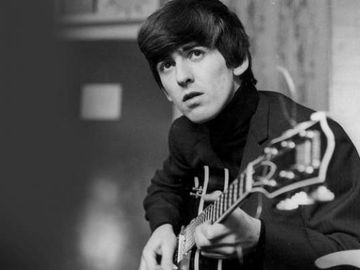
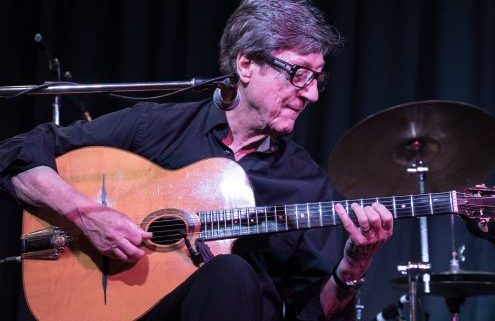
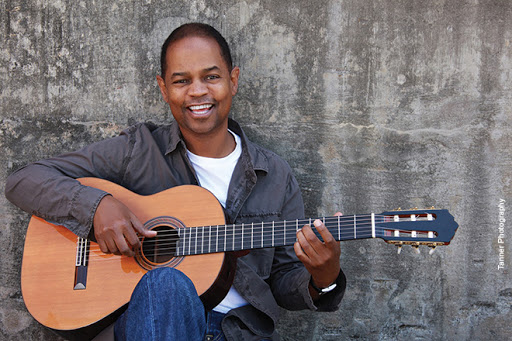
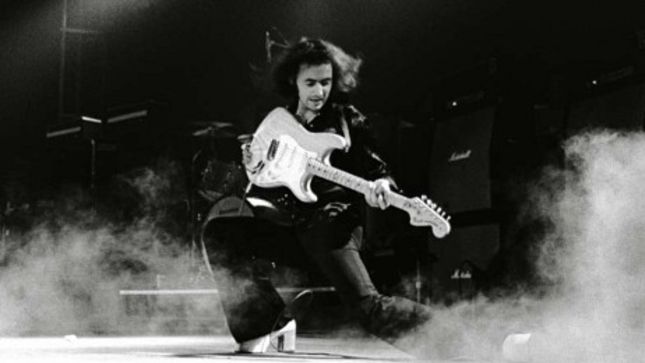
This is one of those exercises / challenges which circulates around Facebook from time to time (much like the one which inspired a previous post about ten albums which inspired me). This one asked guitarists to post photographs of ten guitar players who had been the greatest influence on their own playing.
I find these thought exercises difficult – challenging is the perfect word! I feel like I could post forty pictures and still have missed out a key influence on my playing, yet here we are, in no particular order…
George Harrison
Hank Marvin
BB King
Earl Klugh
Ritchie Blackmore
Steve Cropper
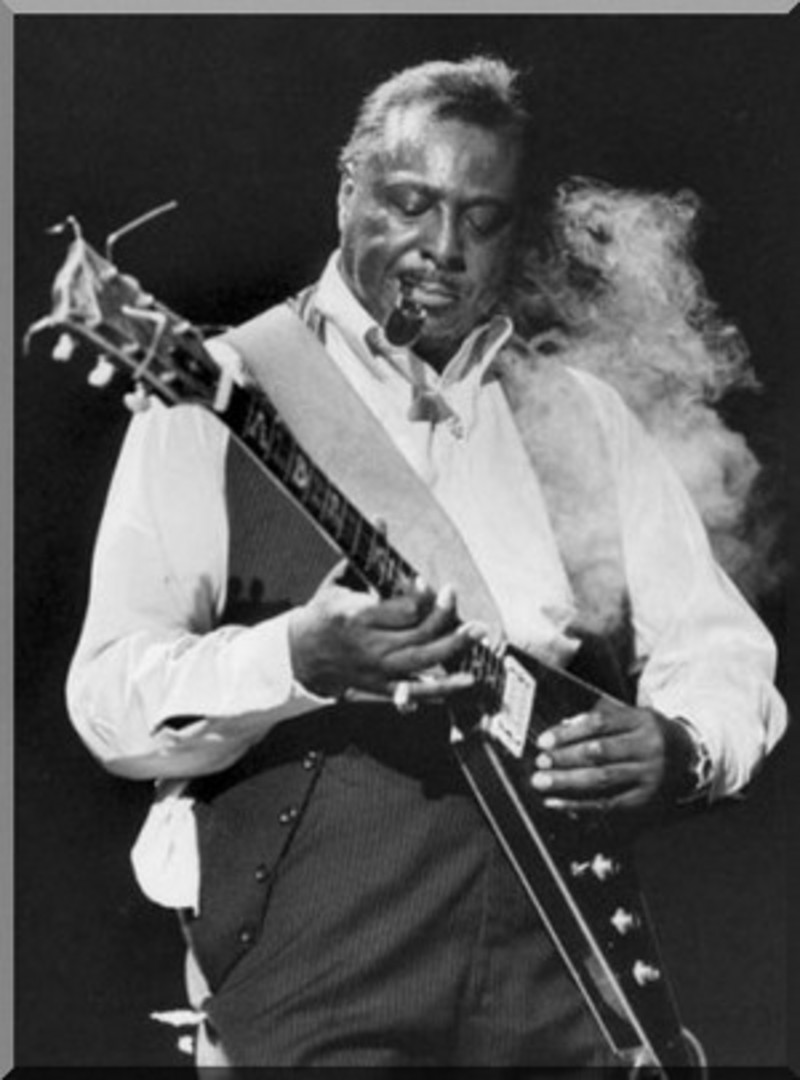
Albert King
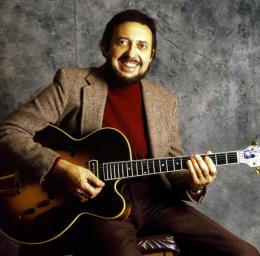
Barney Kessel
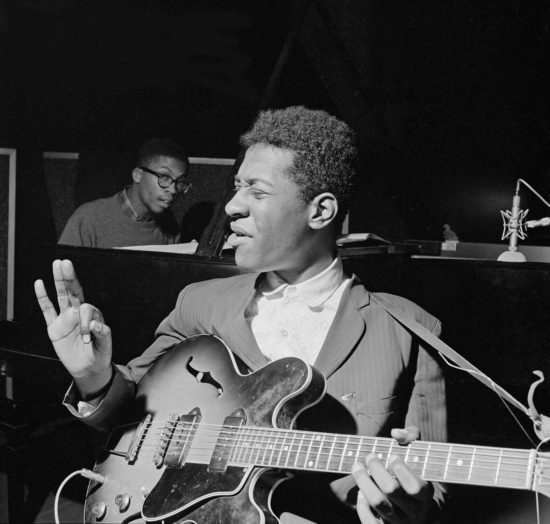
Grant Green
Steve Howe
What do these players have in common? Some are strikingly different. The key characteristics I gravitate towards in other musicians are…
Tasteful or melodic solos
Blending of musical genres
Dazzling showmanship / inspirational technique
…and all of the guitarists pictured above have one or more of these traits.
As always, these are just my opinions. I may well delve into my influences in more specific areas in a future article. But what are your biggest guitar influences? Get in touch or leave a comment to let me know!
Greetings guitar folk. We are back with a little bit of guitar gear news which seems to have dropped this morning…
Most guitar players have probably heard of Harley Benton before. The brand (owned by the European online music superstore Thomann) are well known for bringing surprisingly good guitars into the beginner/lower priced end of the market which have significantly better quality control than their rivals (their 335 copy is in high demand). They also offer a range of instruments and accessories that are useful for working musicians to have in their arsenal. To that end, they have introduced the GPA-100, a power amp that fits in your pedal board.
The GPA-100 features master volume, plus 3 band EQ (treble, middle, bass). It’s main purpose might be to save the day, should your main amp/floor unit fail. And £70 is a small price to pay for that piece of mind.
If I have the chance to test one out, I will drop a review on here. If you buy one, please let me know what you think! Bye for now!
In this installment, a singer and guitar player who took the blues, folk and gospel and created what could arguably be considered the forerunner to rock’n’roll…
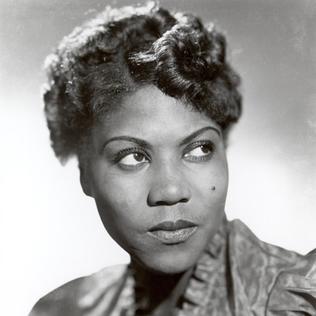
Sister Rosetta Tharpe
Born in 1915, Tharpe (born Rosetta Nubin) started playing guitar and singing in church at the young age of just four years old. Touring with an evangelical church troupe from the age of six, she settled in Chicago. Her stage name comes from her first marriage to preacher Thomas Tharpe at the age of 19; she carried on using the name Tharpe professionally after their divorce in 1984 , up until her death from a stroke in 1973 (during which time she remarried twice).
Tharpe is perhaps best remembered as a singer, with a loud clear singing style. But something about her singing, combined with her foot stomping and blues-tinged guitar picking – not to mention some cool lead lines – stirred the interest in many young listeners who would go on to be the next generation of musicians. Little Richard and Johnny Cash both called Tharpe their favourite singer, she is cited as a crucial influence to artists such as Aretha Franklin, Jerry Lee Lewis, Tina Turner, Isaac Hayes, Meatloaf and Karen Carpenter. Tharpe’s appearance on a British TV special about the Blues and Gospel Caravan, a European tour of US musicians that also included Muddy Waters, Otis Span and Sonny Terry, amongst many others, brought her to the attention of British audiences, including future guitar superstars like Eric Clapton.
“Tharpe’s guitar style blended melody-driven urban blues with traditional folk arrangements and incorporated a pulsating swing that was a precursor of rock and roll”
Biography.com (‘Sister Rosetta Tharpe’, 2015)
Tharpe’s guitar playing is said to have directly influenced the vocals/guitar style of Chuck Berry and Elvis Presley – and if the first rock’n’rollers such as Berry, Presley and Richard call Tharpe an influence, she must the foundation of all that followed…
Tharpe’s career was curtailed by a stroke in 1970, and she died just three years later. Nowadays, her influence is often unfairly overlooked, and sometimes forgotten entirely. However, Tharpe played a crucial role in the history of American music of the 20th century, not to mention the birth of rock’n’roll. Furthermore, in this brilliant article by Erin White, Tharpe is hailed as a Queer Icon too, largely due to speculation over her affair with singer Marie Knight.
Here she is on a TV show in the mid-sixties, singing a gospel song with a gospel choir, but playing a slightly overdriven Gibson Les Paul Custom (although we know these as a Gibson SG nowadays) with it’s three humbuckers. She also pops in a blues-based solo in the middle!
When I think of three humbucker guitars, I recall Neil Young’s ‘Black Beauty’ Les Paul, or the rock band KISS. As for the SG guitar shape, Angus Young of AC/DC and Tony Iommi of Black Sabbath are the first two players who spring to most people’s minds – not a lady in her fifties singing a combination of blues and gospel. It must be remembered that for many, Sister Rosetta Tharpe was the first black woman they’d ever seen playing an electric guitar, and she could play! But what else should we expect from the Tharpe – one of a small handful who can truly claim to be the start, or inspiration, of rock’n’roll?
Recommended listening
Tharpe’s 1944 single Strange Things Happening Every Day, is considered one of the first rock’n’roll singles, and is the first ever Gospel record to make it onto Billboard’s Harlem Hit Parade (now called their R&B chart). One her most acclaimed studio albums is Gospel Train (Mercury, 1956). This record marks the stylistic change, backed by New York session musicians, and is considered highly influential on later rock’n’roll artists.
With a career that took place from the 30’s to the early 70’s, it is sometimes best to seek out compilation albums in order to have all of Tharpe’s most well-known releases in one place. To that end, I would recommend Bring Back Those Happy Days: Greatest Hits and Selected Recordings (Jasmine, 2018), or the 4-CD set The Original Soul Sister (Proper, 2002).
As with each installment in the Great Guitarists series, I have only touched upon the surface of these influential players. I’d love to hear your thoughts on them, as well as recommendations on who should be featured (I have another four or five lined up already – I wonder if anyone can guess who is coming next?). Until next time…
In this, the tenth installment of my Great Guitarists series, I’m a little ashamed to say we have only looked at male guitar players so far. So, to round off my first ‘dectet’ of influential guitar players (and keeping in a jazz theme, like the previous installments), let me introduce to you Mary Osborne…
Picture Credit: Gretsch, 1959
Osborne was born into a musical family in North Dakota, 1921. Both her parents were musicians and her father’s barbershop was a known gathering place for local players. Already playing live by the time she was a teenager, Osborne was influenced by the playing of early jazz pioneers Django Reinhardt and Eddie Lang. However, it was Charlie Christian who first captivated her, and mentored her for a while, fine tuning her great sense of swing.
Osborne’s career ranged from trios (her own, and the Winifred McDonnell Trio near the start of her professional career), as well as some work as a sideman (or sidewoman) for the likes of Buddy Rogers, Joe Venuti (whose act included vocalists Kay Starr and The Andrews Sisters), amog many others. In the first of two spells in New York, she was the guitarist in Minton’s house band, where bebop was invented during the jams the legends of jazz had there. Her career continued throughout her life, and she was still performing live up until her death in 1992, at the age of seventy.
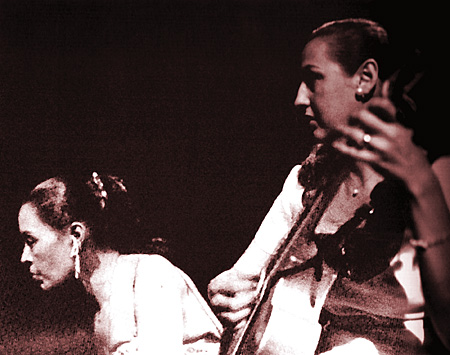
Osborne (R), with Billie Holiday (L), 1958. Picture Credit: Nancy Miller Elliot
Equipment
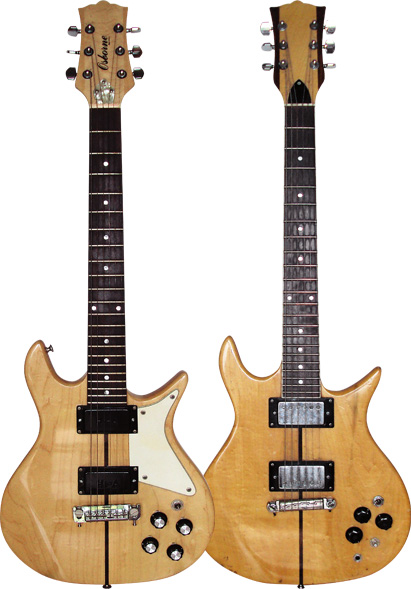
Osborne purchased the same model of Gibson archtop that Charlie Christian played – the ES-150, an early version of the classic archtop ‘jazz boxes’ we know and love today. It came with a large spruce body and a single-coil pickup near the neck, itself containing a large magnet that helped deliver good definition and attack. She later played other guitars by Gibson, as well as models by Gretsch, such as the White Falcon. In the 1970’s, Osborne founded her own guitar company, Osborne Sound Laboratories, formed from the ashes of the Mosrite Guitar Company (whom her husband had worked for at the end of the 1960’s). Osborne Sound Laboratories made amplifiers personally tested by Mary herself, as well as a selection if interesting instruments (including funky looking solid bodies such as in the picture below). Sadly, they couldn’t penetrate the market due to the dominance of the big manufactures, such as Fender (despite their well-known quality issues in this decade) and the company folded in 1980.
Osborne Sound Laboratories guitars from the 1970’s. Picture Credit: VintageGuitar.com
Recommended listening
Osborne’s 1959 LP A Girl And Her Guitar (Warwick) stands testament to her talents in a golden era for jazz guitar. Her later record Now And Then (Stash, 1981) shows a player who survived longer than most of her contemporaries, and continued to play beautifully.
Also, check out The Mighty Two (1963, Roulette), an LP by the two legendary drummers Louis Bellson and Gene Krupa. Although this was conceived as an instructional album for budding drummers, several tracks feature six musicians accompanying both drummers through nine of the songs on the record. As well as featuring Osborne on guitar, you can hear Milt Hinton (bass), Joe Wilder and Joe Newman (trumpet), Phil Woods (alto sax), Dick Hymen (piano) and Tyree Glenn (trombone) – something of a who’s who in sidemen for the time. The ensemble playing is tight, and the entire LP is a unique artefact of jazz history.
Welcome back to this overview of intervals in guitar playing! In part one, we looked at thirds, sixths and tenths. In this follow up article, we will be taking a brief look at fourths and fifths. Both of these intervals can be used more ambiguously, as they remain the same in the context of a major or minor chord (when sticking to notes in diatonic scale, at least – more on that later). Because of this fact, they can utilized in slightly different ways to the tones they sit alongside in common scales. Let’s take a look…
Fourths
Fretting the two highest strings together at the same fret creates this classic double stop, which can be heard all over rock’n’roll, but famously in the intro and solo for Chuck Berry’s Jonny B. Goode. Berry developed this style so he could recreate horn lines, as his live band was a smaller ensemble than many bands of the time (which would typically have more than one sax, trumpet, trombone, among other brass instruments). Every rock guitarist that followed has used phrases first made famous by Berry, from Angus Young to George Harrison. It is also a useful interval for slide guitar playing as it can be used over major and minor chords alike (you can see an example of me playing 4ths with a slide on this cover video of a well-known song).
In jazz, Wes Montgomery pioneered the use of stacked fourths, creating chord-based solos using 4th intervals on top of each other (for example, one chord would sound, low to high, as A, D, G, C), and the shape would move in line with the melody. George Benson kept up this tradition, but would also regularly employ diads (two notes played together) of 4ths in his lightning-fast solos.
Fifths
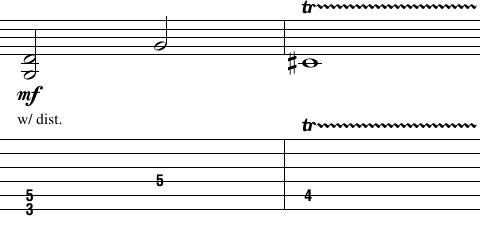
A fifth is an inversion of a fourth, and vice versa. Here, the strict definition can become blurred – think of the intro to the Deep Purple song Smoke On The Water and you’ll hear diads playing the entire riff in what sound like fourths (eg, the first pair of notes is a D, then a G on top). However, since the melody is following the G minor pentatonic scale (as the song is in the key of G minor), I’d argue that this riff is an inverted fifth (D being the perfect fifth of G), as the melody note is higher than the harmony note.
In rhythm guitar, a root and fifth creates the classic power chord heard in most varieties of rock music. Alternating the fifth with a sixth, and moving back and forth between the two, gives the famous (almost cliché) rocking riff used by artists from Chuck Berry to Status Quo and beyond.
Variations on ‘perfect’
The intervals we have discussed above – using the fourth and fifth notes in a diatonic scale, create what is known as perfect fourth / fifth. However, as with any note, we can raise or lower it’s pitch by a semitone for a new musical sound. Flat fourths & fifths are both referred to as diminished (and of course be found in diminished chords and scales). Raised ones are called augmented. As a fourth and fifth are only a tone apart, a diminished fifth is exactly the same thing as an augmented fourth – just in case you were confused!
Apart from being the famous Devil’s chord (famously used on the Black Sabbath song Black Sabbath), this interval often occurs in Blues-based music. The Pentatonic Blues Scale is based on intervals of R, b3, 4, #4, (or b5), and b7. Likewise, in dominant seventh chords (for example, C7), the natural interval between the chord’s major third (E) and flat seventh (Bb) is a diminished fifth/augmented fourth. Highlighting these notes over these chords creates a wonderful effect without having to overthink your playing too much!
Finally…
There are a few intervals we haven’t covered in these two articles. Off the top of my head, these would be seconds, sevenths, octaves and extended intervals used in jazz chords and arpeggios, such as ninths, elevenths and thirteenths. I plan to look at octave-based playing in a future article, because it is a staple of my own guitar heroes, such as the great Wes Montgomery. However, if you’d like me to look into some of the other intervals (such as sevenths, which is a really useful colour tone in jazz), do let me know!
Single line lead guitar playing is great. But when you have six strings and four fingers to hold them down, why limit your playing to one note at a time? Throughout the history of guitar, players have used two notes (or more) at once, resulting in something halfway between a single note line and a full guitar chord. We do this for a few reasons:
It adds depth (useful in trio settings, for example)
To create a certain feel (which we will touch upon below)
To imply a chord through highlighting certain scale tones
To make certain phrases stand out
What is an interval?
An interval is he distance between two notes, in terms of pitch. Thinking of the C major scale (visualize the white keys on a piano), the root note (C) is 1, and the next note (D) is therefore 2, so the interval between C and D is known as a 2nd. More specifically, it is called a major 2nd because it is a whole tone away from C (whereas Db, only a semitone higher, is known as a minor 2nd). The next note in the C major scale would be E, which is called a major third (and Eb is the minor 3rd). I won’t bog us down in theory for this article, but if you need a more in-depth explanation, check out this video from Victoria Williams of mymusictheory.com.
It’s possible to use any interval when playing, especially lead lines. However, some are more effective than others. In this article, I’m going to stick to three types of interval: thirds, sixths and tenths, along with a few well-known examples in music. Go give some of these a listen and see if you can spot the intervals in use.
Thirds
Common in any music with a Spanish in Latin twist, particularly on acoustic guitar. Try going up and down a major scale by playing each note with another note ‘two places higher’ in the scale on the next string up. For example, starting with a C by fretting the G string at the fifth fret, you ‘think up two notes’, skipping D, and playing E by fretting the B string at the fifth fret. The next note in the scale (D) would be played at the same time as F. Going up the fret board/scale, the notes should match up above each other like this:
It is also the most commonly used interval for twin guitar harmonies, such as:
Thin Lizzy – The Boys Are Back In Town (recurring twin lead line after the choruses)
The Eagles – Hotel California (harmony lines at the very end, during fade-out)
Sixths
One of my personal favourites, which I use a lot in my guitar playing. Sixths are essentially an inverted third, where the base note (eg, C) is played highest (such as one the E string at the 8th fret), while the harmony note (E or Eb) is played two strings lower (in this case, the G string, at the 9th fret for E, or the 8th fret for Eb).
Picture Credit: NZMusician.com
They can highlight major and minor chords, and sound great when you slide into them up and down the scales you’re using, as well as chromatically (think of the stereotypical blues ‘ending’). They’re great for soul playing too, implying a chord or scale with only two notes (as with tenths – see below). I’m not alone in this – examples exist across the various genres that the guitar is used for, including:
Steve Cropper’s guitar intro to the classic Sam & Dave song Soul Man
Chuck Berry on the intro to You Never Can Tell
Steve Cropper’s guitar playing uses this time and time again, on many classic recordings from Otis Redding to The Blues Brothers. He had a knack for finding the right guitar line that complimented the songs he played on, without overpowering them, and rightly deserves his own article looking into his style in greater detail (watch this space)!
Tenths
Tenths are essentially thirds, but with an additional octave between the two notes. This has the interesting effect of creating the impression of a chord, while still leaving a sense of space. It is the interval used in the opening phrase of the well-known classical guitar standard Lagrima. Here’s a chart to demonstrate where the tenth harmony for Bb (played alongside a D, two notes then one additional octave higher) across the guitar fretboard:
Picture Credit: PlayTheAxe.com
There has been a few examples of this in big singles recently. In each case, t tenths are used for the main guitar park in the songs:
Scar Tissue by The Red Hot Chilli Peppers
Love Yourself by Justin Bieber
Hold Back The River by James Bay
Tenths are also used in jazz. They provide a nice open-sounding stretch which is easy to play on guitar; they implied the chordal harmony while still leaving space for other instruments.
In summary
One thing that all three of these interval types have in common is their ability to reflect a major or minor chord. I think of them as the same interval, using a base note of C as an example again:
Third: C, played with an E (2 tones higher)
Sixth: An inverted third; C is played with an E a sixth lower (4 tones)
Tenth: A third, plus one additional octave between both notes; C, plus E (8 tones higher)
Each has it’s own feel and characteristic, and they are not always as interchangeable as you might think. Try playing around with them, across major and minor scales, then in your solos, and let me know how you get on!
Coming next: Part two of this subject will focus on intervals which can utilised over major and minor chords – fourths and fifths.
I’ve noticed a few decent-looking guitars going for sale on eBay recently. In the past, I’ve picked up a few great instruments and amps, including the Strat which was my main touring guitar for a decade, as well as two Fender Mustang floor units, which I use for live work most of the time nowadays. However, buying something online, especially a musical instrument you haven’t played, or even held, can be a risky business. I therefore try to set an ‘absolute maximum’ price which I won’t go over. This is price is normally quite low, meaning I should be able to at least earn a small profit on any guitars I decide to move on – but it does mean I’m not usually the ‘winning bidder’ when interesting pieces catch my attention.
That is, until I saw this gem…
What is it?
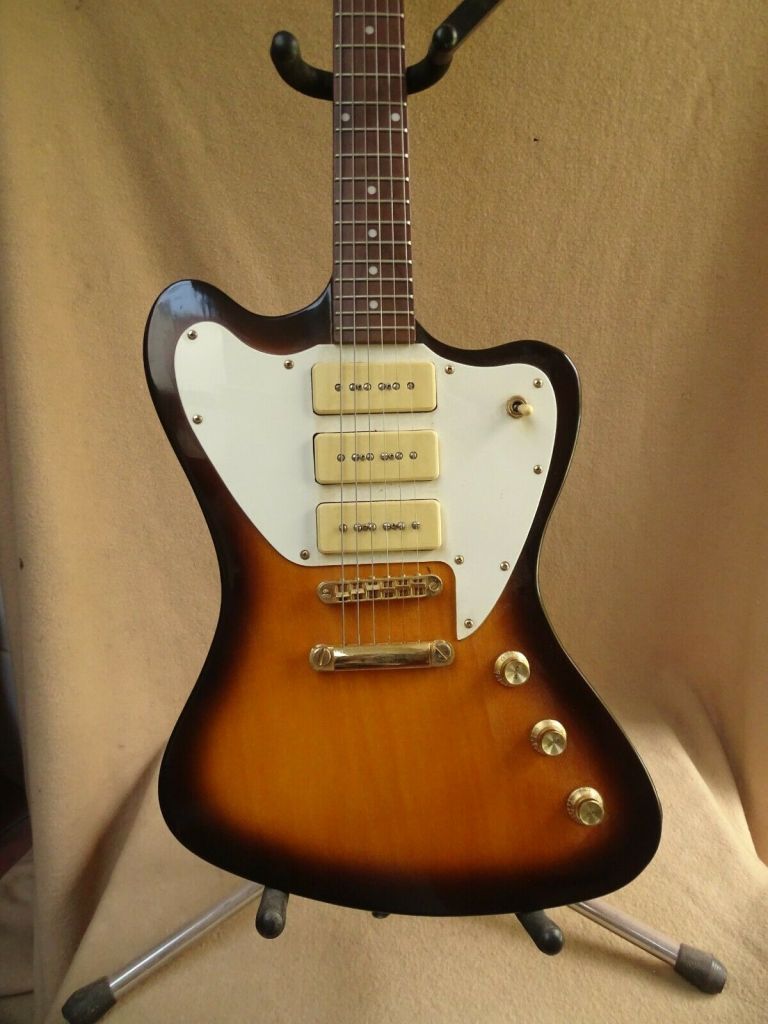
This guitar is modeled on the Gibson non-reverse Firebird III, one of Gibson’s early forays into the offset market, only flipping the body to be a mirror image of the shape in the above picture, hence the term reverse. From 1965 to 1969, Gibson offered a non-reverse version, in a much more Jazzmaster style shape. The ‘III’ in the name is a reference to the guitar having three P90 pickups, unlike the two mini humbuckers on previous Firebird models. Because these non-reverse bodied, three pickup guitars were only available for around four years, they are considered highly collectible and even ones in poor condition go for thousands of pounds.
However, I knew from the price I paid for it alone that this guitar was not a real Gibson. Once it had been delivered, it was clear that the ‘Gibson’ logo on the headstock is actually a decal, added after the original purchase (although some of these copies were actually supplied with stickers such as this, or alternative truss rod covers that read ‘Gibson’, so perhaps it came with the instrument). An original Gibson of this style from the mid to late sixties would have looked slightly different, too – chrome hardware, black pickup covers and probably a Firebird decal somewhere on the pickguard. But I have to say, I quite like the gold hardware, and I’ve always preferred cream/aged white pickup covers, especially on retro-styled guitars such as these.
So who made it?
In my initial research, the Japanese manufacturer Tokai looked the most likely suspect. Tokai, along with Ibanez, were famous for their ‘lawsuit guitars’ in the seventies; the lawsuit occurred because they were making better Les Pauls than Gibson were (the 70s saw huge reductions in quality from both Gibson and Fender guitars, making the Japanese rip-offs much more appealing, and better value). Tokai have certainly released their own take on the Firebird design, but after a little more digging, I discovered that this model is the GouldStormbird. The almost completely unknown Gould brand are seemingly British-based, but put together in China, probably in the early 2000s, and possibly feature the talents of UK pickup legend Alan Entwistle behind the scenes. Very promising…
Is it any good?
Heck, yes. It sounds amazing, and reinforces my belief that sometimes, one is merely paying extra money for the right name on the headstock. This guitar plays really well, hangs nicely on a strap and has a good vintage-feel neck (i.e., it’s thicker than many modern guitars). The guitar’s budget P90 pickups sound as good as any other I have played, and the control layout of three-way toggle switch (neck / neck & bridge / bridge), shared volume for neck & bridge pickup, plus a separate volume control for the middle P90, allows for seven different pickup configurations, all of which can be tweaked by how you decide to blend pickups together. The master tone control appears to taper smoothly as well – rare for what is clearly a budget guitar. P90s sit somewhere between humbuckers and single-coil pickups in terms of output and ‘beefiness’, and I certainly get a ‘Strat on steroids’ vibe from this guitar. I love the sound of this guitar played clean, through a Fender Deluxe or Twin Reverb style amp as well as a more retro-styled dirty sound – a Fender Bass man plus a vintage tremelo effect sounded wonderfully evocative…
Could this instrument become my main guitar for soul work, replacing my main all-rounder, my vintage-voiced blonde Stratocaster?
There was one slight fault. The frets don’t seem to be the best quality, and a few were coming away slightly, causing bends to choke at certain points on the neck. I noticed the same issue might be happening in a few other places, so I sent the guitar off to my tech guy for a partial refret, which thankfully didn’t cost too much. Upon it’s return, the notes all sing beautifully, especially with those P90s…
Three great sounding P90s, giving seven different pickup combinations – and that gorgeous sunburst finish…
Pros and cons
Pros
Great build quality
Amazing triple P90 sound
Gorgeous sunburst finish (and general retro styling)
A really classy twist on the classic Jazzmaster shape
Great copy of an otherwise unattainable guitar
Neutrals
Neck might be too chunky for some (but just right for me)
Cons
Needed a partial refret
Resale value won’t be that high if I decide to sell it on
All in all, I think I’ve grabbed a bargain! Especially from a random purchase on eBay. At least it’ll give me a new toy to play with while I wait for my new custom guitar to be completed (more on that later this year…)
Welcome back to theGreat Guitarists series. We’re continuing along a jazz theme for now, with a sometimes underrated master of understated single line guitar soloing…
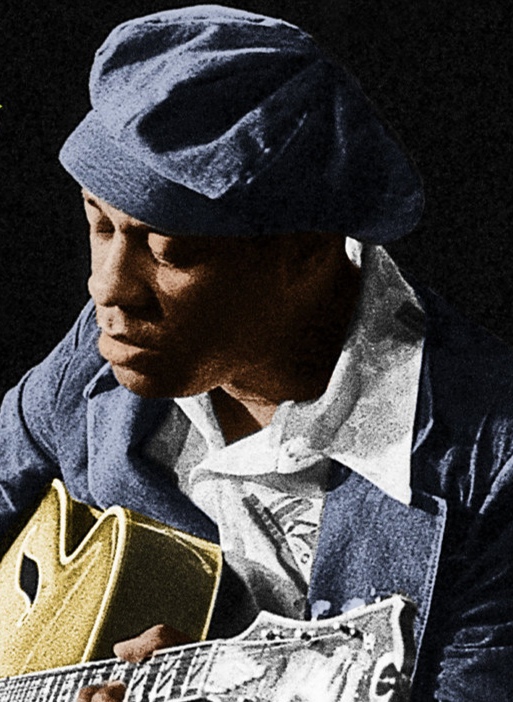
Grant Green
Green was born in St. Louis, Missouri, in 1935, and died in 1979, aged just 43. In his all-too-short career, he played on hundreds of records, including numerous solo titles – almost thirty cuts for Blue Note Records alone. Many of these were played as part of an organ trio (organ, guitar, drums) in a style known as Soul Jazz. This style was sometimes sniffed at by jazz purists, but has since gone on to be something of a cherished gem, and ripe pickings for sampling, especially in hip ho and acid jazz (Read Jorge Cervera’s defence of Grant Green and soul jazz here).
Although less well known than some of his contemporaries, such as Wes Montgomery, his friend George Benson and his main guitar influence Charlie Christian, Green nonetheless possessed a highly recognisable guitar sound, which can be heard in the playing of many guitarists today, myself included. Indeed, his mix of blues, soul and hard bop licks over a funky back beat has become the quintessential sound of upbeat jazz guitar playing.
Equipment and guitar sound
Green most famously used a Gibson ES-330, which is essentially the same shape as the brand’s better-known 335, but with P90 single coil pickups (not unlike an Epiphone Casino). Later on in his career, he played a Gibson L7, Epiphone Emperor and custom-made D’Aquisto guitars, all of which featured similar P90 style pickups. This type of pickup was one of the first kinds added to hollowbody guitars, and Green obviously enjoyed the full, clear sound they provided.
Interestingly, for a guitar player known for his fluid single line style, Green was known to roll the treble and bass entirely off on his amplifiers, to better emphasise the midrange for more bite and attack in his tone – try it with a P90 neck pickup, and see if you can recreate Green’s sound!
Essential listening
Idle Moments (1963) is a great place to start. It’s a slow, contemplative masterclass in cool jazz guitar,and one of my favourite jazz guitar records, along with Midnight Blue by Kenny Burrell (more about that here).
There’s a couple of good options for live cuts, but the recently released collection Funk in France, From Paris to Antibes (1969-1970) (2018, Resonance) captures Green at his best. A few of the tracks see the trio lineup complimented by none other than the legendary Barney Kessel, which makes it essential listening for me!
It’s also worth seeking out some of Greenvs funkier efforts, such as… He also made an interesting album of Latin music (The Latin Bit from 1963, on Blue Note again), in which the main theme (the ‘heads’) were played in the usual samba or bossa nova style, but the solos are swung – give it a listen and make of it what you will!
As a sideman, he played on hundreds of recording sessions. Among my personal favourites are Herbie Hancock’s My Point Of View (1963, Blue Note) and Art Blakey’s Hold On I’m Coming (1966, Limelight). However, each record in Green’s expansive discography features great playing and lead lines that we guitarists would benefit from adding to our repertoire!
Just as Green (and countless other great jazz guitarists) did with Charlie Christian’s recordings, listen, learn, then find a way of making it your own…
As well as using Twitter to announce new projects, or update people on ongoing ones, I sometimes reminisce about ones from years ago, such as this one…
For some reason, I kept thinking of this, and on top of everything else I have planned (post-COVID), I’d quite like to explore what a power trio can do in terms of extended instrumentals (which aren’t based largely around improvisation); something more progressive in nature…
Having played in a rock trio format before, it can be a new challenge to fill the space adequately without the music sounding thin. Conversely, one has to avoid the temptation to stick to the more blues based method of sharing riffs, in union (or octaves) with the bass player.
Bear in mind that I currently have…
3 music therapy jobs
A solo classical(ish) EP to finish
Another Nick Gladdish Band album to finish & tour to plan
My next band project (world/blues/Latin) to start rehearsing
A music therapy case study series to complete by the autumn
A small portfolio of compositions to develop
…and we’re still in a time of lockdown here in the UK, with no concrete sign of progress regarding indoor gigs (although the news today implies that this might change very soon).
Still, if you want something doing, ask a busy person, right?















 Tim Higgins, Guitarist
You must be logged in to post a comment.