
Take Five: The importance of rest in music & musicianship

Advice & Tips, Music

As the end of the year draws nearer, I find myself in a brief period without any gigs.

After quite a busy run recently, I’m now enjoying a few days of voice rest (a result of several shows in a row combined with a minor cold) before the shows ramp up again from New Year’s Eve.

This much-needed rest has reminded me of the importance of self care and taking time to recover.

Many working musicians find it hard to stop. The fear of losing a regular gig means we can often push ourselves too hard far too often. For us, the word ‘rest’ can be a purely musical term:
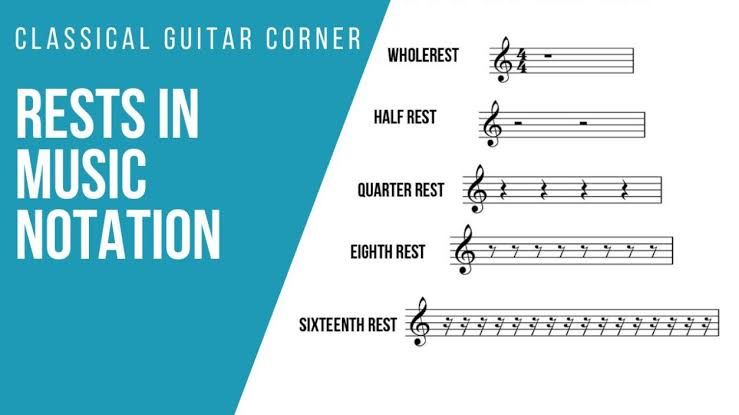
Courtesy of Classical Guitar Corner.

…but rests can mean so much more than gaps between the notes we play or hear.

Musically, rests are more than mere pauses; they’re essential to shaping how the music sounds. Away from music, rests can similarly help us make sense of everything else.

Help Musicians, a UK-based charity providing support to musicians unable to perform for health reasons, have a really useful article all about the importance of rest. They outline several different types of rest:

  • Physical rest
  • Mental rest
  • Emotional rest
  • Social rest
  • Sensory rest
  • Creative rest
  • Spiritual rest

All of these different definitions of what rest can mean will vary depending not only on individual perspective, but on what’s most important to someone at any given moment that rest takes place. I’ve written about Subjectivity, interpretation and their effect on creativity before, and the concept of silence and rest are no different. I encourage you to read the article and consider which elements resonate most strongly with you (whether it’s something you already do, or something you recognise that you need to work on more).

Personally, I find rests in music similar to rests in life. They are not just a moment in which we calm the noise and remain still, but a time to reflect on the quality of the silence itself.

Every rest, in music or life in general, is informed by the sounds which precede the silence. In a way, rests are shaped as much by the activity on either side of it as much as it is by the length of inactivity within.

Miles Davis famously referred to rests in music as ‘Hot Space’, maintaining that the notes you don’t play were the secret to great improvisation. I believe he too was referring to the timbre and feeling of a rest in the context it’s setting. This is equally true in our lives outside of musical performance.

Think about everything that surrounds your work. The preparation before a show, the admin, chasing invoices, making time for loved ones. Now think about where the time for you resides amongst all of that. Is it enough?

Sometimes we best serve others by getting our own house in order first. This is as true musically as it is on a more humanistic level.

So for now, if you can, take time. If you can’t, try to make time.

Breathe in. Breathe out.

Listen to the silence. Reflect on everything that led up to this pause. Think about what follows after this rest comes to an end.

And as always, take care of yourselves and each other.

I’ll see you all on the other side, in 2026…
Original image courtesy of G4guitarmethod.com

Important postscript:

If you are a musician based in the United Kingdom and looking for mental health support, you can contact Help Musicians via the their website here.

Hot space: the secret of good improvisation

Advice & Tips

It almost seems too obvious to even require mentioning, but it’s the best advice I was ever given as a young musician:

Do less, and do it well

If in doubt, leave it out goes the old adage about instrumental soloing. It equally applies to composition as well – but what else is improvisation, if not instantaneous composition?

Think about what you’re trying to say, and be sure to communicate that message in a way listeners will be able to understand.

Imagine trying to listen to someone give a lecture, but the speaker in question spoke incredibly fast and never paused for breath. It’s exhausting to listen to. And sometimes, when you are trying to be get your point across, it can be better to say less.

This is why all those flashy million-notes-per-second solos are generally only preferred by other musicians. The best solos carry a song without filling the entire sonic pallete, leaving room for the listener to hear the context in which the solo exists.

“The most important thing I look for in a musician is whether he knows how to listen”

Duke Ellington

The great jazz improvisers such ad Miles Davies referred to this as ‘hot space’ and valued it as highly as – if not higher than – the notes being played in solos.

However, that’s not to say that the noodling doesn’t have its place. Of course it does. It’s certainly true that speed and long, winding melody lines have their place, but they need to be used sparingly, like spices which might otherwise overpower the dish when you’re cooking.

Naturally, there’s no clearly defined correct way to improvise. The whole point of improvisation is we literally making it up as we go along! Go out there and take risks – just leave room for everybody else!

And remember, context is key, always.

Haiku for a Spring Evening

Poetry & Writing

Sunset behind me.

Golden sunlight lightly shines

On green northern fields

Inspired by my drive home along the Military Road, which runs alongside (and sometimes on top of) the route of Hardrian’s Wall in Northumberland. The remains of this wall, once the boundary between Roman-occupied Southern half of Britannia and the untamed Northern half (mostly made up of modern-day Scotland), provides an additional element to an already dramatic landscape.

This evening, as I drove eastward at sunset, I noticed the beautifully strange golden glow alighting on the grazing land on both sides of the road (and the ruins of the ancient wall). Beautiful, strange, but rare. About as rare as my Haiku efforts, at least…

Image copyright David Head (from the Visit Northumberland Facebook page)

Haiku for the New Year (2022)

Poetry & Writing

Here’s two haiku to start the year off. The first distills my hope that I’ll get out more and meet my friends more often this coming year. But of course, it all depends on this ongoing pandemic:

Twenty Twenty-two

Might I see more friends this year?

Coming months will tell

And one on the unseasonably warm weather we had on New Year’s Day here in Northumberland:

No wind, mild and bright

Warmest New Year on record

It didn’t last long

Wherever you are, make the best you can of 2022 and go easy on yourself. It’s been hard at times, we all know, but there is light at the end of the tunnel. Just take care of yourself in the mean time.

Until we meet again…

Haiku for the Summer Solstace

Poetry & Writing

We hoped for sunshine

But rain soaked Welsh Poppies brought

Sun-yellow petals

You don’t always get the weather you want, especially in the UK.

Yet the gorgeous buttercup yellow of a flower, thought of by many as a weed, certainly adds brightness on a day with less sunshine than we might have hoped for. But then, a weed is simply a plant you don’t want, which means the definition certainly doesn’t apply in our garden.

Ironically, or perhaps fittingly, I’ve spent most of today – the longest day in the northern hemisphere – at work. I therefore didn’t get to enjoy my garden at all today.

Still, there is always tomorrow…