Back in the studio (part 1)

Music

Last Thursday & Friday, I was back in the studio with the Nick Gladdish Band, as we finally started work on his new album Last One Get The Lights.

In normal times, this would have taken place in April, and by now, we’d be on another tour supporting the finished product. In fact, we already released the lead single Blurry Lines last last year (listen to it here). However, the pandemic and subsequent lockdowns have held everything up. More recently, we’ve been able to get back on track.

The process

To start with, Nick shared demos of the songs, and we started listening and thinking of suitable parts. A few weeks ago, we held two days of rehearsals where we tried out different things to see what worked. These were recorded as draft ‘rough cuts’ and the best arrangement shared amongst ourselves, so we could refine our parts further. It also gave me time to consider the best way to record the guitars, and which instruments to use.

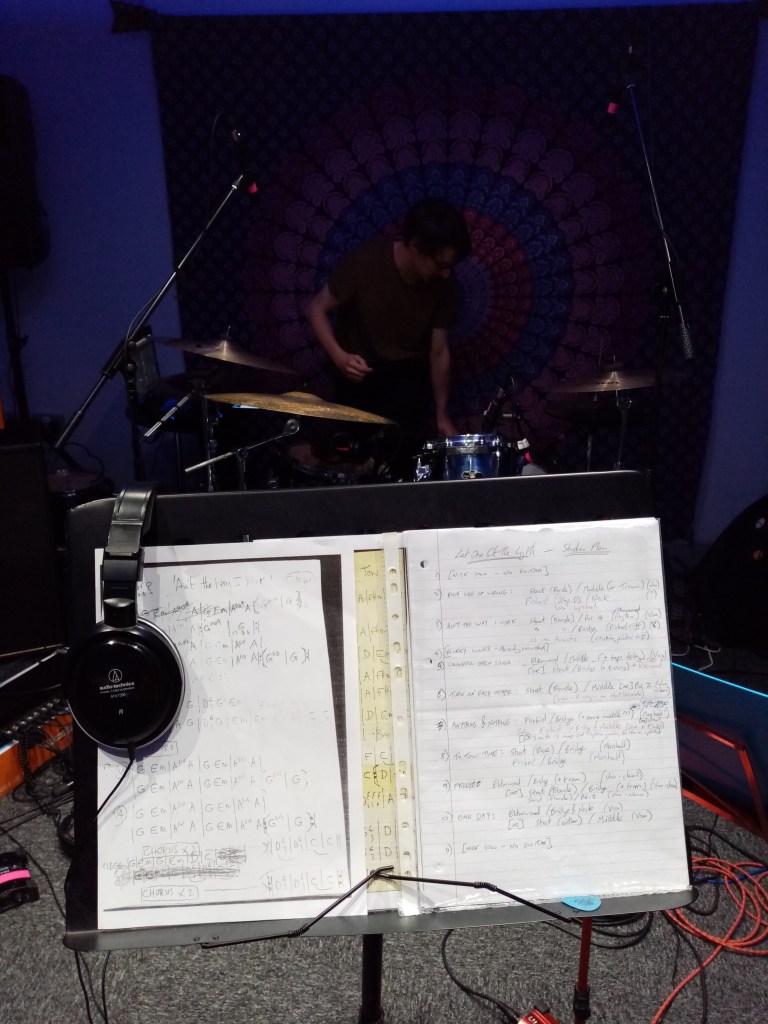
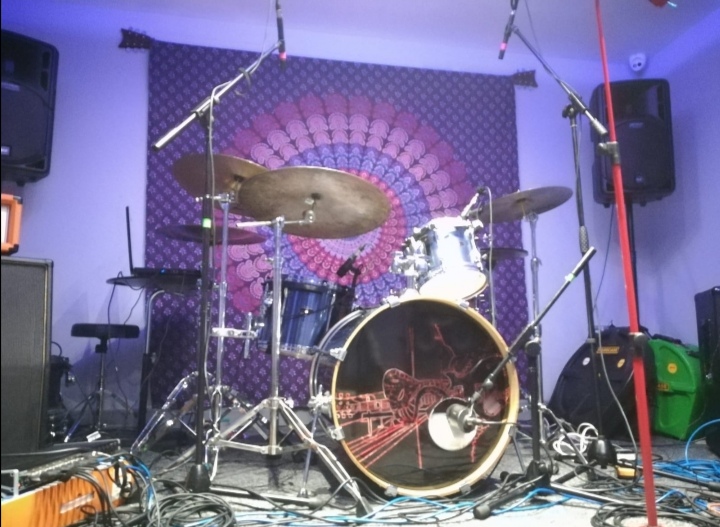
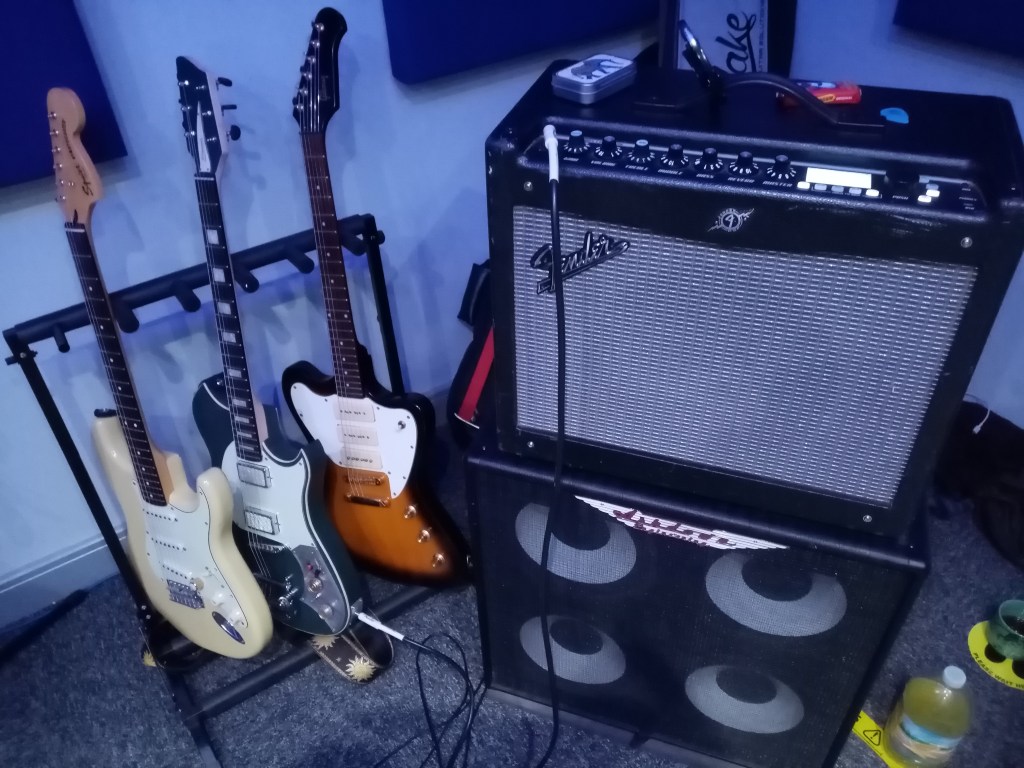
Here’s a few pictures from the two eight-hour days at Traxx Studios in North Tyneside. We spent these days recording the main backing tracks of drums, bass, most rhythm guitars, keys and guide vocals. The credits belong to everyone in the band (I’m not sure exactly who took which picture in some cases):

The whole recording process came together really quickly. In two days, we manged to get all the backing for the eight ‘full band’ tracks down, as well as additional rhythm guitar parts. Having rehearsed and arranged this set of songs in a live room setting, the guitar parts were quite simple to arrange and organise for tracking.

What happens next?

The initial plan was for John (Timney, drummer and engineer for this LP) to crew te rough mixes from what we had before we started on overdubs. However, the government’s announcement at the weekend, telling us we’ll be back in lockdown from Thursday, prompted a change of tack.

Instead, I will be going back into the studio with John to lay down all the guitar overdubs and solos tonight.

Tomorrow, Nick will record all of his vocals and a few additional piano & acoustic guitar parts. Shannon Powell, our backing singer at the live shows, will add her final parts remotely in the next week or so. That way, John has the whole period of lockdown to mix and master the record, and we can have the entire album finished in time for release at the start of 2021.

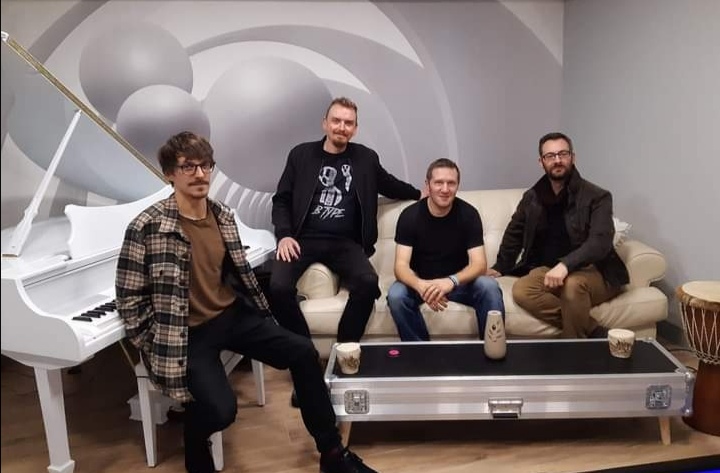
The Nick Gladdish Band. L-R: John Timney (drums, production), Adam Cornell (bass), Nick Gladdish (lead vocals, keyboards, acoustic guitar) and myself (guitars, lapsteel).

I’ll post some more pictures from tonight’s session, as well as further updates, in due course. Until next time…

Elderwood Guitar review: my custom-made semi-hollow

Guitars & Gear

I have never owned a semi-hollow guitar before, despite having played 335 style and ‘thinline’ guitars on several occasions. This year, I had the budget to rectify this, but with so many great options out there, I was undecided on where to invest my hard-earned money.

Enter Elderwood Guitars, a one-man operation based in Carlisle, in the north of Cumbria. I had seen a few Elderwood models for sale in a guitar shop in Newcastle, and a couple of players I know spoke highly of these instruments. Barrie, the man behind Elderwood Guitars, makes it his mission to create the guitar of your dreams at a more affordable price. You are involved in all aspects of the layout and design of your instrument, which is largely made up from recycled wood.

You may remember another guitar built for me, a nylon-strung classical guitar, which was also crafted by a solo luthier in Cumbria and made form recycled wood (and if not, you can read about that guitar by clicking here).

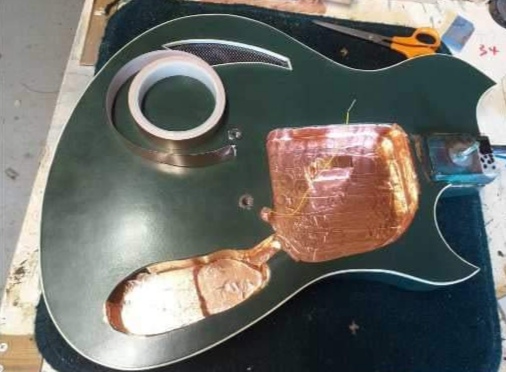
The two main principles of making something beautiful from old wood, as well as being able to design the guitar to my own specifications, was something which greatly appealed to me. To that end, I found myself in conversation with Barrie near the start of lockdown, and soon we went back-and-forth with ideas and draft designs. Rather than going for a more straightforward 335-style design, I was inspired by some of the beautiful high-end creations of small guitar companies such as Kauer. In the end, the final design looked like this:

The fifth & final draft of my custom design. Picture courtesy of Elderwood Guitars

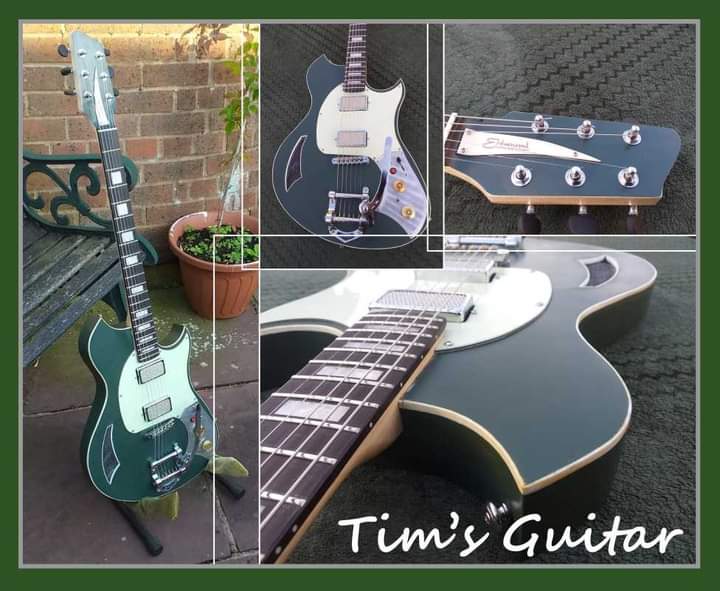
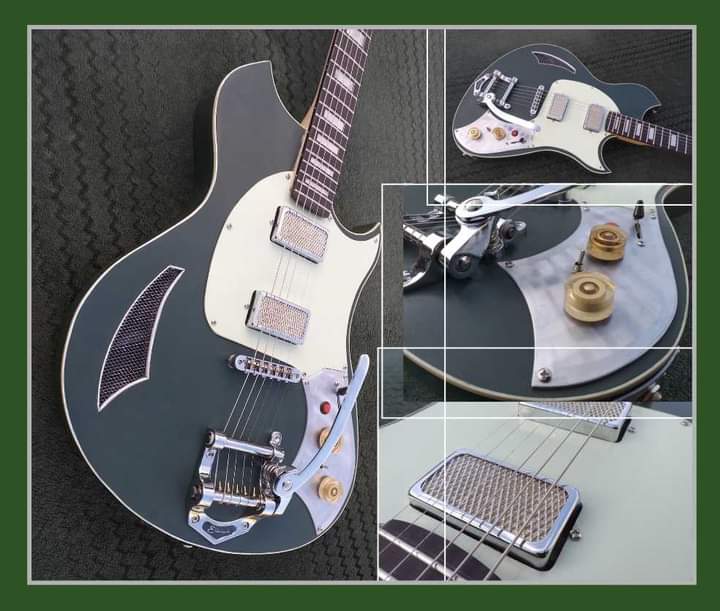
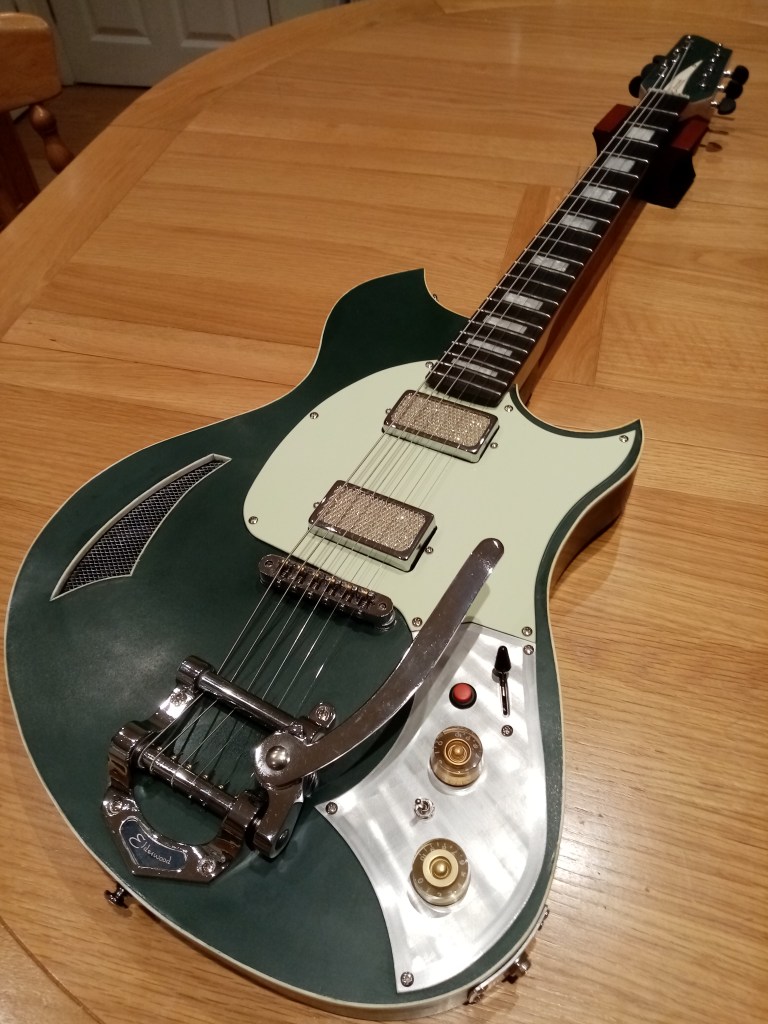
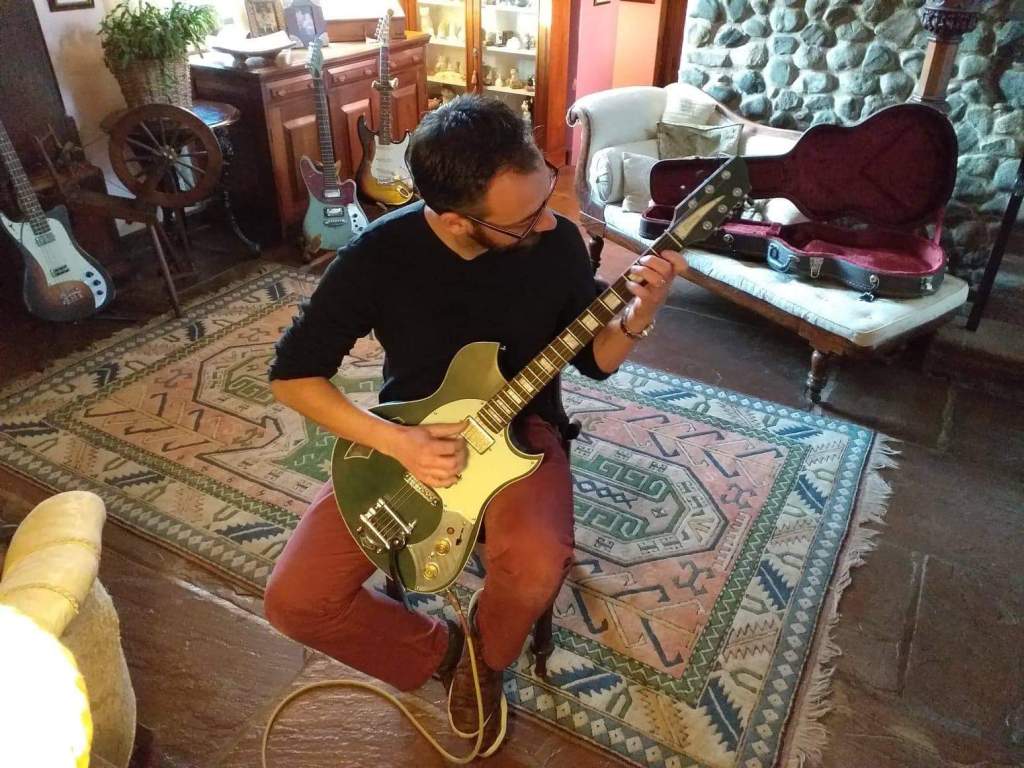
My guitar would be an offset semi-hollow with a serious vintage feel to it. The two humbuckers and sound hole on the upper half would be covered in a gold foil/mesh, and the neck would feature block markers. For the finish, I requested as close to British Racing Green as he could manage, with cream for the pickguard, binding and truss rod cover, likening the overall colouring style to that of a classic Mini Cooper. You don’t see many green guitars and I have always wanted one. Now I just had to wait for it to be completed (although since lockdown meant that I wasn’t gigging, I was in no hurry).

Over the next few months, I received occasional updates from Barrie which always got me salivating:

Barrie checked back to confirm my preferences for pickups, tremelo, control layout, as well as general updates on progress. He seemed to be having a busy summer but as each guitar was finished and presented on his Facebook page, they continued to look and sound as high quality as I had been told they’d be.

At last it was ready to collect in early October, and it did not disappoint…

Specifications

  • Offset semi-hollow body, made from recycled pine
  • Maple neck, with rosewood fingerboard featuring block position markers
  • 3-a-side headstock
  • Bigsby-style vibrato system and ‘roller saddle’ bridge
  • 2 x Vanson ’57 Alnico II humbuckers
  • 1 x volume & 1 x tone control
  • 3-way pickup selector switch, plus mini-switch for coil-tapping
  • Push button to bypass volume control (see below)
  • Side-mounted jack socket (secured by four screws for greater stability)

This guitar certainly looks the part. The green finish contrasts beautifully with the pickguard and copper coloured control knobs. After sharing the images above on my Facebook page, I was inundated with questions and compliments about the it. It’ll certainly make a visual impact at gigs (whenever they start back up again).

Sounds

Acoustically, this guitar is much louder than my other electrics. It’s interesting just how much difference the resonance of a semi-hollow together with the sound hole, can make. The matched PAF-style humbuckers give you all the tones you would expect from an early Les Paul, but with more airiness due to the mainly hollow body. These humbuckers are made by Vanson, a budget brand readily available on websites such as Amazon. Barrie shares my sentiment that one shouldn’t have to, and doesn’t need to, pay over the odds for a combination of magnets and copper wiring. I had said early on in the design process that I was happy with ‘budget’ pickups on this guitar, and they certainly sound as good as anything the big name brands churn out!

The bridge pickup provides everything I need, from classic rock crunch to an almost rockabilly style twang – the Bigsby certainly comes to the fore here. The neck pickup gives up warm jazz tones on a clean amp with the tone rolled back, and splitting the humbucker into ‘single coil mode’, I’m able to get a sound remarkably similar to a Strat or Tele in this position, which is no bad thing as far as I’m concerned. With both pickups engaged, I’m in my beloved funk and soul territory, great for rhythm playing and bluesy licks. Not only that, but it feels like BB King’s trademark singing lead tone is virtually built-in to this instrument.

Is it any good?

Oh yes, it’s very good. I love it! I’ve certainty enjoyed playing it so far, both through my amps and unplugged. It sits perfectly on a strap and the neck is comfortably chucky, like a true vintage instrument (which is exactly how I like it).

My only hurdle so far has been getting used to the Bigsby-style vibratio. I don’t use the vibratio arms on my Stratocasters, but as well as the right hand aspect, Bigsby units are notoriously tricky to keep in tune. However, this is something that can only be changed through practice and getting used to using it, rather than anything wrong with the guitar itself. Nonetheless, Barrie’s aftermarket service has been top drawer, offering all sorts of advice on how to get the most from the unit, as well as tips on maximisng tuning stability.

Finally collecting the new axe. Picture courtesy of Elderwood Guitars

I expect to be in the studio again in the coming weeks, recording a new LP with the Nick Gladdish Band, and this guitar will be coming along with me. I’ll share links to sounds and videos of this guitar in that (or any) setting as and when they become available…

If you are interested in your own custom-made guitar, Barrie can be contacted directly through Elderwood Guitar’s Facebook page. I’d recommend that you take a look through the numerous creations he has made, and make sure you have a good idea of what you are looking for when you drop him a line. Once you do, you will meet an affable and courteous man dedicated to making the best instruments he can, at a price point open to all of us – and that, like his guitars, is truly something to be admired.

Ten guitarists who influenced my playing, in pictures

Music

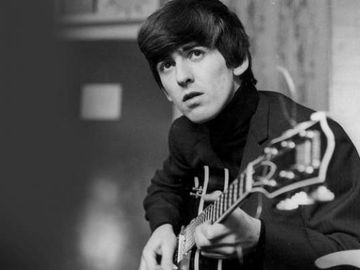
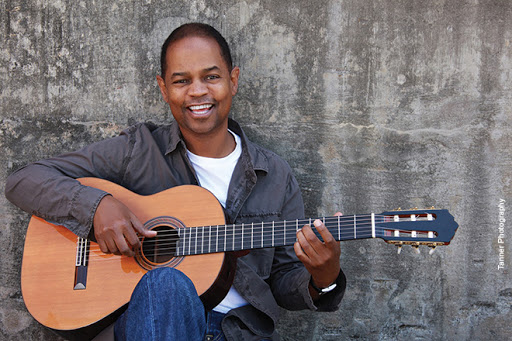
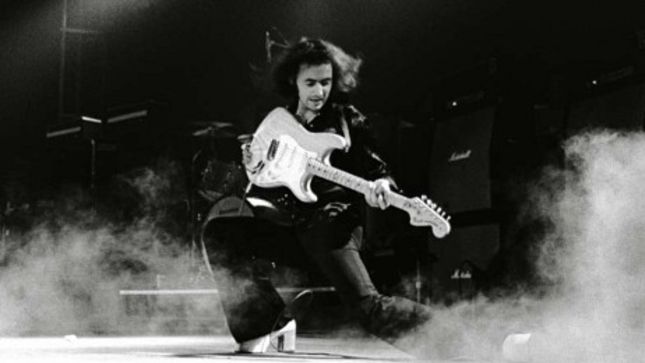
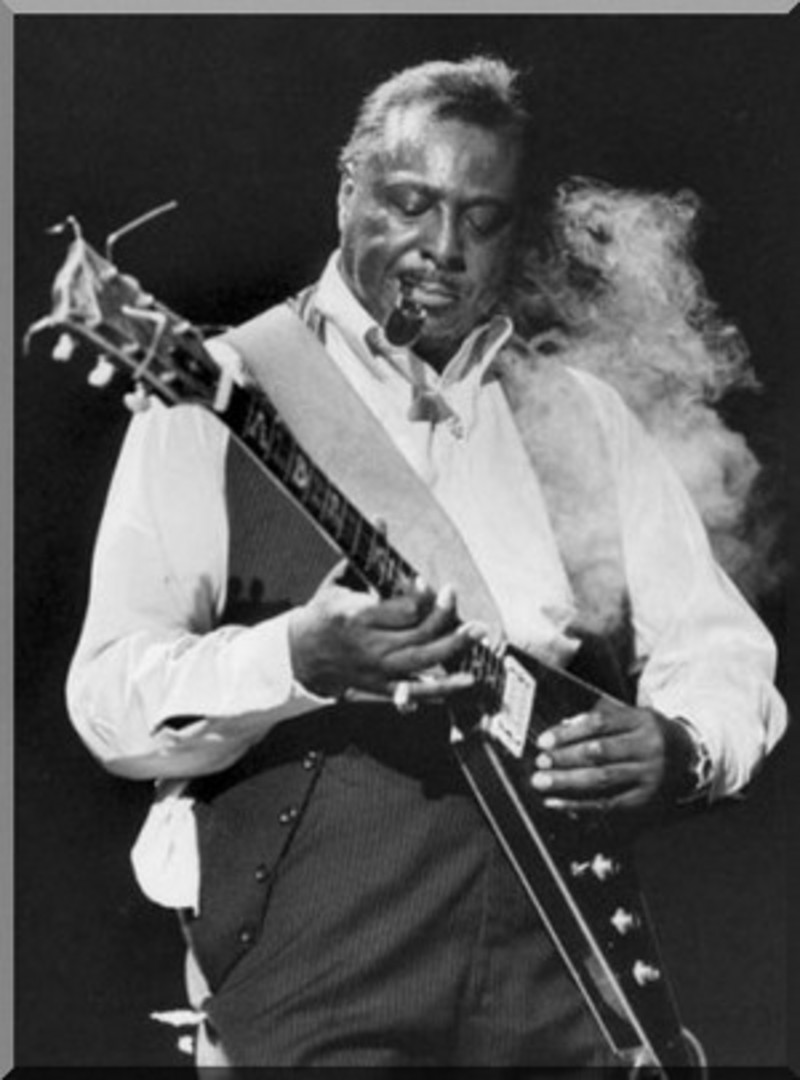
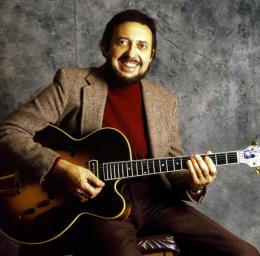
This is one of those exercises / challenges which circulates around Facebook from time to time (much like the one which inspired a previous post about ten albums which inspired me). This one asked guitarists to post photographs of ten guitar players who had been the greatest influence on their own playing.

I find these thought exercises difficult – challenging is the perfect word! I feel like I could post forty pictures and still have missed out a key influence on my playing, yet here we are, in no particular order…

What do these players have in common? Some are strikingly different. The key characteristics I gravitate towards in other musicians are…

  • Tasteful or melodic solos
  • Blending of musical genres
  • Dazzling showmanship / inspirational technique

…and all of the guitarists pictured above have one or more of these traits.

As always, these are just my opinions. I may well delve into my influences in more specific areas in a future article. But what are your biggest guitar influences? Get in touch or leave a comment to let me know!

A year of books (July – September)

Books

It’s hard to believe that we’re in the final three months of the year. What a year it’s been! I’m sure no one could have reliably predicted the majority of changes which most of us have had to undergo, hopefully on a temporary basis, because of this pandemic. I hoped that it might offer more time to get through my oft-mentioned (and ever increasing) ‘to read’ pile. However, if 2020 has taught us anything, it’s that life doesn’t always go the way you expect it to.

Still, there has been some reading since the last installment (which you can read about here), and here is a brief review of it…

The Italians by John Hooper (2015, Penguin)

An affectionate and sometimes amusing look at the characteristics common to Italians, and why that might be the case. Hooper also reiterates that Italy is a relatively new country (as a unified whole), and spends almost as much time highlighting what separates Italians from different regions; north and south; Romans and Sicilians; mountain dwellers and those who reside by the country’s ample coastline, and so on. Hooper regularly interjects anecdotes from his extensive time living and working in Italy as a journalist. These passages give the book a greater cohesion, in that the presumed reader (and Englishman) sees the situations unfold through the eyes of the author, and with similar inherent sensibilities. However, Hooper restrains himself from writing this as a straightforward memoir, which I expect that has increased it’s potential readership.

I read this book during lockdown in England. Of course, Italy had imposed one of the most stringent lockdowns of any country in the world, and the Italians have seemingly been obedient and compliant. This seemed to go against one of the common reoccurring themes in Hooper’s observations; that Italians will regularly bend the rules to suit their needs or preferences. The reports I was hearing on the news in 2020 didn’t sit with this assessment, until I considered another of the books themes – the emphasis and commitment Italians place on family. From this angle, undertaking the strictest measures, which seemed like virtual home arrest to some, made sense, as it gave your elderly relatives a fighting chance of making it through this madness alive. And that, argues Hooper five years before any of this was upon us, is a key characteristic of Italians. Recommended for anyone with an interest in staying in Italy for longer than an average-length holiday.

The Finkler Question by Howard Jacobson (2010, Bloomsbury)

Jacobson’s 2010 comic novel about three male friends – two of them Jewish and a third man who suddenly feels that he might be, won the Booker Prize for Fiction in 2010. This sudden interest in the religion of his friends is the author’s way of examining the universal themes of life and society. It is amusing in places, and the characters are interesting and well-written. Yet I certainly wasn’t gripped by it as much as I had been led to believe the reviewers who had gushed over this novel upon it’s release. Humorous and touching, yes, but also confused in places, and ultimately, slightly underwhelming.

Athelstan by Tom Holland (2016, Penguin)

A recent addition to the Penguin Monarchs series (that is, books on British monarchs published by Penguin books, although there’s a pun about Emporer Penguins in there somewhere), this book examines one of the lesser-known pre-1066 Kings (who wasn’t Alfred the Great).

I enjoy Holland’s writing, having read several of his books previously – in particular, I thoroughly recommend Rubicon, about the last gasp of the Roman Republic. At 160 pages, this is a quick read, but it covers what is known about Athelstan, from the few sources available. Personally, I’m pleased that Holland resisted the temptation to pad the book out with unnecessary additional information or unfounded presumptions.

Utopia for realists by Rutger Bregman (2016, Bloomsbury)

Alternate subtitles for this book, depending on country of publication, include and how we can get there (UK) and the slightly less pithy sounding the case for a universal basic income, open borders, and a 15-hour workweek (Holland). Although the latter of these two subtitles is somewhat unwieldly, it must be said that it up this book’s subject matter much more effectively. The book originated as a series of articles for the Dutch online news site De Correspondent by Bregman, a popular historian, and was later complied and translated. It has quickly became a bestseller, which ringing endorsements from a wide range of economists and politicians across the world.

The text centres on the three polices highlighted in the original subtitle, along with the principle that ideas can change the world, according to Bregman, who states “people are the motors of history and ideas the motors of people”. Of course, there are many who have said that Bergman strays into idealism, and it will certainly prove more popular with readers of a more left-leaning political persuasion. But Bergman is only aiming to issue a challenge, or a promise, of what could be possible but I doubt if the title Utopia for Idealists would have sold quite as well. A manifesto for a brighter future? Maybe not by itself, but a good place to start.

Goshawk Squadron by Derek Robinson (1971, Cassell)

In the afterword section of the book, Robinson recounts his inspiration for writing the story. He read a former R.A.F. pilot describe the tactic of the world’s first fighter pilots during WWI as “to sneak in unobserved behind his opponent and then shoot him in the back”. Hardly the cavaliers of the clouds they have often been immortalized as in tales such as the Biggles series, amongst many others.

This Booker Prize shortlisted book paints it’s fictitious characters in a more truthful light, based on the diaries and letters of real WWI pilots. The book was met with anger from veterans of the Royal Flying Corps (the forerunner to the Royal Air Force) when it was first released, but reading it in 2020, it feels much less controversial now – the idea of a ‘lovely war’ has remained a 20th century concept – but the story is no less gripping for that fact. At just over two hundred pages, it’s a relatively fast read, but I found that the story stayed with me long after I had replaced the book on the shelf.

The next and final installment of this series (due in late December) will feature two novels I have been looking forward to reading. You can also expect updates on some upcoming studio dates and an in-depth review of a new guitar built for me recently. Until next time…
Harley Benton launch £70 power amp for guitar pedal boards

Guitars & Gear

Greetings guitar folk. We are back with a little bit of guitar gear news which seems to have dropped this morning…

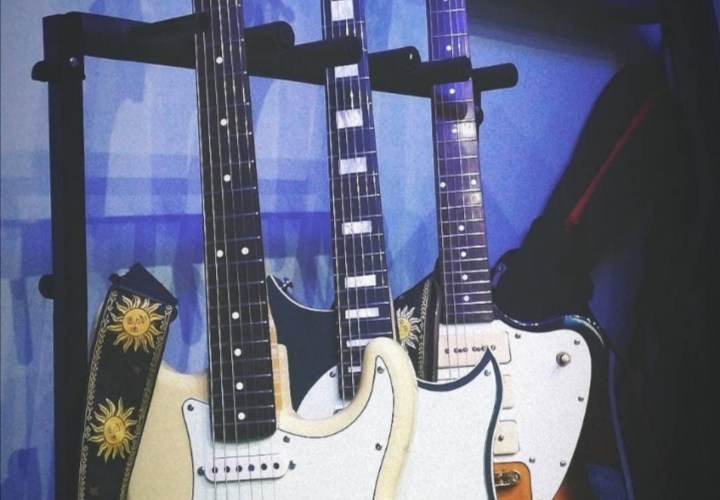
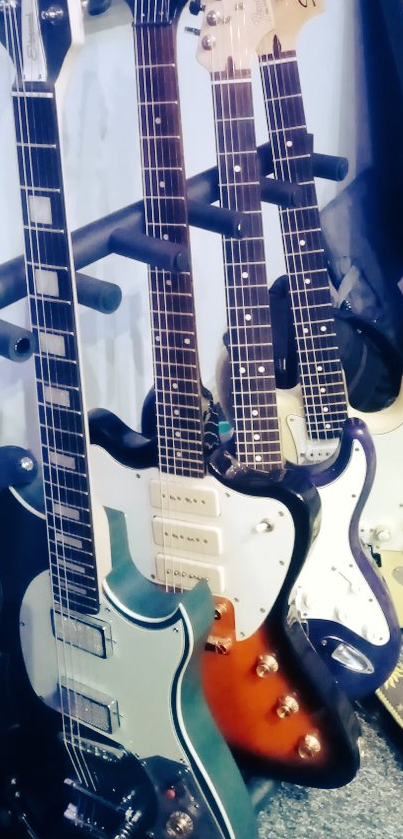
Most guitar players have probably heard of Harley Benton before. The brand (owned by the European online music superstore Thomann) are well known for bringing surprisingly good guitars into the beginner/lower priced end of the market which have significantly better quality control than their rivals (their 335 copy is in high demand). They also offer a range of instruments and accessories that are useful for working musicians to have in their arsenal. To that end, they have introduced the GPA-100, a power amp that fits in your pedal board.

Here’s a link to the Harley Benton page for more information

The GPA-100 features master volume, plus 3 band EQ (treble, middle, bass). It’s main purpose might be to save the day, should your main amp/floor unit fail. And £70 is a small price to pay for that piece of mind.

If I have the chance to test one out, I will drop a review on here. If you buy one, please let me know what you think! Bye for now!

Lessons learned from lockdown

Advice & Tips

This year has seen the most use of the word ‘unprecedented’ that I have ever seen, and probably for good reason.

Do what you can now, and if you can’t do it now, plan for later

Getting started on something can often be hard. During lockdown, I’ve found myself exhausted after a full day of childcare, and in those few rare moments I had for me, working on a new composition seemed ridiculous.

Do what you can, in small steps. In fact…

Make a list

List what your daily tasks are, as well as goals for the medium term (i.e., the next few weeks) and long term (post-lockdown, or even post-COVID altogether). It will help you focus, and evaluate what is important.

List making sure was already an occasional habit of mine, mainly because I am aware of my own poor short-term memory. Going forward, I’ll be sticking to daily lists, as they seem to have made me more productive than when I worked from home in pre-pandemical times.

Speaking of lists…

Bring back the ‘weekly shop’

We must have gotten out of the habit of doing the ‘big shop’ only once a week. Lockdown forced us back into this habit, and although it somehow felt more expensive at first, it seems to be better value across the week, especially when it was harder to nip out on a whim for a treat. Give it a try, if you can, and see how it works for you.

Don’t compare yourself to others

Whether it’s FOMO (fear of missing out) or a kind of professional jealousy when another person seems to be working fine at home – you know, the one with all the recording gear in their spare room (or their parents) and no children.

Social media only shows you what people want you to see. Most of the time, it only shows what those people think everyone else wants or expects to see.

Some of it is real. Some of it is less than genuine. All of it is someone else, in a different set of circumstances (however slight that might appear).

Beware of fatigue

Some of my friends have been locked down at home by themselves, working from one room during day, then zoning out in front of the TV in the evening. They told me that even committing to an online quiz via Zoom felt like too much effort. Staring at a screen all day, even for leisure or socially distant socialising, is incredibly tiring. Give yourself time to reset, and do absolutely nothing. Just remember when you do…

Don’t be to hard on yourself

If the fatigue did’t get you, the guilt surely did – right?

This is connected to my earlier heading, Don’t compare yourself to others, but it’s worth looking at again from a slightly different angle.

We’re going through unprecedented times. No one in our lifetime has experienced this, on this scale, before. Survive. Look after yourself and those around you. Don’t feel guilty for doing less.

In fact, don’t feel guilty at all for how you are managing to get through a pandemic.

Do what you love, if you can (and if you can’t make a plan for doing it in the future)

You might have noticed that a few of my recent posts have been short Hailku form poems, or observations from walks with my family. I enjoy writing them. Since I can’t perform live at the moment, they give me some creative output while everything else is on hold.

If you have recently discovered a new passion, embrace it and enjoy it. Share it with the world. And if COVID19 is stopping you from doing what you love and enjoy (as it has for me with my love of playing guitar live), make another list; this time, make it a plan to get your passion up and running again soon, once all of this is – hopefully – a distant memory of an unpleasant time, now disappearing.

Best of luck, and let me know how you get on! Also, let me know what lessons you have learned from the last few months of lockdown by leaving a comment or getting in touch via my usual channels – I look forward to chatting to you!