Companies and apps have a new habit of ‘wrapping’ the last year. The whole thing is a document in your own consumerism, from the songs you listen to the most to how many minutes you spent staring at a screen trying to improve your Portuguese (or is that just me?).
We all buy into it, taking joy from the evidence of our every move online (or at least on our phones) being mined and researched so someone else can profit from it. We even share the findings, further doing the marketing work of these huge corporations for them.
But sometimes, it’s a good thing to look back over the previous twelve months and assess how far we’ve come – and consider where we’re going…
The most important things
Ask yourself the following questions:
What am I most proud of this year?
How did I affect the lives of others?
What made me happy?
What could I have done better?
For me, I feel like 2024 was the year that the original music projects I’m involved with finally got back up to speed. I’ve spent the years since the pandemic prioritising my work as a Music Therapist and live performer. But this year, I worked on two records for dear friends and my new band, Solcade, has had a successful year of shows, with plans to hit the studio at the very start of January next year.
Solcade have been well recieved this year
In terms of live shows, 2024 has felt quite varied. My gigs have been a mix of grassroots slots, concerts and of course, lots of weddings and parties. I feel that I’ve been able to maintain a healthy balance between original and covers gigs recently, and with thirty dates already booked in for next year with a variety of acts, 2025 looks set to continue that trend.
Of course, there have been setbacks, but nothing that hasn’t left me (or the acts I work with) stronger. My therapy work has changed too, with some contracts coming to an end as exciting new opportunities begin. My plan for next year is to build upon these to grow the service I provide to children, adolescents and young people in my region.
Quite a lot of this is still in the planning stages, but if the network of specialist creative therapists I’m trying to establish continuesnto grow, we will be able to reach even more people and help a vulnerable group build the life-changing mental resources needed to lead fulfilling and enriching lives. Wish me luck!
So that’s me. What about you?
The next steps
Now, having asked yourself about the year which is coming to an end, ask yourself:
What do I want to achieve in 2025?
And what do I need in place to make this happen?
As always, let me know your thoughts, as well as your plans and hopes for 2025. My main suggestion would be to look after yourselves and each other.
Go easy on yourself and forgive yourself when things don’t go according to plan – then get back up and carry on.
Surround yourself with people who make you feel as happy and fulfilled and you are trying to make others feel. None of us can get very far through life on our own.
Guitarist at work, live & in the studio
Now, I’m about to set up for me final show of the year – and because it’s a New Year’s Eve party, it will also be my first show of 2025. So since I’ll be busy at midnight here in the UK, allow me to take the time now to thank you all for reading these posts (as well as contributing your comments and messages) and wish you nothing but the best for 2025, and beyond!
Top session bassist Herbie Flowers sadly passed away on the 5th of September, aged 86.
Although most people may not have heard of the British session musician, Flowers was well known within the music industry, having been performing and recording since the 1960s. After starting out playing tuba and double bass in the RAF in the 1950s, Flowers moved into session work and soon the bass guitar became his main instrument. Among his earliest recorded work was the band Blue Mink, who had hits with ‘Melting Pot’ and ‘Good Morning Freedom’.
Flowers soon began playing sessions for artists in the late sixties, working regularly for famous producers such as Mickie Most (The Animals, Herman’s Hermits, Donovan, Lulu, and many more), Tony Visconti (T. Rex, David Bowie, The Moody Blues, and countless others), and Shel Talmy (The Kinks, The Who, among others). His playing credits are almost too long to list. In fact, it’s estimated he’d played on at least 500 hit recordings by the end of the 1970s!
Here’s a few of the more well-known highlights…
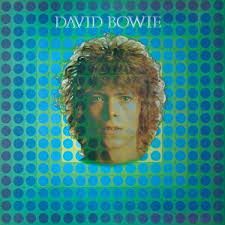
Flowers played bass on Bowie’s eponymous second album, including his first hit, ‘Space Oddity’. He then returned to the studio with Bowie to record his Diamond Dogs album.
When working on Lou Reed’s Transformer album, Flowers created his most recognisable bassline, used on the song ‘Walk On The Wild Side’. This bassline is actually two basses a double bass with a fretless Fender Jazz playing the higher part. As well as creating a unique sound that’s harder to achieve when playing both lines on one guitar, it also allowed Flowers to collect additional royalties for playing additional instruments on the song!
In 1971, Flowers co-wrote the novelty song Grandad, sung by actor Clive Dunn. The song reached the number one spot on the UK charts the same year, where it stayed for three weeks.
Flowers played bass on Jeff Wayne’s famous masterpiece, his musical and spoken-word adaptation of War of the Worlds. He then toured with Wayne when he took his famous concept album on the road decades later.
Flowers also appeared on recordings for Elton John, David Essex, Olivia Newton John, Bryan Ferry, AL Kooper, Harry Nilsson, Cat Stevens as well as on solo albums by three of the Beatles; Paul McCartney, George Harrison and Ringo Starr.
His work on a crossover record Changes by Australian classical guitarist John Williams (which included Williams’ arrangement of ‘Good Morning Freedom’) created a connection which came to fruition in 1978, when Flowers and Williams teamed up with other session musicians to form the famous instrumental group Sky. This supergroup of sorts (although only Williams was recognisable to most of the general music-buying public) released several albums over five years and toured regularly, bringing their fusion of classical, jazz and pop music to a wide audience.
What can we learn from Herbie Flowers?
Unlike other famous session men, such as ‘The Wrecking Crew’ in the USA’s pop music scene, Flowers seems to have developed a good reputation as a reliable performer, making him the first-call for several producers and composers. Why was this?
Put simply, he was not only a good musician, but a reliable one. Studios are expensive places to waste time, so having a roster of musicians who can not only play to a high standard, but also turn up on time is essential to producers, arrangers, musical directors and band leaders. Musical skill and a good ear allow the best session players to grasp a new song quickly and do their best to make it sound as good as possible, but the real professionals are he ones who treat it like the job that it is.
Nowadays, studios and recordings work a little differently. The ones that do make use of session musicians on a regular basis are far more rare, and getting a gig in such a place can feel almost impossible. It’s worth remembering that this side if the industry is – and to an extent, always has been – something of a closed shop. However, opportunities still exist in live performance, which in my experience have led to recording opportunities that I would otherwise not been offered. To give yourself the best chance of being considered for such roles, ask yourself:
Do I have a reputation for turning up on time, setting up quickly, and having working equipment?
Am I recognised as a competent musician (not the flashiest) who can cope with most styles?
Am I considered easy to get along with?
Divas don’t get invited back to future sessions. Nor do musicians who show up with faulty gear. I’ve also known artists to get frustrated with the brilliant ‘hot new thing’, fresh from music school with a head full of jazz theory and the chops to back it up, citing their input as overplaying or lacking in any real soul. Be like Herbie Flowers and that select group of ‘top’ session players: turn up, don’t make trouble, and serve the song. It worked for him. It will work for you.
In both cases, a little hard work and luck is involved, but t’was ever thus. And Herbie Flowers seems to have made the best of the cards he was dealt.
I an article earlier this year, I weighed-up which two guitars in my collection would be the ultimate top two – the two I could take along to any gig any be comfortable they would cover (almost) any style of music being played. This is especially useful for me at studio dates, where surprise requests can often occur, and I don’t usually have capacity to take my entire guitar collection along to every session!
In the end, after examining different types of guitar (differentiated largely by their pickups), I concluded that – for me – one of my Stratocasters and a p90-type guitar (in my case this Gould Stormbird) made a winning combination in terms of tones and range of genres. With these two, I could cover everything from jazz and funk to classic rock and noisy indie, and everything in-between.
But what if you could only take one guitar out? Which one would it be?
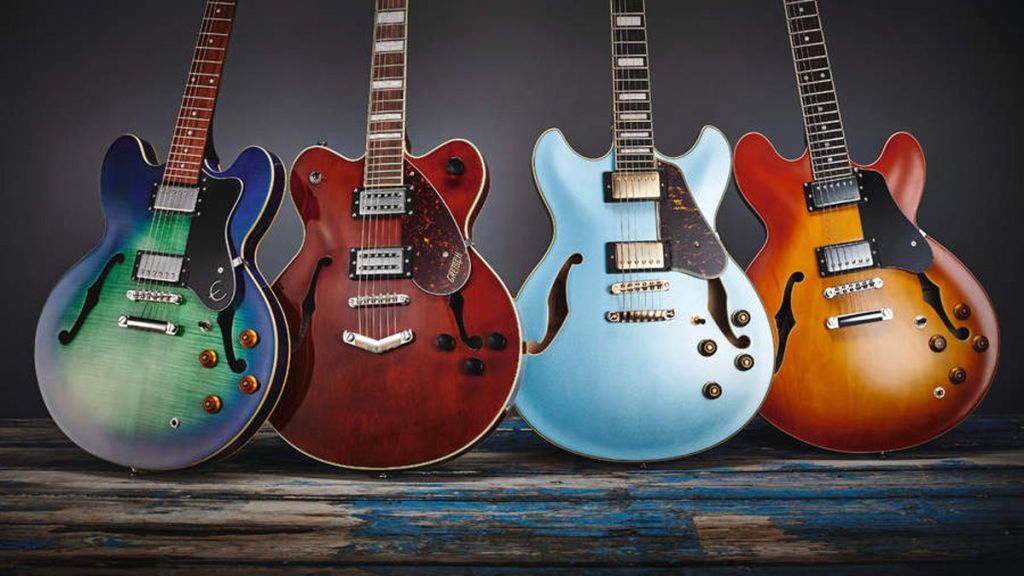
In the original post, I sang the praises of the 335-type guitar, which only just missed out on making it into the ‘top two’. I love my own 335 copy, but I felt more confident taking a Strat to a gig with multiple (or unknown) genres on the go, mainly because the single-pickup solid body cleans up better, is far less prone to feedback onstage (especially when playing heavier styles), and offers more tonal options. Also, I think the fact that I’ve played Strats since I was sixteen likely played a part in my thought process. I sometimes take a job where I don’t know exactly what I’ll be asked to play until I arrive, so familiarity with an instrument I trust is crucial.
However, I might have been a little unfair to the 335, and feel like I’ve changed my opinion in the last few months. I’ve certainly been using one as my main guitar for 80% of my gigs this year so far, and it performed perfectly at my most recent studio bookings – but would I be happy with it as my only guitar for any gig?
Let’s look at the three types of guitar by pickup type again, with a summary of what I use them for, as well as a few examples of where I use them professionally.
Single-coil solid body guitars (Strat, Tele, Danelectro, etc)
Classic guitar tones – bright and clear with lots of twang or spank to their sound Sound great overdriven, but retain some of their original character Sit well in a mix with other instruments/guitars Reliable, solid instruments which are easy to mod Perfect for: pop, funk, country, blues, rock, indie Can be noisy, especially in high-gain settings
P90 solid body guitars (Stormbird, Some PRS models, some Teles, etc)
Beefed-up version of a classic single-coil sound Beautifully warm, yet still clear, distorted sound Great ‘best of both worlds’ between a single-coil and humbucking pickup Covers most styles (but volume has to be rolled back slightly for cleaner sounds) Can be very noisy in certain settings
Humbucker solid body guitars (Les Paul, SG, PRS)
The classic overdriven guitar sound, warm but aggressive Warm, full sound for jazz (with the volume rolled back a little) Perfect for: Rock of all types, jazz and blues Not as good as single-coils for those iconic glassy clean sounds
A humbucking guitar with a slightly airier sound Lighter than a Les Paul (to save your poor back!) Capable to playing most styles imaginable Perfect for: jazz, funk, soul, blues, classic rock Neck & Bridge pickups together gives a wonderful funk tone Prone to feedback onstage, especially in higher-gain settings
Picture credit: Music Radar
Final thoughts
Which would I choose? I still couldn’t say for certain. It depends so much on the gig in question, but if I wasn’t sure what I was going to asked to play, I expect it would be the Strat or the 335 I’d be reaching for. I guess it comes down to a choice between a solid body or (semi) hollow bodied guitar; whether I’m seeking the thicker snap of the Strat, or the airier sound of the 335.
And of course, bear in mind that we’ve only been discussing electric guitar options here – if I was really unsure about the requirements for a studio date, I’d have an acoustic packed into the car too!
But what about you? Obviously, what works for me doesn’t necessarily work for everyone, which is why I’d love to hear your thoughts – get in touch!
As the rain sets in here in the UK, for what looks like a prolonged period, it seems that summer is well and truly over.
The last few months have been pretty busy, so I thought I’d quickly let you in on what I’d been up to…
…aside from the usual, that is
My main working week is still taken up with the music therapy service I provide in a range of settings. Most of my therapy work is with children and young people, and one of the best things about my job is seeing how music helps to communicate feelings which, for some of my clients, can be hard to articulate with words. It makes the more difficult aspects about this work (such as the seemingly endless stream of reports) worthwhile.
Wedding season is coming to an end
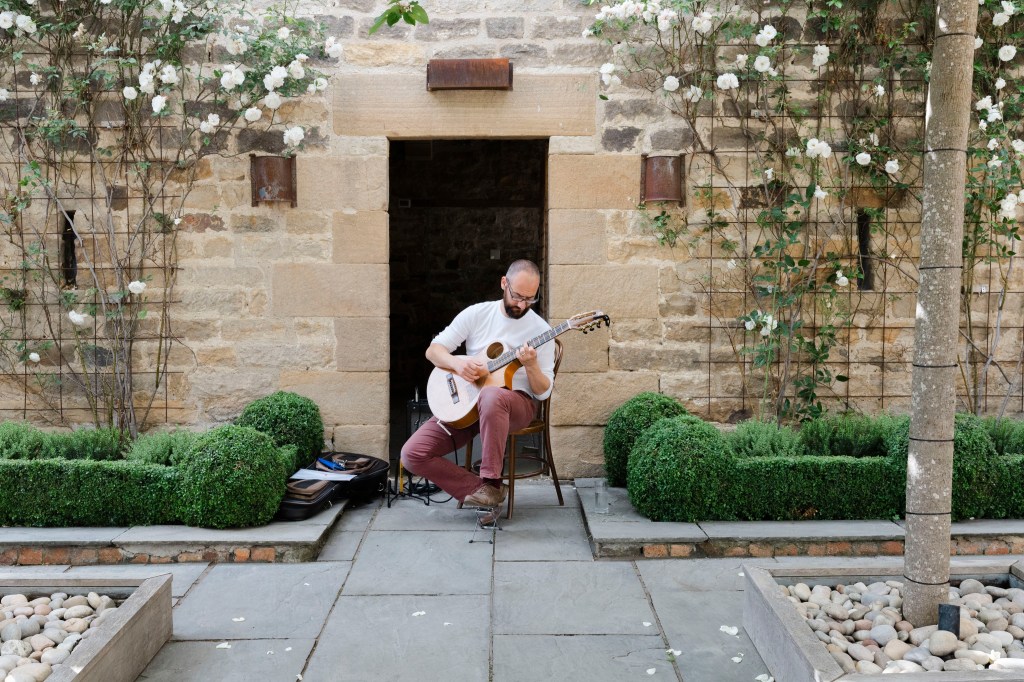
In terms of live music, it is the covers bands that continue to make up majority of my professional output. However, I enjoyed playing more solo guitar gigs, performing at wedding services and receptions.
Credit: Imogenkate Photography (2023).
It’s nice to see this type of work coming back through into my diary again. After Covid, I feared that live classical guitar may have been an expense too far for couples planning their big day, but this summer has thankfully proven my fears to be unfounded. I’ve already got several dates in my diary for 2024 (if you are looking for a solo guitarist for your own big day please get in touch via my contact page).
Nick Gladdish is recording his next LP
In August, Nick called his usual crew into the studio to lay down baking tracks for his new album, he follow-up to 2021’s Last One Get The Lights. Although we all (Nick included) expected this record to feel like a companion piece to LOGTL, we soon discovered a slightly more rock-orientated edge to the arrangements. This may be a result of the tighter arrangements, as Nick told us he was consciously trying to keep the tunes on this record shorter than his usual fare. With John Timey back in the joint producer/drummer chair, and the brilliant Adam Cornell on bass guitar, this felt like one of the smoothest recording sessions I’ve ever been involved with.
NG Band in-studio.Positive feedback?
The results so far are promising; ten pop-rock songs about love, loss, disillusionment and corruption. I certainly enjoyed writing and layering rhythm guitar tracks. There’s not many guitar solos this time around, but there is some interesting experimentation going on, from drowning out the end of one song in multi-tracked guitar feedback, to a bluesy ukulele solo on the opening track! Next come the overdubs, editing and mastering…
New original project finally ready to launch
Finally, despite various obstacles thrown at me, I am pleased to announce that I have a new original music project about to start performing live. Solcade began as an outlet for music I was writing which didn’t fit anywhere else – too jazzy, bluesy or indeed too varied for many of the ensembles I have been working with.
After recruiting a stable five-piece lineup, the project quickly became much more of a democratic process, and the music is all the better as a result. With each member having an equal credit in writing and arranging, everyone involved has been bringing their ‘A game’ and making some amazing contributions. If you’re a fan of psychedelic funk, Jazz, soul and rythym & blues, then watch this space for upcoming details about our forthcoming debut record (likely scheduled for completion & release in 2025).
We have some live shows coming up in the autumn, too. Follow us on Instagram to hear the latest updates.
But what have you been up to?
Let me know! Also, I’m planning on writing a Q&A article so if you have any guitar, composition, music therapy or psychotherapy-based questions, get in touch and I may well include it!
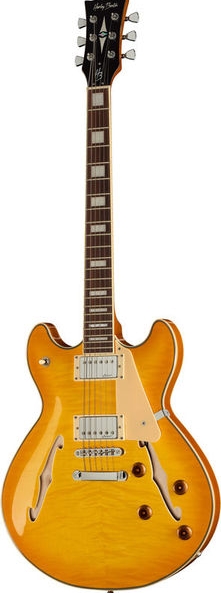
At the end of last year, I acquired a new second-hand guitar. It even shipped with a hard case included as part of the sale! The guitar in question is a budget 335-style copy, made by Harley Benton, the in-house grand for the German musical instrument retailing giant Thomann. Or rather, I should say the Harley Benton HB-35 Plus…
What does plus mean?
Harley Benton already have the HB-35, their budget version of a 335-style guitar. Selling for just £175, they get good reviews and are an affordable way to try out Semi-hollow guitars for the first time. The HB-35 Plus retails at approximately £220 new, but has features which mark it out as a considerable upgrade on it’s cheaper sibling.
So what does that extra £45 get you? Block inlays, for a start, which look very classy. You also get more specialised vintage-voiced humbucking pickups (which can be split for a single-coil sound) and an arched maple top (hence the plus top moniker) in fancier colour options, such as the lemon drop colour reviewed here.
Image from Harley Benton’s website – note the original placement of the pickup selector
I love this colour, which appears more of a light orange-yellow to my eyes.
Furthermore, it seems that the nut is slightly more narrow (42mm to the original HB-35’s 43mm) and a slightly more curved fingerboard (12″ radius, compared to the older model’s 13.5″ or thereabouts), making this guitar feel a little more like the classic ‘jazz boxes’ of old.
Specifications & build quality
Having bought this guitar from another player, I received an instrument which had already been set up, and indeed, modified. This means I don’t know how this guitar would have arrived ‘from the box’, although I hear that like most guitars, a simple set up would be enough to get it in shape.
The guitar I received felt well balanced across the fretboard and is really comfortable to play. The classic Gibson scale length feels familiar and the neck is comfortable in my hand. In fact, it feels like they have copied the dimensions of the classic 335 very closely, which is no bad thing.
What’s more, the previous owner had moved the pickup selector switch from the top shoulder (where you would find it on a Les Paul) to a sit with the other controls, which is much more typical on a 335-style guitar. The only negative is that the original hole is still there (it was covered with a giant sticker when it arrived, which I quickly and carefully removed).
Here are the full specs of the guitar, according the Harley Benton:
Semi-hollow design with mahogany sustain block (Entandrophragma cylindricum)
Maple body with AAAA flamed maple archtop
Set-in maple neck
Pau Ferro fretboard with block fretboard inlays
Fretboard radius: 12 inches
22 medium jumbo Frets
Scale: 24.75 inches
Nut width: 42 mm
2 Roswell LAF Alnico-5 vintage-style humbucker pickups
2 Volume controls with push/pull function for split coil
Individual tone controls for each pickup
3-Way pickup toggle switch
Tune-O-Matic bridge
The main thing on my list to change, and indeed the only upgrade I feel this guitar needs, is to swap the plastic nut for one made of bone. I’ll probably get round to doing this later in the year, and for now it’s working fine and holding its tuning well.
How does it sound?
Before even plugging into an amp, this guitar sounds good (and surprisingly loud) completely acoustic, which is useful for playing at home.
Plugged in – it sounds exactly as a 335 should.
Played clean, single notes and chords ring out loud & clear, sounding even across the entire fretboard. The pickups, combined with the tone controls, allow for everything from jazz and blues to soul, pop, country and an almost Gretsch-like Chet Atkins vibe. Using the push-pull volume to split the humbuckers down to single-coils beings out an airier version of a Telecaster sound.
Throwing a little overdrive in makes this a very enjoyable guitar to play. As well as offering grittier takes on all the styles and sounds mentioned above, you also get some of the best classic rock tones out there. Add more distortion and it continues to sound very good and play incredibly well. The semi-hollow body allowing gentle feedback which helps add to note sustain.
Putting the HB-35+ through it’s paces at home
This guitar not only took any style I threw at it in its stride, but excelled across the board, even in higher-gain settings. Admittedly, I don’t play the more extreme metal genres, but even then, if you can work out the likely feedback issue, I have a feeling this guitar would surprise you…
Does it hold up well at live shows?
Since acquiring this guitar at the end of autumn last year, I’ve gigged it pretty regularly. It performed brilliantly when I put it through its paces at a recent soul review show, covering Steve Cropper style licks and jazzier solos and choral work. With one of my main covers acts, this quickly became my first choice guitar, covering everything from jangle and early 60s pop to classic rock, punk and Britpop, all in the space of one show. It is comfortable both to play and also to wear standing up for two hours.
Ask most professional session guitarists what the best ‘cover all bases’ guitars are, for studio work and live, and they will probably tell you to have a 335 handy. Obviously, this applies to any decent 335-style guitar, if not the gold standard Gibson original. But it certainly makes sense to snap up this significantly cheaper tribute, especially when it looks classy sounds fantastic and plays so well. It may be that they take a little post-purchase work to reach the decent playing standard I seem to have, but in my opinion, it’s worth it.
This guitar surprised me. I’d heard really good things about Harley Benton, but I still wasn’t prepared to be blown away as much as I was by this guitar. I’ve used it in various settings and with several different acts in the last couple of months, covering styles from Kuti to Kasabian and BB to The Buzzcocks, and I’m very impressed with how it’s handled everything I’ve thrown at it.
Nowadays, the term ‘budget guitar’ doesn’t mean the same as it did twenty or even ten years ago, and shouldn’t arouse the kind of stigma which cling to those older, poorly constructed guitars. The quality on this instrument is very high, and I can’t stress enough just how fantastic those Roswell pickups sound!
After years (decades, even) of using Stratocasters as my main go-to guitar while others have come and gone from my collection, I might have found another guitar that I love just as much. I might even have to buy another of these, just in case something happens to this one – which at this price point, is an affordable prospect.
2022 has come to a close and I’ve had a stinking cold and been on the verge of losing my voice for the last few days. My final gig of the year was a New Year’s Eve show with Nick Gladdish, where I luckily don’t have to do much singing!
Next year brings more gigs of various kinds, on top of my ongoing Music Therapy work. I’m also looking forward to getting back into the studio to rehearse and record my old pal Nick’s next album at the start of 2023.
Speaking of studio time, next year will also see a couple of new projects from me, including a few releases of original instrumental material, both for solo guitar (under the working title Sketches) as well as some jazzier stuff with a small group of friends (still working out the details for that one). These pieces have been clogging up my drafts folder for ages, so I plan to record and release them before the end of 2023, meaning that I never have to think about them again!
I’ll keep you all updated via this blog. I’ll also try to keep up the musical articles, including more entries to the Great Guitarists series. In addition, keep an eye out for my round up of my favourite books read in 2022, coming sometime this month.
So enjoy the rest of your festive season, look after each other, and all the very best for the coming New Year. See you at a gig soon…
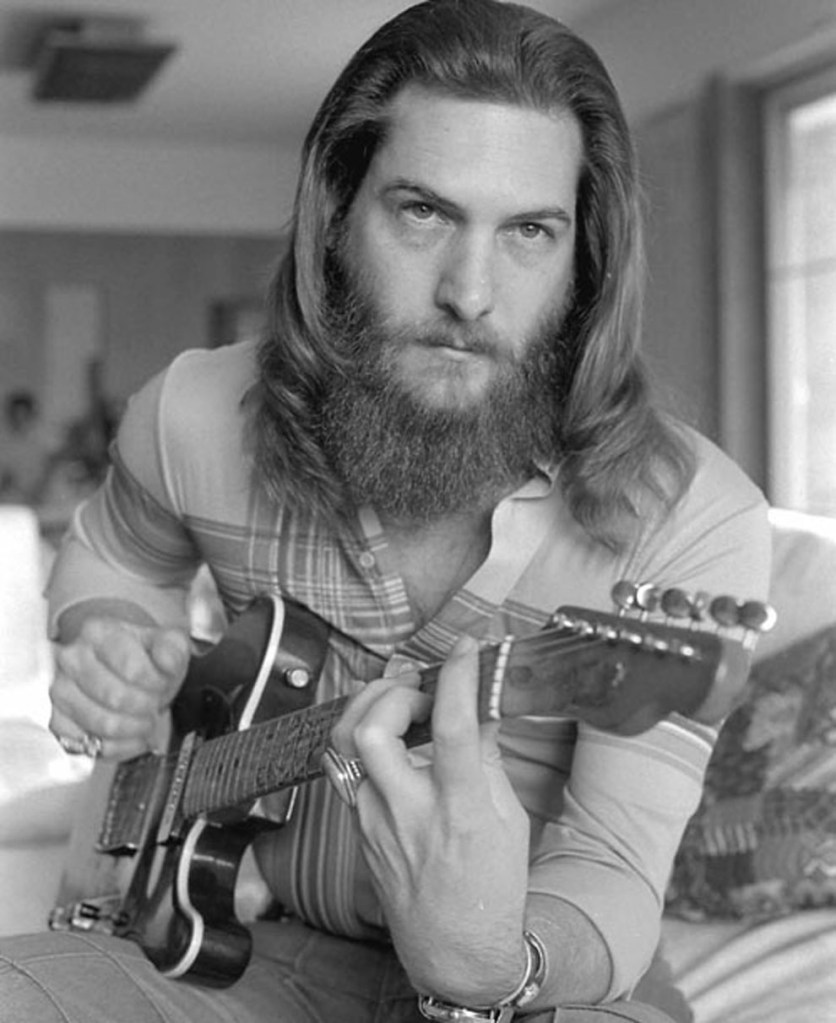
The Great Guitarists series is back, and we’re restarting with one of my all-time favourite guitar Players, Steve ‘The Colonel’ Cropper.
Even if you don’t recognise the name from the cult classic musical comedy The Blues Brothers, you will have heard Cropper’s songs and guitar playing on countless records, playing alongside some of the greatest soul singers of the 20th century.
Steve Cropper with his favoured guitar, the Fender Telecaster.
Cropper was as a member of Brooker T & the MGs, who also included Al Jackson Jr. on drums, Brooker T himself on organ & piano, and Cropper’s childhood friend Donald ‘Duck’ Dunn on bass (Dunn was also featured in The Blues Brothers). The group had hits with instrumental tracks such as Green Onions and Soul Limbo (the one used as the BBC’s theme music for their Cricket coverage).
Brooker T & The MGs (left to right: Al Jackson Jr, Steve Cropper, Brooker T & Donald Dunn).
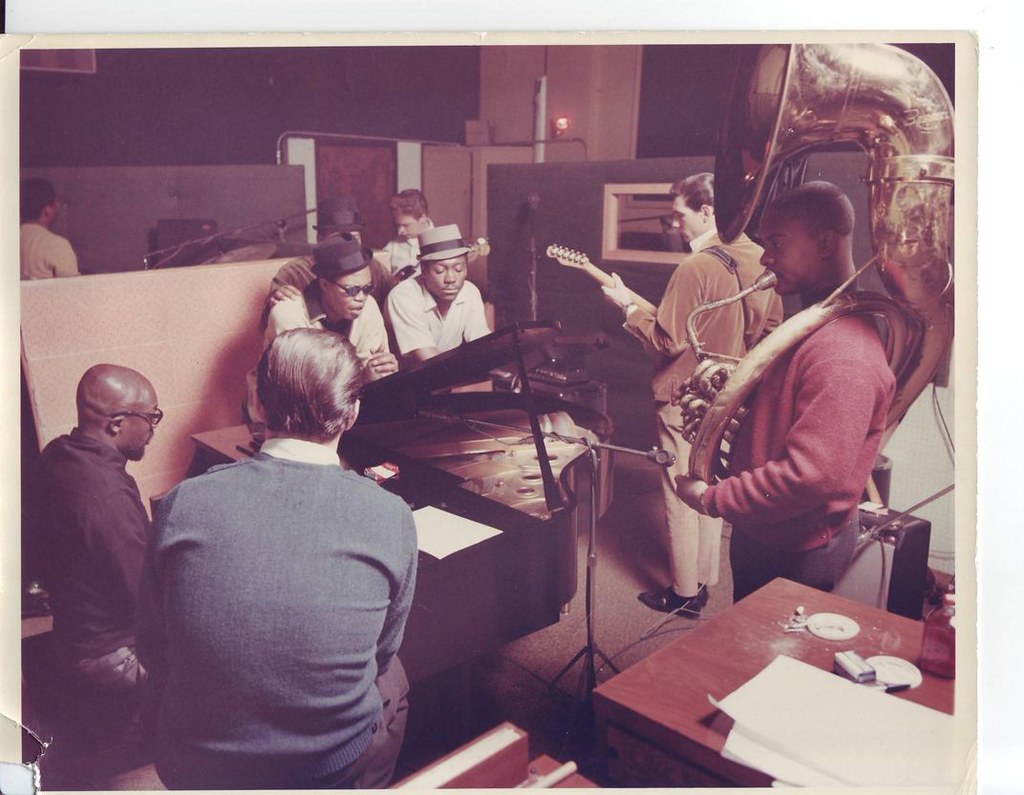
The MGs were also the core in-studio ‘house band’ at Stax Records, Memphis, providing the backing (and often creating the arrangements) for virtually all of their recordings from the mid-sixties to the early seventies. All those hits you know by Otis Redding, Sam & Dave, Eddie Floyd and countless others? The MGs, with Steve, are in all of them…
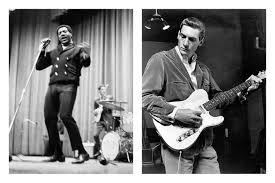
Clockwise from top left: Cropper onstage with Otis Redding; Cropper with his white Tele;In the studio with Sam & Dave; and with Aretha Franklin.
As if that wasn’t enough, Cropper also co-wrote In the Midnight Hour with Wilson Pickett, Knock on Wood with Eddie Floyd and (Sittin’ on) The Dock of the Bay, the famous posthumous hit for Otis Redding. Some of these records were also co-produced by Cropper.
After leaving Stax, Cropper went on to play on Ringo Starr’s and John Lennon’s solo records, as well as produce albums for other artists, notably the Blues guitar legend Albert King. Then, in the late seventies, he was recruited into the Blues Brothers, the act for which he might be best recognised.
The Blues Brothers released two albums, two feature films (both of which included soundtrack albums) and embarked on a handful of tours between the late seventies and the early 2000s. Their influence on bringing rhythm & blues to a wider audience cannot be understated, not least by introducing a new generation of moviegoers and listeners to artists such as John Lee Hooker, Ray Charles, Sam & Dave and many more. Yet even in a band comprising a veritable who’s who of soul musicians, Cropper still stands out.
Cropper (left) with The Blues Brothers Band.
In most of these settings, Cropper is welding a Fender Telecaster or (more recently) Telecaster-like models, such as his Peavy signature model from the late 90s. His playing – and the guitars he played on – provide a full, but not dominating, sound. From simple but effective chord work, to riffs that often doubles up against bass lines, his style of Memphis Soul remains highly imitated. In his lead work, his frequent use of sixths (read more about these here) can be heard to great effect on the intro to Sam & Dave’s hit Soul Man.
Recommend listing
Pick up any classic cut from the Stax label from the mid to late sixties and Cropper is probably on there. Then of course, there is the soundtrack to The Blues Brothers. There are even complications of Cropper’s best-known work available. It doesn’t take much work to find him!
In all cases, listen carefully to his rhythm choice, and note how he leaves space for the singer and other instrumentalists. As for solos, he could certainly play good ones when he needed to but only when they were necessary.
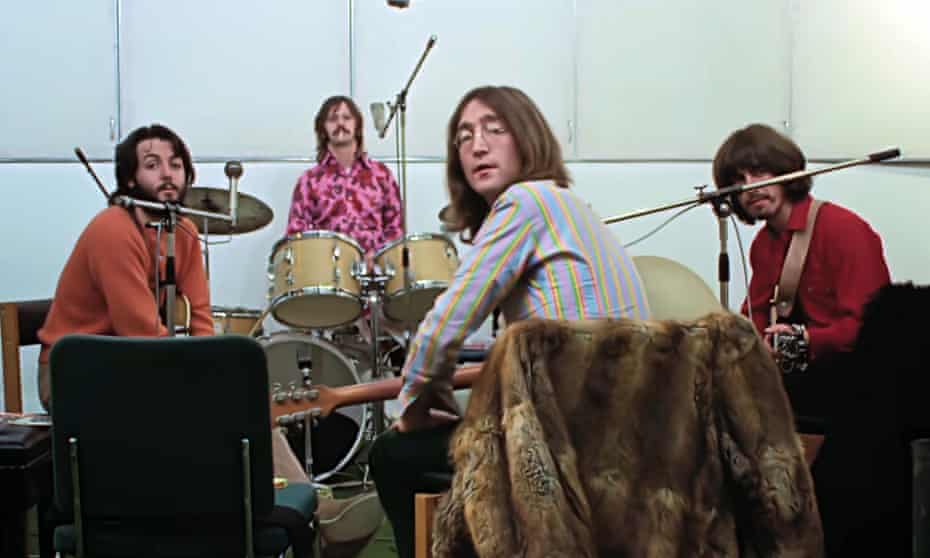
I’m a little late to the party, but I finally managed to watch The Beatles: Get Back. While it was incredibly interesting, I wonder if many casual fans were deterred by its duration. I’ll provide a little background then highlight the main takeaway points I found from this miniseries. If you have watched this, please let me know your thoughts!
Background
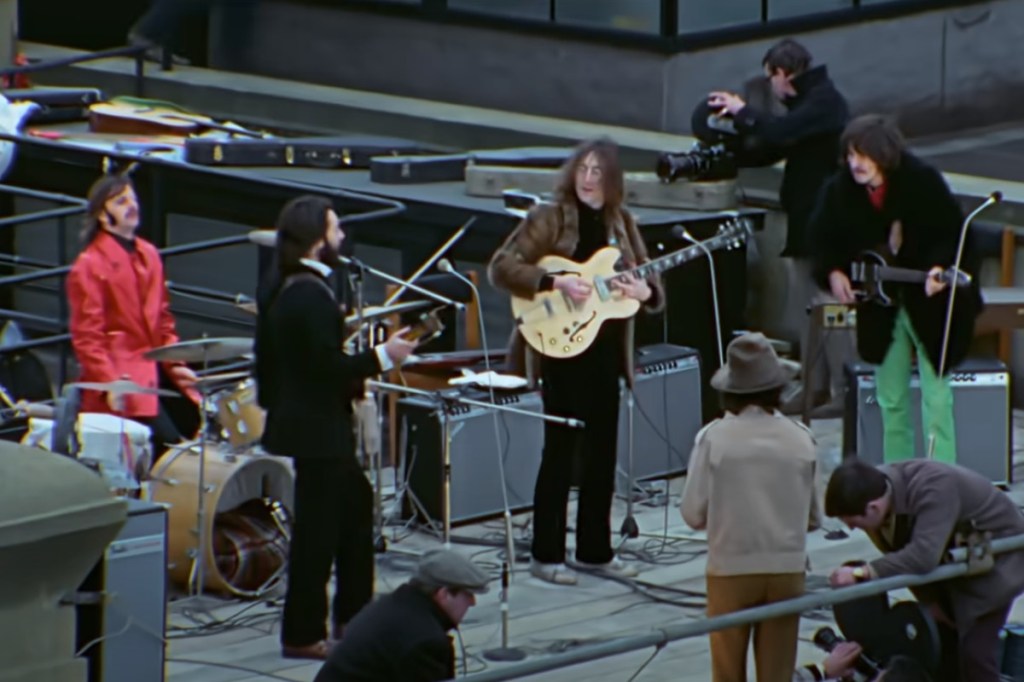
Peter Jackson’s documentary launched at the very end of November last year, in three 2+ hour installments. It covers most of January 1969, when The Beatles, assistants and tech crew assembled in a large recording sounds stage with a documentary film crew in tow. The original plan was to record an album of brand new music, written from scratch and performed live in some form. In the end, sessions were strained before the group love to the new studios in the basement of the Apple Corps (their own record label) offices on Savile Row. The project culminates in a half hour performance on the roof of this building before the police arrive to shut it down.
The music from these sessions was eventually released shortly after The Fab Four had split up. Legendary and infamous American producer Phil Spector was hired to make an album out of the material available, which had been largely worked on by regular Beatles producer George Martin and engineer Glyn Johns prior to the abandonment of the project. The resulting album (Martin later said that he produced it, and “then Spector over produced it” ), now called Let It Be, was released in 1970, seemingly against The Beatles’ wishes. Indeed, Paul McCartney eventually stripped the record of the elements Spector had added – the choir, stings, horns, etc, and re-released the record as Let It Be… Naked in 2003, hoping to finally covey the project’s original direct-to-tape aesthetic.
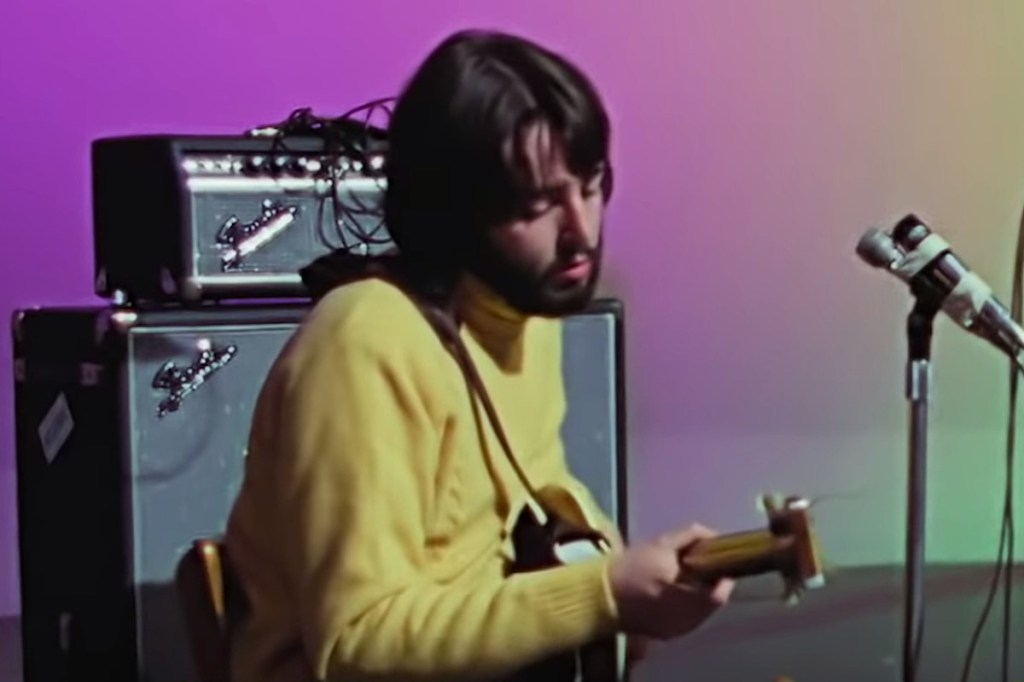
Parts of the film footage was released in a documentary film of the same name. But 50 years later, after hundreds of hours of footage was discovered intact, Jackson (director of the Epic Lord of the Rings film trilogy and a self proclaimed Beatles super fan) stepped in to create a new documentary which told the full story of this short period in Beatles history. It includes a vast swathe of footage never seen before, including moments when The Beatles did not realise they were being recorded (such as a microphone hidden in a canteen flower pot which picks up John Lennon and Paul McCartney frankly discussing how their own egos getting in the way of their music). Overall, it’s fascinating and many musicians I know have marvelled at being able to see how The Beatles worked out songs such as Get Back and Dig A Pony. Here’s a few other things I observed…
Paul doesn’t seem to know what he wants
Most of the Get Back project appears to be McCartney’s idea. He is the driving force behind the ‘live’ aesthetic, either in the form of performing to a live audience or recording without overdubs. However, he also seems a little lost and unsure of what he actually wants to look like. Sometimes it seemed like he was genuinely running out of inspiration (while simultaneously writing some great songs seemingly from scratch), and on other occasions he appears to have ore of a plan than he lets on, but is hesitant to force it onto the rest of the group. Perhaps he feared a mutiny if he pressed his ideas too forcefully. This does indeed happen in Episode 1 when Harrison reaches the end of his patience for having his playing criticised by McCartney (often without him providing a clear idea of what he wants George to play). Seeing McCartney’s indecision, or fear of being too forthright with his ideas, shows us a project that is doomed from the start.
Yet McCartney is not lacking in songwriting inspiration. He brings in Let It Be and The Long And Winding Road to be rehearsed by the band, having apparently written both if these songs almost to completion at home. I was left with the feeling that these were ‘back pocket’ songs; perhaps ones McCartney had considered keeping for a future solo album? However, when it becomes clear that the group don’t have enough material, he puts them forward, and of course, they end up being among the highlights of the subsequent album.
There is small but telling detail which emerges very near the end of Episode 3, after the rooftop concert has been finished and the band are recording the final takes for the album. During a moment listening back to a recent take of The Long and Winding Road, regular producer George Martin mentions McCartney having discussed adding a sting ensemble to fill out the sound on the record. The moment goes by quickly, and McCartney is very noncommittal in his acknowledgement of this statement, but it goes very much against the straight-to-tape aesthetic pursued by none other than McCartney himself. It indicates to me that perhaps his stated intentions and private desires have not always been the same.
Two things saved the session from an even earlier end
The huge soundstage The Beatles start in gives them acoustically-related problems from the outset, and appears to prove a hindrance to their creativity. Speaking from my own experience, it is hard to really dig into new songs, or even your own playing, if you’re struggling to hear everything around you clearly. Their decision to relocate to their just-completed basement studio in the Apple Corps office gives them the opportunity to work on the songs they have started in a more familiar and better sounding environment. You can see in Episode two how much more quickly things come together for the group after the move. But there is anoter factor which helped things along considerably, and arguably saved the project altogether…
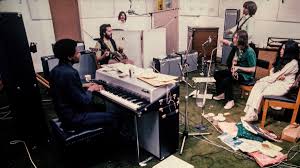
The arrival of Billy Preston to the sessions is the real turning point in the Get Back sessions. The Beatles had first met Preston in their early days of performing in Hamburg. Preston was part of Little Richard’s band and was in London performing with Ray Charles when he ran into George Harrison and popped into the sessions to say hello. Once invited to sit in on electric piano and organ, something clearly changes for the better in the atmosphere of the sessions. This happened once before during the recording of their previous album, 1968’s The Beatles (also known as ‘The White Album’ due to it’s blank cover). Harrison has spoken about having fond memories recording While My Guitar Gently Weeps with Eric Clapton providing an (at the time anonymous) guest solo, because the band were all on best behaviour in the presence of a guest and friend. In a similar way, things seems much less acrimonious or stressful once Preston starts adding to the Get Back sessions. It is clear that the group enjoy his contributions. Lennon even suggests recruiting him officially, to which McCartney counters that it is hard enough reaching agreements between the four of them already! The value which TheBeatles themselves placed on Preston’s presence is evidenced in the initial release of the song Get Back as a single – it is credited to “The Beatles with Billy Preston”. High praise indeed.
Ringo seems to play no part in the decision making process
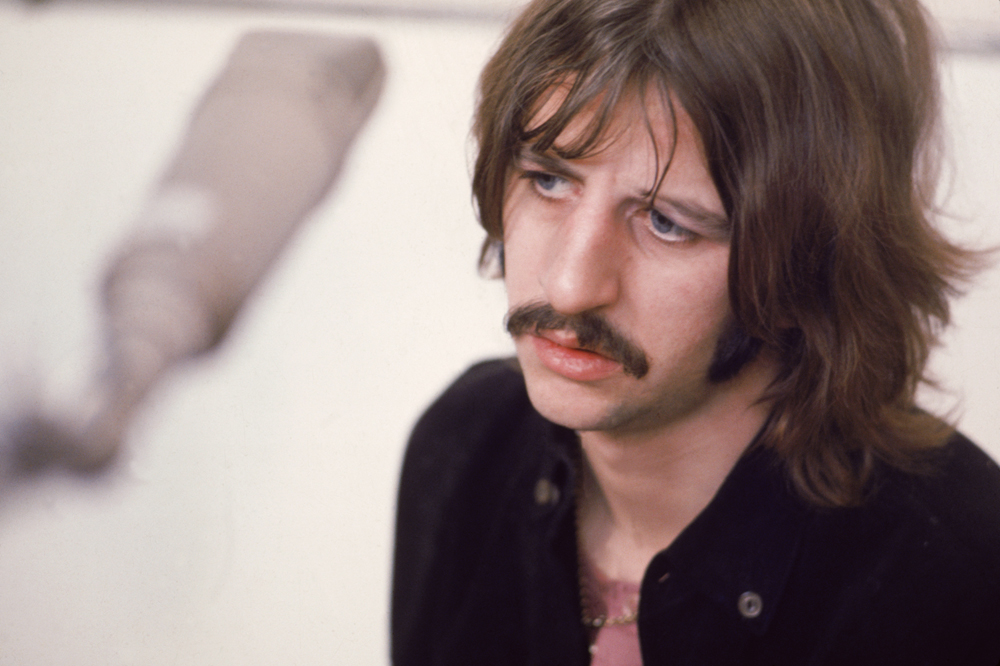
The Get Back sessions are full of decisions, indecisions, wrong decisions and changed decisions. Arguments, conflicts, reflections on their egos and statements of intent. But none of them come from drummer Ringo Starr. Although jokey and stylish as ever, once he sits behind the drum kit, Starr quietly listens as the three remaining members pf the band discuss arrangements or argue. Sometimes suggestions or directions are given to him on how he should play. Interestingly, he is more often than not left to create his parts based on what he hears, showing a high level of trust his band mates place in his abilities.
Yet I still found it striking how – in these sessions at least – it is Starr who is the real ‘quiet one’ of The Beatles.
Several elements precipitated the breakup of The Beatles, but Yoko Ono probably wasn’t one of them
Yoko Ono is a presence throughout this documentary series. But it doesn’t appear disruptive. Sure, during some of the downtime moments, she joins in the free-spirited jams by wailing down a microphone, but most of the time she sits by Lennon, supporting him silently in a way I think he obviously needed at the time. She is seen chatting amiably with the wives and girlfriends of the other members of the band, but nothing we see of her in this series, either voiced aloud or whispered into Lennon’s ear, gives any indication that she was responsible for the tensions the band faced, or their eventual breakup later in the same year.
Those tensions, and those decisions, came from the same place they had since the passing of the band’s manager Brian Epstein a few years before – they came from the four members of The Beatles themselves.
Final thoughts
It was fascinating to see how big the team around The Beatles had become by this point in the life of the band. From the arguments and arrangements to the songwriting and even the business side of The Beatles rearing its head again and again, we are given a clear picture of a small group of people hemmed in by their own success and unsure the best way to continue. Although their main team is comprised of trusted individuals, long term partners and even old friends from their days in Liverpool, the heart of this miniseries is the four members of The Beatles themselves. Many were close – very close. But the only four who really knew what it meant to be a Beatle were John, Paul, George and Ringo. Somehow, it seemed to keep the together, against everything and everyone else. At least, that is, for a time.
Overall, this is a truly fascinating insight into the end of one of the most influential, if not the most influential, musical groups in popular music history. The famous rooftop concert might be one of the less interesting things in this entire series, though this might be because many of us have seen or heard this before (indeed, a few of the live tracks from this concert were used in the final album). It was so much ore enlightening to see the group at work, crafting and recording songs, just like musicians across the world still do today. It is worth watching, but be warned, it’s a long, deep dive…
Well, we finally got there. After delays and set backs, date changes and continued COVID cases making life difficult for all of us, The Nick Gladdish Band finally reached the day of their album launch gig.
The launch gig, on the 12th of September 2021, brought a year’s worth of writing, recording, mixing, printing and promotion to a close – at least, until I get to work finalising our next short tour, scheduled for Spring 2022.
Also playing were local singer songwriter Jenny Lascelles, performing a beautiful solo set from the piano, and The Baltics, a new indie group on the Newcastle local live music scene. Both acts were well received and it was great to be at a live show again. Our only other performance since the start of the pandemic was a warm up show in Stockton in August, in support of another talented young band, Gone Tomorrow. Safe to say the next generation of bands looks full of promise…
As for our set, we had a blast! We’d spent the best part of a year waiting to play the new songs live and our hour onstage seemed to fly by in a blur of smiles and camaraderie. Personally, I thought the guys in the band played a blinder. If there were any wrong notes played that night I certainly didn’t hear them.
Nick Gladdish onstage (credit: John Timney).
The album is available in full on Band camp here. We’d love your support!
We’re having something of a break for the rest of the year. Everyone in this band has other projects to focus on, and it gives Nick time to write the songs for the next album (he could release a new album each year if he wanted to – I don’t know how he does it!). In the meantime, stay tuned for news of other fun things happening soon.
The Nick Gladdish Band (L-R): John Timney, Nick Gladdish, Adam Cornell, Tim Higgins & Shannon Powell, after the album launch.
You might remember Part One of the NG Band mini-documentary, which was released a few weeks ago. If not, you can watch it here.
Here’s part two. Let me know what you think.
New singles Right Side of Wrong and Anything and Nothing will be released as a double A-side this Sunday (11th April) and will be available on all the usual online and steaming platforms


















 Tim Higgins, Guitarist
You must be logged in to post a comment.