Does practice make perfect? It’s undoubtedly true that the more you focus on doing something, the better you become at its accomplishment. However, as this Guardian news story from 2019 highlights, the modern convention of ‘the 10,000 hour practice rule’ may not be quite the guarantee some people have sold it as. Personal improvement, in any sphere of one’s life is never so cut-and-dry, nor can the same methods work for every individual.
The key question is why do you practice, or rather, what are you practicingfor? For instance, is it to sound like a particular musician? And if so, why?
Take this example: I love BB King, and have listened to his music for over two decades to date; I’ve learned some of his key phrases, his recognisable musical characteristics such as his blues box, vibrato technique and the space he’s leave between notes, etc. And despite learning & digesting all of this information – heck, I used to teach these techniques at specialist masterclasses focusing on the blues master – I still sound nothing like him when I play guitar.
That’s not a bad thing, either. It doesn’t represent a failure on my part. If anything, bring able to incorporate so many elements of a player who got so much right, while still retaining my own musical voice, has to be an achievement worth celebrating in some small way. Of course, a large part of a guitar player’s sound comes from their fingers, so I’d never have been able to completely obscure who I was, even if I wanted to.
Perhaps you simply wish you could execute certain techniques as well as the great masters of your chosen instrument? Read that Guardian article again, then learn to measure success by your own improvement, in comparison to your past self only.
It almost sounds trite, but you can’t stop being you, so be the best you possible
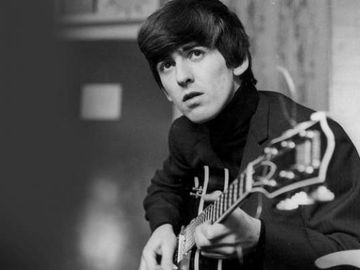
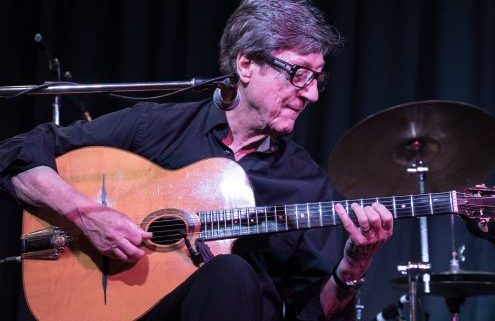
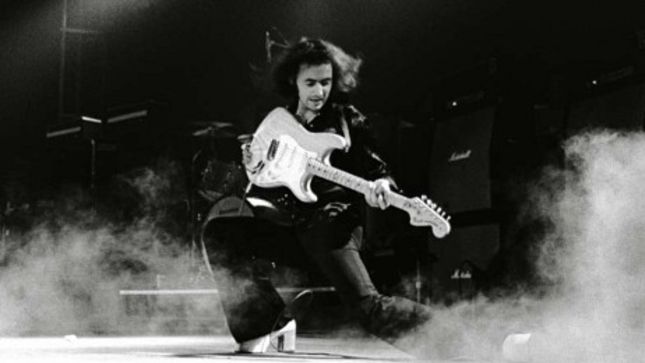
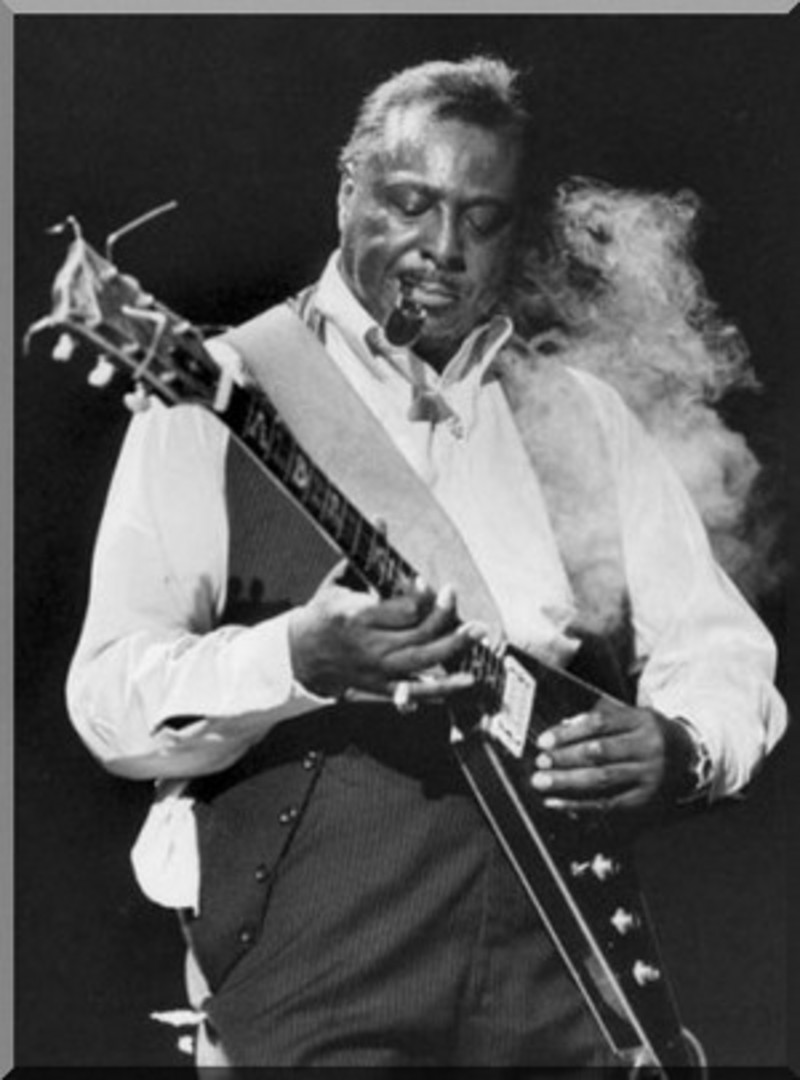
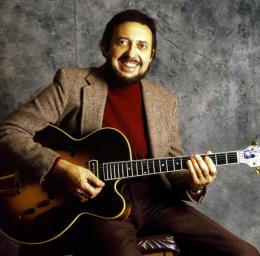
This is one of those exercises / challenges which circulates around Facebook from time to time (much like the one which inspired a previous post about ten albums which inspired me). This one asked guitarists to post photographs of ten guitar players who had been the greatest influence on their own playing.
I find these thought exercises difficult – challenging is the perfect word! I feel like I could post forty pictures and still have missed out a key influence on my playing, yet here we are, in no particular order…
George Harrison
Hank Marvin
BB King
Earl Klugh
Ritchie Blackmore
Steve Cropper
Albert King
Barney Kessel
Grant Green
Steve Howe
What do these players have in common? Some are strikingly different. The key characteristics I gravitate towards in other musicians are…
Tasteful or melodic solos
Blending of musical genres
Dazzling showmanship / inspirational technique
…and all of the guitarists pictured above have one or more of these traits.
As always, these are just my opinions. I may well delve into my influences in more specific areas in a future article. But what are your biggest guitar influences? Get in touch or leave a comment to let me know!
Welcome back to this overview of intervals in guitar playing! In part one, we looked at thirds, sixths and tenths. In this follow up article, we will be taking a brief look at fourths and fifths. Both of these intervals can be used more ambiguously, as they remain the same in the context of a major or minor chord (when sticking to notes in diatonic scale, at least – more on that later). Because of this fact, they can utilized in slightly different ways to the tones they sit alongside in common scales. Let’s take a look…
Fourths
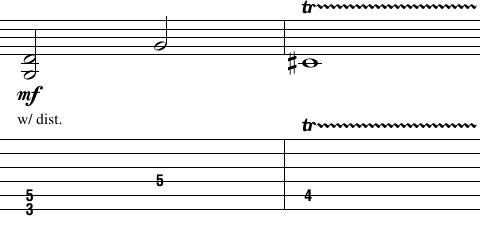
Fretting the two highest strings together at the same fret creates this classic double stop, which can be heard all over rock’n’roll, but famously in the intro and solo for Chuck Berry’s Jonny B. Goode. Berry developed this style so he could recreate horn lines, as his live band was a smaller ensemble than many bands of the time (which would typically have more than one sax, trumpet, trombone, among other brass instruments). Every rock guitarist that followed has used phrases first made famous by Berry, from Angus Young to George Harrison. It is also a useful interval for slide guitar playing as it can be used over major and minor chords alike (you can see an example of me playing 4ths with a slide on this cover video of a well-known song).
In jazz, Wes Montgomery pioneered the use of stacked fourths, creating chord-based solos using 4th intervals on top of each other (for example, one chord would sound, low to high, as A, D, G, C), and the shape would move in line with the melody. George Benson kept up this tradition, but would also regularly employ diads (two notes played together) of 4ths in his lightning-fast solos.
Fifths
A fifth is an inversion of a fourth, and vice versa. Here, the strict definition can become blurred – think of the intro to the Deep Purple song Smoke On The Water and you’ll hear diads playing the entire riff in what sound like fourths (eg, the first pair of notes is a D, then a G on top). However, since the melody is following the G minor pentatonic scale (as the song is in the key of G minor), I’d argue that this riff is an inverted fifth (D being the perfect fifth of G), as the melody note is higher than the harmony note.
In rhythm guitar, a root and fifth creates the classic power chord heard in most varieties of rock music. Alternating the fifth with a sixth, and moving back and forth between the two, gives the famous (almost cliché) rocking riff used by artists from Chuck Berry to Status Quo and beyond.
Variations on ‘perfect’
The intervals we have discussed above – using the fourth and fifth notes in a diatonic scale, create what is known as perfect fourth / fifth. However, as with any note, we can raise or lower it’s pitch by a semitone for a new musical sound. Flat fourths & fifths are both referred to as diminished (and of course be found in diminished chords and scales). Raised ones are called augmented. As a fourth and fifth are only a tone apart, a diminished fifth is exactly the same thing as an augmented fourth – just in case you were confused!
Apart from being the famous Devil’s chord (famously used on the Black Sabbath song Black Sabbath), this interval often occurs in Blues-based music. The Pentatonic Blues Scale is based on intervals of R, b3, 4, #4, (or b5), and b7. Likewise, in dominant seventh chords (for example, C7), the natural interval between the chord’s major third (E) and flat seventh (Bb) is a diminished fifth/augmented fourth. Highlighting these notes over these chords creates a wonderful effect without having to overthink your playing too much!
Finally…
There are a few intervals we haven’t covered in these two articles. Off the top of my head, these would be seconds, sevenths, octaves and extended intervals used in jazz chords and arpeggios, such as ninths, elevenths and thirteenths. I plan to look at octave-based playing in a future article, because it is a staple of my own guitar heroes, such as the great Wes Montgomery. However, if you’d like me to look into some of the other intervals (such as sevenths, which is a really useful colour tone in jazz), do let me know!
Single line lead guitar playing is great. But when you have six strings and four fingers to hold them down, why limit your playing to one note at a time? Throughout the history of guitar, players have used two notes (or more) at once, resulting in something halfway between a single note line and a full guitar chord. We do this for a few reasons:
It adds depth (useful in trio settings, for example)
To create a certain feel (which we will touch upon below)
To imply a chord through highlighting certain scale tones
To make certain phrases stand out
What is an interval?
An interval is he distance between two notes, in terms of pitch. Thinking of the C major scale (visualize the white keys on a piano), the root note (C) is 1, and the next note (D) is therefore 2, so the interval between C and D is known as a 2nd. More specifically, it is called a major 2nd because it is a whole tone away from C (whereas Db, only a semitone higher, is known as a minor 2nd). The next note in the C major scale would be E, which is called a major third (and Eb is the minor 3rd). I won’t bog us down in theory for this article, but if you need a more in-depth explanation, check out this video from Victoria Williams of mymusictheory.com.
It’s possible to use any interval when playing, especially lead lines. However, some are more effective than others. In this article, I’m going to stick to three types of interval: thirds, sixths and tenths, along with a few well-known examples in music. Go give some of these a listen and see if you can spot the intervals in use.
Thirds
Common in any music with a Spanish in Latin twist, particularly on acoustic guitar. Try going up and down a major scale by playing each note with another note ‘two places higher’ in the scale on the next string up. For example, starting with a C by fretting the G string at the fifth fret, you ‘think up two notes’, skipping D, and playing E by fretting the B string at the fifth fret. The next note in the scale (D) would be played at the same time as F. Going up the fret board/scale, the notes should match up above each other like this:
It is also the most commonly used interval for twin guitar harmonies, such as:
Thin Lizzy – The Boys Are Back In Town (recurring twin lead line after the choruses)
The Eagles – Hotel California (harmony lines at the very end, during fade-out)
Sixths
One of my personal favourites, which I use a lot in my guitar playing. Sixths are essentially an inverted third, where the base note (eg, C) is played highest (such as one the E string at the 8th fret), while the harmony note (E or Eb) is played two strings lower (in this case, the G string, at the 9th fret for E, or the 8th fret for Eb).
Picture Credit: NZMusician.com
They can highlight major and minor chords, and sound great when you slide into them up and down the scales you’re using, as well as chromatically (think of the stereotypical blues ‘ending’). They’re great for soul playing too, implying a chord or scale with only two notes (as with tenths – see below). I’m not alone in this – examples exist across the various genres that the guitar is used for, including:
Steve Cropper’s guitar intro to the classic Sam & Dave song Soul Man
Chuck Berry on the intro to You Never Can Tell
Steve Cropper’s guitar playing uses this time and time again, on many classic recordings from Otis Redding to The Blues Brothers. He had a knack for finding the right guitar line that complimented the songs he played on, without overpowering them, and rightly deserves his own article looking into his style in greater detail (watch this space)!
Tenths
Tenths are essentially thirds, but with an additional octave between the two notes. This has the interesting effect of creating the impression of a chord, while still leaving a sense of space. It is the interval used in the opening phrase of the well-known classical guitar standard Lagrima. Here’s a chart to demonstrate where the tenth harmony for Bb (played alongside a D, two notes then one additional octave higher) across the guitar fretboard:
Picture Credit: PlayTheAxe.com
There has been a few examples of this in big singles recently. In each case, t tenths are used for the main guitar park in the songs:
Scar Tissue by The Red Hot Chilli Peppers
Love Yourself by Justin Bieber
Hold Back The River by James Bay
Tenths are also used in jazz. They provide a nice open-sounding stretch which is easy to play on guitar; they implied the chordal harmony while still leaving space for other instruments.
In summary
One thing that all three of these interval types have in common is their ability to reflect a major or minor chord. I think of them as the same interval, using a base note of C as an example again:
Third: C, played with an E (2 tones higher)
Sixth: An inverted third; C is played with an E a sixth lower (4 tones)
Tenth: A third, plus one additional octave between both notes; C, plus E (8 tones higher)
Each has it’s own feel and characteristic, and they are not always as interchangeable as you might think. Try playing around with them, across major and minor scales, then in your solos, and let me know how you get on!
Coming next: Part two of this subject will focus on intervals which can utilised over major and minor chords – fourths and fifths.
One question I was asked fairly regularly by ukulele students in the past was:
Which is better for playing ukulele – fingers or pick*?
This blog post will hopefully go some way to explain why both are equally viable options. There – if you came to this article solely for reassurance on your preferred method of playing, I’ve saved you the hassle of reading any further!
[*NB – when I say ‘pick’, I of course mean a plectrum, like those used for guitar playing. If you’re here to learn about the kind if pick you dig holes with, you’re very much in the wrong place!]
If you’re looking for more information on picks, this rather informative article here from liveukulele.com may prove to be of use. But for now, let’s dive into our two options…
Pick (plectrum)
A pick is an easy option to start with, as even the nylon strings if a ukulele (as opposed to the steel strings used on a typical acoustic guitar) can have an effect on your fingers; this is particularly true of your nails and cuticles (the skin directly under your finger nails). You also get a louder, more direct sound when using a regular guitar plectrum, which are generally made of plastic or synthetic materials such as nylon & tortex (fake tortoise shell).
If you’re used to picking & strumming a guitar, you don’t have to make any changes to your right hand style at all. Although the same could be said if you’re primarily a fingerstyle player…
Fingerpicking
If you’re adept at fingerpicking guitar, you’ll be completely at home on the ukulele. In fact, it has two strings less, which should make it easier! I often find myself using my thumb for the G & C strings (the two closest to your face) and only making use of my index and middle finger for the E & A strings respectively.
I’ve also noticed that I perform finger rakes with any finger, and use my thumb in a greater variety of ways. Also, any guitar picking technique, from muting to string slapping & body tapping, all work equally well on a uke. If anything, my ukulele picking technique is more akin to how I play flamenco guitar!
Finally, you may notice that the tone of a fingerpicked uke is less harsh than when plucked with a pick. It’s certainly possible to obtain a greater range of sounds by adjusting which part of your fingers and nails pluck or strike the strings than could be managed with a plectrum.
Is there a middle way?
Well, yes. There are a few alternatives. Firstly, there’s felt plectrums. These are fairly common in ukulele playing and provide three ease of using a pick without the harsher tone. However, they’re less useful for more intricate playing, such as plucking individual strings.
There’s also a type of pick which sits on your fingers, popular in bluegrass styles.
Thumb & finger picks, popular in bluegrass banjo & guitar playing
These thumb & finger picks originated banjo playing, and offer the attack of a plectrum while still using fingerstyle hand & finger movement. Having said that, they do take a bit of getting used to! Many players use only the thumb pick in combination with their fingers. I’d recommend experimenting to see what works best for you.
But which is better?
As always in articles of this nature, I can’t give you a definitive answer, other than telling you my personal preference. For me, I don’t use picks at all in ukulele playing. I prefer the tone & versatility of using my fingers. But that’s just me – I encourage you to try both and see which one feels right for you.
Finally, don’t worry about sounding amazing if you’re new to trying a new playing style. Consider what feels most comfortable, and what has the best potential for you to continue improving in your playing. Let me know how you get on!










 Tim Higgins, Guitarist
You must be logged in to post a comment.