Inspired by my drive home along the Military Road, which runs alongside (and sometimes on top of) the route of Hardrian’s Wall in Northumberland. The remains of this wall, once the boundary between Roman-occupied Southern half of Britannia and the untamed Northern half (mostly made up of modern-day Scotland), provides an additional element to an already dramatic landscape.
This evening, as I drove eastward at sunset, I noticed the beautifully strange golden glow alighting on the grazing land on both sides of the road (and the ruins of the ancient wall). Beautiful, strange, but rare. About as rare as my Haiku efforts, at least…
Image copyright David Head (from the Visit Northumberland Facebook page)
Here’s two haiku to start the year off. The first distills my hope that I’ll get out more and meet my friends more often this coming year. But of course, it all depends on this ongoing pandemic:
Twenty Twenty-two
Might I see more friends this year?
Coming months will tell
And one on the unseasonably warm weather we had on New Year’s Day here in Northumberland:
No wind, mild and bright
Warmest New Year on record
It didn’t last long
Wherever you are, make the best you can of 2022 and go easy on yourself. It’s been hard at times, we all know, but there is light at the end of the tunnel. Just take care of yourself in the mean time.
In this installment, a singer and guitar player who took the blues, folk and gospel and created what could arguably be considered the forerunner to rock’n’roll…
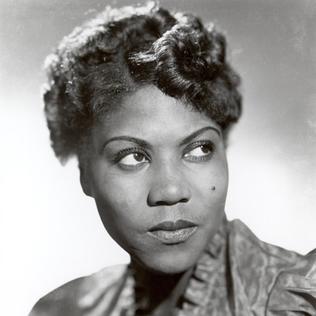
Sister Rosetta Tharpe
Born in 1915, Tharpe (born Rosetta Nubin) started playing guitar and singing in church at the young age of just four years old. Touring with an evangelical church troupe from the age of six, she settled in Chicago. Her stage name comes from her first marriage to preacher Thomas Tharpe at the age of 19; she carried on using the name Tharpe professionally after their divorce in 1984 , up until her death from a stroke in 1973 (during which time she remarried twice).
Tharpe is perhaps best remembered as a singer, with a loud clear singing style. But something about her singing, combined with her foot stomping and blues-tinged guitar picking – not to mention some cool lead lines – stirred the interest in many young listeners who would go on to be the next generation of musicians. Little Richard and Johnny Cash both called Tharpe their favourite singer, she is cited as a crucial influence to artists such as Aretha Franklin, Jerry Lee Lewis, Tina Turner, Isaac Hayes, Meatloaf and Karen Carpenter. Tharpe’s appearance on a British TV special about the Blues and Gospel Caravan, a European tour of US musicians that also included Muddy Waters, Otis Span and Sonny Terry, amongst many others, brought her to the attention of British audiences, including future guitar superstars like Eric Clapton.
“Tharpe’s guitar style blended melody-driven urban blues with traditional folk arrangements and incorporated a pulsating swing that was a precursor of rock and roll”
Biography.com (‘Sister Rosetta Tharpe’, 2015)
Tharpe’s guitar playing is said to have directly influenced the vocals/guitar style of Chuck Berry and Elvis Presley – and if the first rock’n’rollers such as Berry, Presley and Richard call Tharpe an influence, she must the foundation of all that followed…
Tharpe’s career was curtailed by a stroke in 1970, and she died just three years later. Nowadays, her influence is often unfairly overlooked, and sometimes forgotten entirely. However, Tharpe played a crucial role in the history of American music of the 20th century, not to mention the birth of rock’n’roll. Furthermore, in this brilliant article by Erin White, Tharpe is hailed as a Queer Icon too, largely due to speculation over her affair with singer Marie Knight.
Here she is on a TV show in the mid-sixties, singing a gospel song with a gospel choir, but playing a slightly overdriven Gibson Les Paul Custom (although we know these as a Gibson SG nowadays) with it’s three humbuckers. She also pops in a blues-based solo in the middle!
When I think of three humbucker guitars, I recall Neil Young’s ‘Black Beauty’ Les Paul, or the rock band KISS. As for the SG guitar shape, Angus Young of AC/DC and Tony Iommi of Black Sabbath are the first two players who spring to most people’s minds – not a lady in her fifties singing a combination of blues and gospel. It must be remembered that for many, Sister Rosetta Tharpe was the first black woman they’d ever seen playing an electric guitar, and she could play! But what else should we expect from the Tharpe – one of a small handful who can truly claim to be the start, or inspiration, of rock’n’roll?
Recommended listening
Tharpe’s 1944 single Strange Things Happening Every Day, is considered one of the first rock’n’roll singles, and is the first ever Gospel record to make it onto Billboard’s Harlem Hit Parade (now called their R&B chart). One her most acclaimed studio albums is Gospel Train (Mercury, 1956). This record marks the stylistic change, backed by New York session musicians, and is considered highly influential on later rock’n’roll artists.
With a career that took place from the 30’s to the early 70’s, it is sometimes best to seek out compilation albums in order to have all of Tharpe’s most well-known releases in one place. To that end, I would recommend Bring Back Those Happy Days: Greatest Hits and Selected Recordings (Jasmine, 2018), or the 4-CD set The Original Soul Sister (Proper, 2002).
As with each installment in the Great Guitarists series, I have only touched upon the surface of these influential players. I’d love to hear your thoughts on them, as well as recommendations on who should be featured (I have another four or five lined up already – I wonder if anyone can guess who is coming next?). Until next time…




 Tim Higgins, Guitarist
You must be logged in to post a comment.