Well, we finally got there. After delays and set backs, date changes and continued COVID cases making life difficult for all of us, The Nick Gladdish Band finally reached the day of their album launch gig.
The launch gig, on the 12th of September 2021, brought a year’s worth of writing, recording, mixing, printing and promotion to a close – at least, until I get to work finalising our next short tour, scheduled for Spring 2022.
Also playing were local singer songwriter Jenny Lascelles, performing a beautiful solo set from the piano, and The Baltics, a new indie group on the Newcastle local live music scene. Both acts were well received and it was great to be at a live show again. Our only other performance since the start of the pandemic was a warm up show in Stockton in August, in support of another talented young band, Gone Tomorrow. Safe to say the next generation of bands looks full of promise…
As for our set, we had a blast! We’d spent the best part of a year waiting to play the new songs live and our hour onstage seemed to fly by in a blur of smiles and camaraderie. Personally, I thought the guys in the band played a blinder. If there were any wrong notes played that night I certainly didn’t hear them.
Nick Gladdish onstage (credit: John Timney).
The album is available in full on Band camp here. We’d love your support!
We’re having something of a break for the rest of the year. Everyone in this band has other projects to focus on, and it gives Nick time to write the songs for the next album (he could release a new album each year if he wanted to – I don’t know how he does it!). In the meantime, stay tuned for news of other fun things happening soon.
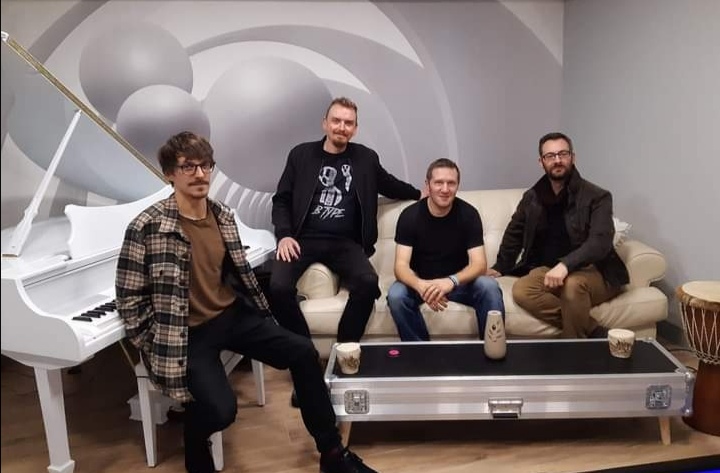
The Nick Gladdish Band (L-R): John Timney, Nick Gladdish, Adam Cornell, Tim Higgins & Shannon Powell, after the album launch.
You might remember Part One of the NG Band mini-documentary, which was released a few weeks ago. If not, you can watch it here.
Here’s part two. Let me know what you think.
New singles Right Side of Wrong and Anything and Nothing will be released as a double A-side this Sunday (11th April) and will be available on all the usual online and steaming platforms
I recently read about the passing of Hilton Valentine, the original guitarist for The Animals, who has died, aged 77.
Valentine’s simple arpeggiated riff in the band’s version of the traditional tune House of the Rising Sun remains one of the most recognisable guitar parts in the history of rock’n’roll.
R.I.P. Hilton Valentine, creator of one of the most famous guitar riffs in rock and roll history.
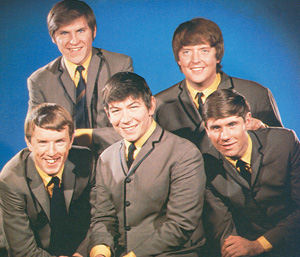
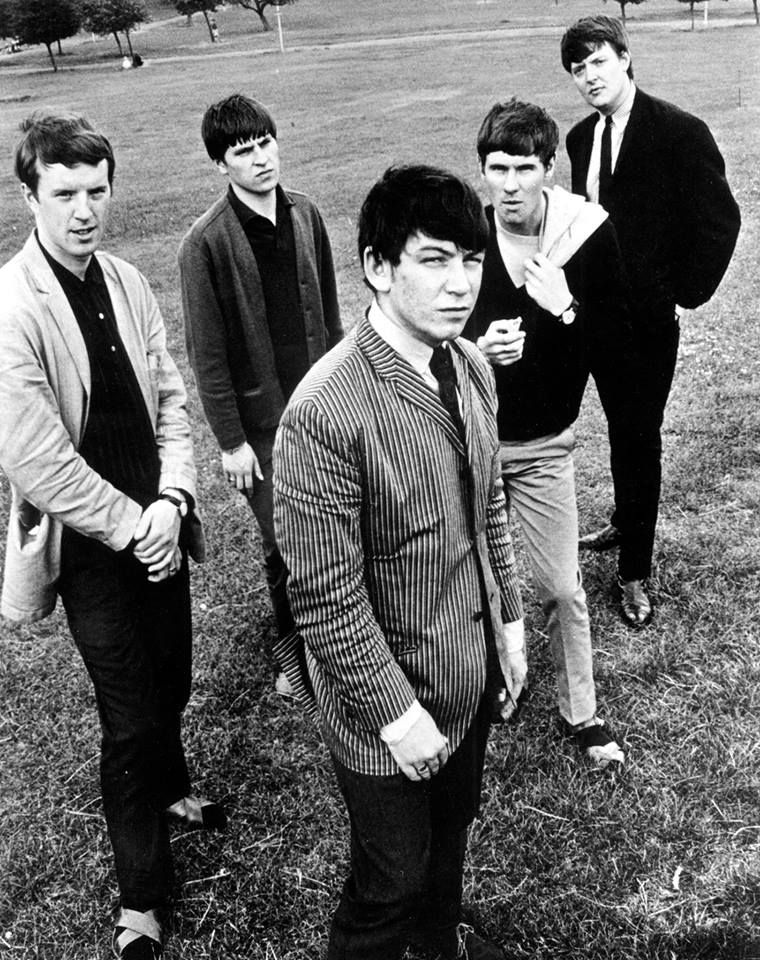
Valentine’s passing caused me to reflect on the wider influence of The Animals. The original lineup split by 1966, but in that time they recorded some memorable songs, including the huge hits We Gotta Get Out of This Place and their uptempo cover of (Don’t let me be) Misunderstood, originally written for and recorded by Nina Simone.
The Animals were one of the British groups from the early 1960s who took the R&B of the (predominantly black) artists in the US and repackaged it in a form that brought the genre – and its original performers – to a larger audience. A number of groups were part of this ‘wave’, including The Beatles, The Rolling Stones and The Yardbirds, to name but a few. While it might make one baulk to think that it took the playing of ‘black music’ by white performers to make the style palatable to white audiences in America (racial segregation still existed in some states in the early 1960s), it is worth remembering that these same audiences later turned to the original artists themselves. This created career-changing opportunities for artists such as BB King, Muddy Waters, Howlin’ Wolf and so many, many more.
Yet their influence on the artists who followed in their footsteps shouldn’t be underestimated. They were more than just local heroes in the north east of England; their activities after the breakup of the original group in 1966 led to a few significant ripples through the music world…
As well as the countless musicians who picked up a guitar to try and play House of the Rising Sun, or to start their own rhythm & blues outfit, The Animals also raised the profile of several well-known acts, one way or another.
Lead singer Eric Burdon became well respected for his soulful, yet gravelly, voice. After initially attempting to create a new version of The Animals (with only Burdon as the surviving founder member), he was soon teamed up with an up and coming R&B band. The resulting outfit – Eric Burdon and War – had success with the single Spill the Wine, and two albums together.
However, Burdon unexpectedly left the group halfway through a European tour. The band continued without Burdon, creating some very well-known hits in the 1979s, including Cisco Kid, Low Rider and Why Can’t We Be Friends?
Alan Price, keyboard player for the animals, had something if a dual career after the group disbanded. He worked with fellow 60s star George Fame for many years, while also writing film & theatre scores. He also released a few solo albums, and in his songs choices, became one of the first performers to bring the music of American songwriter Randy Newman (later famous for songs such as Short People and You’ve Got a Friend In Me)to a wider audience.
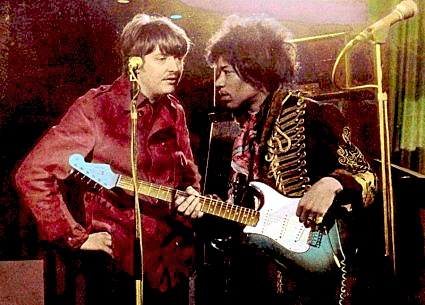
Meanwhile, Animals bassist Chad Chandler discovered a young Jimi Hendrix performing in Greenwich Village, New York, and became his manager. He set up the legendary guitar player with Mitch Mitchell and Noel Redding to form The Jimi Hendrix Experience, but used his connections to secure gigs in the UK for the group, and introduce him to contemporaries on the sixties music scene in London, such as The Beatles and Eric Clapton. In fact, the last time Hendrix performed live was onstage in London with Eric Burdon & War, the day before his tragic early death.
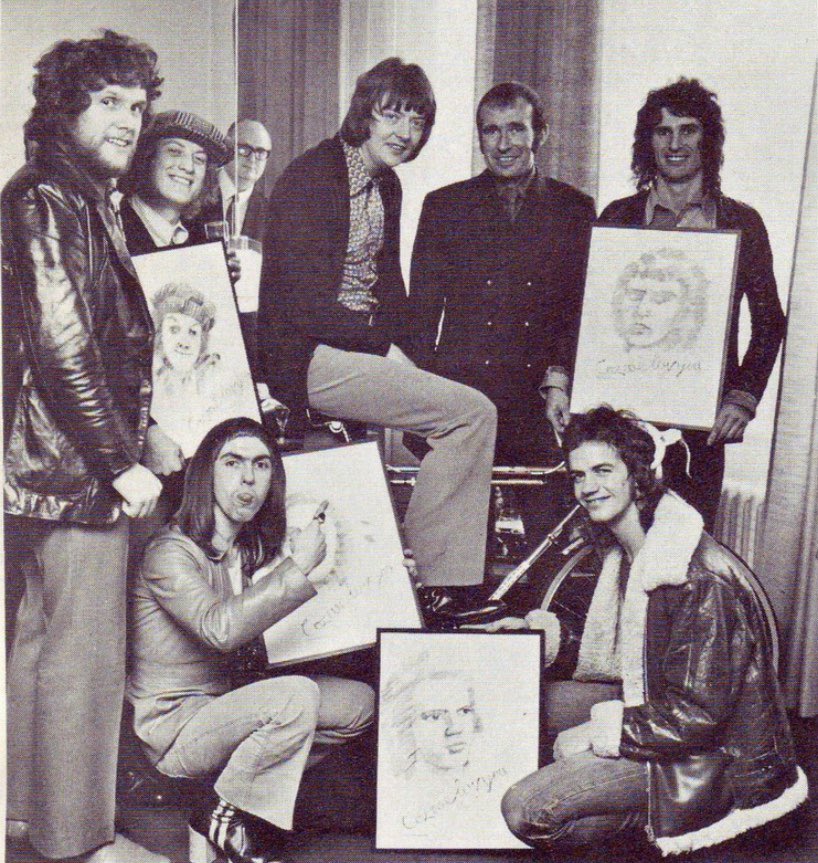
Chandler went on to manage the British glam-rock group Slade, who had several hits through the seventies (including one of the most well-known Christmas songs in pop music). His other business interests helped to build the Newcastle Arena, a sport and large capacity concert venue, which meant those of us in the region now got to see more of the bigger artists when they came around on tour!
I’m sure similar ‘family trees’ can be found throughout the history of rock’n’roll, and maybe it is the shared home region which fuels my fondness for them, but The Animals were much more than a few catchy songs and one incredibly famous guitar riff.
Rest in peace, Hilton Valentine (1943 – 2021). The music lives on.
You may remember that I spent a few days in the studio with the Nick Gladdish Band late last year. If not, you can read about it here.
We’ve been releasing singles from the newly finished and mastered record, Last One Get The Lights, which you can see & hear on my media page, and buy online from all the usual platforms.
Here’s part one of the mini documentary made by Torn Apart TV. Part two, and the full album, will be released in a few months time.
The latest single by the Nick Gladdish Band, Ain’t The Way I Work, is available to download now.
The Nick Gladdish Band are finally releasing the second single from our upcoming album, Last One Get The Lights, after a little over two months of recording, overdubbing, mixing and mastering!
The song is called Freeze, and will be available via all the usual online streaming outlets such as Spotify, Amazon, iTunes, Deezer, etc…
This record has been delayed because of COVID19. The first lead single for this album was released last year! But somehow, in the middle of a pandemic (and adhering to social distancing rules), we managed to get the other ten tracks compeleted. I can’t wait to start sharing them with you!
In fact, after you’ve searched for Nick Gladdish and found the song, why not save him / follow him? We’ll have a new single coming out on the last Friday of the month for the first part of 2021, until the album Last One Get The Lights is released in April or May!
The final piece of the album is now in place. Backing vocalist Shannon Powell has added her amazing talents to the new Nick Gladdish Band album.
Those of you who are unfamiliar with Shannon’s vocal prowess would do well to check out her project YUMA (a collaboration with NG Band drummer & producer John Timney)
Shannon Powell (of YUMA) recording harmony vocals for the new Nick Gladdish record
Cover art
Nick also revealed the main painting being used for the album cover, created by Kristin Designs…
Album cover artfor ‘Last One Get The Lights’
Next steps
We’ve already reviewed the ‘first pass’ of the mixed tracks, and discussed changes. The second attempt is currently ongoing, now with Shannon’s vocals added, which gives us the full picture. To my ears, these tracks need very little fixing now. Most of the big tweaks & redos have already been taken care of.
Once the mixing is finalised, the next step is mastering the overall album. After this, the first single can be released. Details to follow soon…
At the same time, the cover art and lyric booklet are being designed and formatted. However, this is a slightly less pressing issue because the album won’t be released until the start of 2021.
Last night, we got the final session of tracking done (on a new album for The Nick Gladdish Band), with a day left until lockdown #2 comes into effect across the UK.
Nick met drummer & producer John Timney at TRAXX Studios in North Tyneside for five hour. They didn’t just tracked all the vocal parts to the band songs. They also recorded the two solo songs which will ‘bookend’ the album.
Nick working hard in the studio (picture courtesy of John Timney)
Now comes the mixing…
I’ve already heard a few early mixes on a couple of the songs. Even in their rough, unmastered state, they sound rather promising. As always, I’ll keep you updated as the record progresses…
With a second full national lockdown upon us in a few day’s time, we had a very small window to finish the bulk of the tracking for Last One Get The Lights, the in-progress LP from the Nick Gladdish Band. John Timney (drums, engineering and production on this record) and I met at The Space rehearsal studios in Carlisle with some guitars, a laptop, and a sense of urgency which wasn’t entirely helpful…
Recording lapsteel and 12-string acoustic at The Space, Carlisle (credit: John Timney)
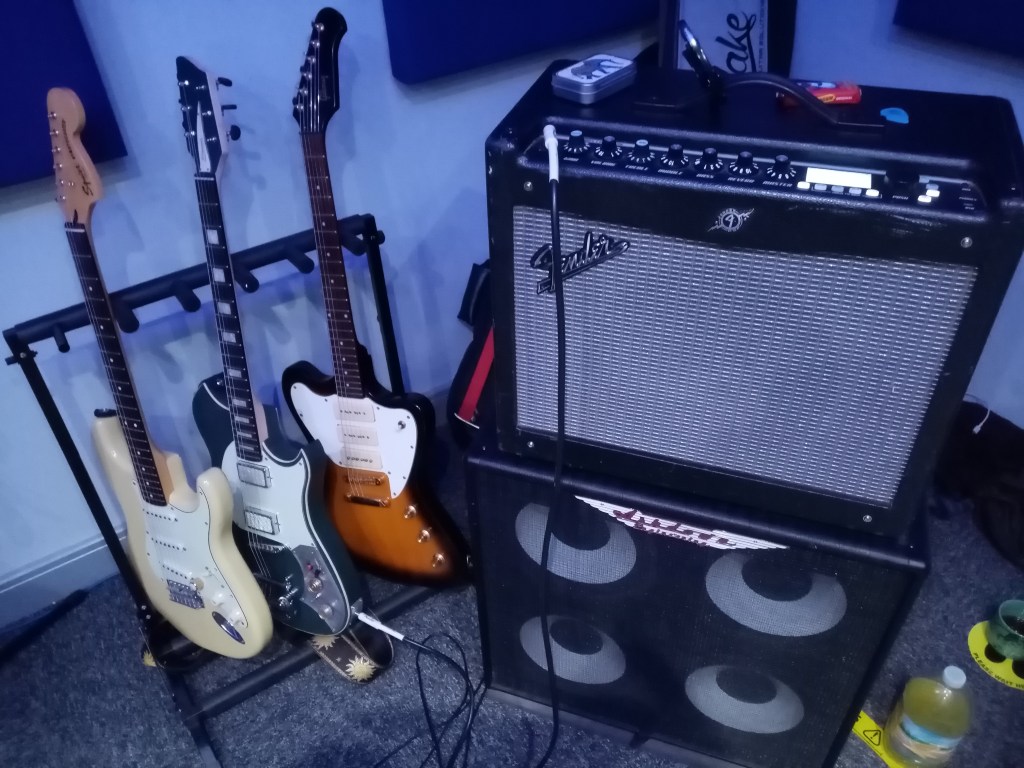
We managed to get several small bits done in just two hours. These included the few remaining rhythm/textural guitar parts, lead parts and full-on guitar solos over five different tracks. As well as borrowing John’s beautiful 12-string acoustic for a small part in one of the songs, I also used my Artisan lapsteel, Squier Strat and the new custom made Elderwood semi-hollow (read about that one here), all going through my Fender Mustang III amplifier. We might find there’s a few bits which need fixing, but if there is, we’ll have to wait until after lockdown!
Tomorrow, John will record the vocals (and a few other bits) with Nick back at Traxx Studios in North Tyneside (where the main chunk of the LP has been recorded, as documented in part one). Nick has lived with these songs for a most of this year, and in some cases even longer, so should be able to get the vast majority of them down tomorrow.
After that, it’s a case of adding Shannon’s backing vocals remotely, then mixing…
Still, at least we have all of lockdown to do that part!
More updates to follow, as and when they occur. Until then,take care of yourselves out there…
Last Thursday & Friday, I was back in the studio with the Nick Gladdish Band, as we finally started work on his new album Last One Get The Lights.
In normal times, this would have taken place in April, and by now, we’d be on another tour supporting the finished product. In fact, we already released the lead single Blurry Lines last last year (listen to it here). However, the pandemic and subsequent lockdowns have held everything up. More recently, we’ve been able to get back on track.
The process
To start with, Nick shared demos of the songs, and we started listening and thinking of suitable parts. A few weeks ago, we held two days of rehearsals where we tried out different things to see what worked. These were recorded as draft ‘rough cuts’ and the best arrangement shared amongst ourselves, so we could refine our parts further. It also gave me time to consider the best way to record the guitars, and which instruments to use.
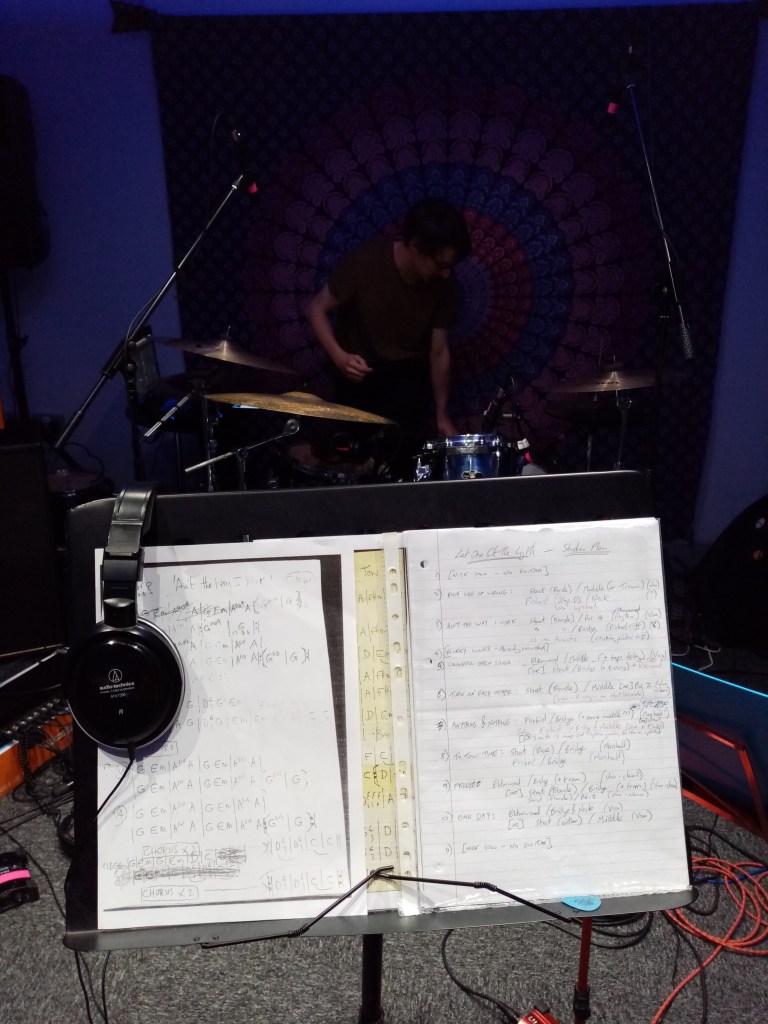
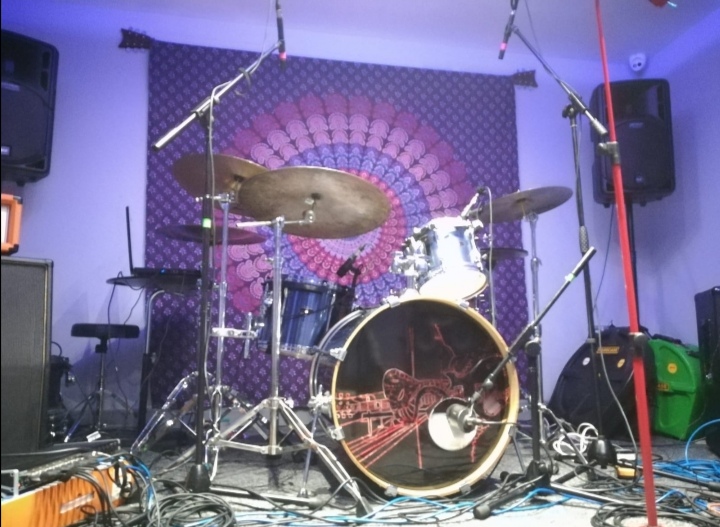
Here’s a few pictures from the two eight-hour days at Traxx Studios in North Tyneside. We spent these days recording the main backing tracks of drums, bass, most rhythm guitars, keys and guide vocals. The credits belong to everyone in the band (I’m not sure exactly who took which picture in some cases):
The whole recording process came together really quickly. In two days, we manged to get all the backing for the eight ‘full band’ tracks down, as well as additional rhythm guitar parts. Having rehearsed and arranged this set of songs in a live room setting, the guitar parts were quite simple to arrange and organise for tracking.
What happens next?
The initial plan was for John (Timney, drummer and engineer for this LP) to crew te rough mixes from what we had before we started on overdubs. However, the government’s announcement at the weekend, telling us we’ll be back in lockdown from Thursday, prompted a change of tack.
Instead, I will be going back into the studio with John to lay down all the guitar overdubs and solos tonight.
Tomorrow, Nick will record all of his vocals and a few additional piano & acoustic guitar parts. Shannon Powell, our backing singer at the live shows, will add her final parts remotely in the next week or so. That way, John has the whole period of lockdown to mix and master the record, and we can have the entire album finished in time for release at the start of 2021.
The Nick Gladdish Band. L-R: John Timney (drums, production), Adam Cornell (bass), Nick Gladdish (lead vocals, keyboards, acoustic guitar) and myself (guitars, lapsteel).
I’ll post some more pictures from tonight’s session, as well as further updates, in due course. Until next time…
I have never owned a semi-hollow guitar before, despite having played 335 style and ‘thinline’ guitars on several occasions. This year, I had the budget to rectify this, but with so many great options out there, I was undecided on where to invest my hard-earned money.
Enter Elderwood Guitars, a one-man operation based in Carlisle, in the north of Cumbria. I had seen a few Elderwood models for sale in a guitar shop in Newcastle, and a couple of players I know spoke highly of these instruments. Barrie, the man behind Elderwood Guitars, makes it his mission to create the guitar of your dreams at a more affordable price. You are involved in all aspects of the layout and design of your instrument, which is largely made up from recycled wood.
You may remember another guitar built for me, a nylon-strung classical guitar, which was also crafted by a solo luthier in Cumbria and made form recycled wood (and if not, you can read about that guitar by clicking here).
The two main principles of making something beautiful from old wood, as well as being able to design the guitar to my own specifications, was something which greatly appealed to me. To that end, I found myself in conversation with Barrie near the start of lockdown, and soon we went back-and-forth with ideas and draft designs. Rather than going for a more straightforward 335-style design, I was inspired by some of the beautiful high-end creations of small guitar companies such as Kauer. In the end, the final design looked like this:
The fifth & final draft of my custom design. Picture courtesy of Elderwood Guitars
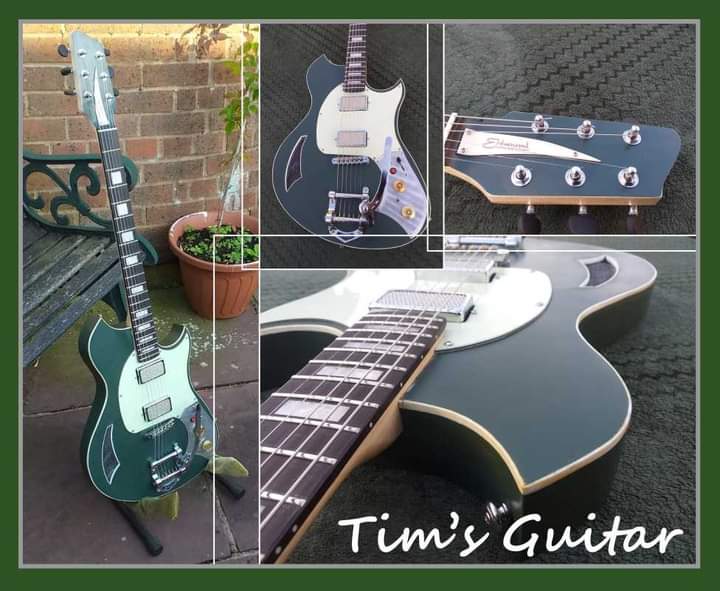
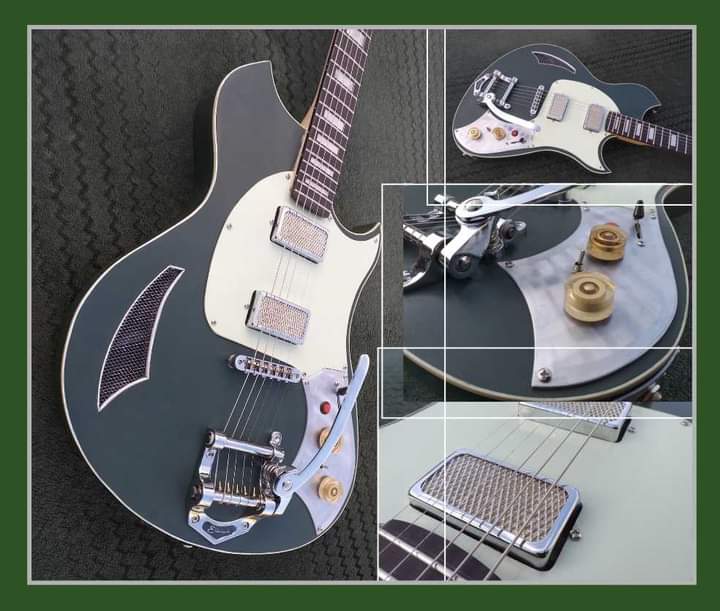
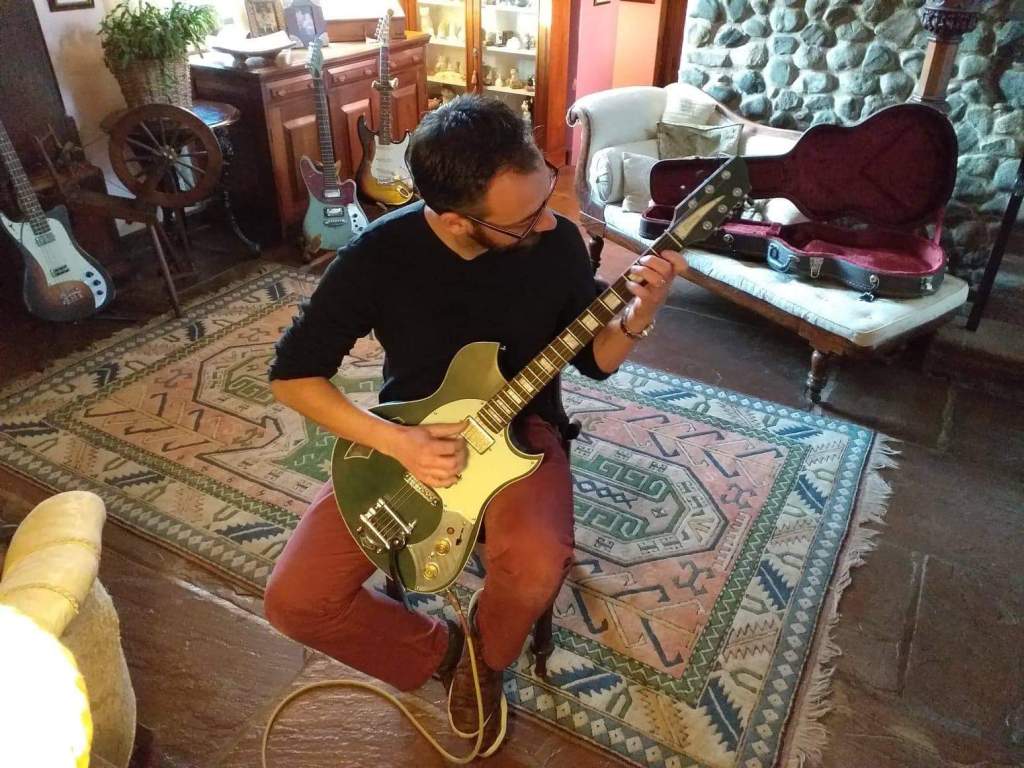
My guitar would be an offset semi-hollow with a serious vintage feel to it. The two humbuckers and sound hole on the upper half would be covered in a gold foil/mesh, and the neck would feature block markers. For the finish, I requested as close to British Racing Green as he could manage, with cream for the pickguard, binding and truss rod cover, likening the overall colouring style to that of a classic Mini Cooper. You don’t see many green guitars and I have always wanted one. Now I just had to wait for it to be completed (although since lockdown meant that I wasn’t gigging, I was in no hurry).
Over the next few months, I received occasional updates from Barrie which always got me salivating:
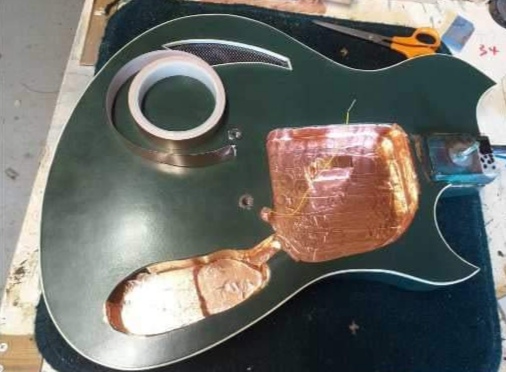
The guitar starting to take shape. Photos courtney of Elderwood Guitars
Barrie checked back to confirm my preferences for pickups, tremelo, control layout, as well as general updates on progress. He seemed to be having a busy summer but as each guitar was finished and presented on his Facebook page, they continued to look and sound as high quality as I had been told they’d be.
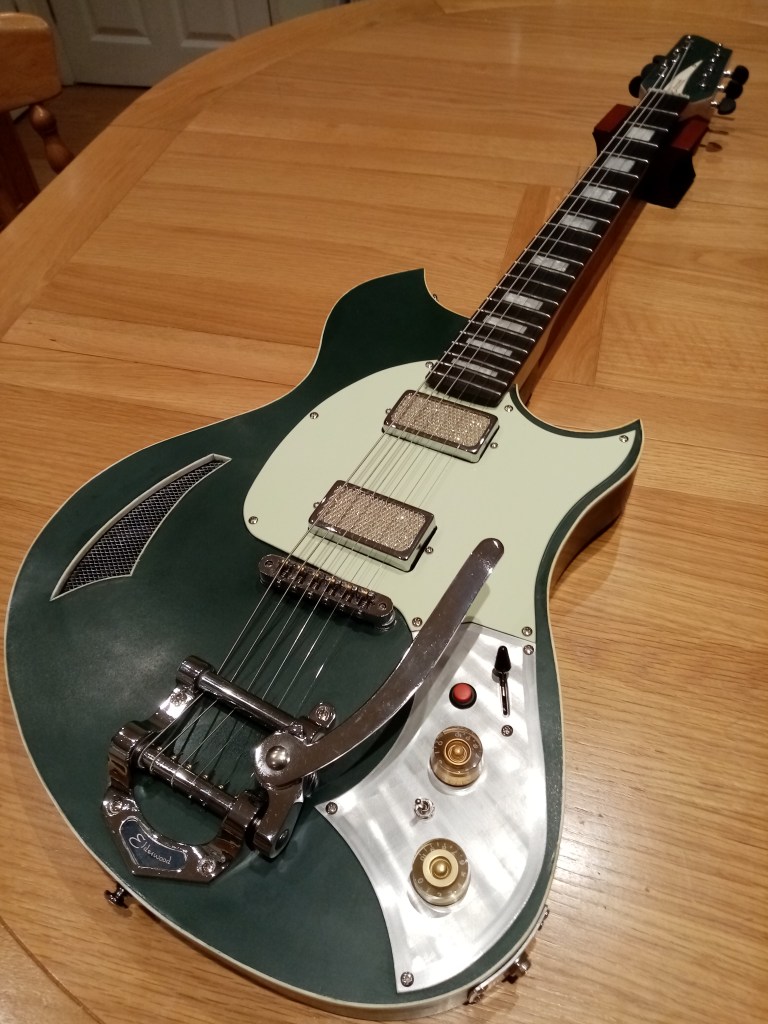
At last it was ready to collect in early October, and it did not disappoint…
The first shots of my completed guitar, sent across by Barrie at Elderwood Guitars
Specifications
Offset semi-hollow body, made from recycled pine
Maple neck, with rosewood fingerboard featuring block position markers
3-a-side headstock
Bigsby-style vibrato system and ‘roller saddle’ bridge
2 x Vanson ’57 Alnico II humbuckers
1 x volume & 1 x tone control
3-way pickup selector switch, plus mini-switch for coil-tapping
Push button to bypass volume control (see below)
Side-mounted jack socket (secured by four screws for greater stability)
This guitar certainly looks the part. The green finish contrasts beautifully with the pickguard and copper coloured control knobs. After sharing the images above on my Facebook page, I was inundated with questions and compliments about the it. It’ll certainly make a visual impact at gigs (whenever they start back up again).
Sounds
Acoustically, this guitar is much louder than my other electrics. It’s interesting just how much difference the resonance of a semi-hollow together with the sound hole, can make. The matched PAF-style humbuckers give you all the tones you would expect from an early Les Paul, but with more airiness due to the mainly hollow body. These humbuckers are made by Vanson, a budget brand readily available on websites such as Amazon. Barrie shares my sentiment that one shouldn’t have to, and doesn’t need to, pay over the odds for a combination of magnets and copper wiring. I had said early on in the design process that I was happy with ‘budget’ pickups on this guitar, and they certainly sound as good as anything the big name brands churn out!
The bridge pickup provides everything I need, from classic rock crunch to an almost rockabilly style twang – the Bigsby certainly comes to the fore here. The neck pickup gives up warm jazz tones on a clean amp with the tone rolled back, and splitting the humbucker into ‘single coil mode’, I’m able to get a sound remarkably similar to a Strat or Tele in this position, which is no bad thing as far as I’m concerned. With both pickups engaged, I’m in my beloved funk and soul territory, great for rhythm playing and bluesy licks. Not only that, but it feels like BB King’s trademark singing lead tone is virtually built-in to this instrument.
Is it any good?
Oh yes, it’s very good. I love it! I’ve certainty enjoyed playing it so far, both through my amps and unplugged. It sits perfectly on a strap and the neck is comfortably chucky, like a true vintage instrument (which is exactly how I like it).
My only hurdle so far has been getting used to the Bigsby-style vibratio. I don’t use the vibratio arms on my Stratocasters, but as well as the right hand aspect, Bigsby units are notoriously tricky to keep in tune. However, this is something that can only be changed through practice and getting used to using it, rather than anything wrong with the guitar itself. Nonetheless, Barrie’s aftermarket service has been top drawer, offering all sorts of advice on how to get the most from the unit, as well as tips on maximisng tuning stability.
Finally collecting the new axe. Picture courtesy of Elderwood Guitars
I expect to be in the studio again in the coming weeks, recording a new LP with the Nick Gladdish Band, and this guitar will be coming along with me. I’ll share links to sounds and videos of this guitar in that (or any) setting as and when they become available…
If you are interested in your own custom-made guitar, Barrie can be contacted directly through Elderwood Guitar’s Facebook page. I’d recommend that you take a look through the numerous creations he has made, and make sure you have a good idea of what you are looking for when you drop him a line. Once you do, you will meet an affable and courteous man dedicated to making the best instruments he can, at a price point open to all of us – and that, like his guitars, is truly something to be admired.














 Tim Higgins, Guitarist
You must be logged in to post a comment.