I an article earlier this year, I weighed-up which two guitars in my collection would be the ultimate top two – the two I could take along to any gig any be comfortable they would cover (almost) any style of music being played. This is especially useful for me at studio dates, where surprise requests can often occur, and I don’t usually have capacity to take my entire guitar collection along to every session!
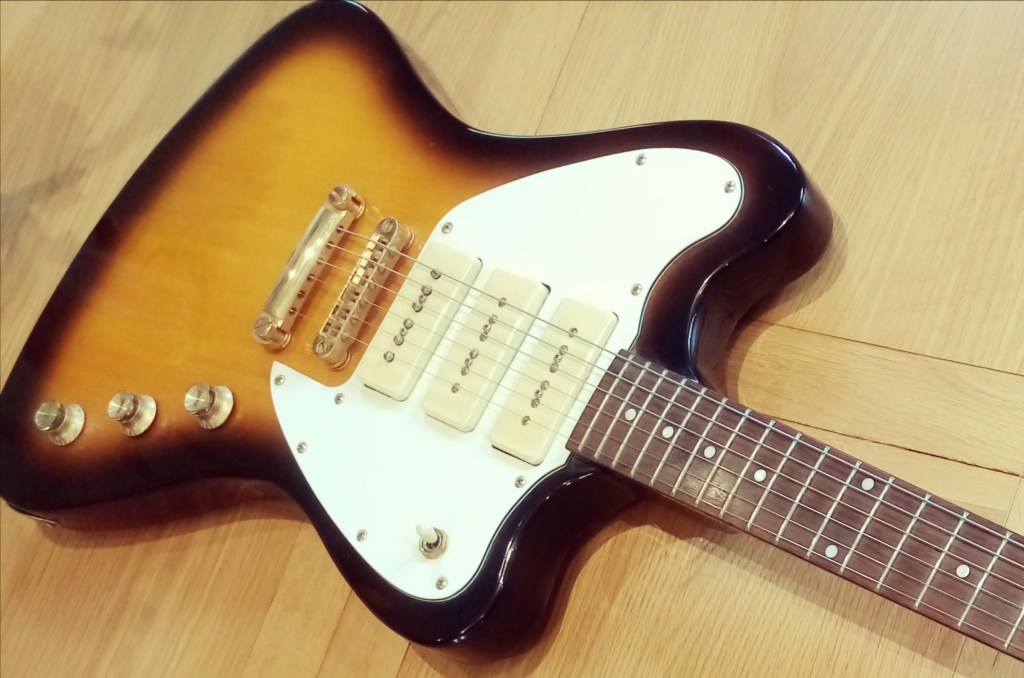
In the end, after examining different types of guitar (differentiated largely by their pickups), I concluded that – for me – one of my Stratocasters and a p90-type guitar (in my case this Gould Stormbird) made a winning combination in terms of tones and range of genres. With these two, I could cover everything from jazz and funk to classic rock and noisy indie, and everything in-between.
But what if you could only take one guitar out? Which one would it be?
In the original post, I sang the praises of the 335-type guitar, which only just missed out on making it into the ‘top two’. I love my own 335 copy, but I felt more confident taking a Strat to a gig with multiple (or unknown) genres on the go, mainly because the single-pickup solid body cleans up better, is far less prone to feedback onstage (especially when playing heavier styles), and offers more tonal options. Also, I think the fact that I’ve played Strats since I was sixteen likely played a part in my thought process. I sometimes take a job where I don’t know exactly what I’ll be asked to play until I arrive, so familiarity with an instrument I trust is crucial.
However, I might have been a little unfair to the 335, and feel like I’ve changed my opinion in the last few months. I’ve certainly been using one as my main guitar for 80% of my gigs this year so far, and it performed perfectly at my most recent studio bookings – but would I be happy with it as my only guitar for any gig?
Let’s look at the three types of guitar by pickup type again, with a summary of what I use them for, as well as a few examples of where I use them professionally.
Single-coil solid body guitars (Strat, Tele, Danelectro, etc)
Classic guitar tones – bright and clear with lots of twang or spank to their sound Sound great overdriven, but retain some of their original character Sit well in a mix with other instruments/guitars Reliable, solid instruments which are easy to mod Perfect for: pop, funk, country, blues, rock, indie Can be noisy, especially in high-gain settings
P90 solid body guitars (Stormbird, Some PRS models, some Teles, etc)
Beefed-up version of a classic single-coil sound Beautifully warm, yet still clear, distorted sound Great ‘best of both worlds’ between a single-coil and humbucking pickup Covers most styles (but volume has to be rolled back slightly for cleaner sounds) Can be very noisy in certain settings
Humbucker solid body guitars (Les Paul, SG, PRS)
The classic overdriven guitar sound, warm but aggressive Warm, full sound for jazz (with the volume rolled back a little) Perfect for: Rock of all types, jazz and blues Not as good as single-coils for those iconic glassy clean sounds
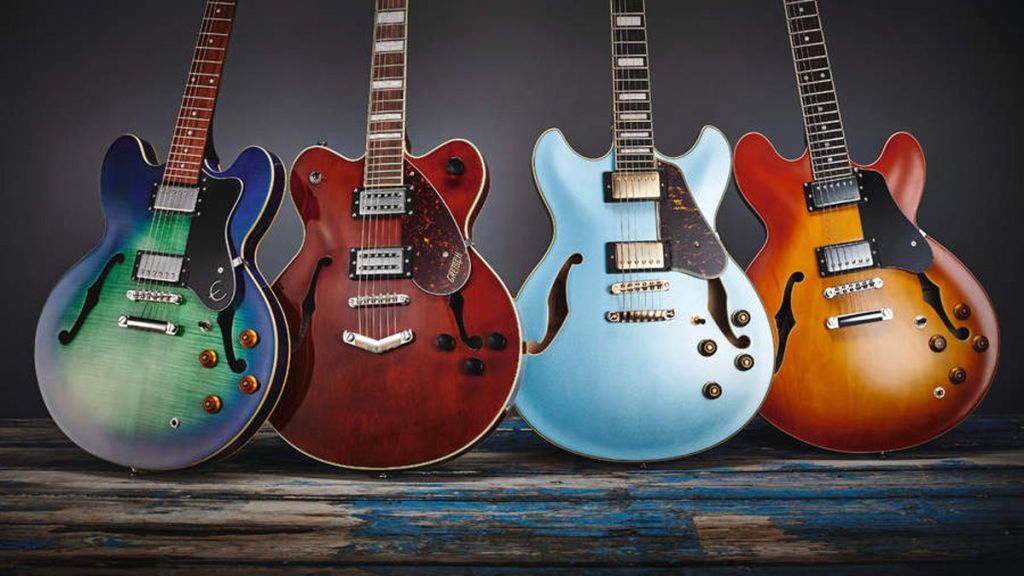
A humbucking guitar with a slightly airier sound Lighter than a Les Paul (to save your poor back!) Capable to playing most styles imaginable Perfect for: jazz, funk, soul, blues, classic rock Neck & Bridge pickups together gives a wonderful funk tone Prone to feedback onstage, especially in higher-gain settings
Picture credit: Music Radar
Final thoughts
Which would I choose? I still couldn’t say for certain. It depends so much on the gig in question, but if I wasn’t sure what I was going to asked to play, I expect it would be the Strat or the 335 I’d be reaching for. I guess it comes down to a choice between a solid body or (semi) hollow bodied guitar; whether I’m seeking the thicker snap of the Strat, or the airier sound of the 335.
And of course, bear in mind that we’ve only been discussing electric guitar options here – if I was really unsure about the requirements for a studio date, I’d have an acoustic packed into the car too!
But what about you? Obviously, what works for me doesn’t necessarily work for everyone, which is why I’d love to hear your thoughts – get in touch!
When looking up reviews if new guitars, I often come across the acronym GAS, or Gear Acquisition Syndrome. This humorous shorthand phrase sums up the seemingly inante drive in many guitarists to buy more equipment, from amps and effects pedals to, of course, guitars.
But how many guitars do we really need? Can one setup (be that one guitar, plus a backup, or two guitars used equally) be used in a wide variety of styles and genres?
For many guitarists working in more than one band, this feels like an impossible question – perhaps only slightly easier to answer than asking what one guitar would easily cover all bases for every type of gig you play?
Let’s work on the assumption that most players cross genres in one way or another, and begin with a few opening questions…
How many different genres do you play? And how varied are they?
If you only play one style of rock, metal or punk, then this might be quite simple. Similarly, if you rarely stray out of jazz or soul, you likely have couple of guitars which provide all the sounds and textures you are looking for, and fit the sound of your groups quite well. But what if you’re expected to hop from one extreme to another on different gigs – or even (such as some cruise ship or theatre pit musician gigs) in the course of one gig? Do your guitars cover as many options as possible?
Which guitars in your collection are the most practical?
For most of us, stage space is at a premium, so it’s unreasonable (and widely impractical) to bring four or five guitars to an average show.
Most of the working musicians I know (myself included) soon find themselves reaching for the same two or three guitars in their armoury, confident that these instruments deliver the goods time and again at any gig they bring it to. These instruments are usually well set up and hold their tune reliably, and are often not the most expensive or luxurious instrument option. As lovely as that vintage jazz hollow-body from the 1930s is, it only really does one sound well, and the rest of the time would be sitting there waiting to get knocked over and damaged beyond repair! (it probably feeds back like no one’s business in a live setting, too!)
To sum up, a few questions to consider…
Could this guitar play an entire show?
Is it reliable & comfortable enough to play for long periods of time?
Am I crippled with fear of it getting damaged?
These are the factors we have consider in making a choice such as this. Now let’s look at some of the obvious contenders…
Single-coil guitars (e.g., Stratocaster or Telecaster)
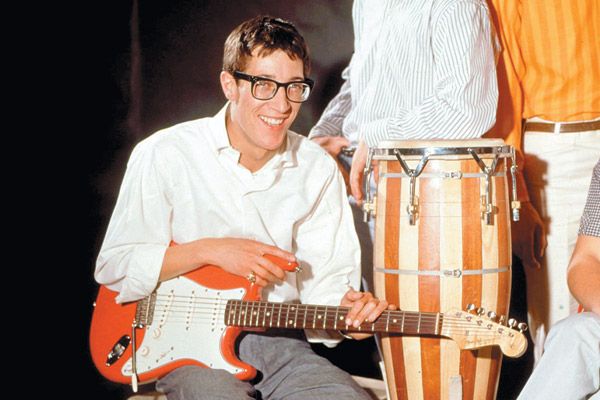
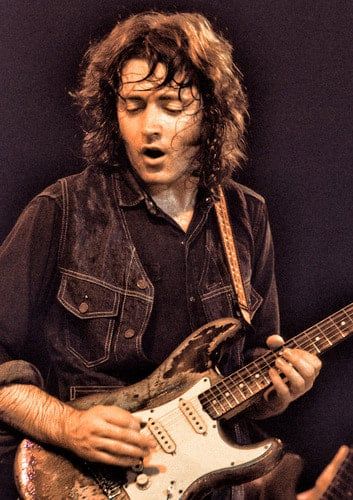
Generally the lowest output pickups (although there’s a world of variations out there), single-coils have been fitted as standard on Fender Stratocasters and Telecasters since they first appeared on the market in the early 1950s. Played clean, these have a wonderful clear sound, and with a little push from the amp or overdrive pedals, breakup beautifully. They aren’t best suited to heavier styles of music, but they perform brilliantly in almost everything else. Think of Buddy Holly and Hank Marvin inspiring millions of future guitar players with the original Strats, as well as the countless players who pushed the instrument beyond expectations such as Jimi Hendrix. For blues, look at Buddy Guy’s searing attack or Stevie Ray Vaughn’s much-too-imitated blues sound (pushing the neck pickup of his Strats through a Tubescreamer pedal)…
Some of the Strat players who have left a significant influence on how we approach the electric guitar. All of them finding their unique voice on the same instrument (Clockwise from top right: Hank Marvin, Buddy Guy, Nile Rogers, Stevie Ray Vaughan, Mark Knopfler, Rory Gallagher, Jimi Hendrix, Buddy Holly)
Telecasters have had a similarly lasting effect on music history, from the early country musicians and Dylan ‘going electric’ with one in 1965, to it’s emergence as a reliable solid body jazz instrument and the soulful stylings of Stax and Blues Brothers legend Steve Cropper. And let’s not forget that the Telecaster was often the unsung hero in the studio, used on more sessions and hit records than you might imagine – Jimmy Page used one to record pretty much all of Led Zeppelin’s debut album!
Of course, there are far more than Strats and Teles in the world of single-coil guitars. Danelectro make use of their unique ‘lipstick’ pickups, as well as all the weird and wonderful guitars which came out of Japan and Eastern Europe during the 1960s and 1970s. But the guitars made by Fender were by far the market leaders this area, and even if it’s not a Strat or Tele on that record you love, if it’s a single-coil sound, it’s most likely inspired by one.
I’ve been a Stratocaster player since I was sixteen years old, using them for everything from funk & soul to classic rock, with loads of blues and indie-rock in-between. It’s hard to keep count, but I’ve probably had at least ten different Strats in my possession (not all at the same time, I hasten to add!), and I keep coming back to them for a number of reasons, but that clear single-coil sound is chief amongst them.
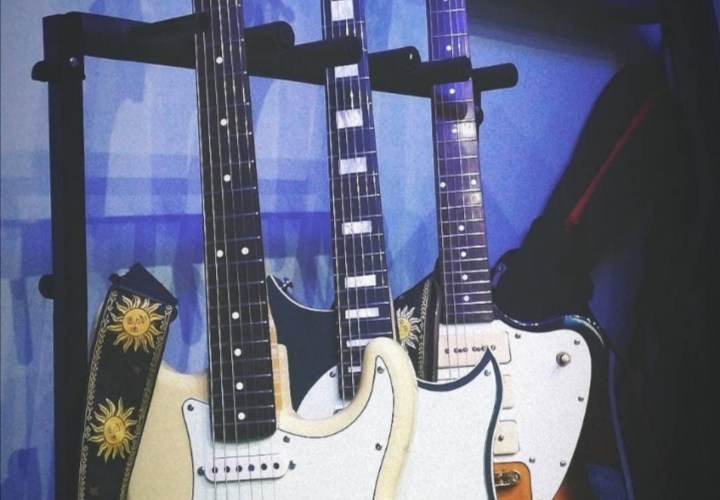
Both of my current Strats are fitted with alnico iii (3) magnets, like the very first Strats produced in 1954 (although they soon switched to Alnico V and have stuck with them ever since). The 3’s are slightly lower output and vintage sounding, breaking up nicely through a slightly driven amp, and still retaining crisp clarity when paired with a classic Marshall overdrive sound. One of them (the orange one, above right) also features a button to engage the neck and bridge pickups at the same time, giving me the so-called Tele mod, and allowing me the sounds of both guitars in one. A lot of my function gigs in recent have involved numerous switches in musical style, and these two guitars do a great job of handing whatever I throw at them.
Humbucking guitars (e.g., Les Paul, SG, 335)
Humbuckers are, in essence, two single-coils wound together. The two magnets combined create a higher output sound, and their opposing polarity cancels out the 60-cycle hum which occurs in single-magnet pickups, hence the name hum-bucker. These two factors make humbuckers ideal for heaver guitar sounds, from classic rock to metal and beyond. The original humbuckers tended o sound a little ‘dark’ at lower gain settings, but this (along with their inherent noise-cancelling properties) made them an ideal choice for jazz guitarists, and they remain so to this day.
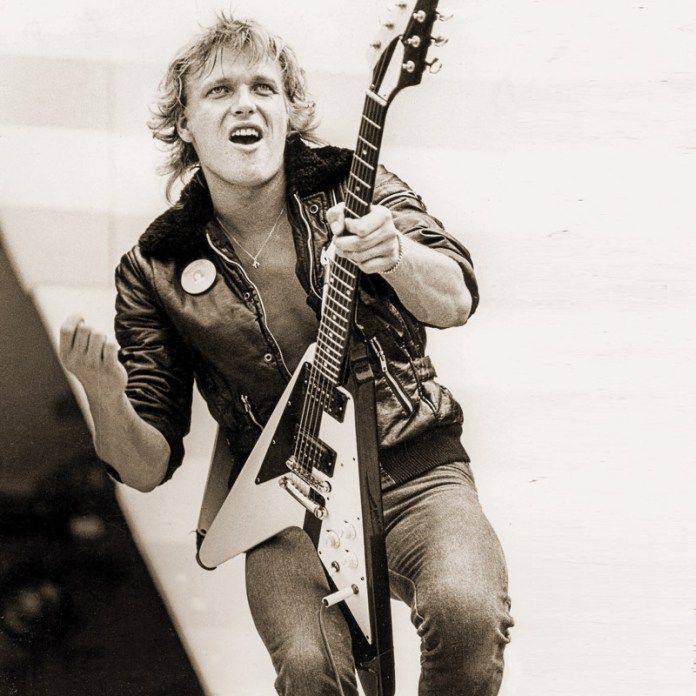
Examples of different guitarists who have used humbucking guitars in a wide array of genres, from jazz & blues to metal & avant-garde (Clockwise from top right: BB King, Frank Zappa, Michael Schenker, Billy Gibbons, Peter Green, Wes Montgomery)
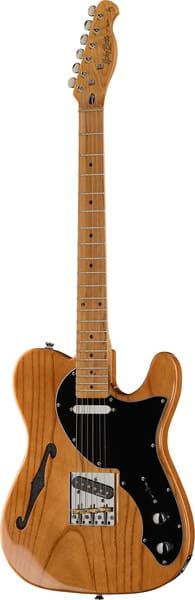
Semi-hollow guitars (such as the 335 style Harley Benton, below left) offer a great hybrid for playing jazz, funk and soul, as well as dirtier blues, rock, pop and indie.
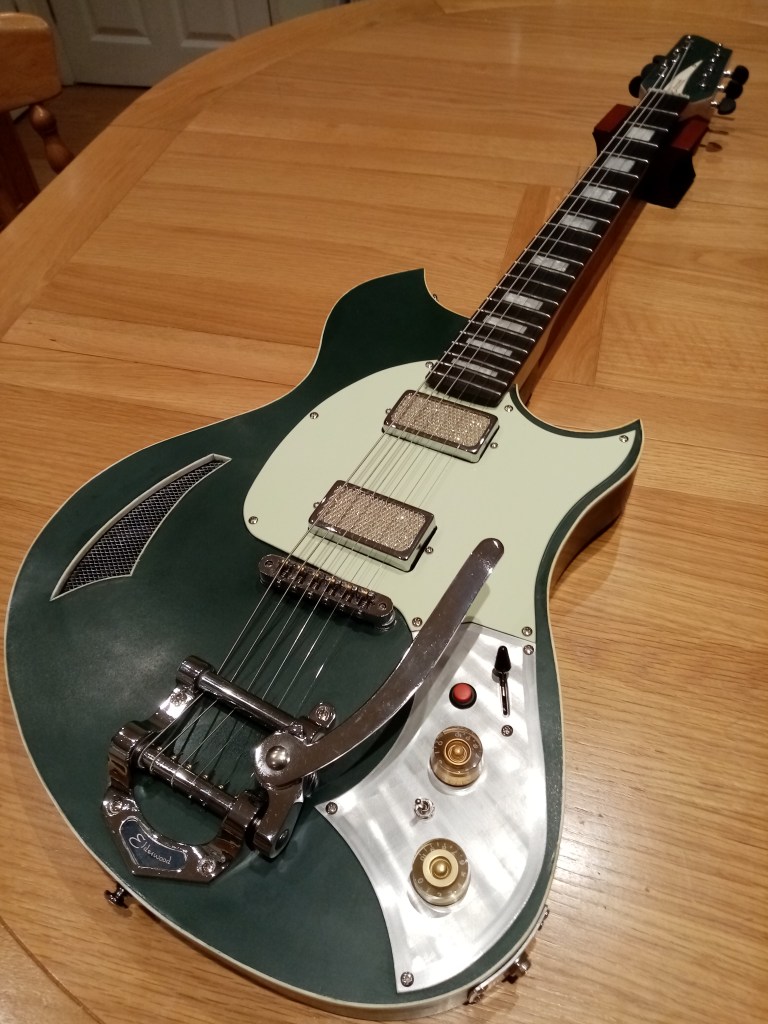
Both of my humbucker-equipped guitars (the Harley Benton and my custom Elderwood, above right), have the option to split the coils, giving a single-coil sound when needed. This is a really useful option, although the split sound is a little too ‘thin’ sounding to use too often; sometimes it’s better to wind back the volume slight on a full humbucker, or find a pickup that’s a good halfway point between a single-coil and humbuckng pickup…
P90 guitars
P90s sit somewhere between the clarity of a single-coil and the power of a humbucker, meaning that they can be a useful cover-all option for gigs that require both heavier and gentler sounds. With careful listening and judicious use of the volume control, you should have the full gamut of sounds available. It’s also worth noting that quite a lot of the classic pop & rock music you love was in fact recorded with p90-equiped guitars – although that’s a story for another time…
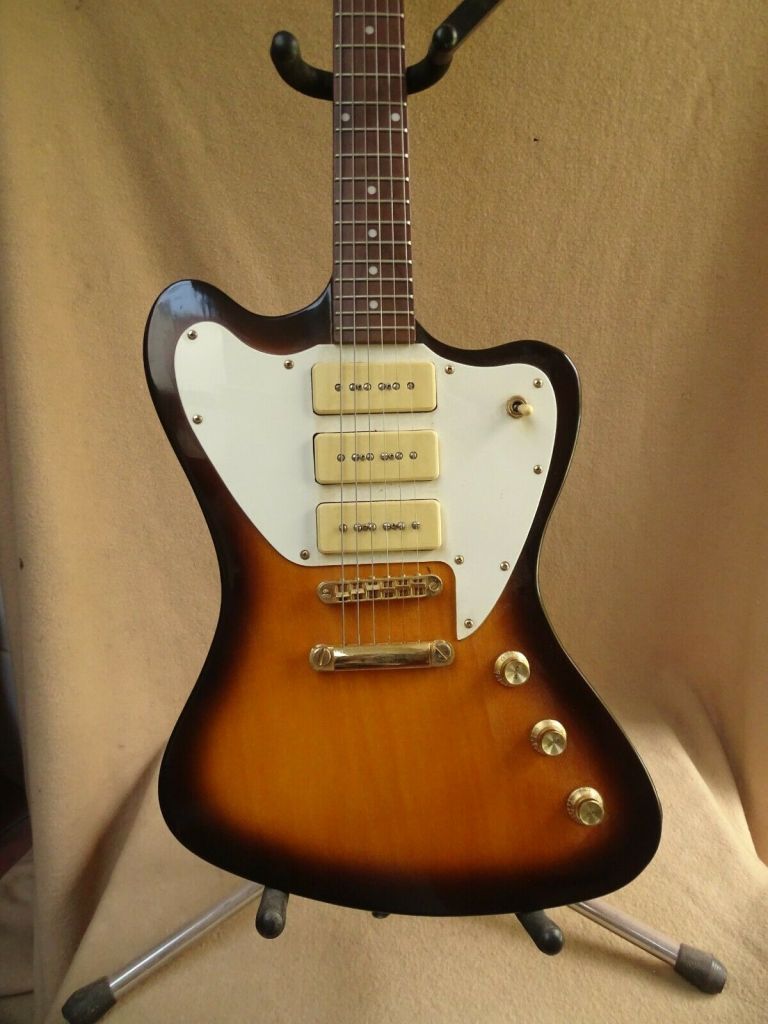
I have a triple p90 Gould Stormbird (a copy of a non-reverse Firebird with Entwhistle pickup) which acts as my main guitar for one of my original projects (dirty psychedelic funk), as well as the backup to my Strats and humbucking guitars, at a range of shows. These pickups clean up wonderfully and can produce enough grit for the styles of music I regularly play.
Gould Stormbird, based on a Gibson non-reverse Firebird, with three p90 pickups
One of the main drawbacks to a p90 is that they can be quite noisy, even more so than with single-coil pickups, due to their increased output. This is especially apparent in venues with lots of mixed lighting circuits (such as stage lights with timers and dimmers), so you have to be ready to mute your sound between songs. Is it worth it? In my opinion, yes. I currently only have one p90 guitar, and it’s become so essential to my rig that I need to look at getting another p90 guitar to act as a spare in case anything goes wrong with this one…
So what are my ultimate two?
Let me start by saying I think every guitarist should at least try out a 335-style guitar. They are incredibly versatile and comfortable instruments, capable of covering a wide range of bases. If I was ever in the position where I could only take one guitar to a session (be it live or in the studio), I think a 335 (or in my case, the HB-35 Plus) would be my safest bet.
However, in terms of covering the most styles possible while remaining comfortable and reliable, I would choose one of my Strats and the p90-loaded Gould. Between these two guitars, I can go from clean to quite heavy, with a high degree of note clarity, and little (if any) risk of onstage feedback. Both axes are well built and well setup solid bodied instruments that rarely present any issues while working. Although I’m sure I’d find myself missing the 335 before too long…
Final thoughts
Of course, these are my opinions, based on my own experience and current work. As always, I’d love to hear from you – what two guitars would you take out as your cover-all-bases setup?
Amongst the most famous blues guitar players, there are the so-called Three Kings of the Blues. All unrelated despite the shared surname, these three guitar players helped to define the sound of modern blues guitar.
We have already looked at Albert King and how his unorthodox technique and biting sound left a huge influence on later guitar megastars such as Jimi Hendrix, Buddy Guy and Stevie Ray Vaughan (to name just three). This time, we will focus on the man who is – quite probably – the most influential blues guitarist of all time: B.B. King.
Much of King’s influence is indirect, but the vast majority of guitar superstars in the 1960s and 1970s owe a debt to this man’s melodic and simple, yet incredibly emotional and effective, style of lead guitar playing. He was also a brilliant singer, working in duet with his own guitar playing, like the singer-guitarists of the early blues period, but bringing the genre into the modern electric era with a wonderfully soulful edge.
(Credit: Mike Moore)
Early years
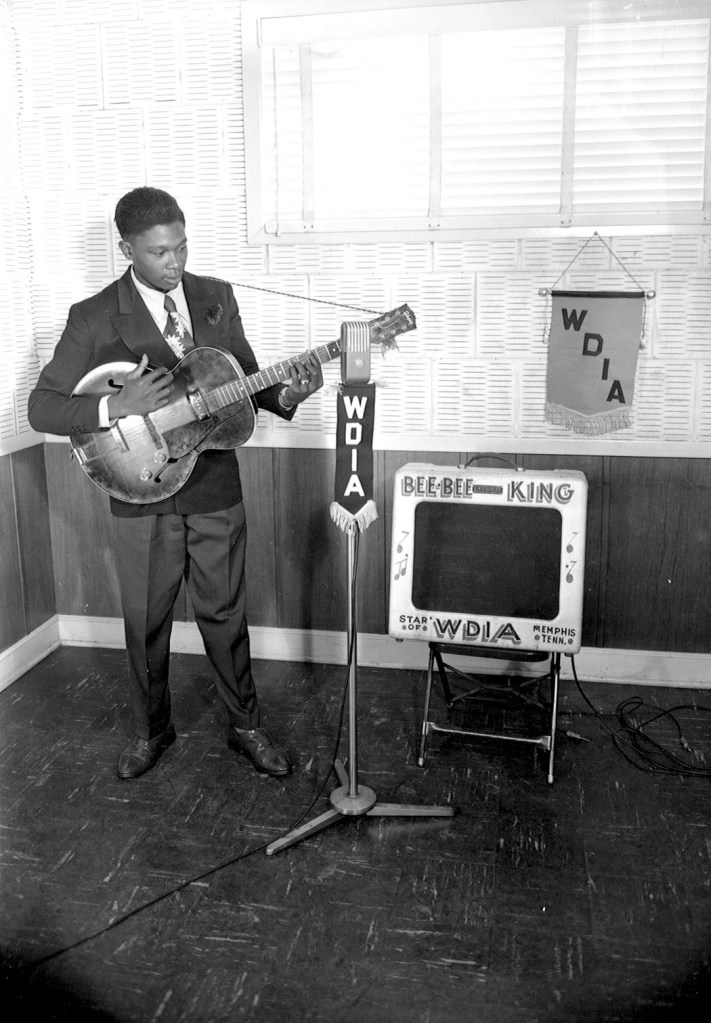
Riley B. King was born on the 16th of September, 1925, on a cotton plantation in Leflore County, Mississippi. In his teens, King sang in a local gospel choir and learned his first few guitar chords from the preacher at his church. He spent his late teens working as a tractor driver and as a guitar player for a popular touring choir, performing at religious services across Mississippi. But after hearing Delta Blues on the radio, King aspired to become a radio musician. Following a move to Memphis, King began to realise this dream, performing on various radio shows and eventually landing his own on the station WDIA. Here he soon garnered the nickname “Beale Street Blues Boy”, which was shortened to “Blues Boy”, eventually becoming the “B.B.” he was known by for the rest of his career.
It was during his stint at WDIA that King first met T-Bone Walker, later stating “Once I’d heard him for the first time, I knew I’d have to have [an electric guitar] myself”. Aside from the Delta Blues and T-Bone Walker, King’s early blues influences were singer-guitarists such as Blind Lemmon Jefferson and Leadbelly. He was also influenced by early jazz guitarists Charlie Christian and Django Reinhardt.
What these players had in common was a knack for beautiful single-line guitar melodies, and an ability to work with singers and other instrumentalists in a ‘question and answer’ style which King would later perform with himself, singing his songs and responding to his vocal lines with a guitar lick.
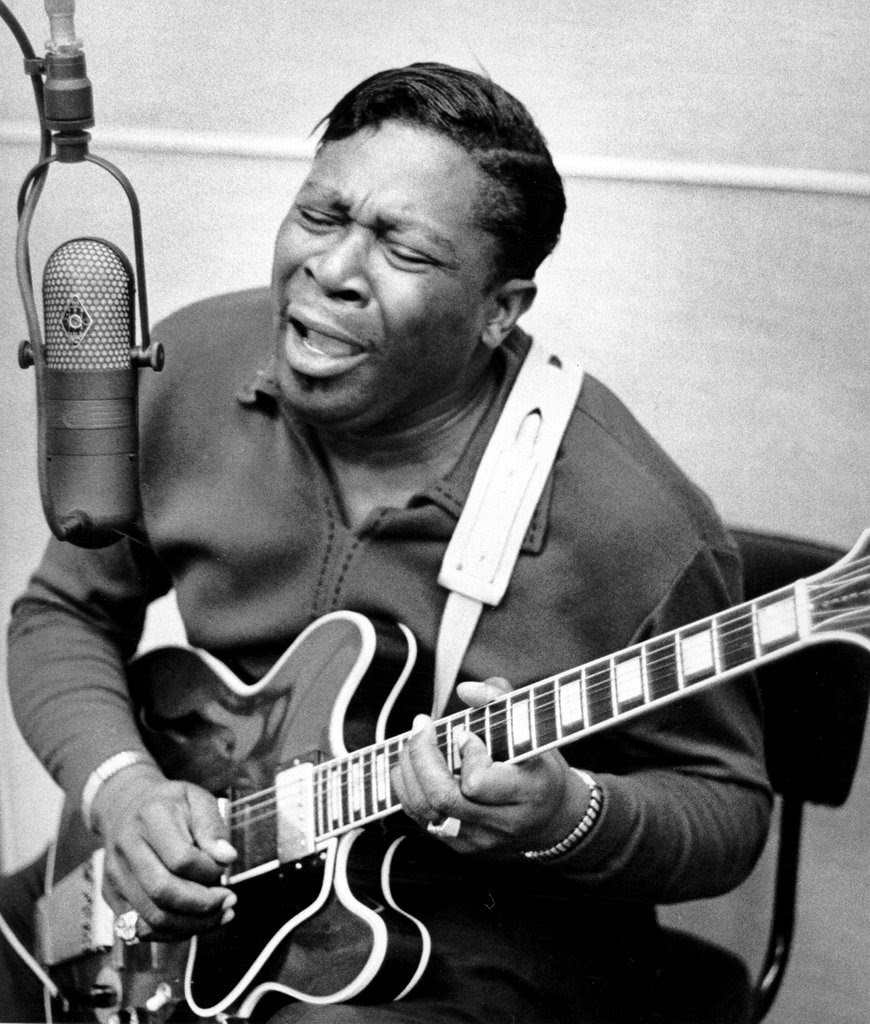
(Credit:Colin Escott/Michael Ochs Archives)(Credit: Gilles Petard/Redferns) (Credit: Michael Ochs Archives)King through the early years of his career (clockwise from top left): mid-40’s with a Gibson ES-5; In 1950 with Telecaster; And in 1960 with ‘Lucille’
Finding success
King became popular on the Beale Street blues scene in Memphis, performing with other well-known acts of the time, such as lifelong friend Bobby Bland. He cut some early records with Sam Phillips, who later founded Sun Records (and discovered Elvis Presley), but these did not chart too well. However, he soon had a number one record on the Billboard Rhythm & Blues chart with 3 O’clock Blues in 1952. This was followed by a run of successful blues singles which helped King become a well-known name on the national blues touring circuit.
During the 1960s, King received the nod of approval from a singer he much admired, Frank Sinatra. Sinatra had arranged for King to play at the main clubs in Las Vegas. King credited Sinatra for opening doors to black entertainers who otherwise were very rarely, if ever, given the chance to play these venues.
Water from the white fountain didn’t taste any better than from the black fountain
BB King, quoted in Esquire, 2006
By the end of the 1960s, groups associated with the so-called British Invasion (see below) allowed King to reach a larger audience than before, through exposure to white audiences. This included opening for The Rolling Stones on their US tour of 1969.
BB King never abandoned the blues. But his biggest breakthrough hit, The Thrill is Gone, released in 1969, showed that the blues could be framed in a more modern, funk & soul-based setting that left room for King’s equally soulful singing and lead guitar voices. Although the song had been written in the early 1959s, King’s rendition, the first time he incorporated strings into his arrangements, earned him a Grammy Award for Best Male R&B Vocal Performance in 1970 and became his signature song.
The 1970s saw King release similarly soul-blues singles such as Hummingbird and I Like to Live the Love. For the latter of these songs, the studio version of which feels like a classic soul record, but here’s a slightly faster version from a concert King gave in Zaire (now known as The Democratic Republic of the Congo) in 1974 – look out for legendary session guitarist Larry Carlton on backing guitar:
Video credit: GravyLimited/YouTube
King’s music included elements of funk, soul, gospel and jazz, all combined to create a unique style which many bluesman continue to emulate to this day. By the 1980s, King was already an Elder Statesman of the blues, and the LPs he released over the decades from here until his passing in 2015 were largely albums of duets, featuring a veritable Who’s Who of stars from the world of the blues and beyond.
Influence
Early on, King transcended his musical shortcomings — an inability to play guitar leads while he sang and a failure to master the use of a bottleneck or slide favored by many of his guitar-playing peers — and created a unique style that made him one of the most respected and influential blues musicians ever.
Although his urbanisation of the blues brought forth some detractors, King’s economy of style proved influential on many of his peers, not least the generation of guitar players who followed him, such as Buddy Guy. Jimi Hendrix was also a big fan of King, incorporating some of his licks into his eclectic vocabulary of psychedelic blues playing.
However, King’s greatest influence came from across the pond in the United Kingdom. While blues artists were not getting much airtime on mainstream radio in the US, young guitar players in Blighty were eager to snap up any blues records which came across the Atlantic. The resulting generation of guitarists redefined the sound of the blues, taking their bands back across to the US and finding great success. Groups such as The Rolling Stones (with guitarists Keith Richards, Brian Jones and later, Mick Taylor, who who displayed BB King’s influence the most overtly), The Yardbirds (which featured, at varying times, legendary guitarists Eric Clapton, Jeff Beck and Jimmy Page) and Fleetwood Mac (Peter Green) were just some of the British bands who followed the success of The Beatles, and helped US audiences rediscover their own elder statesmen of the blues, such as King.
Yet King’s influence didn’t end with the generation which followed. He recorded the rock-based duet When Love Comes To Town with U2 on their 1988 album Rattle and Hum. The arena-filling bluesman of the moment, Joe Bonamassa, puts his success down to a meeting with King when he was just twelve years old, leading the young guitarist to act as an opening act for King, from which he has grown an illustrious career of his own. The groove from King’s 1970 song Chains and Things was a huge inspiration for Gary Clark Jr. The track was also sampled by hip hop artists such as 50 Cent and Ice Cube.
Credit: BB King Official YouTube Channel
Looking back from the history of guitar, blues or otherwise, from the mid-20th century to date, you’d be hard-pressed to find a guitar player who doesn’t owe King a debt f thanks, be it directly or indirectly. It has even been said that a young Elvis Presley was a fan, long before he helped create a newer, uptempo version of the blues known as Rock’n’Roll…
Equipment
All this passion and soul, not to mention influence, from a disarmingly simple setup. Although early photos sometimes show King playing a Gibson ES-5, most of initial singles with RPM were in fact recorded on a Fender Esquire, the forerunner to the Telecaster.
However, by the 1960s, King had switched to the guitar he is most associated with, the Gibson 335.
(Credit: Gibson)
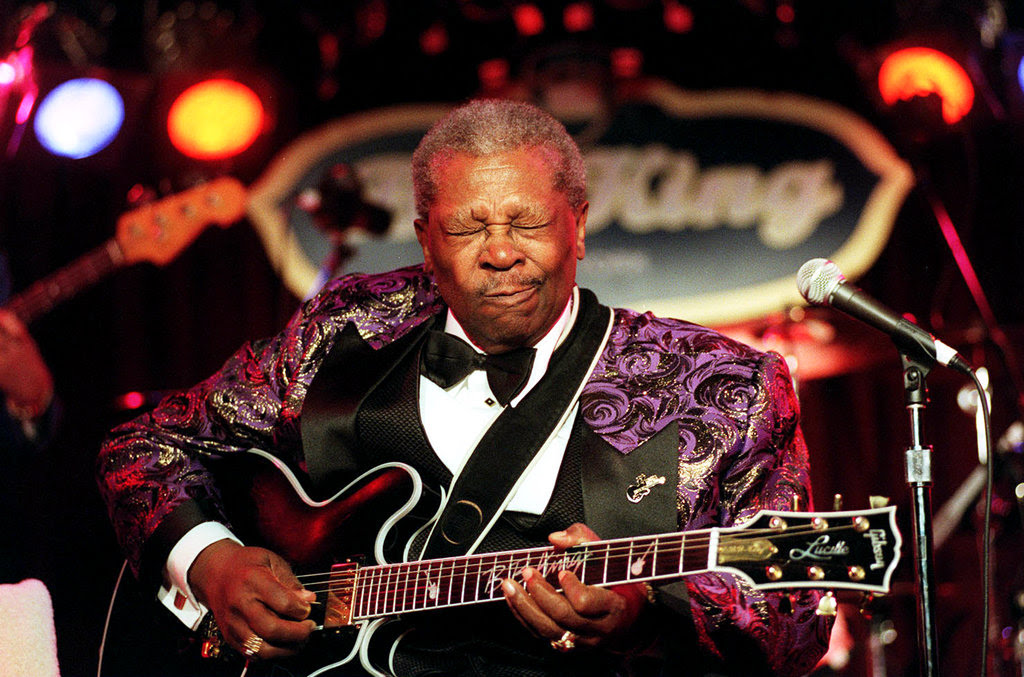
The semi-hollow design allowed space for King’s lead lines to ‘sing’ a little.more freely, but in an era of loud onstage volumes, it also meant the guitar was prone to feedback. To counter this, King used to stuff the f-hole with material to cut down on feedback. Eventually, Gibson began making him his own signature model 335 without f-holes. All of these guitars have since been known as Lucille, following an incident where a fire was caused at a show, all started over a woman of the same name.
(Credit: Associated Press)(Credit: Steve Berman/The New York Times)King with versions of his signature Gibson ‘Lucille’ guitars, in 1980 (left) & 2000(right)
For amplification, King favoured the sound of a Fender Twin. King has stated his belief that Fender amps were “the best ever made”, in terms of sound and durability.
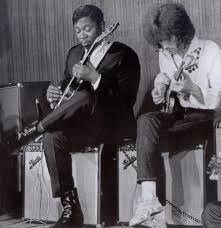
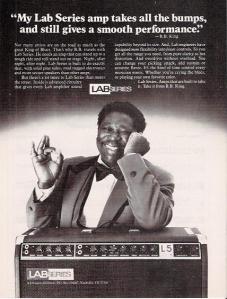
King and Eric Clapton sitting on their Fender Twin amplifiers in the late 1960s (left); Lab Series advert from the 1980s (right).
During the seventies and eighties, King also used a Lab Series L5 2×12″ combo amp. This was probably an upgrade of sorts on the Twin, while still retaining the tone King loved and was renowned for.
Recommended listening
There are plenty of records to choose from, spanning the entirety of King’s long career. You won’t go wrong with any of his releases, but for a taste of his early singles, check out The Modern Recordings: 1950-1951. These tracks (including rare alternate takes of his original 45rpm releases) most strongly showcase the jazzy influence of T-Bone Walker in King’s melodic guitar playing.
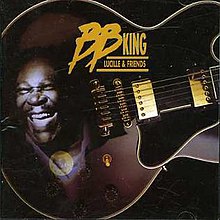
In terms of King’s collaboration albums, there’s plenty to choose from. Lucille and Friends (1995), Deuces Wild (1997) and B.B. King & Friends: 80 (2005) feature a wealth of well produced blues duets with the cream of the rock and blues worlds, recovering songs from King’s repertoire. King also recorded albums of Louis Jordan covers, as well as records and live albums with the singer Bobby Bland. However, his 200p release with Eric Clapton, Riding With The King, shows both guitar players on top form.
However, the quintessential B.B. King record, and one that I believe is essential listening for any blues guitarist, is his 1965 release Live At The Regal, a concert recording from a show at The Regal Theatre in Chicago on the 21st of November, 1964. Hailed as one of the greatest blues albums of all time, this record showcases King at his finest, and is one of the records which helped to shape me as a guitarist. Highly recommended.
As always, I’d love to hear your thoughts. King was a prolific live performer, so if you were ever lucky enough to see the master at work onstage, do get in touch to share your experiences. Until next time…
The Great Guitarists series is back, and we’re restarting with one of my all-time favourite guitar Players, Steve ‘The Colonel’ Cropper.
Even if you don’t recognise the name from the cult classic musical comedy The Blues Brothers, you will have heard Cropper’s songs and guitar playing on countless records, playing alongside some of the greatest soul singers of the 20th century.
Steve Cropper with his favoured guitar, the Fender Telecaster.
Cropper was as a member of Brooker T & the MGs, who also included Al Jackson Jr. on drums, Brooker T himself on organ & piano, and Cropper’s childhood friend Donald ‘Duck’ Dunn on bass (Dunn was also featured in The Blues Brothers). The group had hits with instrumental tracks such as Green Onions and Soul Limbo (the one used as the BBC’s theme music for their Cricket coverage).
Brooker T & The MGs (left to right: Al Jackson Jr, Steve Cropper, Brooker T & Donald Dunn).
The MGs were also the core in-studio ‘house band’ at Stax Records, Memphis, providing the backing (and often creating the arrangements) for virtually all of their recordings from the mid-sixties to the early seventies. All those hits you know by Otis Redding, Sam & Dave, Eddie Floyd and countless others? The MGs, with Steve, are in all of them…
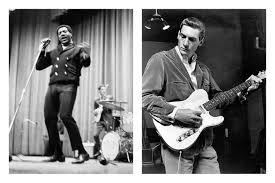
Clockwise from top left: Cropper onstage with Otis Redding; Cropper with his white Tele;In the studio with Sam & Dave; and with Aretha Franklin.
As if that wasn’t enough, Cropper also co-wrote In the Midnight Hour with Wilson Pickett, Knock on Wood with Eddie Floyd and (Sittin’ on) The Dock of the Bay, the famous posthumous hit for Otis Redding. Some of these records were also co-produced by Cropper.
After leaving Stax, Cropper went on to play on Ringo Starr’s and John Lennon’s solo records, as well as produce albums for other artists, notably the Blues guitar legend Albert King. Then, in the late seventies, he was recruited into the Blues Brothers, the act for which he might be best recognised.
The Blues Brothers released two albums, two feature films (both of which included soundtrack albums) and embarked on a handful of tours between the late seventies and the early 2000s. Their influence on bringing rhythm & blues to a wider audience cannot be understated, not least by introducing a new generation of moviegoers and listeners to artists such as John Lee Hooker, Ray Charles, Sam & Dave and many more. Yet even in a band comprising a veritable who’s who of soul musicians, Cropper still stands out.
Cropper (left) with The Blues Brothers Band.
In most of these settings, Cropper is welding a Fender Telecaster or (more recently) Telecaster-like models, such as his Peavy signature model from the late 90s. His playing – and the guitars he played on – provide a full, but not dominating, sound. From simple but effective chord work, to riffs that often doubles up against bass lines, his style of Memphis Soul remains highly imitated. In his lead work, his frequent use of sixths (read more about these here) can be heard to great effect on the intro to Sam & Dave’s hit Soul Man.
Pick up any classic cut from the Stax label from the mid to late sixties and Cropper is probably on there. Then of course, there is the soundtrack to The Blues Brothers. There are even complications of Cropper’s best-known work available. It doesn’t take much work to find him!
In all cases, listen carefully to his rhythm choice, and note how he leaves space for the singer and other instrumentalists. As for solos, he could certainly play good ones when he needed to but only when they were necessary.
A group best known for their cover of Bob Dylan’s Mr Tambourine Man, but which created a ripple which ran further and deeper through popular music than you might realise. From famous alumni to mechanical innovations for country & western guitar music, here’s a small token of praise for folk rock pioneers, The Byrds.
Originally formed in early 1964 as The Jet Set, a trio of singer-guitar players Jim (later known as Roger) McGuinn, Gene Clark and David Crosby, they soon augmented their line-up with Chris Hillman (bass/mandolin/vocals) and Michael Clarke (drums, and apparently hired on the strength of his excellent Brian Jones style haircut). They set out to meld the influence of British Invasion bands, most notably The Beatles, with traditional folk music in what was a unique new sound at the time.
In particular, the Fab Four was the inspiration behind McGuinn playing the Rickenbacker 360 12-string guitars that played a large part in the sound of their early records. A lot of the ‘jangly’ guitar music you hear in later bands – particularly the indie acts of the 80s and Britpop bands of the 90s – owe as much of a debt to The Byrds as they do to The Beatles.
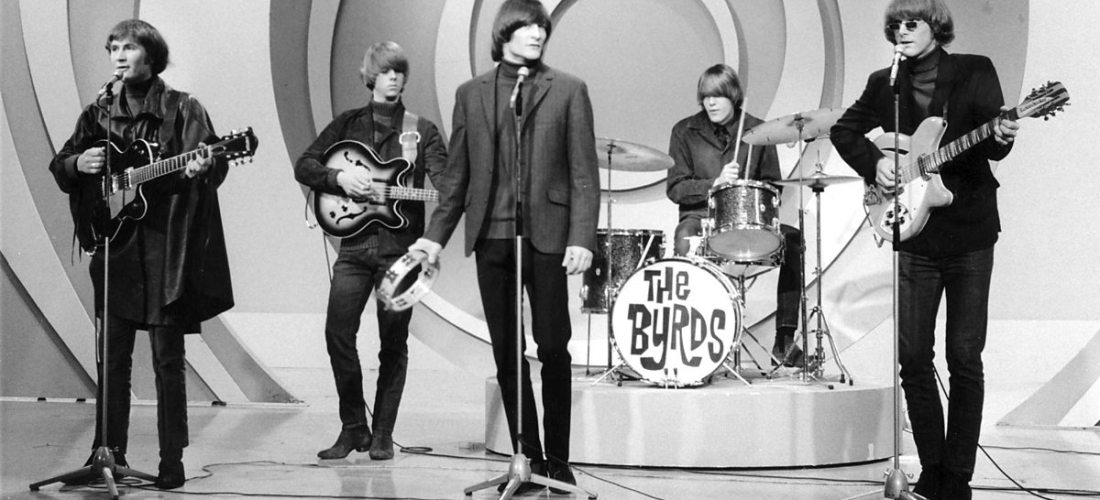
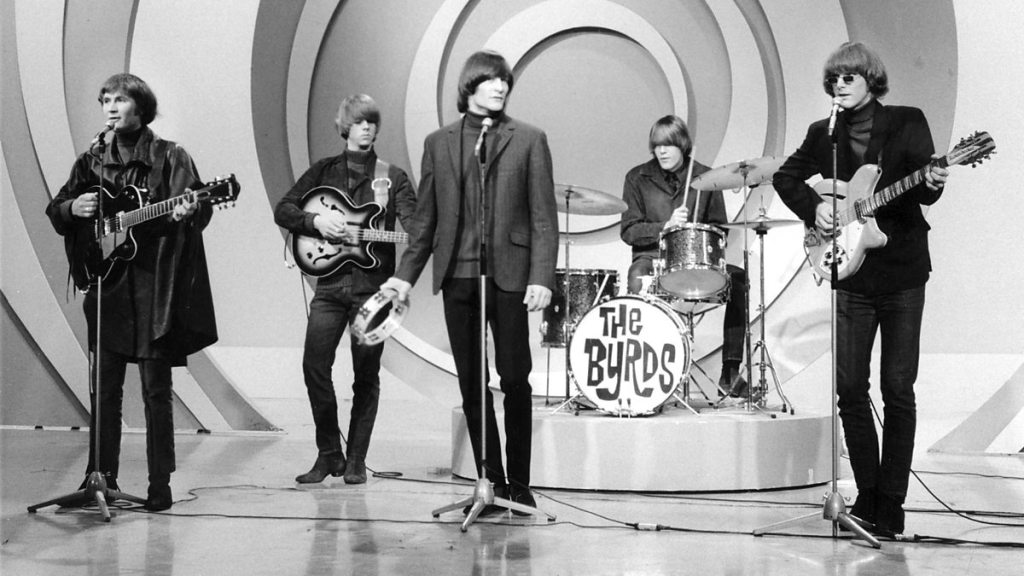
The Byrds live on the BBC (left) and an early photoshoot (right).
They played ‘electric folk’ before Dylan (sort of)
Their first single was a cover of Bob Dylan’s Mr Tambourine Man, which they recorded before Dylan’s original acoustic version was released as part of his album Bringing It All Back Home in March 1965. Interestingly, although this album marked the first time Dylan used a backing band and electrified instrumentation (on side one), his original version of Mr Tambourine Man is in his (at the time) traditional style of solo guitar and harmonica to accompany his vocals (as part of the all-acoustic side two). The Byrds’ version was finally released a month later, reaching number one on both the British and US charts.
This release was still a good two months prior to Dylan’s infamous appearance with a ‘rock’ band and playing electric guitars at the Newport Folk Festival in July 1965. Dylan was friendly with the group and had got up on stage to jam with them at the start of year, undoubtedly helping their reputation beyond the folk scene before they’d released any records. It seems clear to me that both acts were part of a change to folk music that was happening at the time, and it’s fair to say they had a degree of influence on each other. The Byrds certainly covered a lot of Dylan songs on their debut album (also named Mr Tambourine Man, released in June 1965).
They went beyond folk rock
By the end of 1965, The Byrds had already begun to include more psychedelic influence in their songs. Most notably, Eight Miles High features guitar playing by McGuinn which was intended to emulate the playing of John Coltrane’s Impressions album, particularly the opening track India, in which Coltrane was seeking to recreate the raga lines of Indian performers such as Ravi Shankar.
Within less than two years of their formation, their line-up had started to change. As well as the raga-styled influences, The Byrds sound incorporated jazz, psychedelia and an increasing amount of country & western influences. By the end of their time together as a band (circa 1973), The Byrds’ sound was more representative of early country rock than their original folk sound.
Impressive alumni
Many members of he Byrds went on to form well known groups. David Crosby was dismissed from the band in 1967, for a variety of reasons (clashing egos with is bandmates seemingly chief amongst them). The following year, he formed the supergroup Crosby, Stills & Nash with Graham Nash (from the British pop group The Hollies) and Steven Still (from Canadian band Buffalo Springfield). By their second album, they had been joined by Stills’ former bandmate Neil Young, prompting a name change/extension to Crosby, Stills, Nash & Young. Although their time together has been intermittent and varied, their earl albums produced highly popular hits, and their vocal harmonies have been highly influential on countless performers ever since.
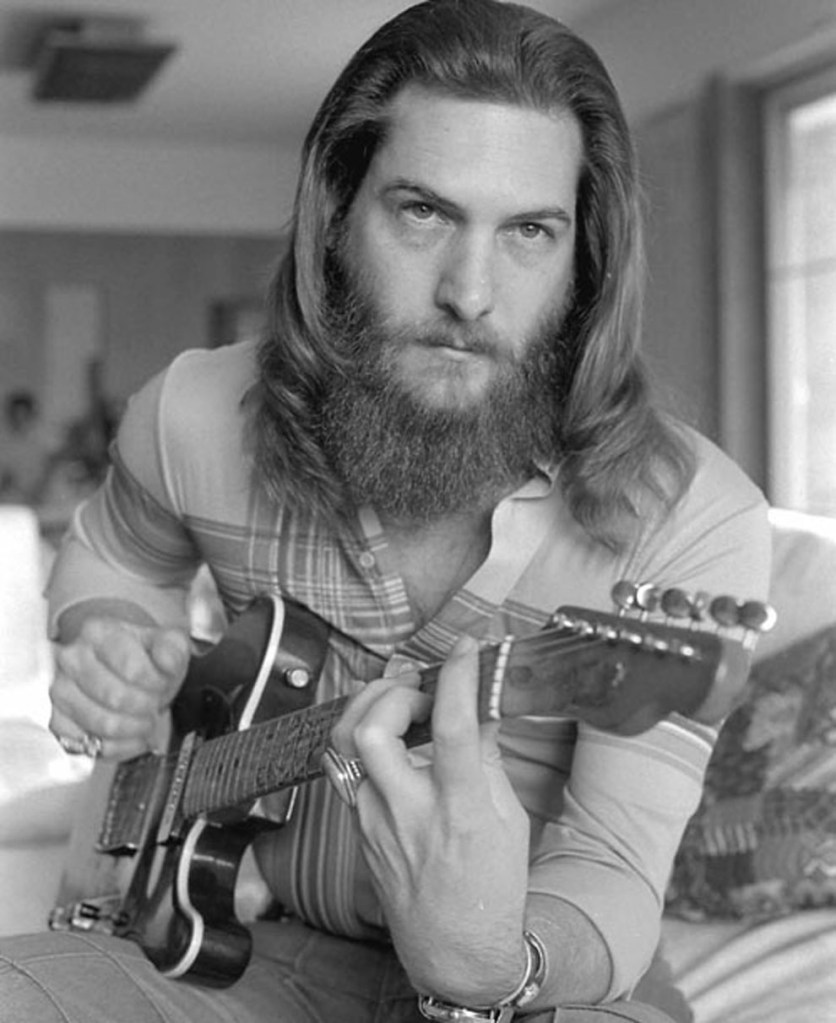
Crosby, Stills Nash & Young performing live (top left); Gram Parsons (top right); Roger McGuinn, post-Byrds (main image).
Later members of the Byrds included Gram Parsons, another pioneer of country rock and Americana (and also notorious for the theft f his corpse and it’s unusual cremation after his untimely death in 1973). Members of The Byrds also went on (with Parsons) to form another influential country rock band, The Flying Burrito Brothers. Roger McGuinn continued as a solo performer, including collaborations with Dylan in the seventies, and has reformed The Byrds in various guises, largely for reunion tours) across the decades.
Two former members created a brand new guitar system
Clarence White, a highly respected bluegrass player and session guitarist, joined The Byrds in 1968. Also joining him was Gene Parsons (no relation to Gram), who ad previously performed with White in the country rock group Nashville West. Sometime between these two groups, White and Parsons discussed ways to simulate the sound of a pedal steel (which uses pedals to alter the pitches of some strings, similar to a harp) on the guitar. Parsons set out devising a system that would enable White to achieve what he was looking for.
Original patent design for the Parsons/White String Bender.
Parsons’ design involved adding a pulley system onto the strap button closest to the guitar’s neck, meaning that when the guitar is pulled downwards (away from the head of the player), a the pressure on the strap moved a lever which, in turn, raised one or more strings on the bridge of the guitar. As unwieldy as that sounds, the result was exactly what White was looking for, and Parsons later went into business selling these devises as retro-fits, usually onto Telecasters, like White’s original model. The design was originally licenced to Fender in the early seventies, and though they didn’t do anything with it originally they have since released their own special model of B-bender Telecaster guitars in recent decades. The B-bender guitar has become a poplar tool in country and country rock music, with guitarists such as Brad Paisley using them to amazing effect.
Here’s Parsons discussing his invention as part of a documentary on The Byrds:
I’d heard of the B-bender before, but it was only when reading an article about The Byrds a few months ago that I learned it was one of their drummers who invented it to help his bandmate out! It certainly demonstrates the lasting legacy of the band on modern country music.
This is in no way a definitive history of the band. There are numerous biographies out there that those interested in learning more about this group should seek out (an in all likelihood, probably already have). This brief overview (much like my previous article on The Animals) merely serves to show how some performers – of whom most people might only recognise less than a handful of songs – can influence the musicians you know and music you hear i ways you might not expect, and often without you realising it.
Can you think of any other bands that might have had a similar far-reaching effect as inventing a new kind of country guitar, or bringing Jimi Hendrix to wider recognition (see: The Animals)? Please let me know, as it may well end up in a future article! Since I have covered an A and a B band, perhaps new suggestions could follow on in this (unintentional) alphabetic format? Get in touch!
After commissioning my custom ukulele (which you can read more about here), I was more or less set in terms of the instruments I needed with my current musical projects. There was just one guitar which wasn’t quite right…
My oldest Stratocaster hasn’t seen much of the stage recently, and not just because of playing less gigs due to various lockdowns, etc. The action had felt off, and it seemed to be because of the bridge, or rather the saddles. After twenty-two years, the small screws in the saddles had corroded to the point that strings could not be raised high enough for my liking.
I contacted Elderwood Guitars (who built my beautiful semi-hollow guitar) to discuss repairs. I also decided to make a few changes while this axe was in the shop…
What’s new?
I don’t really have the need for an HSS guitar nowadays, so used this opportunity to have the bridge humbucker replaced with a Tonerider Vintage Blues single coil. This would better match the two City Limits pickups in the neck and middle positions. Barrie at Elderwood was able to change the pick guard and place the bridge pickup within the larger cavity in the guitar (cut out for the original humbucker).
I also asked for the ‘Tele mod’, i.e., a switch which allows me to activate the bridge pickup in any position, effectively giving my seven different pickup combinations, including the lovely sounding neck & bridge pairing. This is one sound Telecasters have always had that was not available on a standard Strat.
With a switch taking the place of the second tone control (the remaining tone control becoming a master for all three pickups), I now had a guitar that could provide this, as well as the classic ‘quack’ from the out-of-phase Strat positions (2 & 4) – the best of both worlds, in my mind (and to my ears).
Finally, I figured that since these modifications would result in a different sounding guitar, perhaps it ws worthwhile refreshing the instrument visually as well. The old Midnight Blue finish had certainly acquired its fair share of chips and dents over the years. Barrie smoothed these out before hand painting the guitar in a burnt orange hue, which you can see below…
Before (left) and after (right) shots of my oldest Strat (pic courtesy Elderwood Guitars)
To me, it looks very similar to the orangey shade of older, worn down fiesta red guitars. It lends a classic vibe to my oldest Strat – the oldest guitar in my collection, in fact. The vintage feel is aided by the off-white pickup covers and scratchplate.
How does it sound?
It sounds like a classic 60s Strat or Tele, depending on your pickup choices. The neck & bridge combination has widened the sonic pallette of this guitar, making it my main choice for soul, funk and rhythm & blues gigs – or as in the video above, for slightly overdriven funky licks. Another great job by Barrie!
What are the best mods you’ve made to your guitars? Get in touch and let me know!
In this, the tenth installment of my Great Guitarists series, I’m a little ashamed to say we have only looked at male guitar players so far. So, to round off my first ‘dectet’ of influential guitar players (and keeping in a jazz theme, like the previous installments), let me introduce to you Mary Osborne…
Picture Credit: Gretsch, 1959
Osborne was born into a musical family in North Dakota, 1921. Both her parents were musicians and her father’s barbershop was a known gathering place for local players. Already playing live by the time she was a teenager, Osborne was influenced by the playing of early jazz pioneers Django Reinhardt and Eddie Lang. However, it was Charlie Christian who first captivated her, and mentored her for a while, fine tuning her great sense of swing.
Osborne’s career ranged from trios (her own, and the Winifred McDonnell Trio near the start of her professional career), as well as some work as a sideman (or sidewoman) for the likes of Buddy Rogers, Joe Venuti (whose act included vocalists Kay Starr and The Andrews Sisters), amog many others. In the first of two spells in New York, she was the guitarist in Minton’s house band, where bebop was invented during the jams the legends of jazz had there. Her career continued throughout her life, and she was still performing live up until her death in 1992, at the age of seventy.
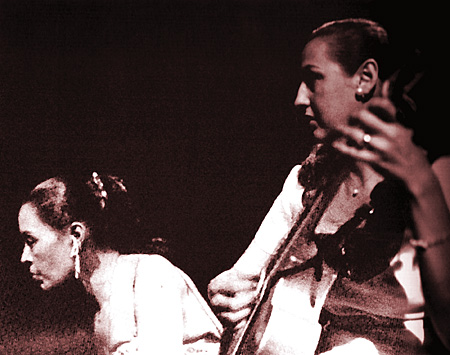
Osborne (R), with Billie Holiday (L), 1958. Picture Credit: Nancy Miller Elliot
Equipment
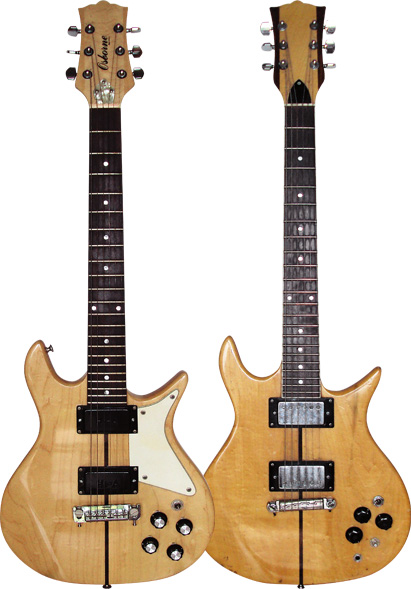
Osborne purchased the same model of Gibson archtop that Charlie Christian played – the ES-150, an early version of the classic archtop ‘jazz boxes’ we know and love today. It came with a large spruce body and a single-coil pickup near the neck, itself containing a large magnet that helped deliver good definition and attack. She later played other guitars by Gibson, as well as models by Gretsch, such as the White Falcon. In the 1970’s, Osborne founded her own guitar company, Osborne Sound Laboratories, formed from the ashes of the Mosrite Guitar Company (whom her husband had worked for at the end of the 1960’s). Osborne Sound Laboratories made amplifiers personally tested by Mary herself, as well as a selection if interesting instruments (including funky looking solid bodies such as in the picture below). Sadly, they couldn’t penetrate the market due to the dominance of the big manufactures, such as Fender (despite their well-known quality issues in this decade) and the company folded in 1980.
Osborne Sound Laboratories guitars from the 1970’s. Picture Credit: VintageGuitar.com
Recommended listening
Osborne’s 1959 LP A Girl And Her Guitar (Warwick) stands testament to her talents in a golden era for jazz guitar. Her later record Now And Then (Stash, 1981) shows a player who survived longer than most of her contemporaries, and continued to play beautifully.
Also, check out The Mighty Two (1963, Roulette), an LP by the two legendary drummers Louis Bellson and Gene Krupa. Although this was conceived as an instructional album for budding drummers, several tracks feature six musicians accompanying both drummers through nine of the songs on the record. As well as featuring Osborne on guitar, you can hear Milt Hinton (bass), Joe Wilder and Joe Newman (trumpet), Phil Woods (alto sax), Dick Hymen (piano) and Tyree Glenn (trombone) – something of a who’s who in sidemen for the time. The ensemble playing is tight, and the entire LP is a unique artefact of jazz history.
I’ve noticed a few decent-looking guitars going for sale on eBay recently. In the past, I’ve picked up a few great instruments and amps, including the Strat which was my main touring guitar for a decade, as well as two Fender Mustang floor units, which I use for live work most of the time nowadays. However, buying something online, especially a musical instrument you haven’t played, or even held, can be a risky business. I therefore try to set an ‘absolute maximum’ price which I won’t go over. This is price is normally quite low, meaning I should be able to at least earn a small profit on any guitars I decide to move on – but it does mean I’m not usually the ‘winning bidder’ when interesting pieces catch my attention.
That is, until I saw this gem…
What is it?
This guitar is modeled on the Gibson non-reverse Firebird III, one of Gibson’s early forays into the offset market, only flipping the body to be a mirror image of the shape in the above picture, hence the term reverse. From 1965 to 1969, Gibson offered a non-reverse version, in a much more Jazzmaster style shape. The ‘III’ in the name is a reference to the guitar having three P90 pickups, unlike the two mini humbuckers on previous Firebird models. Because these non-reverse bodied, three pickup guitars were only available for around four years, they are considered highly collectible and even ones in poor condition go for thousands of pounds.
However, I knew from the price I paid for it alone that this guitar was not a real Gibson. Once it had been delivered, it was clear that the ‘Gibson’ logo on the headstock is actually a decal, added after the original purchase (although some of these copies were actually supplied with stickers such as this, or alternative truss rod covers that read ‘Gibson’, so perhaps it came with the instrument). An original Gibson of this style from the mid to late sixties would have looked slightly different, too – chrome hardware, black pickup covers and probably a Firebird decal somewhere on the pickguard. But I have to say, I quite like the gold hardware, and I’ve always preferred cream/aged white pickup covers, especially on retro-styled guitars such as these.
So who made it?
In my initial research, the Japanese manufacturer Tokai looked the most likely suspect. Tokai, along with Ibanez, were famous for their ‘lawsuit guitars’ in the seventies; the lawsuit occurred because they were making better Les Pauls than Gibson were (the 70s saw huge reductions in quality from both Gibson and Fender guitars, making the Japanese rip-offs much more appealing, and better value). Tokai have certainly released their own take on the Firebird design, but after a little more digging, I discovered that this model is the GouldStormbird. The almost completely unknown Gould brand are seemingly British-based, but put together in China, probably in the early 2000s, and possibly feature the talents of UK pickup legend Alan Entwistle behind the scenes. Very promising…
Is it any good?
Heck, yes. It sounds amazing, and reinforces my belief that sometimes, one is merely paying extra money for the right name on the headstock. This guitar plays really well, hangs nicely on a strap and has a good vintage-feel neck (i.e., it’s thicker than many modern guitars). The guitar’s budget P90 pickups sound as good as any other I have played, and the control layout of three-way toggle switch (neck / neck & bridge / bridge), shared volume for neck & bridge pickup, plus a separate volume control for the middle P90, allows for seven different pickup configurations, all of which can be tweaked by how you decide to blend pickups together. The master tone control appears to taper smoothly as well – rare for what is clearly a budget guitar. P90s sit somewhere between humbuckers and single-coil pickups in terms of output and ‘beefiness’, and I certainly get a ‘Strat on steroids’ vibe from this guitar. I love the sound of this guitar played clean, through a Fender Deluxe or Twin Reverb style amp as well as a more retro-styled dirty sound – a Fender Bass man plus a vintage tremelo effect sounded wonderfully evocative…
Could this instrument become my main guitar for soul work, replacing my main all-rounder, my vintage-voiced blonde Stratocaster?
There was one slight fault. The frets don’t seem to be the best quality, and a few were coming away slightly, causing bends to choke at certain points on the neck. I noticed the same issue might be happening in a few other places, so I sent the guitar off to my tech guy for a partial refret, which thankfully didn’t cost too much. Upon it’s return, the notes all sing beautifully, especially with those P90s…
Three great sounding P90s, giving seven different pickup combinations – and that gorgeous sunburst finish…
Pros and cons
Pros
Great build quality
Amazing triple P90 sound
Gorgeous sunburst finish (and general retro styling)
A really classy twist on the classic Jazzmaster shape
Great copy of an otherwise unattainable guitar
Neutrals
Neck might be too chunky for some (but just right for me)
Cons
Needed a partial refret
Resale value won’t be that high if I decide to sell it on
All in all, I think I’ve grabbed a bargain! Especially from a random purchase on eBay. At least it’ll give me a new toy to play with while I wait for my new custom guitar to be completed (more on that later this year…)
This article has been one of my most viewed pieces, as fans of Squier guitars try to get to the bottom of a pickup mystery. I heard of it being shared on forums discussing the link between Squire’s Classic Vibe range and Tonerider pickups. However, I also recently learned of an important update, so have returned to this post to bring it up to date.
This article was first published in May 2020, and was updated in November 2024.
A few years ago, I was in the process of changing the pickups in my two Stratocasters. One, my blonde Squier Vintage Modified (pictured below), was fitted out with custom pickups handmade for me by Rohdan Pickups in the USA. These were made using Alnico III magnets in the neck and middle pups, the same as the very first run of Fender Strats in 1954. The bridge was a mix of Alnico V & II, for better definition, without the harsh trebley bite.
My three Strats, before I sold the red one (top) or changed the pickups in the other two…
For the other guitar, my trusty Mexican HSS Strat (the blue one, pictured above), I only needed replacement neck and middle pickups. I was playing with different groups with less emphasis on heavy rock, and needed something more versatile. I’m still really happy with the Seymour Duncan ’59 humbucker in the bridge (this is usually a Les Paul replacement/upgrade, and has a great tone for classic rock). Having loved the sound of one of my other Strats, a Squier CV, or ‘Classic Vibe’ (Simon Neil signature model, based on a CV 60’s model), I started researching it’s pickups online. I thought I might get an idea of where to look for similar-sounding pups to install in my Mexican Strat. However, in my search, I happened upon an interesting, and ultimately money-saving, discovery…
Tonerider Pickups
Tonerider make replacement pickup sets for Strats and Teles. They appear to operate out of Squier’s main factory and sound as similar to the pickups used in Squier’s Classic Vibe guitar range as to lead most people to believe they are the stock pups built into the instrument.
An excellent article by Tidy Words seemed to confirm what many Squier players had long suspected, and which Tonerider set was (allegedly!) being used in which guitar:
However, this only appears true for Squier Classic Vibe guitarsmadebefore 2019inChina
According to Fuzz Faced, Squire CV production tool place in the Grand Reward factory, based in the Guang Dong province of Southern China. Tonerider pickups were made in the same factory, leading to the noticeable similarities in construction and sound between their pickups and the stock CV ones.
Squire moved production of the Classic Vibe range to Indonesia in 2019, as a means of lowering costs and avoiding US import tarrifs on goods manufactured in China. As a result, these newer guitars are no longer made in the same factory as Tonerider pickups. So what might have been true of a pre-2019 CV is much less likely now.
However, the sound of a CV 50s Strat made in China is the same is one made in Indonesia. Their pickup voicings remain almost identical to models of Tonerider pickup available.
The takeaway message…
If you have a Squire Classic Vibe guitar, don’t rush to upgrade it with Tonerider pickups. They are, for all intents and purposes, already in there! And frankly, if you’ve bought a CV guitar to get the overall ‘vibe’ of a certain era in Fender’s history, the stock (Tonerider-sounding) pickups do a great job, and don’t need replacing in the first place! These guitars are well built and in terms of sound, playability and build quality, give the ‘real’ Fenders a run for their money – at a fraction of the price!
On the other hand, if you like the Strat you have, but it’s not from the Classic Vibe range, and want to improve the pickups, you could do a lot worse than the Tonerider range. Check out their full range of Strat pickups here.
How did it work out for me?
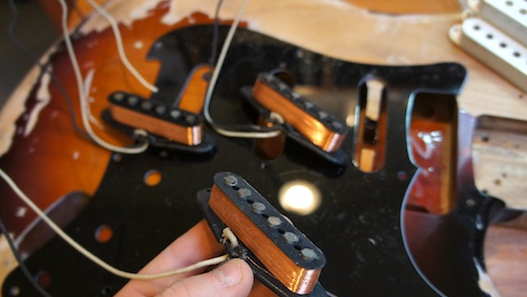
I bought a City Limits single coil set from Tonerider for the Mexican HSS Strat. These use Alnico V magnets, and are aiming for the ‘Texas Blues’ sound Fender Strats do so well – think ‘SRV’ and you’ll have a fairly good idea what I mean.
Picture courtesy of Tonerider.com
These pickups worked brilliantly for blues, rock, funk, jazz and everything else I threw at it. However, I found the difference between the sound of my two Strats to be an issue (as one guitar serves as backup for the other onstage), so I switched the bridge pickup to a more original-sounding single-coil, and decided to put in a new, fully balanced set. Having grown to prefer the sound of my blonde Strat, I opted for Tonerider’s Alnico-3 Surfari set. I also made the ‘tele mod’, making it possible to select the bridge and neck pickups at the same time. Now I have that wonderfully airy but funky Telecaster sound, making for a very versatile guitar which pairs much better with my blonde Strat.
I hope this has been helpful, and clears up any misunderstanding about the Squier CV range. As always let me know your thoughts, and good luck in your buying choices!
You must be logged in to post a comment.