Examples of using intervals in guitar playing, part 2: fourths and fifths

Advice & Tips

Welcome back to this overview of intervals in guitar playing! In part one, we looked at thirds, sixths and tenths. In this follow up article, we will be taking a brief look at fourths and fifths. Both of these intervals can be used more ambiguously, as they remain the same in the context of a major or minor chord (when sticking to notes in diatonic scale, at least – more on that later). Because of this fact, they can utilized in slightly different ways to the tones they sit alongside in common scales. Let’s take a look…

Fourths

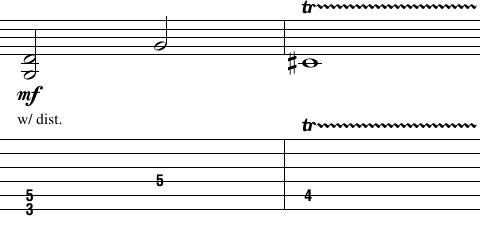
Fretting the two highest strings together at the same fret creates this classic double stop, which can be heard all over rock’n’roll, but famously in the intro and solo for Chuck Berry’s Jonny B. Goode. Berry developed this style so he could recreate horn lines, as his live band was a smaller ensemble than many bands of the time (which would typically have more than one sax, trumpet, trombone, among other brass instruments). Every rock guitarist that followed has used phrases first made famous by Berry, from Angus Young to George Harrison. It is also a useful interval for slide guitar playing as it can be used over major and minor chords alike (you can see an example of me playing 4ths with a slide on this cover video of a well-known song).

In jazz, Wes Montgomery pioneered the use of stacked fourths, creating chord-based solos using 4th intervals on top of each other (for example, one chord would sound, low to high, as A, D, G, C), and the shape would move in line with the melody. George Benson kept up this tradition, but would also regularly employ diads (two notes played together) of 4ths in his lightning-fast solos.

Fifths

A fifth is an inversion of a fourth, and vice versa. Here, the strict definition can become blurred – think of the intro to the Deep Purple song Smoke On The Water and you’ll hear diads playing the entire riff in what sound like fourths (eg, the first pair of notes is a D, then a G on top). However, since the melody is following the G minor pentatonic scale (as the song is in the key of G minor), I’d argue that this riff is an inverted fifth (D being the perfect fifth of G), as the melody note is higher than the harmony note.

In rhythm guitar, a root and fifth creates the classic power chord heard in most varieties of rock music. Alternating the fifth with a sixth, and moving back and forth between the two, gives the famous (almost cliché) rocking riff used by artists from Chuck Berry to Status Quo and beyond.

Variations on ‘perfect’

The intervals we have discussed above – using the fourth and fifth notes in a diatonic scale, create what is known as perfect fourth / fifth. However, as with any note, we can raise or lower it’s pitch by a semitone for a new musical sound. Flat fourths & fifths are both referred to as diminished (and of course be found in diminished chords and scales). Raised ones are called augmented. As a fourth and fifth are only a tone apart, a diminished fifth is exactly the same thing as an augmented fourth – just in case you were confused!

Apart from being the famous Devil’s chord (famously used on the Black Sabbath song Black Sabbath), this interval often occurs in Blues-based music. The Pentatonic Blues Scale is based on intervals of R, b3, 4, #4, (or b5), and b7. Likewise, in dominant seventh chords (for example, C7), the natural interval between the chord’s major third (E) and flat seventh (Bb) is a diminished fifth/augmented fourth. Highlighting these notes over these chords creates a wonderful effect without having to overthink your playing too much!

Finally…

There are a few intervals we haven’t covered in these two articles. Off the top of my head, these would be seconds, sevenths, octaves and extended intervals used in jazz chords and arpeggios, such as ninths, elevenths and thirteenths. I plan to look at octave-based playing in a future article, because it is a staple of my own guitar heroes, such as the great Wes Montgomery. However, if you’d like me to look into some of the other intervals (such as sevenths, which is a really useful colour tone in jazz), do let me know!

Great Guitarists #9: Grant Green

Great Guitarists

Welcome back to the Great Guitarists series. We’re continuing along a jazz theme for now, with a sometimes underrated master of understated single line guitar soloing…

Grant Green

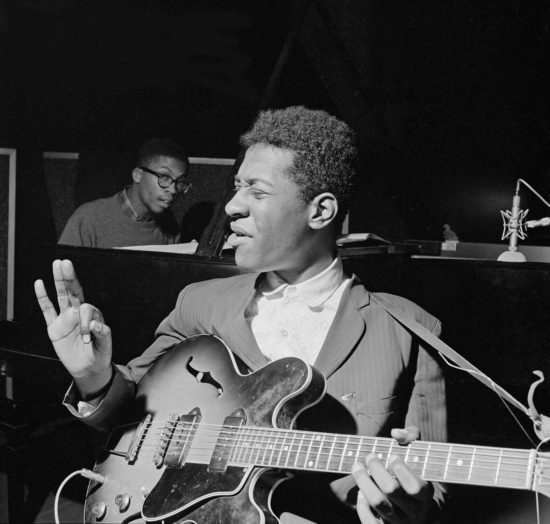
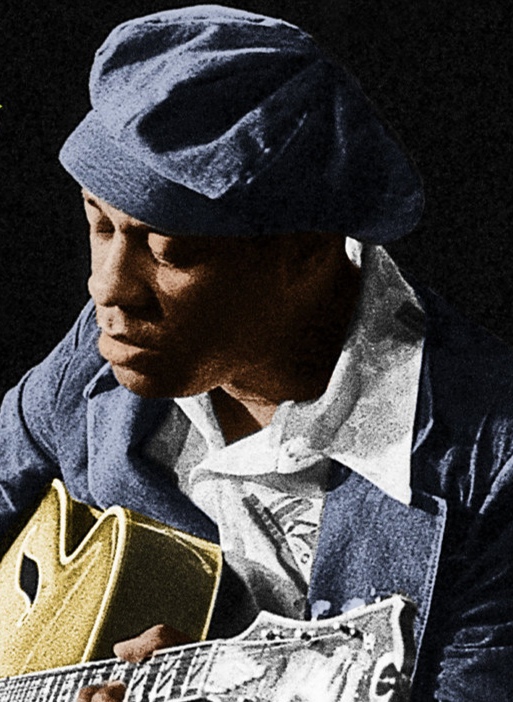
Green was born in St. Louis, Missouri, in 1935, and died in 1979, aged just 43. In his all-too-short career, he played on hundreds of records, including numerous solo titles – almost thirty cuts for Blue Note Records alone. Many of these were played as part of an organ trio (organ, guitar, drums) in a style known as Soul Jazz. This style was sometimes sniffed at by jazz purists, but has since gone on to be something of a cherished gem, and ripe pickings for sampling, especially in hip ho and acid jazz (Read Jorge Cervera’s defence of Grant Green and soul jazz here).

Although less well known than some of his contemporaries, such as Wes Montgomery, his friend George Benson and his main guitar influence Charlie Christian, Green nonetheless possessed a highly recognisable guitar sound, which can be heard in the playing of many guitarists today, myself included. Indeed, his mix of blues, soul and hard bop licks over a funky back beat has become the quintessential sound of upbeat jazz guitar playing.

Equipment and guitar sound

Green most famously used a Gibson ES-330, which is essentially the same shape as the brand’s better-known 335, but with P90 single coil pickups (not unlike an Epiphone Casino). Later on in his career, he played a Gibson L7, Epiphone Emperor and custom-made D’Aquisto guitars, all of which featured similar P90 style pickups. This type of pickup was one of the first kinds added to hollowbody guitars, and Green obviously enjoyed the full, clear sound they provided.

Interestingly, for a guitar player known for his fluid single line style, Green was known to roll the treble and bass entirely off on his amplifiers, to better emphasise the midrange for more bite and attack in his tone – try it with a P90 neck pickup, and see if you can recreate Green’s sound!

Essential listening

Idle Moments (1963) is a great place to start. It’s a slow, contemplative masterclass in cool jazz guitar,and one of my favourite jazz guitar records, along with Midnight Blue by Kenny Burrell (more about that here).

There’s a couple of good options for live cuts, but the recently released collection Funk in France, From Paris to Antibes (1969-1970) (2018, Resonance) captures Green at his best. A few of the tracks see the trio lineup complimented by none other than the legendary Barney Kessel, which makes it essential listening for me!

It’s also worth seeking out some of Greenvs funkier efforts, such as… He also made an interesting album of Latin music (The Latin Bit from 1963, on Blue Note again), in which the main theme (the ‘heads’) were played in the usual samba or bossa nova style, but the solos are swung – give it a listen and make of it what you will!

As a sideman, he played on hundreds of recording sessions. Among my personal favourites are Herbie Hancock’s My Point Of View (1963, Blue Note) and Art Blakey’s Hold On I’m Coming (1966, Limelight). However, each record in Green’s expansive discography features great playing and lead lines that we guitarists would benefit from adding to our repertoire!

Just as Green (and countless other great jazz guitarists) did with Charlie Christian’s recordings, listen, learn, then find a way of making it your own…

Great Guitarists #4: Kenny Burrell

Great Guitarists

Today we look at the man behind one of my favourite jazz albums of all time…

Kenny Burrell

Kenny Burrell, at the Midnight Blue sessions, 1963

Born in Detroit, Michigan, in 1931, and into a musical family, Burrell has been recording and performing on the guitar since the start of the 1950’s.

Burrell’s recording debut recording was as part of none other than trumpet player Dizzy Gillespie’s sextet in 1951. He started recording solo records almost immediately after, often working in collaboration with other big names in jazz. His discography as band leader is enormous (well over fifty studio cuts). Yet Burrell still found time to work as a sideman for scores of artists, such as Oscar Peterson, Tony Bennett, Billie Holiday, Bill Evans, Wes Montgomery and Benny Goodman (taking the chair once held by his hero Charlie Christian), and many, many more.

His main guitar influences are a mix of jazz (Charlie Christian & Django Reinhardt) and blues (T-Bone Walker & BB King). This blurring of the lines between jazz & blues continued throughout his career, in a style known as Hard Bop (or Soul Jazz). This sub-genre of jazz, of which Burrell is considered a key proponent, is considered by some to be a reaction to the Cool Jazz of the West Coast musicians. His warm tone came from his Gibson Super 400 (a fairly large archtop) combined with failing down the treble on his Fender amplifiers for a ‘fatter’ tone.

One of the reasons I really enjoyed listening to Kenny Burrell when I started learning jazz was how accessible he made the genre sound. His more blues-tinged works (see below) provided an aural link I found familiar as a blues player. However, I soon discovered that his phrasing was as sophisticated and intelligent as the other jazz players – he just made it sound effortless. Making such advanced playing appear so effortless, and therefore more listenable, is one if the traits which makes Burrell a great guitarist!

Essential Listening

It can only be Midnight Blue (1963). I’ve linked to the title track here – a masterclass in laid back, bluesy jazz – but do yourself a favour and spare yourself 45 minutes to enjoy the entire album.

To hear a different side to Burrell’s playing, try Kenny Burrell & John Coltrane, also from 1963. Bebop plays more prominent on this album although Burrell’s tasteful restraint still shines through,and hearing him trade solos with Coltrane feels genuinely seminal. This LP is an underrated album which deserves more attention and acclaim.

Remember, don’t be shy about getting in touch with your thoughts on the series so far, as well as your suggestions for future features. Bye for now!

Great Guitarists #3: George Benson

Great Guitarists

Today’s player has a connection to my first featured player, Earl Klugh, and is another guitarist influenced by Wes Montgomery. Any guesses? Read on…

George Benson

Born in 1943 in Pittsburgh, Pennsylvania, Benson started performing at the age if eight, and recorded his first single a year later, although it did not garner much success for him at the time. After graduating high school, Benson found work as a sideman, and recorded his first record as band leader, The New Boss Guitar of George Benson in 1964, aged just twenty-one. Amazingly, his guitar during these early years was hand-built for him by his stepfather!

Benson continued a prolific run of albums throughout the sixties & seventies, often with some big jazz names guesting (Earl Klugh played guitar in his band for two albums and tours in 1972-73). He even found time to perform on the Miles Davis track ‘Paraphernalia’ from Miles In The Sky (1968). To date, Benson has released thirty-six albums across the last six decades and still tours regularly, which certainly puts plenty other musicians to shame!

Guitar Style

A lifelong user of archtop guitars, such as his signature Ibanez models, Benson’s playing style comes directly from his hero and number one influence, Wes Montgomery. Like Montgomery (and Klugh), Benson doesn’t use a guitar pick, nor does he employ the conventional classical method in his fingerpickng. Instead, all three make extensive use of their thumbs. When using his other right hand fingers, Benson seems to use the rest stroke style of Django Reinhardt.

What sets Benson apart is his speed, all while remaining fluid and innately soulful. It’s hard to maintain a melodic heart during such fast runs, although Benson’s habit if singing/scatting his guitar lines while improvising them probably helps!

Essential listening

To be honest, Benson’s back catalogue is chock full of amazing guitar work. However, if you’d prefer to stay away from the singing, anything before the 1976 album/hit instrumental Breezin’ is your best bet. Personally, I’d recommend White Rabbit (1972) and the wonderfully titled Giblet Gravy from 1968 (featuring fellow jazz legends Herbie Hancock & Billy Cobham, among others) for starters.

Good King Bad (1976) shows where Benson’s style was heading, with a tighter, funkier backline, which some critics believe led to more focused phrasing in his guitar playing. The title track from this album, Theme from Good King Bad, demonstrates Benson’s soloing prowess wonderfully. Yes, the main theme might sound a little dated to our ears, but stick with it. The guitar solo (over the song’s B section) starts with octave melodies, then three notes at once, moving as melody chords, before Benson really starts to cut loose with some dazzling – yet tasteful – single note phrases.

One of the things that I love about this solo in particular is Benson’s choice of landing note. Namely, where he ends his phrases, and how they relate to the chords underneath. This is something I plan on exploring deeper in a future post, but it’s worth summarising here: with a strong opening and a tight landing will make almost all solos (or the phrases they are made up of) sound great. This is something Benson has done throughout his career, and he still seems to be going strong, continuing to record and perform through his eightieth decade…

As always, let me know what you think. I’d especially love to hear your suggestions for future players to feature, as I plan to return to this series from time to time. Make your voice heard!