Great Guitarists #13: Albert King

Great Guitarists

Albert Nelson (1923-1992) is one of the most influential blues guitar players of the mid-29th century, at the height of the Blues’ electric period, and one of the early exponents of the modern blues. But you probably know him better by his stage name, Albert King.

He took the stage moniker of King due to the success of another popular blues guitarist, B.B. King. In fact, it is believed he even passed himself off as a cousin of B.B.’s early in his career in order to raise his profile and get more gigs!

Despite the somewhat cheeky start, both B.B. and Albert, together with Freddie King (also no relation to either of the other two), are now.often referred to collectively as The Three Kings of the Blues, given their enormous influence on countless guitar players both in the next generation of players and among their contemporaries.

Breakthrough Success

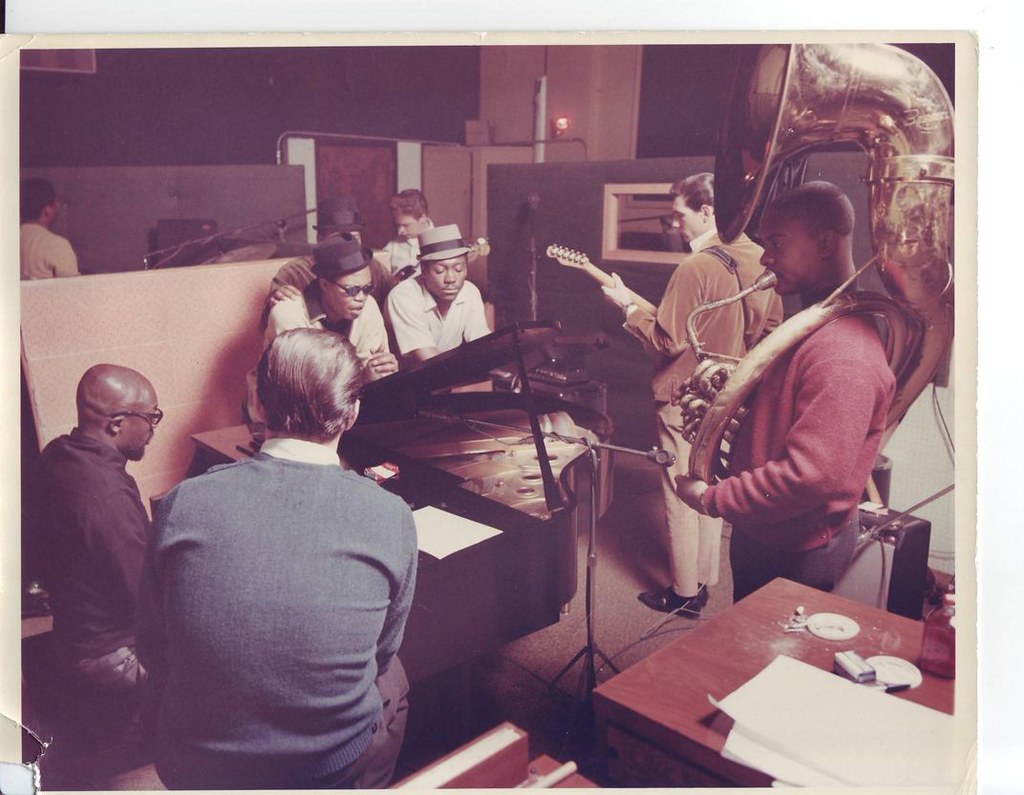
King had played with other artists (including as a drummer for Blues Legend Jimmy Reed, for a brief time) as well as leading his own band on the blues club circuit in Illinois in the USA. However, it wasn’t until he moved to Memphis and signed to Stax Records that he started to have a successful run of single releases. King believed that it was his decision to play blues songs in an upbeat, soul-based style which proved crucial to his success. He recorded with the Stax House band, Brooker T and the MGs (featuring none other than Steve Cropper on rhythm guitar), as well the Memphis Horns. Stax singer-songwriter Isaac Hayes also contributed piano to the sessions alongside organist Brooker T. Jones.

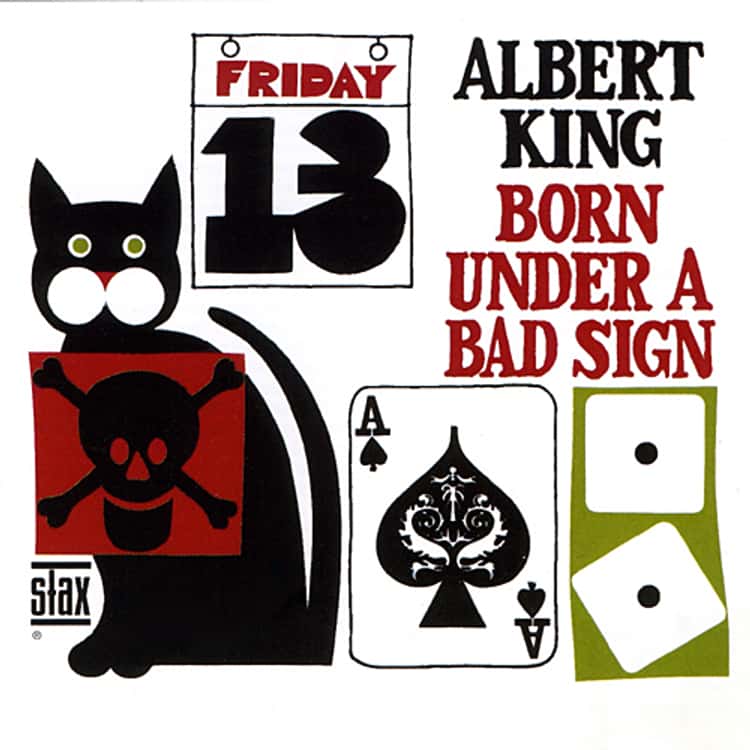
Eleven of the Stax singles, recorded over five seasons from March 1966 to June 1967, were complied and released as the album Born Under a Bad Sign in 1967. The album became a reference point for guitar players such as Eric Clapton, and the title track from the album became King’s signature song (also covered by Clapton with his late sixties blues-rock supergroup Cream).

Unorthodox technique

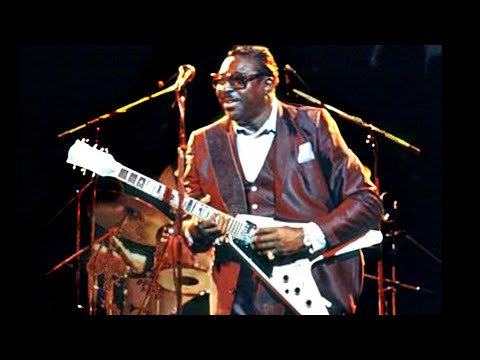
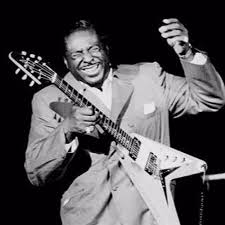
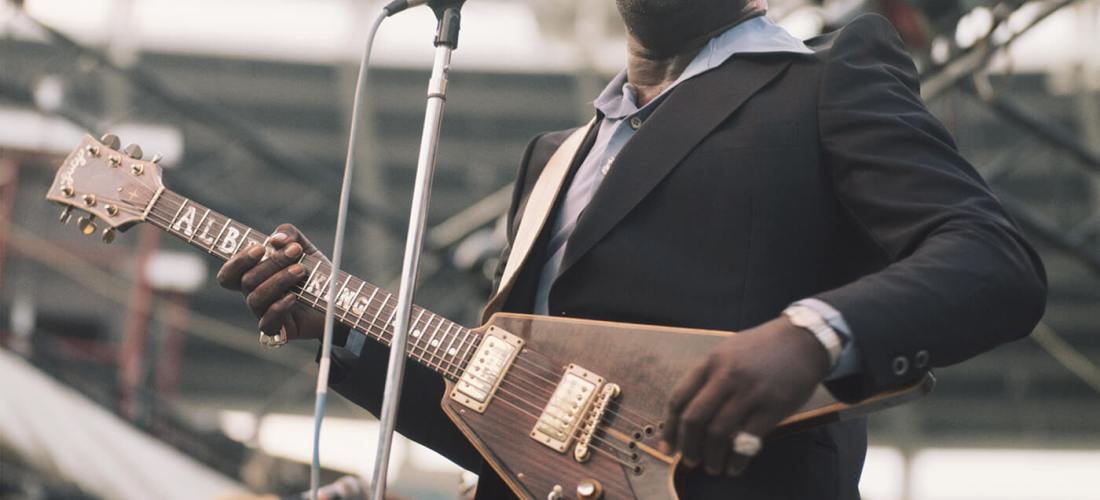
Albert King was known as the “Velvet Bulldozer” due to his soulful voice, which contrasted his large physical frame (standing 6’4″ tall). He was left-handed but opted to play a (standard) right-handed guitar upside down. The guitar he is most associated with is Gibson’s Flying V (see pictures), or custom-built guitars based on this model. It’s unusual ‘V’ shape made it much easier to play left-handed without anything getting in the way (Hendrix occasionally used one too, likely for the same reason). King strung his guitars the opposite way to the ‘standard’ layout, with the thinnest/highest sounding string at the top – he was literally playing a ‘standard’ guitar upside down.

Another ‘upside down’ element to King’s technique can be found in the way he bends his notes. His large hands bent the strings by pulling them downwards, towards the floor. Some players (like Jeff Beck, I believe) have remarked on this, saying it allows for greater control of the pitch. In King’s case, he was able to raise the pitch by over two tones of he wanted to. He was also able to comfortably bend several strings at once, a technique much-copied since.

King’s unique style has been identified as a key element in the playing styles of Eric Clapton, Jimi Hendrix, Buddy Guy, Albert Collins, Mike Bloomfield and in particular, Stevie Ray Vaughan, who cited King as his primary influence.

King largely played on the three highest-sounding strings of his guitars, usually playing variations on the same musical phrases. But it was the numerous different ways that he was able to phrase the same simple blues licks; his huge string bends; and the harsh, stinging ‘attack’ he utilised in his playing, which gave King his unique sound.
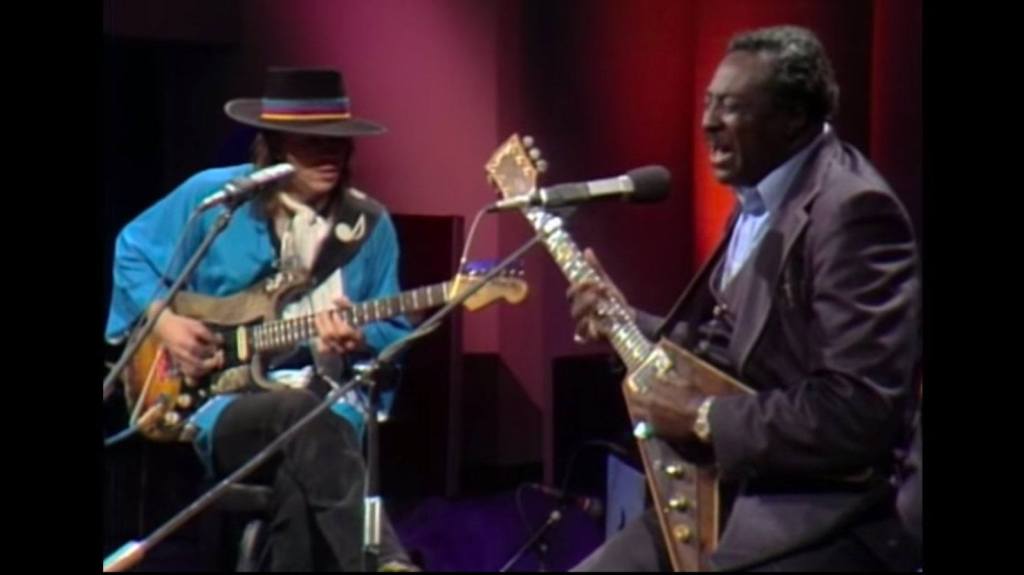
King with Stevie Ray Vaughan (left) recording the In Session TV special/album (1983).

Guitar Tuning

There remains to this day an ongoing debate about how exactly King tuned his guitar – yet another unorthodox element to his style. Rather than use the standard guitar tuning (low to high: EADGBE), King made use of a more unusual tuning, believed to be either (low to high): CBEF#BE (according to Steve Cropper, who recorded with King and produced some of his records), or CFCFAD (according to Dan Erlewine, who built custom guitars for King later in his career). He may have switched between both options and others.

In either case, since King only played lead, he did not have to contend with the difficult chord shaped these tunings would have thrown up. It is likely he found them useful for easily finding his root note and being able to execute his particular repertoire of blues licks across a greater range of the fretboard.

Recommended listening

Aside from Born Under a Bad Sign (1967), I’d suggest checking out King’s love album Live Wire / Blues Power (1969), which features cuts taken from a three-night stint at the Filmore West.
Also worth listening to is In Session, the audio record of a TV special from 1983, but only released in 1999. In Session is a collaboration between King, who leads processing as the ‘old master’ and the then up-and-coming blues guitar superstar (and Albert King disciple) Stevie Ray Vaughan. As well as hearing both guitar players trade licks, the record also includes a few brief moments of ‘chat’ between the two which adds to the atmosphere of the project.

Left to right: King, B.B. King, Eric Clapton & Stevie Ray Vaughan sharing a joke backstage.

If you are looking to learn how to get the most out of less in your lead guitar playing, you could do far worse than listen to King’s sharp but tasteful playing. As always, let me know what you think, and keep an eye out for future articles on the other two ‘Kings of the Blues’, coming very soon…

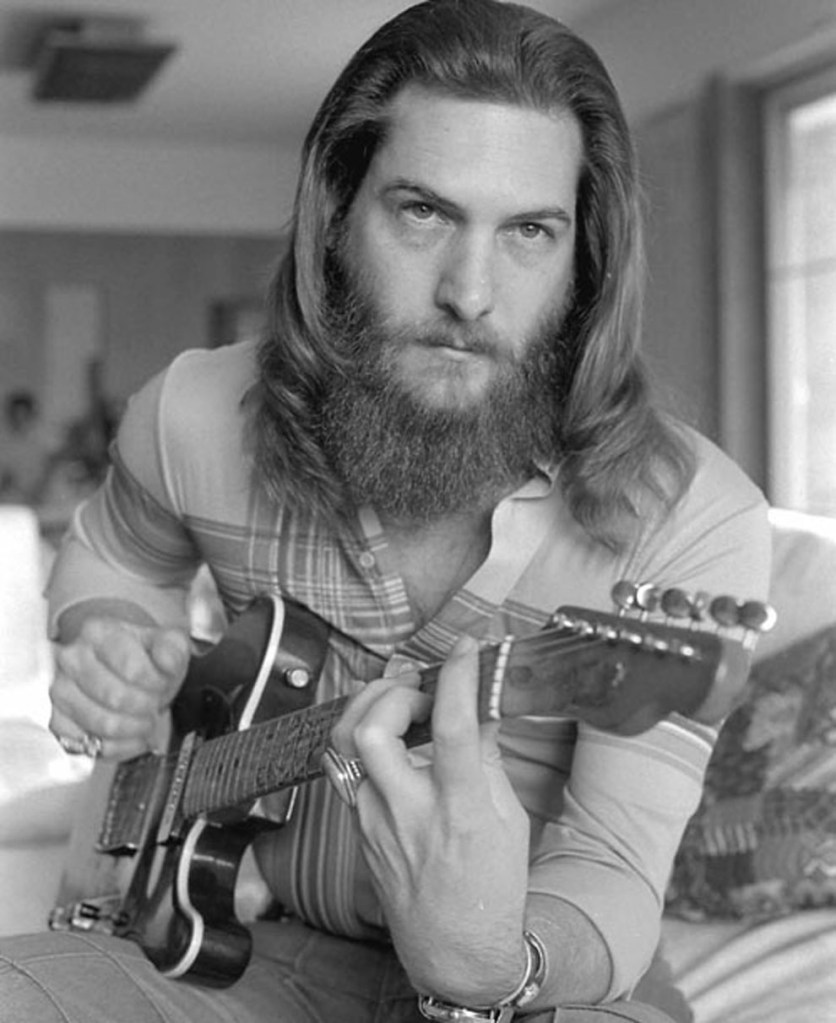
Great Guitarists #12: Steve Cropper

Great Guitarists

The Great Guitarists series is back, and we’re restarting with one of my all-time favourite guitar Players, Steve ‘The Colonel’ Cropper.

Even if you don’t recognise the name from the cult classic musical comedy The Blues Brothers, you will have heard Cropper’s songs and guitar playing on countless records, playing alongside some of the greatest soul singers of the 20th century.

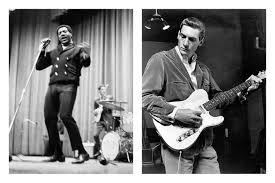
Steve Cropper with his favoured guitar, the Fender Telecaster.

Cropper was as a member of Brooker T & the MGs, who also included Al Jackson Jr. on drums, Brooker T himself on organ & piano, and Cropper’s childhood friend Donald ‘Duck’ Dunn on bass (Dunn was also featured in The Blues Brothers). The group had hits with instrumental tracks such as Green Onions and Soul Limbo (the one used as the BBC’s theme music for their Cricket coverage).

Brooker T & The MGs (left to right: Al Jackson Jr, Steve Cropper, Brooker T & Donald Dunn).

The MGs were also the core in-studio ‘house band’ at Stax Records, Memphis, providing the backing (and often creating the arrangements) for virtually all of their recordings from the mid-sixties to the early seventies. All those hits you know by Otis Redding, Sam & Dave, Eddie Floyd and countless others? The MGs, with Steve, are in all of them…

As if that wasn’t enough, Cropper also co-wrote In the Midnight Hour with Wilson Pickett, Knock on Wood with Eddie Floyd and (Sittin’ on) The Dock of the Bay, the famous posthumous hit for Otis Redding. Some of these records were also co-produced by Cropper.

After leaving Stax, Cropper went on to play on Ringo Starr’s and John Lennon’s solo records, as well as produce albums for other artists, notably the Blues guitar legend Albert King. Then, in the late seventies, he was recruited into the Blues Brothers, the act for which he might be best recognised.

The Blues Brothers released two albums, two feature films (both of which included soundtrack albums) and embarked on a handful of tours between the late seventies and the early 2000s. Their influence on bringing rhythm & blues to a wider audience cannot be understated, not least by introducing a new generation of moviegoers and listeners to artists such as John Lee Hooker, Ray Charles, Sam & Dave and many more. Yet even in a band comprising a veritable who’s who of soul musicians, Cropper still stands out.

Cropper (left) with The Blues Brothers Band.

In most of these settings, Cropper is welding a Fender Telecaster or (more recently) Telecaster-like models, such as his Peavy signature model from the late 90s. His playing – and the guitars he played on – provide a full, but not dominating, sound. From simple but effective chord work, to riffs that often doubles up against bass lines, his style of Memphis Soul remains highly imitated. In his lead work, his frequent use of sixths (read more about these here) can be heard to great effect on the intro to Sam & Dave’s hit Soul Man.

Recommend listing

Pick up any classic cut from the Stax label from the mid to late sixties and Cropper is probably on there. Then of course, there is the soundtrack to The Blues Brothers. There are even complications of Cropper’s best-known work available. It doesn’t take much work to find him!

In all cases, listen carefully to his rhythm choice, and note how he leaves space for the singer and other instrumentalists. As for solos, he could certainly play good ones when he needed to but only when they were necessary.

Until next time…

Ten albums which helped shape me as a guitarist

Music

I was recently tagged in a Facebook challenge by my friend David, in which you post 10 albums which have informed your early musical tastes.

I find things like this almost impossible. It’s so personal, but based on hundreds of musical memories. How do you select just ten LPs from years of discovering & listening to new music? So I made my criteria a little more specific, and chose ten records which, as well as being ones I listened to frequently, also served as early influences on my guitar playing & songwriting.

Because I’m focusing on my earliest influences, this list looks rather narrow. I’d like to think that my guitar playing influences, as well as my music listening tastes, are much more eclectic than this list would imply. But then, these are my earliest influences, rather than the wider world of music that these albums (and countless others not in this list) opened up to me.

In some cases I chose a favourite album by artists who could have filled a ‘top ten’ list all by themselves. I also decided to omit quite a few 90s choices which were heavy-rotation at the time, but didn’t accompany my out of the 90s, so to speak…

And because I’m looking at albums, I’ve not included any classical or folk pieces. Although they were a huge part of what I was playing on the guitar back then, just as now, I learned these pieces individually, rather than via any one particular LP – perhaps that’s a separate list of its own for a future post…

Likewise, jazz was a genre I started digging deeper into in my very late teens, so they while it has certainly influenced my playing, it didn’t happen until later. As such, only one jazz record makes an appearance on this particular list.

So what you see below is perhaps better catogorised as ten rock & pop albums which had a lasting influence on my guitar playing. Also, because it was really tricky narrowing down to just 10 choices, I’ve included a few contenders which nearly made the cut.

Strangely, some significant guitar influences don’t appear in these picks, for various reasons – not least because 10 albums isn’t enough! I think it’s because I view some guitar player’s work over their whole career (or live performances), rather than limited to just one record.

Anyway, here they are. The list is (very loosely) organised by chronology of when I discovered them, where my memory makes that possible. Enjoy!

The Shadows – 20 Golden Greats (1977)

The album that started it all. I was six years old and going through the ‘tennis racket guitar’ phase. My Dad suggested I listen to some “proper guitar music” and player this album to me (on cassette, naturally). There was no turning back. That famous clean Stratocaster tone was under my skin.

As I reached my teenage years I soon learned that The Shadows & their legendary lead guitarist Hank Marvin were far from fashionable, and I expect many young players may never have even heard of them. But one way or another, the landscape of popular music would be very different without their influence.

The Moody Blues – In Search of the Lost Chord (1968)

My father is to blame for this one too. He has all seven of the ‘classic’ Moodies albums (from 1967-72), and any one of them could have been chosen for inclusion here. Why Lost Chord? It best represents the mix of influences on my playing, featuring both fantastic acoustic & electric guitar work, as well as an abundance of non-rock instrumentation like sitar, flute and some of the best played mellotron in the history of popular music (it was this band’s keyboard player, Mike Pinder, who introduced the instrument to The Beatles).

Another element I’ve always enjoyed in the music of The Moody Blues is that they were a five-piece band with four singers. They divided up lead vocal duties equally, and performed some beautiful harmony arrangements. Meanwhile, the drummer (the only non-vocalist) wrote poetry which the band performed as spoken word on each album. Sometimes a little dated, but very experimental & extremely fun.

Close contenders: ‘Days of Future Passed’ (1967), ‘On the Threshold of a Dream’ (1969), ‘To Our Children’s Children’s Children’ (1969), ‘Question of Balance’ (1970), ‘Every Good Boy Deserves Favour’ (1971) & ‘Seventh Sojourn’ (1972), all by The Moody Blues

The Beatles – Abbey Road (1969)

Of course The Beatles feature on this list. I chose this LP above some of their other groundbreaking albums (particularly the studio-bound later records) for two reasons. Firstly, the suite of sings which takes up most of side two of the record. Secondly, it features two of George Harrison’s best songs, Something & Here Comes The Sun.

Close contenders: ‘Sgt Pepper’s Lonely Hearts Club Band’ (1967) by The Beatles & ‘Pet Sounds’ (1966) by The Beach Boys

Blur – The Great Escape (1995)

Blur were always more than just a Britpop band. Their music had an air of adventure & experimentalism that simply wasn’t present in the work of their contemporaries. This album shows how observational pop songs could still have a grungy & left field edge to them. As well as this, guitarist Graham Coxon has left his mark on my approach to creating parts in a band with only one guitar player (and no keyboards for the most part) that go beyond the obvious but still fit the tunes perfectly.

Close contenders: Blur’s preceding album ‘Parklife’ (1994) & ‘Return to the Last Chance Saloon’ (1998) by The Bluetones

Deep Purple – Machine Head (1972)

This album’s most famous song (Smoke On The Water) tells the story of its own creation. It is also my least favourite track on this LP, most likely due to over-saturation (are you allowed to play it in guitar shops yet?) bit there’s riffs & solos aplenty on this gem. Guitarist Ritchie Blackmore undoubtedly influenced my early soloing style. I loved how his tone was almost clean, unlike every guitar player who followed in his wake. His single-note slide playing has also had on effect on the melodic approach I try to employ in my lap steel playing.

Close contenders: Aerosmith‘s ‘Toys in the Attic’ (1975) & ‘Back in Black’ (1980) by AC/DC

Gomez – Liquid Skin (1999)

Their debut album Bring It On won Gomez that year’s Mercury Music Award. This was their follow up, released the following year. Both albums are of a similar vein (coming so close together). I chose this one because I think I ever so slightly prefer the songs on this one. Alternative, inventive, experimental, but still melodic. And like the Moody Blues and The Beatles, this group had several leas singers and performed some sublime vocal harmonies.

Close contenders: ‘Bring It On’ (1998) by Gomez & ‘K’ (1996) by Kula Shaker

Sam & Dave – The Best of Sam & Dave (1969)

Classic soul tunes from the legendary Stax Records label. As great as Sam & Dave were as singers and performers, it’s the backing band which brings me back to this record time and time again. The Stax House band were Brooker T & The MGs, featuring Steve Cropper on guitar. Every song is an masterclass in creating parts which serve the song. Many of my own chops come directly from Cropper, especially his use of sliding sixths in his lead playing & fills. Check this record out – in fact, check out any album released by Stax in the sixties and early seventies.

Close contender: Otis Redding’s posthumous greatest hits ‘The Dock of the Bay – The Definitive Collection’ (1987) is another great example from Stax Records and features more amazing arrangements by Brooker T & The MGs

Led Zeppelin – Led Zeppelin I (1968)

Any Zep album could have ended up on this list, particularly their first four eponymous LPs (known as I, II, III & IV). But their debut record, recorded in just three days, was one I kept coming back to again and again as a teenager. The group were part of a wave of British acts turning the blues on it’s head, alongside the likes of Jimi Hendrix and Cream. But unlike, Led Zeppelin felt more like a meeting of equally talented musicians, and (no offence to Hendrix or Jack Bruce) they certainly had the best singer in the then-unknown Robert Plant. Powerful, beautiful, but ultimately, accessible got a fledgling guitarist.

Close contenders: ‘Disraeli Gears’ by Cream (1967) & ‘Tres Hombres’ by ZZ Top (1973)

B. B. King – Live at the Regal (1965)

Unlike many live albums, which cherry-pick the best examples from numerous dates, this release was taken from a recording of one show at Chicago’s Regal Theater, on the 21st of November, 1964. It captures B.B. on top form, backed by a large band of superb musicians. This record provides a masterclass in phrasing, demonstrating King’s economical & tasteful playing, each note dripping with the blues. Highlights include Sweet Little Angel and Help The Poor.

Close contender: ‘In Session’ by Albert King & Stevie Ray Vaughan (1983)

Kenny Burrell – Midnight Blue (1963)

This record is the epitome of cool jazz. It sounds like it was recorded in the wee small hours, and it probably was. I’ve dedicated a recent post entirely to Burrell, who’s playing has just enough blues to make this jazz record accessible to a novice such as I was in my teenage years.

Close contender: ‘Julie Is Her Name’ (1955) by Julie London

Special mentions should also go to Queen’s Greatest Hits (I & II), because my family sometimes had a car growing up, and these albums were standard issue with all cars back then…

As always, I’d love to hear your thoughts on this list, as well as your own. Get in touch in the usual way! Until next time…