The (not so) secret to getting a great guitar tone

Advice & Tips

Is tone more important than technique? That’s a great debate to have, but not today…

Yet when most people listen to music, it is the tone of an instrument such as a guitar which catches and holds our attention first, so tone is pretty important. But how do we improve our tone? To do this, we need to understand what makes the tone we hear when we play guitar.

Tone knobs. Also available on dishwashers

In this article, I will list the various various factors that impact the tone of your instrument, starting from the last one in the chain before the sound reaches our ears, all the way back to where the notes come from…

Amplification

As the last step in the signal chain, the sounds that come out of your amplifier (or PA speaker if you’re using an amp simulator, etc) if what you and the audience hear. Everything that comes before this will be coloured by the natural sound of the speaker, it’s valves/circuitry and whatever tones you dial in.

It’s so common to see guitar players spending most of their money on a guitar, while skimping on amplification. While it’s certainly true that it’s a good idea to have the best equipment you can afford, that super-expensive Deluxe Strat would actually sound too different to the Squier Bullet Strat if you’re playing them through the same amp.

Image credit: Fender.com

A good amp can adapt your sound. Weaker, thinner-sounding pickups (such as single coils) can be ‘beefed up’, while humbuckers with too much push can be fixed with a mid-range cut. And that’s before we look at overdrive, distinction, reverb and effects such as chorus, flange, phaser, etc, all of which further colour the natural tone of the guitar. There is dangers here, too. Overuse of EQ or effects can lead to something which sounds over-processed, or just plain bad (think of the infamous ‘wasp in a jam jar’ sound attained from too much fuzz and treble).

Luckily, the market is full of affordable amplification options. There are also various digital modelling amps and units that can recreate the classic tones of famous (and incredibly expensive) vintage and boutique amps. To have so many genuinely realistic sounds available in one place, at an affordable price, is a relatively new luxury that all guitarists should be taking advantage of.

Pickups

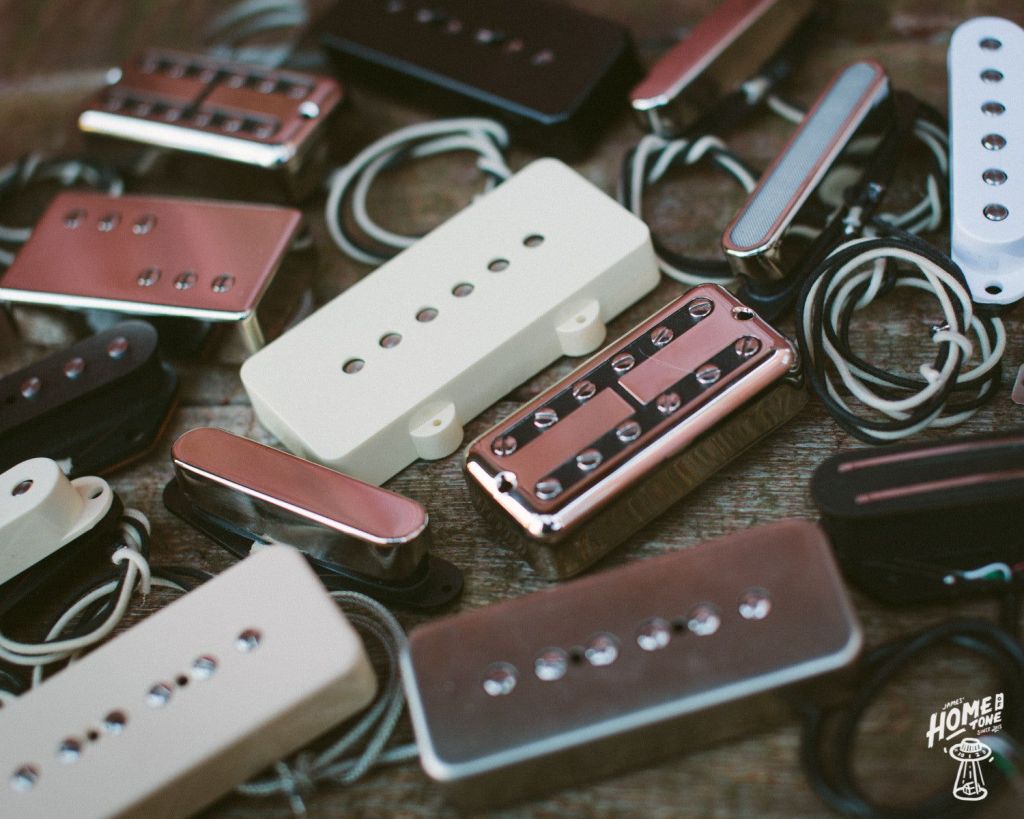
After amplification, the second most crucial factor affecting the sound of an electric guitar is the pickups. These devices, magnets wrapped in wire, convert the vibration of the guitar’s strings into an electrical signal to send onwards in the chain.

Image credit: http://www.homeoftone.co.uk

I have spoken in earlier posts about the differences in pickup type and how some may be more versatile than others (see the articles in question here and here), but to sum up, keep in mind these basic points:

– The lower the output of a pickup is, the cleaner it will sound as you increase volume
– Humbuckers can handle higher-gain settings with much less extraneous noise (hence the name, a reference to their hum-cancelling qualities)
– Different types of pickups will naturally sound different (i.e., those made with individual magnet ‘slugs’ for each string, as opposed to ceramic bars which run the length of the pickup); do plenty of research before you commit to buying!

Volume

As hinted at above, some pickups will retain their ‘natural’ tone more easily than others, depending on their strength. However, in many cases, judicious use of the volume control(s) on your guitar can help find the sweet spot in terms of sound. Unless there is a treble-bleed circuit installed within the circuitry of your guitar, most pickups lose a little top end as the volume is turned down. I find that rolling back the master volume on my Strats to around 7 or 8 takes out some of the harsher treble frequencies for a nicer, more rounded-out sound. It also leaves a little headroom to boost your volume and cut-through for lead lines.

Similarly, turning down the gain on the front end of an amp or overdrive pedal can allow for a cleaner sounding boost instead. On a pedal like a Tubescreamer (or the many brilliant clones available), turning down the gain allows you to use the volume to amplify the tone of your guitar/pickups without colouring it too much – and a cleaner sound usually cuts through more effectively than drenching your tone in distortion. Listen to those classic Led Zeppelin and Deep Purple records, and notice how there is surprisingly little distortion on the guitar most of the time. The power comes from the volume.

Strings

We’ve now reached one of the cheapest things which affects the sound of your guitar: strings.

Generally speaking, most people experiment with different thicknesses and brands when starting out as a guitarist, eventually settling on the ones which feel most comfortable under their fingers and break as infrequently as possible. But not all strings are alike. Their material (usually a type of metal or alloy) and various coatings have an effect on how the string vibrates, and therefore how it transfers sound to the pickups. Also, a strings that feel different will result in us adjusting the way we play, perhaps without meaning to.

Image credit: ErnieBall.com

Many guitarists used to believe that thicker strings meant more tone. Think of Stevie Ray Vaughan’s gauge 13 strings and the huge bluesy tone he achieved. Yet also bear in mind that the Texan guitarist used heavy strings because he had large hands and and had developed a heavy-handed playing style; he used thicker strings to try and keep them from snapping all the time (and there’s lots of evidence from live footage of his performances to suggest he wasn’t entirely successful in this aim). Foe a while, I had one of my Strats set up with gauge 11 strings and down-tuned a half-step to Eb (as I have been told the late, great Jeff Beck used to do). This was largely a practical setup for the band I was working with at the time, but any guitar players believe doing this allowed the thicker strings to vibrate a little more ‘loosely’, which led to an improvement in tone. I can’t say I noticed much of a difference in the heat of a live show.

As a counter argument, B.B. King and Billy Gibbons used gauge 8 strings, and still managed to achieve great sounds from their instruments. For Gibbons, this may have been down to the famous ‘pearly gates’ humbuckers on his Les Paul, as well as his amplifier tone. As for the King of the Blues…

Fingers (and picks)

B.B. King would have sounded like B.B. King on any guitar. Indeed, Jeff Beck, Jimi Hendrix, Jimmy Page did always manage to sound uniquely like themselves on any guitar they played. The same can be said of virtually any famous guitarist you can think of, and indeed the rest of us. Why? Fingers.

The most overlooked area affecting the tone of your guitar (and following the rough cost-order of this list, the cheapest!) is the parts of your hands which make contact with the strings and create the sounds in the first place. This goes for either hand, but the fretting hand is the one which is holding the strings and notes in place.

Obviously, there can be a huge difference between picking with your fingers or using a plectrum, and the type of material you use for picks should be taken into account and experimented with until you find what works best for you. However, for your fretting hand, there’s not much we can do to change how this affects the sound overall. The good news is, that’s okay! You have been using the same hands since first picking up the instrument and your sound will always take this into account, if you didn’t realise you were doing it. Embrace who you are! Also, as your fingers are the first stage in the ‘sound chain’, there’s plenty of ways to change the sound as we go through pickups, effects, amps, etc… Take some time to explore the huge range of options and see what works for you!

One engineer’s breakdown of the factors that go into guitar tone. Do you agree? Image credit: http://www.stevenmeloneyrecording.com

Final thoughts

From all of the elements described above, which one would I single out as the most useful for tone shaping? That’s a tough call, and ultimately a very subjective topic. However, for me, I think volume is the most underrated element in the signal chain, and one I’ve taken years to master in terms of my own guitar sound and playing.

In my early days of playing guitar, I sometimes strove to change the sound of my guitar tone, frustrated that I could only go so far without seriously reprocessing the sound into something which might end up sounding synthetic. Yet as I performed live more often, I noticed that out of all of the comments people would make to me about my playing, tone was only ever mentioned in a positive light (the same could not be said for technique, unfortunately). Records capture faithful reproductions of the sounds I started with when tracking them. No one has ever said I have a bad tone. The only person who (sometimes) wanted to change it was me.

One of my modified Stratocasters

Maybe guitar players worry about this too much? Maybe we’ve been conditioned to overthink our tone because it serves the interests of the musical instrument industry? Thousands of companies, from instrument makers to amplifier manufactures, and creators of effects or inventors of accessories, rely on our need for more gear, to finally find that one product that will fix the problem in our sound. But it rarely does. Luckily, there’s always another thing to buy…

I’m sometimes prone to this line of thinking too. That’s the side-effect of living in a capitalist economy, I suppose. I’s never been easier to get purchase anything we need, but we have to be careful not to lose ourselves in the process, and hold on to the simple joy of music-making which got us started in the first place. I came to be happy with the sounds I produce from my fingers. I think it’s had a positive effect on the music I create. It can do the same for you too. Just remember to pay attention to the various stops along your signal chain to ensure everything is working in the best possible way for your sound, and you won’t go far wrong.

One to rule them all – which guitar is the best all-rounder?

Guitars & Gear

I an article earlier this year, I weighed-up which two guitars in my collection would be the ultimate top two – the two I could take along to any gig any be comfortable they would cover (almost) any style of music being played. This is especially useful for me at studio dates, where surprise requests can often occur, and I don’t usually have capacity to take my entire guitar collection along to every session!

In the end, after examining different types of guitar (differentiated largely by their pickups), I concluded that – for me – one of my Stratocasters and a p90-type guitar (in my case this Gould Stormbird) made a winning combination in terms of tones and range of genres. With these two, I could cover everything from jazz and funk to classic rock and noisy indie, and everything in-between.

But what if you could only take one guitar out? Which one would it be?

In the original post, I sang the praises of the 335-type guitar, which only just missed out on making it into the ‘top two’. I love my own 335 copy, but I felt more confident taking a Strat to a gig with multiple (or unknown) genres on the go, mainly because the single-pickup solid body cleans up better, is far less prone to feedback onstage (especially when playing heavier styles), and offers more tonal options. Also, I think the fact that I’ve played Strats since I was sixteen likely played a part in my thought process. I sometimes take a job where I don’t know exactly what I’ll be asked to play until I arrive, so familiarity with an instrument I trust is crucial.

However, I might have been a little unfair to the 335, and feel like I’ve changed my opinion in the last few months. I’ve certainly been using one as my main guitar for 80% of my gigs this year so far, and it performed perfectly at my most recent studio bookings – but would I be happy with it as my only guitar for any gig?

Let’s look at the three types of guitar by pickup type again, with a summary of what I use them for, as well as a few examples of where I use them professionally.

Single-coil solid body guitars (Strat, Tele, Danelectro, etc)

Classic guitar tones – bright and clear with lots of twang or spank to their sound
Sound great overdriven, but retain some of their original character
Sit well in a mix with other instruments/guitars
Reliable, solid instruments which are easy to mod
Perfect for: pop, funk, country, blues, rock, indie
Can be noisy, especially in high-gain settings

P90 solid body guitars (Stormbird, Some PRS models, some Teles, etc)

Beefed-up version of a classic single-coil sound
Beautifully warm, yet still clear, distorted sound
Great ‘best of both worlds’ between a single-coil and humbucking pickup
Covers most styles (but volume has to be rolled back slightly for cleaner sounds)
Can be very noisy in certain settings

Humbucker solid body guitars (Les Paul, SG, PRS)

The classic overdriven guitar sound, warm but aggressive
Warm, full sound for jazz (with the volume rolled back a little)
Perfect for: Rock of all types, jazz and blues
Not as good as single-coils for those iconic glassy clean sounds

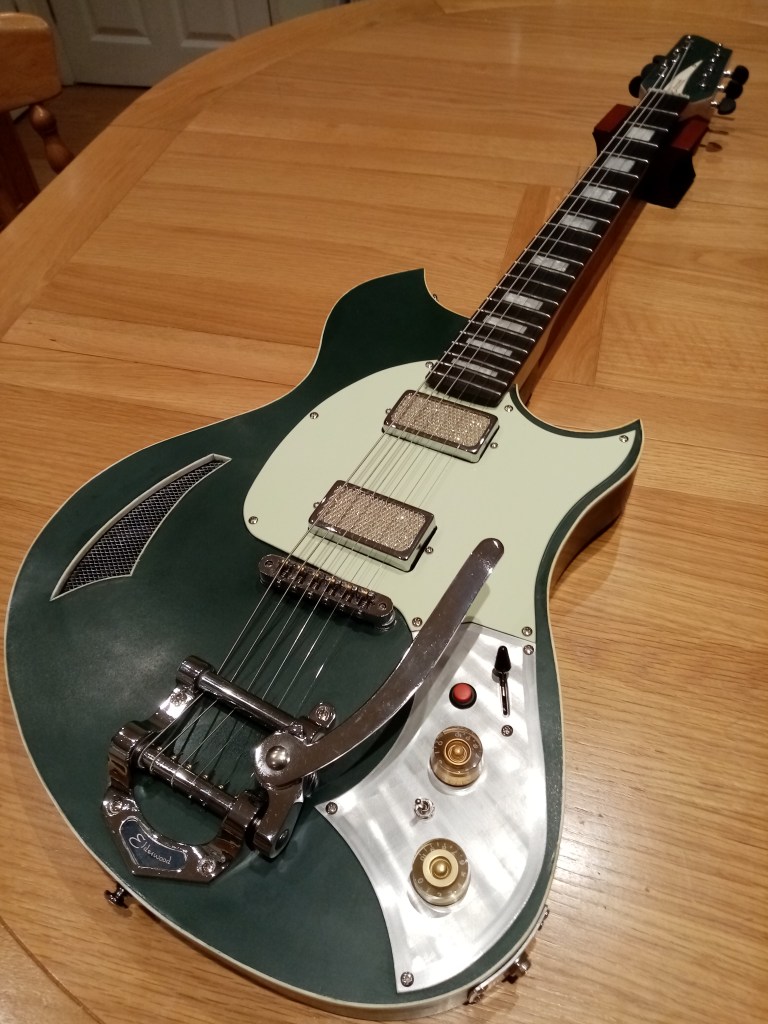
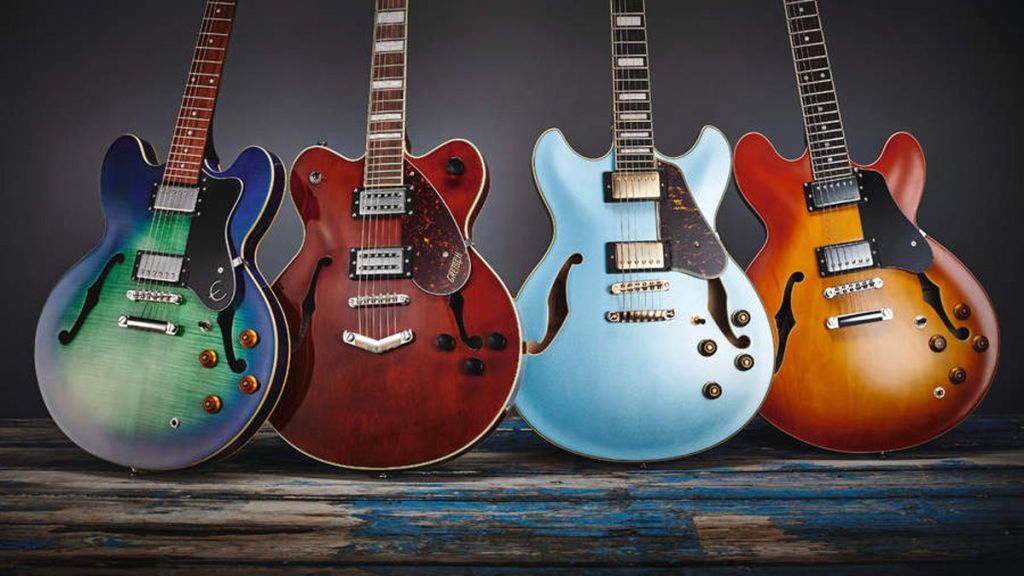
Humbucker semi-hollow guitars (335, Elderwood, etc)

A humbucking guitar with a slightly airier sound
Lighter than a Les Paul (to save your poor back!)
Capable to playing most styles imaginable
Perfect for: jazz, funk, soul, blues, classic rock
Neck & Bridge pickups together gives a wonderful funk tone
Prone to feedback onstage, especially in higher-gain settings

Picture credit: Music Radar

Final thoughts

Which would I choose? I still couldn’t say for certain. It depends so much on the gig in question, but if I wasn’t sure what I was going to asked to play, I expect it would be the Strat or the 335 I’d be reaching for. I guess it comes down to a choice between a solid body or (semi) hollow bodied guitar; whether I’m seeking the thicker snap of the Strat, or the airier sound of the 335.

And of course, bear in mind that we’ve only been discussing electric guitar options here – if I was really unsure about the requirements for a studio date, I’d have an acoustic packed into the car too!

But what about you? Obviously, what works for me doesn’t necessarily work for everyone, which is why I’d love to hear your thoughts – get in touch!

Music & Wellbeing (Part 3): Music Therapy – a brief introduction

Music Therapy

Music Therapy

As a practice, music therapy sits somewhere between art, therapy, healthcare, and psychoanalysis; it ‘invites the art, science and craft of music and healing’ (Pavlicevic, 1999, p. 141). Its practice has been proven as having a ‘huge impact on confidence, and therefore improved wellbeing’ (Therapy Today, 2011, p. 5). Besides more common associations with mental health and children with special needs (SEN), music therapy has also proved to be of benefit on a much wider scale, including, amongst other areas, ‘physical impairments, people with hearing and visual problems, the institutionalised elderly, and people in the criminal justice system’ (North & Hargreaves, 2008, p. 298-299).

Within the field of music therapy, there is a history of deploying music to ‘alleviate chronic psychological disorders and problems associated with long-term physical impairment’ (North & Hargreaves, 2008, p. 298). There is evidence of music-based practices dating back prior to the beginning of recorded history. Being centered on music makes it one of the most accessible forms of treatment in terms of engagement:

Everyone has the ability to respond to music, and music therapy uses this connection to facilitate positive changes in emotional wellbeing and communication through the engagement in live musical interaction between client and therapist (British Association for Music Therapy)

The idea of creating music ‘out of thin air’ might seem like an alien concept to some. However, the process of music therapy sessions is to create something out of the patient’s feelings, situation and environment, with the assistance of the therapist (Williams, 2014). In the context of a music therapy session, there are ‘no ‘right’ and ‘wrong’ notes: all are part of possibility.’ (Pavlicevic, 1999, p. 143) Improvisation between therapist and client is key to allowing the client to experience music as a positive means of therapy:

Music therapy allows people to discover for themselves what is going on underneath, as well as allowing them to express repressed emotions or memories. If verbal communication has shut down, as with autism or stroke, it has a huge impact on a person’s confidence, which in turn affects every aspect of their life (Angela Harrison, quoted in Therapy Today, 2011, p. 5)

Just as the act of talking, or indeed writing, about one’s personal experiences can be seen as therapeutic and empowering (Newham, 1999, p. 32), so too can singing about it (Stige et al, 2010; Harrison, 2006). Due to the connections music makes with the brain and emotions, singing as a means of therapy can be seen to be even more cathartic:

To fill our memories with emotion requires us to use the full range of our voice to express the full range of feelings. And nowhere do we witness such a use of the voice more intensely than in the art of singing (Newham, 1999, p. 59)

Community Music Therapy

Such feelings of catharsis and empowerment which music therapy can provide are also useful in the context of a community. One’s place in their community has an effect on their overall wellbeing (Venkatapuram, 2013). According to Feld (1994, p. 77), ‘music has a fundamentally social life. It is made to be engaged – practically and intellectually and communally’. I agree that the main purpose of music is as a shared form of communication, much as it has been considered a language throughout history (Thaut, 2005, p. 171). This language reaches us at a level of understanding deeper than verbal communication (Harrison, 2006).

According to the National Health Service (2006) there are five evidence-based steps we can take to improve mental wellbeing:

  • Get active
  • Connect with others
  • Keep learning
  • Be aware of yourself and the world
  • Give to others

(National Health Service, 2006)

I believe that the practice of community music therapy covers all five of these points, through a variety of styles. Modes of practice, including music workshops, which act to ‘foster active and collaborative music making’ are therefore an excellent way of fostering better community wellbeing (Higgins, 2012, p. 144). Harrison (2006) believes the power of singing lies in its power to move other human beings; its ‘transformative qualities’; the way it can allow others unable to sing to feel cathartic benefits through empathic listening (2006, p. 24). I am inclined to agree with this view. I believe this element of music therapy has in fact the most potential to affect overall wellbeing, through its inherently inclusive and group-based nature. Participants, in making music with others, can experience ‘one of life’s greatest pleasures’ (Green, 1986, p. 69).

Further examples highlight to me that community music therapy might be better thought of in more broad terms, such as ‘care’ and ‘service’ (Stige & Aarø, 2012, p. 14) Like Stige & Aarø (2012), I believe it represents a group musical ‘service’ which takes place outside of the private, confidential, one-on-one setting of the traditional music therapy session. It is a means of bringing the community, and neighbouring communities, together through local music-based activities, the kind of which I have witnessed throughout my life in one form or another, without ever having identified them as ‘therapy’. These activities can take place in ‘arts centers [sic], schools, prisons, health settings, places of worship, festivals, on the streets, and in a wide range of community contexts’ (Higgins, 2012, p. 174). They can be said to be having a beneficial effect on the wellbeing of the community, and therefore the individuals within those community groups (Choi, Lee & Lim, 2008).

Music Therapy & Dementia

The term dementia, generally associated with old age or degenerative neurological diseases, is displayed as memory loss and difficulties with thinking, problem-solving or language, the most common form of which is Alzheimer’s Disease (Alzheimer’s Society). Alzheimer’s is characterised by changes in nerve cells and neurotransmitter levels, as well as destruction of synapses (Levitin, 2006, p. 231). In many cases, short term memory is largely absent, creating frustration among patients (Pavlicevic, 1999, p. 130). However, music therapy has proven to be of enormous positive effect in improving the wellbeing of Alzheimer’s patients (Lee & Thyer, 2013; Stige et al, 2010). Levitin goes on to report an interesting observation in the musical memory of Alzheimer’s patients:

As the disease progresses, memory loss becomes more profound. Yet many of these old-timers can still remember how to sing the songs they heard when they were fourteen. Why fourteen? Part of the reason we remember songs from our teenage years is because those years were times of self-discovery, and as a consequence, they were emotionally charged; in general, we tend to remember things that have an emotional component because our amygdala and neurotransmitters act in concert to ‘tag’ the memories as something important (Levitin, D. 2006, pp. 231-232)

Music’s innate ability to hone in on these ‘tags’ seems to almost reverse the symptoms of dementia for a brief time; play or sing a song from their past and they are once again ‘present’ (Sacks, 2008, p. 377). The practise of community music therapy has also been seen to have a positive effect in regards to Alzheimer’s patients, due to the added social factor involved (Stige et al, 2010, p. 266).

Music as alleviation to anxiety and depression

The frustration experienced by many people with dementia can often lead to frustration and agitation (Clare, 2004). While research on the subject is limited, music therapy has been proven as a noticeably effective, low-cost, non-pharmacological intervention (Blackburn & Bradshaw, 2014). Music-based interventions have yielded positive results in easing depression among adults without dementia (Chan et al, 2012). Occasionally studies note reduced anxiety as a by-product of alleviating another condition (Hargreaves & North, 2008).

There has been found to allow improvements to self-esteem and reduced depression in children and adolescents with behavioural and emotional problems, which were sustained over a prolonged period (Therapy Today, 2014, p. 6). One particular advantage of music therapy over talking therapies is that younger people seem more open to participation:

The most popular activity was song-writing or writing their own lyrics to music, which seemed to benefit their ability to communicate their feelings more generally, she said. Nearly all — 97 per cent — chose to write autobiographically about how they were feeling, where they were at. This age group tend to find talking therapies slightly more challenging but our psychology colleagues tell us that, as a result of the music therapy, these children are more open to engaging with them in their sessions and more able to express how they were feeling. (Therapy Today, 2014, p. 6)

The level of effectiveness music has in relieving stress varies ‘according to age, the type of stress in question, the means by which the music was used, the listener’s musical preference, and their prior level of music experience’ (Hargreaves & North, 2008, p. 307). This brief overview highlights to me that music therapy is of intrinsic value to our wellbeing. As well as the areas mentioned above, music therapy has seen measurable success relieving anxiety in a variety of settings (Hargreaves & North, 2008). It is also useful in treatment as therapy for drug and solvent abuse (Oklan & Henderson, 2014; Silverman, 2009).

(This article was first published in June 2015)

REFERENCES

Alzheimer’s Society (2015) What is Alzheimer’s disease? Available at: http://www.alzheimers.org.uk/site/scripts/documents_info.php?categoryID=200171&documentID=100&gclid=CI_j59OHv8UCFYgIwwodCqUAPA (Last accessed: 06/05/2015).

Blackburn, R., & Bradshaw, T. (2014) ‘Music therapy for service users with dementia: a critical review of the literature’, Journal of Psychiatric & Mental Health Nursing, Vol. 21, No. 10, pp. 879-888. Available from: 10.1111/jpm.12165.

British Association for Music Therapy (2012) What is music therapy? Available at: http://www.bamt.org/music-therapy/what-is-music-therapy.html (Last accessed: 12/05/2012).

Chan, M., Wong, Z., Onishi, H., & Thayala, N. (2012) ‘Effects of music on depression in older people: a randomised controlled trial’, Journal of Clinical Nursing, Vol. 21, No. 5/6, pp. 776-783. Available from: 10.1111/j.1365-2702.2011.03954.x.

Choi, A., Lee, M., & Lim, H. (2008) ‘Effects of group music intervention on depression, anxiety, and relationships in psychiatric patients: a pilot study’, Journal of Alternative & Complementary Medicine, Vol. 14, No. 5, pp. 567-570. Available from: 10.1089/acm.2008.0006.

Clare, M. (2014) ‘Soothing sounds: reducing agitation with music therapy’, Nursing & Residential Care, Vol. 16, No. 4, pp. 217-221.

Feld, S. (1994) ‘Communication, music, and speech about music’, in Keil, C. & Feld, S. (eds.) Music grooves: essays and dialogues. United States of America: The University of Chicago Press, pp. 77-95.

Green, B. (1986) The inner game of music. United States: Pan Books.

Harrison, P. (2006) The human nature of the singing voice: exploring a h basis for sound teaching and learning. Great Britain: Dunedin Academic Press.

Higgins, L. (2012) Community music: in theory and in practice. United States: Oxford University Press.

Lee, J., & Thyer, B. (2013) ‘Does Music Therapy Improve Mental Health in Adults? A Review’, Journal of Human Behavior in the Social Environment, Vol. 23, No. 5, pp. 591-603. Available from: 10.1080/10911359.2013.766147.

Levitin, D. (2006). This is your brain on music: understanding a human obsession. Great Britain: Atlantic Books.

National Health Service (2006) Wellbeing self-assessment. Available at: http://www.nhs.uk/Tools/Pages/Wellbeing-self-assessment.aspx (Last accessed: 11/05/2015).

Newham, P. (1999) Using voice and song in therapy: the practical application of voice movement therapy. United Kingdom: Jessica Kingsley Publishers.

North, A. & Hargreaves, D. (2008) The social and applied psychology of music. United States: Oxford University Press.

Oklan, A., & Henderson, S. (2014) ‘Treating inhalant abuse in adolescence: A recorded music expressive arts intervention’, Psychomusicology: Music, Mind, and Brain, Vol. 24, No. 3, pp. 231-237. Available from: 10.1037/pmu0000058.

Pavlicevic, M. (1999) Music therapy: intimate notes. United Kingdom: Jessica Kingsley Publishers.

Sacks, O. (2008). Musicophilia: tales of music and the brain. 2nd Edition. United Kingdom: Vintage Books.

Silverman, M. (2009) ‘A descriptive analysis of music therapists working with consumers in substance abuse rehabilitation: Current clinical practice to guide future research’, The Arts in Psychotherapy, Vol. 36, pp. 123-130. Available from: 10.1016/j.aip.2008.10.005.

Stige, B., Ansdell, G., Elefant, C. & Pavlicevic, M. (2010) Where music helps: community music therapy in action and reflection. Great Britain: Ashgate.

Stige, B. & Aarø, L. (2012) Invitation to community music therapy. United Kingdom: Routledge.

Thaut, M. (2005) ‘Rhythm, human temporality, and brain function’, in Miell, D., MacDonald, R. & Hargreaves, D. (Eds.) Musical communication. United States: Oxford University Press, pp. 171-191.

Therapy Today (2011) ‘NHS urged to pay for music therapy to cure depression’, 2011, Therapy Today, Vol. 22 (No. 7), p.5.

Therapy Today (2014) ‘Music therapy helps beat depression’, (2014) Therapy Today, Vol. 25, No. 9, p. 6.

Venkatapuram, S. (2013) ‘Subjective wellbeing: a primer for poverty analysts’, Journal of Poverty & Social Justice, Vol. 21, No. 1, pp. 5-17. Available from: 10.1332/175982713X664029.

Williams, T. (2014) ‘A journey to music therapy’, Exceptional Parent, Vol. 44, No. 4, pp. 30-32.

Music & Wellbeing (Part 2). I feel good: Music and feelings of pleasure

Music Therapy

Continuing this mini-series on the the value of music in our wellbeing, today’s post examines how and why we feel pleasure upon hearing music.

I feel good: Music and feelings of pleasure

A number of studies on the human brain have noticed our ability to differentiate between ‘noise’ and ‘music’. Listening to music uses the same areas of the brain as when processing speech. (Schön et al, 2010). Music also activates sections of the brain responsible for pleasurable feeling (Salimpoor et al, 2015), known colloquially as the ‘reward centres’ of the brain (Icahn School of Medicine, 2015). Salimpoor et al’s (2015) report confirmed:

Not only is dopamine released when desirable sound events are heard, but also suggest that musical events leading up to peak pleasure moments may generate a sense of anticipation and lead to dopamine release when individuals listen to familiar music (Salimpoor et al, 2015)

Levitin goes on to explain activity in the cerebellum during his studies:

In my laboratory we found strong activations in the cerebellum when we asked people to listen to music, but not when we asked them to listen to noise. The cerebellum appears to be involved in tracking the beat. And the cerebellum has shown up in our studies in another context: when we ask people to listen to music they like versus music they don’t like, or familiar music versus unfamiliar music (Levitin, 2006, pp. 174-175)

Is timing the key difference between what makes the sounds we hear ‘noise’ and ‘music’? Schaffer (1977) reasons that the modern human, having grown up in an industrialised world, has what he refers to as ‘lo-fi hearing’. In effect, we are tuning out all of the everyday noise our environment bombards out ears with on a daily basis. A person from a time before the growth of large cities and the industrial revolution had higher definition hearing. This may also be in part due to our earlier need to rely on bird and animal calls as a means of hunting for food or for our own safety – in both cases, essential to our survival:

It can be argued that the survival of our ancient ancestors depended on their ability to detect patterns in sounds, derive meaning from them, and adjust their behaviour [sic] accordingly (Juslin, 2013)

Furthermore, Keil (1994, p. 97) refers to the social aspect of music utilised by our ancestors, stating that everyone would have been a full participant in music rituals staged by early civilisations. These participatory rituals promoted a greater interconnectedness with nature, society and an ‘ever deeper and more satisfying knowledge of who we are’ (Keil, 1994, p. 98).

Kania (2013) discusses the ‘aesthetic’ definition of music put forward by Jerrold Levinson (1990), who asserts that music is a collection of sounds, deliberately organised, with the aim of ‘eliciting a certain kind of heightened experience’ (Kania, 2013, p. 639). However, Kania believes music is more than this, finding one hole in Levinson’s argument in particular:

If you think, however, that a lullaby sung to put a baby to sleep is an example of music, then it is a counterexample to this definition, since the singer intends precisely the opposite of active engagement on the baby’s part (Kania, 2013, p. 639).

The research of Salimpoor et al (2011) found that ‘Music, an abstract stimulus, can arouse feelings of euphoria and craving’ and that during their tests, ‘we found endogenous dopamine release in the striatum at peak emotional arousal during music listening’. This illustrates the positive effect music has on the human mind’s neural pathways, resulting in a general feeling of wellbeing (Salimoor et al, 2011). However I argue that such studies don’t take into account the huge array of external factors our brains process at the same time as listening to music. Previous existing research also states the need to consider external factors and the wider social context of the subjects (Anders et al, 2012;North & Hargreaves, 2008; Mitchell et al, 2007), or, as Kieran (2013) puts it:

The pleasures afforded by sport, coffee drinking and good conversation are not wholly specifiable independently of the nature of the objects or activity involved…So too with good art generally. (Kieran, 2013, p. 290)

(This article was first published in June 2015)

REFERENCES

Anders, Y., Rossbach, H., Weinert, S., Ebert, S., Kuger, S., Lehrl, S., Von Maurice, J. (2012) ‘Home and preschool learning environments and their relations to the development of early numeracy skills’, Early Childhood Research Quarterly, Vol. 27, pp. 231–244. Available From http://dx.doi.org/10.1016/j.ecresq.2011.08.003.

Icahn School of Medicine (2015). Brain reward pathways. Available at: http://neuroscience.mssm.edu/nestler/brainRewardpathways.html (Last accessed: 24/04/2015).

Juslin, P.N. (2013) ‘Review: From everyday emotions to aesthetic emotions: Towards a unified theory of musical emotions’, Physics of Life Reviews, vol. 10, pp. 235-266. Available from: 10.1016/j.plrev.2013.05.008.

Kania, A. (2013) ‘Music’, in Gaut, B. & McIver Lopes, D. (eds.) The routledge companion to aesthetics. 3rd Edition. USA & Canada: Routledge, pp. 639-648.

Keil, C. (1994) ‘Participatory discrepancies and the power of music’, in Keil, C. & Feld, S. (eds.) Music grooves: essays and dialogues. United States of America: The University of Chicago Press, pp. 96-108.

Kieran, M. (2013) ‘Value of art’, in Gaut, B. & McIver Lopes, D. (eds.) The routledge companion to aesthetics. 3rd Edition. USA & Canada: Routledge, pp. 289-298.

Levitin, D. (2006). This is your brain on music: understanding a human obsession. Great Britain: Atlantic Books.

North, A. & Hargreaves, D. (2008) The social and applied psychology of music. United States: Oxford University Press.

Salimpoor, V., Benovoy, M., Larcher, K., Dagher, A. & Zatorre, R. (2011) ‘Anatomically distinct dopamine release during anticipation and experience of peak emotion to music’. Nature Neuroscience. Vol. 14 (No. 2, February), pp. 257-264.

Salimpoor, V., Zald, D., Zatorre, R., Dagher, A., & McIntosh, A. (2015) ‘Review: Predictions and the brain: how musical sounds become rewarding’, Trends in Cognitive Sciences, vol. 19, pp. 86-91. Available from: 10.1016/j.tics.2014.12.001.

Schafer, R. (1977) The soundscape: our sonic environment and the tuning of the world. USA: Destiny Books.

Schön, D., Gordon, R., Campagne, A., Magne, C., Astésano, C., Anton, J., & Besson, M. (2010) ‘Similar cerebral networks in language, music and song perception’, Neuroimage, vol. 51, pp. 450-461. Available from: 10.1016/j.neuroimage.2010.02.023.

Harley Benton HB-35 Plus Top Semi-hollow Guitar Review

Guitars & Gear

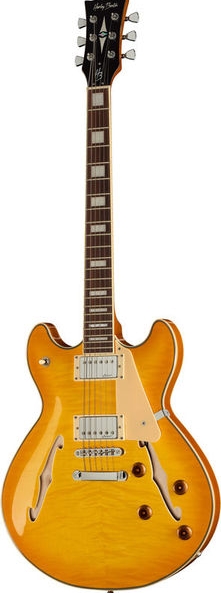
At the end of last year, I acquired a new second-hand guitar. It even shipped with a hard case included as part of the sale! The guitar in question is a budget 335-style copy, made by Harley Benton, the in-house grand for the German musical instrument retailing giant Thomann. Or rather, I should say the Harley Benton HB-35 Plus

What does plus mean?

Harley Benton already have the HB-35, their budget version of a 335-style guitar. Selling for just £175, they get good reviews and are an affordable way to try out Semi-hollow guitars for the first time. The HB-35 Plus retails at approximately £220 new, but has features which mark it out as a considerable upgrade on it’s cheaper sibling.

So what does that extra £45 get you? Block inlays, for a start, which look very classy. You also get more specialised vintage-voiced humbucking pickups (which can be split for a single-coil sound) and an arched maple top (hence the plus top moniker) in fancier colour options, such as the lemon drop colour reviewed here.

Image from Harley Benton’s website – note the original placement of the pickup selector

I love this colour, which appears more of a light orange-yellow to my eyes.

Furthermore, it seems that the nut is slightly more narrow (42mm to the original HB-35’s 43mm) and a slightly more curved fingerboard (12″ radius, compared to the older model’s 13.5″ or thereabouts), making this guitar feel a little more like the classic ‘jazz boxes’ of old.

Specifications & build quality

Having bought this guitar from another player, I received an instrument which had already been set up, and indeed, modified. This means I don’t know how this guitar would have arrived ‘from the box’, although I hear that like most guitars, a simple set up would be enough to get it in shape.

The guitar I received felt well balanced across the fretboard and is really comfortable to play. The classic Gibson scale length feels familiar and the neck is comfortable in my hand. In fact, it feels like they have copied the dimensions of the classic 335 very closely, which is no bad thing.

What’s more, the previous owner had moved the pickup selector switch from the top shoulder (where you would find it on a Les Paul) to a sit with the other controls, which is much more typical on a 335-style guitar. The only negative is that the original hole is still there (it was covered with a giant sticker when it arrived, which I quickly and carefully removed).

Here are the full specs of the guitar, according the Harley Benton:

  • Semi-hollow design with mahogany sustain block (Entandrophragma cylindricum)
  • Maple body with AAAA flamed maple archtop
  • Set-in maple neck
  • Pau Ferro fretboard with block fretboard inlays
  • Fretboard radius: 12 inches
  • 22 medium jumbo Frets
  • Scale: 24.75 inches
  • Nut width: 42 mm
  • 2 Roswell LAF Alnico-5 vintage-style humbucker pickups
  • 2 Volume controls with push/pull function for split coil
  • Individual tone controls for each pickup
  • 3-Way pickup toggle switch
  • Tune-O-Matic bridge

The main thing on my list to change, and indeed the only upgrade I feel this guitar needs, is to swap the plastic nut for one made of bone. I’ll probably get round to doing this later in the year, and for now it’s working fine and holding its tuning well.

How does it sound?

Before even plugging into an amp, this guitar sounds good (and surprisingly loud) completely acoustic, which is useful for playing at home.

Plugged in – it sounds exactly as a 335 should.

Played clean, single notes and chords ring out loud & clear, sounding even across the entire fretboard. The pickups, combined with the tone controls, allow for everything from jazz and blues to soul, pop, country and an almost Gretsch-like Chet Atkins vibe. Using the push-pull volume to split the humbuckers down to single-coils beings out an airier version of a Telecaster sound.

Throwing a little overdrive in makes this a very enjoyable guitar to play. As well as offering grittier takes on all the styles and sounds mentioned above, you also get some of the best classic rock tones out there. Add more distortion and it continues to sound very good and play incredibly well. The semi-hollow body allowing gentle feedback which helps add to note sustain.

Putting the HB-35+ through it’s paces at home

This guitar not only took any style I threw at it in its stride, but excelled across the board, even in higher-gain settings. Admittedly, I don’t play the more extreme metal genres, but even then, if you can work out the likely feedback issue, I have a feeling this guitar would surprise you…

Does it hold up well at live shows?

Since acquiring this guitar at the end of autumn last year, I’ve gigged it pretty regularly. It performed brilliantly when I put it through its paces at a recent soul review show, covering Steve Cropper style licks and jazzier solos and choral work. With one of my main covers acts, this quickly became my first choice guitar, covering everything from jangle and early 60s pop to classic rock, punk and Britpop, all in the space of one show. It is comfortable both to play and also to wear standing up for two hours.

Ask most professional session guitarists what the best ‘cover all bases’ guitars are, for studio work and live, and they will probably tell you to have a 335 handy. Obviously, this applies to any decent 335-style guitar, if not the gold standard Gibson original. But it certainly makes sense to snap up this significantly cheaper tribute, especially when it looks classy sounds fantastic and plays so well. It may be that they take a little post-purchase work to reach the decent playing standard I seem to have, but in my opinion, it’s worth it.

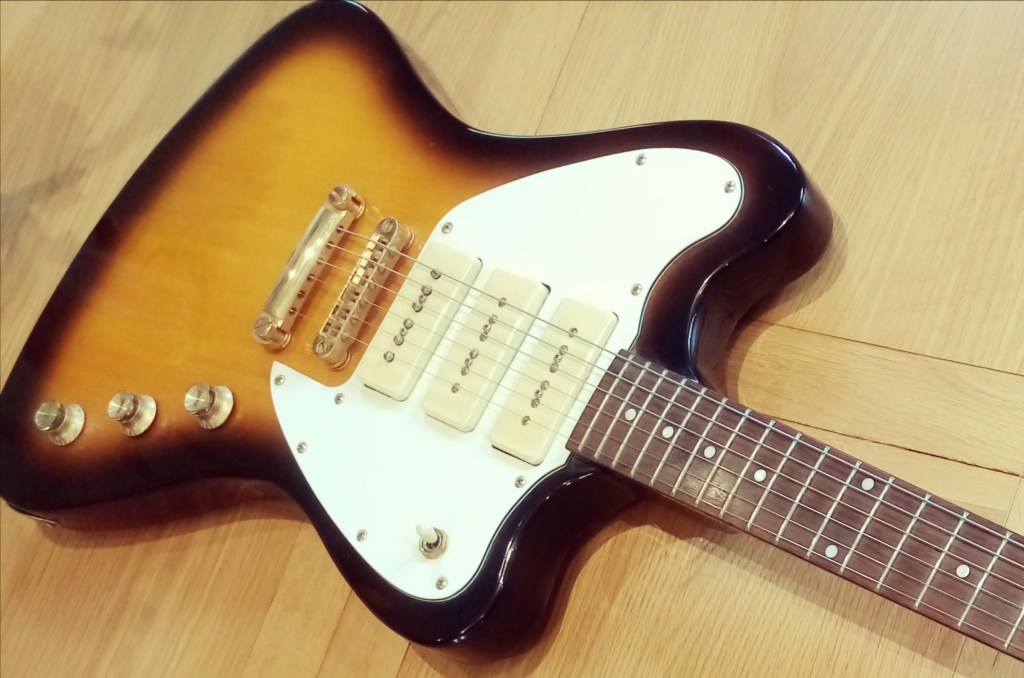
This guitar is quickly becoming a firm favourite in my small stable of electric guitars (which includes Stratocasters, a triple P90 non-reverse Firebird copy, and my other, less traditional semi-hollow). In fact, it’s already become my main guitar for covers gigs, playing weddings and corporate functions.

Final Thoughts

This guitar surprised me. I’d heard really good things about Harley Benton, but I still wasn’t prepared to be blown away as much as I was by this guitar. I’ve used it in various settings and with several different acts in the last couple of months, covering styles from Kuti to Kasabian and BB to The Buzzcocks, and I’m very impressed with how it’s handled everything I’ve thrown at it.

Nowadays, the term ‘budget guitar’ doesn’t mean the same as it did twenty or even ten years ago, and shouldn’t arouse the kind of stigma which cling to those older, poorly constructed guitars. The quality on this instrument is very high, and I can’t stress enough just how fantastic those Roswell pickups sound!

After years (decades, even) of using Stratocasters as my main go-to guitar while others have come and gone from my collection, I might have found another guitar that I love just as much. I might even have to buy another of these, just in case something happens to this one – which at this price point, is an affordable prospect.

Highly recommended. Go and give one a try now.