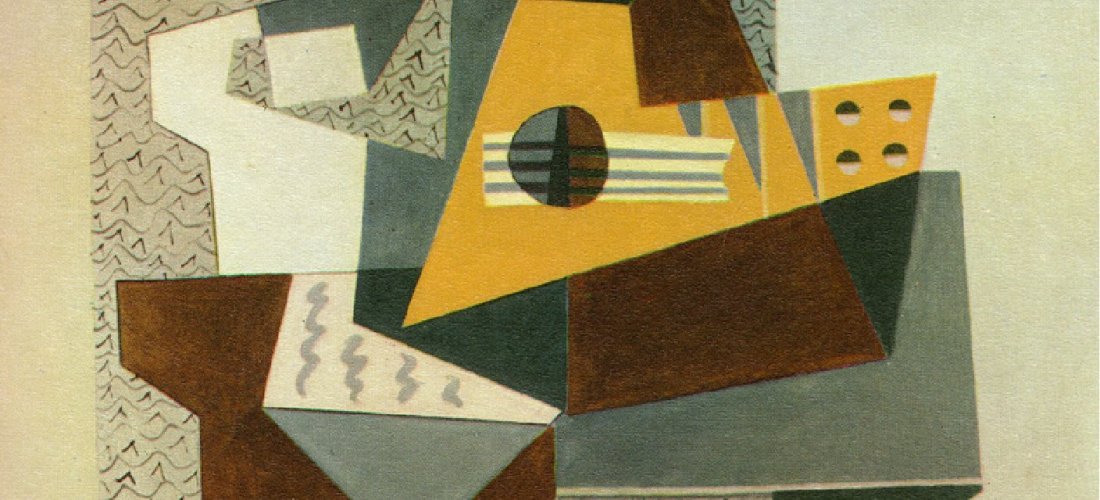
The abstract movement in early 20th century art often seemed to use stock figures, and the guitar seems to come up frequently. I believe artists used the familiar and sensual (in the feminine form of the curves), shape of the guitar because it was easy to recognise. Artists could therefore demonstrate their own interpretation of the instrument’s form in order to encourage the viewer into looking at these forms & shapes in new ways.
I’ve always loved the early abstract takes in the guitar, so I thought I’d share a few of my favourites here. I have also included some of Kandinsky’s attempts to capture the spirit of music – that is, the essence of music, rather than the mechanics or energy of live performance – in his abstract works across a career spent exploring shape, colour & form.
It should go without saying (but I will anyway) that these examples are my personal favourites, and I am not attempting to create an exhaustive catalogue of every . possible example.
Picasso & Gris
Pablo Picasso (1881-1973) may be one of the most well-known artists of the 29th century, if not all time. He often used repeated motifs, such as bulls, doves, the human form and of course, the guitar.
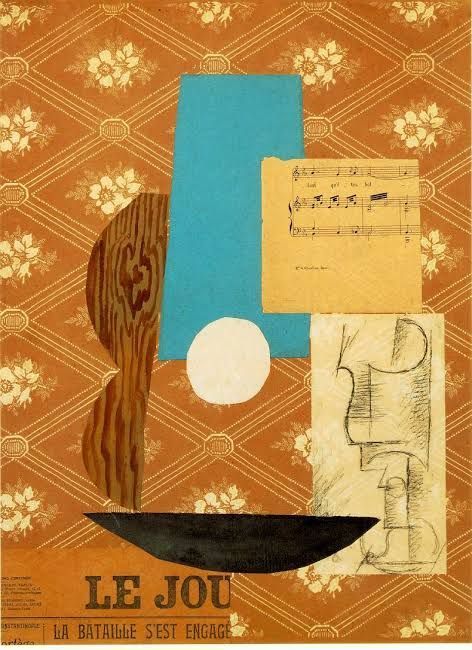
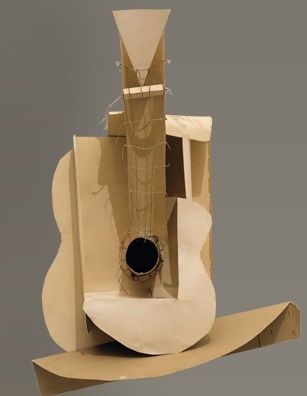
Here I have highlighted a few examples below, starting with a collage of mixed materials (first image, below) which Picasso developed into a form of Synthetic Cubism which further mixed traditional painting with collage and additional material (see second image, below). Finally, I have demonstrated Picasso’s attempts to define the essence and perception of the guitar in sculpture, using cardboard, paper, string & wire (third image, below).
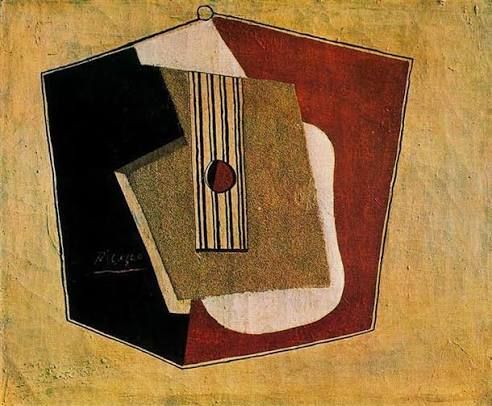
Juan Gris (1887-1927) is a less recognised name to many, but he is considered one of the foremost examples of early cubism in art. Like Picasso, Gris also returned to the guitar and the figure of the Harlequin, which seems to have been another common theme at the time.
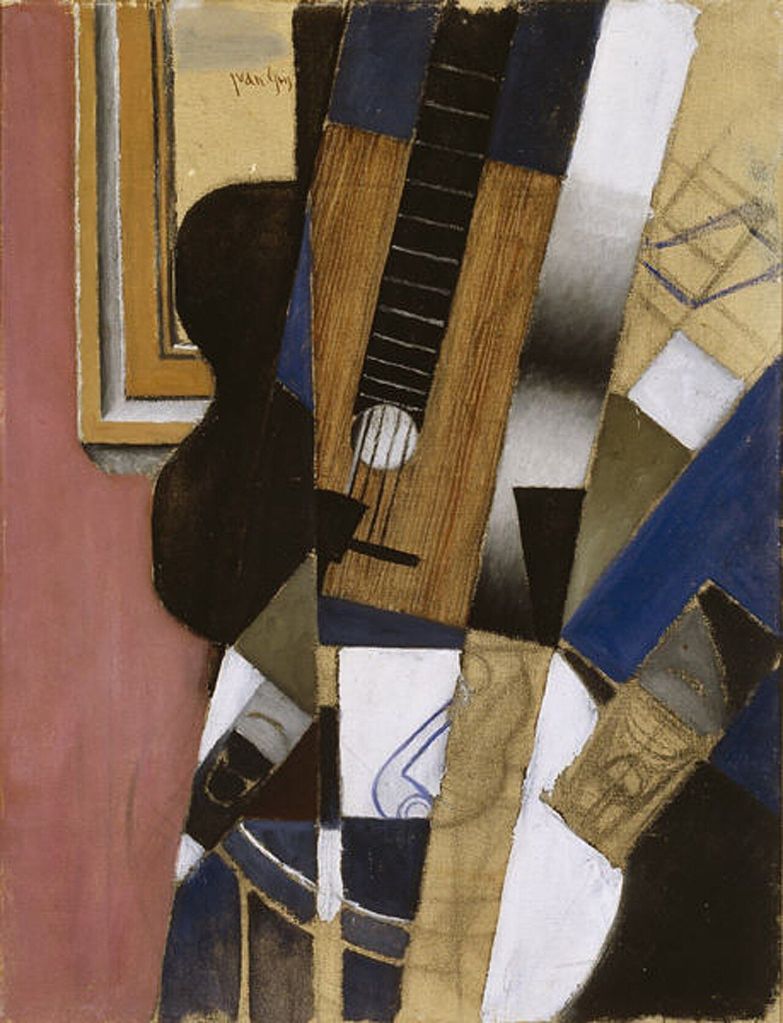
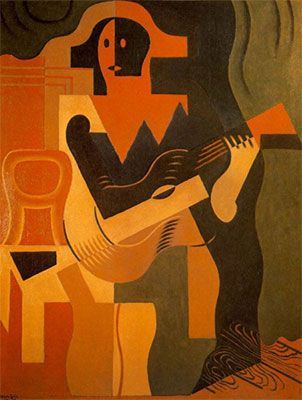
Wassily Kandinsky’s Composition Series
An early pioneer of abstract expressionism, the Russian-born Wassily Kandinsky (1866-1944) created striking works (often in large canvases) in an effort later termed “absolute subjectivity” by French philosopher Michel Henry.
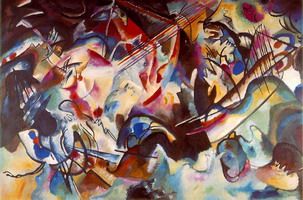
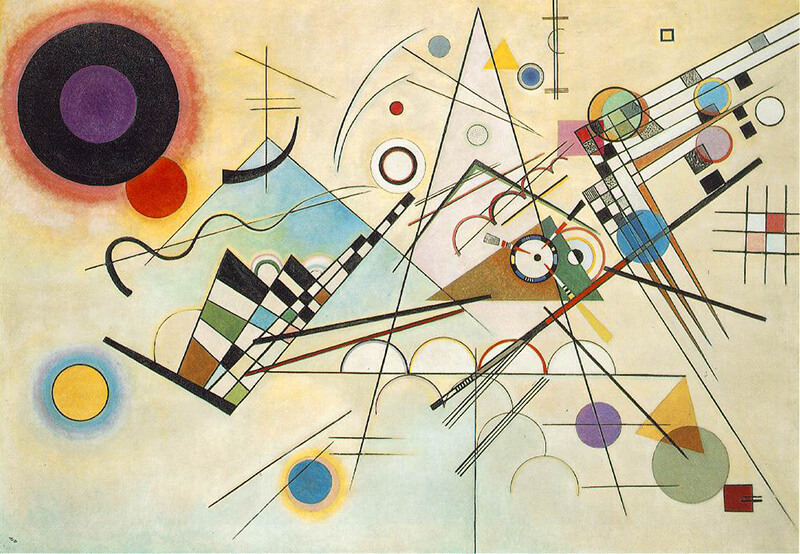
There is evidence of Kandinsky’s interest in Chromesthesia, which is a a form of synesthesia in which sound involuntarily evokes colours and shapes. Music was a major theme in much of Kandinsky’s art, and never more so than in his ten Compositions (the first seven of which were painted between 1910 and 1913 in Germany; the final three between 1923 and 1939 in Germany and France).
These paintings were Kandinsky’s attempt to capture the vibrancy and feeling of music through the use of bright colours, bold lines and abstract shapes. Here are my three personal favourites, where I feel he has come closest to achieving that goal.
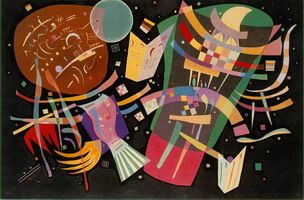
A final caveat…
These eight images (nine, if you include the article header image, Picasso’s Guitar from 1920) represent a mere handful amongst countless attempts to capture the spirit of the guitar, the guitar player, and music itself. Readers who do not share my enthusiasm or appreciation of the artworks showcased here may still find other artistic representations of the same subject which inspires or fascinates them. As with all good art, each to their own.
Interestingly, there doesn’t seem to be any concise collection or discussion about depictions of the guitar in modern art, or art in general – the closest I could find was The Art and Times of the Guitar by Frederic V. Grunfeld (published in 1970 and available for over £70!) so perhaps I should work with an art historian to create such a tome? Any volunteers are very welcome!










 Tim Higgins, Guitarist
You must be logged in to post a comment.