In previous posts, I have asked what the best all-rounder guitar might be. I mentioned various types of guitar, eventually settling on a 335 style guitar such as my Harley Benton HB-35 Plus.
I also praised the Stratocaster, another guitar I have more than one of, in various forms. I certainly mentioned the Telecaster, but when I read the articles back, I feel like I was unfair to the first ever commercially produced electric guitar. Why?
The answer is probably because I have hardly played one in comparison to Strats or other guitars. And while over a dozen Strats have passed through my guitar collection in the last quarter of a century, I have never owned a Telecaster of any kind.
The more I think about it, the more striking that is, especially when considering how many of my favourite guitar players used Teles. These include guitarists from literally every genre you can imagine, including (but not remotely limited to):
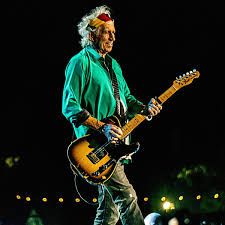
Keith Richards (The Rolling Stones)
Steve Cropper (legendary guitarist on some of the world’s best known soul recordings)
Jimmy Page (who recorded Led Zeppelin’s debut album entirely on a paisley telecaster)
Roy Buchanan (influencial sideman known as ‘the guitarists’ guitarist’s guitarist’)
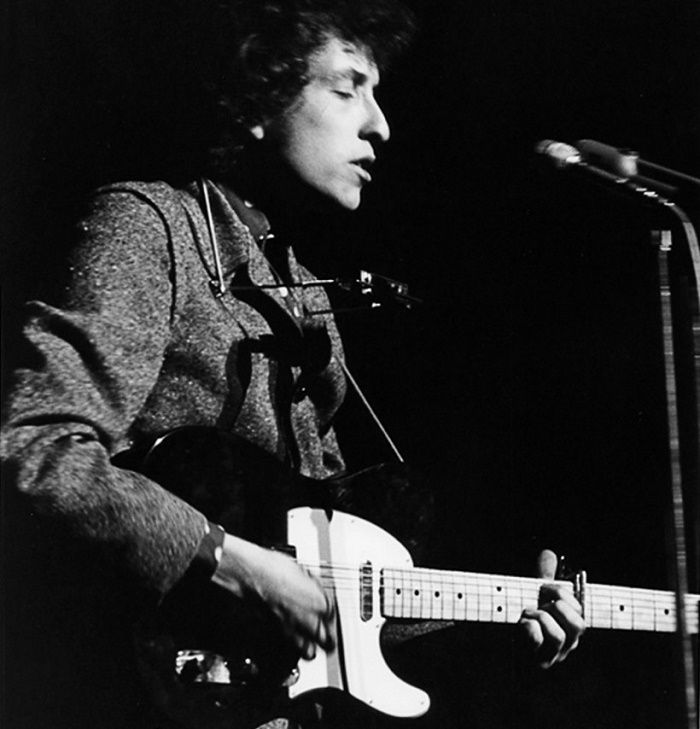
Bob Dylan (who infamously went electric at a folk festival by plugging in a Telecaster)
George Harrison (in the later years of The Beatles, including during their legendary rooftop concert)
Tommy Tedesco (legendary session guitarist)
Bill Frizell, Mike Stern & Julian Lage (amazing Tele-playing jazz guitarists)
James Burton (Elvis Presley)
Bruce Springsteen (The Boss)
Joe Strummer (The Clash)
PJ Harvey (lauded British singer-songwriter)
Andy Summers (The Police)
Graham Coxon (Blur)
Chrissie Hyde (The Pretenders)
Jonny Greenwood (Radiohead)
Rick Parfitt & Francis Rossi (Status Quo)
Muddy Waters & Albert Collins (blues legends)
Mike Campbell (Tom Petty and the Heartbreakers; Fleetwood Mac)
Tom Morello (Rage Against The Machine; Audioslave)
Waylon Jemnings (country legend)
Matt Bellamy (Muse)
Mike Bloomfield (blues & session guitarist who worked with Dylan, among others)
Jeff Buckley (revered singer-songwriter)
Anna Calvin (three times Mercury-nominated artist)
Richie Kotzen (Poison; Mr Big)
Jerry Donahue (insanely talented country-fusion string bender)
Brad Paisley (one of several amazing country guitarists wielding Teles)
…and did you know Hendrix used a Telecaster (borrowed from his bass player, Noel Redding) to record the solo to Purple Haze?
A handful of famous Telecaster players. Clockwise from top left: Bruce Springsteen, PJ Harvey, Bob Dylan, Muddy Waters, Keith Richards, Prince.
It goes without saying that the above list is by no means exhaustive, and also that many of the artists listed above used other guitars. However, the vast majority of them relied on a Telecaster for their most seminal recordings or the bulk of their live work – as have so many others.
So why haven’t I?
I think I started off by buying a Stratocaster as my first proper guitar, and fell in love. I became a Strat Guy, and in many ways, remain one. It’s the guitar in the hands of many of my earliest guitar heroes and was the dream guitar of my teenage years. And as I have said previously, the Stratocaster is an incredibly versatile guitar. But I wonder if this has led me to overlook Telecasters as a result?
Perhaps it’s time to change that. Any recommendations for the best value Telecaster to buy? I’ve a few in mind, but I’d love to hear your thoughts.
And of course, if/when I eventually get to put a Tele through it’s paces, I’ll report back…
Loved by some, derided by others. You will have heard at least some of the music of The Doors.
Despite their short time together at their height, they left behind an impressive legacy. As with similar articles (such as my look at the wider impact of The Animals and The Bryds), I’ll try to keep it brief, focusing on the factors that I believe made The Doors unique and influential.
So, on the understanding that this is not a definitive history, let’s dive in…
A quick rise
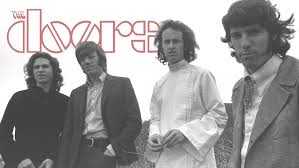
The Doors were formed in Los Angeles in 1965 by vocalist Jim Morrison and keyboardist Ray Manzarek, initially under the name Rick & The Ravens with Manzarek’s brothers Rick and Jim. They soon changed their name to The Doors in honour of Aldous Huxley’s book The Doors of Perception, recording their first one demo along with drummer John Denmore. After brothers Ray and Jim left the group, the group, guitarist Robby Krieger joined the band and the classic lineup of The Doors was complete.
They very quickly became popular, despite having played few gigs. In the start of 1966, the band managed to secure a residency at The London Fog club on Sunset Strip by having all of their friends turn up to their initial trial gig and cheer loudly. This residency not only gave Morrison the chance to overcome his stage fright, but also provided an opportunity for the band to experiment with their songs, many of which appeared on their debut album the following year.
In May 1966, the group became the house band at the more prestigious Whiskey a Go-go club, supporting the visiting acts such as Van Morrison with his band Them. By August, The Doors had been signed to Elektra Records. They recorded their eponymous debut album the same month, released at the very start of 1967. Their follow up, Strange Days, was released in September of the same year. This started an impressive run which saw the band release one studio album every subsequent year, ending with LA Woman in April 1971.
(copyright Elektra Records)
A polarising frontman
Over the years, Morrison’s behaviour had become increasingly erratic and difficult for the ban to manage. He was already living in Paris by the time LA Woman was released, taking time out from the group to focus on his poetry. He was dead just three months later, likely of an accidental overdose on heroin (although no autopsy was performed to officially rule the cause of death).
I put out a poll on my social media pages to canvass for opinions on The Doors. It seemed that, by and large, those who said they didn’t like the group generally cited Morrison’s vocal delivery style lyrics, or his persona as the main reason. He seems to have become a love-him-or-hate-him figure in music history. For some, Morrison represented the epitome of a certain type of masculine sexuality. Several bedrooms have been adorned with posters featuring well-known pictures of Morrison, topless and brooding. which seemingly turned ob as many people as it turned off.
Furthermore, in passing away at such a young age, fans never had the opportunity to watch him grow old, or indeed display an change or sense of ongoing maturity in his work. What is left behind becomes immortalised, while Morrison himself became a legendary figure. His grave in Paris remains a popular tourist attraction for would-be Bohemians to congregate.
But what we’re the critics opinions of Morrison before he died? The music of The Doors left fans divided. Fiona Sturges claimed that “Lester Bangs was right when he described Morrison, the son of a US rear admiral, as ‘a drunken buffoon masquerading as a poet‘” (quoted in The Independent, 2012). Yet Bangs had the maturity in later years to recognise the legacy of Morrison on his peers:
Think about it. Without Jim Morrison no Patti, but what’s more or less no Iggy perhaps no Bryan Ferry in his least petit-bonbonned moments. Without Iggy, of course, no punk rock renaissance at all, which means obviously that Jim was the real father of all that noise
Similarly, the music was considered by some to be twee in places (with those fiddly organ lines) or even downright pretentious. Listening to their entire run of six albums highlights inconsistencies in style, but I’d argue that this was common for groups at the time. In a time of psychedelia and increasing experimentation in pop music, record executives seemed to have lost their sense of what would sell and what wouldn’t, and allowed some artists time – and often several albums – to find a formula that worked. The Doors were no exception to this, although I believe they stood out for a few reasons.
Grounded in the Blues, but not limited to them
Like many bands of the time, The Doors were rooted in the Blues as the bedrock of their sound. When he wanted to, Morrison could write lyrics that were reminiscent of blues men such as Muddy Waters or Howling Wolf,such as on Love Me Two Times or LA Woman, for two well-known examples.
Musically, many of the songs were grounded with blues-based riffs, common to other R&B acts of the time. It was the combination of electric blues with the more poetic elements to Morrison’s words, coupled with a sense of exploration and a willingness to add elements of jazz to their sound, which gave The Doors an edge over their contemporaries in the world of psychedelic rock.
No bass player?
No – not for their live performances, at least.
In the studio, Doors producer [name] felt that Manzarek’s left-hand organ bass notes didn’t cut through as well as the second of a plucked string, and a session bass player was called in. This started something of a tradition for the band, who had bass guitar on the vast majority of their recorded material while maintaining their bass-less quartet format onstage.
In most cases, the session bassists – including bit hitters such as Harvey Brooks (who had played on Dylan’s first electric album and subsequent live shows) and Jerry Scheff (who has played with everyone from The Everley Brothers to Elvis Presley’s Vegas band) – were given strict instructions on what to play. This often following the Blues-based riffs. Otherwise, they simply filled in the sonic space a little, leaving ample room for [keys] and [guitar] to take flight, often in surprisingly intricate ways (a full and fascinating read on the bass players working with The Doors can be found here).
Robby Krieger’s guitar style
The final element to be discussed is The Doors’ guitar player, Robby Krieger. Although the last member to join the band, his playing gave the group a certain ‘lift’, mixing various styles and moving beyond solely blues-based lead lines.
Before picking up the electric guitar, Krieger had studied flamenco, who requires a strong right hand picking technique. Elements of this can be heard throughout the band’s output, not only in overt references such as Spanish Caravan, but also in his jazz-rock solo on Light My Fire. Krieger also maintained the flamenco/classical tradition of playing fingerstyle, eschewing plectrums (is it that plectra?) for his entire career.
Krieger, circa 1965 (pic credit: Chris Walter)
As I sat down to research and write this article, I started to realise the extent to which Krieger had been an influence on my own lead guitar playing. However, I rarely cite him as an influence. This may due to our similarities in background; I too, was a classical guitar player long before I started on the electric guitar, and my first electric influences were blues players and the experimental artists of the nineteen-sixties.
It may also be that Krieger’s influence came indirectly, via the first ever tuition book I bought to help me learn lead guitar, Lead Guitar by Harvey Vinson (which is a whole thing in itself – expect an article all about it in the near future). Looking back through the example riffs in that book, most of them could easily have been lifted from Doors tunes. I even owned a cheap SG copy too, but that’s a story for another time…
Recommended listening
There’s something interesting to be found on all six of the band’s studio albums. It is worth giving them all a listen to see what jumps out for yourself. Having said that, I find that for me, their first two LPs The Doors and Strange Days (both 1967), as well as their final offering, LA Woman (1971), showcase the group at their finest.
As always, let me know what you think. I enjoy having discussions with readers who get in touch and would love to know your opinions on The Doors, Morrison’s legacy, Krieger’s technique and everything else. But for now, this is the end…
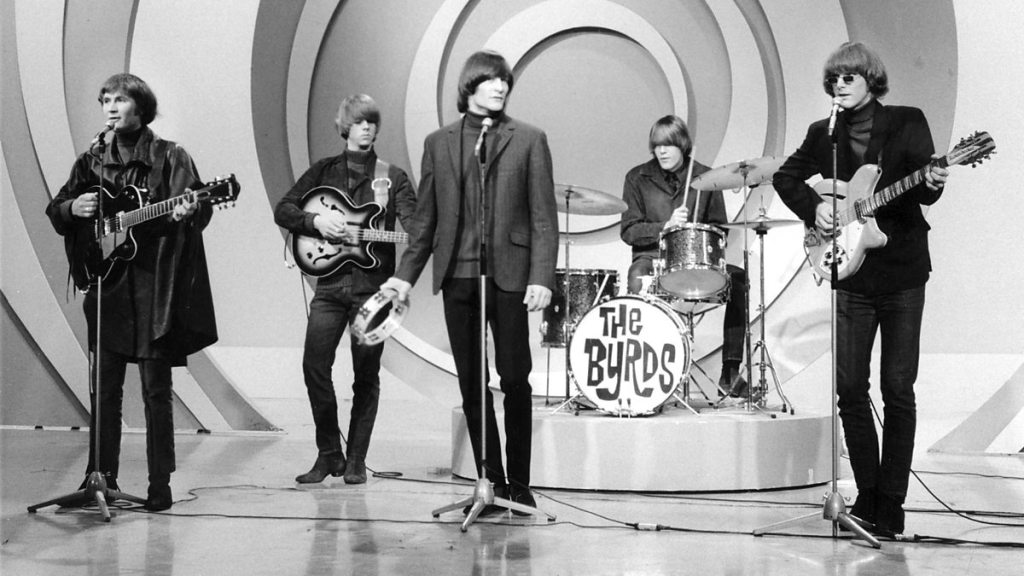
A group best known for their cover of Bob Dylan’s Mr Tambourine Man, but which created a ripple which ran further and deeper through popular music than you might realise. From famous alumni to mechanical innovations for country & western guitar music, here’s a small token of praise for folk rock pioneers, The Byrds.
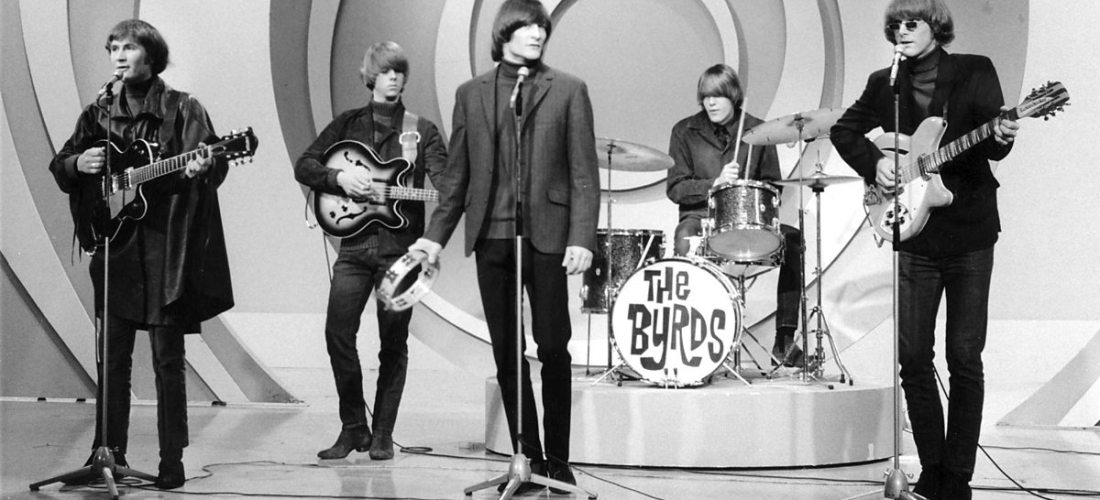
Originally formed in early 1964 as The Jet Set, a trio of singer-guitar players Jim (later known as Roger) McGuinn, Gene Clark and David Crosby, they soon augmented their line-up with Chris Hillman (bass/mandolin/vocals) and Michael Clarke (drums, and apparently hired on the strength of his excellent Brian Jones style haircut). They set out to meld the influence of British Invasion bands, most notably The Beatles, with traditional folk music in what was a unique new sound at the time.
In particular, the Fab Four was the inspiration behind McGuinn playing the Rickenbacker 360 12-string guitars that played a large part in the sound of their early records. A lot of the ‘jangly’ guitar music you hear in later bands – particularly the indie acts of the 80s and Britpop bands of the 90s – owe as much of a debt to The Byrds as they do to The Beatles.
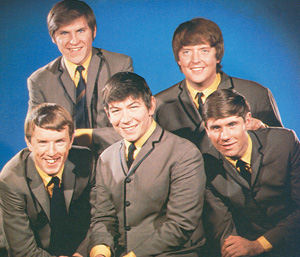
The Byrds live on the BBC (left) and an early photoshoot (right).
They played ‘electric folk’ before Dylan (sort of)
Their first single was a cover of Bob Dylan’s Mr Tambourine Man, which they recorded before Dylan’s original acoustic version was released as part of his album Bringing It All Back Home in March 1965. Interestingly, although this album marked the first time Dylan used a backing band and electrified instrumentation (on side one), his original version of Mr Tambourine Man is in his (at the time) traditional style of solo guitar and harmonica to accompany his vocals (as part of the all-acoustic side two). The Byrds’ version was finally released a month later, reaching number one on both the British and US charts.
This release was still a good two months prior to Dylan’s infamous appearance with a ‘rock’ band and playing electric guitars at the Newport Folk Festival in July 1965. Dylan was friendly with the group and had got up on stage to jam with them at the start of year, undoubtedly helping their reputation beyond the folk scene before they’d released any records. It seems clear to me that both acts were part of a change to folk music that was happening at the time, and it’s fair to say they had a degree of influence on each other. The Byrds certainly covered a lot of Dylan songs on their debut album (also named Mr Tambourine Man, released in June 1965).
They went beyond folk rock
By the end of 1965, The Byrds had already begun to include more psychedelic influence in their songs. Most notably, Eight Miles High features guitar playing by McGuinn which was intended to emulate the playing of John Coltrane’s Impressions album, particularly the opening track India, in which Coltrane was seeking to recreate the raga lines of Indian performers such as Ravi Shankar.
Within less than two years of their formation, their line-up had started to change. As well as the raga-styled influences, The Byrds sound incorporated jazz, psychedelia and an increasing amount of country & western influences. By the end of their time together as a band (circa 1973), The Byrds’ sound was more representative of early country rock than their original folk sound.
Impressive alumni
Many members of he Byrds went on to form well known groups. David Crosby was dismissed from the band in 1967, for a variety of reasons (clashing egos with is bandmates seemingly chief amongst them). The following year, he formed the supergroup Crosby, Stills & Nash with Graham Nash (from the British pop group The Hollies) and Steven Still (from Canadian band Buffalo Springfield). By their second album, they had been joined by Stills’ former bandmate Neil Young, prompting a name change/extension to Crosby, Stills, Nash & Young. Although their time together has been intermittent and varied, their earl albums produced highly popular hits, and their vocal harmonies have been highly influential on countless performers ever since.
Crosby, Stills Nash & Young performing live (top left); Gram Parsons (top right); Roger McGuinn, post-Byrds (main image).
Later members of the Byrds included Gram Parsons, another pioneer of country rock and Americana (and also notorious for the theft f his corpse and it’s unusual cremation after his untimely death in 1973). Members of The Byrds also went on (with Parsons) to form another influential country rock band, The Flying Burrito Brothers. Roger McGuinn continued as a solo performer, including collaborations with Dylan in the seventies, and has reformed The Byrds in various guises, largely for reunion tours) across the decades.
Two former members created a brand new guitar system
Clarence White, a highly respected bluegrass player and session guitarist, joined The Byrds in 1968. Also joining him was Gene Parsons (no relation to Gram), who ad previously performed with White in the country rock group Nashville West. Sometime between these two groups, White and Parsons discussed ways to simulate the sound of a pedal steel (which uses pedals to alter the pitches of some strings, similar to a harp) on the guitar. Parsons set out devising a system that would enable White to achieve what he was looking for.
Original patent design for the Parsons/White String Bender.
Parsons’ design involved adding a pulley system onto the strap button closest to the guitar’s neck, meaning that when the guitar is pulled downwards (away from the head of the player), a the pressure on the strap moved a lever which, in turn, raised one or more strings on the bridge of the guitar. As unwieldy as that sounds, the result was exactly what White was looking for, and Parsons later went into business selling these devises as retro-fits, usually onto Telecasters, like White’s original model. The design was originally licenced to Fender in the early seventies, and though they didn’t do anything with it originally they have since released their own special model of B-bender Telecaster guitars in recent decades. The B-bender guitar has become a poplar tool in country and country rock music, with guitarists such as Brad Paisley using them to amazing effect.
Here’s Parsons discussing his invention as part of a documentary on The Byrds:
I’d heard of the B-bender before, but it was only when reading an article about The Byrds a few months ago that I learned it was one of their drummers who invented it to help his bandmate out! It certainly demonstrates the lasting legacy of the band on modern country music.
This is in no way a definitive history of the band. There are numerous biographies out there that those interested in learning more about this group should seek out (an in all likelihood, probably already have). This brief overview (much like my previous article on The Animals) merely serves to show how some performers – of whom most people might only recognise less than a handful of songs – can influence the musicians you know and music you hear i ways you might not expect, and often without you realising it.
Can you think of any other bands that might have had a similar far-reaching effect as inventing a new kind of country guitar, or bringing Jimi Hendrix to wider recognition (see: The Animals)? Please let me know, as it may well end up in a future article! Since I have covered an A and a B band, perhaps new suggestions could follow on in this (unintentional) alphabetic format? Get in touch!
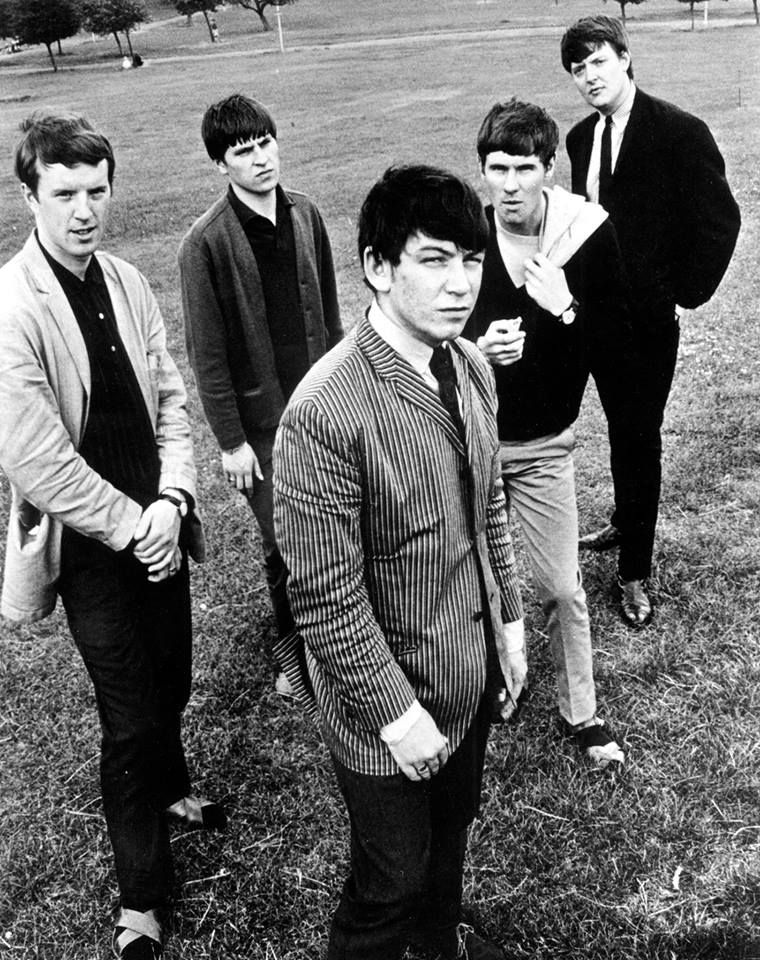
I recently read about the passing of Hilton Valentine, the original guitarist for The Animals, who has died, aged 77.
Valentine’s simple arpeggiated riff in the band’s version of the traditional tune House of the Rising Sun remains one of the most recognisable guitar parts in the history of rock’n’roll.
R.I.P. Hilton Valentine, creator of one of the most famous guitar riffs in rock and roll history.
Valentine’s passing caused me to reflect on the wider influence of The Animals. The original lineup split by 1966, but in that time they recorded some memorable songs, including the huge hits We Gotta Get Out of This Place and their uptempo cover of (Don’t let me be) Misunderstood, originally written for and recorded by Nina Simone.
The Animals were one of the British groups from the early 1960s who took the R&B of the (predominantly black) artists in the US and repackaged it in a form that brought the genre – and its original performers – to a larger audience. A number of groups were part of this ‘wave’, including The Beatles, The Rolling Stones and The Yardbirds, to name but a few. While it might make one baulk to think that it took the playing of ‘black music’ by white performers to make the style palatable to white audiences in America (racial segregation still existed in some states in the early 1960s), it is worth remembering that these same audiences later turned to the original artists themselves. This created career-changing opportunities for artists such as BB King, Muddy Waters, Howlin’ Wolf and so many, many more.
Yet their influence on the artists who followed in their footsteps shouldn’t be underestimated. They were more than just local heroes in the north east of England; their activities after the breakup of the original group in 1966 led to a few significant ripples through the music world…
As well as the countless musicians who picked up a guitar to try and play House of the Rising Sun, or to start their own rhythm & blues outfit, The Animals also raised the profile of several well-known acts, one way or another.
Lead singer Eric Burdon became well respected for his soulful, yet gravelly, voice. After initially attempting to create a new version of The Animals (with only Burdon as the surviving founder member), he was soon teamed up with an up and coming R&B band. The resulting outfit – Eric Burdon and War – had success with the single Spill the Wine, and two albums together.
However, Burdon unexpectedly left the group halfway through a European tour. The band continued without Burdon, creating some very well-known hits in the 1979s, including Cisco Kid, Low Rider and Why Can’t We Be Friends?
Alan Price, keyboard player for the animals, had something if a dual career after the group disbanded. He worked with fellow 60s star George Fame for many years, while also writing film & theatre scores. He also released a few solo albums, and in his songs choices, became one of the first performers to bring the music of American songwriter Randy Newman (later famous for songs such as Short People and You’ve Got a Friend In Me)to a wider audience.
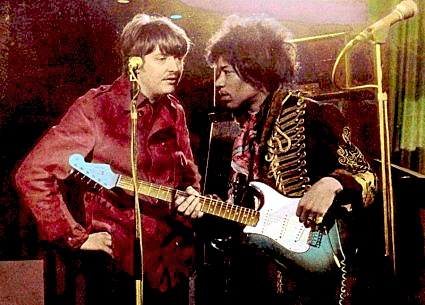
Meanwhile, Animals bassist Chad Chandler discovered a young Jimi Hendrix performing in Greenwich Village, New York, and became his manager. He set up the legendary guitar player with Mitch Mitchell and Noel Redding to form The Jimi Hendrix Experience, but used his connections to secure gigs in the UK for the group, and introduce him to contemporaries on the sixties music scene in London, such as The Beatles and Eric Clapton. In fact, the last time Hendrix performed live was onstage in London with Eric Burdon & War, the day before his tragic early death.
Chandler went on to manage the British glam-rock group Slade, who had several hits through the seventies (including one of the most well-known Christmas songs in pop music). His other business interests helped to build the Newcastle Arena, a sport and large capacity concert venue, which meant those of us in the region now got to see more of the bigger artists when they came around on tour!
I’m sure similar ‘family trees’ can be found throughout the history of rock’n’roll, and maybe it is the shared home region which fuels my fondness for them, but The Animals were much more than a few catchy songs and one incredibly famous guitar riff.
Rest in peace, Hilton Valentine (1943 – 2021). The music lives on.
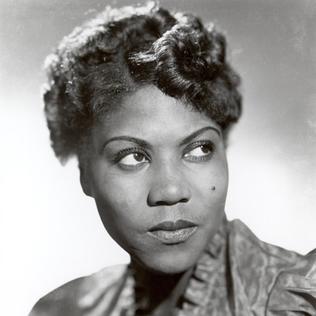
In this installment, a singer and guitar player who took the blues, folk and gospel and created what could arguably be considered the forerunner to rock’n’roll…
Sister Rosetta Tharpe
Born in 1915, Tharpe (born Rosetta Nubin) started playing guitar and singing in church at the young age of just four years old. Touring with an evangelical church troupe from the age of six, she settled in Chicago. Her stage name comes from her first marriage to preacher Thomas Tharpe at the age of 19; she carried on using the name Tharpe professionally after their divorce in 1984 , up until her death from a stroke in 1973 (during which time she remarried twice).
Tharpe is perhaps best remembered as a singer, with a loud clear singing style. But something about her singing, combined with her foot stomping and blues-tinged guitar picking – not to mention some cool lead lines – stirred the interest in many young listeners who would go on to be the next generation of musicians. Little Richard and Johnny Cash both called Tharpe their favourite singer, she is cited as a crucial influence to artists such as Aretha Franklin, Jerry Lee Lewis, Tina Turner, Isaac Hayes, Meatloaf and Karen Carpenter. Tharpe’s appearance on a British TV special about the Blues and Gospel Caravan, a European tour of US musicians that also included Muddy Waters, Otis Span and Sonny Terry, amongst many others, brought her to the attention of British audiences, including future guitar superstars like Eric Clapton.
“Tharpe’s guitar style blended melody-driven urban blues with traditional folk arrangements and incorporated a pulsating swing that was a precursor of rock and roll”
Biography.com (‘Sister Rosetta Tharpe’, 2015)
Tharpe’s guitar playing is said to have directly influenced the vocals/guitar style of Chuck Berry and Elvis Presley – and if the first rock’n’rollers such as Berry, Presley and Richard call Tharpe an influence, she must the foundation of all that followed…
Tharpe’s career was curtailed by a stroke in 1970, and she died just three years later. Nowadays, her influence is often unfairly overlooked, and sometimes forgotten entirely. However, Tharpe played a crucial role in the history of American music of the 20th century, not to mention the birth of rock’n’roll. Furthermore, in this brilliant article by Erin White, Tharpe is hailed as a Queer Icon too, largely due to speculation over her affair with singer Marie Knight.
Here she is on a TV show in the mid-sixties, singing a gospel song with a gospel choir, but playing a slightly overdriven Gibson Les Paul Custom (although we know these as a Gibson SG nowadays) with it’s three humbuckers. She also pops in a blues-based solo in the middle!
When I think of three humbucker guitars, I recall Neil Young’s ‘Black Beauty’ Les Paul, or the rock band KISS. As for the SG guitar shape, Angus Young of AC/DC and Tony Iommi of Black Sabbath are the first two players who spring to most people’s minds – not a lady in her fifties singing a combination of blues and gospel. It must be remembered that for many, Sister Rosetta Tharpe was the first black woman they’d ever seen playing an electric guitar, and she could play! But what else should we expect from the Tharpe – one of a small handful who can truly claim to be the start, or inspiration, of rock’n’roll?
Recommended listening
Tharpe’s 1944 single Strange Things Happening Every Day, is considered one of the first rock’n’roll singles, and is the first ever Gospel record to make it onto Billboard’s Harlem Hit Parade (now called their R&B chart). One her most acclaimed studio albums is Gospel Train (Mercury, 1956). This record marks the stylistic change, backed by New York session musicians, and is considered highly influential on later rock’n’roll artists.
With a career that took place from the 30’s to the early 70’s, it is sometimes best to seek out compilation albums in order to have all of Tharpe’s most well-known releases in one place. To that end, I would recommend Bring Back Those Happy Days: Greatest Hits and Selected Recordings (Jasmine, 2018), or the 4-CD set The Original Soul Sister (Proper, 2002).
As with each installment in the Great Guitarists series, I have only touched upon the surface of these influential players. I’d love to hear your thoughts on them, as well as recommendations on who should be featured (I have another four or five lined up already – I wonder if anyone can guess who is coming next?). Until next time…
Welcome back to this overview of intervals in guitar playing! In part one, we looked at thirds, sixths and tenths. In this follow up article, we will be taking a brief look at fourths and fifths. Both of these intervals can be used more ambiguously, as they remain the same in the context of a major or minor chord (when sticking to notes in diatonic scale, at least – more on that later). Because of this fact, they can utilized in slightly different ways to the tones they sit alongside in common scales. Let’s take a look…
Fourths
Fretting the two highest strings together at the same fret creates this classic double stop, which can be heard all over rock’n’roll, but famously in the intro and solo for Chuck Berry’s Jonny B. Goode. Berry developed this style so he could recreate horn lines, as his live band was a smaller ensemble than many bands of the time (which would typically have more than one sax, trumpet, trombone, among other brass instruments). Every rock guitarist that followed has used phrases first made famous by Berry, from Angus Young to George Harrison. It is also a useful interval for slide guitar playing as it can be used over major and minor chords alike (you can see an example of me playing 4ths with a slide on this cover video of a well-known song).
In jazz, Wes Montgomery pioneered the use of stacked fourths, creating chord-based solos using 4th intervals on top of each other (for example, one chord would sound, low to high, as A, D, G, C), and the shape would move in line with the melody. George Benson kept up this tradition, but would also regularly employ diads (two notes played together) of 4ths in his lightning-fast solos.
Fifths
A fifth is an inversion of a fourth, and vice versa. Here, the strict definition can become blurred – think of the intro to the Deep Purple song Smoke On The Water and you’ll hear diads playing the entire riff in what sound like fourths (eg, the first pair of notes is a D, then a G on top). However, since the melody is following the G minor pentatonic scale (as the song is in the key of G minor), I’d argue that this riff is an inverted fifth (D being the perfect fifth of G), as the melody note is higher than the harmony note.
In rhythm guitar, a root and fifth creates the classic power chord heard in most varieties of rock music. Alternating the fifth with a sixth, and moving back and forth between the two, gives the famous (almost cliché) rocking riff used by artists from Chuck Berry to Status Quo and beyond.
Variations on ‘perfect’
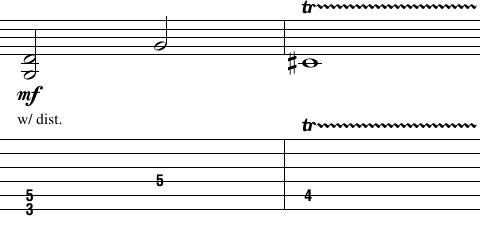
The intervals we have discussed above – using the fourth and fifth notes in a diatonic scale, create what is known as perfect fourth / fifth. However, as with any note, we can raise or lower it’s pitch by a semitone for a new musical sound. Flat fourths & fifths are both referred to as diminished (and of course be found in diminished chords and scales). Raised ones are called augmented. As a fourth and fifth are only a tone apart, a diminished fifth is exactly the same thing as an augmented fourth – just in case you were confused!
Apart from being the famous Devil’s chord (famously used on the Black Sabbath song Black Sabbath), this interval often occurs in Blues-based music. The Pentatonic Blues Scale is based on intervals of R, b3, 4, #4, (or b5), and b7. Likewise, in dominant seventh chords (for example, C7), the natural interval between the chord’s major third (E) and flat seventh (Bb) is a diminished fifth/augmented fourth. Highlighting these notes over these chords creates a wonderful effect without having to overthink your playing too much!
Finally…
There are a few intervals we haven’t covered in these two articles. Off the top of my head, these would be seconds, sevenths, octaves and extended intervals used in jazz chords and arpeggios, such as ninths, elevenths and thirteenths. I plan to look at octave-based playing in a future article, because it is a staple of my own guitar heroes, such as the great Wes Montgomery. However, if you’d like me to look into some of the other intervals (such as sevenths, which is a really useful colour tone in jazz), do let me know!
I was recently tagged in a Facebook challenge by my friend David, in which you post 10 albums which have informed your early musical tastes.
I find things like this almost impossible. It’s so personal, but based on hundreds of musical memories. How do you select just ten LPs from years of discovering & listening to new music? So I made my criteria a little more specific, and chose ten records which, as well as being ones I listened to frequently, also served as early influences on my guitar playing & songwriting.
Because I’m focusing on my earliest influences, this list looks rather narrow. I’d like to think that my guitar playing influences, as well as my music listening tastes, are much more eclectic than this list would imply. But then, these are my earliest influences, rather than the wider world of music that these albums (and countless others not in this list) opened up to me.
In some cases I chose a favourite album by artists who could have filled a ‘top ten’ list all by themselves. I also decided to omit quite a few 90s choices which were heavy-rotation at the time, but didn’t accompany my out of the 90s, so to speak…
And because I’m looking at albums, I’ve not included any classical or folk pieces. Although they were a huge part of what I was playing on the guitar back then, just as now, I learned these pieces individually, rather than via any one particular LP – perhaps that’s a separate list of its own for a future post…
Likewise, jazz was a genre I started digging deeper into in my very late teens, so they while it has certainly influenced my playing, it didn’t happen until later. As such, only one jazz record makes an appearance on this particular list.
So what you see below is perhaps better catogorised as ten rock & pop albums which had a lasting influence on my guitar playing. Also, because it was really tricky narrowing down to just 10 choices, I’ve included a few contenders which nearly made the cut.
Strangely, some significant guitar influences don’t appear in these picks, for various reasons – not least because 10 albums isn’t enough! I think it’s because I view some guitar player’s work over their whole career (or live performances), rather than limited to just one record.
Anyway, here they are. The list is (very loosely) organised by chronology of when I discovered them, where my memory makes that possible. Enjoy!
The Shadows – 20 Golden Greats (1977)
The album that started it all. I was six years old and going through the ‘tennis racket guitar’ phase. My Dad suggested I listen to some “proper guitar music” and player this album to me (on cassette, naturally). There was no turning back. That famous clean Stratocaster tone was under my skin.
As I reached my teenage years I soon learned that The Shadows & their legendary lead guitarist Hank Marvin were far from fashionable, and I expect many young players may never have even heard of them. But one way or another, the landscape of popular music would be very different without their influence.
The Moody Blues – In Search of the Lost Chord (1968)
My father is to blame for this one too. He has all seven of the ‘classic’ Moodies albums (from 1967-72), and any one of them could have been chosen for inclusion here. Why Lost Chord? It best represents the mix of influences on my playing, featuring both fantastic acoustic & electric guitar work, as well as an abundance of non-rock instrumentation like sitar, flute and some of the best played mellotron in the history of popular music (it was this band’s keyboard player, Mike Pinder, who introduced the instrument to The Beatles).
Another element I’ve always enjoyed in the music of The Moody Blues is that they were a five-piece band with four singers. They divided up lead vocal duties equally, and performed some beautiful harmony arrangements. Meanwhile, the drummer (the only non-vocalist) wrote poetry which the band performed as spoken word on each album. Sometimes a little dated, but very experimental & extremely fun.
Close contenders: ‘Days of Future Passed’ (1967), ‘On the Threshold of a Dream’ (1969), ‘To Our Children’s Children’s Children’ (1969), ‘Question of Balance’ (1970), ‘Every Good Boy Deserves Favour’(1971) & ‘Seventh Sojourn’ (1972), all by The Moody Blues
The Beatles – Abbey Road (1969)
Of course The Beatles feature on this list. I chose this LP above some of their other groundbreaking albums (particularly the studio-bound later records) for two reasons. Firstly, the suite of sings which takes up most of side two of the record. Secondly, it features two of George Harrison’s best songs, Something & Here Comes The Sun.
Close contenders: ‘Sgt Pepper’s Lonely Hearts Club Band’ (1967) by The Beatles & ‘Pet Sounds’ (1966) by The Beach Boys
Blur – The Great Escape (1995)
Blur were always more than just a Britpop band. Their music had an air of adventure & experimentalism that simply wasn’t present in the work of their contemporaries. This album shows how observational pop songs could still have a grungy & left field edge to them. As well as this, guitarist Graham Coxon has left his mark on my approach to creating parts in a band with only one guitar player (and no keyboards for the most part) that go beyond the obvious but still fit the tunes perfectly.
Close contenders: Blur’s preceding album ‘Parklife’ (1994) & ‘Return to the Last Chance Saloon’ (1998) by The Bluetones
Deep Purple – Machine Head (1972)
This album’s most famous song (Smoke On The Water) tells the story of its own creation. It is also my least favourite track on this LP, most likely due to over-saturation (are you allowed to play it in guitar shops yet?) bit there’s riffs & solos aplenty on this gem. Guitarist Ritchie Blackmore undoubtedly influenced my early soloing style. I loved how his tone was almost clean, unlike every guitar player who followed in his wake. His single-note slide playing has also had on effect on the melodic approach I try to employ in my lap steel playing.
Close contenders: Aerosmith‘s ‘Toys in the Attic’ (1975) & ‘Back in Black’ (1980) by AC/DC
Gomez – Liquid Skin (1999)
Their debut album Bring It On won Gomez that year’s Mercury Music Award. This was their follow up, released the following year. Both albums are of a similar vein (coming so close together). I chose this one because I think I ever so slightly prefer the songs on this one. Alternative, inventive, experimental, but still melodic. And like the Moody Blues and The Beatles, this group had several leas singers and performed some sublime vocal harmonies.
Close contenders: ‘Bring It On’ (1998) by Gomez & ‘K’ (1996) by Kula Shaker
Sam & Dave – The Best of Sam & Dave (1969)
Classic soul tunes from the legendary Stax Records label. As great as Sam & Dave were as singers and performers, it’s the backing band which brings me back to this record time and time again. The Stax House band were Brooker T & The MGs, featuring Steve Cropper on guitar. Every song is an masterclass in creating parts which serve the song. Many of my own chops come directly from Cropper, especially his use of sliding sixths in his lead playing & fills. Check this record out – in fact, check out any album released by Stax in the sixties and early seventies.
Close contender: OtisRedding’s posthumous greatest hits ‘The Dock of the Bay – The Definitive Collection’ (1987) is another great example from Stax Records and features more amazing arrangements by Brooker T & The MGs
Led Zeppelin – Led ZeppelinI (1968)
Any Zep album could have ended up on this list, particularly their first four eponymous LPs (known as I, II, III & IV). But their debut record, recorded in just three days, was one I kept coming back to again and again as a teenager. The group were part of a wave of British acts turning the blues on it’s head, alongside the likes of Jimi Hendrix and Cream. But unlike, Led Zeppelin felt more like a meeting of equally talented musicians, and (no offence to Hendrix or Jack Bruce) they certainly had the best singer in the then-unknown Robert Plant. Powerful, beautiful, but ultimately, accessible got a fledgling guitarist.
Close contenders: ‘Disraeli Gears’ by Cream (1967) & ‘Tres Hombres’ by ZZ Top (1973)
B. B. King – Live at the Regal (1965)
Unlike many live albums, which cherry-pick the best examples from numerous dates, this release was taken from a recording of one show at Chicago’s Regal Theater, on the 21st of November, 1964. It captures B.B. on top form, backed by a large band of superb musicians. This record provides a masterclass in phrasing, demonstrating King’s economical & tasteful playing, each note dripping with the blues. Highlights include Sweet Little Angel and Help The Poor.
Close contender: ‘In Session’ by Albert King & Stevie Ray Vaughan (1983)
Kenny Burrell – Midnight Blue (1963)
This record is the epitome of cool jazz. It sounds like it was recorded in the wee small hours, and it probably was. I’ve dedicated a recent post entirely to Burrell, who’s playing has just enough blues to make this jazz record accessible to a novice such as I was in my teenage years.
Close contender: ‘Julie Is Her Name’ (1955) by Julie London
Special mentions should also go to Queen’s Greatest Hits (I & II), because my family sometimes had a car growing up, and these albums were standard issue with all cars back then…
As always, I’d love to hear your thoughts on this list, as well as your own. Get in touch in the usual way! Until next time…












 Tim Higgins, Guitarist
You must be logged in to post a comment.