The (not so) secret to getting a great guitar tone

Advice & Tips

Is tone more important than technique? That’s a great debate to have, but not today…

Yet when most people listen to music, it is the tone of an instrument such as a guitar which catches and holds our attention first, so tone is pretty important. But how do we improve our tone? To do this, we need to understand what makes the tone we hear when we play guitar.

Tone knobs. Also available on dishwashers

In this article, I will list the various various factors that impact the tone of your instrument, starting from the last one in the chain before the sound reaches our ears, all the way back to where the notes come from…

Amplification

As the last step in the signal chain, the sounds that come out of your amplifier (or PA speaker if you’re using an amp simulator, etc) if what you and the audience hear. Everything that comes before this will be coloured by the natural sound of the speaker, it’s valves/circuitry and whatever tones you dial in.

It’s so common to see guitar players spending most of their money on a guitar, while skimping on amplification. While it’s certainly true that it’s a good idea to have the best equipment you can afford, that super-expensive Deluxe Strat would actually sound too different to the Squier Bullet Strat if you’re playing them through the same amp.

Image credit: Fender.com

A good amp can adapt your sound. Weaker, thinner-sounding pickups (such as single coils) can be ‘beefed up’, while humbuckers with too much push can be fixed with a mid-range cut. And that’s before we look at overdrive, distinction, reverb and effects such as chorus, flange, phaser, etc, all of which further colour the natural tone of the guitar. There is dangers here, too. Overuse of EQ or effects can lead to something which sounds over-processed, or just plain bad (think of the infamous ‘wasp in a jam jar’ sound attained from too much fuzz and treble).

Luckily, the market is full of affordable amplification options. There are also various digital modelling amps and units that can recreate the classic tones of famous (and incredibly expensive) vintage and boutique amps. To have so many genuinely realistic sounds available in one place, at an affordable price, is a relatively new luxury that all guitarists should be taking advantage of.

Pickups

After amplification, the second most crucial factor affecting the sound of an electric guitar is the pickups. These devices, magnets wrapped in wire, convert the vibration of the guitar’s strings into an electrical signal to send onwards in the chain.
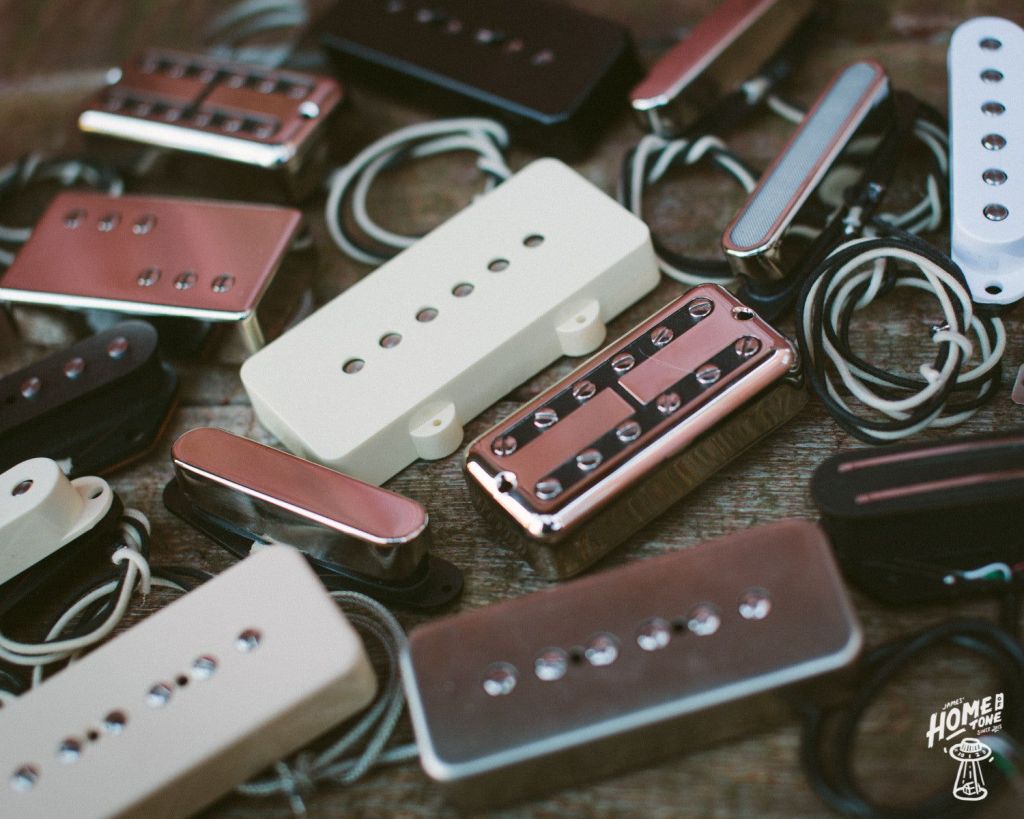
Image credit: http://www.homeoftone.co.uk

I have spoken in earlier posts about the differences in pickup type and how some may be more versatile than others (see the articles in question here and here), but to sum up, keep in mind these basic points:

– The lower the output of a pickup is, the cleaner it will sound as you increase volume
– Humbuckers can handle higher-gain settings with much less extraneous noise (hence the name, a reference to their hum-cancelling qualities)
– Different types of pickups will naturally sound different (i.e., those made with individual magnet ‘slugs’ for each string, as opposed to ceramic bars which run the length of the pickup); do plenty of research before you commit to buying!

Volume

As hinted at above, some pickups will retain their ‘natural’ tone more easily than others, depending on their strength. However, in many cases, judicious use of the volume control(s) on your guitar can help find the sweet spot in terms of sound. Unless there is a treble-bleed circuit installed within the circuitry of your guitar, most pickups lose a little top end as the volume is turned down. I find that rolling back the master volume on my Strats to around 7 or 8 takes out some of the harsher treble frequencies for a nicer, more rounded-out sound. It also leaves a little headroom to boost your volume and cut-through for lead lines.

Similarly, turning down the gain on the front end of an amp or overdrive pedal can allow for a cleaner sounding boost instead. On a pedal like a Tubescreamer (or the many brilliant clones available), turning down the gain allows you to use the volume to amplify the tone of your guitar/pickups without colouring it too much – and a cleaner sound usually cuts through more effectively than drenching your tone in distortion. Listen to those classic Led Zeppelin and Deep Purple records, and notice how there is surprisingly little distortion on the guitar most of the time. The power comes from the volume.

Strings

We’ve now reached one of the cheapest things which affects the sound of your guitar: strings.

Generally speaking, most people experiment with different thicknesses and brands when starting out as a guitarist, eventually settling on the ones which feel most comfortable under their fingers and break as infrequently as possible. But not all strings are alike. Their material (usually a type of metal or alloy) and various coatings have an effect on how the string vibrates, and therefore how it transfers sound to the pickups. Also, a strings that feel different will result in us adjusting the way we play, perhaps without meaning to.
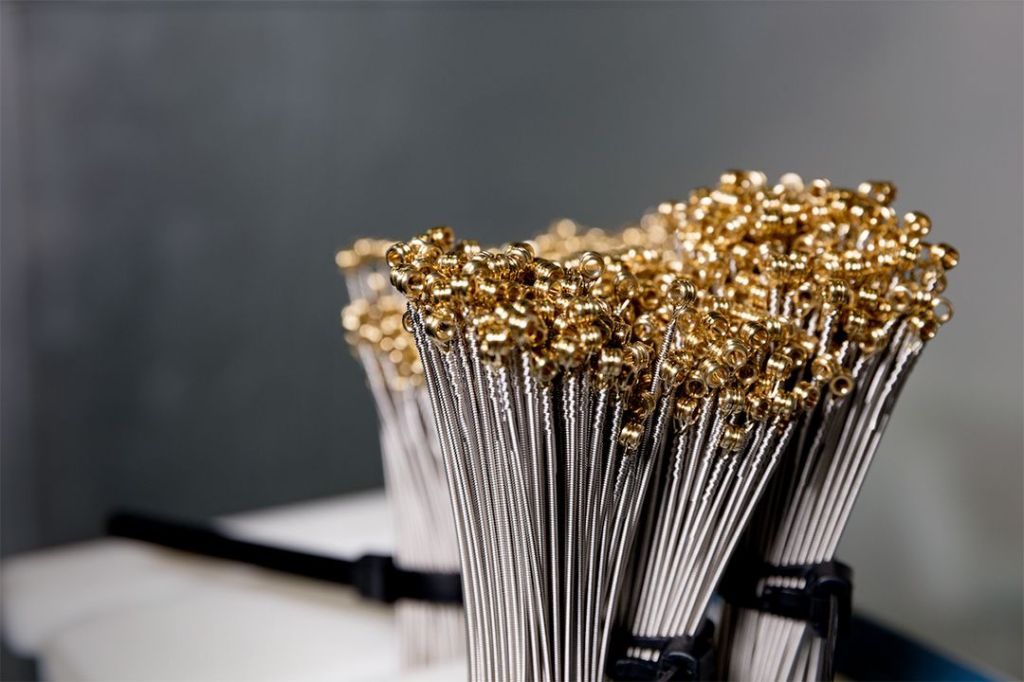
Image credit: ErnieBall.com

Many guitarists used to believe that thicker strings meant more tone. Think of Stevie Ray Vaughan’s gauge 13 strings and the huge bluesy tone he achieved. Yet also bear in mind that the Texan guitarist used heavy strings because he had large hands and and had developed a heavy-handed playing style; he used thicker strings to try and keep them from snapping all the time (and there’s lots of evidence from live footage of his performances to suggest he wasn’t entirely successful in this aim). Foe a while, I had one of my Strats set up with gauge 11 strings and down-tuned a half-step to Eb (as I have been told the late, great Jeff Beck used to do). This was largely a practical setup for the band I was working with at the time, but any guitar players believe doing this allowed the thicker strings to vibrate a little more ‘loosely’, which led to an improvement in tone. I can’t say I noticed much of a difference in the heat of a live show.

As a counter argument, B.B. King and Billy Gibbons used gauge 8 strings, and still managed to achieve great sounds from their instruments. For Gibbons, this may have been down to the famous ‘pearly gates’ humbuckers on his Les Paul, as well as his amplifier tone. As for the King of the Blues…

Fingers (and picks)

B.B. King would have sounded like B.B. King on any guitar. Indeed, Jeff Beck, Jimi Hendrix, Jimmy Page did always manage to sound uniquely like themselves on any guitar they played. The same can be said of virtually any famous guitarist you can think of, and indeed the rest of us. Why? Fingers.

The most overlooked area affecting the tone of your guitar (and following the rough cost-order of this list, the cheapest!) is the parts of your hands which make contact with the strings and create the sounds in the first place. This goes for either hand, but the fretting hand is the one which is holding the strings and notes in place.

Obviously, there can be a huge difference between picking with your fingers or using a plectrum, and the type of material you use for picks should be taken into account and experimented with until you find what works best for you. However, for your fretting hand, there’s not much we can do to change how this affects the sound overall. The good news is, that’s okay! You have been using the same hands since first picking up the instrument and your sound will always take this into account, if you didn’t realise you were doing it. Embrace who you are! Also, as your fingers are the first stage in the ‘sound chain’, there’s plenty of ways to change the sound as we go through pickups, effects, amps, etc… Take some time to explore the huge range of options and see what works for you!

One engineer’s breakdown of the factors that go into guitar tone. Do you agree? Image credit: http://www.stevenmeloneyrecording.com

Final thoughts

From all of the elements described above, which one would I single out as the most useful for tone shaping? That’s a tough call, and ultimately a very subjective topic. However, for me, I think volume is the most underrated element in the signal chain, and one I’ve taken years to master in terms of my own guitar sound and playing.

In my early days of playing guitar, I sometimes strove to change the sound of my guitar tone, frustrated that I could only go so far without seriously reprocessing the sound into something which might end up sounding synthetic. Yet as I performed live more often, I noticed that out of all of the comments people would make to me about my playing, tone was only ever mentioned in a positive light (the same could not be said for technique, unfortunately). Records capture faithful reproductions of the sounds I started with when tracking them. No one has ever said I have a bad tone. The only person who (sometimes) wanted to change it was me.

One of my modified Stratocasters

Maybe guitar players worry about this too much? Maybe we’ve been conditioned to overthink our tone because it serves the interests of the musical instrument industry? Thousands of companies, from instrument makers to amplifier manufactures, and creators of effects or inventors of accessories, rely on our need for more gear, to finally find that one product that will fix the problem in our sound. But it rarely does. Luckily, there’s always another thing to buy…

I’m sometimes prone to this line of thinking too. That’s the side-effect of living in a capitalist economy, I suppose. I’s never been easier to get purchase anything we need, but we have to be careful not to lose ourselves in the process, and hold on to the simple joy of music-making which got us started in the first place. I came to be happy with the sounds I produce from my fingers. I think it’s had a positive effect on the music I create. It can do the same for you too. Just remember to pay attention to the various stops along your signal chain to ensure everything is working in the best possible way for your sound, and you won’t go far wrong.
One to rule them all – which guitar is the best all-rounder?

Guitars & Gear

I an article earlier this year, I weighed-up which two guitars in my collection would be the ultimate top two – the two I could take along to any gig any be comfortable they would cover (almost) any style of music being played. This is especially useful for me at studio dates, where surprise requests can often occur, and I don’t usually have capacity to take my entire guitar collection along to every session!

In the end, after examining different types of guitar (differentiated largely by their pickups), I concluded that – for me – one of my Stratocasters and a p90-type guitar (in my case this Gould Stormbird) made a winning combination in terms of tones and range of genres. With these two, I could cover everything from jazz and funk to classic rock and noisy indie, and everything in-between.

But what if you could only take one guitar out? Which one would it be?

In the original post, I sang the praises of the 335-type guitar, which only just missed out on making it into the ‘top two’. I love my own 335 copy, but I felt more confident taking a Strat to a gig with multiple (or unknown) genres on the go, mainly because the single-pickup solid body cleans up better, is far less prone to feedback onstage (especially when playing heavier styles), and offers more tonal options. Also, I think the fact that I’ve played Strats since I was sixteen likely played a part in my thought process. I sometimes take a job where I don’t know exactly what I’ll be asked to play until I arrive, so familiarity with an instrument I trust is crucial.

However, I might have been a little unfair to the 335, and feel like I’ve changed my opinion in the last few months. I’ve certainly been using one as my main guitar for 80% of my gigs this year so far, and it performed perfectly at my most recent studio bookings – but would I be happy with it as my only guitar for any gig?

Let’s look at the three types of guitar by pickup type again, with a summary of what I use them for, as well as a few examples of where I use them professionally.

Single-coil solid body guitars (Strat, Tele, Danelectro, etc)

Classic guitar tones – bright and clear with lots of twang or spank to their sound
Sound great overdriven, but retain some of their original character
Sit well in a mix with other instruments/guitars
Reliable, solid instruments which are easy to mod
Perfect for: pop, funk, country, blues, rock, indie
Can be noisy, especially in high-gain settings

P90 solid body guitars (Stormbird, Some PRS models, some Teles, etc)

Beefed-up version of a classic single-coil sound
Beautifully warm, yet still clear, distorted sound
Great ‘best of both worlds’ between a single-coil and humbucking pickup
Covers most styles (but volume has to be rolled back slightly for cleaner sounds)
Can be very noisy in certain settings

Humbucker solid body guitars (Les Paul, SG, PRS)

The classic overdriven guitar sound, warm but aggressive
Warm, full sound for jazz (with the volume rolled back a little)
Perfect for: Rock of all types, jazz and blues
Not as good as single-coils for those iconic glassy clean sounds

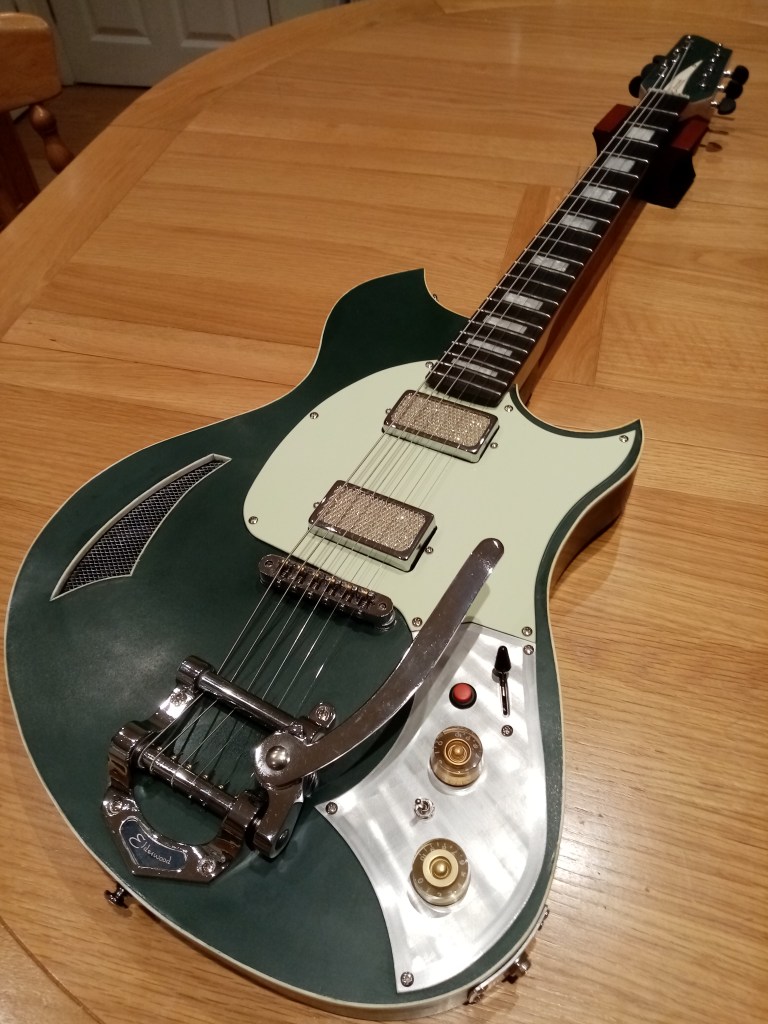
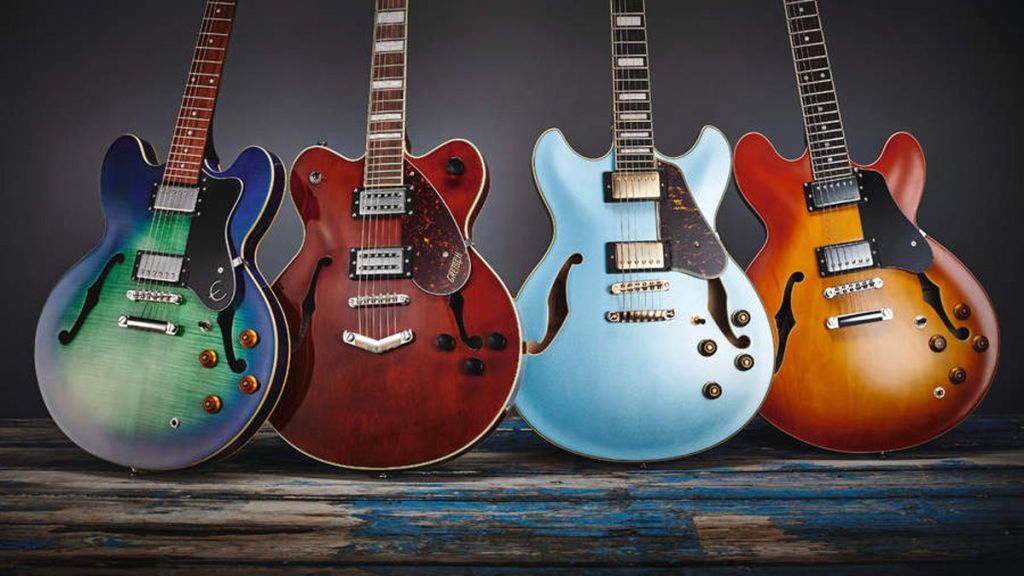
Humbucker semi-hollow guitars (335, Elderwood, etc)

A humbucking guitar with a slightly airier sound
Lighter than a Les Paul (to save your poor back!)
Capable to playing most styles imaginable
Perfect for: jazz, funk, soul, blues, classic rock
Neck & Bridge pickups together gives a wonderful funk tone
Prone to feedback onstage, especially in higher-gain settings

Picture credit: Music Radar

Final thoughts

Which would I choose? I still couldn’t say for certain. It depends so much on the gig in question, but if I wasn’t sure what I was going to asked to play, I expect it would be the Strat or the 335 I’d be reaching for. I guess it comes down to a choice between a solid body or (semi) hollow bodied guitar; whether I’m seeking the thicker snap of the Strat, or the airier sound of the 335.

And of course, bear in mind that we’ve only been discussing electric guitar options here – if I was really unsure about the requirements for a studio date, I’d have an acoustic packed into the car too!

But what about you? Obviously, what works for me doesn’t necessarily work for everyone, which is why I’d love to hear your thoughts – get in touch!

Harley Benton HB-35 Plus Top Semi-hollow Guitar Review

Guitars & Gear

At the end of last year, I acquired a new second-hand guitar. It even shipped with a hard case included as part of the sale! The guitar in question is a budget 335-style copy, made by Harley Benton, the in-house grand for the German musical instrument retailing giant Thomann. Or rather, I should say the Harley Benton HB-35 Plus

What does plus mean?

Harley Benton already have the HB-35, their budget version of a 335-style guitar. Selling for just £175, they get good reviews and are an affordable way to try out Semi-hollow guitars for the first time. The HB-35 Plus retails at approximately £220 new, but has features which mark it out as a considerable upgrade on it’s cheaper sibling.

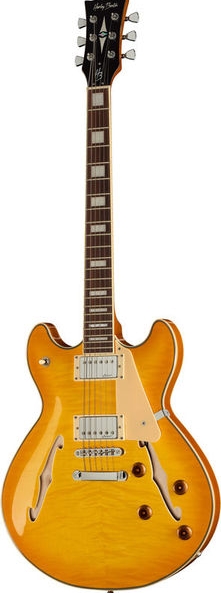
So what does that extra £45 get you? Block inlays, for a start, which look very classy. You also get more specialised vintage-voiced humbucking pickups (which can be split for a single-coil sound) and an arched maple top (hence the plus top moniker) in fancier colour options, such as the lemon drop colour reviewed here.

Image from Harley Benton’s website – note the original placement of the pickup selector

I love this colour, which appears more of a light orange-yellow to my eyes.

Furthermore, it seems that the nut is slightly more narrow (42mm to the original HB-35’s 43mm) and a slightly more curved fingerboard (12″ radius, compared to the older model’s 13.5″ or thereabouts), making this guitar feel a little more like the classic ‘jazz boxes’ of old.

Specifications & build quality

Having bought this guitar from another player, I received an instrument which had already been set up, and indeed, modified. This means I don’t know how this guitar would have arrived ‘from the box’, although I hear that like most guitars, a simple set up would be enough to get it in shape.

The guitar I received felt well balanced across the fretboard and is really comfortable to play. The classic Gibson scale length feels familiar and the neck is comfortable in my hand. In fact, it feels like they have copied the dimensions of the classic 335 very closely, which is no bad thing.

What’s more, the previous owner had moved the pickup selector switch from the top shoulder (where you would find it on a Les Paul) to a sit with the other controls, which is much more typical on a 335-style guitar. The only negative is that the original hole is still there (it was covered with a giant sticker when it arrived, which I quickly and carefully removed).

Here are the full specs of the guitar, according the Harley Benton:

  • Semi-hollow design with mahogany sustain block (Entandrophragma cylindricum)
  • Maple body with AAAA flamed maple archtop
  • Set-in maple neck
  • Pau Ferro fretboard with block fretboard inlays
  • Fretboard radius: 12 inches
  • 22 medium jumbo Frets
  • Scale: 24.75 inches
  • Nut width: 42 mm
  • 2 Roswell LAF Alnico-5 vintage-style humbucker pickups
  • 2 Volume controls with push/pull function for split coil
  • Individual tone controls for each pickup
  • 3-Way pickup toggle switch
  • Tune-O-Matic bridge

The main thing on my list to change, and indeed the only upgrade I feel this guitar needs, is to swap the plastic nut for one made of bone. I’ll probably get round to doing this later in the year, and for now it’s working fine and holding its tuning well.

How does it sound?

Before even plugging into an amp, this guitar sounds good (and surprisingly loud) completely acoustic, which is useful for playing at home.

Plugged in – it sounds exactly as a 335 should.

Played clean, single notes and chords ring out loud & clear, sounding even across the entire fretboard. The pickups, combined with the tone controls, allow for everything from jazz and blues to soul, pop, country and an almost Gretsch-like Chet Atkins vibe. Using the push-pull volume to split the humbuckers down to single-coils beings out an airier version of a Telecaster sound.

Throwing a little overdrive in makes this a very enjoyable guitar to play. As well as offering grittier takes on all the styles and sounds mentioned above, you also get some of the best classic rock tones out there. Add more distortion and it continues to sound very good and play incredibly well. The semi-hollow body allowing gentle feedback which helps add to note sustain.

Putting the HB-35+ through it’s paces at home

This guitar not only took any style I threw at it in its stride, but excelled across the board, even in higher-gain settings. Admittedly, I don’t play the more extreme metal genres, but even then, if you can work out the likely feedback issue, I have a feeling this guitar would surprise you…

Does it hold up well at live shows?

Since acquiring this guitar at the end of autumn last year, I’ve gigged it pretty regularly. It performed brilliantly when I put it through its paces at a recent soul review show, covering Steve Cropper style licks and jazzier solos and choral work. With one of my main covers acts, this quickly became my first choice guitar, covering everything from jangle and early 60s pop to classic rock, punk and Britpop, all in the space of one show. It is comfortable both to play and also to wear standing up for two hours.

Ask most professional session guitarists what the best ‘cover all bases’ guitars are, for studio work and live, and they will probably tell you to have a 335 handy. Obviously, this applies to any decent 335-style guitar, if not the gold standard Gibson original. But it certainly makes sense to snap up this significantly cheaper tribute, especially when it looks classy sounds fantastic and plays so well. It may be that they take a little post-purchase work to reach the decent playing standard I seem to have, but in my opinion, it’s worth it.

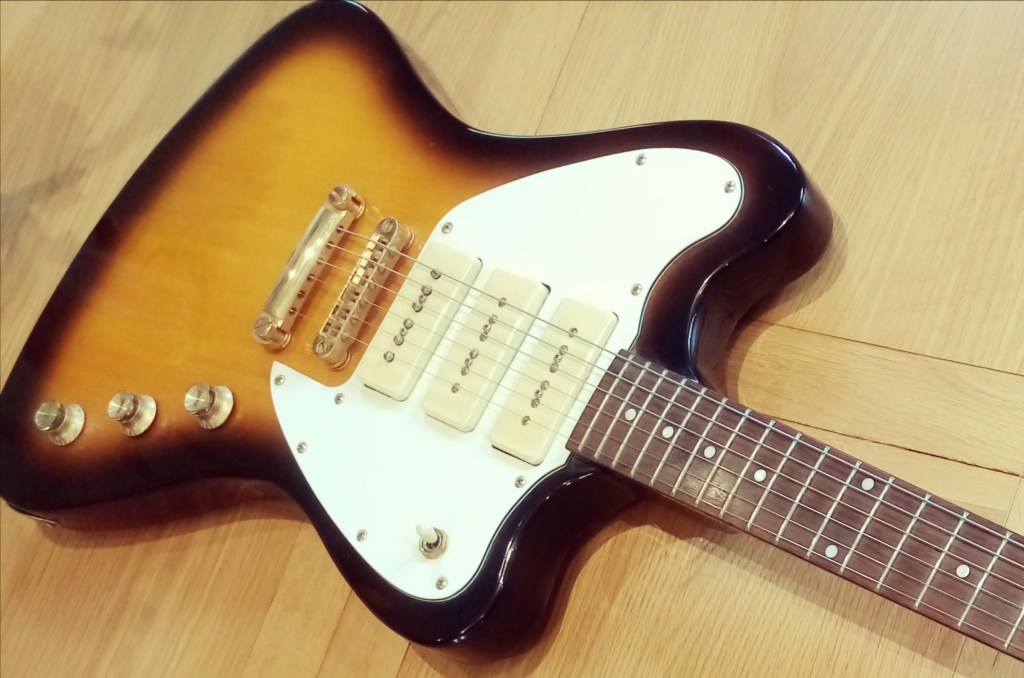
This guitar is quickly becoming a firm favourite in my small stable of electric guitars (which includes Stratocasters, a triple P90 non-reverse Firebird copy, and my other, less traditional semi-hollow). In fact, it’s already become my main guitar for covers gigs, playing weddings and corporate functions.

Final Thoughts

This guitar surprised me. I’d heard really good things about Harley Benton, but I still wasn’t prepared to be blown away as much as I was by this guitar. I’ve used it in various settings and with several different acts in the last couple of months, covering styles from Kuti to Kasabian and BB to The Buzzcocks, and I’m very impressed with how it’s handled everything I’ve thrown at it.

Nowadays, the term ‘budget guitar’ doesn’t mean the same as it did twenty or even ten years ago, and shouldn’t arouse the kind of stigma which cling to those older, poorly constructed guitars. The quality on this instrument is very high, and I can’t stress enough just how fantastic those Roswell pickups sound!

After years (decades, even) of using Stratocasters as my main go-to guitar while others have come and gone from my collection, I might have found another guitar that I love just as much. I might even have to buy another of these, just in case something happens to this one – which at this price point, is an affordable prospect.

Highly recommended. Go and give one a try now.

Creativity v Convention: What happened to improvisation in classical music?

Music

During lockdown, I wrote a piece featuring only a starting and ending theme, leaving the space in between entirely free for the performers (taking turns) to improvise. Players had complete freedom of expression in how they choose to navigate from one theme to the other. The notes they chose, how long they took, and style were entirely at the discretion of each performer.

I approached a few of my musician friends to test this conceptual piece out. When faced with no rules and no harmonic foundation on which they could improvise against, many of them struggled. I found this surprising, especially from performers I know to be excellent jazz improvisers.

However, my friends who are classical musicians failed the task entirely. Why?

Improvisation seems to have all but disappeared not just from the repertoire of classical music, but from the skill set of classical performers. Audiences attending classical concerts and recitals generally expect to hear faithful renditions of the pieces they know, and doubtless have in their music collections at home. Deviation from the score is seen as a failure, perhaps even an insult to the express will of the composer.

It wasn’t always this way. Many early pieces were based around a framework where improvisation would be expected, not just on the main theme (similar to a jazz ‘head’ followed by solos nowadays), but in the accompanymeny itself. The basso continuo parts in Baroque scores (usually played by the harpsichord) were loose fragments, using a special shorthand (known as figured bass) to highlight the expected harmony at certain points in the piece. It was up to the player to fill in the gaps. Similarly, soloists were given freedom of expression in their performance, often at the end of a piece in a completely improvised coda known as a cadanza:

It was the performer’s job to “finish” the composition for the audience (in the same way, today, that an interior decorator finishes the work of an architect and a builder)

Rhode Island Philharmonic, THE STORY BEHIND… (2021)
Composer & violin pioneer Antonio Vivaldi was renowned (and even feared by his peers) for the virtuosity of his improvised cadenzas (picture credit: Eboracum Baroque)

Nowadays, there is almost no improvisation to be heard at a classical concert or recital. Sticking strictly to the notes on the page has become convention.

Did the beginning of the end start with Beethoven? His fifth and final piano concerto, the so-called ‘Emporer Concerto’, features a unique instruction at the end of the first movement: “Do not make a cadenza, but immediately proceed to the following” (usually marked on the score as Non si fa una cadenza, ma s’attacca subito il seguente).

At this time in his life, Beethoven once one of the most celebrated piano improviser of his time, if it the best among his contemporaries, was now struggling with his hearing to the extent that he was no longer able to improvise when playing alongside an orchestra.

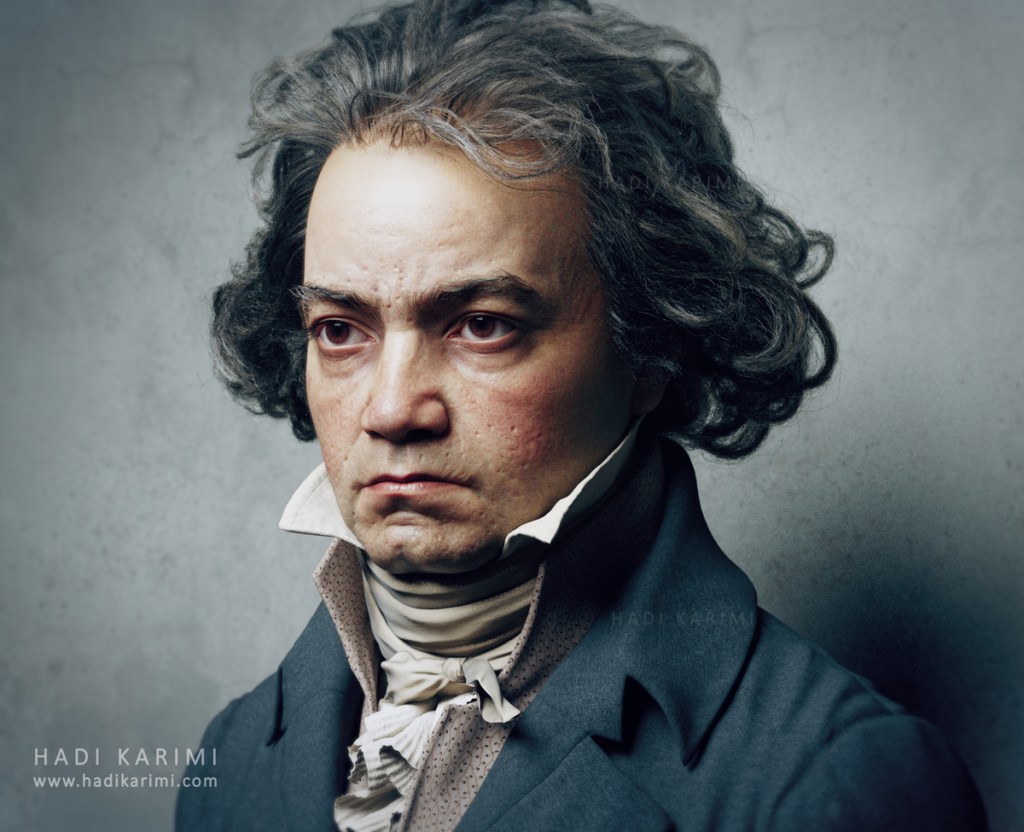
A wonderfully striking 3D interpretation of Beethoven’s portrait, circa 1812 (picture credit: Hadi Karimi)

Some believe that he decided to formally write a cadenza to be played as written, which was very rare for the time, almost out of a sense of spite; frustration at not being able to improvise the way he wanted to led to the instruction specifying that no other performer could either.

At the same time, pieces were becomg more elaborate, orchestras were increasing in size and composers were becoming more experimental and imaginative. This left little room for the spontanetny of one individual’s instantaneous composing. Similarly the widening of audiences themselves to include more of the emerging middles classes led to an increased formalisation of concert going etiquette, much like the ever-expanding rules of dining (which fork to use, passing the port from the left). Invented rules designed to separate the ‘old money’ from the ‘neveau riche’ soon became simply the way things are done. Instruction because convention. Convention became tradition.

So how do we come back from this? There are those who argue that without the skill of improvisation, you’re not a complete musician.

When we repeat music we have learned by rote, are we repeating memorised phrases in a foreign language in which we are unable to actually converse? Music is, after all, the oldest language. We don’t exchange information and ideas solely through the quotation of famous speeches (at least, not most of the time), so why does this still such a strong convention in western classical music performance?

That’s just how things are done around here.

There is something stultifying about a tradition where millions of pianists are all playing the same 100 compositions… everyone has to play a Bach prelude and fugue, a Beethoven sonata, a Chopin nocturne, and we’ll do that until the end of the world, something in our soul dies

John Mortensen, quoted in The Guardian (2020)

But it doesn’t necessarily have to be this way.

Real art is about breaking the rules and going against convention. Perhaps it is time classical performers took back their right to own their own performance and interpretation. Audiences won’t mind (according to this relatively recent research). Beethoven and the Old Masters won’t mind. They’re dead, but their music doesn’t have to be…