More thoughts on interpretation

Music

In a recent article, I used Albêniz’s Leyenda as an example of varying interpretations, from a performer’s and arranger’s perspective. I stated my belief that interpretation is one of the crucial elements of artistic performance, yet it remains one which is often overlooked in musical performance. It’s what makes a performance unique to you, rather than a carbon copy of notes on a page. I say this because sometimes meaning can be lost if we do not remain mindful of what we want a piece to convey.

Views on interpretation vary, not only in how it should be defined but also in who has the right to do the act of interpreting in the first place. There are no right answers – only opinions. There are mine, based on my experiences of a wide range of musical genres, all of which I have interacted with in many different ways; composer, arranger, performer, and most of all, listener.

Interpretation as an act of translation, rather than the inferring of meaning

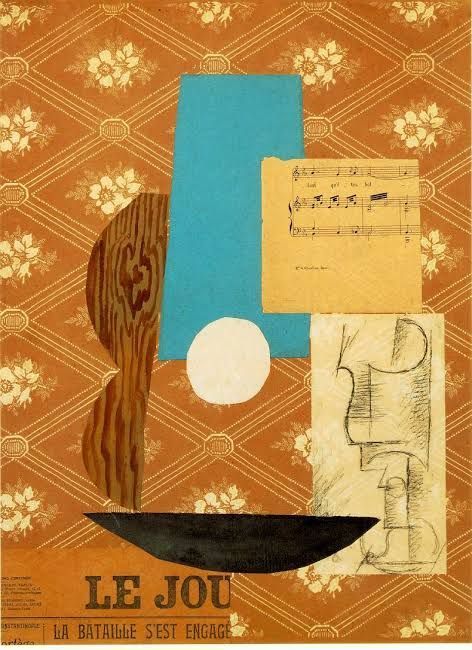
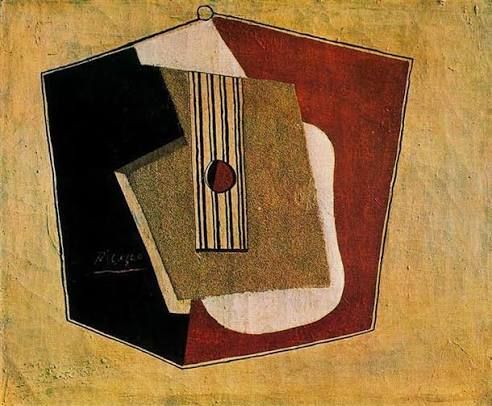
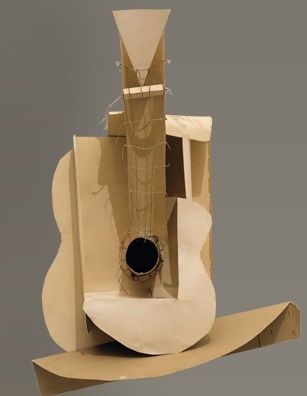
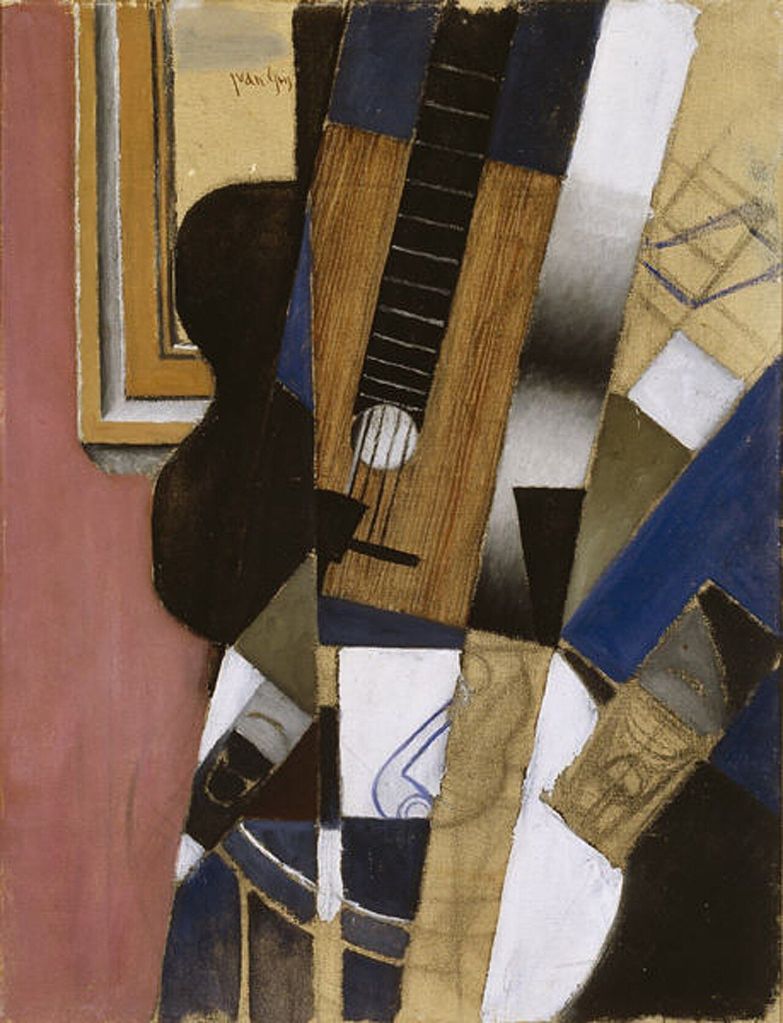
Interpretation often comes in for criticism, but usually in the context of art being explained to an audience. Literary critic E. D. Hirsch stated that “the author’s intention must be the sole determiner of meaning” (The Aims of Interpretation,1976), though many would disagree. Artists and creatives such as Charlie Chaplin to Salvador Dali have made similar-sounding statements against the imposition of another’s interpretation onto an audience. In effect: art doesn’t require an explanation. Meaning can be interpreted by the recipient in their own way.

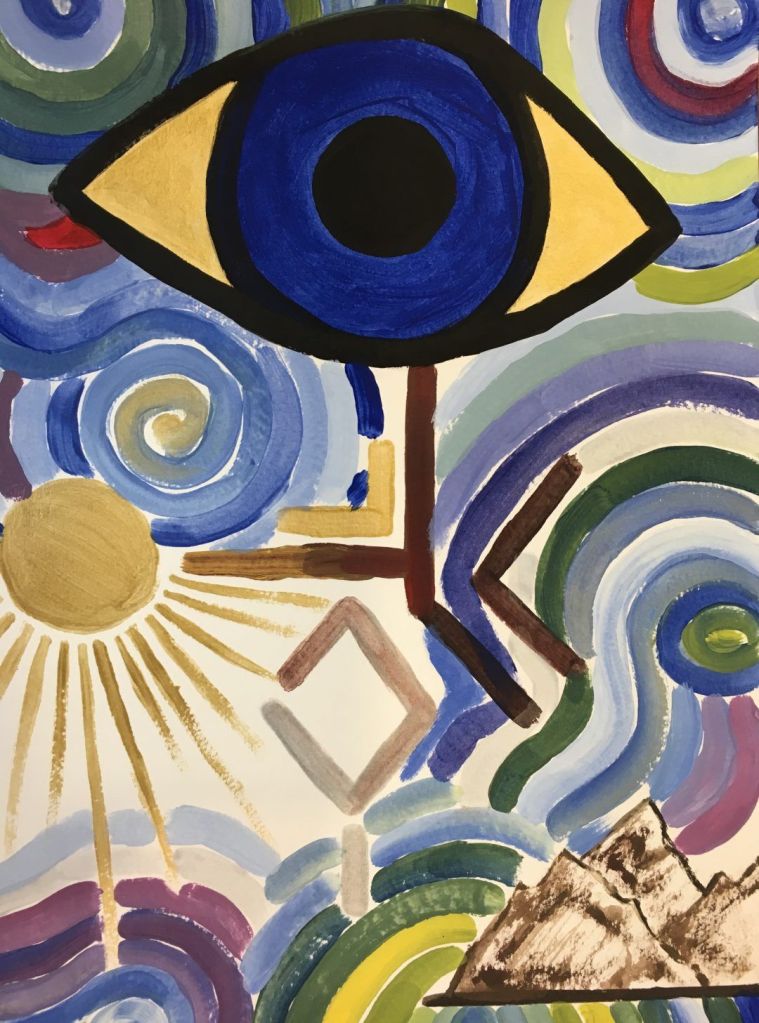
A Visual Interpretation of Mark di Suvero’s Mindseye, by Lauren Kordas (2017)

This is undoubtedly true, but what about the creator of the art? In terms of the composer, a sense of meaning will have been part of the original creation of any work of art. Even a piece purposely left open to the audience’s own interpretation is a deliberate choice on the part of the creator.

And what of the middle-men between creator and audience? In the case of music and performing arts, how can arrangers and performers interpret previously written works? Consider just how many modern films, etc, are modern versions of Shakespeare, classic Greek plays, etc, where the setting and characters has been changed. Often, it is brought up to the present time of the new adaptation, and usually re-scripted in language more accessible to the audience of these more recent times. Sometimes works are transposed to completely different media, such as tone poems based on paintings or poems.

A concert performer will often choose works of a similar theme for recitals. This act of curation demonstrates that someone other than the composer – be it the performer or program director – has imposed a new theme onto the chosen pieces which in all likelihood was not part of their original creation. Along these theme is the jukebox musical, an early example of this is Return to the Forbidden Planet, based on the 1956 sci-fi film Forbidden Planet, which in turn is based on Shakespeare’s final play, The Tempest. The score of songs sung by the cast (or used as incidental music) throughout the play is comprised entirely of rock’n’roll hits from the 1950s and 1960s, none of which were conceived or recorded with the story or themes of this musical (premiered in the 1980s) in mind – old works were chosen and presented in a new format to tell a new story.

A Visual Interpretation of Mark di Suvero’s Mindseye, by Allison Rice (2017)

Be sure to include your own voice, and your own meaning

For performers, interpretation is unavoidable. Many performers appear happy to perform pieces written and arranged by others, repeating their original vision and intent without adding anything to the process apart from the immediacy of live performance. In some cases, this may be the most appropriate course of action. However, I’d argue that the opposite is true far more often than you might think.

Sometimes the effects of presenting a piece through the lens of your own interpretation is barely noticeable. The results will be felt rather than consciously observed by audiences. In some cases, they have been known to have a longer lasting effect. In my article on Leyenda, I noted that the most widely accepted adaptation for guitar includes a series of sixteenth triplets near the beginning which are not present in the original piano score, but an invention of noted classical guitarist Andres Segovia. I have noted in an additional piece that such rhythmic variations used to be the norm in musical performance. The apparent convention in modern classical music concerts, which seems to impose limits on the range of individual creativity permitted by performers, is likely to have led to the neglect of artistic interpretation in more recent times.

In more immediate terms, the way you perform a piece will affect the way the audience hear it, and the kind of meaning they might derive from it. This doesn’t mean grand re-imaginings are required for every performance. Sometimes the simplest (and best) option is to be mindful of your intent in preparation for an upcoming performance, and during the performance itself, rather than focusing solely on technique – or achieving a faithful reproduction of note sequences.

Image credit: Jazzia / Folia.com (2013)

Put simply: be mindful about what you are playing, and how you are playing it

The composer’s views are important. So is understanding the context of the times in which the pieces were commissioned, written and first performed. These will affect your understanding of a piece. The same goes for your audience. But if we are to consider the context of time and place, it is essential that we include the most important factors which separates a performance from a recording (or past performance): the here and now.

In Music Therapy, both improvised music and pre-existing songs are used as a language to communicate feelings the client might struggle to adequately articulate verbally. However, when performing a well-known song, neither the client or therapist is primarily concerned with a faithful recreation of the original artist’s recording. Instead, we are using the musical language in the here and now of the therapeutic space to communicate new feelings, and new meanings. That is, and has always been, the intrinsic power of music.

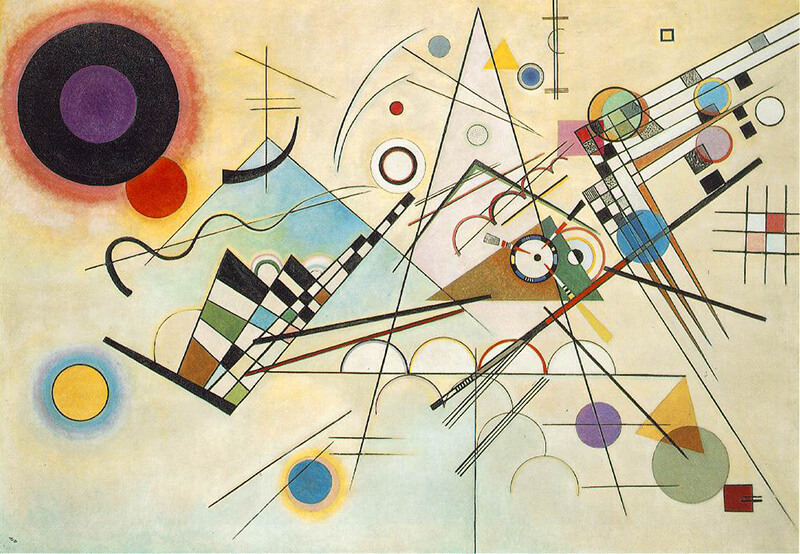
Composition VIII – Wassily Kandinsky (1923)

The (not so) secret to getting a great guitar tone

Advice & Tips

Is tone more important than technique? That’s a great debate to have, but not today…

Yet when most people listen to music, it is the tone of an instrument such as a guitar which catches and holds our attention first, so tone is pretty important. But how do we improve our tone? To do this, we need to understand what makes the tone we hear when we play guitar.

Tone knobs. Also available on dishwashers

In this article, I will list the various various factors that impact the tone of your instrument, starting from the last one in the chain before the sound reaches our ears, all the way back to where the notes come from…

Amplification

As the last step in the signal chain, the sounds that come out of your amplifier (or PA speaker if you’re using an amp simulator, etc) if what you and the audience hear. Everything that comes before this will be coloured by the natural sound of the speaker, it’s valves/circuitry and whatever tones you dial in.

It’s so common to see guitar players spending most of their money on a guitar, while skimping on amplification. While it’s certainly true that it’s a good idea to have the best equipment you can afford, that super-expensive Deluxe Strat would actually sound too different to the Squier Bullet Strat if you’re playing them through the same amp.

Image credit: Fender.com

A good amp can adapt your sound. Weaker, thinner-sounding pickups (such as single coils) can be ‘beefed up’, while humbuckers with too much push can be fixed with a mid-range cut. And that’s before we look at overdrive, distinction, reverb and effects such as chorus, flange, phaser, etc, all of which further colour the natural tone of the guitar. There is dangers here, too. Overuse of EQ or effects can lead to something which sounds over-processed, or just plain bad (think of the infamous ‘wasp in a jam jar’ sound attained from too much fuzz and treble).

Luckily, the market is full of affordable amplification options. There are also various digital modelling amps and units that can recreate the classic tones of famous (and incredibly expensive) vintage and boutique amps. To have so many genuinely realistic sounds available in one place, at an affordable price, is a relatively new luxury that all guitarists should be taking advantage of.

Pickups

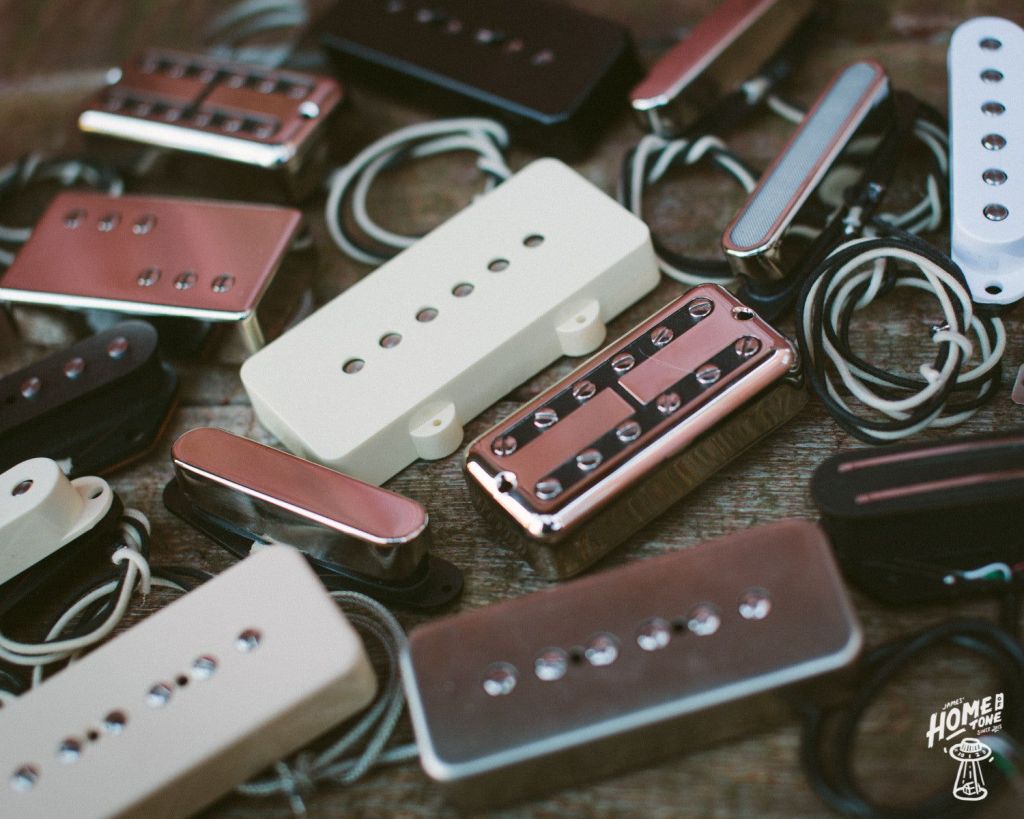
After amplification, the second most crucial factor affecting the sound of an electric guitar is the pickups. These devices, magnets wrapped in wire, convert the vibration of the guitar’s strings into an electrical signal to send onwards in the chain.

Image credit: http://www.homeoftone.co.uk

I have spoken in earlier posts about the differences in pickup type and how some may be more versatile than others (see the articles in question here and here), but to sum up, keep in mind these basic points:

– The lower the output of a pickup is, the cleaner it will sound as you increase volume
– Humbuckers can handle higher-gain settings with much less extraneous noise (hence the name, a reference to their hum-cancelling qualities)
– Different types of pickups will naturally sound different (i.e., those made with individual magnet ‘slugs’ for each string, as opposed to ceramic bars which run the length of the pickup); do plenty of research before you commit to buying!

Volume

As hinted at above, some pickups will retain their ‘natural’ tone more easily than others, depending on their strength. However, in many cases, judicious use of the volume control(s) on your guitar can help find the sweet spot in terms of sound. Unless there is a treble-bleed circuit installed within the circuitry of your guitar, most pickups lose a little top end as the volume is turned down. I find that rolling back the master volume on my Strats to around 7 or 8 takes out some of the harsher treble frequencies for a nicer, more rounded-out sound. It also leaves a little headroom to boost your volume and cut-through for lead lines.

Similarly, turning down the gain on the front end of an amp or overdrive pedal can allow for a cleaner sounding boost instead. On a pedal like a Tubescreamer (or the many brilliant clones available), turning down the gain allows you to use the volume to amplify the tone of your guitar/pickups without colouring it too much – and a cleaner sound usually cuts through more effectively than drenching your tone in distortion. Listen to those classic Led Zeppelin and Deep Purple records, and notice how there is surprisingly little distortion on the guitar most of the time. The power comes from the volume.

Strings

We’ve now reached one of the cheapest things which affects the sound of your guitar: strings.

Generally speaking, most people experiment with different thicknesses and brands when starting out as a guitarist, eventually settling on the ones which feel most comfortable under their fingers and break as infrequently as possible. But not all strings are alike. Their material (usually a type of metal or alloy) and various coatings have an effect on how the string vibrates, and therefore how it transfers sound to the pickups. Also, a strings that feel different will result in us adjusting the way we play, perhaps without meaning to.

Image credit: ErnieBall.com

Many guitarists used to believe that thicker strings meant more tone. Think of Stevie Ray Vaughan’s gauge 13 strings and the huge bluesy tone he achieved. Yet also bear in mind that the Texan guitarist used heavy strings because he had large hands and and had developed a heavy-handed playing style; he used thicker strings to try and keep them from snapping all the time (and there’s lots of evidence from live footage of his performances to suggest he wasn’t entirely successful in this aim). Foe a while, I had one of my Strats set up with gauge 11 strings and down-tuned a half-step to Eb (as I have been told the late, great Jeff Beck used to do). This was largely a practical setup for the band I was working with at the time, but any guitar players believe doing this allowed the thicker strings to vibrate a little more ‘loosely’, which led to an improvement in tone. I can’t say I noticed much of a difference in the heat of a live show.

As a counter argument, B.B. King and Billy Gibbons used gauge 8 strings, and still managed to achieve great sounds from their instruments. For Gibbons, this may have been down to the famous ‘pearly gates’ humbuckers on his Les Paul, as well as his amplifier tone. As for the King of the Blues…

Fingers (and picks)

B.B. King would have sounded like B.B. King on any guitar. Indeed, Jeff Beck, Jimi Hendrix, Jimmy Page did always manage to sound uniquely like themselves on any guitar they played. The same can be said of virtually any famous guitarist you can think of, and indeed the rest of us. Why? Fingers.

The most overlooked area affecting the tone of your guitar (and following the rough cost-order of this list, the cheapest!) is the parts of your hands which make contact with the strings and create the sounds in the first place. This goes for either hand, but the fretting hand is the one which is holding the strings and notes in place.

Obviously, there can be a huge difference between picking with your fingers or using a plectrum, and the type of material you use for picks should be taken into account and experimented with until you find what works best for you. However, for your fretting hand, there’s not much we can do to change how this affects the sound overall. The good news is, that’s okay! You have been using the same hands since first picking up the instrument and your sound will always take this into account, if you didn’t realise you were doing it. Embrace who you are! Also, as your fingers are the first stage in the ‘sound chain’, there’s plenty of ways to change the sound as we go through pickups, effects, amps, etc… Take some time to explore the huge range of options and see what works for you!

One engineer’s breakdown of the factors that go into guitar tone. Do you agree? Image credit: http://www.stevenmeloneyrecording.com

Final thoughts

From all of the elements described above, which one would I single out as the most useful for tone shaping? That’s a tough call, and ultimately a very subjective topic. However, for me, I think volume is the most underrated element in the signal chain, and one I’ve taken years to master in terms of my own guitar sound and playing.

In my early days of playing guitar, I sometimes strove to change the sound of my guitar tone, frustrated that I could only go so far without seriously reprocessing the sound into something which might end up sounding synthetic. Yet as I performed live more often, I noticed that out of all of the comments people would make to me about my playing, tone was only ever mentioned in a positive light (the same could not be said for technique, unfortunately). Records capture faithful reproductions of the sounds I started with when tracking them. No one has ever said I have a bad tone. The only person who (sometimes) wanted to change it was me.

One of my modified Stratocasters

Maybe guitar players worry about this too much? Maybe we’ve been conditioned to overthink our tone because it serves the interests of the musical instrument industry? Thousands of companies, from instrument makers to amplifier manufactures, and creators of effects or inventors of accessories, rely on our need for more gear, to finally find that one product that will fix the problem in our sound. But it rarely does. Luckily, there’s always another thing to buy…

I’m sometimes prone to this line of thinking too. That’s the side-effect of living in a capitalist economy, I suppose. I’s never been easier to get purchase anything we need, but we have to be careful not to lose ourselves in the process, and hold on to the simple joy of music-making which got us started in the first place. I came to be happy with the sounds I produce from my fingers. I think it’s had a positive effect on the music I create. It can do the same for you too. Just remember to pay attention to the various stops along your signal chain to ensure everything is working in the best possible way for your sound, and you won’t go far wrong.

Hot space: the secret of good improvisation

Advice & Tips

It almost seems too obvious to even require mentioning, but it’s the best advice I was ever given as a young musician:

Do less, and do it well

If in doubt, leave it out goes the old adage about instrumental soloing. It equally applies to composition as well – but what else is improvisation, if not instantaneous composition?

Think about what you’re trying to say, and be sure to communicate that message in a way listeners will be able to understand.

Imagine trying to listen to someone give a lecture, but the speaker in question spoke incredibly fast and never paused for breath. It’s exhausting to listen to. And sometimes, when you are trying to be get your point across, it can be better to say less.

This is why all those flashy million-notes-per-second solos are generally only preferred by other musicians. The best solos carry a song without filling the entire sonic pallete, leaving room for the listener to hear the context in which the solo exists.

“The most important thing I look for in a musician is whether he knows how to listen”

Duke Ellington

The great jazz improvisers such ad Miles Davies referred to this as ‘hot space’ and valued it as highly as – if not higher than – the notes being played in solos.

However, that’s not to say that the noodling doesn’t have its place. Of course it does. It’s certainly true that speed and long, winding melody lines have their place, but they need to be used sparingly, like spices which might otherwise overpower the dish when you’re cooking.

Naturally, there’s no clearly defined correct way to improvise. The whole point of improvisation is we literally making it up as we go along! Go out there and take risks – just leave room for everybody else!

And remember, context is key, always.

Music & Wellbeing (Part 6): Music Therapy & Educational Wellbeing

Music Therapy

Music and educational wellbeing

So far, we have investigated the value of music in physical and mental wellbeing. As previously discussed, a better education leads to greater feelings of wellbeing, particularly in later stages of life (Merriam & Kee, 2014). With that in mind, if we are to consider the value of music on our physical and mental wellbeing, we must also discern its role in our education.

There have been recent arguments for the evaluation of wellbeing in the school system, examining what good practice is already in place, and also discussing ways to implement further measures (Aggleton, Dennison & Warwick, 2010). A recent study by McFerran & Rickson (2014) also highlighted the positive effect of music and music therapy in educational wellbeing. Both of the above studies allude to the wider benefits in the community and later on in the child’s life, once they reach adulthood. In this chapter, I aim to examine current thinking on the effects of music on improvements in children’s learning.

The act of participating in musical activities, or playing musical instrument, is seen by many to be of great importance to children’s development (Scripp, Ulibarri, & Flax, 2013; Swanwick, 1988, 1994;). As well as teaching self-discipline and providing feelings of achievement, it acts as ‘a powerful therapy for all sorts of childhood conditions. It develops body, brain and soul in balance’ (Ben-Tovim, 1979, pp. 15-16). Music has been considered to share many similarities with language throughout our history (Thaut, 2005, p. 171). It has long been used as a method of communicating new ideas and concepts to children in a classroom environment (Welch, 2005, p. 254; Barrett, 2005). The use of music in teaching pre-school children acts as both an ‘aid in language development while promoting musical development at the same time’ (Wiggins, 2007, p. 55). Recent studies, such as those carried out by Rickard et al (2010) noticed significant improvements in the verbal memory of primary school children who had spent time studying and playing music.

Such improvements, however, stop a little short of the now famous ‘Mozart effect’. This term is derived from an experiment in which students who listened to at least ten minutes of Mozart’s music performed better in special awareness tests (Rauscher, Shaw & Ky, 1993, quoted in North & Hargreaves, 2008, p. 346). The popularity of these studies allowing the idea that certain genres of music can increase intelligence has since filtered into popular assumption. However, the theory that listening to music increases intelligence quotient (IQ), excluding any other factors or stimuli, is in itself a ‘massive oversimplification and overgeneralisation of the original scientific findings’ (North & Hargreaves, 2008, p. 346). I agree that there are too many additional factors to be considered when taking into account music as stimulation for learning. I find it unreasonable to rely on an almost magical ‘Mozart Effect’ for better results in a classroom environment. I believe music needs to be employed intelligently as a communicative and participatory tool in teaching practice. Student engagement will be increased through activities they regard as ‘fun’ and consequently topics can be digested more effectively. In my opinion, the musical method should stimulate creativity in the children, and better equip them for future learning in other subjects (Scripp, Ulibarri, & Flax, 2013).

While Wiggins (2007) conducted her research in the United States of America, there is an emerging global consensus to collaborate her view surrounding music as an effective tool in teaching. A similar study undertaken in Australia investigated the effects of shared music activities in pre-school children at ages 2-3 years old. The researchers then successfully linked these to a positive range of skills by the time the subjects reached ages 4-5 years old. The children demonstrated higher abilities in ‘vocabulary, numeracy, attentional and emotional regulation, and prosocial skills’. (Williams et al, 2015). The children in these tests proved to be more developed in terms of numeracy, literacy and prosocial skills, than children who had not partaken in shared music activities at a young age; more, even, than children who had participated in shared reading activities at the same age as part of the same research (Williams et al, 2015). This builds upon previous research in Germany, which suggests the level of skills such as numeracy in children may be largely down to the home environment of the child, not to mention other factors such as the educational level of the mother (Anders et al, 2012). Williams et al (2015) use the studies of Anders et al (2012) as one of the bases for their own research. While the German studies are not music-specific, they do not preclude the theories on which the Australian study was conducted. Similar investigations on older children by Hille & Schupp (2015) demonstrated not only an improvement in school performance, but greater conscientiousness and improved social awareness.

So what about children with special educational needs? ‘Special educational needs’ (SEN) is a term which encompasses a wide variety of physical and mental circumstances which might impede learning, experienced both within and outside of the educational system. In the classroom environment, examples of SEN include children with speech, sight or hearing impairments, dyslexia, dyspraxia, delayed cognition, Down’s syndrome and those on the Autistic spectrum (ASD). Studies carried out by Dieringer & Porretta (2013) have shown that the use of music during lessons improves concentration in children on the autistic spectrum. The data returned by their research showed significantly less propensity on the child’s part to diverge into off-task behaviours. They showed higher levels of concentration when music was used as part of the learning process. They reasoned that ‘music can act as an extra auditory stimulus providing additional environmental structure, thus prompting children with ASD to stay on task.’ (Dieringer & Porretta, 2013, p. 8). Dieringer & Porretta (2013) also conclude that looking into this area of study further could lead to improvements in other aspects of life for children with ASD, not least enhanced inclusiveness with other children.

While Dieringer and Porretta (2013) demonstrate in their study that off-task behaviours are reduced when music is used, they argue that further research needs to be conducted into whether or not ‘improved performance or learning actually took place’ (2013, p. 9). However, similar research by Gerrity (2013) focused specifically on improved learning in children with autism during music lessons. The findings of this research conclude that improvements in musical ability and understanding did in fact occur.

What is interesting about the studies carried out by Gerrity (2013), and those undertaken by Dieringer & Porretta (2013) is that they both focus on children with varying levels of autism inside the regular public school system. However, research by (Sandiford, Mainess, & Daher, 2013) has shown how music is of enormous help to teachers in specialist schools for children with profound and multiple learning difficulties (PMLD), including the most severe cases of autism. My caveat to this would be that such improvements depend on a number of interlinking circumstances. This is similar to the findings of Anders et al (2012) and include, amongst other factors; teaching style; available resources (learning support and funding, for example); environment (at home and school); and parental support.

(This article was first published in June 2015)

REFERENCES

Anders, Y., Rossbach, H., Weinert, S., Ebert, S., Kuger, S., Lehrl, S., Von Maurice, J. (2012) ‘Home and preschool learning environments and their relations to the development of early numeracy skills’, Early Childhood Research Quarterly, Vol. 27, pp. 231–244. Available From http://dx.doi.org/10.1016/j.ecresq.2011.08.003.

Barrett, M. (2005) ‘Musical communication and children’s communities of musical practice’, in Miell, D., MacDonald, R. & Hargreaves, D. (eds.) Musical communication. United States: Oxford University Press, pp. 261-280.

Ben-Tovim, A. (1979) Children and music. Great Britain: A. & C. Black Ltd.

Dieringer, S. & Porretta, D. (2013) ‘Using music to decrease off-task behaviours in young children with autism spectrum disorders’, Palaestra, Vol. 27, No. 1, pp. 7-9.

Dennison, C., Warwick, I. & Aggleton, P. (2010) ‘Evaluating health and well-being in schools’, in Aggleton, P., Dennison, C. & Warwick, I. (eds.) Promoting health and well-being through schools. United States & Canada: Routledge.

Gerrity, K. (2013) ‘Conditions that facilitate music learning among students with special needs: a mixed-methods inquiry’, Journal of research in music education, Vol. 61, No. 2, pp. 144-159. Available from: 10.1177/0022429413485428.

Hille, A., & Schupp, J. (2015) ‘How learning a musical instrument affects the development of skills’, Economics of Education Review, Vol. 44, pp. 56-82. Available from: 10.1016/j.econedurev.2014.10.007.

McFerran, K. & Rickson, D. (2014) ‘Community music therapy in schools: Realigning with the needs of contemporary students, staff and systems.’ International Journal of Community Music, Vol. 7, No. 1, p. 75. Available from: 10.1386/ijcm.7.1.75_1.

Merriam, S., & Kee, Y. (2014) ‘Promoting Community Wellbeing: The Case for Lifelong Learning for Older Adults’, Adult Education Quarterly, Vol. 64, No. 2, pp. 128-144. Available from: 10.1177/0741713613513633.

Rickard, N., Vasquez, J., Murphy, F., Gill, A., & Toukhsati, S. (2010) ‘Benefits of a Classroom Based Instrumental Music Program on Verbal Memory of Primary School Children: A Longitudinal Study’, Australian Journal of Music Education, No. 1, pp. 36-47.

North, A. & Hargreaves, D. (2008) The social and applied psychology of music. United States: Oxford University Press.

Sandiford, G., Mainess, K., & Daher, N. (2013) ‘A Pilot Study on the Efficacy of Melodic Based Communication Therapy for Eliciting Speech in Nonverbal Children with Autism’, Journal of Autism & Developmental Disorders, Vol. 43, No. 6, pp. 1298-1307. Available from: 10.1007/s10803-012-1672-z.

Scripp, L., Ulibarri, D., & Flax, R. (2013) ‘Thinking Beyond the Myths and Misconceptions of Talent: Creating Music Education Policy that Advances Music’s Essential Contribution to Twenty-First-Century Teaching and Learning’, Arts Education Policy Review, Vol. 114, No. 2, pp. 54-102. Available from: 10.1080/10632913.2013.769825.

Swanwick, K. (1988). Music, mind, and education. USA & Canada: Routledge.

Thaut, M. (2005) ‘Rhythm, human temporality, and brain function’, in Miell, D., MacDonald, R. & Hargreaves, D. (Eds.) Musical communication. United States: Oxford University Press, pp. 171-191.

Welch, G. (2005) ‘Singing as communication’, in Miell, D., MacDonald, R. & Hargreaves, D.J. (eds.) Musical communication. United States: Oxford University Press, pp. 239-259.

Wiggins, D. (2007) ‘Pre-K Music and the Emergent Reader: Promoting Literacy in a Music-Enhanced Environment’, Early Childhood Education Journal, vol. 35, no. 1, pp. 55-64. Available from: 10.1007/s10643-007-0167-6.

Williams, K., Barrett, M., Welch, G., Abad, V., & Broughton, M. (2015) ‘Associations between early shared music activities in the home and later child outcomes: Findings from the Longitudinal Study of Australian Children’, Early Childhood Research Quarterly, Vol. 31, pp. 113-124. Available from: 10.1016/j.ecresq.2015.01.004.

Music & Wellbeing (Part 5): Music & Pain Relief

Music Therapy

Music & pain relief

So far, we have examined the positive effects of music on our wellbeing, both physically and mentally. However, if music can indeed make us ‘feel better’, is there any scope for its application towards pain relief? As well as being beneficial, can music be medicinal? There is historical evidence of music playing a role in treating disorders as early as ancient Egyptian times, circa 4,000 B.C. (Thompson, 2015). An additional benefit to the use of music is its lack of invasiveness, compared to other forms of treatment:

Music is perhaps unrivalled by any other form of human expression in the range of its defining characteristics, from its melody and rhythm to its emotional and social nature. The treatments that take advantage of these attributes are rewarding, motivating, accessible and inexpensive, and basically free of side effects, too. The attractive quality of music also encourages patients to continue therapy over many weeks and months, improving the chance of lasting gains (Thompson, 2015)

Rather than being a physical experience alone, pain is a ‘biopsychosocial experience’ (Gregory, 2014, p. 27) which exists in the mind as much as the body: ‘It is affected by psychological and social factors, such as the site and nature of the injury, personality, age, gender, anxiety, understanding and cultural factors’ (Godfrey, 2005, quoted in Gregory, 2014, p. 24). In previous studies on chronic pain, it has been noted that patients who concentrated on other tasks or activities experienced less pain (Löfgren & Norrbrink, 2012, p. 2146). Since many sections of the brain are activated when listening to music (Levitin, 2006, pp. 270-271), it stands to reason that the use of music could be highly effective as a distraction from pain, reducing or cancelling-out pain signals.

A clinical study by Mitchell et al (2007) supported the idea of music as a means of distraction from chronic pain, if not a complete remedy to pain altogether:

Music listening, and in particular listening to our own preferred music, may provide an emotionally engaging distraction capable of reducing both the sensation of pain itself and the accompanying negative affective experience (Mitchell et al, 2007, p. 37)

Mitchell et al’s (2007) study paints a highly optimistic picture for the application of music as an effective means of distraction. In particular, they noted that the patients in their study who place a higher value on music, and listen to it more frequently, responded that they were ‘enjoying life more, having more energy and ability to perform activities, and feeling depressed and in need of medical treatment less often’ (Mitchell et al, 2007, p. 37).

Another study by Silvestrini et al (2011) produced similarly interesting findings:

The present study was designed to test the pain-reducing effects of pleasant music compared to silence, unpleasant music, and to an auditory attention task. Results partially confirmed our hypotheses. Compared to the silence and the unpleasant music, pleasant music had a significant effect on the pain ratings and pain tolerance to the cold pressor test but not on the NFR. This finding suggests that the auditory stimuli used in this study, and more particularly pleasant music, did not produce any central descendent analgesic effect on spinal nociception, which would have resulted in lower NFR. In contrast, music had a significant effect on the NRS, the sensory and the affective thresholds, and on the pain tolerance to the cold pressor test compared to silence and to the unpleasant musical stimulations, and these results are consistent with previous studies showing pain-reducing effect of music on reported pain experience (Silvestrini et al, 2011, p. 268)

Silvestrini et al’s (2011) report suggests that the areas of the brain responsible for processing pain signals are the same as the areas for analysing music we hear. This is mainly because our brains utilize several different areas and functions when listening to music. These include the areas which process movement: the Cerebellum; a combination of Cortexes (Prefrontal, Motor, Sensory, Auditory and Visual); and the areas which process emotions: the Amygdala and Nucleus Accumbens. (Levitin, 2006, pp. 270-271).

Does this mean music is a distraction? Pain acts as a signal in the brain, alerting the conscious mind of something which may be an ‘issue’ or problem. This is a survival-trait ingrained in us through our evolution. Like music, ‘the areas of the brain involved in pain experience and behaviour are very extensive’ (Melzack, 1996, p.134). However, some studies, such as those by Fabbro & Crescentini (2014), indicate that once we are aware of these ‘issues’ with the body, manifested as pain we experience in the affected area, it is possible to cancel out the signal. We can, in effect, ‘switch off’ pain, depending on the individuals attitudes to pain.

This might go some way to explain the variance in results found by Silvestrini et al (2011) and Mitchell et al (2007). Both seemed to find generally positive results when studying the effect of listening to music in relation to experience of pain. However, both reports clearly show mixed results amongst their test groups. Other research, while demonstrating an overall positive effect of music in medicinal use (Hargreaves & North, 2008, p. 301), met with similarly varied outcomes depending on the subject’s gender and age:

With regard to sex, music was less effective for males than it was for females. With regard to age, children responded more positively to music than did adults and infants (Standley, 1995, quoted in Hargreaves & North, 2008, p. 302)

This runs in accordance with the findings of Fabbro & Crescentini (2014), which stated that different people apply varying levels of importance and focus to the pain they experience. What one individual might experience as mild pain, another could feel something altogether more debilitating; the change in pain experience is determined mainly by the “expectations” of the patient’ (Fabbro & Crescentini, 2014, p. 545). Gregory (2014) agrees with this view. As we have already seen, pain is ‘an individual experience and the effectiveness of interventions can vary between individuals’ (Gregory, 2014, p. 24). Therefore, their ability to focus on music instead of the brain’s pain signals will be compromised. Giving focus to anything our minds have deemed important for our attention means the brain is devoting less processing energy to listening to the music. This renders as null the positive effect music can have on our experience of pain, because ‘even if you’re only paying attention to one other factor, our capacity to focus on the music may have already been cut in half’. (Green, 1986, p. 68)

It is especially interesting that both studies yielded more positive results when the participants were listening not only to pleasant music, but to music they preferred (Mitchell et al, 2007, p.37). Levitin (2006, pp. 231) states that we often make our preferred musical choices during our early teenage years, and we attach a level of emotional importance to this music. Therefore, music’s ability to have a reductive effect on pain must be, in part, the mental act of processing these positive emotional feelings when listening to music we enjoy.

(This article was first published in June 2015)

REFERENCES

Fabbro, F., & Crescentini, C. (2014) ‘Review: Facing the experience of pain: A neuropsychological perspective’, Physics of Life Reviews, Vol. 11, pp. 540-552. Available from: 10.1016/j.plrev.2013.12.010.

Green, B. (1986) The inner game of music. United States: Pan Books.

Gregory, J. (2014) ‘Dealing with acute and chronic pain: part two – management’, Journal of Community Nursing, Vol. 28, No. 5, pp. 24-29.

Levitin, D. (2006). This is your brain on music: understanding a human obsession. Great Britain: Atlantic Books.

Löfgren, M., & Norrbrink, C. (2012) ”But I know what works’ – patients’ experience of spinal cord injury neuropathic pain management’, Disability & Rehabilitation, Vol. 34, No. 25, pp. 2139-2147.

Melzack, R. (1996) ‘Gate control theory: on the evolution of pain concepts’, Pain Forum, Vol. 5, No. 2, pp. 128-138.

Mitchell, L., MacDonald, R., Knussen, C. & Serpell, M. (2007) ‘A survey investigation of the effects of music listening on chronic pain’, Psychology of Music. Vol. 35 (1), pp. 37-57.

North, A. & Hargreaves, D. (2008) The social and applied psychology of music. United States: Oxford University Press.

Silvestrini, N., Piguet, V., Cedraschi, C. & Zentner, M. (2011) ‘Music and auditory distraction reduce pain: emotional or attentional effects?’ Music and Medicine. Vol 3 (4), pp. 264-270.

Thompson, W. (2015) ‘The Healine [sic] Power of Music’, Scientific American Mind, vol. 26, no. 2, pp. 32-41.

Music & Wellbeing (Part 4): Music & Movement

Music Therapy

This is a continuation of my mini-series examining the value of music on our overall wellbeing. The next two installments will look at the physical benefits of music as a means of healing and rehabilitation.

I got rhythm: Music & Movement

Levitin (2006, p. 174) states that the cerebellum, as one of the earliest parts of our brain to evolve, is responsible for motor functions, including timing:

The Cerebellum is the part of the brain that is involved closely with timing and with coordinating movements of the body…From phylogenetic studies – studies of brains of different animals up and down the genetic ladder – we’ve learned that the cerebellum is one of the oldest parts of the brain, evolutionarily speaking. In popular language, it is sometimes referred to as the reptilian brain. Although it weighs only 10 per cent as much as the rest of the brain, it contains 50 to 80 per cent of the total number of neurons. The function of this oldest part of the brain is something that is crucial to music: timing (Levitin, 2006, p. 174)

As one of our oldest brain functions, our propensity for rhythm is therefore hardwired into us. Combine these automatic functions with the reward-centre activation we experience when listening to music (Salimpoor et al, 2015), and it goes quite some way to explaining our natural need to set things in order; an ‘unconscious propensity to impose a rhythm even when one hears a series of identical sounds at constant intervals’ (Sacks, 2008, p. 264).

Sacks (2008) discusses studies which demonstrated that the motor cortex and subcortical motor systems were activated when listening to music, or even merely imagining it. He argued that keeping time, in both a mental sense and as a physical act, depends ‘on interactions between the auditory and the dorsal premotor cortex’ (Sacks, 2008, p. 262). The human mind is unique in its ‘functional connection between these two motor activations’ (Sacks, 2008, p. 262) which are so intricately integrated with each other. Further to this, when listening to music is coupled with a physical activity, such as finger-tapping or any other movement in the body, several more areas of the brain are utilised. These include the cerebellum and the areas of the frontal lobes commonly associated with ‘higher perceptual and cognitive control’ (Thaut, 2005, p. 179).

According to Thompson (2015), utilizing music’s effects on the brain has yielded a positive response in stroke patients with impaired motor skills:

Patients who engaged in this intervention, called music-supported training, showed greater improvement in the timing, precision and smoothness of fine motor skills than did patients who relied on conventional therapy. The researchers postulated that the gains resulted from an increase in connections between neurons of the sensorimotor and auditory regions…the hope now is that active music making-singing, moving and synchronizing to a beat-might help restore additional skills, including speech and motor functions in stroke patients (Thompson, 2015)

Thaut (2005) has also recorded positive results when using ‘rhythmic auditory stimulation to facilitate walking’ in patients who have been partially paralysed following a stroke (Sacks, 2008, p. 276). Again, we see rhythm at play here to increasingly useful effect. Similar research carried out by Jun, Roh, & Kim (2013) investigated the benefits of music therapy in rehabilitating stroke patients. They discovered that better results, and improved mood, were increased by providing music-based movement treatments on a more regular basis (Jun, Roh, & Kim, 2013, P. 29).

Parkinson’s Disease is another condition in which music has been proven to help in alleviating symptoms. Parkinson’s Disease is a progressive neurological condition (www.parkinsons.org) caused by the ‘degeneration of cells in the midbrain that feed dopamine to the basal ganglia, an area involved in the initation [sic] and smoothness of movements’ (Thompson, 2015). These symptoms worsen as the disease progresses (Ross & Singer, 2014). In later stages of the disease, it is not only movement which is slowed down, but also the ‘flow of perception, thought, and feeling’ (Sacks, 2008, p. 274). This highlights the roots of the disease in the brain rather than in other parts of the body, much in the same way that the body can be affected after a stroke. Most studies conclude that music supplants a rhythm where the patient’s brain has stopped carrying out movement functions automatically (Jun, Roh, & Kim, 2013; Sacks, 2008; Thaut, 2005; Thompson, 2015).

As we saw when looking at musical interventions on stroke patients, one of the key factors to the success of music therapy in patients with Parkinson’s Disease is down to timing. In regard to Parkinson’s Disease, there are particular observations to be made about the patient’s own perception of timing:

‘An observer may note how slowed a parkinsonian’s movements are, but the patient will say, “My own movements seem normal to me unless I see how long they take by looking at a clock. The clock on the wall of the ward seems to be going exceptionally fast.”’ (Gooddy, 1988, quoted in Sacks, 2008, p. 276)

Regarding this example of relative time, using music has a positive effect because it ‘imposes its own tempo’, effectively overriding the impulses to speed up or slow down that Parkinsonion patients experience (Sacks, 2008, p. 276). Sacks (2008) continued that for as long as the music lasts, the patients’ rhythms returned to pre-illness speeds of movement. In other cases, where one side of the body is operating at a different speed to the other, getting the patient to play on an organ brought his limbs back into synchronicity again (Sacks, 2008, p. 277).

In many of the case studies provided by Sacks (2008), he mentions that the patients ‘come alive’ and in some examples shake off all visible signs of Parkinson’s Disease; walking more fluidly; singing; and even dancing energetically. In one case, an especially motionless patient is seated at the piano and not only frees up in her movement, but plays beautifully from memory; the act of imagining the music has the same effect as physically hearing it (Sacks, 2008, p. 278).

The phrase ‘come alive’, to me, suggests a happier state of mind when music is present in these patients. This is similar to the stroke patients in Jun, Roh, & Kim’s (2013) study that experienced an ‘improved mood’. While music is being applied here seeking physical improvements, it is simultaneously improving the patient’s mental wellbeing. Therefore, music can be seen to have an overall positive effect on the patients’ combined wellbeing. I agree with the research in these chapters, and believe that further implementation of music-based interventions within the National Health Service will show quicker recovery times in patients. This, in turn, should lead to a greater overall mental wellbeing in the patients as their health improves. As for the National Health Service, they are optimistic about the positive use of music as a means for treating stroke and Parkinson’s patients. However, they wish to see larger studies with more varied groups of patients. (National Health Service, 2008).

(This article was first published in June 2015)

REFERENCES

Jun, E., Roh, Y., & Kim, M. (2013) ‘The effect of music-movement therapy on physical and psychological states of stroke patients’, Journal of Clinical Nursing, Vol. 22, No. 1/2, pp. 22-31. Available from: 10.1111/j.1365-2702.2012.04243.x.

Levitin, D. (2006). This is your brain on music: understanding a human obsession. Great Britain: Atlantic Books.

National Health Service (2008) Music aids stroke recovery. Available at: http://www.nhs.uk/news/2007/January08/Pages/Musicaidsstrokerecovery.aspx (Last accessed: 07/05/2012).

Parkinson’s Society (2015). Available at: www.parkinsons.org

Sacks, O. (2008). Musicophilia: tales of music and the brain. 2nd Edition. United Kingdom: Vintage Books.

Salimpoor, V., Zald, D., Zatorre, R., Dagher, A., & McIntosh, A. (2015) ‘Review: Predictions and the brain: how musical sounds become rewarding’, Trends in Cognitive Sciences, vol. 19, pp. 86-91. Available from: 10.1016/j.tics.2014.12.001.

Thaut, M. (2005) ‘Rhythm, human temporality, and brain function’, in Miell, D., MacDonald, R. & Hargreaves, D. (Eds.) Musical communication. United States: Oxford University Press, pp. 171-191.

Thompson, W. (2015) ‘The Healine [sic] Power of Music’, Scientific American Mind, vol. 26, no. 2, pp. 32-41.

Music & Wellbeing (Part 3): Music Therapy – a brief introduction

Music Therapy

Music Therapy

As a practice, music therapy sits somewhere between art, therapy, healthcare, and psychoanalysis; it ‘invites the art, science and craft of music and healing’ (Pavlicevic, 1999, p. 141). Its practice has been proven as having a ‘huge impact on confidence, and therefore improved wellbeing’ (Therapy Today, 2011, p. 5). Besides more common associations with mental health and children with special needs (SEN), music therapy has also proved to be of benefit on a much wider scale, including, amongst other areas, ‘physical impairments, people with hearing and visual problems, the institutionalised elderly, and people in the criminal justice system’ (North & Hargreaves, 2008, p. 298-299).

Within the field of music therapy, there is a history of deploying music to ‘alleviate chronic psychological disorders and problems associated with long-term physical impairment’ (North & Hargreaves, 2008, p. 298). There is evidence of music-based practices dating back prior to the beginning of recorded history. Being centered on music makes it one of the most accessible forms of treatment in terms of engagement:

Everyone has the ability to respond to music, and music therapy uses this connection to facilitate positive changes in emotional wellbeing and communication through the engagement in live musical interaction between client and therapist (British Association for Music Therapy)

The idea of creating music ‘out of thin air’ might seem like an alien concept to some. However, the process of music therapy sessions is to create something out of the patient’s feelings, situation and environment, with the assistance of the therapist (Williams, 2014). In the context of a music therapy session, there are ‘no ‘right’ and ‘wrong’ notes: all are part of possibility.’ (Pavlicevic, 1999, p. 143) Improvisation between therapist and client is key to allowing the client to experience music as a positive means of therapy:

Music therapy allows people to discover for themselves what is going on underneath, as well as allowing them to express repressed emotions or memories. If verbal communication has shut down, as with autism or stroke, it has a huge impact on a person’s confidence, which in turn affects every aspect of their life (Angela Harrison, quoted in Therapy Today, 2011, p. 5)

Just as the act of talking, or indeed writing, about one’s personal experiences can be seen as therapeutic and empowering (Newham, 1999, p. 32), so too can singing about it (Stige et al, 2010; Harrison, 2006). Due to the connections music makes with the brain and emotions, singing as a means of therapy can be seen to be even more cathartic:

To fill our memories with emotion requires us to use the full range of our voice to express the full range of feelings. And nowhere do we witness such a use of the voice more intensely than in the art of singing (Newham, 1999, p. 59)

Community Music Therapy

Such feelings of catharsis and empowerment which music therapy can provide are also useful in the context of a community. One’s place in their community has an effect on their overall wellbeing (Venkatapuram, 2013). According to Feld (1994, p. 77), ‘music has a fundamentally social life. It is made to be engaged – practically and intellectually and communally’. I agree that the main purpose of music is as a shared form of communication, much as it has been considered a language throughout history (Thaut, 2005, p. 171). This language reaches us at a level of understanding deeper than verbal communication (Harrison, 2006).

According to the National Health Service (2006) there are five evidence-based steps we can take to improve mental wellbeing:

  • Get active
  • Connect with others
  • Keep learning
  • Be aware of yourself and the world
  • Give to others

(National Health Service, 2006)

I believe that the practice of community music therapy covers all five of these points, through a variety of styles. Modes of practice, including music workshops, which act to ‘foster active and collaborative music making’ are therefore an excellent way of fostering better community wellbeing (Higgins, 2012, p. 144). Harrison (2006) believes the power of singing lies in its power to move other human beings; its ‘transformative qualities’; the way it can allow others unable to sing to feel cathartic benefits through empathic listening (2006, p. 24). I am inclined to agree with this view. I believe this element of music therapy has in fact the most potential to affect overall wellbeing, through its inherently inclusive and group-based nature. Participants, in making music with others, can experience ‘one of life’s greatest pleasures’ (Green, 1986, p. 69).

Further examples highlight to me that community music therapy might be better thought of in more broad terms, such as ‘care’ and ‘service’ (Stige & Aarø, 2012, p. 14) Like Stige & Aarø (2012), I believe it represents a group musical ‘service’ which takes place outside of the private, confidential, one-on-one setting of the traditional music therapy session. It is a means of bringing the community, and neighbouring communities, together through local music-based activities, the kind of which I have witnessed throughout my life in one form or another, without ever having identified them as ‘therapy’. These activities can take place in ‘arts centers [sic], schools, prisons, health settings, places of worship, festivals, on the streets, and in a wide range of community contexts’ (Higgins, 2012, p. 174). They can be said to be having a beneficial effect on the wellbeing of the community, and therefore the individuals within those community groups (Choi, Lee & Lim, 2008).

Music Therapy & Dementia

The term dementia, generally associated with old age or degenerative neurological diseases, is displayed as memory loss and difficulties with thinking, problem-solving or language, the most common form of which is Alzheimer’s Disease (Alzheimer’s Society). Alzheimer’s is characterised by changes in nerve cells and neurotransmitter levels, as well as destruction of synapses (Levitin, 2006, p. 231). In many cases, short term memory is largely absent, creating frustration among patients (Pavlicevic, 1999, p. 130). However, music therapy has proven to be of enormous positive effect in improving the wellbeing of Alzheimer’s patients (Lee & Thyer, 2013; Stige et al, 2010). Levitin goes on to report an interesting observation in the musical memory of Alzheimer’s patients:

As the disease progresses, memory loss becomes more profound. Yet many of these old-timers can still remember how to sing the songs they heard when they were fourteen. Why fourteen? Part of the reason we remember songs from our teenage years is because those years were times of self-discovery, and as a consequence, they were emotionally charged; in general, we tend to remember things that have an emotional component because our amygdala and neurotransmitters act in concert to ‘tag’ the memories as something important (Levitin, D. 2006, pp. 231-232)

Music’s innate ability to hone in on these ‘tags’ seems to almost reverse the symptoms of dementia for a brief time; play or sing a song from their past and they are once again ‘present’ (Sacks, 2008, p. 377). The practise of community music therapy has also been seen to have a positive effect in regards to Alzheimer’s patients, due to the added social factor involved (Stige et al, 2010, p. 266).

Music as alleviation to anxiety and depression

The frustration experienced by many people with dementia can often lead to frustration and agitation (Clare, 2004). While research on the subject is limited, music therapy has been proven as a noticeably effective, low-cost, non-pharmacological intervention (Blackburn & Bradshaw, 2014). Music-based interventions have yielded positive results in easing depression among adults without dementia (Chan et al, 2012). Occasionally studies note reduced anxiety as a by-product of alleviating another condition (Hargreaves & North, 2008).

There has been found to allow improvements to self-esteem and reduced depression in children and adolescents with behavioural and emotional problems, which were sustained over a prolonged period (Therapy Today, 2014, p. 6). One particular advantage of music therapy over talking therapies is that younger people seem more open to participation:

The most popular activity was song-writing or writing their own lyrics to music, which seemed to benefit their ability to communicate their feelings more generally, she said. Nearly all — 97 per cent — chose to write autobiographically about how they were feeling, where they were at. This age group tend to find talking therapies slightly more challenging but our psychology colleagues tell us that, as a result of the music therapy, these children are more open to engaging with them in their sessions and more able to express how they were feeling. (Therapy Today, 2014, p. 6)

The level of effectiveness music has in relieving stress varies ‘according to age, the type of stress in question, the means by which the music was used, the listener’s musical preference, and their prior level of music experience’ (Hargreaves & North, 2008, p. 307). This brief overview highlights to me that music therapy is of intrinsic value to our wellbeing. As well as the areas mentioned above, music therapy has seen measurable success relieving anxiety in a variety of settings (Hargreaves & North, 2008). It is also useful in treatment as therapy for drug and solvent abuse (Oklan & Henderson, 2014; Silverman, 2009).

(This article was first published in June 2015)

REFERENCES

Alzheimer’s Society (2015) What is Alzheimer’s disease? Available at: http://www.alzheimers.org.uk/site/scripts/documents_info.php?categoryID=200171&documentID=100&gclid=CI_j59OHv8UCFYgIwwodCqUAPA (Last accessed: 06/05/2015).

Blackburn, R., & Bradshaw, T. (2014) ‘Music therapy for service users with dementia: a critical review of the literature’, Journal of Psychiatric & Mental Health Nursing, Vol. 21, No. 10, pp. 879-888. Available from: 10.1111/jpm.12165.

British Association for Music Therapy (2012) What is music therapy? Available at: http://www.bamt.org/music-therapy/what-is-music-therapy.html (Last accessed: 12/05/2012).

Chan, M., Wong, Z., Onishi, H., & Thayala, N. (2012) ‘Effects of music on depression in older people: a randomised controlled trial’, Journal of Clinical Nursing, Vol. 21, No. 5/6, pp. 776-783. Available from: 10.1111/j.1365-2702.2011.03954.x.

Choi, A., Lee, M., & Lim, H. (2008) ‘Effects of group music intervention on depression, anxiety, and relationships in psychiatric patients: a pilot study’, Journal of Alternative & Complementary Medicine, Vol. 14, No. 5, pp. 567-570. Available from: 10.1089/acm.2008.0006.

Clare, M. (2014) ‘Soothing sounds: reducing agitation with music therapy’, Nursing & Residential Care, Vol. 16, No. 4, pp. 217-221.

Feld, S. (1994) ‘Communication, music, and speech about music’, in Keil, C. & Feld, S. (eds.) Music grooves: essays and dialogues. United States of America: The University of Chicago Press, pp. 77-95.

Green, B. (1986) The inner game of music. United States: Pan Books.

Harrison, P. (2006) The human nature of the singing voice: exploring a h basis for sound teaching and learning. Great Britain: Dunedin Academic Press.

Higgins, L. (2012) Community music: in theory and in practice. United States: Oxford University Press.

Lee, J., & Thyer, B. (2013) ‘Does Music Therapy Improve Mental Health in Adults? A Review’, Journal of Human Behavior in the Social Environment, Vol. 23, No. 5, pp. 591-603. Available from: 10.1080/10911359.2013.766147.

Levitin, D. (2006). This is your brain on music: understanding a human obsession. Great Britain: Atlantic Books.

National Health Service (2006) Wellbeing self-assessment. Available at: http://www.nhs.uk/Tools/Pages/Wellbeing-self-assessment.aspx (Last accessed: 11/05/2015).

Newham, P. (1999) Using voice and song in therapy: the practical application of voice movement therapy. United Kingdom: Jessica Kingsley Publishers.

North, A. & Hargreaves, D. (2008) The social and applied psychology of music. United States: Oxford University Press.

Oklan, A., & Henderson, S. (2014) ‘Treating inhalant abuse in adolescence: A recorded music expressive arts intervention’, Psychomusicology: Music, Mind, and Brain, Vol. 24, No. 3, pp. 231-237. Available from: 10.1037/pmu0000058.

Pavlicevic, M. (1999) Music therapy: intimate notes. United Kingdom: Jessica Kingsley Publishers.

Sacks, O. (2008). Musicophilia: tales of music and the brain. 2nd Edition. United Kingdom: Vintage Books.

Silverman, M. (2009) ‘A descriptive analysis of music therapists working with consumers in substance abuse rehabilitation: Current clinical practice to guide future research’, The Arts in Psychotherapy, Vol. 36, pp. 123-130. Available from: 10.1016/j.aip.2008.10.005.

Stige, B., Ansdell, G., Elefant, C. & Pavlicevic, M. (2010) Where music helps: community music therapy in action and reflection. Great Britain: Ashgate.

Stige, B. & Aarø, L. (2012) Invitation to community music therapy. United Kingdom: Routledge.

Thaut, M. (2005) ‘Rhythm, human temporality, and brain function’, in Miell, D., MacDonald, R. & Hargreaves, D. (Eds.) Musical communication. United States: Oxford University Press, pp. 171-191.

Therapy Today (2011) ‘NHS urged to pay for music therapy to cure depression’, 2011, Therapy Today, Vol. 22 (No. 7), p.5.

Therapy Today (2014) ‘Music therapy helps beat depression’, (2014) Therapy Today, Vol. 25, No. 9, p. 6.

Venkatapuram, S. (2013) ‘Subjective wellbeing: a primer for poverty analysts’, Journal of Poverty & Social Justice, Vol. 21, No. 1, pp. 5-17. Available from: 10.1332/175982713X664029.

Williams, T. (2014) ‘A journey to music therapy’, Exceptional Parent, Vol. 44, No. 4, pp. 30-32.
Music & Wellbeing (Part 2). I feel good: Music and feelings of pleasure

Music Therapy

Continuing this mini-series on the the value of music in our wellbeing, today’s post examines how and why we feel pleasure upon hearing music.

I feel good: Music and feelings of pleasure

A number of studies on the human brain have noticed our ability to differentiate between ‘noise’ and ‘music’. Listening to music uses the same areas of the brain as when processing speech. (Schön et al, 2010). Music also activates sections of the brain responsible for pleasurable feeling (Salimpoor et al, 2015), known colloquially as the ‘reward centres’ of the brain (Icahn School of Medicine, 2015). Salimpoor et al’s (2015) report confirmed:

Not only is dopamine released when desirable sound events are heard, but also suggest that musical events leading up to peak pleasure moments may generate a sense of anticipation and lead to dopamine release when individuals listen to familiar music (Salimpoor et al, 2015)

Levitin goes on to explain activity in the cerebellum during his studies:

In my laboratory we found strong activations in the cerebellum when we asked people to listen to music, but not when we asked them to listen to noise. The cerebellum appears to be involved in tracking the beat. And the cerebellum has shown up in our studies in another context: when we ask people to listen to music they like versus music they don’t like, or familiar music versus unfamiliar music (Levitin, 2006, pp. 174-175)

Is timing the key difference between what makes the sounds we hear ‘noise’ and ‘music’? Schaffer (1977) reasons that the modern human, having grown up in an industrialised world, has what he refers to as ‘lo-fi hearing’. In effect, we are tuning out all of the everyday noise our environment bombards out ears with on a daily basis. A person from a time before the growth of large cities and the industrial revolution had higher definition hearing. This may also be in part due to our earlier need to rely on bird and animal calls as a means of hunting for food or for our own safety – in both cases, essential to our survival:

It can be argued that the survival of our ancient ancestors depended on their ability to detect patterns in sounds, derive meaning from them, and adjust their behaviour [sic] accordingly (Juslin, 2013)

Furthermore, Keil (1994, p. 97) refers to the social aspect of music utilised by our ancestors, stating that everyone would have been a full participant in music rituals staged by early civilisations. These participatory rituals promoted a greater interconnectedness with nature, society and an ‘ever deeper and more satisfying knowledge of who we are’ (Keil, 1994, p. 98).

Kania (2013) discusses the ‘aesthetic’ definition of music put forward by Jerrold Levinson (1990), who asserts that music is a collection of sounds, deliberately organised, with the aim of ‘eliciting a certain kind of heightened experience’ (Kania, 2013, p. 639). However, Kania believes music is more than this, finding one hole in Levinson’s argument in particular:

If you think, however, that a lullaby sung to put a baby to sleep is an example of music, then it is a counterexample to this definition, since the singer intends precisely the opposite of active engagement on the baby’s part (Kania, 2013, p. 639).

The research of Salimpoor et al (2011) found that ‘Music, an abstract stimulus, can arouse feelings of euphoria and craving’ and that during their tests, ‘we found endogenous dopamine release in the striatum at peak emotional arousal during music listening’. This illustrates the positive effect music has on the human mind’s neural pathways, resulting in a general feeling of wellbeing (Salimoor et al, 2011). However I argue that such studies don’t take into account the huge array of external factors our brains process at the same time as listening to music. Previous existing research also states the need to consider external factors and the wider social context of the subjects (Anders et al, 2012;North & Hargreaves, 2008; Mitchell et al, 2007), or, as Kieran (2013) puts it:

The pleasures afforded by sport, coffee drinking and good conversation are not wholly specifiable independently of the nature of the objects or activity involved…So too with good art generally. (Kieran, 2013, p. 290)

(This article was first published in June 2015)

REFERENCES

Anders, Y., Rossbach, H., Weinert, S., Ebert, S., Kuger, S., Lehrl, S., Von Maurice, J. (2012) ‘Home and preschool learning environments and their relations to the development of early numeracy skills’, Early Childhood Research Quarterly, Vol. 27, pp. 231–244. Available From http://dx.doi.org/10.1016/j.ecresq.2011.08.003.

Icahn School of Medicine (2015). Brain reward pathways. Available at: http://neuroscience.mssm.edu/nestler/brainRewardpathways.html (Last accessed: 24/04/2015).

Juslin, P.N. (2013) ‘Review: From everyday emotions to aesthetic emotions: Towards a unified theory of musical emotions’, Physics of Life Reviews, vol. 10, pp. 235-266. Available from: 10.1016/j.plrev.2013.05.008.

Kania, A. (2013) ‘Music’, in Gaut, B. & McIver Lopes, D. (eds.) The routledge companion to aesthetics. 3rd Edition. USA & Canada: Routledge, pp. 639-648.

Keil, C. (1994) ‘Participatory discrepancies and the power of music’, in Keil, C. & Feld, S. (eds.) Music grooves: essays and dialogues. United States of America: The University of Chicago Press, pp. 96-108.

Kieran, M. (2013) ‘Value of art’, in Gaut, B. & McIver Lopes, D. (eds.) The routledge companion to aesthetics. 3rd Edition. USA & Canada: Routledge, pp. 289-298.

Levitin, D. (2006). This is your brain on music: understanding a human obsession. Great Britain: Atlantic Books.

North, A. & Hargreaves, D. (2008) The social and applied psychology of music. United States: Oxford University Press.

Salimpoor, V., Benovoy, M., Larcher, K., Dagher, A. & Zatorre, R. (2011) ‘Anatomically distinct dopamine release during anticipation and experience of peak emotion to music’. Nature Neuroscience. Vol. 14 (No. 2, February), pp. 257-264.

Salimpoor, V., Zald, D., Zatorre, R., Dagher, A., & McIntosh, A. (2015) ‘Review: Predictions and the brain: how musical sounds become rewarding’, Trends in Cognitive Sciences, vol. 19, pp. 86-91. Available from: 10.1016/j.tics.2014.12.001.

Schafer, R. (1977) The soundscape: our sonic environment and the tuning of the world. USA: Destiny Books.

Schön, D., Gordon, R., Campagne, A., Magne, C., Astésano, C., Anton, J., & Besson, M. (2010) ‘Similar cerebral networks in language, music and song perception’, Neuroimage, vol. 51, pp. 450-461. Available from: 10.1016/j.neuroimage.2010.02.023.

Music & Wellbeing (Part 1): The intrinsic value of music

Music Therapy

This mini series is a collection of essays on the benefits of music on wellbeing. Over the next few ‘chapters’, I shall investigate the aesthetic, holistic, physical and education angles of music as an aid to improving wellbeing.

But first, an introduction into the value of music within itself, or rather, the value we humans place upon it. I hope you enjoy reading this and the installments to follow. If you have any comments, please do not hesitate to contact me.

The intrinsic value of music

‘For humans, music is a means of expressing and experiencing ‘love, excitement, joy, sadness and even spiritual fulfillment’ (Green, 1986, p. 69). John Cage (1952) famously stated that ‘everything is music’. By contrast, Claude Debussy remarked that ‘music is the space between the notes’ (quoted in Green, 1986, p. 70). This does, however, imply that some organisation of notes is required, if only to determine the length and perceived colours of these spaces, and the impact they may have upon hearing them.

Nicholas Cook (1998) elaborates further on the meaning of music, maintaining that music’s value is paramount due to its presence at the heart of everything we are and do as a species:

Rather than being something apart, music is in the very midst of things. In fact it’s less a ‘something’ than a way of knowing the world, a way of being ourselves. (Cook, 1998, p. vii)

Some believe the meanings we take away from music will always be unique to us; that everything we feel from music, good and bad, exists solely ‘in the audience’ (Cage, 1968, p. 97). This further demonstrates a need for contextualisation or interpretation on the part of the listener. However, I believe it carries the same underlying message as Cook (1998): music is not only important to us, but the listener will apply some means of interpretation to it, whether by concentrated thought or subconsciously. What the listener may discern from these sounds is effectively up to the listener alone.

Of course, what music we chose to consume is in part formed and shaped by our social conditions, with some allowances for personal taste (Shuker, 2008, p. 173). Martin (1995, pp. 75-76) even suggested that some forms of music can be shaped based on the traits and characteristics of the society from with it originates. This sentiment is, to some degree, rebuffed by Matthew Kieran (2013), who believed certain pieces had more relevance to an individual than another might:

To value Bach’s Cello Suites just because they cheer me up implies that they are replaceable by something that performs the same function as well or better, whether it be a feel-good movie or a night out. However, to find intrinsic value in a work is to appreciate the imaginative experience it properly affords, which may be beautiful, moving uplifting, pleasurable, insightful or profound. But it is the particular nature of the work that guides our active mental engagement and responses to it. Hence there is something about the experience of a particular work, if it is intrinsically valuable, that cannot be replaced by another. (Kieran, 2013, p. 289)

Citing Barber’s Adagio for Strings as another example, Kieran (2013) made further interesting observations on the nature of music’s value to the individual as art:

In terms of technical musical complexity the piece is relatively simple and yet in terms of expressivity it is a great piece of music…It is no coincidence that the Adagio for Strings has been used for state funerals and as the thematic music for Oliver Stone’s Platoon. The piece of music may not be about anything in the strict representational sense, yet its expressive development moves between melancholy, grief and reconciliation. (Kieran, 2013, p. 289)

Kieran’s (2013) argues that while other pieces of music may express similar sentiments to Barber’s Adagio, due to subtle differences, they can never do so in exactly the same way. This implies the listener is investing emotions onto the music, rather than the other way around. This poses some difficulties in using specific musical pieces as therapy. While drugs have an overall blanket effect on the body, whether our minds will them to or not, ‘good artworks are not dispensable in the way drugs are…in the case of art the experience is a result of our active mental engagement with the work’ (Kieran, 2013, p. 290).

Stecker (1997, 2010), on the other hand, holds the view that art is instrumental in value. We value music because of the experience it affords; the ends it realizes. Kieran (2013, p. 290) differentiates between Stecker’s (1997, 2010) viewpoint that art is instrumental in value, and his own belief that art has an inherent value. He argues that money, for example, has no value in itself, and is purely of instrumental value to gain materials or realize certain situations. However, the relationship of money to the ends it can supply is entirely external. The only way by which the outcome is affected by money is as means of its attainment. Meanwhile music, to paraphrase Lynn H. Hough (1920), is more about the journey than the destination. So to find inherent value in music, it can’t merely ‘be the means to a valuable end, but also the means must partly constitute and thus be internal to the ends involved’ (Kieran, 2013, p. 290).

To that end, Rycenga (1994) described how music, and her own compositional process, gave her the confidence and freedom to be comfortable and active in her own sexuality, thus highlighting the human value of music on an emotional level:

All of these summoned a strongly physical response from me. If it had not been for the ways in which music acted upon me, music acted in me, music touched me, it is unlikely that I would have been able to act as decisively in a physical sense as I did. (Rycenga, 1994, p. 276)

To be free to be yourself, comfortable in who you are, implies an improved state of wellbeing compared to a repressed individual. This is especially true in coming to terms with your sexuality (Tasker & McCann, 1999, p. 34).

So what is the value of music in relation to our own wellbeing? Can music, the planned organisation of pitch and rhythm be beneficial as an aid to our overall physical condition or improved mental health? In attempting to find the value of music in human wellbeing, I will look across three main areas. In chapter one, I will examine music’s effect on feelings of pleasure, followed by an overview of how music therapy is being used to improve mental health.

The following installments in this series will focus on the use of music to improve physical health. This will include studies evaluating its application as a means of pain relief. Finally, following Merriam & Kee’s (2014) view that better educational wellbeing leads to an improved adult life, the following chapters will look at the application of music therapy in schools. This will include a case study, undertaken by myself, examining the benefits of music-based interventions for literacy improvement in children with special education needs (SEN). Relying on current thinking by the best practitioners and writers in this relatively new field of study, the following installments will attempt to determine the value of music in our lives, beyond the ephemeral, beyond existing objectively as art.

(This article was originally published in June 2015)

REFERENCES

Cage, J. (1952) 4’33’’. Available at: https://www.youtube.com/watch?v=JTEFKFiXSx4 (Last Accessed: 12/05/2012).

Cook, N. (1998) Music: a very short introduction. Great Britain: Oxford University Press.

Green, B. (1986) The inner game of music. United States: Pan Books.

Kieran, M. (2013) ‘Value of art’, in Gaut, B. & McIver Lopes, D. (eds.) The routledge companion to aesthetics. 3rd Edition. USA & Canada: Routledge, pp. 289-298.

Martin, P. (1995) Sounds and society: themes in the sociology of music. Great Britain: Manchester University Press.

Merriam, S., & Kee, Y. (2014) ‘Promoting Community Wellbeing: The Case for Lifelong Learning for Older Adults’, Adult Education Quarterly, Vol. 64, No. 2, pp. 128-144. Available from: 10.1177/0741713613513633.

Rycenga, J. (1994) ‘Lesbian compositional process: one lover-composer’s perspective’, in Brett, P., Wood, E. & Thomas, G.C. (eds.) Queering the pitch: the new gay and lesbian musicology. Great Britain: Routledge, pp. 275-296.

Shuker, R. (2008) Understanding popular music culture. Third edition. USA & Canada: Routledge.

Tasker, F., & McCann, D. (1999) ‘Affirming patterns of adolescent sexual identity: the challenge’, Journal of Family Therapy, Vol. 21, No. 1, pp. 30-54.

In praise of The Doors

Music

Loved by some, derided by others. You will have heard at least some of the music of The Doors.

Despite their short time together at their height, they left behind an impressive legacy. As with similar articles (such as my look at the wider impact of The Animals and The Bryds), I’ll try to keep it brief, focusing on the factors that I believe made The Doors unique and influential.

So, on the understanding that this is not a definitive history, let’s dive in…

A quick rise

The Doors were formed in Los Angeles in 1965 by vocalist Jim Morrison and keyboardist Ray Manzarek, initially under the name Rick & The Ravens with Manzarek’s brothers Rick and Jim. They soon changed their name to The Doors in honour of Aldous Huxley’s book The Doors of Perception, recording their first one demo along with drummer John Denmore. After brothers Ray and Jim left the group, the group, guitarist Robby Krieger joined the band and the classic lineup of The Doors was complete.

They very quickly became popular, despite having played few gigs. In the start of 1966, the band managed to secure a residency at The London Fog club on Sunset Strip by having all of their friends turn up to their initial trial gig and cheer loudly. This residency not only gave Morrison the chance to overcome his stage fright, but also provided an opportunity for the band to experiment with their songs, many of which appeared on their debut album the following year.

In May 1966, the group became the house band at the more prestigious Whiskey a Go-go club, supporting the visiting acts such as Van Morrison with his band Them. By August, The Doors had been signed to Elektra Records. They recorded their eponymous debut album the same month, released at the very start of 1967. Their follow up, Strange Days, was released in September of the same year. This started an impressive run which saw the band release one studio album every subsequent year, ending with LA Woman in April 1971.

(copyright Elektra Records)

A polarising frontman

Over the years, Morrison’s behaviour had become increasingly erratic and difficult for the ban to manage. He was already living in Paris by the time LA Woman was released, taking time out from the group to focus on his poetry. He was dead just three months later, likely of an accidental overdose on heroin (although no autopsy was performed to officially rule the cause of death).

I put out a poll on my social media pages to canvass for opinions on The Doors. It seemed that, by and large, those who said they didn’t like the group generally cited Morrison’s vocal delivery style lyrics, or his persona as the main reason. He seems to have become a love-him-or-hate-him figure in music history. For some, Morrison represented the epitome of a certain type of masculine sexuality. Several bedrooms have been adorned with posters featuring well-known pictures of Morrison, topless and brooding. which seemingly turned ob as many people as it turned off.

Furthermore, in passing away at such a young age, fans never had the opportunity to watch him grow old, or indeed display an change or sense of ongoing maturity in his work. What is left behind becomes immortalised, while Morrison himself became a legendary figure. His grave in Paris remains a popular tourist attraction for would-be Bohemians to congregate.

But what we’re the critics opinions of Morrison before he died? The music of The Doors left fans divided. Fiona Sturges claimed that “Lester Bangs was right when he described Morrison, the son of a US rear admiral, as ‘a drunken buffoon masquerading as a poet‘” (quoted in The Independent, 2012). Yet Bangs had the maturity in later years to recognise the legacy of Morrison on his peers:

Think about it. Without Jim Morrison no Patti, but what’s more or less no Iggy perhaps no Bryan Ferry in his least petit-bonbonned moments. Without Iggy, of course, no punk rock renaissance at all, which means obviously that Jim was the real father of all that noise

Lester Bangs, writing in Creem Magazine (1981)
Morrison, circa 1967 (pic credit: Joel Brodsky)

Similarly, the music was considered by some to be twee in places (with those fiddly organ lines) or even downright pretentious. Listening to their entire run of six albums highlights inconsistencies in style, but I’d argue that this was common for groups at the time. In a time of psychedelia and increasing experimentation in pop music, record executives seemed to have lost their sense of what would sell and what wouldn’t, and allowed some artists time – and often several albums – to find a formula that worked. The Doors were no exception to this, although I believe they stood out for a few reasons.

Grounded in the Blues, but not limited to them

Like many bands of the time, The Doors were rooted in the Blues as the bedrock of their sound. When he wanted to, Morrison could write lyrics that were reminiscent of blues men such as Muddy Waters or Howling Wolf,such as on Love Me Two Times or LA Woman, for two well-known examples.

Musically, many of the songs were grounded with blues-based riffs, common to other R&B acts of the time. It was the combination of electric blues with the more poetic elements to Morrison’s words, coupled with a sense of exploration and a willingness to add elements of jazz to their sound, which gave The Doors an edge over their contemporaries in the world of psychedelic rock.

No bass player?

No – not for their live performances, at least.

In the studio, Doors producer [name] felt that Manzarek’s left-hand organ bass notes didn’t cut through as well as the second of a plucked string, and a session bass player was called in. This started something of a tradition for the band, who had bass guitar on the vast majority of their recorded material while maintaining their bass-less quartet format onstage.

In most cases, the session bassists – including bit hitters such as Harvey Brooks (who had played on Dylan’s first electric album and subsequent live shows) and Jerry Scheff (who has played with everyone from The Everley Brothers to Elvis Presley’s Vegas band) – were given strict instructions on what to play. This often following the Blues-based riffs. Otherwise, they simply filled in the sonic space a little, leaving ample room for [keys] and [guitar] to take flight, often in surprisingly intricate ways (a full and fascinating read on the bass players working with The Doors can be found here).

Robby Krieger’s guitar style

The final element to be discussed is The Doors’ guitar player, Robby Krieger. Although the last member to join the band, his playing gave the group a certain ‘lift’, mixing various styles and moving beyond solely blues-based lead lines.

Before picking up the electric guitar, Krieger had studied flamenco, who requires a strong right hand picking technique. Elements of this can be heard throughout the band’s output, not only in overt references such as Spanish Caravan, but also in his jazz-rock solo on Light My Fire. Krieger also maintained the flamenco/classical tradition of playing fingerstyle, eschewing plectrums (is it that plectra?) for his entire career.

Krieger, circa 1965 (pic credit: Chris Walter)

As I sat down to research and write this article, I started to realise the extent to which Krieger had been an influence on my own lead guitar playing. However, I rarely cite him as an influence. This may due to our similarities in background; I too, was a classical guitar player long before I started on the electric guitar, and my first electric influences were blues players and the experimental artists of the nineteen-sixties.

It may also be that Krieger’s influence came indirectly, via the first ever tuition book I bought to help me learn lead guitar, Lead Guitar by Harvey Vinson (which is a whole thing in itself – expect an article all about it in the near future). Looking back through the example riffs in that book, most of them could easily have been lifted from Doors tunes. I even owned a cheap SG copy too, but that’s a story for another time…

Recommended listening

There’s something interesting to be found on all six of the band’s studio albums. It is worth giving them all a listen to see what jumps out for yourself. Having said that, I find that for me, their first two LPs The Doors and Strange Days (both 1967), as well as their final offering, LA Woman (1971), showcase the group at their finest.

As always, let me know what you think. I enjoy having discussions with readers who get in touch and would love to know your opinions on The Doors, Morrison’s legacy, Krieger’s technique and everything else. But for now, this is the end