Great Guitarists #14: BB King

Great Guitarists

Amongst the most famous blues guitar players, there are the so-called Three Kings of the Blues. All unrelated despite the shared surname, these three guitar players helped to define the sound of modern blues guitar.

We have already looked at Albert King and how his unorthodox technique and biting sound left a huge influence on later guitar megastars such as Jimi Hendrix, Buddy Guy and Stevie Ray Vaughan (to name just three). This time, we will focus on the man who is – quite probably – the most influential blues guitarist of all time: B.B. King.

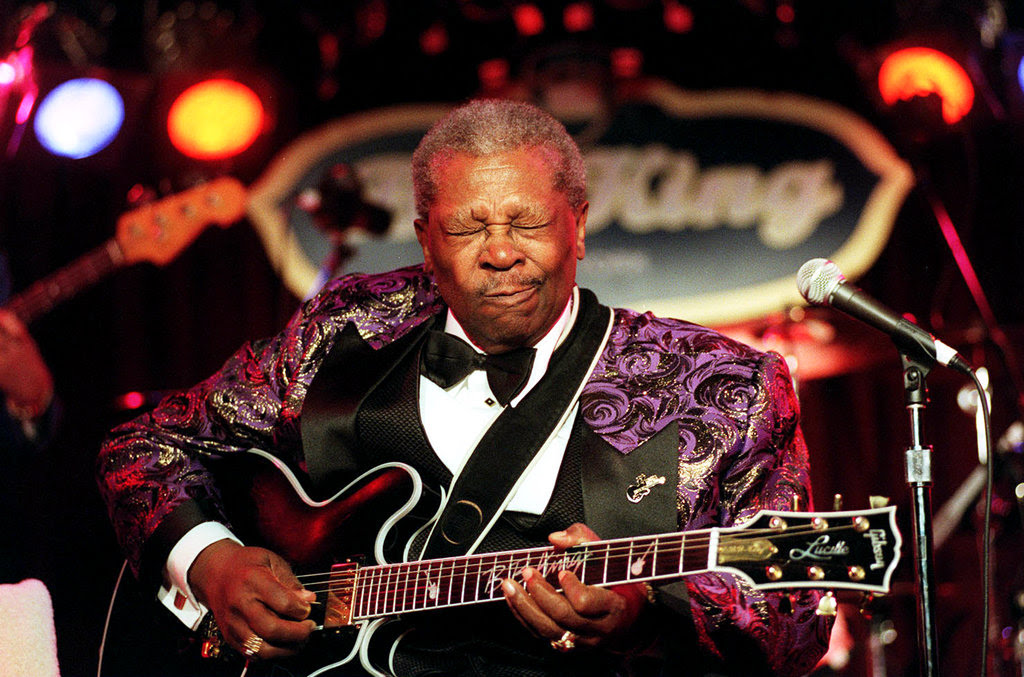
Much of King’s influence is indirect, but the vast majority of guitar superstars in the 1960s and 1970s owe a debt to this man’s melodic and simple, yet incredibly emotional and effective, style of lead guitar playing. He was also a brilliant singer, working in duet with his own guitar playing, like the singer-guitarists of the early blues period, but bringing the genre into the modern electric era with a wonderfully soulful edge.

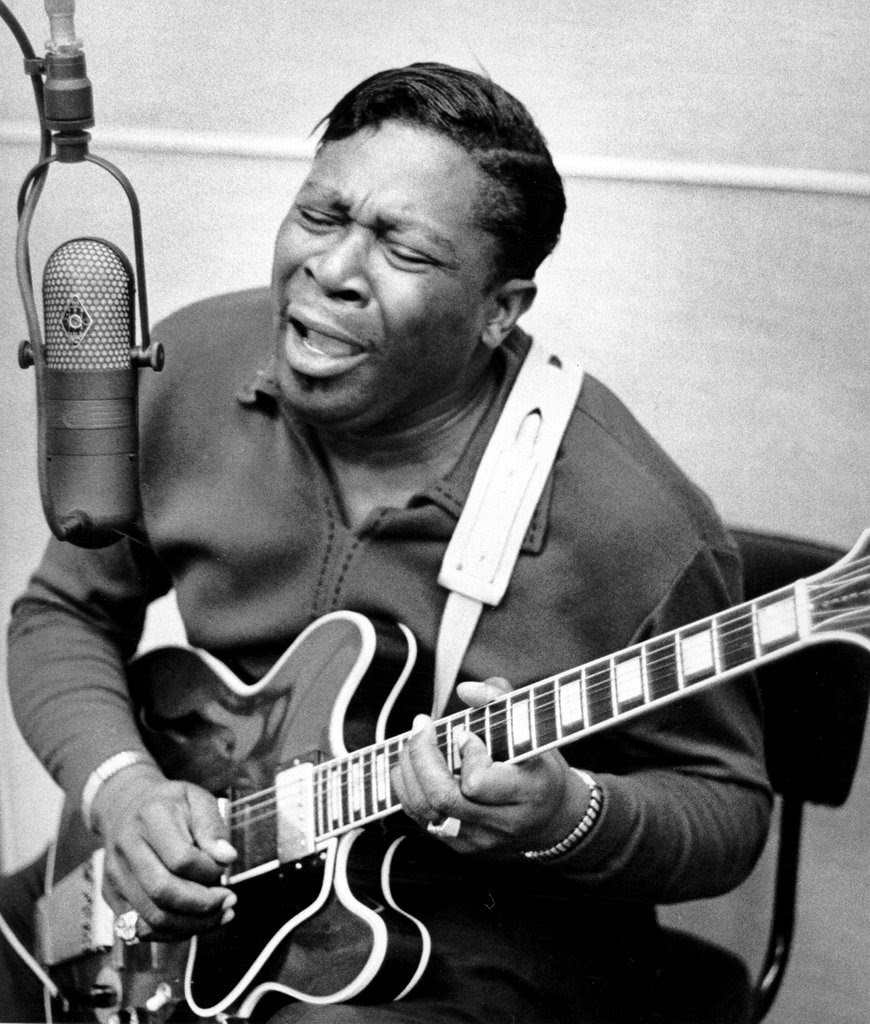
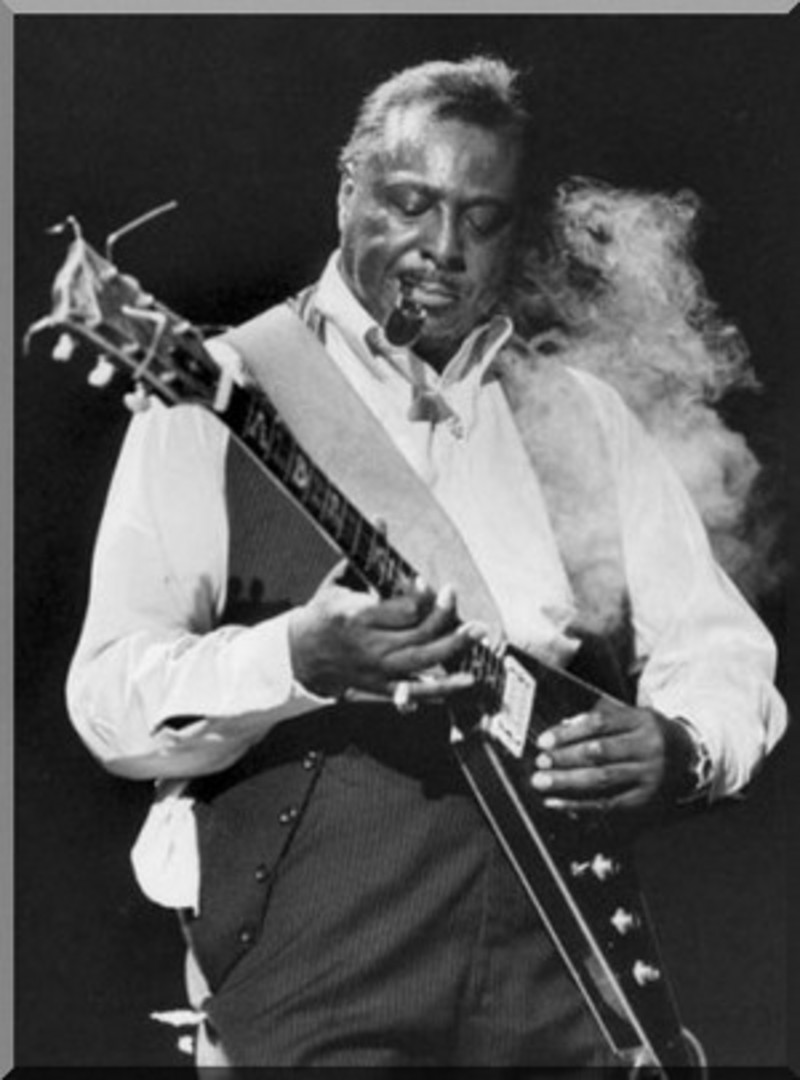
(Credit: Mike Moore)

Early years

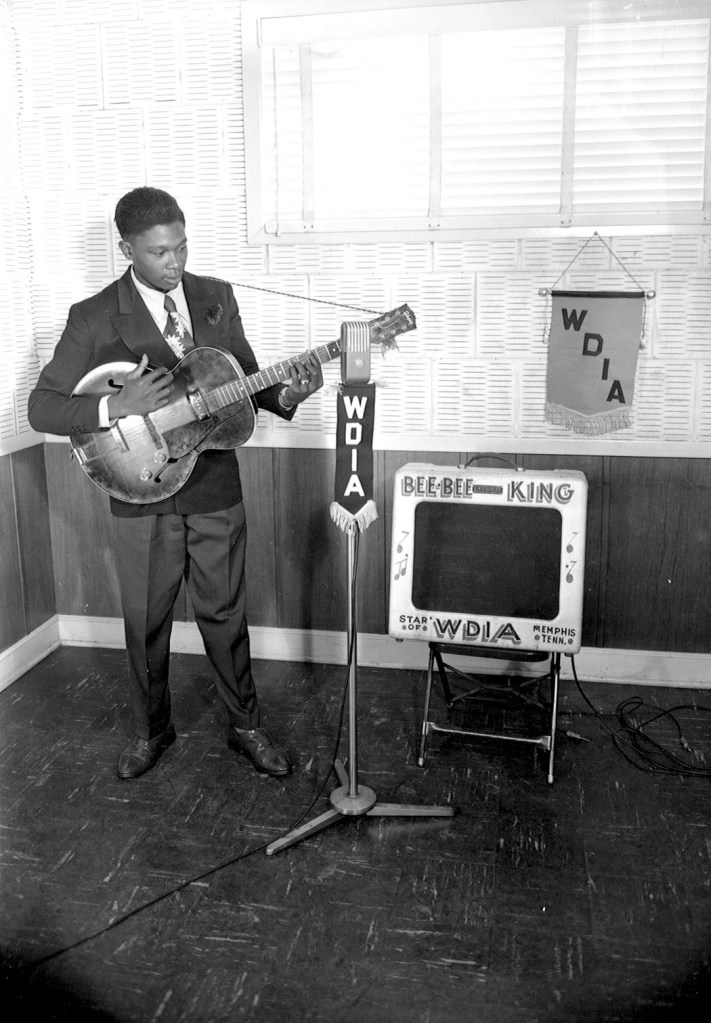
Riley B. King was born on the 16th of September, 1925, on a cotton plantation in Leflore County, Mississippi. In his teens, King sang in a local gospel choir and learned his first few guitar chords from the preacher at his church. He spent his late teens working as a tractor driver and as a guitar player for a popular touring choir, performing at religious services across Mississippi. But after hearing Delta Blues on the radio, King aspired to become a radio musician. Following a move to Memphis, King began to realise this dream, performing on various radio shows and eventually landing his own on the station WDIA. Here he soon garnered the nickname “Beale Street Blues Boy”, which was shortened to “Blues Boy”, eventually becoming the “B.B.” he was known by for the rest of his career.

It was during his stint at WDIA that King first met T-Bone Walker, later stating “Once I’d heard him for the first time, I knew I’d have to have [an electric guitar] myself”. Aside from the Delta Blues and T-Bone Walker, King’s early blues influences were singer-guitarists such as Blind Lemmon Jefferson and Leadbelly. He was also influenced by early jazz guitarists Charlie Christian and Django Reinhardt.

What these players had in common was a knack for beautiful single-line guitar melodies, and an ability to work with singers and other instrumentalists in a ‘question and answer’ style which King would later perform with himself, singing his songs and responding to his vocal lines with a guitar lick.
Finding success

King became popular on the Beale Street blues scene in Memphis, performing with other well-known acts of the time, such as lifelong friend Bobby Bland. He cut some early records with Sam Phillips, who later founded Sun Records (and discovered Elvis Presley), but these did not chart too well. However, he soon had a number one record on the Billboard Rhythm & Blues chart with 3 O’clock Blues in 1952. This was followed by a run of successful blues singles which helped King become a well-known name on the national blues touring circuit.

During the 1960s, King received the nod of approval from a singer he much admired, Frank Sinatra. Sinatra had arranged for King to play at the main clubs in Las Vegas. King credited Sinatra for opening doors to black entertainers who otherwise were very rarely, if ever, given the chance to play these venues.

Water from the white fountain didn’t taste any better than from the black fountain

BB King, quoted in Esquire, 2006

By the end of the 1960s, groups associated with the so-called British Invasion (see below) allowed King to reach a larger audience than before, through exposure to white audiences. This included opening for The Rolling Stones on their US tour of 1969.

BB King never abandoned the blues. But his biggest breakthrough hit, The Thrill is Gone, released in 1969, showed that the blues could be framed in a more modern, funk & soul-based setting that left room for King’s equally soulful singing and lead guitar voices. Although the song had been written in the early 1959s, King’s rendition, the first time he incorporated strings into his arrangements, earned him a Grammy Award for Best Male R&B Vocal Performance in 1970 and became his signature song.

The 1970s saw King release similarly soul-blues singles such as Hummingbird and I Like to Live the Love. For the latter of these songs, the studio version of which feels like a classic soul record, but here’s a slightly faster version from a concert King gave in Zaire (now known as The Democratic Republic of the Congo) in 1974 – look out for legendary session guitarist Larry Carlton on backing guitar:

Video credit: GravyLimited/YouTube

King’s music included elements of funk, soul, gospel and jazz, all combined to create a unique style which many bluesman continue to emulate to this day. By the 1980s, King was already an Elder Statesman of the blues, and the LPs he released over the decades from here until his passing in 2015 were largely albums of duets, featuring a veritable Who’s Who of stars from the world of the blues and beyond.

Influence

Early on, King transcended his musical shortcomings — an inability to play guitar leads while he sang and a failure to master the use of a bottleneck or slide favored by many of his guitar-playing peers — and created a unique style that made him one of the most respected and influential blues musicians ever.

LA Times obituary of BB King, 2015

Although his urbanisation of the blues brought forth some detractors, King’s economy of style proved influential on many of his peers, not least the generation of guitar players who followed him, such as Buddy Guy. Jimi Hendrix was also a big fan of King, incorporating some of his licks into his eclectic vocabulary of psychedelic blues playing.

However, King’s greatest influence came from across the pond in the United Kingdom. While blues artists were not getting much airtime on mainstream radio in the US, young guitar players in Blighty were eager to snap up any blues records which came across the Atlantic. The resulting generation of guitarists redefined the sound of the blues, taking their bands back across to the US and finding great success. Groups such as The Rolling Stones (with guitarists Keith Richards, Brian Jones and later, Mick Taylor, who who displayed BB King’s influence the most overtly), The Yardbirds (which featured, at varying times, legendary guitarists Eric Clapton, Jeff Beck and Jimmy Page) and Fleetwood Mac (Peter Green) were just some of the British bands who followed the success of The Beatles, and helped US audiences rediscover their own elder statesmen of the blues, such as King.

Yet King’s influence didn’t end with the generation which followed. He recorded the rock-based duet When Love Comes To Town with U2 on their 1988 album Rattle and Hum. The arena-filling bluesman of the moment, Joe Bonamassa, puts his success down to a meeting with King when he was just twelve years old, leading the young guitarist to act as an opening act for King, from which he has grown an illustrious career of his own. The groove from King’s 1970 song Chains and Things was a huge inspiration for Gary Clark Jr. The track was also sampled by hip hop artists such as 50 Cent and Ice Cube.

Credit: BB King Official YouTube Channel

Looking back from the history of guitar, blues or otherwise, from the mid-20th century to date, you’d be hard-pressed to find a guitar player who doesn’t owe King a debt f thanks, be it directly or indirectly. It has even been said that a young Elvis Presley was a fan, long before he helped create a newer, uptempo version of the blues known as Rock’n’Roll…

Equipment

All this passion and soul, not to mention influence, from a disarmingly simple setup. Although early photos sometimes show King playing a Gibson ES-5, most of initial singles with RPM were in fact recorded on a Fender Esquire, the forerunner to the Telecaster.

However, by the 1960s, King had switched to the guitar he is most associated with, the Gibson 335.

(Credit: Gibson)

The semi-hollow design allowed space for King’s lead lines to ‘sing’ a little.more freely, but in an era of loud onstage volumes, it also meant the guitar was prone to feedback. To counter this, King used to stuff the f-hole with material to cut down on feedback. Eventually, Gibson began making him his own signature model 335 without f-holes. All of these guitars have since been known as Lucille, following an incident where a fire was caused at a show, all started over a woman of the same name.

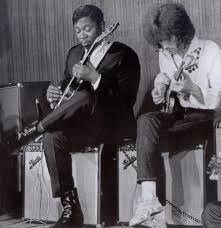
For amplification, King favoured the sound of a Fender Twin. King has stated his belief that Fender amps were “the best ever made”, in terms of sound and durability.
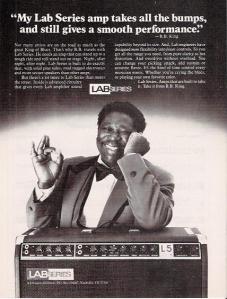
During the seventies and eighties, King also used a Lab Series L5 2×12″ combo amp. This was probably an upgrade of sorts on the Twin, while still retaining the tone King loved and was renowned for.

Recommended listening

There are plenty of records to choose from, spanning the entirety of King’s long career. You won’t go wrong with any of his releases, but for a taste of his early singles, check out The Modern Recordings: 1950-1951. These tracks (including rare alternate takes of his original 45rpm releases) most strongly showcase the jazzy influence of T-Bone Walker in King’s melodic guitar playing.

In terms of King’s collaboration albums, there’s plenty to choose from. Lucille and Friends (1995), Deuces Wild (1997) and B.B. King & Friends: 80 (2005) feature a wealth of well produced blues duets with the cream of the rock and blues worlds, recovering songs from King’s repertoire. King also recorded albums of Louis Jordan covers, as well as records and live albums with the singer Bobby Bland. However, his 200p release with Eric Clapton, Riding With The King, shows both guitar players on top form.
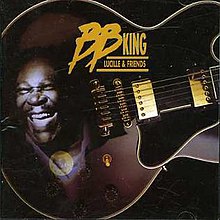
However, the quintessential B.B. King record, and one that I believe is essential listening for any blues guitarist, is his 1965 release Live At The Regal, a concert recording from a show at The Regal Theatre in Chicago on the 21st of November, 1964. Hailed as one of the greatest blues albums of all time, this record showcases King at his finest, and is one of the records which helped to shape me as a guitarist. Highly recommended.

As always, I’d love to hear your thoughts. King was a prolific live performer, so if you were ever lucky enough to see the master at work onstage, do get in touch to share your experiences. Until next time…
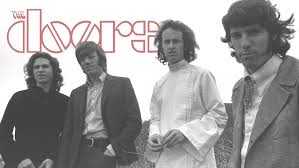
In praise of The Doors

Music

Loved by some, derided by others. You will have heard at least some of the music of The Doors.

Despite their short time together at their height, they left behind an impressive legacy. As with similar articles (such as my look at the wider impact of The Animals and The Bryds), I’ll try to keep it brief, focusing on the factors that I believe made The Doors unique and influential.

So, on the understanding that this is not a definitive history, let’s dive in…

A quick rise

The Doors were formed in Los Angeles in 1965 by vocalist Jim Morrison and keyboardist Ray Manzarek, initially under the name Rick & The Ravens with Manzarek’s brothers Rick and Jim. They soon changed their name to The Doors in honour of Aldous Huxley’s book The Doors of Perception, recording their first one demo along with drummer John Denmore. After brothers Ray and Jim left the group, the group, guitarist Robby Krieger joined the band and the classic lineup of The Doors was complete.

They very quickly became popular, despite having played few gigs. In the start of 1966, the band managed to secure a residency at The London Fog club on Sunset Strip by having all of their friends turn up to their initial trial gig and cheer loudly. This residency not only gave Morrison the chance to overcome his stage fright, but also provided an opportunity for the band to experiment with their songs, many of which appeared on their debut album the following year.

In May 1966, the group became the house band at the more prestigious Whiskey a Go-go club, supporting the visiting acts such as Van Morrison with his band Them. By August, The Doors had been signed to Elektra Records. They recorded their eponymous debut album the same month, released at the very start of 1967. Their follow up, Strange Days, was released in September of the same year. This started an impressive run which saw the band release one studio album every subsequent year, ending with LA Woman in April 1971.

(copyright Elektra Records)

A polarising frontman

Over the years, Morrison’s behaviour had become increasingly erratic and difficult for the ban to manage. He was already living in Paris by the time LA Woman was released, taking time out from the group to focus on his poetry. He was dead just three months later, likely of an accidental overdose on heroin (although no autopsy was performed to officially rule the cause of death).

I put out a poll on my social media pages to canvass for opinions on The Doors. It seemed that, by and large, those who said they didn’t like the group generally cited Morrison’s vocal delivery style lyrics, or his persona as the main reason. He seems to have become a love-him-or-hate-him figure in music history. For some, Morrison represented the epitome of a certain type of masculine sexuality. Several bedrooms have been adorned with posters featuring well-known pictures of Morrison, topless and brooding. which seemingly turned ob as many people as it turned off.

Furthermore, in passing away at such a young age, fans never had the opportunity to watch him grow old, or indeed display an change or sense of ongoing maturity in his work. What is left behind becomes immortalised, while Morrison himself became a legendary figure. His grave in Paris remains a popular tourist attraction for would-be Bohemians to congregate.

But what we’re the critics opinions of Morrison before he died? The music of The Doors left fans divided. Fiona Sturges claimed that “Lester Bangs was right when he described Morrison, the son of a US rear admiral, as ‘a drunken buffoon masquerading as a poet‘” (quoted in The Independent, 2012). Yet Bangs had the maturity in later years to recognise the legacy of Morrison on his peers:

Think about it. Without Jim Morrison no Patti, but what’s more or less no Iggy perhaps no Bryan Ferry in his least petit-bonbonned moments. Without Iggy, of course, no punk rock renaissance at all, which means obviously that Jim was the real father of all that noise

Lester Bangs, writing in Creem Magazine (1981)
Morrison, circa 1967 (pic credit: Joel Brodsky)

Similarly, the music was considered by some to be twee in places (with those fiddly organ lines) or even downright pretentious. Listening to their entire run of six albums highlights inconsistencies in style, but I’d argue that this was common for groups at the time. In a time of psychedelia and increasing experimentation in pop music, record executives seemed to have lost their sense of what would sell and what wouldn’t, and allowed some artists time – and often several albums – to find a formula that worked. The Doors were no exception to this, although I believe they stood out for a few reasons.

Grounded in the Blues, but not limited to them

Like many bands of the time, The Doors were rooted in the Blues as the bedrock of their sound. When he wanted to, Morrison could write lyrics that were reminiscent of blues men such as Muddy Waters or Howling Wolf,such as on Love Me Two Times or LA Woman, for two well-known examples.

Musically, many of the songs were grounded with blues-based riffs, common to other R&B acts of the time. It was the combination of electric blues with the more poetic elements to Morrison’s words, coupled with a sense of exploration and a willingness to add elements of jazz to their sound, which gave The Doors an edge over their contemporaries in the world of psychedelic rock.

No bass player?

No – not for their live performances, at least.

In the studio, Doors producer [name] felt that Manzarek’s left-hand organ bass notes didn’t cut through as well as the second of a plucked string, and a session bass player was called in. This started something of a tradition for the band, who had bass guitar on the vast majority of their recorded material while maintaining their bass-less quartet format onstage.

In most cases, the session bassists – including bit hitters such as Harvey Brooks (who had played on Dylan’s first electric album and subsequent live shows) and Jerry Scheff (who has played with everyone from The Everley Brothers to Elvis Presley’s Vegas band) – were given strict instructions on what to play. This often following the Blues-based riffs. Otherwise, they simply filled in the sonic space a little, leaving ample room for [keys] and [guitar] to take flight, often in surprisingly intricate ways (a full and fascinating read on the bass players working with The Doors can be found here).

Robby Krieger’s guitar style

The final element to be discussed is The Doors’ guitar player, Robby Krieger. Although the last member to join the band, his playing gave the group a certain ‘lift’, mixing various styles and moving beyond solely blues-based lead lines.

Before picking up the electric guitar, Krieger had studied flamenco, who requires a strong right hand picking technique. Elements of this can be heard throughout the band’s output, not only in overt references such as Spanish Caravan, but also in his jazz-rock solo on Light My Fire. Krieger also maintained the flamenco/classical tradition of playing fingerstyle, eschewing plectrums (is it that plectra?) for his entire career.

Krieger, circa 1965 (pic credit: Chris Walter)

As I sat down to research and write this article, I started to realise the extent to which Krieger had been an influence on my own lead guitar playing. However, I rarely cite him as an influence. This may due to our similarities in background; I too, was a classical guitar player long before I started on the electric guitar, and my first electric influences were blues players and the experimental artists of the nineteen-sixties.

It may also be that Krieger’s influence came indirectly, via the first ever tuition book I bought to help me learn lead guitar, Lead Guitar by Harvey Vinson (which is a whole thing in itself – expect an article all about it in the near future). Looking back through the example riffs in that book, most of them could easily have been lifted from Doors tunes. I even owned a cheap SG copy too, but that’s a story for another time…

Recommended listening

There’s something interesting to be found on all six of the band’s studio albums. It is worth giving them all a listen to see what jumps out for yourself. Having said that, I find that for me, their first two LPs The Doors and Strange Days (both 1967), as well as their final offering, LA Woman (1971), showcase the group at their finest.

As always, let me know what you think. I enjoy having discussions with readers who get in touch and would love to know your opinions on The Doors, Morrison’s legacy, Krieger’s technique and everything else. But for now, this is the end

In praise of The Animals

Music

I recently read about the passing of Hilton Valentine, the original guitarist for The Animals, who has died, aged 77.

Valentine’s simple arpeggiated riff in the band’s version of the traditional tune House of the Rising Sun remains one of the most recognisable guitar parts in the history of rock’n’roll.

Valentine’s passing caused me to reflect on the wider influence of The Animals. The original lineup split by 1966, but in that time they recorded some memorable songs, including the huge hits We Gotta Get Out of This Place and their uptempo cover of (Don’t let me be) Misunderstood, originally written for and recorded by Nina Simone.

The Animals were one of the British groups from the early 1960s who took the R&B of the (predominantly black) artists in the US and repackaged it in a form that brought the genre – and its original performers – to a larger audience. A number of groups were part of this ‘wave’, including The Beatles, The Rolling Stones and The Yardbirds, to name but a few. While it might make one baulk to think that it took the playing of ‘black music’ by white performers to make the style palatable to white audiences in America (racial segregation still existed in some states in the early 1960s), it is worth remembering that these same audiences later turned to the original artists themselves. This created career-changing opportunities for artists such as BB King, Muddy Waters, Howlin’ Wolf and so many, many more.

Yet their influence on the artists who followed in their footsteps shouldn’t be underestimated. They were more than just local heroes in the north east of England; their activities after the breakup of the original group in 1966 led to a few significant ripples through the music world…

As well as the countless musicians who picked up a guitar to try and play House of the Rising Sun, or to start their own rhythm & blues outfit, The Animals also raised the profile of several well-known acts, one way or another.

Lead singer Eric Burdon became well respected for his soulful, yet gravelly, voice. After initially attempting to create a new version of The Animals (with only Burdon as the surviving founder member), he was soon teamed up with an up and coming R&B band. The resulting outfit – Eric Burdon and War – had success with the single Spill the Wine, and two albums together.

However, Burdon unexpectedly left the group halfway through a European tour. The band continued without Burdon, creating some very well-known hits in the 1979s, including Cisco Kid, Low Rider and Why Can’t We Be Friends?

Alan Price, keyboard player for the animals, had something if a dual career after the group disbanded. He worked with fellow 60s star George Fame for many years, while also writing film & theatre scores. He also released a few solo albums, and in his songs choices, became one of the first performers to bring the music of American songwriter Randy Newman (later famous for songs such as Short People and You’ve Got a Friend In Me) to a wider audience.

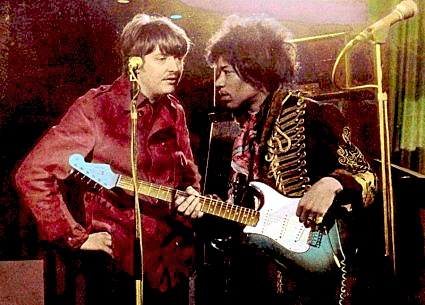
Meanwhile, Animals bassist Chad Chandler discovered a young Jimi Hendrix performing in Greenwich Village, New York, and became his manager. He set up the legendary guitar player with Mitch Mitchell and Noel Redding to form The Jimi Hendrix Experience, but used his connections to secure gigs in the UK for the group, and introduce him to contemporaries on the sixties music scene in London, such as The Beatles and Eric Clapton. In fact, the last time Hendrix performed live was onstage in London with Eric Burdon & War, the day before his tragic early death.

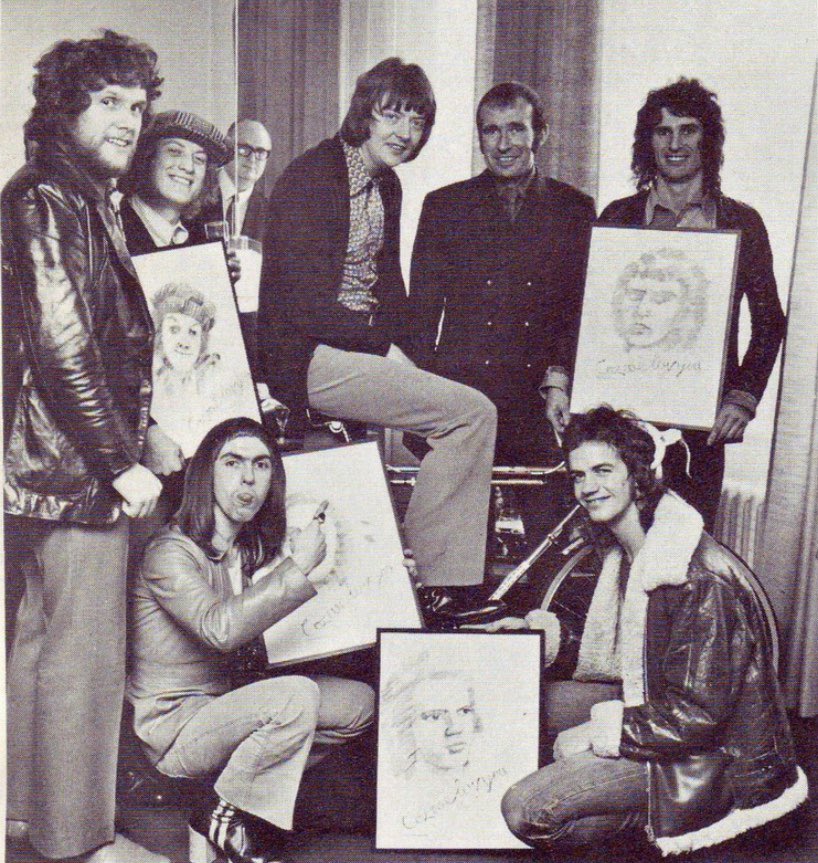
Chandler went on to manage the British glam-rock group Slade, who had several hits through the seventies (including one of the most well-known Christmas songs in pop music). His other business interests helped to build the Newcastle Arena, a sport and large capacity concert venue, which meant those of us in the region now got to see more of the bigger artists when they came around on tour!

I’m sure similar ‘family trees’ can be found throughout the history of rock’n’roll, and maybe it is the shared home region which fuels my fondness for them, but The Animals were much more than a few catchy songs and one incredibly famous guitar riff.

Rest in peace, Hilton Valentine (1943 – 2021). The music lives on.

Ten guitarists who influenced my playing, in pictures

Music

This is one of those exercises / challenges which circulates around Facebook from time to time (much like the one which inspired a previous post about ten albums which inspired me). This one asked guitarists to post photographs of ten guitar players who had been the greatest influence on their own playing.

I find these thought exercises difficult – challenging is the perfect word! I feel like I could post forty pictures and still have missed out a key influence on my playing, yet here we are, in no particular order…

What do these players have in common? Some are strikingly different. The key characteristics I gravitate towards in other musicians are…

  • Tasteful or melodic solos
  • Blending of musical genres
  • Dazzling showmanship / inspirational technique

…and all of the guitarists pictured above have one or more of these traits.

As always, these are just my opinions. I may well delve into my influences in more specific areas in a future article. But what are your biggest guitar influences? Get in touch or leave a comment to let me know!

Great Guitarists #11: Sister Rosetta Tharpe

Great Guitarists

In this installment, a singer and guitar player who took the blues, folk and gospel and created what could arguably be considered the forerunner to rock’n’roll…

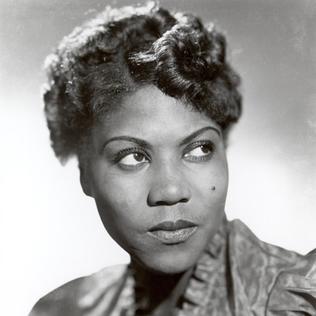
Sister Rosetta Tharpe

Born in 1915, Tharpe (born Rosetta Nubin) started playing guitar and singing in church at the young age of just four years old. Touring with an evangelical church troupe from the age of six, she settled in Chicago. Her stage name comes from her first marriage to preacher Thomas Tharpe at the age of 19; she carried on using the name Tharpe professionally after their divorce in 1984 , up until her death from a stroke in 1973 (during which time she remarried twice).

Tharpe is perhaps best remembered as a singer, with a loud clear singing style. But something about her singing, combined with her foot stomping and blues-tinged guitar picking – not to mention some cool lead lines – stirred the interest in many young listeners who would go on to be the next generation of musicians. Little Richard and Johnny Cash both called Tharpe their favourite singer, she is cited as a crucial influence to artists such as Aretha Franklin, Jerry Lee Lewis, Tina Turner, Isaac Hayes, Meatloaf and Karen Carpenter. Tharpe’s appearance on a British TV special about the Blues and Gospel Caravan, a European tour of US musicians that also included Muddy Waters, Otis Span and Sonny Terry, amongst many others, brought her to the attention of British audiences, including future guitar superstars like Eric Clapton.

“Tharpe’s guitar style blended melody-driven urban blues with traditional folk arrangements and incorporated a pulsating swing that was a precursor of rock and roll”

Biography.com (‘Sister Rosetta Tharpe’, 2015)

Tharpe’s guitar playing is said to have directly influenced the vocals/guitar style of Chuck Berry and Elvis Presley – and if the first rock’n’rollers such as Berry, Presley and Richard call Tharpe an influence, she must the foundation of all that followed…

Tharpe’s career was curtailed by a stroke in 1970, and she died just three years later. Nowadays, her influence is often unfairly overlooked, and sometimes forgotten entirely. However, Tharpe played a crucial role in the history of American music of the 20th century, not to mention the birth of rock’n’roll. Furthermore, in this brilliant article by Erin White, Tharpe is hailed as a Queer Icon too, largely due to speculation over her affair with singer Marie Knight.

Here she is on a TV show in the mid-sixties, singing a gospel song with a gospel choir, but playing a slightly overdriven Gibson Les Paul Custom (although we know these as a Gibson SG nowadays) with it’s three humbuckers. She also pops in a blues-based solo in the middle!

When I think of three humbucker guitars, I recall Neil Young’s ‘Black Beauty’ Les Paul, or the rock band KISS. As for the SG guitar shape, Angus Young of AC/DC and Tony Iommi of Black Sabbath are the first two players who spring to most people’s minds – not a lady in her fifties singing a combination of blues and gospel. It must be remembered that for many, Sister Rosetta Tharpe was the first black woman they’d ever seen playing an electric guitar, and she could play! But what else should we expect from the Tharpe – one of a small handful who can truly claim to be the start, or inspiration, of rock’n’roll?

Recommended listening

Tharpe’s 1944 single Strange Things Happening Every Day, is considered one of the first rock’n’roll singles, and is the first ever Gospel record to make it onto Billboard’s Harlem Hit Parade (now called their R&B chart). One her most acclaimed studio albums is Gospel Train (Mercury, 1956). This record marks the stylistic change, backed by New York session musicians, and is considered highly influential on later rock’n’roll artists.

With a career that took place from the 30’s to the early 70’s, it is sometimes best to seek out compilation albums in order to have all of Tharpe’s most well-known releases in one place. To that end, I would recommend Bring Back Those Happy Days: Greatest Hits and Selected Recordings (Jasmine, 2018), or the 4-CD set The Original Soul Sister (Proper, 2002).

As with each installment in the Great Guitarists series, I have only touched upon the surface of these influential players. I’d love to hear your thoughts on them, as well as recommendations on who should be featured (I have another four or five lined up already – I wonder if anyone can guess who is coming next?). Until next time…

R.I.P. Julian Bream (1933-2020), a giant in the world of classical guitar

Great Guitarists

Not many classical guitar players are household names, either worldwide or here in the UK. Andres Segovia might be one, as a pioneer for performance of the instrument in it’s modern form. However, I’d suggest more people have heard of two of his more famous successors on the international performance stage. One is the very well-known Australian guitarist John Williams; the other, Julian Alexander Bream, who we learn has passed away at his Wiltshire home in the early hours of this morning, at the age of 87.

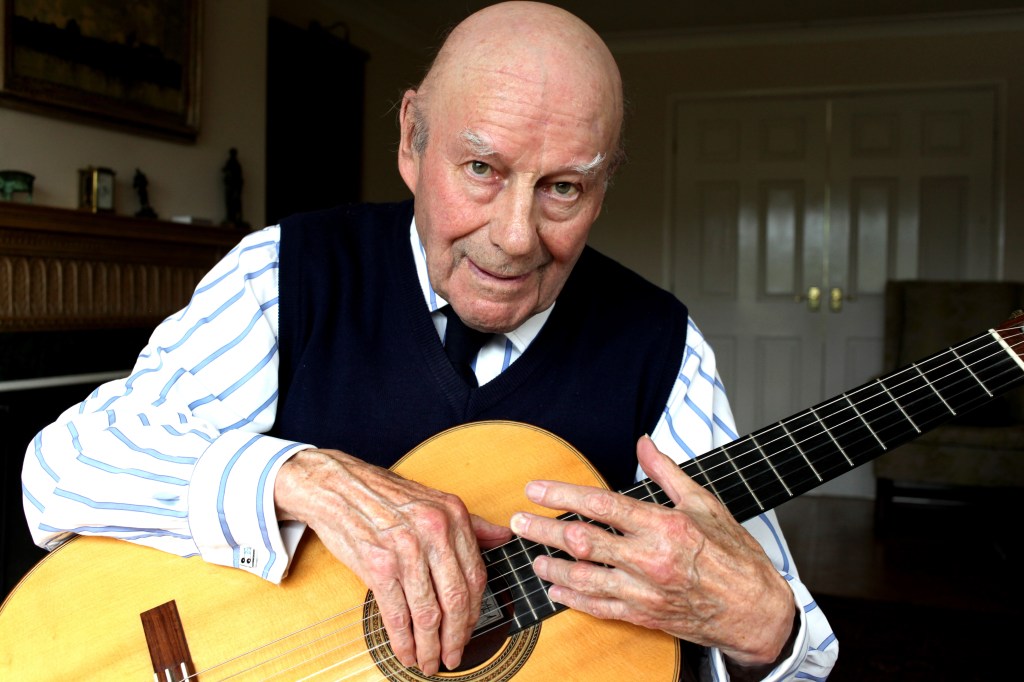
Julian Bream at home, 2014 (Credit: Eamonn McCabe for classicalguitarmagazine.com)

Born in London in 1933, Bream initially learned jazz , influenced by his father’s playing and Django Reinhardt. He was also offered a place at the Royal College of Music, aged just 12 years old, based on his piano playing. He later switched to the lute, and became a great champion for the instrument throughout his life, even as his focus shifted more and more towards classical guitar.

As well as his numerous transcriptions of lute pieces (such as those by Bach or Dowland) for guitar, Bream also performed many of the transcriptions left behind by Segovia, as well as the seminal guitar pieces composed by Francisco Tarrega. Known for his eye for detail, Bream’s virtuosity included an element of flexibility; a key example of this was that he did not maintain a consistent rigid right hand when playing (i.e., held at right angles to the stings), but made use of a more relaxed position, in order to achieve a greater variety in tone. This is something I do as well, because I, like Bream, am multi-genre guitarist. However, having been regularly admonished by my guitar tutor in my youth for holding an ‘improper’ right hand position, it was a relief to learn the one of the instrument’s masters did the same!

As Bream’s reputation increased, he was gifted pieces by composers as varied as “Britten, Walton, Tippett and Hans Werner Henze” (classical-music.com) and performed around the world. He also recorded TV specials, such as a series of four master classes on BBC television in the nineteen seventies, as well as segments for Channel 4 in the nineteen eighties. This no doubt helped him to become a household name for many, but he certainly never rested on his laurels. Even as an ‘elder stateman’ of the guitar, he apparently strove to improve himself. According to an interview given to The Guardian newspaper, Bream believed he was a better guitarist at the age of 70 than ever before!

Essential listening: A great place to start would be his two albums with John Williams, Together (1971) and Together Again (1974). Also, seek out his version of Joaquin Rodrigo’s Concierto de Aranjuez (with it’s famously emotive second movement).

Bream with lute (Credit: Avie Records)

Guitar students would do well to look at his crossovers into other styles, as well as his early lute work too, to get a more rounded picture of a hugely talented player, whose passing leaves a large hole in the classical guitar community.

Rest in peace, Julian.

Great Guitarists #6: Django Reinhardt

Great Guitarists

This installment features the only artist in this week-long mini series to hail from outside of the USA. But boy, did he leave his mark on jazz, with an influence that stretches far beyond the guitar…

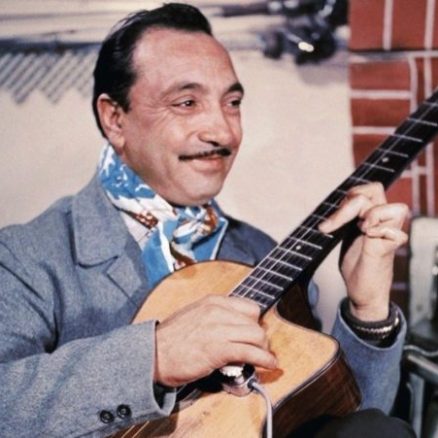
Django Reinhardt

Jean ‘Django’ Reinhardt was born in a Romany Gypsy camp in Belgium, 1910, moving to Paris with his family as a youth. He was reportedly something of a child prodigy within his community, capable of playing back melodies flawlessly after only one hearing. He first discovered jazz via a Louis Armstrong recording as a teenager. On hearing the record in question, the young Reinhardt reportedly cried out “my brother!” and thus, it seems he had found his musical path from that day onward.

One amazing thing about Reinhardt is how he relearned his entire fingering technique, following a fire in his caravan when he was eighteen. The blaze left him with a permanently damaged left hand; his ring and little fingers were partially fused together. As a result, Reinhardt’s entire career – all those lightening-fast single note runs – we’re performed using only two fingers (although he would sometimes incorporate his fused ring finger for chords). In overcoming an injury which, for many, would have made guitar playing a write-off, Reinhardt demonstrates the combined power of will, alongside the power of music.

Reinhardt’s most famous music was made the Quintette du Hot Club de France, a five piece band of three guitars (two rhythm, plus Reinhardt on lead), bass and one violin. Three spots the Quintette’s lineup were fairly fluid over the years, but one mainstay was violinist Stéphane Grappelli. It is his duets with Grappelli which have mesmerized listeners for almost a century. Their style of ‘Gypsy Jazz’ remains synonymous with Paris to this day, although the Quintette were only a working musical entity until between 1934-1938, when World War II put an end to their activities.

After the war, Reinhardt toured the USA and was a featured guest with larger ensembles such as The Duke Ellington Orchestra. He died of a brain hemorrhage in 1953,at the age of forty-three, leaving behind a vast musical legacy that still influences musicians to this day.

Essential Listening

I’m terms of recordings, anything by the Quintette du Hot Club de France is a great starting point; plenty of reissued albums and compilations exist of this group. However, there aren’t many video recordings of Reinhardt’s playing, so what little footage we do have is worth seeking out. For this post, I shall suggest this short documentary film which features a minute or two highlighting Reinhardt’s unorthodox, yet necessary, technique.

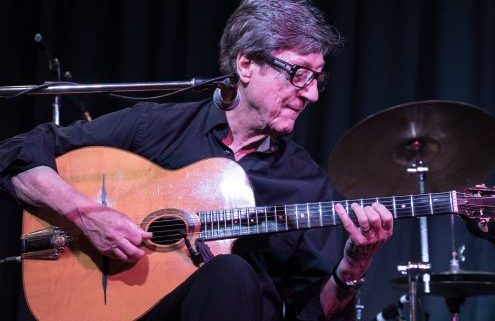
You can hear Django’s style of  gypsy jazz playing in the most unexpected of places. However, it remains largely synonymous with France, and Paris in particular. The style retains a loyal following to this day. It amazed me to learn that no less a guitar player than Hank Marvin, the legendary British rock’n’roll pioneer, devotes himself to playing gypsy jazz, now that The Shadows have finally hung up their Stratocasters! It’s somehow fitting that both guitarists have had an immeasurable influence on the instrument, and now one devotes his time to studying the other – but more on him in another article, later in this series!

As always, do get in touch with your thoughts and suggestions for future posts…

Great Guitarists #7: Wes Montgomery

Great Guitarists

As we arrive at part seven in this occasional series, there is one Great Guitarist left to feature, one who is up there with Charlie Christian  and Django Reinhardt as one of the most influential jazz guitar players of all time. Since I’ve focused this short run of articles on jazz guitar players, it is essential to include the man who has left an indelible influence on how jazz guitar is played…

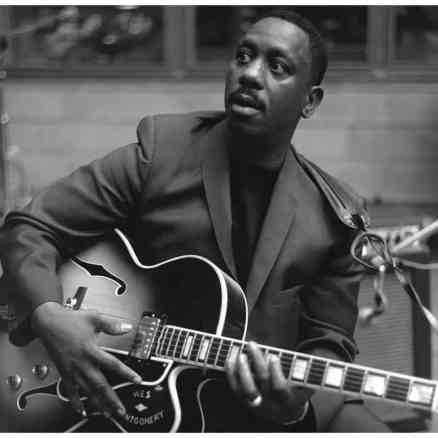
Wes Montgomery

He played impossible things on the guitar because it was never pointed out to him that they were impossible

– Ronnie Scott

Like the origins of jazz itself, nothing about Montgomery’s career was orthodox. Born John Leslie Montgomery in Indianapolis, 1923, ‘Wes’ only dabbled in music until hearing a Benny Goodman record, aged nineteen. The record in question featured the guitar playing of Charlie Christian, and inspired Montgomery to buy a guitar the very next day. He spent almost a year learning Christian’s solos, particularly those from the record Solo Flight.

Working as a welder during the day, Montgomery’s guitar practice sessions took place at night, leading to complaints from his neighbours and his wife. His solution was to ditch the pick and pick the guitar’s strings with the dude if his thumb, as this was much quieter. His use of octave playing also comes from this period, as it enabled Montgomery to better hear what he was playing as he practiced. This technique, which Montgomery has said gave him real “headaches” when learning, was relatively rare in guitar playing; following the influence Montgomery left behind, it is now one of the most definitively recognisable characteristics of jazz guitar.

Success didn’t come easy or quick for Montgomery. Although he had started to build his reputation as a guitarist while playing in ensembles with his two brothers, Monk (bass) and Buddy (piano & vibraphone). These early recordings did not garner much commercial success. In his mid-thirties, Montgomery had returned to working factory shifts during the day, to support his wife and six children, then gigging in jazz clubs until the wee small hours.

This lifestyle ultimately took a toll on his health, but the sheer amount of graft Montgomery was devoting to his playing was paying off. Without being able to read a note of music, Montgomery used his ears and his heart to make his playing swing. His prolific use of octaves, as well as his chord-based soloing (usually on the highest four strings), all without fully understanding the theory of what he played, revolutionised the way in which jazz guitar could be approached and performed.

A chance discovery by saxophonist Cannonball Alderley led to Montgomery being signed to Riverside Records in 1959. Montgomery was soon a rising star, although his more pop-friendly crossover records in the mid-sixties (covers of pop songs, often featuring additional orchestration) led to him being considered a ‘sell out’ by some jazz musicians. He died of a heart attack while on tour in June 1968,aged just forty-five.

Montgomery’s legacy survives through the countless guitar players he influenced. These include his friend (and another guitarist to experience crossover success) George Benson, Pat Matheny and Earl Klugh, to name only a handful.

Essential Listening

Despite Montgomery’s short recording career, he recorded sixteen LPs as band leader in his lifetime, as well earlier recordings with his brothers as The Mastersounds and a handful of posthumous releases. Smokin’ At The Half Note (1965) is a fantastic live album that I wholeheartedly recommended you give some time to.

For studio cuts, you won’t go wrong with his first few albums with Riverside. A personal favourite is The Incredible Jazz Guitar of Wes Montgomery (1960), which includes some of his more well-known pieces such as ‘Four On Six’ and ‘West Coast Blues’.

For the guitar players amongst us keen to emulate Montgomery’s playing style, there exists a wealth of articles and tutorials on how to get started. However, as is often the case, the best thing would be to listen, play, listen, play, listen, then play some more!

Good luck and see you with the next installment soon!