
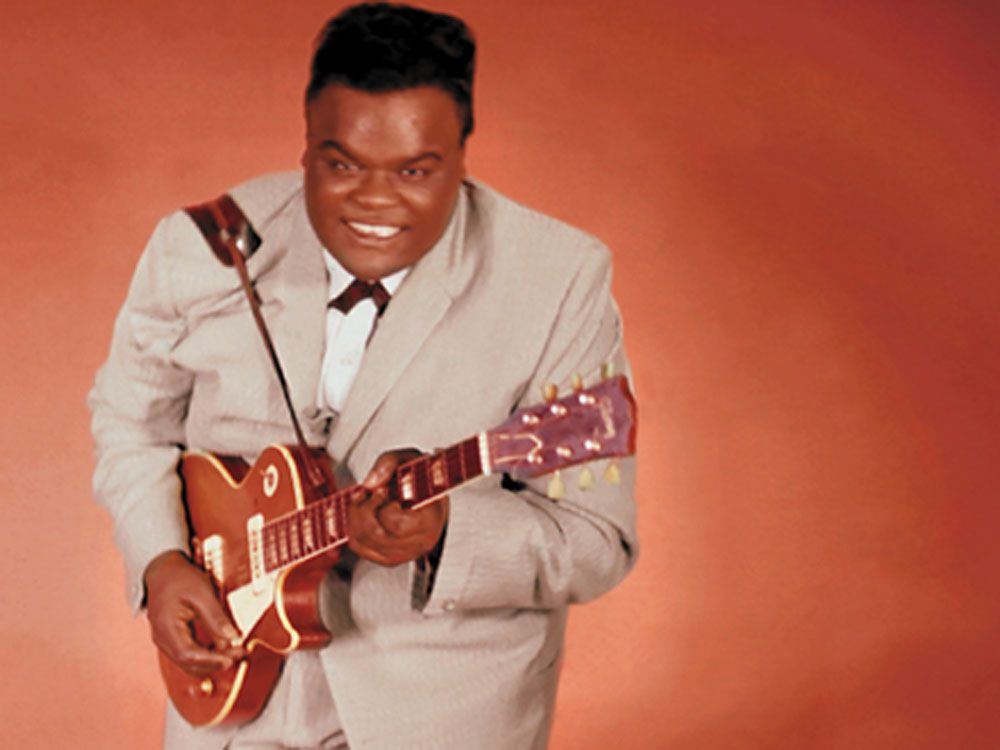
The last of the ‘Three Kings of the Blues’, showing just as much influence on the guitar world as Albert King and BB King, is the youngest of the three guitarists, Freddie King.

Known for his biting tone and crossover appeal, King was one of the electric blue guitar players who influenced the young musicians in the UK. These guitarists (such as Eric Clapton and Peter Green) went on to form the bands of the British Invasion of the 1960s – bringing King’s sound back to the US and eventually raising his profile.
Fred King was born in Texas in 1934 and began learning the guitar from his mother and uncle when he was only six years old. His family moved to the South Side of Chicago when he was fifteen, and he was soon sneaking into the nightclubs to hear the music of the original blues guitarists such as Muddy Waters, Elmore James, T-Bone Walker, as well as other bluesmen like Howlin’ Wolf and Sonny Boy Williamson. King was soon performing with his own band and by the time he was eighteen, he acted as a sideman to some of the better-known performers on the Chicago blue scene, such as Little Walter, Jimmy Rogers, Willie Dixon and Memphis Slim.
Despite his apparent guitar talent on he Chicago live blues circuit, King’s initial initial attempts at recordings were either unsuccessful or unreleased altogether, He was also turned down more than once by the city’s now-legendary Chess Records label, allegedly because he singing voice resembled B.B. King too closely. Nevertheless, King proved a popular mainstay on the emerging West Side clubs of Chicago.
Finding success
King eventually signed to Federal Records in 1960 recording his first session for the label in August of the same year. The results of this session yielded King’s first single, Have You Ever Loved a Woman, which charted in the Billboard top 100. From the same session came one of King’s best-known instrumental tracks, Hide Away. Hide Away managed to reach no. 29 in the US pop music charts, an unprecedented feat for a blues record at a time when the genre was still relatively unknown to white audiences. Eric Clapton later brought the song to an even wider audience when he recorded his version as part of John Mayall and The Bluesbreakers in 1966.
King released a steady stream of albums throughout the sixties and early seventies. Sadly, a hard-partying lifestyle, coupled with a relentless touring schedule, led to King’s untimely death in 1976, aged just 42.
Influence
King is one of the notable influences on Clapton’s playing. His style is considered a mix of Texas and West Side Chicago blues, with added nuances to make his guitar solos feel more like vocal lines. Clapton once described playing alongside King as a player who could hide his ‘mean’ lead style under a veneer of subtlety, saying “He’d make you feel at home, and then tear you to pieces” in a ‘cutting contest’ (a friendly guitar duel, usually between two players who greatly respect each other).
As well as Clapton and Peter Green (founding member of Fleetwood Mac), King’s influence can be heard in the playing of Jeff Beck, Mick Taylor (of the Rolling Stones from 1969-74), Lonnie Mack, Stevie Ray Vaughan and Jerry Garcia (Grateful Dead), to name just a few.
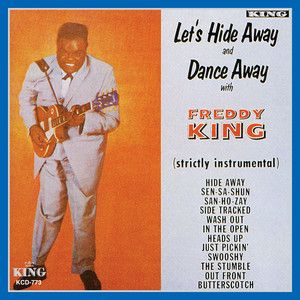
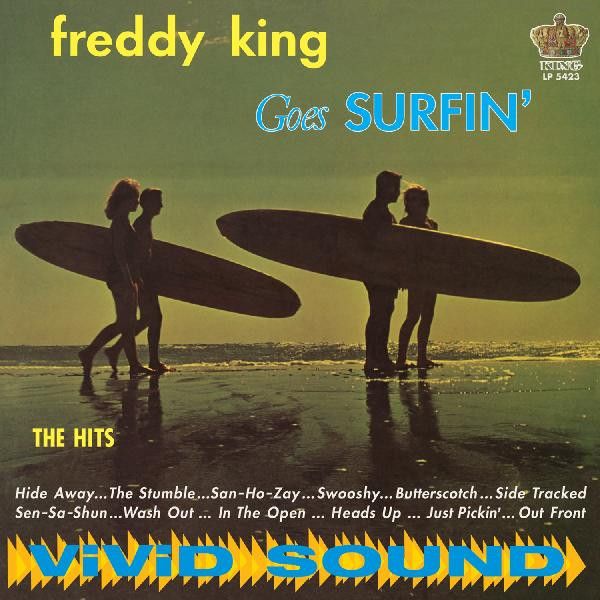
Many of King’s early instrumentals, such as Hideaway, became popular with surf bands in the early 1960s. This popularity was strong enough for his 1961 instrumental album, Let’s Hide Away and Dance Away with Freddy King, to be re-released two years later under the new title Freddy King Goes Surfin’.
Equipment
King used a gold top Gibson Les Paul equipped with P90 pickups in his early recordings, but moved to semi-hollow electrics such as the ES-335 and ES-345 (both by Gibson) later in his career. His bright tone largely came from his simultaneous use of a plastic thumb pick and metal finger pick on his index finger (more commonly used by pedal steel players) coupled with a strong attack in his playing and an amplifier (such as a Fender Quad Reverb) cranked up as loud as it could go.

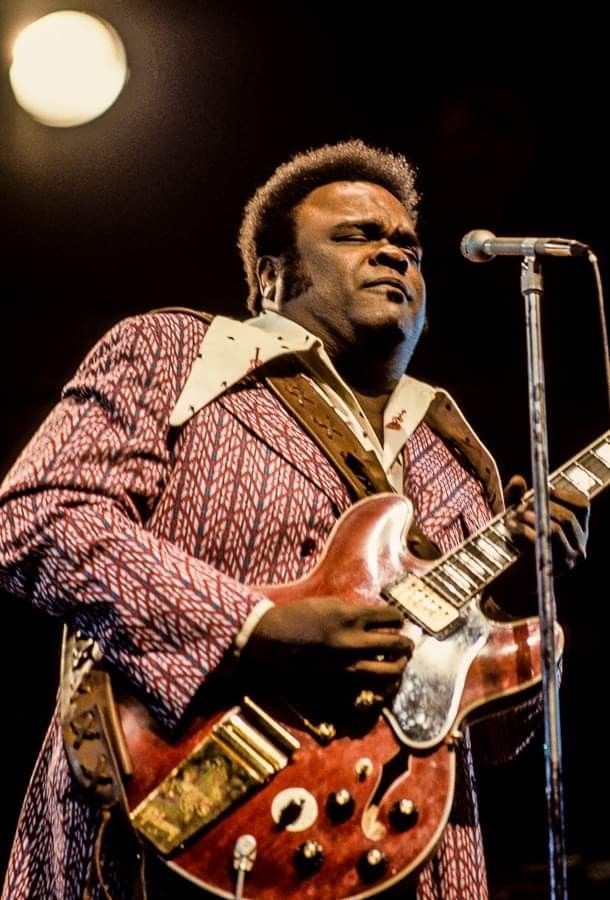
Any semi-hollow (including more budget-friendly options such as this Harley Benton HB35 Plus) or P90 style guitar will help you get in the ballpark for King’s tone, but in theory, even a single-coil guitar with a treble boost (or mild use of overdrive to thicken one’s sound) should get you there. Just be sure to stick to the bridge pickup and really dig in with your right hand. The most important thing is to play like you meant it!
Recommended listening
We’ve already mentioned Let’s Hide Away and Dance Away with Freddy King (1961), which features many of the instrumentals for which King became well-known. This is the obvious starting point for first getting into Freddie King, much as it was for those guitarists of the original British Invasion of the 1960s. Later albums feature variations on these themes, sometimes with a funkier backing (from one of the first multi-racial backing groups) as record companies attempted to sell King to a newer audience.
King’s albums of the early seventies feel like they’ve had more care put into their production. King signed to Leon Russell’s Shelter Records and his three albums with this label featured a high calibre of well-known and respected musicians backing him up. These LPs also showcase King’s powerful singing voice, which was rarely used on his early records.
- Getting Ready (1971, Shelter)
- Texas Cannonball (1972, Shelter)
- Woman Across The River (1973, Shelter)
- Burglar (1974, RCO)
- Larger Than Life (1975, RCO)
There a few useful resources for getting to grips with King’s more typical licks and phrases, such as this guide via Fundamental Changes and the online Guitar Magazine. The examples provided are simple enough to learn. The secret to really nailing these phrases is a strong right hand attack when picking.
I’ll leave you with his version of Sweet Home Chicago, a local anthem in the Chicago blues scene, as well as a standard everywhere else…
 Tim Higgins, Guitarist
You must be logged in to post a comment.