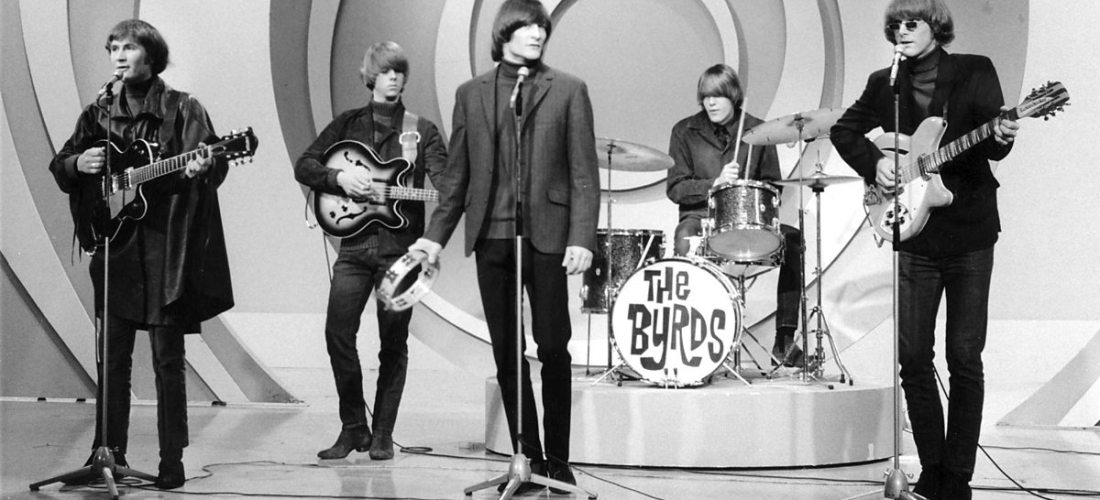
A group best known for their cover of Bob Dylan’s Mr Tambourine Man, but which created a ripple which ran further and deeper through popular music than you might realise. From famous alumni to mechanical innovations for country & western guitar music, here’s a small token of praise for folk rock pioneers, The Byrds.
Originally formed in early 1964 as The Jet Set, a trio of singer-guitar players Jim (later known as Roger) McGuinn, Gene Clark and David Crosby, they soon augmented their line-up with Chris Hillman (bass/mandolin/vocals) and Michael Clarke (drums, and apparently hired on the strength of his excellent Brian Jones style haircut). They set out to meld the influence of British Invasion bands, most notably The Beatles, with traditional folk music in what was a unique new sound at the time.
In particular, the Fab Four was the inspiration behind McGuinn playing the Rickenbacker 360 12-string guitars that played a large part in the sound of their early records. A lot of the ‘jangly’ guitar music you hear in later bands – particularly the indie acts of the 80s and Britpop bands of the 90s – owe as much of a debt to The Byrds as they do to The Beatles.
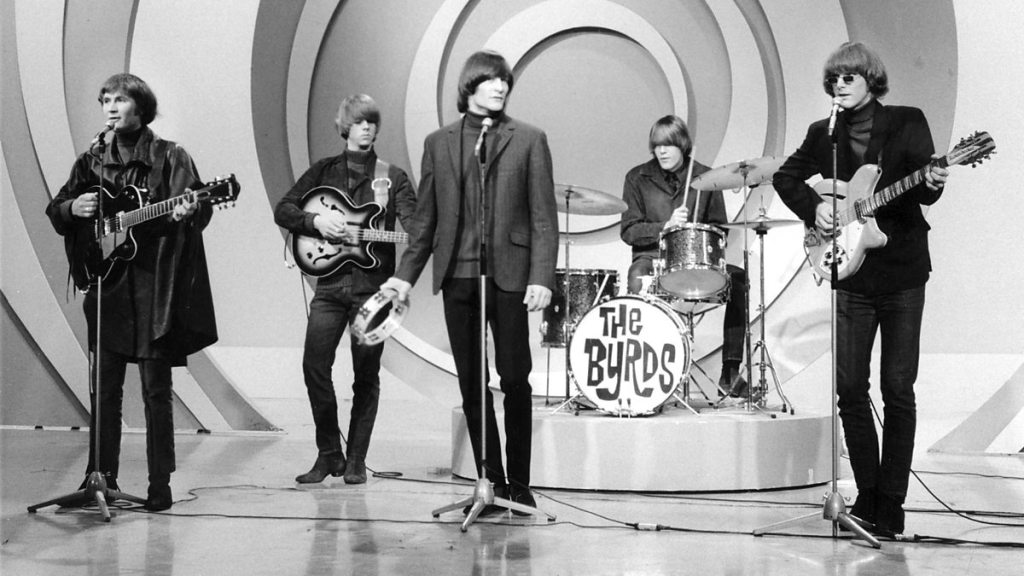

They played ‘electric folk’ before Dylan (sort of)
Their first single was a cover of Bob Dylan’s Mr Tambourine Man, which they recorded before Dylan’s original acoustic version was released as part of his album Bringing It All Back Home in March 1965. Interestingly, although this album marked the first time Dylan used a backing band and electrified instrumentation (on side one), his original version of Mr Tambourine Man is in his (at the time) traditional style of solo guitar and harmonica to accompany his vocals (as part of the all-acoustic side two). The Byrds’ version was finally released a month later, reaching number one on both the British and US charts.
This release was still a good two months prior to Dylan’s infamous appearance with a ‘rock’ band and playing electric guitars at the Newport Folk Festival in July 1965. Dylan was friendly with the group and had got up on stage to jam with them at the start of year, undoubtedly helping their reputation beyond the folk scene before they’d released any records. It seems clear to me that both acts were part of a change to folk music that was happening at the time, and it’s fair to say they had a degree of influence on each other. The Byrds certainly covered a lot of Dylan songs on their debut album (also named Mr Tambourine Man, released in June 1965).
They went beyond folk rock
By the end of 1965, The Byrds had already begun to include more psychedelic influence in their songs. Most notably, Eight Miles High features guitar playing by McGuinn which was intended to emulate the playing of John Coltrane’s Impressions album, particularly the opening track India, in which Coltrane was seeking to recreate the raga lines of Indian performers such as Ravi Shankar.
Within less than two years of their formation, their line-up had started to change. As well as the raga-styled influences, The Byrds sound incorporated jazz, psychedelia and an increasing amount of country & western influences. By the end of their time together as a band (circa 1973), The Byrds’ sound was more representative of early country rock than their original folk sound.
Impressive alumni
Many members of he Byrds went on to form well known groups. David Crosby was dismissed from the band in 1967, for a variety of reasons (clashing egos with is bandmates seemingly chief amongst them). The following year, he formed the supergroup Crosby, Stills & Nash with Graham Nash (from the British pop group The Hollies) and Steven Still (from Canadian band Buffalo Springfield). By their second album, they had been joined by Stills’ former bandmate Neil Young, prompting a name change/extension to Crosby, Stills, Nash & Young. Although their time together has been intermittent and varied, their earl albums produced highly popular hits, and their vocal harmonies have been highly influential on countless performers ever since.


Later members of the Byrds included Gram Parsons, another pioneer of country rock and Americana (and also notorious for the theft f his corpse and it’s unusual cremation after his untimely death in 1973). Members of The Byrds also went on (with Parsons) to form another influential country rock band, The Flying Burrito Brothers. Roger McGuinn continued as a solo performer, including collaborations with Dylan in the seventies, and has reformed The Byrds in various guises, largely for reunion tours) across the decades.
Two former members created a brand new guitar system
Clarence White, a highly respected bluegrass player and session guitarist, joined The Byrds in 1968. Also joining him was Gene Parsons (no relation to Gram), who ad previously performed with White in the country rock group Nashville West. Sometime between these two groups, White and Parsons discussed ways to simulate the sound of a pedal steel (which uses pedals to alter the pitches of some strings, similar to a harp) on the guitar. Parsons set out devising a system that would enable White to achieve what he was looking for.

Parsons’ design involved adding a pulley system onto the strap button closest to the guitar’s neck, meaning that when the guitar is pulled downwards (away from the head of the player), a the pressure on the strap moved a lever which, in turn, raised one or more strings on the bridge of the guitar. As unwieldy as that sounds, the result was exactly what White was looking for, and Parsons later went into business selling these devises as retro-fits, usually onto Telecasters, like White’s original model. The design was originally licenced to Fender in the early seventies, and though they didn’t do anything with it originally they have since released their own special model of B-bender Telecaster guitars in recent decades. The B-bender guitar has become a poplar tool in country and country rock music, with guitarists such as Brad Paisley using them to amazing effect.
Here’s Parsons discussing his invention as part of a documentary on The Byrds:
I’d heard of the B-bender before, but it was only when reading an article about The Byrds a few months ago that I learned it was one of their drummers who invented it to help his bandmate out! It certainly demonstrates the lasting legacy of the band on modern country music.
This is in no way a definitive history of the band. There are numerous biographies out there that those interested in learning more about this group should seek out (an in all likelihood, probably already have). This brief overview (much like my previous article on The Animals) merely serves to show how some performers – of whom most people might only recognise less than a handful of songs – can influence the musicians you know and music you hear i ways you might not expect, and often without you realising it.
Can you think of any other bands that might have had a similar far-reaching effect as inventing a new kind of country guitar, or bringing Jimi Hendrix to wider recognition (see: The Animals)? Please let me know, as it may well end up in a future article! Since I have covered an A and a B band, perhaps new suggestions could follow on in this (unintentional) alphabetic format? Get in touch!

 Tim Higgins, Guitarist
You must be logged in to post a comment.