
In a recent article, I used Albêniz’s Leyenda as an example of varying interpretations, from a performer’s and arranger’s perspective. I stated my belief that interpretation is one of the crucial elements of artistic performance, yet it remains one which is often overlooked in musical performance. It’s what makes a performance unique to you, rather than a carbon copy of notes on a page. I say this because sometimes meaning can be lost if we do not remain mindful of what we want a piece to convey.
Views on interpretation vary, not only in how it should be defined but also in who has the right to do the act of interpreting in the first place. There are no right answers – only opinions. There are mine, based on my experiences of a wide range of musical genres, all of which I have interacted with in many different ways; composer, arranger, performer, and most of all, listener.
Interpretation as an act of translation, rather than the inferring of meaning
Interpretation often comes in for criticism, but usually in the context of art being explained to an audience. Literary critic E. D. Hirsch stated that “the author’s intention must be the sole determiner of meaning” (The Aims of Interpretation,1976), though many would disagree. Artists and creatives such as Charlie Chaplin to Salvador Dali have made similar-sounding statements against the imposition of another’s interpretation onto an audience. In effect: art doesn’t require an explanation. Meaning can be interpreted by the recipient in their own way.

This is undoubtedly true, but what about the creator of the art? In terms of the composer, a sense of meaning will have been part of the original creation of any work of art. Even a piece purposely left open to the audience’s own interpretation is a deliberate choice on the part of the creator.
And what of the middle-men between creator and audience? In the case of music and performing arts, how can arrangers and performers interpret previously written works? Consider just how many modern films, etc, are modern versions of Shakespeare, classic Greek plays, etc, where the setting and characters has been changed. Often, it is brought up to the present time of the new adaptation, and usually re-scripted in language more accessible to the audience of these more recent times. Sometimes works are transposed to completely different media, such as tone poems based on paintings or poems.
A concert performer will often choose works of a similar theme for recitals. This act of curation demonstrates that someone other than the composer – be it the performer or program director – has imposed a new theme onto the chosen pieces which in all likelihood was not part of their original creation. Along these theme is the jukebox musical, an early example of this is Return to the Forbidden Planet, based on the 1956 sci-fi film Forbidden Planet, which in turn is based on Shakespeare’s final play, The Tempest. The score of songs sung by the cast (or used as incidental music) throughout the play is comprised entirely of rock’n’roll hits from the 1950s and 1960s, none of which were conceived or recorded with the story or themes of this musical (premiered in the 1980s) in mind – old works were chosen and presented in a new format to tell a new story.

Be sure to include your own voice, and your own meaning
For performers, interpretation is unavoidable. Many performers appear happy to perform pieces written and arranged by others, repeating their original vision and intent without adding anything to the process apart from the immediacy of live performance. In some cases, this may be the most appropriate course of action. However, I’d argue that the opposite is true far more often than you might think.
Sometimes the effects of presenting a piece through the lens of your own interpretation is barely noticeable. The results will be felt rather than consciously observed by audiences. In some cases, they have been known to have a longer lasting effect. In my article on Leyenda, I noted that the most widely accepted adaptation for guitar includes a series of sixteenth triplets near the beginning which are not present in the original piano score, but an invention of noted classical guitarist Andres Segovia. I have noted in an additional piece that such rhythmic variations used to be the norm in musical performance. The apparent convention in modern classical music concerts, which seems to impose limits on the range of individual creativity permitted by performers, is likely to have led to the neglect of artistic interpretation in more recent times.
In more immediate terms, the way you perform a piece will affect the way the audience hear it, and the kind of meaning they might derive from it. This doesn’t mean grand re-imaginings are required for every performance. Sometimes the simplest (and best) option is to be mindful of your intent in preparation for an upcoming performance, and during the performance itself, rather than focusing solely on technique – or achieving a faithful reproduction of note sequences.

Put simply: be mindful about what you are playing, and how you are playing it
The composer’s views are important. So is understanding the context of the times in which the pieces were commissioned, written and first performed. These will affect your understanding of a piece. The same goes for your audience. But if we are to consider the context of time and place, it is essential that we include the most important factors which separates a performance from a recording (or past performance): the here and now.
In Music Therapy, both improvised music and pre-existing songs are used as a language to communicate feelings the client might struggle to adequately articulate verbally. However, when performing a well-known song, neither the client or therapist is primarily concerned with a faithful recreation of the original artist’s recording. Instead, we are using the musical language in the here and now of the therapeutic space to communicate new feelings, and new meanings. That is, and has always been, the intrinsic power of music.


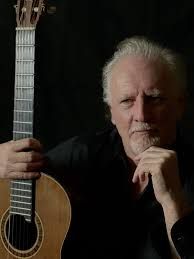
 Tim Higgins, Guitarist
You must be logged in to post a comment.