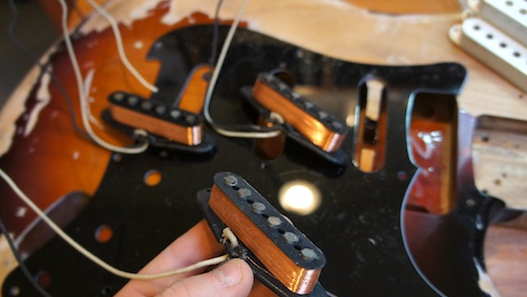
This article has been one of my most viewed pieces, as fans of Squier guitars try to get to the bottom of a pickup mystery. I heard of it being shared on forums discussing the link between Squire’s Classic Vibe range and Tonerider pickups. However, I also recently learned of an important update, so have returned to this post to bring it up to date.
This article was first published in May 2020, and was updated in November 2024.
A few years ago, I was in the process of changing the pickups in my two Stratocasters. One, my blonde Squier Vintage Modified (pictured below), was fitted out with custom pickups handmade for me by Rohdan Pickups in the USA. These were made using Alnico III magnets in the neck and middle pups, the same as the very first run of Fender Strats in 1954. The bridge was a mix of Alnico V & II, for better definition, without the harsh trebley bite.

My three Strats, before I sold the red one (top) or changed the pickups in the other two…
For the other guitar, my trusty Mexican HSS Strat (the blue one, pictured above), I only needed replacement neck and middle pickups. I was playing with different groups with less emphasis on heavy rock, and needed something more versatile. I’m still really happy with the Seymour Duncan ’59 humbucker in the bridge (this is usually a Les Paul replacement/upgrade, and has a great tone for classic rock). Having loved the sound of one of my other Strats, a Squier CV, or ‘Classic Vibe’ (Simon Neil signature model, based on a CV 60’s model), I started researching it’s pickups online. I thought I might get an idea of where to look for similar-sounding pups to install in my Mexican Strat. However, in my search, I happened upon an interesting, and ultimately money-saving, discovery…
Tonerider Pickups
Tonerider make replacement pickup sets for Strats and Teles. They appear to operate out of Squier’s main factory and sound as similar to the pickups used in Squier’s Classic Vibe guitar range as to lead most people to believe they are the stock pups built into the instrument.
An excellent article by Tidy Words seemed to confirm what many Squier players had long suspected, and which Tonerider set was (allegedly!) being used in which guitar:
- CV 50’s Strat – Tonerider Surfaris
- CV 60’s Strat – Tonerider Classic Blues
- CV signature Strat (Simon Neil signature, etc) – Tonerider Vintage Classics
For full details, you can see the full article here.
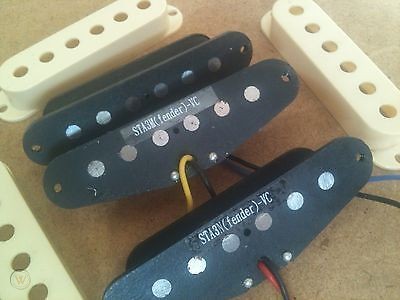
Picture courtesy of Worth Point.
However, this only appears true for Squier Classic Vibe guitars made before 2019 in China
According to Fuzz Faced, Squire CV production tool place in the Grand Reward factory, based in the Guang Dong province of Southern China. Tonerider pickups were made in the same factory, leading to the noticeable similarities in construction and sound between their pickups and the stock CV ones.
Squire moved production of the Classic Vibe range to Indonesia in 2019, as a means of lowering costs and avoiding US import tarrifs on goods manufactured in China. As a result, these newer guitars are no longer made in the same factory as Tonerider pickups. So what might have been true of a pre-2019 CV is much less likely now.
However, the sound of a CV 50s Strat made in China is the same is one made in Indonesia. Their pickup voicings remain almost identical to models of Tonerider pickup available.
The takeaway message…
If you have a Squire Classic Vibe guitar, don’t rush to upgrade it with Tonerider pickups. They are, for all intents and purposes, already in there! And frankly, if you’ve bought a CV guitar to get the overall ‘vibe’ of a certain era in Fender’s history, the stock (Tonerider-sounding) pickups do a great job, and don’t need replacing in the first place! These guitars are well built and in terms of sound, playability and build quality, give the ‘real’ Fenders a run for their money – at a fraction of the price!
On the other hand, if you like the Strat you have, but it’s not from the Classic Vibe range, and want to improve the pickups, you could do a lot worse than the Tonerider range. Check out their full range of Strat pickups here.
How did it work out for me?
I bought a City Limits single coil set from Tonerider for the Mexican HSS Strat. These use Alnico V magnets, and are aiming for the ‘Texas Blues’ sound Fender Strats do so well – think ‘SRV’ and you’ll have a fairly good idea what I mean.

Picture courtesy of Tonerider.com
These pickups worked brilliantly for blues, rock, funk, jazz and everything else I threw at it. However, I found the difference between the sound of my two Strats to be an issue (as one guitar serves as backup for the other onstage), so I switched the bridge pickup to a more original-sounding single-coil, and decided to put in a new, fully balanced set. Having grown to prefer the sound of my blonde Strat, I opted for Tonerider’s Alnico-3 Surfari set. I also made the ‘tele mod’, making it possible to select the bridge and neck pickups at the same time. Now I have that wonderfully airy but funky Telecaster sound, making for a very versatile guitar which pairs much better with my blonde Strat.
I hope this has been helpful, and clears up any misunderstanding about the Squier CV range. As always let me know your thoughts, and good luck in your buying choices!


 Tim Higgins, Guitarist
You must be logged in to post a comment.