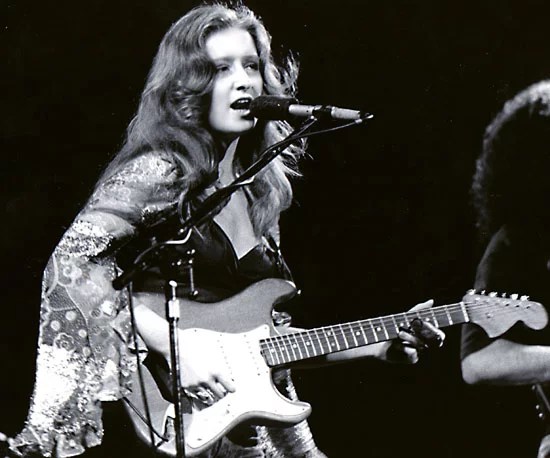
Great Guitarists #17: Bonnie Raitt

Great Guitarists

Now more than ever, the world is a busy place. In the age of social media and being reachable in one form or another virtually anywhere in the world, we find our time is filled up with ever-newer demands on our attention. Yet classic musical genres like the Blues remain a steady fixture, especially in the guitar-o-sphere, be it as the rediscovery of BB King and his compatriots by each new generation, or the influence of blues guitar in the apparent resurgence of the guitar solo in modern chart music.

I’ve certainly had a busy summer, although in my case it was a few months full of gigs, including in some new and interesting locations (which I will tell you about in an upcoming post). But now things have settled back into something resembling a normal routine – or as normal as any freelancer’s life can ever be – it’s time I returned to the Great Guitarists series, and returned to the Blues. This time, we’re sticking with the Blues to honour one of the greatest slide guitar players in the history of guitar: Bonnie Lynn Raitt…

Born in California in late 1949 to a musical family, Raitt first picked up the guitar at the age of eight and continued learning songs throughout her teens. She gravitated to a slide guitar technique early on, although she still viewed music as a hobby while going to study Social Relations and African Studies at University (that’s college for American readers). Indeed, she planned to work in Africa after graduating, but a road trip to Philadelphia and some early gigs backing Mississippi Fred McDowell started Raitt on the path towards a career in music which has seen her win fifteen Grammy Awards and become one of the very few elder stateswomen of the Blues.

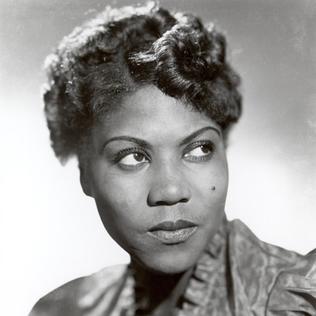
Her eponymous debut album was released in 1971 to critical acclaim at a time when women generally weren’t praised for the guitar playing. Following a tradition set out at the very start of Rock’n’Roll by Sister Rosetta Tharpe, Raitt’s playing earned the respect of her peers, and wider public recognition followed in 1977, with the commercial breakthrough of her sixth studio record, Sweet Forgiveness. Since then, despite periods where she’s taken time out to deal with addition health and personal issues, Raitt has maintained a steady release of records and continues to perform and record to this day.

Slide technique

Raitt learned about “bottleneck” playing from old blues records, and started with a glass bottle, inspired by slide legend Duane Allman. She has admitted her technique is a little unorthodox, since she wears her slide in her middle finger, rather than the little or ring fingers, which is far more typical.

However, being able to hold her slide between two stringer fingers gives her an element of control that’s sometimes lacking in the majority of slide players who prefer to wear their slides on their ring or little fingers. Also, Raitt is always precise with her movements during her solos. Although the middle finger is a rare choice, it is something Raitt has in common with Joe Walsh (James Gang, The Eagles) and Billy Gibbons (ZZ Top), which is rather good company for her (and me, another middle finger slide-ist) to be amongst!
Equipment

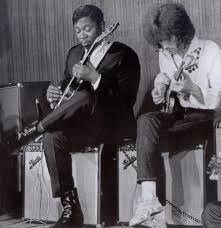
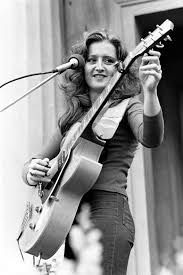
Raitt can be seen in pictures with a variety of guitars, but her most famous tone comes from a Fender Stratocaster she bought in 1969. The single coil pickups help the biting tone of her slide playing to cut through more clearly. She also plays a Gibson E-175 on occasion, and seems to favour Guild acoustic guitars. Amplification can vary, but Raitt appears to use Black Cat combos more often than not on tour, and for added bite, usually has a Rat distortion pedal in her armoury.

Her preferred tuning is Open A (low to high: E, A, E, A, C#, E), which is simply the more common Open G, raised by a whole tone – so if you (like me) often keep a guitar tuned to Open G for slide work (or bashing out Keith Richards style open-tuned riffs), a capo on the 2nd fret saves you having to retune (and intonate) your guitar.

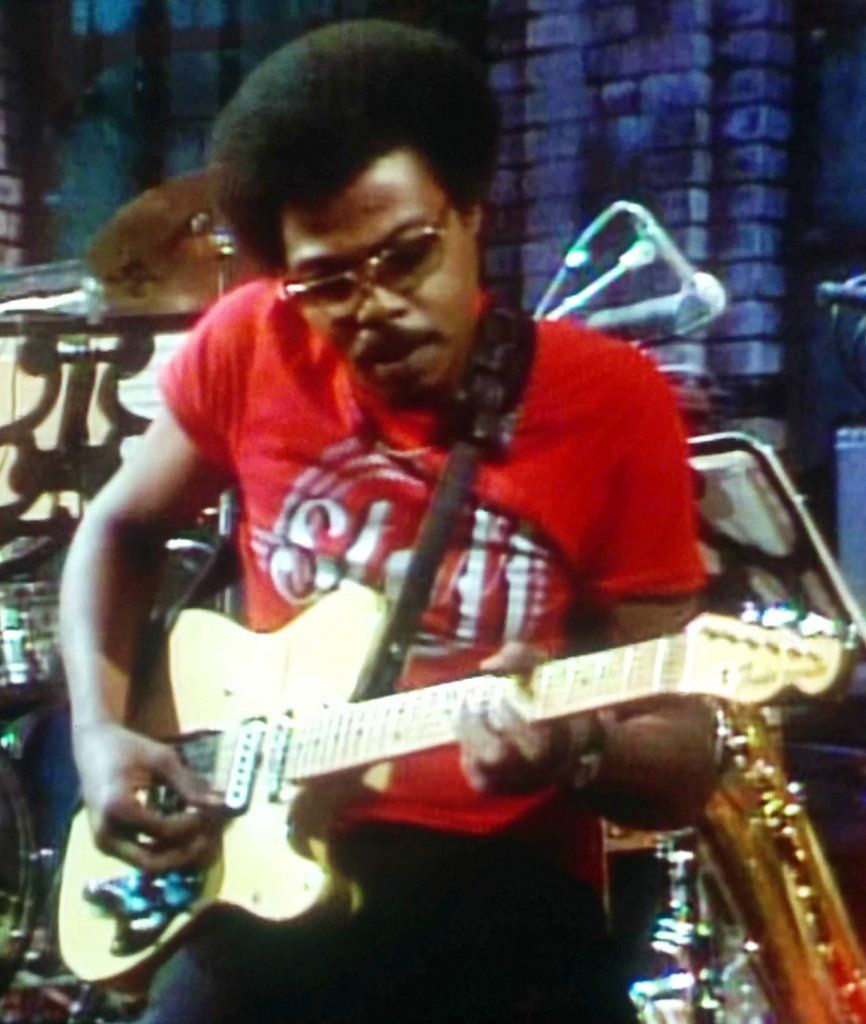
Raitt with her main Fender Stratocaster.

Recommended listening

You have eighteen of Raitt’s studio albums to choose from over her five decade long career, and they each have something to offer in terms of excellent slide guitar tone and a melody-focused soloing approach. As well as previously mentioned successes such as Sweet Forgiveness (1977) her 1971 debut and its follow-up, 1972’s Give It Up, Raitt’s fans rate 1989’s Nick Of Time and Luck Of The Draw (1991) as great showcases of her guitar and vocal talents. Raitt has also appeared as a session musician, performing guitar or backing vocals on records by a range of artists, from Roy Orbison, Aretha Franklin and Bruce Hornsby to Little Feat, The Pointer Sisters, and many more…

It’s also worth highlighting her numerous guest appearances with other Blues greats, from Mississippi Fred McDowell and John Lee Hooker to her fantastic rendition of Stevie Ray Vaughan’s Pride and Joy at the tribute concert in his honour (after his tragic death) recorded in Austin, Texas in 1995, alongside BB King, Buddy Guy, Eric Clapton, Dr John and Stevie’s brother Jimmy Vaughan.

Final thoughts

I’ve long admired Raitt, not only for her slide guitar playing, but for her social conscience and lifelong activism, using her voice to speak out about global and environmental issues throughout her career. I also recognise how hard it is to take sabbaticals form the music industry, where the fear of being forgotten, dropped by a record label, and therefore at risk of losing one’s income has driven countless musicians to an early grave. Yet Raitt is on record for speaking about taking time out in the 1980s to properly deal with her alcohol and substance addictions, as well as taking time to properly grieve following family bereavements. This is a good example of taking time for oneself, not just to survive, but to thrive – something too many of us can struggle to do, and indeed be made to feel guilty for.

In this increasingly busy and high-pressured world, perhaps we should all be a bit more like Bonnie Raitt by taking more time to heal when we need it, and keeping our unique voices ringing out about to speak up when it matters – both creatively and socially.

Great Guitarists #16: Freddie King

Great Guitarists

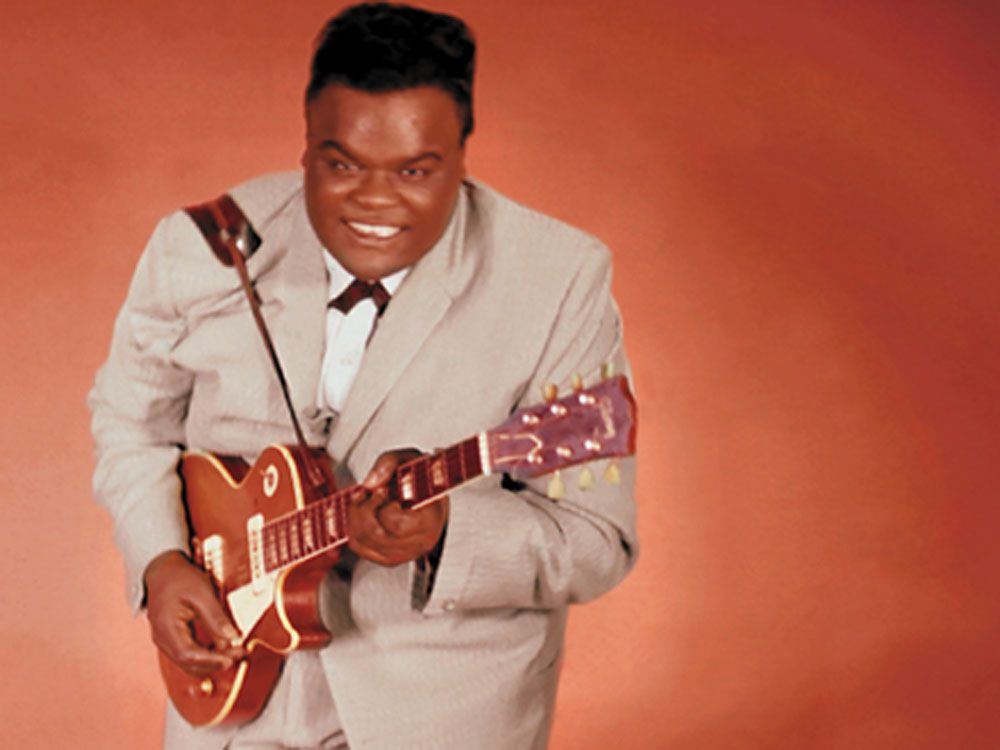
The last of the ‘Three Kings of the Blues’, showing just as much influence on the guitar world as Albert King and BB King, is the youngest of the three guitarists, Freddie King.

Known for his biting tone and crossover appeal, King was one of the electric blue guitar players who influenced the young musicians in the UK. These guitarists (such as Eric Clapton and Peter Green) went on to form the bands of the British Invasion of the 1960s – bringing King’s sound back to the US and eventually raising his profile.

Fred King was born in Texas in 1934 and began learning the guitar from his mother and uncle when he was only six years old. His family moved to the South Side of Chicago when he was fifteen, and he was soon sneaking into the nightclubs to hear the music of the original blues guitarists such as Muddy Waters, Elmore James, T-Bone Walker, as well as other bluesmen like Howlin’ Wolf and Sonny Boy Williamson. King was soon performing with his own band and by the time he was eighteen, he acted as a sideman to some of the better-known performers on the Chicago blue scene, such as Little Walter, Jimmy Rogers, Willie Dixon and Memphis Slim.

Despite his apparent guitar talent on he Chicago live blues circuit, King’s initial initial attempts at recordings were either unsuccessful or unreleased altogether, He was also turned down more than once by the city’s now-legendary Chess Records label, allegedly because he singing voice resembled B.B. King too closely. Nevertheless, King proved a popular mainstay on the emerging West Side clubs of Chicago.

Finding success

King eventually signed to Federal Records in 1960 recording his first session for the label in August of the same year. The results of this session yielded King’s first single, Have You Ever Loved a Woman, which charted in the Billboard top 100. From the same session came one of King’s best-known instrumental tracks, Hide Away. Hide Away managed to reach no. 29 in the US pop music charts, an unprecedented feat for a blues record at a time when the genre was still relatively unknown to white audiences. Eric Clapton later brought the song to an even wider audience when he recorded his version as part of John Mayall and The Bluesbreakers in 1966.

King released a steady stream of albums throughout the sixties and early seventies. Sadly, a hard-partying lifestyle, coupled with a relentless touring schedule, led to King’s untimely death in 1976, aged just 42.

Influence

King is one of the notable influences on Clapton’s playing. His style is considered a mix of Texas and West Side Chicago blues, with added nuances to make his guitar solos feel more like vocal lines. Clapton once described playing alongside King as a player who could hide his ‘mean’ lead style under a veneer of subtlety, saying “He’d make you feel at home, and then tear you to pieces” in a ‘cutting contest’ (a friendly guitar duel, usually between two players who greatly respect each other).

As well as Clapton and Peter Green (founding member of Fleetwood Mac), King’s influence can be heard in the playing of Jeff Beck, Mick Taylor (of the Rolling Stones from 1969-74), Lonnie Mack, Stevie Ray Vaughan and Jerry Garcia (Grateful Dead), to name just a few.

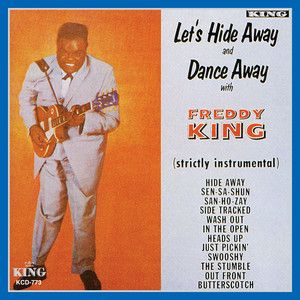
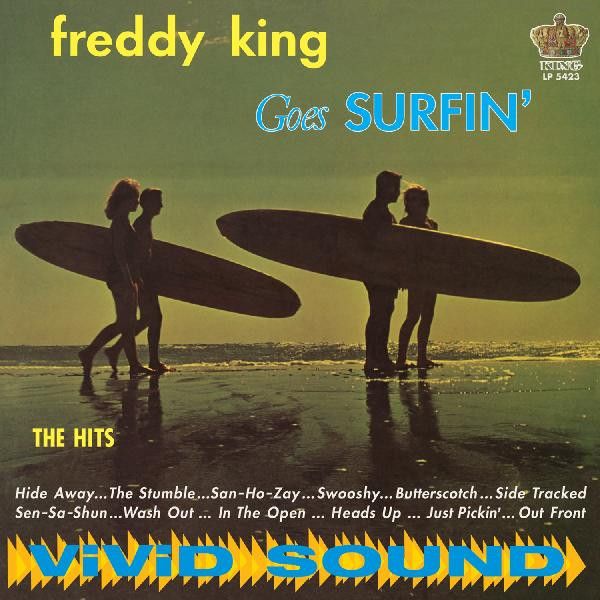
Many of King’s early instrumentals, such as Hideaway, became popular with surf bands in the early 1960s. This popularity was strong enough for his 1961 instrumental album, Let’s Hide Away and Dance Away with Freddy King, to be re-released two years later under the new title Freddy King Goes Surfin’.

Equipment

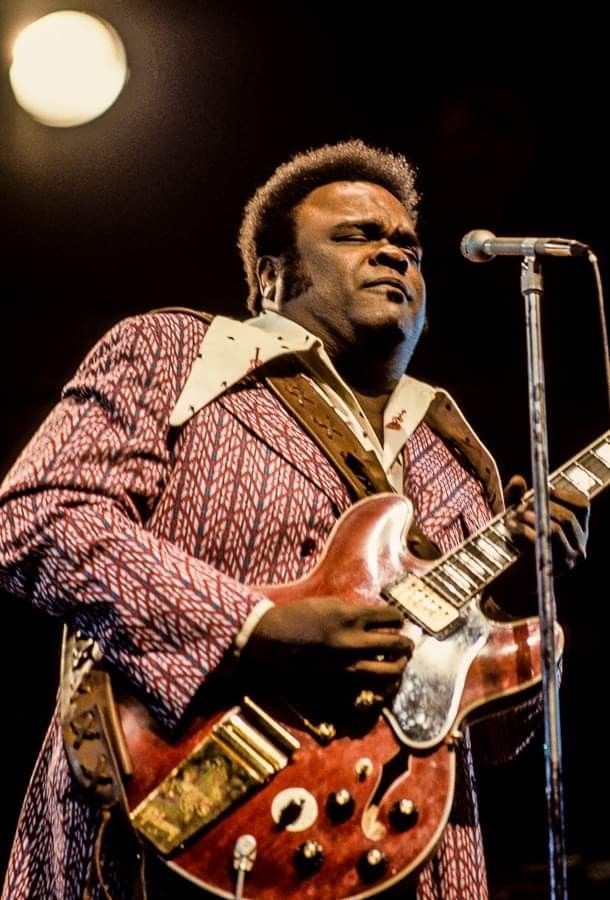
King used a gold top Gibson Les Paul equipped with P90 pickups in his early recordings, but moved to semi-hollow electrics such as the ES-335 and ES-345 (both by Gibson) later in his career. His bright tone largely came from his simultaneous use of a plastic thumb pick and metal finger pick on his index finger (more commonly used by pedal steel players) coupled with a strong attack in his playing and an amplifier (such as a Fender Quad Reverb) cranked up as loud as it could go.

Any semi-hollow (including more budget-friendly options such as this Harley Benton HB35 Plus) or P90 style guitar will help you get in the ballpark for King’s tone, but in theory, even a single-coil guitar with a treble boost (or mild use of overdrive to thicken one’s sound) should get you there. Just be sure to stick to the bridge pickup and really dig in with your right hand. The most important thing is to play like you meant it!

Recommended listening

We’ve already mentioned Let’s Hide Away and Dance Away with Freddy King (1961), which features many of the instrumentals for which King became well-known. This is the obvious starting point for first getting into Freddie King, much as it was for those guitarists of the original British Invasion of the 1960s. Later albums feature variations on these themes, sometimes with a funkier backing (from one of the first multi-racial backing groups) as record companies attempted to sell King to a newer audience.

King’s albums of the early seventies feel like they’ve had more care put into their production. King signed to Leon Russell’s Shelter Records and his three albums with this label featured a high calibre of well-known and respected musicians backing him up. These LPs also showcase King’s powerful singing voice, which was rarely used on his early records.

  • Getting Ready (1971, Shelter)
  • Texas Cannonball (1972, Shelter)
  • Woman Across The River (1973, Shelter)
  • Burglar (1974, RCO)
  • Larger Than Life (1975, RCO)

There a few useful resources for getting to grips with King’s more typical licks and phrases, such as this guide via Fundamental Changes and the online Guitar Magazine. The examples provided are simple enough to learn. The secret to really nailing these phrases is a strong right hand attack when picking.

I’ll leave you with his version of Sweet Home Chicago, a local anthem in the Chicago blues scene, as well as a standard everywhere else…

Great Guitarists #15: Cornell Dupree

Great Guitarists

Following my last article on the recently passed Herbie Flowers, it felt fitting to return to some of the behind-the-scenes musicians in the next instalment of my (ever-so-intermittent) Great Guitarists series. I have already shone a light on some of my personal favourites, including Steve Cropper and Barney Kessel, and this time I’m focusing on another sideman who played on so many sessions he had the nickname “Mr 2500”, Cornell Dupree (1942-2011).

There’s not many guitarists, even in the session world, whose credits include such a diverse range of artists, from Barbara Streisand and Mariah Carey to jazzers Herbie Mann and Sonny Stitt, as well as rockers Joe Cocker and Ian Hunter.

Born Cornell Luther Dupree Jr in Fort Worth, Texas. His career began in Texas, having decided to learn guitar after seeing Jonny ‘Guitar’ Watson in concert. While playing in local bands, he will have undoubtedly encountered and opened shows for other well-known and respected Texan artists such as T-Bone Walker, Lowell Fulson, Albert Collins, Lightning Hopkins, as well as country stars such as Roger Miller and Ray Price.

In the early 1960s, Dupree was called to New York by saxophone player King Curtis (whom he had known from their days in Fort Worth) to join him in his band The Kingpins. This group were a joined a few years later by a second guitarist – a certain James Marshall Hendrix…

Left to right: King Curtis, Cornell Dupree, and Jimi Hendrix performing with The Kingpins

In a band without a keys player the two guitarists worked together to fill out the band’s sound; Hendrix quickly taking on soloing duties while Dupree filled out the rhythm section. While Hendrix was dismissed from the band in 1965 (for being too loud, too flashy and often late to gigs), Dupree stayed with King Curtis, both onstage and in the studio, up until the band leader’s death in 1971.

Dupree made is first foray into session work in the mid-sixties, while still in the Kingpins. He spent much of the next decade and a half as a much called upon ember for Atlantic Records’ in-house studio band. In the the 1970s alone, his playing graces the albums of artists such as Aretha Franklin, Grover Washington Jr., Donny Hathaway, Miles Davis, Lulu, Herbie Mann, B.B. King, Freddie King, Billy Cobham, Paul Simon and many, many more.

Atlantic Records producer Jerry Wexler stated (in the liner notes to Dupree’s 1994 solo record Bop’n’Blues) that Dupree’s ability to play lead and rhythm at the same time meant that only one guitarist was required to provide what was needed. Thanks to recommendations from former bandmates such as bassist Chuck Rainey, Dupree soon gained a reputation as the only guitarist a producer might need.

Amongst all this, Dupree not only found time to release over a dozen solo records, but also founded the jazz fusion group Stuff. Stuff were a who’s who of session musicians including bassist Gordon Edwards, Richard Tee on keys and Steve Gadd on drums and fellow session guitarist Eric Gale. Their appearance at the 1976 Montreux Jazz Festival is available as a concert video and LP (see one of the tunes, Stuff’s Stuff, below), showcasing these players at the top of their game.

Stuff live at Montreux, 1976

In later years, Dupree continued to perform despite declining health. He can be seen at the end of the Bill Wither documentary Still Bill playing ‘Grandma’s Hands’ with Withers while using an oxygen tank to aid his breathing. He died in 2011 while waiting for a lung transplant as a result of emphysema.

Playing style

As a soul-based guitar player, much of Dupree’s playing used a clean sound with minimal effects, except for a touch of reverb, in most cases. This allows his playing to shine through without becoming overly dominant in the mix. His style demonstrates that blues and gospel-based pattern of question & answer, where one melodic phase acts as a short opening statement (of less than a bar in length), before being ‘replied to’ by another phrase of similar length.

His choral work makes use of the sort of flickering embellishments familiar to use through Jimi Hendrix making extensive use of them (along with Curtis Mayfield and others). In Dupree’s case, they always feel very tastefully executed, and seem to leave ample space for the artist (usually a vocalist) whom he is backing. In this sense, he is following the golden rule of the sideman: to make the featured artist sound good.

Stuff; the all-session jazz fusion supergroup

An integral part of Dupree’s lead guitar style is his use of sliding sixth to augment and enhance the chords he was soloing over. For those who are unsure about sixths, you can find my explainer on sixths and similar intervals here. Steve Cropper was a big proponent of this technique, and like Dupree, one of the guitarists I kept hearing on soul records time and again, without really knowing who these backing musicians were until I was older and starting to dig deeper into this side of my own guitar playing.

Equipment

Although reported to have started out on a Les Paul, then a Les Paul TV Special (a stripped down, P90-equipped version of the Les Paul), Dupree appears to be mainly pictured with a modified telecaster (another common element he shares with Cropper). He is often shown in older pictures with a white/faded blonde model, with a third DeArmond style pickup added in the middle position. This addition meant the pickguard could not be refitted onto the guitar, so Dupree appears to have filled in the screw holes with rivets. It certainly makes for a distinctive look!

A recreation of Dupree’s long-time telecaster (with added bird artwork not on the original guitar) by Scero Guitars

In 2002, Yamaha made a Cornell Dupree artist model Pacifica, using their telecaster-style ash body with a one piece bolt-on maple neck. This signature model had the same atypical pickup configuration that Dupree had been using for decades on his modded Telecaster. The Pacifica came with a neck humbucker and Seymour Duncan ‘Hot Rails’ in the bridge position, controlled by a three-way switch to toggle between them, but not a rivet to be seen!

Dupree with his Yamaha signature Pacifica

There was also an alnico V single coil in the middle, which could be added to any selection via it’s dedicated on/off switch. I’ve seen this mod on the guitars of a few professionals, particularly those who like to get the most sounds out of just one guitar (something I have written about before). Indeed, I’ve modded a few of my own guitars to ensure a similar level of flexibility and range of sounds (read about some of my mods here).

What can Cornell Dupree teach us?

Dupree was the master of economy of style, never overplaying. I guess that’s one of the reasons he was always asked back to more sessions; he knew how to serve the song. Another factor is his clear professionalism. As with Herbie Flowers, showing up, acting professional, and learning to anticipate the producers needs is a key element to a successful career as a session player.

While his former bandmate Hendrix might be more recognisable, having made a wonderful career on his own terms (and in his own time, it seems), Dupree seemed content to remain slightly off-centre stage. As a result, he had a long and varied career. Indeed, although Hendrix is undoubtedly the more seen, I’d argue that Dupree – thanks to his appearances on thousands of recordings by some of the music’s biggest-selling artists – may actually be the more heard of the two. In my mind, that’s quite the achievement.

Great Guitarists #14: BB King

Great Guitarists

Amongst the most famous blues guitar players, there are the so-called Three Kings of the Blues. All unrelated despite the shared surname, these three guitar players helped to define the sound of modern blues guitar.

We have already looked at Albert King and how his unorthodox technique and biting sound left a huge influence on later guitar megastars such as Jimi Hendrix, Buddy Guy and Stevie Ray Vaughan (to name just three). This time, we will focus on the man who is – quite probably – the most influential blues guitarist of all time: B.B. King.

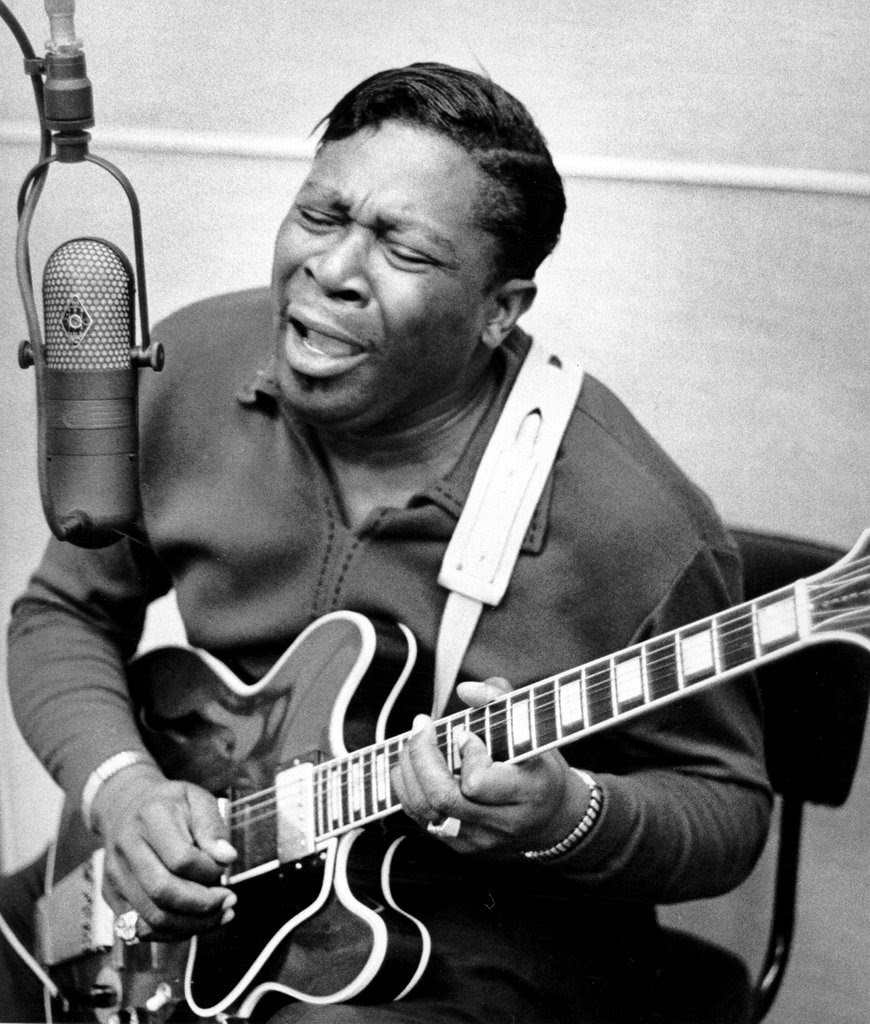
Much of King’s influence is indirect, but the vast majority of guitar superstars in the 1960s and 1970s owe a debt to this man’s melodic and simple, yet incredibly emotional and effective, style of lead guitar playing. He was also a brilliant singer, working in duet with his own guitar playing, like the singer-guitarists of the early blues period, but bringing the genre into the modern electric era with a wonderfully soulful edge.

(Credit: Mike Moore)

Early years

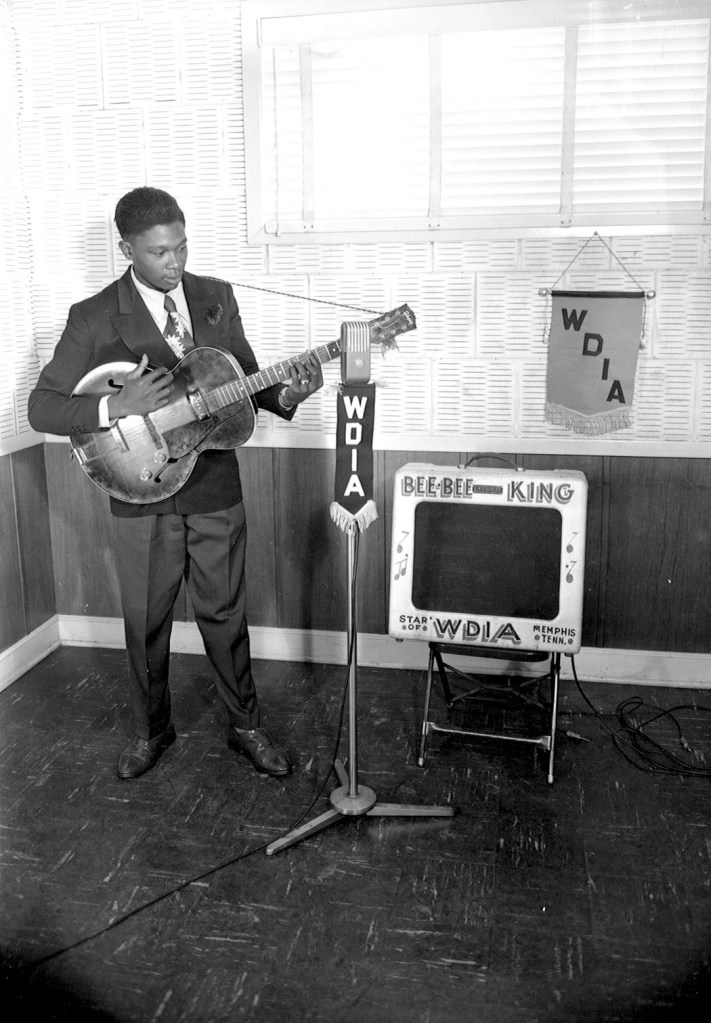
Riley B. King was born on the 16th of September, 1925, on a cotton plantation in Leflore County, Mississippi. In his teens, King sang in a local gospel choir and learned his first few guitar chords from the preacher at his church. He spent his late teens working as a tractor driver and as a guitar player for a popular touring choir, performing at religious services across Mississippi. But after hearing Delta Blues on the radio, King aspired to become a radio musician. Following a move to Memphis, King began to realise this dream, performing on various radio shows and eventually landing his own on the station WDIA. Here he soon garnered the nickname “Beale Street Blues Boy”, which was shortened to “Blues Boy”, eventually becoming the “B.B.” he was known by for the rest of his career.

It was during his stint at WDIA that King first met T-Bone Walker, later stating “Once I’d heard him for the first time, I knew I’d have to have [an electric guitar] myself”. Aside from the Delta Blues and T-Bone Walker, King’s early blues influences were singer-guitarists such as Blind Lemmon Jefferson and Leadbelly. He was also influenced by early jazz guitarists Charlie Christian and Django Reinhardt.
What these players had in common was a knack for beautiful single-line guitar melodies, and an ability to work with singers and other instrumentalists in a ‘question and answer’ style which King would later perform with himself, singing his songs and responding to his vocal lines with a guitar lick.

Finding success

King became popular on the Beale Street blues scene in Memphis, performing with other well-known acts of the time, such as lifelong friend Bobby Bland. He cut some early records with Sam Phillips, who later founded Sun Records (and discovered Elvis Presley), but these did not chart too well. However, he soon had a number one record on the Billboard Rhythm & Blues chart with 3 O’clock Blues in 1952. This was followed by a run of successful blues singles which helped King become a well-known name on the national blues touring circuit.

During the 1960s, King received the nod of approval from a singer he much admired, Frank Sinatra. Sinatra had arranged for King to play at the main clubs in Las Vegas. King credited Sinatra for opening doors to black entertainers who otherwise were very rarely, if ever, given the chance to play these venues.

Water from the white fountain didn’t taste any better than from the black fountain

BB King, quoted in Esquire, 2006

By the end of the 1960s, groups associated with the so-called British Invasion (see below) allowed King to reach a larger audience than before, through exposure to white audiences. This included opening for The Rolling Stones on their US tour of 1969.

BB King never abandoned the blues. But his biggest breakthrough hit, The Thrill is Gone, released in 1969, showed that the blues could be framed in a more modern, funk & soul-based setting that left room for King’s equally soulful singing and lead guitar voices. Although the song had been written in the early 1959s, King’s rendition, the first time he incorporated strings into his arrangements, earned him a Grammy Award for Best Male R&B Vocal Performance in 1970 and became his signature song.

The 1970s saw King release similarly soul-blues singles such as Hummingbird and I Like to Live the Love. For the latter of these songs, the studio version of which feels like a classic soul record, but here’s a slightly faster version from a concert King gave in Zaire (now known as The Democratic Republic of the Congo) in 1974 – look out for legendary session guitarist Larry Carlton on backing guitar:

Video credit: GravyLimited/YouTube

King’s music included elements of funk, soul, gospel and jazz, all combined to create a unique style which many bluesman continue to emulate to this day. By the 1980s, King was already an Elder Statesman of the blues, and the LPs he released over the decades from here until his passing in 2015 were largely albums of duets, featuring a veritable Who’s Who of stars from the world of the blues and beyond.

Influence

Early on, King transcended his musical shortcomings — an inability to play guitar leads while he sang and a failure to master the use of a bottleneck or slide favored by many of his guitar-playing peers — and created a unique style that made him one of the most respected and influential blues musicians ever.

LA Times obituary of BB King, 2015

Although his urbanisation of the blues brought forth some detractors, King’s economy of style proved influential on many of his peers, not least the generation of guitar players who followed him, such as Buddy Guy. Jimi Hendrix was also a big fan of King, incorporating some of his licks into his eclectic vocabulary of psychedelic blues playing.

However, King’s greatest influence came from across the pond in the United Kingdom. While blues artists were not getting much airtime on mainstream radio in the US, young guitar players in Blighty were eager to snap up any blues records which came across the Atlantic. The resulting generation of guitarists redefined the sound of the blues, taking their bands back across to the US and finding great success. Groups such as The Rolling Stones (with guitarists Keith Richards, Brian Jones and later, Mick Taylor, who who displayed BB King’s influence the most overtly), The Yardbirds (which featured, at varying times, legendary guitarists Eric Clapton, Jeff Beck and Jimmy Page) and Fleetwood Mac (Peter Green) were just some of the British bands who followed the success of The Beatles, and helped US audiences rediscover their own elder statesmen of the blues, such as King.

Yet King’s influence didn’t end with the generation which followed. He recorded the rock-based duet When Love Comes To Town with U2 on their 1988 album Rattle and Hum. The arena-filling bluesman of the moment, Joe Bonamassa, puts his success down to a meeting with King when he was just twelve years old, leading the young guitarist to act as an opening act for King, from which he has grown an illustrious career of his own. The groove from King’s 1970 song Chains and Things was a huge inspiration for Gary Clark Jr. The track was also sampled by hip hop artists such as 50 Cent and Ice Cube.

Credit: BB King Official YouTube Channel

Looking back from the history of guitar, blues or otherwise, from the mid-20th century to date, you’d be hard-pressed to find a guitar player who doesn’t owe King a debt f thanks, be it directly or indirectly. It has even been said that a young Elvis Presley was a fan, long before he helped create a newer, uptempo version of the blues known as Rock’n’Roll…

Equipment

All this passion and soul, not to mention influence, from a disarmingly simple setup. Although early photos sometimes show King playing a Gibson ES-5, most of initial singles with RPM were in fact recorded on a Fender Esquire, the forerunner to the Telecaster.

However, by the 1960s, King had switched to the guitar he is most associated with, the Gibson 335.

(Credit: Gibson)

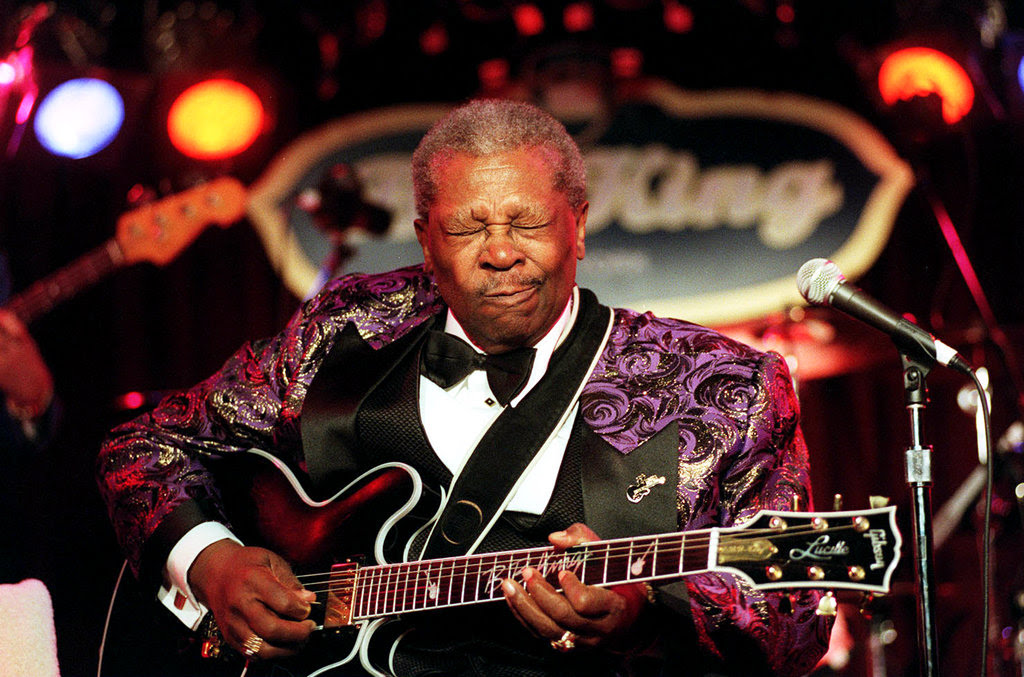
The semi-hollow design allowed space for King’s lead lines to ‘sing’ a little.more freely, but in an era of loud onstage volumes, it also meant the guitar was prone to feedback. To counter this, King used to stuff the f-hole with material to cut down on feedback. Eventually, Gibson began making him his own signature model 335 without f-holes. All of these guitars have since been known as Lucille, following an incident where a fire was caused at a show, all started over a woman of the same name.

For amplification, King favoured the sound of a Fender Twin. King has stated his belief that Fender amps were “the best ever made”, in terms of sound and durability.

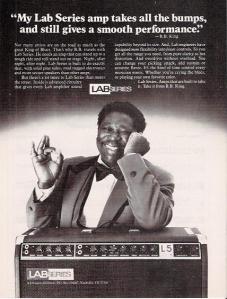
During the seventies and eighties, King also used a Lab Series L5 2×12″ combo amp. This was probably an upgrade of sorts on the Twin, while still retaining the tone King loved and was renowned for.

Recommended listening

There are plenty of records to choose from, spanning the entirety of King’s long career. You won’t go wrong with any of his releases, but for a taste of his early singles, check out The Modern Recordings: 1950-1951. These tracks (including rare alternate takes of his original 45rpm releases) most strongly showcase the jazzy influence of T-Bone Walker in King’s melodic guitar playing.

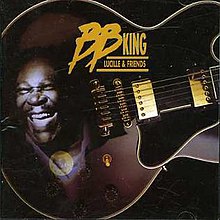
In terms of King’s collaboration albums, there’s plenty to choose from. Lucille and Friends (1995), Deuces Wild (1997) and B.B. King & Friends: 80 (2005) feature a wealth of well produced blues duets with the cream of the rock and blues worlds, recovering songs from King’s repertoire. King also recorded albums of Louis Jordan covers, as well as records and live albums with the singer Bobby Bland. However, his 200p release with Eric Clapton, Riding With The King, shows both guitar players on top form.

However, the quintessential B.B. King record, and one that I believe is essential listening for any blues guitarist, is his 1965 release Live At The Regal, a concert recording from a show at The Regal Theatre in Chicago on the 21st of November, 1964. Hailed as one of the greatest blues albums of all time, this record showcases King at his finest, and is one of the records which helped to shape me as a guitarist. Highly recommended.

As always, I’d love to hear your thoughts. King was a prolific live performer, so if you were ever lucky enough to see the master at work onstage, do get in touch to share your experiences. Until next time…

Great Guitarists #13: Albert King

Great Guitarists

Albert Nelson (1923-1992) is one of the most influential blues guitar players of the mid-29th century, at the height of the Blues’ electric period, and one of the early exponents of the modern blues. But you probably know him better by his stage name, Albert King.

He took the stage moniker of King due to the success of another popular blues guitarist, B.B. King. In fact, it is believed he even passed himself off as a cousin of B.B.’s early in his career in order to raise his profile and get more gigs!

Despite the somewhat cheeky start, both B.B. and Albert, together with Freddie King (also no relation to either of the other two), are now.often referred to collectively as The Three Kings of the Blues, given their enormous influence on countless guitar players both in the next generation of players and among their contemporaries.

Breakthrough Success

King had played with other artists (including as a drummer for Blues Legend Jimmy Reed, for a brief time) as well as leading his own band on the blues club circuit in Illinois in the USA. However, it wasn’t until he moved to Memphis and signed to Stax Records that he started to have a successful run of single releases. King believed that it was his decision to play blues songs in an upbeat, soul-based style which proved crucial to his success. He recorded with the Stax House band, Brooker T and the MGs (featuring none other than Steve Cropper on rhythm guitar), as well the Memphis Horns. Stax singer-songwriter Isaac Hayes also contributed piano to the sessions alongside organist Brooker T. Jones.

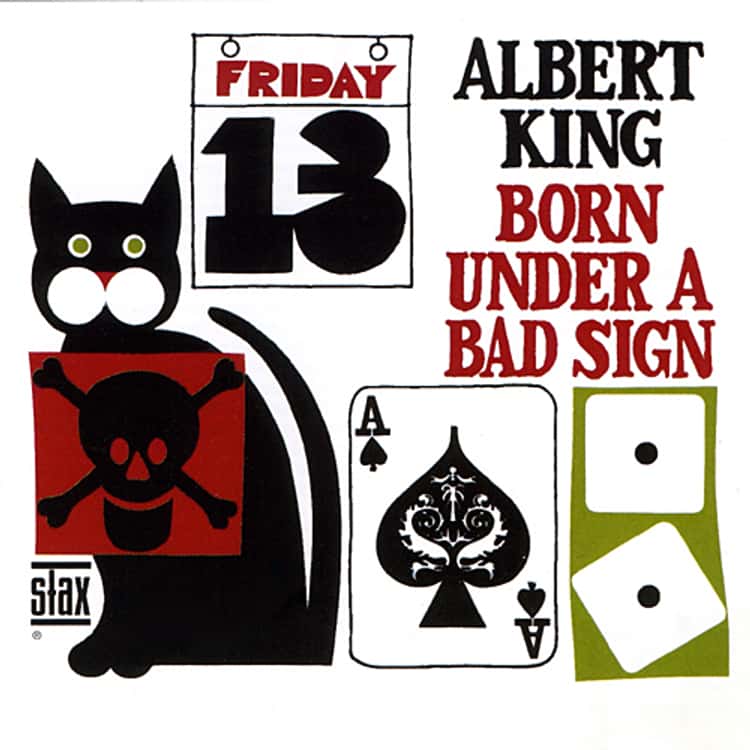
Eleven of the Stax singles, recorded over five seasons from March 1966 to June 1967, were complied and released as the album Born Under a Bad Sign in 1967. The album became a reference point for guitar players such as Eric Clapton, and the title track from the album became King’s signature song (also covered by Clapton with his late sixties blues-rock supergroup Cream).

Unorthodox technique

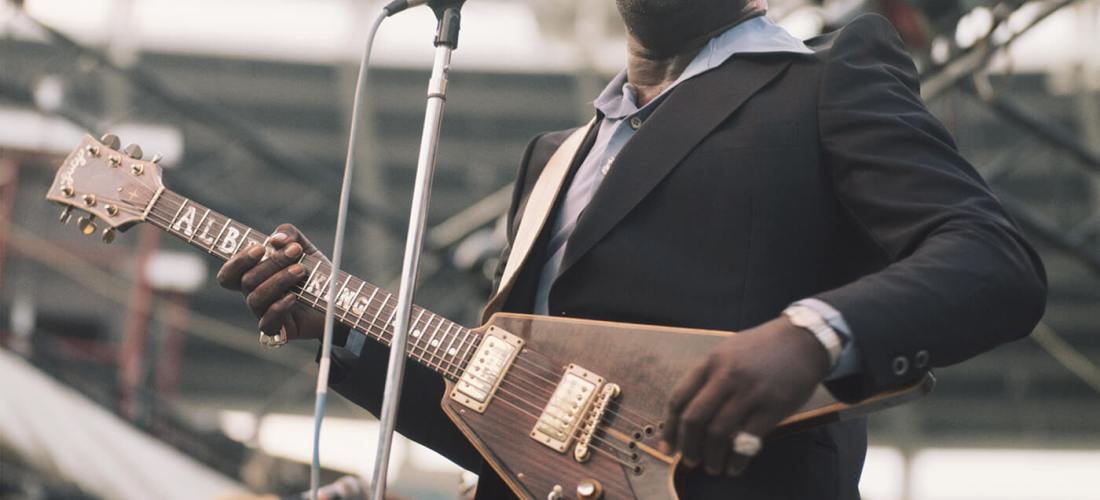
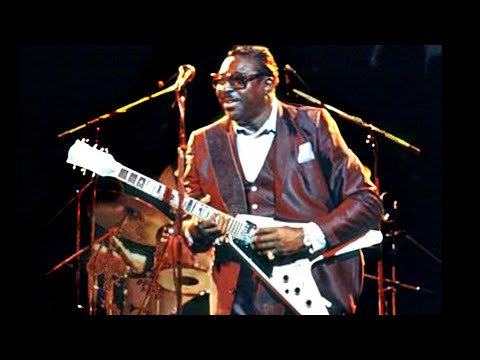
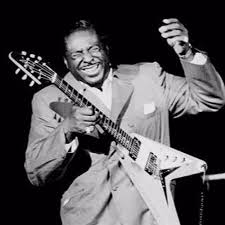
Albert King was known as the “Velvet Bulldozer” due to his soulful voice, which contrasted his large physical frame (standing 6’4″ tall). He was left-handed but opted to play a (standard) right-handed guitar upside down. The guitar he is most associated with is Gibson’s Flying V (see pictures), or custom-built guitars based on this model. It’s unusual ‘V’ shape made it much easier to play left-handed without anything getting in the way (Hendrix occasionally used one too, likely for the same reason). King strung his guitars the opposite way to the ‘standard’ layout, with the thinnest/highest sounding string at the top – he was literally playing a ‘standard’ guitar upside down.

Another ‘upside down’ element to King’s technique can be found in the way he bends his notes. His large hands bent the strings by pulling them downwards, towards the floor. Some players (like Jeff Beck, I believe) have remarked on this, saying it allows for greater control of the pitch. In King’s case, he was able to raise the pitch by over two tones of he wanted to. He was also able to comfortably bend several strings at once, a technique much-copied since.

King’s unique style has been identified as a key element in the playing styles of Eric Clapton, Jimi Hendrix, Buddy Guy, Albert Collins, Mike Bloomfield and in particular, Stevie Ray Vaughan, who cited King as his primary influence.

King largely played on the three highest-sounding strings of his guitars, usually playing variations on the same musical phrases. But it was the numerous different ways that he was able to phrase the same simple blues licks; his huge string bends; and the harsh, stinging ‘attack’ he utilised in his playing, which gave King his unique sound.

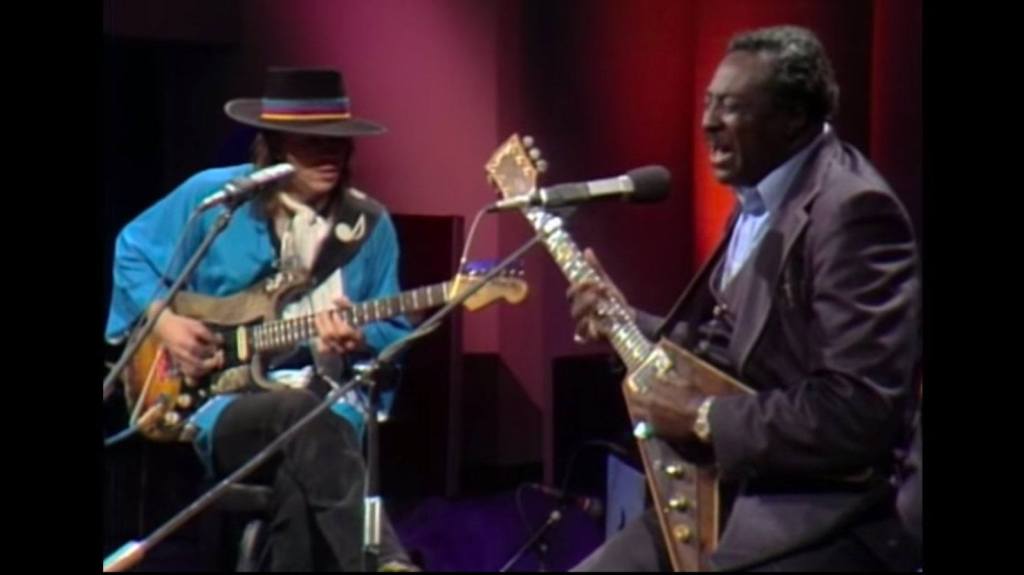
King with Stevie Ray Vaughan (left) recording the In Session TV special/album (1983).

Guitar Tuning

There remains to this day an ongoing debate about how exactly King tuned his guitar – yet another unorthodox element to his style. Rather than use the standard guitar tuning (low to high: EADGBE), King made use of a more unusual tuning, believed to be either (low to high): CBEF#BE (according to Steve Cropper, who recorded with King and produced some of his records), or CFCFAD (according to Dan Erlewine, who built custom guitars for King later in his career). He may have switched between both options and others.

In either case, since King only played lead, he did not have to contend with the difficult chord shaped these tunings would have thrown up. It is likely he found them useful for easily finding his root note and being able to execute his particular repertoire of blues licks across a greater range of the fretboard.

Recommended listening

Aside from Born Under a Bad Sign (1967), I’d suggest checking out King’s love album Live Wire / Blues Power (1969), which features cuts taken from a three-night stint at the Filmore West.

Also worth listening to is In Session, the audio record of a TV special from 1983, but only released in 1999. In Session is a collaboration between King, who leads processing as the ‘old master’ and the then up-and-coming blues guitar superstar (and Albert King disciple) Stevie Ray Vaughan. As well as hearing both guitar players trade licks, the record also includes a few brief moments of ‘chat’ between the two which adds to the atmosphere of the project.

Left to right: King, B.B. King, Eric Clapton & Stevie Ray Vaughan sharing a joke backstage.

If you are looking to learn how to get the most out of less in your lead guitar playing, you could do far worse than listen to King’s sharp but tasteful playing. As always, let me know what you think, and keep an eye out for future articles on the other two ‘Kings of the Blues’, coming very soon…

Great Guitarists #12: Steve Cropper

Great Guitarists

The Great Guitarists series is back, and we’re restarting with one of my all-time favourite guitar Players, Steve ‘The Colonel’ Cropper.

Even if you don’t recognise the name from the cult classic musical comedy The Blues Brothers, you will have heard Cropper’s songs and guitar playing on countless records, playing alongside some of the greatest soul singers of the 20th century.

Steve Cropper with his favoured guitar, the Fender Telecaster.

Cropper was as a member of Brooker T & the MGs, who also included Al Jackson Jr. on drums, Brooker T himself on organ & piano, and Cropper’s childhood friend Donald ‘Duck’ Dunn on bass (Dunn was also featured in The Blues Brothers). The group had hits with instrumental tracks such as Green Onions and Soul Limbo (the one used as the BBC’s theme music for their Cricket coverage).

Brooker T & The MGs (left to right: Al Jackson Jr, Steve Cropper, Brooker T & Donald Dunn).

The MGs were also the core in-studio ‘house band’ at Stax Records, Memphis, providing the backing (and often creating the arrangements) for virtually all of their recordings from the mid-sixties to the early seventies. All those hits you know by Otis Redding, Sam & Dave, Eddie Floyd and countless others? The MGs, with Steve, are in all of them…

As if that wasn’t enough, Cropper also co-wrote In the Midnight Hour with Wilson Pickett, Knock on Wood with Eddie Floyd and (Sittin’ on) The Dock of the Bay, the famous posthumous hit for Otis Redding. Some of these records were also co-produced by Cropper.

After leaving Stax, Cropper went on to play on Ringo Starr’s and John Lennon’s solo records, as well as produce albums for other artists, notably the Blues guitar legend Albert King. Then, in the late seventies, he was recruited into the Blues Brothers, the act for which he might be best recognised.

The Blues Brothers released two albums, two feature films (both of which included soundtrack albums) and embarked on a handful of tours between the late seventies and the early 2000s. Their influence on bringing rhythm & blues to a wider audience cannot be understated, not least by introducing a new generation of moviegoers and listeners to artists such as John Lee Hooker, Ray Charles, Sam & Dave and many more. Yet even in a band comprising a veritable who’s who of soul musicians, Cropper still stands out.

Cropper (left) with The Blues Brothers Band.

In most of these settings, Cropper is welding a Fender Telecaster or (more recently) Telecaster-like models, such as his Peavy signature model from the late 90s. His playing – and the guitars he played on – provide a full, but not dominating, sound. From simple but effective chord work, to riffs that often doubles up against bass lines, his style of Memphis Soul remains highly imitated. In his lead work, his frequent use of sixths (read more about these here) can be heard to great effect on the intro to Sam & Dave’s hit Soul Man.

Recommend listing

Pick up any classic cut from the Stax label from the mid to late sixties and Cropper is probably on there. Then of course, there is the soundtrack to The Blues Brothers. There are even complications of Cropper’s best-known work available. It doesn’t take much work to find him!

In all cases, listen carefully to his rhythm choice, and note how he leaves space for the singer and other instrumentalists. As for solos, he could certainly play good ones when he needed to but only when they were necessary.

Until next time…

Great Guitarists #11: Sister Rosetta Tharpe

Great Guitarists

In this installment, a singer and guitar player who took the blues, folk and gospel and created what could arguably be considered the forerunner to rock’n’roll…

Sister Rosetta Tharpe

Born in 1915, Tharpe (born Rosetta Nubin) started playing guitar and singing in church at the young age of just four years old. Touring with an evangelical church troupe from the age of six, she settled in Chicago. Her stage name comes from her first marriage to preacher Thomas Tharpe at the age of 19; she carried on using the name Tharpe professionally after their divorce in 1984 , up until her death from a stroke in 1973 (during which time she remarried twice).

Tharpe is perhaps best remembered as a singer, with a loud clear singing style. But something about her singing, combined with her foot stomping and blues-tinged guitar picking – not to mention some cool lead lines – stirred the interest in many young listeners who would go on to be the next generation of musicians. Little Richard and Johnny Cash both called Tharpe their favourite singer, she is cited as a crucial influence to artists such as Aretha Franklin, Jerry Lee Lewis, Tina Turner, Isaac Hayes, Meatloaf and Karen Carpenter. Tharpe’s appearance on a British TV special about the Blues and Gospel Caravan, a European tour of US musicians that also included Muddy Waters, Otis Span and Sonny Terry, amongst many others, brought her to the attention of British audiences, including future guitar superstars like Eric Clapton.

“Tharpe’s guitar style blended melody-driven urban blues with traditional folk arrangements and incorporated a pulsating swing that was a precursor of rock and roll”

Biography.com (‘Sister Rosetta Tharpe’, 2015)

Tharpe’s guitar playing is said to have directly influenced the vocals/guitar style of Chuck Berry and Elvis Presley – and if the first rock’n’rollers such as Berry, Presley and Richard call Tharpe an influence, she must the foundation of all that followed…

Tharpe’s career was curtailed by a stroke in 1970, and she died just three years later. Nowadays, her influence is often unfairly overlooked, and sometimes forgotten entirely. However, Tharpe played a crucial role in the history of American music of the 20th century, not to mention the birth of rock’n’roll. Furthermore, in this brilliant article by Erin White, Tharpe is hailed as a Queer Icon too, largely due to speculation over her affair with singer Marie Knight.

Here she is on a TV show in the mid-sixties, singing a gospel song with a gospel choir, but playing a slightly overdriven Gibson Les Paul Custom (although we know these as a Gibson SG nowadays) with it’s three humbuckers. She also pops in a blues-based solo in the middle!

When I think of three humbucker guitars, I recall Neil Young’s ‘Black Beauty’ Les Paul, or the rock band KISS. As for the SG guitar shape, Angus Young of AC/DC and Tony Iommi of Black Sabbath are the first two players who spring to most people’s minds – not a lady in her fifties singing a combination of blues and gospel. It must be remembered that for many, Sister Rosetta Tharpe was the first black woman they’d ever seen playing an electric guitar, and she could play! But what else should we expect from the Tharpe – one of a small handful who can truly claim to be the start, or inspiration, of rock’n’roll?

Recommended listening

Tharpe’s 1944 single Strange Things Happening Every Day, is considered one of the first rock’n’roll singles, and is the first ever Gospel record to make it onto Billboard’s Harlem Hit Parade (now called their R&B chart). One her most acclaimed studio albums is Gospel Train (Mercury, 1956). This record marks the stylistic change, backed by New York session musicians, and is considered highly influential on later rock’n’roll artists.

With a career that took place from the 30’s to the early 70’s, it is sometimes best to seek out compilation albums in order to have all of Tharpe’s most well-known releases in one place. To that end, I would recommend Bring Back Those Happy Days: Greatest Hits and Selected Recordings (Jasmine, 2018), or the 4-CD set The Original Soul Sister (Proper, 2002).

As with each installment in the Great Guitarists series, I have only touched upon the surface of these influential players. I’d love to hear your thoughts on them, as well as recommendations on who should be featured (I have another four or five lined up already – I wonder if anyone can guess who is coming next?). Until next time…

Great Guitarists #10: Mary Osborne

Great Guitarists

In this, the tenth installment of my Great Guitarists series, I’m a little ashamed to say we have only looked at male guitar players so far. So, to round off my first ‘dectet’ of influential guitar players (and keeping in a jazz theme, like the previous installments), let me introduce to you Mary Osborne…

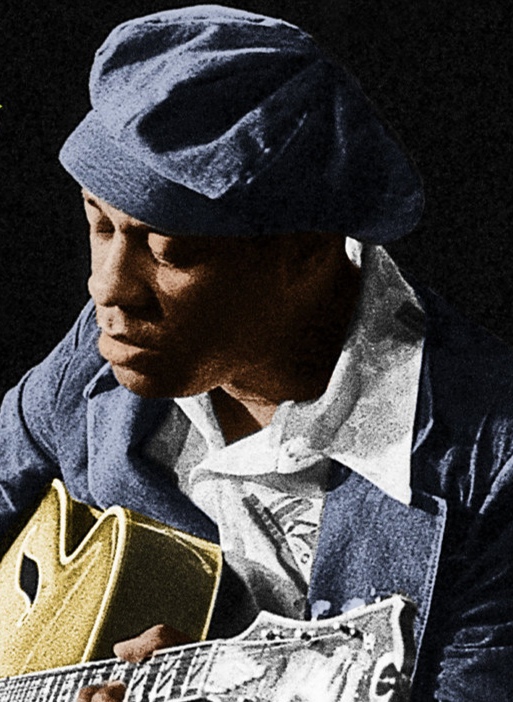
Picture Credit: Gretsch, 1959

Osborne was born into a musical family in North Dakota, 1921. Both her parents were musicians and her father’s barbershop was a known gathering place for local players. Already playing live by the time she was a teenager, Osborne was influenced by the playing of early jazz pioneers Django Reinhardt and Eddie Lang. However, it was Charlie Christian who first captivated her, and mentored her for a while, fine tuning her great sense of swing.

Osborne’s career ranged from trios (her own, and the Winifred McDonnell Trio near the start of her professional career), as well as some work as a sideman (or sidewoman) for the likes of Buddy Rogers, Joe Venuti (whose act included vocalists Kay Starr and The Andrews Sisters), amog many others. In the first of two spells in New York, she was the guitarist in Minton’s house band, where bebop was invented during the jams the legends of jazz had there. Her career continued throughout her life, and she was still performing live up until her death in 1992, at the age of seventy.

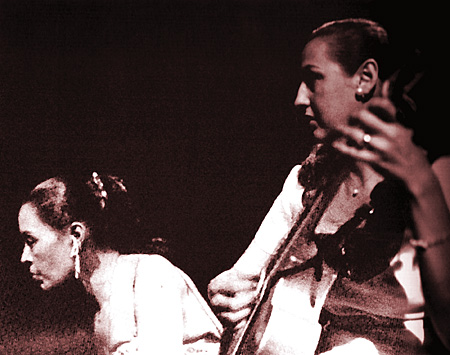
Osborne (R), with Billie Holiday (L), 1958. Picture Credit: Nancy Miller Elliot

Equipment

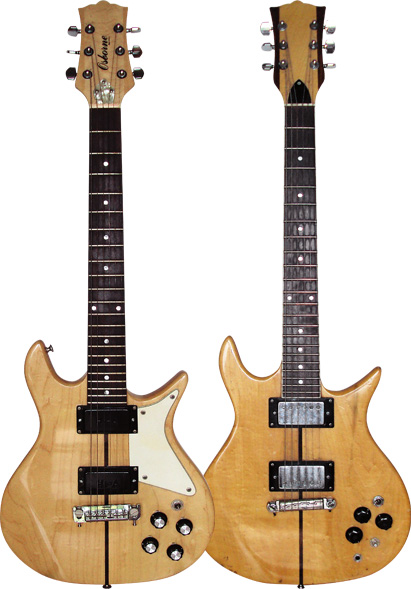
Osborne purchased the same model of Gibson archtop that Charlie Christian played – the ES-150, an early version of the classic archtop ‘jazz boxes’ we know and love today. It came with a large spruce body and a single-coil pickup near the neck, itself containing a large magnet that helped deliver good definition and attack. She later played other guitars by Gibson, as well as models by Gretsch, such as the White Falcon. In the 1970’s, Osborne founded her own guitar company, Osborne Sound Laboratories, formed from the ashes of the Mosrite Guitar Company (whom her husband had worked for at the end of the 1960’s). Osborne Sound Laboratories made amplifiers personally tested by Mary herself, as well as a selection if interesting instruments (including funky looking solid bodies such as in the picture below). Sadly, they couldn’t penetrate the market due to the dominance of the big manufactures, such as Fender (despite their well-known quality issues in this decade) and the company folded in 1980.

Osborne Sound Laboratories guitars from the 1970’s. Picture Credit: VintageGuitar.com

Recommended listening

Osborne’s 1959 LP A Girl And Her Guitar (Warwick) stands testament to her talents in a golden era for jazz guitar. Her later record Now And Then (Stash, 1981) shows a player who survived longer than most of her contemporaries, and continued to play beautifully.

Also, check out The Mighty Two (1963, Roulette), an LP by the two legendary drummers Louis Bellson and Gene Krupa. Although this was conceived as an instructional album for budding drummers, several tracks feature six musicians accompanying both drummers through nine of the songs on the record. As well as featuring Osborne on guitar, you can hear Milt Hinton (bass), Joe Wilder and Joe Newman (trumpet), Phil Woods (alto sax), Dick Hymen (piano) and Tyree Glenn (trombone) – something of a who’s who in sidemen for the time. The ensemble playing is tight, and the entire LP is a unique artefact of jazz history.

Great Guitarists #9: Grant Green

Great Guitarists

Welcome back to the Great Guitarists series. We’re continuing along a jazz theme for now, with a sometimes underrated master of understated single line guitar soloing…

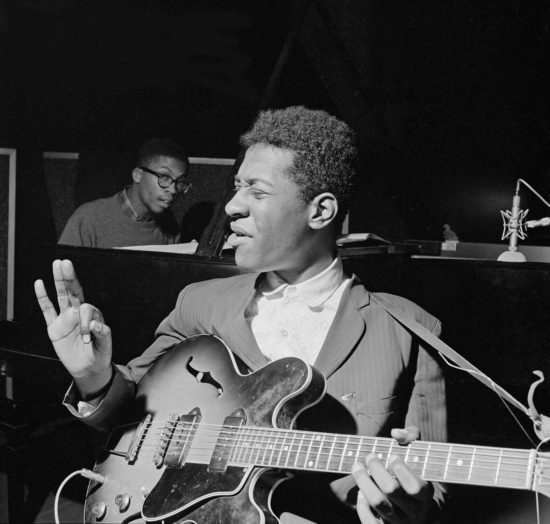
Grant Green

Green was born in St. Louis, Missouri, in 1935, and died in 1979, aged just 43. In his all-too-short career, he played on hundreds of records, including numerous solo titles – almost thirty cuts for Blue Note Records alone. Many of these were played as part of an organ trio (organ, guitar, drums) in a style known as Soul Jazz. This style was sometimes sniffed at by jazz purists, but has since gone on to be something of a cherished gem, and ripe pickings for sampling, especially in hip ho and acid jazz (Read Jorge Cervera’s defence of Grant Green and soul jazz here).

Although less well known than some of his contemporaries, such as Wes Montgomery, his friend George Benson and his main guitar influence Charlie Christian, Green nonetheless possessed a highly recognisable guitar sound, which can be heard in the playing of many guitarists today, myself included. Indeed, his mix of blues, soul and hard bop licks over a funky back beat has become the quintessential sound of upbeat jazz guitar playing.

Equipment and guitar sound

Green most famously used a Gibson ES-330, which is essentially the same shape as the brand’s better-known 335, but with P90 single coil pickups (not unlike an Epiphone Casino). Later on in his career, he played a Gibson L7, Epiphone Emperor and custom-made D’Aquisto guitars, all of which featured similar P90 style pickups. This type of pickup was one of the first kinds added to hollowbody guitars, and Green obviously enjoyed the full, clear sound they provided.

Interestingly, for a guitar player known for his fluid single line style, Green was known to roll the treble and bass entirely off on his amplifiers, to better emphasise the midrange for more bite and attack in his tone – try it with a P90 neck pickup, and see if you can recreate Green’s sound!

Essential listening

Idle Moments (1963) is a great place to start. It’s a slow, contemplative masterclass in cool jazz guitar,and one of my favourite jazz guitar records, along with Midnight Blue by Kenny Burrell (more about that here).

There’s a couple of good options for live cuts, but the recently released collection Funk in France, From Paris to Antibes (1969-1970) (2018, Resonance) captures Green at his best. A few of the tracks see the trio lineup complimented by none other than the legendary Barney Kessel, which makes it essential listening for me!

It’s also worth seeking out some of Greenvs funkier efforts, such as… He also made an interesting album of Latin music (The Latin Bit from 1963, on Blue Note again), in which the main theme (the ‘heads’) were played in the usual samba or bossa nova style, but the solos are swung – give it a listen and make of it what you will!

As a sideman, he played on hundreds of recording sessions. Among my personal favourites are Herbie Hancock’s My Point Of View (1963, Blue Note) and Art Blakey’s Hold On I’m Coming (1966, Limelight). However, each record in Green’s expansive discography features great playing and lead lines that we guitarists would benefit from adding to our repertoire!

Just as Green (and countless other great jazz guitarists) did with Charlie Christian’s recordings, listen, learn, then find a way of making it your own…

R.I.P. Julian Bream (1933-2020), a giant in the world of classical guitar

Great Guitarists

Not many classical guitar players are household names, either worldwide or here in the UK. Andres Segovia might be one, as a pioneer for performance of the instrument in it’s modern form. However, I’d suggest more people have heard of two of his more famous successors on the international performance stage. One is the very well-known Australian guitarist John Williams; the other, Julian Alexander Bream, who we learn has passed away at his Wiltshire home in the early hours of this morning, at the age of 87.

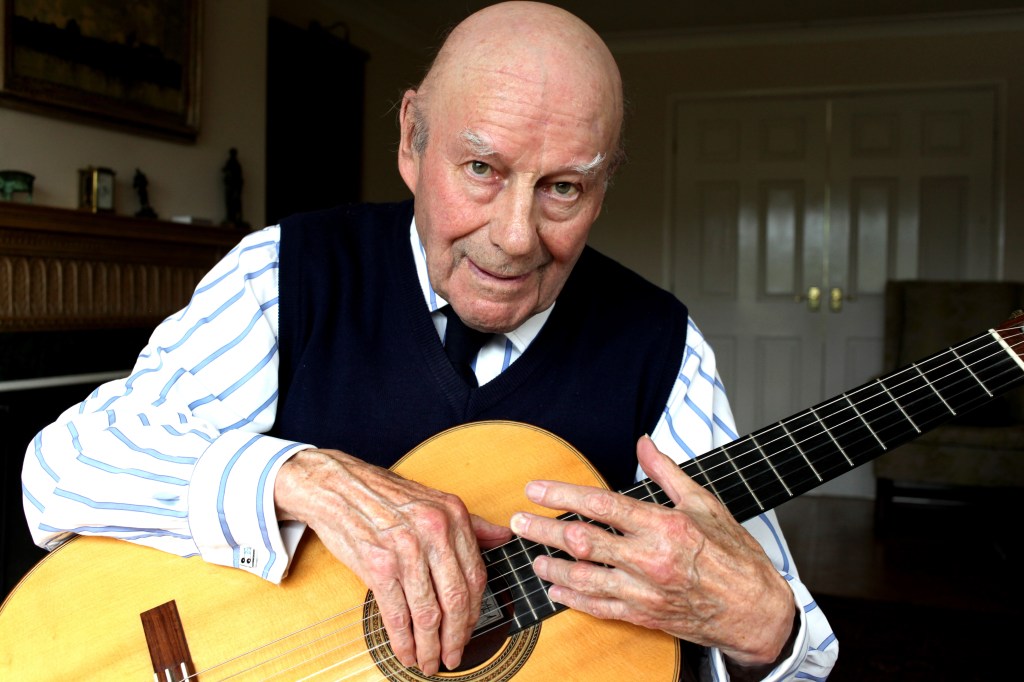
Julian Bream at home, 2014 (Credit: Eamonn McCabe for classicalguitarmagazine.com)

Born in London in 1933, Bream initially learned jazz , influenced by his father’s playing and Django Reinhardt. He was also offered a place at the Royal College of Music, aged just 12 years old, based on his piano playing. He later switched to the lute, and became a great champion for the instrument throughout his life, even as his focus shifted more and more towards classical guitar.

As well as his numerous transcriptions of lute pieces (such as those by Bach or Dowland) for guitar, Bream also performed many of the transcriptions left behind by Segovia, as well as the seminal guitar pieces composed by Francisco Tarrega. Known for his eye for detail, Bream’s virtuosity included an element of flexibility; a key example of this was that he did not maintain a consistent rigid right hand when playing (i.e., held at right angles to the stings), but made use of a more relaxed position, in order to achieve a greater variety in tone. This is something I do as well, because I, like Bream, am multi-genre guitarist. However, having been regularly admonished by my guitar tutor in my youth for holding an ‘improper’ right hand position, it was a relief to learn the one of the instrument’s masters did the same!

As Bream’s reputation increased, he was gifted pieces by composers as varied as “Britten, Walton, Tippett and Hans Werner Henze” (classical-music.com) and performed around the world. He also recorded TV specials, such as a series of four master classes on BBC television in the nineteen seventies, as well as segments for Channel 4 in the nineteen eighties. This no doubt helped him to become a household name for many, but he certainly never rested on his laurels. Even as an ‘elder stateman’ of the guitar, he apparently strove to improve himself. According to an interview given to The Guardian newspaper, Bream believed he was a better guitarist at the age of 70 than ever before!

Essential listening: A great place to start would be his two albums with John Williams, Together (1971) and Together Again (1974). Also, seek out his version of Joaquin Rodrigo’s Concierto de Aranjuez (with it’s famously emotive second movement).

Bream with lute (Credit: Avie Records)

Guitar students would do well to look at his crossovers into other styles, as well as his early lute work too, to get a more rounded picture of a hugely talented player, whose passing leaves a large hole in the classical guitar community.

Rest in peace, Julian.