Harley Benton HB-35 Plus Top Semi-hollow Guitar Review

Guitars & Gear

At the end of last year, I acquired a new second-hand guitar. It even shipped with a hard case included as part of the sale! The guitar in question is a budget 335-style copy, made by Harley Benton, the in-house grand for the German musical instrument retailing giant Thomann. Or rather, I should say the Harley Benton HB-35 Plus

What does plus mean?

Harley Benton already have the HB-35, their budget version of a 335-style guitar. Selling for just Ā£175, they get good reviews and are an affordable way to try out Semi-hollow guitars for the first time. The HB-35 Plus retails at approximately Ā£220 new, but has features which mark it out as a considerable upgrade on it’s cheaper sibling.

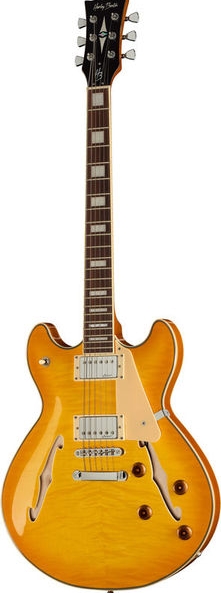
So what does that extra £45 get you? Block inlays, for a start, which look very classy. You also get more specialised vintage-voiced humbucking pickups (which can be split for a single-coil sound) and an arched maple top (hence the plus top moniker) in fancier colour options, such as the lemon drop colour reviewed here.

Image from Harley Benton’s website – note the original placement of the pickup selector

I love this colour, which appears more of a light orange-yellow to my eyes.

Furthermore, it seems that the nut is slightly more narrow (42mm to the original HB-35’s 43mm) and a slightly more curved fingerboard (12″ radius, compared to the older model’s 13.5″ or thereabouts), making this guitar feel a little more like the classic ‘jazz boxes’ of old.

Specifications & build quality

Having bought this guitar from another player, I received an instrument which had already been set up, and indeed, modified. This means I don’t know how this guitar would have arrived ‘from the box’, although I hear that like most guitars, a simple set up would be enough to get it in shape.

The guitar I received felt well balanced across the fretboard and is really comfortable to play. The classic Gibson scale length feels familiar and the neck is comfortable in my hand. In fact, it feels like they have copied the dimensions of the classic 335 very closely, which is no bad thing.

What’s more, the previous owner had moved the pickup selector switch from the top shoulder (where you would find it on a Les Paul) to a sit with the other controls, which is much more typical on a 335-style guitar. The only negative is that the original hole is still there (it was covered with a giant sticker when it arrived, which I quickly and carefully removed).

Here are the full specs of the guitar, according the Harley Benton:

  • Semi-hollow design with mahogany sustain block (Entandrophragma cylindricum)
  • Maple body with AAAA flamed maple archtop
  • Set-in maple neck
  • Pau Ferro fretboard with block fretboard inlays
  • Fretboard radius: 12 inches
  • 22 medium jumbo Frets
  • Scale: 24.75 inches
  • Nut width: 42 mm
  • 2 Roswell LAF Alnico-5 vintage-style humbucker pickups
  • 2 Volume controls with push/pull function for split coil
  • Individual tone controls for each pickup
  • 3-Way pickup toggle switch
  • Tune-O-Matic bridge

The main thing on my list to change, and indeed the only upgrade I feel this guitar needs, is to swap the plastic nut for one made of bone. I’ll probably get round to doing this later in the year, and for now it’s working fine and holding its tuning well.

How does it sound?

Before even plugging into an amp, this guitar sounds good (and surprisingly loud) completely acoustic, which is useful for playing at home.

Plugged in – it sounds exactly as a 335 should.

Played clean, single notes and chords ring out loud & clear, sounding even across the entire fretboard. The pickups, combined with the tone controls, allow for everything from jazz and blues to soul, pop, country and an almost Gretsch-like Chet Atkins vibe. Using the push-pull volume to split the humbuckers down to single-coils beings out an airier version of a Telecaster sound.

Throwing a little overdrive in makes this a very enjoyable guitar to play. As well as offering grittier takes on all the styles and sounds mentioned above, you also get some of the best classic rock tones out there. Add more distortion and it continues to sound very good and play incredibly well. The semi-hollow body allowing gentle feedback which helps add to note sustain.

Putting the HB-35+ through it’s paces at home

This guitar not only took any style I threw at it in its stride, but excelled across the board, even in higher-gain settings. Admittedly, I don’t play the more extreme metal genres, but even then, if you can work out the likely feedback issue, I have a feeling this guitar would surprise you…

Does it hold up well at live shows?

Since acquiring this guitar at the end of autumn last year, I’ve gigged it pretty regularly. It performed brilliantly when I put it through its paces at a recent soul review show, covering Steve Cropper style licks and jazzier solos and choral work. With one of my main covers acts, this quickly became my first choice guitar, covering everything from jangle and early 60s pop to classic rock, punk and Britpop, all in the space of one show. It is comfortable both to play and also to wear standing up for two hours.

Ask most professional session guitarists what the best ‘cover all bases’ guitars are, for studio work and live, and they will probably tell you to have a 335 handy. Obviously, this applies to any decent 335-style guitar, if not the gold standard Gibson original. But it certainly makes sense to snap up this significantly cheaper tribute, especially when it looks classy sounds fantastic and plays so well. It may be that they take a little post-purchase work to reach the decent playing standard I seem to have, but in my opinion, it’s worth it.

This guitar is quickly becoming a firm favourite in my small stable of electric guitars (which includes Stratocasters, a triple P90 non-reverse Firebird copy, and my other, less traditional semi-hollow). In fact, it’s already become my main guitar for covers gigs, playing weddings and corporate functions.

Final Thoughts

This guitar surprised me. I’d heard really good things about Harley Benton, but I still wasn’t prepared to be blown away as much as I was by this guitar. I’ve used it in various settings and with several different acts in the last couple of months, covering styles from Kuti to Kasabian and BB to The Buzzcocks, and I’m very impressed with how it’s handled everything I’ve thrown at it.

Nowadays, the term ‘budget guitar’ doesn’t mean the same as it did twenty or even ten years ago, and shouldn’t arouse the kind of stigma which cling to those older, poorly constructed guitars. The quality on this instrument is very high, and I can’t stress enough just how fantastic those Roswell pickups sound!

After years (decades, even) of using Stratocasters as my main go-to guitar while others have come and gone from my collection, I might have found another guitar that I love just as much. I might even have to buy another of these, just in case something happens to this one – which at this price point, is an affordable prospect.

Highly recommended. Go and give one a try now.

Happy New Year

Music

2022 has come to a close and I’ve had a stinking cold and been on the verge of losing my voice for the last few days. My final gig of the year was a New Year’s Eve show with Nick Gladdish, where I luckily don’t have to do much singing!

Next year brings more gigs of various kinds, on top of my ongoing Music Therapy work. I’m also looking forward to getting back into the studio to rehearse and record my old pal Nick’s next album at the start of 2023.

Speaking of studio time, next year will also see a couple of new projects from me, including a few releases of original instrumental material, both for solo guitar (under the working title Sketches) as well as some jazzier stuff with a small group of friends (still working out the details for that one). These pieces have been clogging up my drafts folder for ages, so I plan to record and release them before the end of 2023, meaning that I never have to think about them again!

I’ll keep you all updated via this blog. I’ll also try to keep up the musical articles, including more entries to the Great Guitarists series. In addition, keep an eye out for my round up of my favourite books read in 2022, coming sometime this month.

So enjoy the rest of your festive season, look after each other, and all the very best for the coming New Year. See you at a gig soon…

Tim x

Great Guitarists #12: Steve Cropper

Great Guitarists

The Great Guitarists series is back, and we’re restarting with one of my all-time favourite guitar Players, Steve ‘The Colonel’ Cropper.

Even if you don’t recognise the name from the cult classic musical comedy The Blues Brothers, you will have heard Cropper’s songs and guitar playing on countless records, playing alongside some of the greatest soul singers of the 20th century.

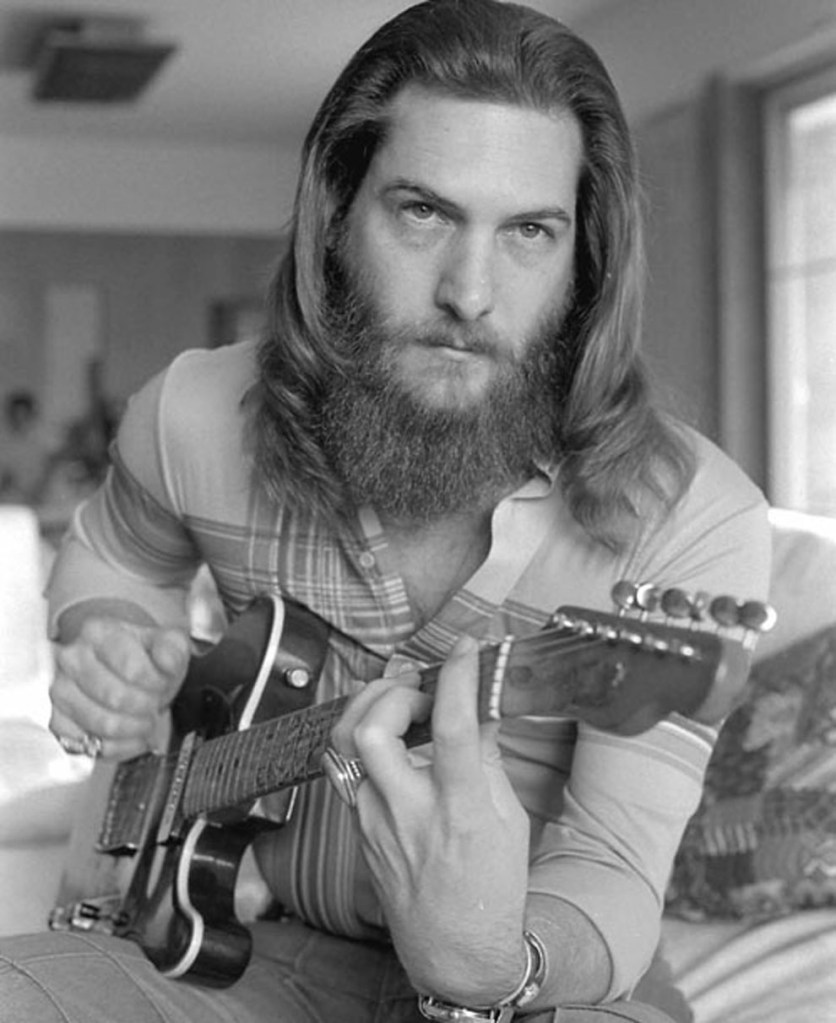
Steve Cropper with his favoured guitar, the Fender Telecaster.

Cropper was as a member of Brooker T & the MGs, who also included Al Jackson Jr. on drums, Brooker T himself on organ & piano, and Cropper’s childhood friend Donald ‘Duck’ Dunn on bass (Dunn was also featured in The Blues Brothers). The group had hits with instrumental tracks such as Green Onions and Soul Limbo (the one used as the BBC’s theme music for their Cricket coverage).

Brooker T & The MGs (left to right: Al Jackson Jr, Steve Cropper, Brooker T & Donald Dunn).

The MGs were also the core in-studio ‘house band’ at Stax Records, Memphis, providing the backing (and often creating the arrangements) for virtually all of their recordings from the mid-sixties to the early seventies. All those hits you know by Otis Redding, Sam & Dave, Eddie Floyd and countless others? The MGs, with Steve, are in all of them…

As if that wasn’t enough, Cropper also co-wrote In the Midnight Hour with Wilson Pickett, Knock on Wood with Eddie Floyd and (Sittin’ on) The Dock of the Bay, the famous posthumous hit for Otis Redding. Some of these records were also co-produced by Cropper.

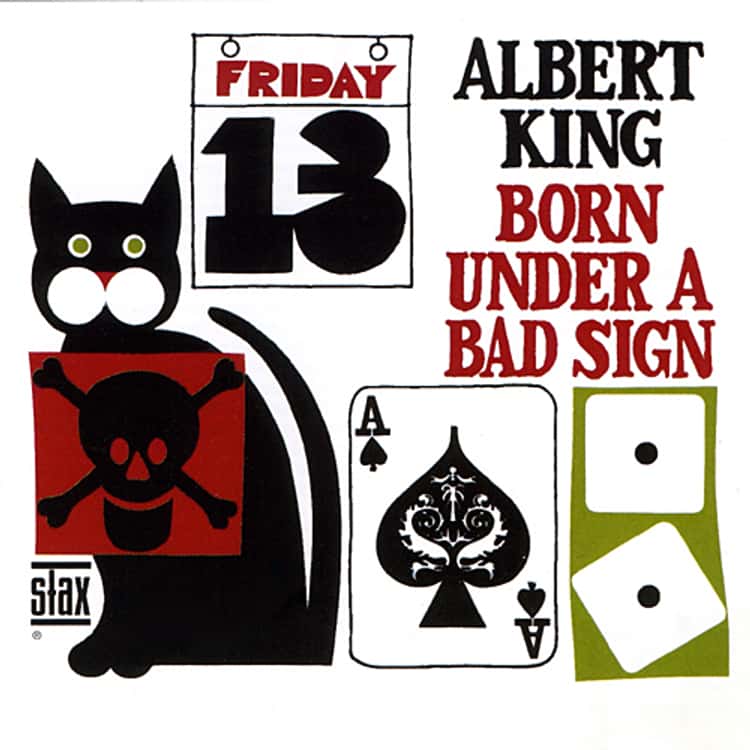
After leaving Stax, Cropper went on to play on Ringo Starr’s and John Lennon’s solo records, as well as produce albums for other artists, notably the Blues guitar legend Albert King. Then, in the late seventies, he was recruited into the Blues Brothers, the act for which he might be best recognised.

The Blues Brothers released two albums, two feature films (both of which included soundtrack albums) and embarked on a handful of tours between the late seventies and the early 2000s. Their influence on bringing rhythm & blues to a wider audience cannot be understated, not least by introducing a new generation of moviegoers and listeners to artists such as John Lee Hooker, Ray Charles, Sam & Dave and many more. Yet even in a band comprising a veritable who’s who of soul musicians, Cropper still stands out.

Cropper (left) with The Blues Brothers Band.

In most of these settings, Cropper is welding a Fender Telecaster or (more recently) Telecaster-like models, such as his Peavy signature model from the late 90s. His playing – and the guitars he played on – provide a full, but not dominating, sound. From simple but effective chord work, to riffs that often doubles up against bass lines, his style of Memphis Soul remains highly imitated. In his lead work, his frequent use of sixths (read more about these here) can be heard to great effect on the intro to Sam & Dave’s hit Soul Man.

Recommend listing

Pick up any classic cut from the Stax label from the mid to late sixties and Cropper is probably on there. Then of course, there is the soundtrack to The Blues Brothers. There are even complications of Cropper’s best-known work available. It doesn’t take much work to find him!

In all cases, listen carefully to his rhythm choice, and note how he leaves space for the singer and other instrumentalists. As for solos, he could certainly play good ones when he needed to but only when they were necessary.

Until next time…

Quiet Quitting isn’t a thing – but fair working should be

Advice & Tips

Recently the term Quiet Quitting has emerged in the public sphere this year. The term refers to the apparently new trend of only working one’s contracted hours, foregoing unofficial overtime, answering emails from home, or living to serve one’s employer. Pieces have provided an overview on the BBC’s website and in newspaper articles often highlighting the anxieties of large corporations as they lose thousands of unpaid hours of labour. This piece by Guardian columnist Tayo Bero provides an informative insight into the practice.

Except it isn’t a new phenomenon at all. Some people have brought this mindset to their jobs for years. This article from Time Magazine (published just a month before the world closed down because of Coronavirus), discusses the work-life balance and comes very close to saying the same points that the Quiet Quitting ‘movement’ are saying now.

But not everyone can do this. The term mainly applies to those in what might unkindly be referred to as a ‘dead end’ job, from office workers to hospitality staff. Healthcare professionals don’t have the luxury of being able to clock off once they have reached their contracted hours for the day if patients still require care then and there. The same is true in allied healthcare professions such as therapy, my own area of work. Even in the regular routine of weekly sessions, there are issues, from last minute meetings to safeguarding emergencies that mean your presence and insight is required, and you have a duty of care to ensure the best care possible.

But is that always reflected in the financial compensation therapists receive? That largely depends on the employer. Those at the highest risk of working far beyond what they are paid for are those in the sector who are self-employed. These professionals face the struggle to balance charging fairly for their time against the threat of pricing themselves out of the market for a contracted service.

I have wrestled with this conundrum myself as both a music therapist and as a guitar player for hire. It’s certainly not rare to feel like you should have invoiced for more after the full scale of the work involved becomes clear. Getting this balance right is largely a lesson we learn from experience, but in a society where average wages are falling below the cost of living, it is a balance which many find increasingly difficult to maintain.

By contrast, the practice of Quiet Firing, described in this article, has also been highlighted, where employers distance some of their employees from opportunities to progress in their career. It is highly likely that both practices are being fuelled by the other, creating an unhealthy cycle that no employee would wish to be part of.

Some are even attempting to relabel Quiet Quitting as burnout, or a means of dealing with or avoiding burnout. I even read one which went as far as to suggest that the practice was a coping mechanism by employees which will help them be more productive in the future:

It’s another sign of workers — sometimes not even consciously — looking ā€œfor ways to feel less burnt out, more motivated and more engaged.ā€

Nathalie Baumgartner, quoted In The Washington Post

While burnout is in doubtedly a factor, I think viewing this as the workers trying to be even better workers is one hell of a stretch. Perhaps HR teams across the land are finding ways to exonerate themselves of any unpleasant behaviour by placing all the onus on the employees? The very term Quiet Quitting is misleading, as it implies that not working beyond what you are paid to do is somehow falling short of the standards expected.

Something is clearly wrong with our work culture if we have reached this point. So what do we need to change? Perhaps businesses should have been more mindful to learn lessons from the Covid pandemic, instead of panicking about getting back to Business As Usual.

It’s time we, as a society, ha took a good hard look at the way we work, and perhaps if we continue to slowly stop pandering to big businesses (where possible), they will be forced to change And if a change comes from society, then everyone benefits – even theĀ  self-employed. But first, we have to know our worth, and accept that fairness is worth fighting for.

In praise of The Byrds

Music

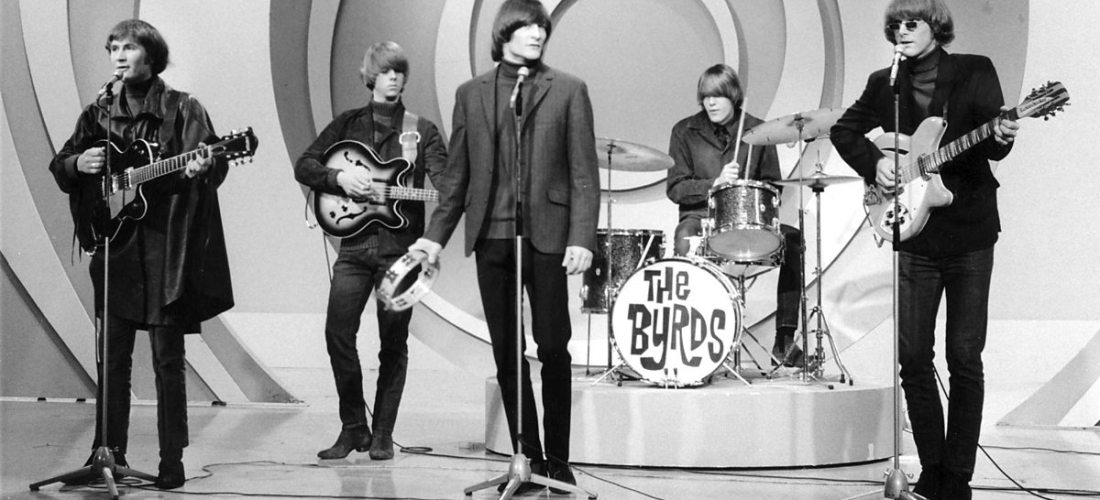
A group best known for their cover of Bob Dylan’s Mr Tambourine Man, but which created a ripple which ran further and deeper through popular music than you might realise. From famous alumni to mechanical innovations for country & western guitar music, here’s a small token of praise for folk rock pioneers, The Byrds.

Originally formed in early 1964 as The Jet Set, a trio of singer-guitar players Jim (later known as Roger) McGuinn, Gene Clark and David Crosby, they soon augmented their line-up with Chris Hillman (bass/mandolin/vocals) and Michael Clarke (drums, and apparently hired on the strength of his excellent Brian Jones style haircut). They set out to meld the influence of British Invasion bands, most notably The Beatles, with traditional folk music in what was a unique new sound at the time.

In particular, the Fab Four was the inspiration behind McGuinn playing the Rickenbacker 360 12-string guitars that played a large part in the sound of their early records. A lot of the ‘jangly’ guitar music you hear in later bands – particularly the indie acts of the 80s and Britpop bands of the 90s – owe as much of a debt to The Byrds as they do to The Beatles.

They played ‘electric folk’ before Dylan (sort of)

Their first single was a cover of Bob Dylan’s Mr Tambourine Man, which they recorded before Dylan’s original acoustic version was released as part of his album Bringing It All Back Home in March 1965. Interestingly, although this album marked the first time Dylan used a backing band and electrified instrumentation (on side one), his original version of Mr Tambourine Man is in his (at the time) traditional style of solo guitar and harmonica to accompany his vocals (as part of the all-acoustic side two). The Byrds’ version was finally released a month later, reaching number one on both the British and US charts.

This release was still a good two months prior to Dylan’s infamous appearance with a ‘rock’ band and playing electric guitars at the Newport Folk Festival in July 1965. Dylan was friendly with the group and had got up on stage to jam with them at the start of year, undoubtedly helping their reputation beyond the folk scene before they’d released any records. It seems clear to me that both acts were part of a change to folk music that was happening at the time, and it’s fair to say they had a degree of influence on each other. The Byrds certainly covered a lot of Dylan songs on their debut album (also named Mr Tambourine Man, released in June 1965).

They went beyond folk rock

By the end of 1965, The Byrds had already begun to include more psychedelic influence in their songs. Most notably, Eight Miles High features guitar playing by McGuinn which was intended to emulate the playing of John Coltrane’s Impressions album, particularly the opening track India, in which Coltrane was seeking to recreate the raga lines of Indian performers such as Ravi Shankar.

Within less than two years of their formation, their line-up had started to change. As well as the raga-styled influences, The Byrds sound incorporated jazz, psychedelia and an increasing amount of country & western influences. By the end of their time together as a band (circa 1973), The Byrds’ sound was more representative of early country rock than their original folk sound.

Impressive alumni

Many members of he Byrds went on to form well known groups. David Crosby was dismissed from the band in 1967, for a variety of reasons (clashing egos with is bandmates seemingly chief amongst them). The following year, he formed the supergroup Crosby, Stills & Nash with Graham Nash (from the British pop group The Hollies) and Steven Still (from Canadian band Buffalo Springfield). By their second album, they had been joined by Stills’ former bandmate Neil Young, prompting a name change/extension to Crosby, Stills, Nash & Young. Although their time together has been intermittent and varied, their earl albums produced highly popular hits, and their vocal harmonies have been highly influential on countless performers ever since.

Later members of the Byrds included Gram Parsons, another pioneer of country rock and Americana (and also notorious for the theft f his corpse and it’s unusual cremation after his untimely death in 1973). Members of The Byrds also went on (with Parsons) to form another influential country rock band, The Flying Burrito Brothers. Roger McGuinn continued as a solo performer, including collaborations with Dylan in the seventies, and has reformed The Byrds in various guises, largely for reunion tours) across the decades.

Two former members created a brand new guitar system

Clarence White, a highly respected bluegrass player and session guitarist, joined The Byrds in 1968. Also joining him was Gene Parsons (no relation to Gram), who ad previously performed with White in the country rock group Nashville West. Sometime between these two groups, White and Parsons discussed ways to simulate the sound of a pedal steel (which uses pedals to alter the pitches of some strings, similar to a harp) on the guitar. Parsons set out devising a system that would enable White to achieve what he was looking for.

Original patent design for the Parsons/White String Bender.

Parsons’ design involved adding a pulley system onto the strap button closest to the guitar’s neck, meaning that when the guitar is pulled downwards (away from the head of the player), a the pressure on the strap moved a lever which, in turn, raised one or more strings on the bridge of the guitar. As unwieldy as that sounds, the result was exactly what White was looking for, and Parsons later went into business selling these devises as retro-fits, usually onto Telecasters, like White’s original model. The design was originally licenced to Fender in the early seventies, and though they didn’t do anything with it originally they have since released their own special model of B-bender Telecaster guitars in recent decades. The B-bender guitar has become a poplar tool in country and country rock music, with guitarists such as Brad Paisley using them to amazing effect.

Here’s Parsons discussing his invention as part of a documentary on The Byrds:

I’d heard of the B-bender before, but it was only when reading an article about The Byrds a few months ago that I learned it was one of their drummers who invented it to help his bandmate out! It certainly demonstrates the lasting legacy of the band on modern country music.

This is in no way a definitive history of the band. There are numerous biographies out there that those interested in learning more about this group should seek out (an in all likelihood, probably already have). This brief overview (much like my previous article on The Animals) merely serves to show how some performers – of whom most people might only recognise less than a handful of songs – can influence the musicians you know and music you hear i ways you might not expect, and often without you realising it.

Can you think of any other bands that might have had a similar far-reaching effect as inventing a new kind of country guitar, or bringing Jimi Hendrix to wider recognition (see: The Animals)? Please let me know, as it may well end up in a future article! Since I have covered an A and a B band, perhaps new suggestions could follow on in this (unintentional) alphabetic format? Get in touch!

Why practice doesn’t always make perfect

Advice & Tips

Does practice make perfect? It’s undoubtedly true that the more you focus on doing something, the better you become at its accomplishment. However, as this Guardian news story from 2019 highlights, the modern convention of ‘the 10,000 hour practice rule’ may not be quite the guarantee some people have sold it as. Personal improvement, in any sphere of one’s life is never so cut-and-dry, nor can the same methods work for every individual.

The key question is why do you practice, or rather, what are you practicing for?
For instance, is it to sound like a particular musician? And if so, why?

Take this example: I love BB King, and have listened to his music for over two decades to date; I’ve learned some of his key phrases, his recognisable musical characteristics such as his blues box, vibrato technique and the space he’s leave between notes, etc. And despite learning & digesting all of this information – heck, I used to teach these techniques at specialist masterclasses focusing on the blues master – I still sound nothing like him when I play guitar.

That’s not a bad thing, either. It doesn’t represent a failure on my part. If anything, bring able to incorporate so many elements of a player who got so much right, while still retaining my own musical voice, has to be an achievement worth celebrating in some small way. Of course, a large part of a guitar player’s sound comes from their fingers, so I’d never have been able to completely obscure who I was, even if I wanted to.

Perhaps you simply wish you could execute certain techniques as well as the great masters of your chosen instrument? Read that Guardian article again, then learn to measure success by your own improvement, in comparison to your past self only.

It almost sounds trite, but you can’t stop being you, so be the best you possible

So how should you practice? This interesting article from Bulletproof Musician offers some insights into what you should be looking for, and offering the term deliberate practice instead.

For further reading, feel free to peruse my older blogs & reblogs on the subject of practice, such as my warm-up and practice recommendations, advice for young musicians, and this reblogged article from Nicole Rogers on how to practice effectively.

Just remember, perfection is an illusion, and no amount of practice will stop you from being you. Perhaps we should all embrace that.

Creativity v Convention: What happened to improvisation in classical music?

Music

During lockdown, I wrote a piece featuring only a starting and ending theme, leaving the space in between entirely free for the performers (taking turns) to improvise. Players had complete freedom of expression in how they choose to navigate from one theme to the other. The notes they chose, how long they took, and style were entirely at the discretion of each performer.

I approached a few of my musician friends to test this conceptual piece out. When faced with no rules and no harmonic foundation on which they could improvise against, many of them struggled. I found this surprising, especially from performers I know to be excellent jazz improvisers.

However, my friends who are classical musicians failed the task entirely. Why?

Improvisation seems to have all but disappeared not just from the repertoire of classical music, but from the skill set of classical performers. Audiences attending classical concerts and recitals generally expect to hear faithful renditions of the pieces they know, and doubtless have in their music collections at home. Deviation from the score is seen as a failure, perhaps even an insult to the express will of the composer.

It wasn’t always this way. Many early pieces were based around a framework where improvisation would be expected, not just on the main theme (similar to a jazz ‘head’ followed by solos nowadays), but in the accompanymeny itself. The basso continuo parts in Baroque scores (usually played by the harpsichord) were loose fragments, using a special shorthand (known as figured bass) to highlight the expected harmony at certain points in the piece. It was up to the player to fill in the gaps. Similarly, soloists were given freedom of expression in their performance, often at the end of a piece in a completely improvised coda known as a cadanza:

It was the performer’s job to ā€œfinishā€ the composition for the audience (in the same way, today, that an interior decorator finishes the work of an architect and a builder)

Rhode Island Philharmonic, THE STORY BEHIND… (2021)
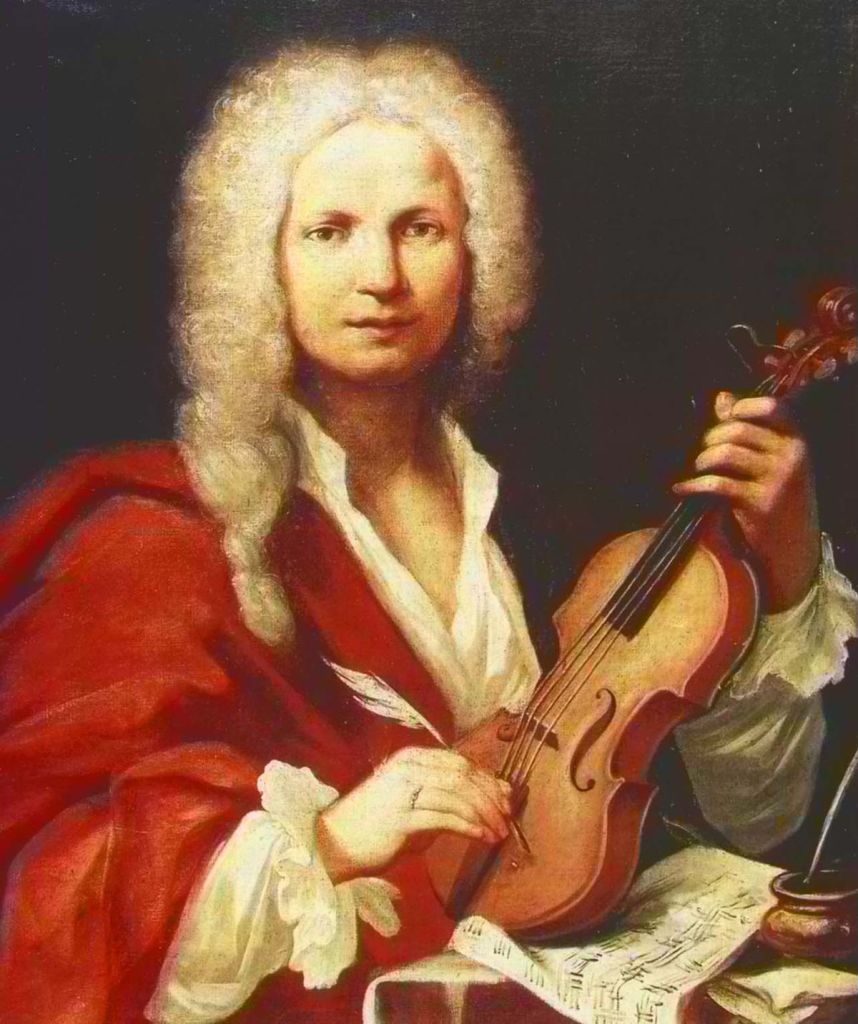
Composer & violin pioneer Antonio Vivaldi was renowned (and even feared by his peers) for the virtuosity of his improvised cadenzas (picture credit: Eboracum Baroque)

Nowadays, there is almost no improvisation to be heard at a classical concert or recital. Sticking strictly to the notes on the page has become convention.

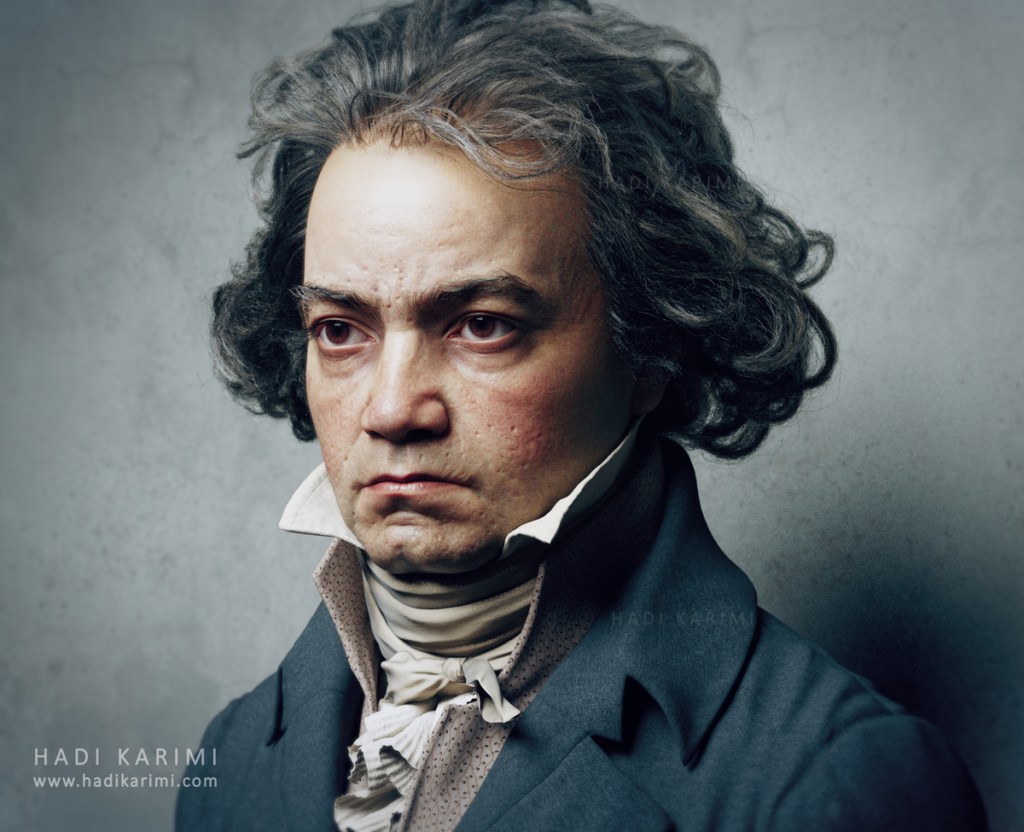
Did the beginning of the end start with Beethoven? His fifth and final piano concerto, the so-called ‘Emporer Concerto’, features a unique instruction at the end of the first movement: “Do not make a cadenza, but immediately proceed to the followingā€ (usually marked on the score as Non si fa una cadenza, ma s’attacca subito il seguente).

At this time in his life, Beethoven once one of the most celebrated piano improviser of his time, if it the best among his contemporaries, was now struggling with his hearing to the extent that he was no longer able to improvise when playing alongside an orchestra.

A wonderfully striking 3D interpretation of Beethoven’s portrait, circa 1812 (picture credit: Hadi Karimi)

Some believe that he decided to formally write a cadenza to be played as written, which was very rare for the time, almost out of a sense of spite; frustration at not being able to improvise the way he wanted to led to the instruction specifying that no other performer could either.

At the same time, pieces were becomg more elaborate, orchestras were increasing in size and composers were becoming more experimental and imaginative. This left little room for the spontanetny of one individual’s instantaneous composing. Similarly the widening of audiences themselves to include more of the emerging middles classes led to an increased formalisation of concert going etiquette, much like the ever-expanding rules of dining (which fork to use, passing the port from the left). Invented rules designed to separate the ‘old money’ from the ‘neveau riche’ soon became simply the way things are done. Instruction because convention. Convention became tradition.

So how do we come back from this? There are those who argue that without the skill of improvisation, you’re not a complete musician.

When we repeat music we have learned by rote, are we repeating memorised phrases in a foreign language in which we are unable to actually converse? Music is, after all, the oldest language. We don’t exchange information and ideas solely through the quotation of famous speeches (at least, not most of the time), so why does this still such a strong convention in western classical music performance?

That’s just how things are done around here.

There is something stultifying about a tradition where millions of pianists are all playing the same 100 compositions… everyone has to play a Bach prelude and fugue, a Beethoven sonata, a Chopin nocturne, and we’ll do that until the end of the world, something in our soul dies

John Mortensen, quoted in The Guardian (2020)

But it doesn’t necessarily have to be this way.

Real art is about breaking the rules and going against convention. Perhaps it is time classical performers took back their right to own their own performance and interpretation. Audiences won’t mind (according to this relatively recent research). Beethoven and the Old Masters won’t mind. They’re dead, but their music doesn’t have to be…

Refreshing my Strat (and adding a Tele mod)

Guitars & Gear

After commissioning my custom ukulele (which you can read more about here), I was more or less set in terms of the instruments I needed with my current musical projects. There was just one guitar which wasn’t quite right

My oldest Stratocaster hasn’t seen much of the stage recently, and not just because of playing less gigs due to various lockdowns, etc. The action had felt off, and it seemed to be because of the bridge, or rather the saddles. After twenty-two years, the small screws in the saddles had corroded to the point that strings could not be raised high enough for my liking.

I contacted Elderwood Guitars (who built my beautiful semi-hollow guitar) to discuss repairs. I also decided to make a few changes while this axe was in the shop…

What’s new?

I don’t really have the need for an HSS guitar nowadays, so used this opportunity to have the bridge humbucker replaced with a Tonerider Vintage Blues single coil. This would better match the two City Limits pickups in the neck and middle positions. Barrie at Elderwood was able to change the pick guard and place the bridge pickup within the larger cavity in the guitar (cut out for the original humbucker).

I also asked for the ‘Tele mod’, i.e., a switch which allows me to activate the bridge pickup in any position, effectively giving my seven different pickup combinations, including the lovely sounding neck & bridge pairing. This is one sound Telecasters have always had that was not available on a standard Strat.

With a switch taking the place of the second tone control (the remaining tone control becoming a master for all three pickups), I now had a guitar that could provide this, as well as the classic ‘quack’ from the out-of-phase Strat positions (2 & 4) – the best of both worlds, in my mind (and to my ears).

Finally, I figured that since these modifications would result in a different sounding guitar, perhaps it ws worthwhile refreshing the instrument visually as well. The old Midnight Blue finish had certainly acquired its fair share of chips and dents over the years. Barrie smoothed these out before hand painting the guitar in a burnt orange hue, which you can see below…

Before (left) and after (right) shots of my oldest Strat (pic courtesy Elderwood Guitars)

To me, it looks very similar to the orangey shade of older, worn down fiesta red guitars. It lends a classic vibe to my oldest Strat – the oldest guitar in my collection, in fact. The vintage feel is aided by the off-white pickup covers and scratchplate.

How does it sound?

It sounds like a classic 60s Strat or Tele, depending on your pickup choices. The neck & bridge combination has widened the sonic pallette of this guitar, making it my main choice for soul, funk and rhythm & blues gigs – or as in the video above, for slightly overdriven funky licks. Another great job by Barrie!

What are the best mods you’ve made to your guitars? Get in touch and let me know!

Upcycled music: Neil McHardy ukulele review

Guitars & Gear

Last year, I commissioned another custom-built instrument. I was in the market for a ukulele I could take out to gigs, as my existing concert sized one did not have a pickup or preamp attached. Knowing Neil McHardy in Cumbria has built a few ukes recently, I asked if he would consider making a tenor sized electro-acoustic model for me. McHardy guitars operate from a village in Cumbria, making acoustic instruments out of recycled wood. Some of you may remember built his first ever classical guitar at my request, mainly out of an old table (you can read the full review by clicking here).

This time around, I was happy to let Neil design it pretty much however he wished. I am a fan of his signature offset sound holes, and my only stipulation was to include a preamp so the ukulele could be used for concerts and recording. As always, Neil sent regular updates on how the build was progressing (see pictures) and was always happy to impart gems of guitar and uke building knowledge.

Size matters

So what is the difference between a concert and tenor sized ukulele? A tenor is larger than a concert, sometimes up to four inches longer, but they are tuned the same. In fact, soprano, concert and tenor ukuleles can all be tuned the same (G4, C4, E4, A4). The main difference is volume and depth of bass response which the larger bodied instruments benefit from.

An example of the size and scale differences between different types of ukulele

With tenor ukuleles, some players also use a G string which sounds an octave lower (G3), effectively making he open strings sound exactly the same as the highest four strings of a guitar at the fifth fret. I can see how some players might find this easier, especially if they are migrating to the ukulele from the guitar. Personally, if I needed that sound, I’d put a capo on one of my guitars, so I have opted for the more traditional uke tuning.

Specifications

The finished instrument is made from recycled Douglas Fir and Spanish Cedar. The face plate and scratchplate (or golpe) are made from fallen trees Neil found on a walk, and feature the most stunning grain, on which Neil has placed the tuning pegs in a line (rather than two per side, as is traditional).

With the addition of a good value preamp (powered by an easily removable 9 volt battery), this new uke was fitted with strings and Neil contacted me to collect it.

I love the look of the grain on the golpe and faceplate, and was impressed with the instrument’s volume when strumming it unplugged for the first time. Plugged in, it sounded the same as it did acoustically, just with the potential to go a lot louder – which is exactly what I would expect.

Family photo with my previous McHardy build, my gorgeous classical guitar

Unfortunately, I haven’t had the chance to try it out onstage yet, but I plan to use it in an upcoming recording project (more details on that to follow). But when that material comes to the stage, this uke will be out on the road with me. I can’t wait.

Haiku for a Spring Evening

Poetry & Writing

Sunset behind me.

Golden sunlight lightly shines

On green northern fields

Inspired by my drive home along the Military Road, which runs alongside (and sometimes on top of) the route of Hardrian’s Wall in Northumberland. The remains of this wall, once the boundary between Roman-occupied Southern half of Britannia and the untamed Northern half (mostly made up of modern-day Scotland), provides an additional element to an already dramatic landscape.

This evening, as I drove eastward at sunset, I noticed the beautifully strange golden glow alighting on the grazing land on both sides of the road (and the ruins of the ancient wall). Beautiful, strange, but rare. About as rare as my Haiku efforts, at least…

Image copyright David Head (from the Visit Northumberland Facebook page)