Hello and Happy New Year! How’s the New Year’s resolutions going?
I’m starting 2026 the way I mean to go on, with lots of fun gigs and NEW MUSIC!
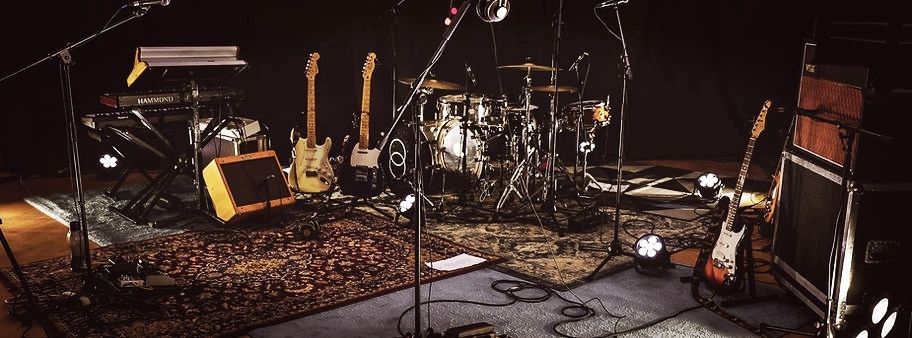
As well as various wedding gigs, both as a solo guitarist and with my function band, I also have a few shows and releases with my original music project, Solcade.
I’ve been involved in a few original projects over the last decade, but mainly as an arranger and band leader. My songwriting contributions have been minimal. As a result, I’d been storing up a small collection of ideas that didn’t really suit any of the acts I was working with. These sketches mixed funk and jazz with the afro and latin-fused rhythms I’d developed a deep love for through past work with older ‘world’ music acts, and mixed with a heavy dose of psychedelia and garage rock.
After we began to emerge from the pandemic and start performing live again, I decided to put together a group of musicians with a shared interest in less common styles of music (at least within the UK), including afrobeat. Initial jamming and writing sessions yielded some interesting results, and almost saw the project reshape into something closer to free jazz. However, the lineup didn’t remain stable and I had to rethink what I was trying to achieve.
By 2023, I had assembled a slightly altered lineup that shared the same vision: to write interesting and genre-blending music; and to credit all compositions to all members equally (in this case, as a five-way split). This can sometimes cause issues such as resentment of one member is not perceived to be adequately pulling their weight in terms of writing. However, I was fortunate enough to be working with enthusiastic creatives who stepped up to the challenge, and we soon had enough songs to get onstage and perform live.
Best of all, this collective approach applies to more than just the songwriting process. I may have kicked this whole thing off, but we now work as a team, with no singular leader, making this a true band; a collaborative experience. You can find regular updates on the band on our Instagram page.
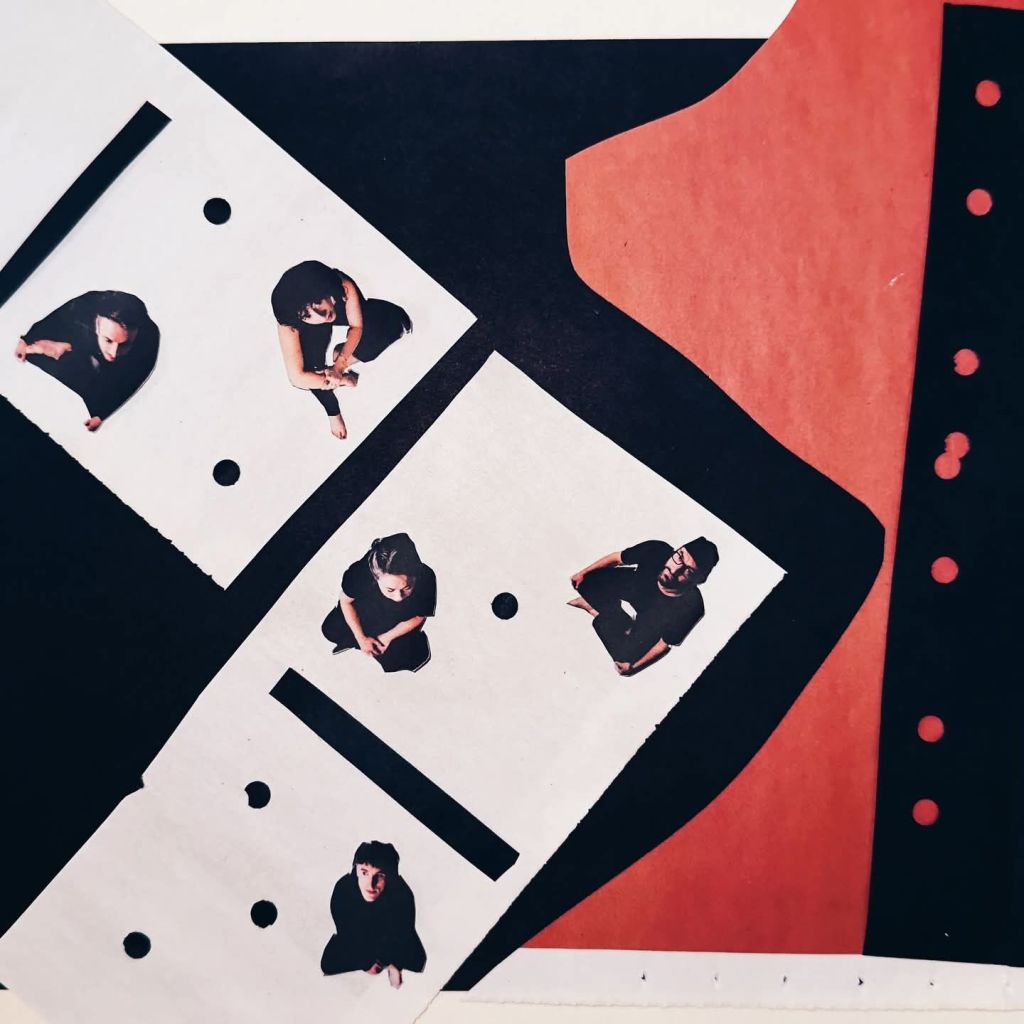
Our first single, ONE MORE DOMINO, is out now, available everywhere. This song focuses on the feelings that come with the build-up to revolutions throughout history. Listen to the new track here and let me know what you think.
As the end of the year draws nearer, I find myself in a brief period without any gigs.
After quite a busy run recently, I’m now enjoying a few days of voice rest (a result of several shows in a row combined with a minor cold) before the shows ramp up again from New Year’s Eve.
This much-needed rest has reminded me of the importance of self care and taking time to recover.
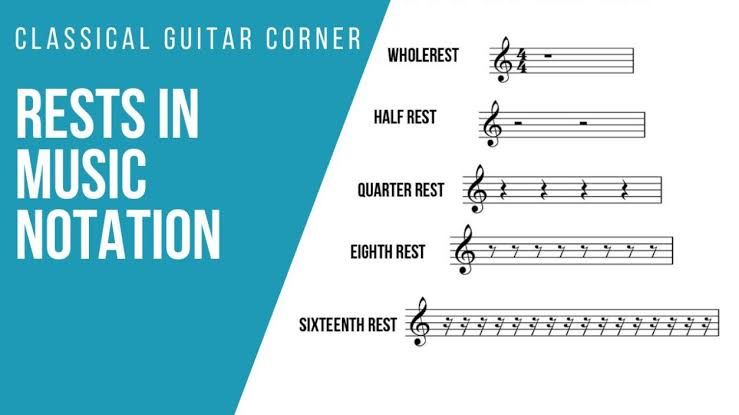
Many working musicians find it hard to stop. The fear of losing a regular gig means we can often push ourselves too hard far too often. For us, the word ‘rest’ can be a purely musical term:
Courtesy of Classical Guitar Corner.
…but rests can mean so much more than gaps between the notes we play or hear.
Musically, rests are more than mere pauses; they’re essential to shaping how the music sounds. Away from music, rests can similarly help us make sense of everything else.
Help Musicians, a UK-based charity providing support to musicians unable to perform for health reasons, have a really useful article all about the importance of rest. They outline several different types of rest:
Physical rest
Mental rest
Emotional rest
Social rest
Sensory rest
Creative rest
Spiritual rest
All of these different definitions of what rest can mean will vary depending not only on individual perspective, but on what’s most important to someone at any given moment that rest takes place. I’ve written aboutĀ Subjectivity, interpretation and their effect on creativity before, and the concept of silence and rest are no different. I encourage you to read the article and consider which elements resonate most strongly with you (whether it’s something you already do, or something you recognise that you need to work on more).
Personally, I find rests in music similar to rests in life. They are not just a moment in which we calm the noise and remain still, but a time to reflect on the quality of the silence itself.
Every rest, in music or life in general, is informed by the sounds which precede the silence. In a way, rests are shaped as much by the activity on either side of it as much as it is by the length of inactivity within.
Miles Davis famously referred to rests in music as ‘Hot Space’, maintaining that the notes you don’t play were the secret to great improvisation. I believe he too was referring to the timbre and feeling of a rest in the context it’s setting. This is equally true in our lives outside of musical performance.
Think about everything that surrounds your work. The preparation before a show, the admin, chasing invoices, making time for loved ones. Now think about where the time for you resides amongst all of that. Is it enough?
Sometimes we best serve others by getting our own house in order first. This is as true musically as it is on a more humanistic level.
So for now, if you can, take time. If you can’t, try to make time.
Breathe in. Breathe out.
Listen to the silence. Reflect on everything that led up to this pause. Think about what follows after this rest comes to an end.
And as always, take care of yourselves and each other.
I’ll see you all on the other side, in 2026…
Original image courtesy of G4guitarmethod.com
Important postscript:
If you are a musician based in the United Kingdom and looking for mental health support, you can contact Help Musicians via the their website here.
Now more than ever, the world is a busy place. In the age of social media and being reachable in one form or another virtually anywhere in the world, we find our time is filled up with ever-newer demands on our attention. Yet classic musical genres like the Blues remain a steady fixture, especially in the guitar-o-sphere, be it as the rediscovery of BB King and his compatriots by each new generation, or the influence of blues guitar in the apparent resurgence of the guitar solo in modern chart music.
I’ve certainly had a busy summer, although in my case it was a few months full of gigs, including in some new and interesting locations (which I will tell you about in an upcoming post). But now things have settled back into something resembling a normal routine – or as normal as any freelancer’s life can ever be – it’s time I returned to the Great Guitarists series, and returned to the Blues. This time, we’re sticking with the Blues to honour one of the greatest slide guitar players in the history of guitar: Bonnie Lynn Raitt…
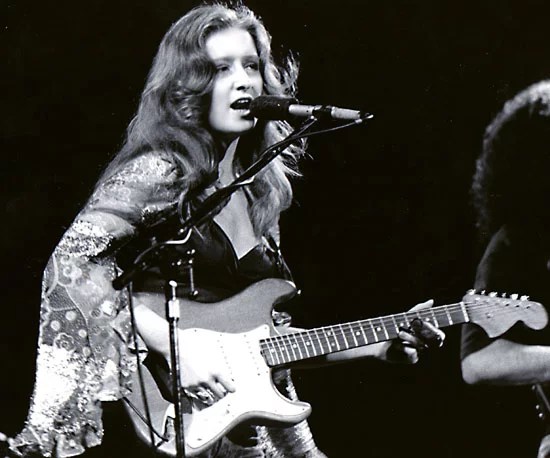
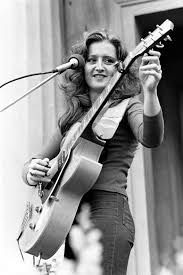
Raitt performing live in the 1975 (l) & 2012 (r)
Born in California in late 1949 to a musical family, Raitt first picked up the guitar at the age of eight and continued learning songs throughout her teens. She gravitated to a slide guitar technique early on, although she still viewed music as a hobby while going to study Social Relations and African Studies at University (that’s college for American readers). Indeed, she planned to work in Africa after graduating, but a road trip to Philadelphia and some early gigs backing Mississippi Fred McDowell started Raitt on the path towards a career in music which has seen her win fifteen Grammy Awards and become one of the very few elder stateswomen of the Blues.
Her eponymous debut album was released in 1971 to critical acclaim at a time when women generally weren’t praised for the guitar playing. Following a tradition set out at the very start of Rock’n’Roll by Sister Rosetta Tharpe, Raitt’s playing earned the respect of her peers, and wider public recognition followed in 1977, with the commercial breakthrough of her sixth studio record, Sweet Forgiveness. Since then, despite periods where she’s taken time out to deal with addition health and personal issues, Raitt has maintained a steady release of records and continues to perform and record to this day.
Slide technique
Raitt learned about “bottleneck” playing from old blues records, and started with a glass bottle, inspired by slide legend Duane Allman. She has admitted her technique is a little unorthodox, since she wears her slide in her middle finger, rather than the little or ring fingers, which is far more typical.
However, being able to hold her slide between two stringer fingers gives her an element of control that’s sometimes lacking in the majority of slide players who prefer to wear their slides on their ring or little fingers. Also, Raitt is always precise with her movements during her solos. Although the middle finger is a rare choice, it is something Raitt has in common with Joe Walsh (James Gang, The Eagles) and Billy Gibbons (ZZ Top), which is rather good company for her (and me, another middle finger slide-ist) to be amongst!
Equipment
Raitt can be seen in pictures with a variety of guitars, but her most famous tone comes from a Fender Stratocaster she bought in 1969. The single coil pickups help the biting tone of her slide playing to cut through more clearly. She also plays a Gibson E-175 on occasion, and seems to favour Guild acoustic guitars. Amplification can vary, but Raitt appears to use Black Cat combos more often than not on tour, and for added bite, usually has a Rat distortion pedal in her armoury.
Her preferred tuning is Open A (low to high: E, A, E, A, C#, E), which is simply the more common Open G, raised by a whole tone – so if you (like me) often keep a guitar tuned to Open G for slide work (or bashing out Keith Richards style open-tuned riffs), a capo on the 2nd fret saves you having to retune (and intonate) your guitar.
Raitt with her main Fender Stratocaster.
Recommended listening
You have eighteen of Raitt’s studio albums to choose from over her five decade long career, and they each have something to offer in terms of excellent slide guitar tone and a melody-focused soloing approach. As well as previously mentioned successes such as Sweet Forgiveness (1977) her 1971 debut and its follow-up, 1972’s Give It Up, Raitt’s fans rate 1989’s Nick Of Time and Luck Of The Draw (1991) as great showcases of her guitar and vocal talents. Raitt has also appeared as a session musician, performing guitar or backing vocals on records by a range of artists, from Roy Orbison, Aretha Franklin and Bruce Hornsby to Little Feat, The Pointer Sisters, and many more…
It’s also worth highlighting her numerous guest appearances with other Blues greats, from Mississippi Fred McDowell and John Lee Hooker to her fantastic rendition of Stevie Ray Vaughan’s Pride and Joy at the tribute concert in his honour (after his tragic death) recorded in Austin, Texas in 1995, alongside BB King, Buddy Guy, Eric Clapton, Dr John and Stevie’s brother Jimmy Vaughan.
Final thoughts
I’ve long admired Raitt, not only for her slide guitar playing, but for her social conscience and lifelong activism, using her voice to speak out about global and environmental issues throughout her career. I also recognise how hard it is to take sabbaticals form the music industry, where the fear of being forgotten, dropped by a record label, and therefore at risk of losing one’s income has driven countless musicians to an early grave. Yet Raitt is on record for speaking about taking time out in the 1980s to properly deal with her alcohol and substance addictions, as well as taking time to properly grieve following family bereavements. This is a good example of taking time for oneself, not just to survive, but to thrive – something too many of us can struggle to do, and indeed be made to feel guilty for.
In this increasingly busy and high-pressured world, perhaps we should all be a bit more like Bonnie Raitt by taking more time to heal when we need it, and keeping our unique voices ringing out about to speak up when it matters – both creatively and socially.
The last of the ‘Three Kings of the Blues’, showing just as much influence on the guitar world as Albert King and BB King, is the youngest of the three guitarists, Freddie King.

Known for his biting tone and crossover appeal, King was one of the electric blue guitar players who influenced the young musicians in the UK. These guitarists (such as Eric Clapton and Peter Green) went on to form the bands of the British Invasion of the 1960s – bringing King’s sound back to the US and eventually raising his profile.
Fred King was born in Texas in 1934 and began learning the guitar from his mother and uncle when he was only six years old. His family moved to the South Side of Chicago when he was fifteen, and he was soon sneaking into the nightclubs to hear the music of the original blues guitarists such as Muddy Waters, Elmore James, T-Bone Walker, as well as other bluesmen like Howlin’ Wolf and Sonny Boy Williamson. King was soon performing with his own band and by the time he was eighteen, he acted as a sideman to some of the better-known performers on the Chicago blue scene, such as Little Walter, Jimmy Rogers, Willie Dixon and Memphis Slim.
Despite his apparent guitar talent on he Chicago live blues circuit, King’s initial initial attempts at recordings were either unsuccessful or unreleased altogether, He was also turned down more than once by the city’s now-legendary Chess Records label, allegedly because he singing voice resembled B.B. King too closely. Nevertheless, King proved a popular mainstay on the emerging West Side clubs of Chicago.
Finding success
King eventually signed to Federal Records in 1960 recording his first session for the label in August of the same year. The results of this session yielded King’s first single, Have You Ever Loved a Woman, which charted in the Billboard top 100. From the same session came one of King’s best-known instrumental tracks, Hide Away. Hide Away managed to reach no. 29 in the US pop music charts, an unprecedented feat for a blues record at a time when the genre was still relatively unknown to white audiences. Eric Clapton later brought the song to an even wider audience when he recorded his version as part of John Mayall and The Bluesbreakers in 1966.
King released a steady stream of albums throughout the sixties and early seventies. Sadly, a hard-partying lifestyle, coupled with a relentless touring schedule, led to King’s untimely death in 1976, aged just 42.
Influence
King is one of the notable influences on Clapton’s playing. His style is considered a mix of Texas and West Side Chicago blues, with added nuances to make his guitar solos feel more like vocal lines. Clapton once described playing alongside King as a player who could hide his ‘mean’ lead style under a veneer of subtlety, saying “Heād make you feel at home, and then tear you to pieces” in a ‘cutting contest’ (a friendly guitar duel, usually between two players who greatly respect each other).
As well as Clapton and Peter Green (founding member of Fleetwood Mac), King’s influence can be heard in the playing of Jeff Beck, Mick Taylor (of the Rolling Stones from 1969-74), Lonnie Mack, Stevie Ray Vaughan and Jerry Garcia (Grateful Dead), to name just a few.
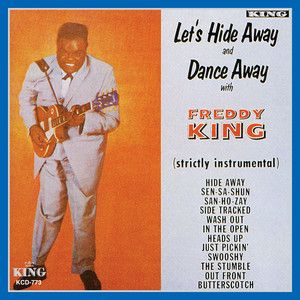
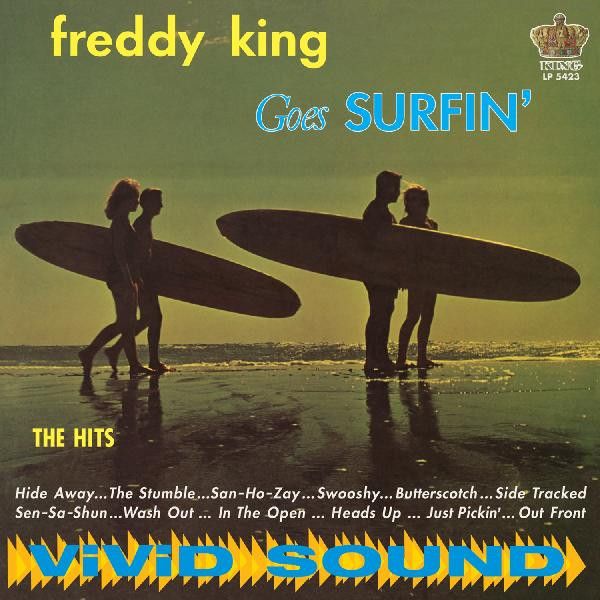
Many of King’s early instrumentals, such as Hideaway, became popular with surf bands in the early 1960s. This popularity was strong enough for his 1961 instrumental album, Let’s Hide Away and Dance Away with Freddy King, to be re-released two years later under the new title Freddy King Goes Surfin’.
King’s original 1961 record (left) and the repackaged version from 1963 (right).
Equipment
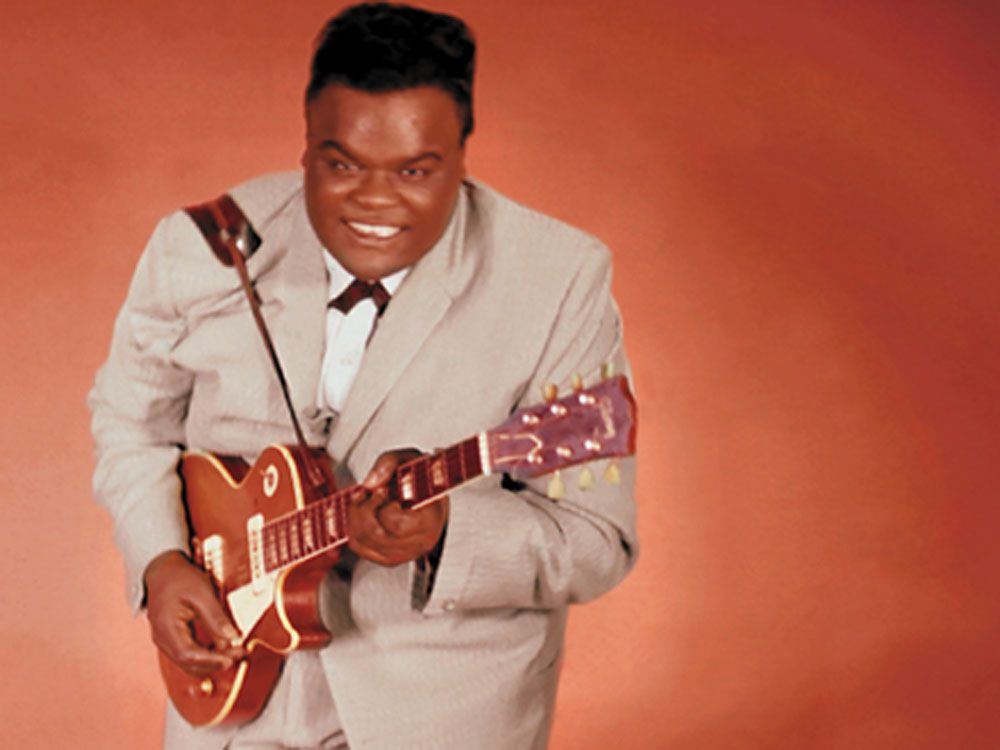
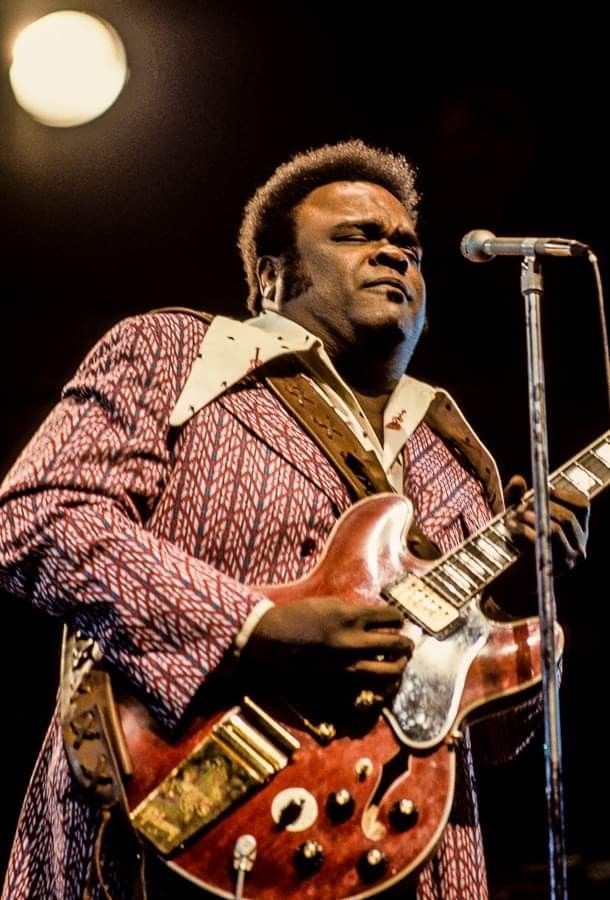
King used a gold top Gibson Les Paul equipped with P90 pickups in his early recordings, but moved to semi-hollow electrics such as the ES-335 and ES-345 (both by Gibson) later in his career. His bright tone largely came from his simultaneous use of a plastic thumb pick and metal finger pick on his index finger (more commonly used by pedal steel players) coupled with a strong attack in his playing and an amplifier (such as a Fender Quad Reverb) cranked up as loud as it could go.
King with a 50s Gibson LP ‘gold top’ (left), and later, a Gibson 345 (right).
Any semi-hollow (including more budget-friendly options such as this Harley Benton HB35 Plus) or P90 style guitar will help you get in the ballpark for King’s tone, but in theory, even a single-coil guitar with a treble boost (or mild use of overdrive to thicken one’s sound) should get you there. Just be sure to stick to the bridge pickup and really dig in with your right hand. The most important thing is to play like you meant it!
Recommended listening
We’ve already mentioned Let’s Hide Away and Dance Away with Freddy King (1961), which features many of the instrumentals for which King became well-known. This is the obvious starting point for first getting into Freddie King, much as it was for those guitarists of the original British Invasion of the 1960s. Later albums feature variations on these themes, sometimes with a funkier backing (from one of the first multi-racial backing groups) as record companies attempted to sell King to a newer audience.
King’s albums of the early seventies feel like they’ve had more care put into their production. King signed to Leon Russell’s Shelter Records and his three albums with this label featured a high calibre of well-known and respected musicians backing him up. These LPs also showcase King’s powerful singing voice, which was rarely used on his early records.
Getting Ready (1971, Shelter)
Texas Cannonball (1972, Shelter)
Woman Across The River (1973, Shelter)
Burglar (1974, RCO)
Larger Than Life (1975, RCO)
There a few useful resources for getting to grips with King’s more typical licks and phrases, such as this guide via Fundamental Changes and the online Guitar Magazine. The examples provided are simple enough to learn. The secret to really nailing these phrases is a strong right hand attack when picking.
I’ll leave you with his version of Sweet Home Chicago, a local anthem in the Chicago blues scene, as well as a standard everywhere else…
In previous posts, I have asked what the best all-rounder guitar might be. I mentioned various types of guitar, eventually settling on a 335 style guitar such as my Harley Benton HB-35 Plus.
I also praised the Stratocaster, another guitar I have more than one of, in various forms. I certainly mentioned the Telecaster, but when I read the articles back, I feel like I was unfair to the first ever commercially produced electric guitar. Why?
The answer is probably because I have hardly played one in comparison to Strats or other guitars. And while over a dozen Strats have passed through my guitar collection in the last quarter of a century, I have never owned a Telecaster of any kind.
The more I think about it, the more striking that is, especially when considering how many of my favourite guitar players used Teles. These include guitarists from literally every genre you can imagine, including (but not remotely limited to):
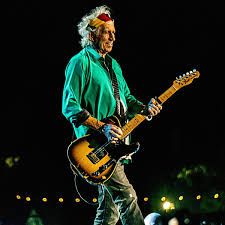
Keith Richards (The Rolling Stones)
Steve Cropper (legendary guitarist on some of the world’s best known soul recordings)
Jimmy Page (who recorded Led Zeppelin’s debut album entirely on a paisley telecaster)
Roy Buchanan (influencial sideman known as ‘the guitarists’ guitarist’s guitarist’)
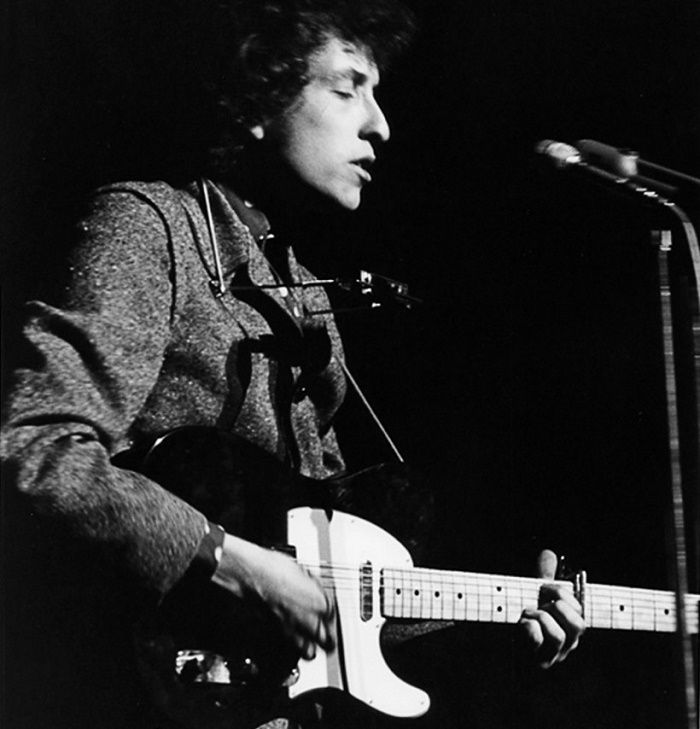
Bob Dylan (who infamously went electric at a folk festival by plugging in a Telecaster)
George Harrison (in the later years of The Beatles, including during their legendary rooftop concert)
Tommy Tedesco (legendary session guitarist)
Bill Frizell, Mike Stern & Julian Lage (amazing Tele-playing jazz guitarists)
James Burton (Elvis Presley)
Bruce Springsteen (The Boss)
Joe Strummer (The Clash)
PJ Harvey (lauded British singer-songwriter)
Andy Summers (The Police)
Graham Coxon (Blur)
Chrissie Hyde (The Pretenders)
Jonny Greenwood (Radiohead)
Rick Parfitt & Francis Rossi (Status Quo)
Muddy Waters & Albert Collins (blues legends)
Mike Campbell (Tom Petty and the Heartbreakers; Fleetwood Mac)
Tom Morello (Rage Against The Machine; Audioslave)
Waylon Jemnings (country legend)
Matt Bellamy (Muse)
Mike Bloomfield (blues & session guitarist who worked with Dylan, among others)
Jeff Buckley (revered singer-songwriter)
Anna Calvin (three times Mercury-nominated artist)
Richie Kotzen (Poison; Mr Big)
Jerry Donahue (insanely talented country-fusion string bender)
Brad Paisley (one of several amazing country guitarists wielding Teles)
…and did you know Hendrix used a Telecaster (borrowed from his bass player, Noel Redding) to record the solo to Purple Haze?
A handful of famous Telecaster players. Clockwise from top left: Bruce Springsteen, PJ Harvey, Bob Dylan, Muddy Waters, Keith Richards, Prince.
It goes without saying that the above list is by no means exhaustive, and also that many of the artists listed above used other guitars. However, the vast majority of them relied on a Telecaster for their most seminal recordings or the bulk of their live work – as have so many others.
So why haven’t I?
I think I started off by buying a Stratocaster as my first proper guitar, and fell in love. I became a Strat Guy, and in many ways, remain one. It’s the guitar in the hands of many of my earliest guitar heroes and was the dream guitar of my teenage years. And as I have said previously, the Stratocaster is an incredibly versatile guitar. But I wonder if this has led me to overlook Telecasters as a result?
Perhaps it’s time to change that. Any recommendations for the best value Telecaster to buy? I’ve a few in mind, but I’d love to hear your thoughts.
And of course, if/when I eventually get to put a Tele through it’s paces, I’ll report back…
In a recent article, I used AlbĆŖnizās Leyenda as an example of varying interpretations, from a performer’s and arranger’s perspective. I stated my belief that interpretation is one of the crucial elements of artistic performance, yet it remains one which is often overlooked in musical performance. It’s what makes a performance unique to you, rather than a carbon copy of notes on a page. I say this because sometimes meaning can be lost if we do not remain mindful of what we want a piece to convey.
Views on interpretation vary, not only in how it should be defined but also in who has the right to do the act of interpreting in the first place. There are no right answers – only opinions. There are mine, based on my experiences of a wide range of musical genres, all of which I have interacted with in many different ways; composer, arranger, performer, and most of all, listener.
Interpretation as an act of translation, rather than the inferring of meaning
Interpretation often comes in for criticism, but usually in the context of art being explained to an audience. Literary critic E. D. Hirsch stated that “the author’s intention must be the sole determiner of meaning” (The Aims of Interpretation,1976), though many would disagree. Artists and creatives such as Charlie Chaplin to Salvador Dali have made similar-sounding statements against the imposition of another’s interpretation onto an audience. In effect: art doesn’t require an explanation. Meaning can be interpreted by the recipient in their own way.
A Visual Interpretation of Mark di Suveroās Mindseye, by Lauren Kordas (2017)
This is undoubtedly true, but what about the creator of the art? In terms of the composer, a sense of meaning will have been part of the original creation of any work of art. Even a piece purposely left open to the audience’s own interpretation is a deliberate choice on the part of the creator.
And what of the middle-men between creator and audience? In the case of music and performing arts, how can arrangers and performers interpret previously written works? Consider just how many modern films, etc, are modern versions of Shakespeare, classic Greek plays, etc, where the setting and characters has been changed. Often, it is brought up to the present time of the new adaptation, and usually re-scripted in language more accessible to the audience of these more recent times. Sometimes works are transposed to completely different media, such as tone poems based on paintings or poems.
A concert performer will often choose works of a similar theme for recitals. This act of curation demonstrates that someone other than the composer – be it the performer or program director – has imposed a new theme onto the chosen pieces which in all likelihood was not part of their original creation. Along these theme is the jukebox musical, an early example of this is Return to the Forbidden Planet, based on the 1956 sci-fi film Forbidden Planet, which in turn is based on Shakespeare’s final play, The Tempest. The score of songs sung by the cast (or used as incidental music) throughout the play is comprised entirely of rock’n’roll hits from the 1950s and 1960s, none of which were conceived or recorded with the story or themes of this musical (premiered in the 1980s) in mind – old works were chosen and presented in a new format to tell a new story.
A Visual Interpretation of Mark di Suveroās Mindseye, by Allison Rice (2017)
Be sure to include your own voice, and your own meaning
For performers, interpretation is unavoidable. Many performers appear happy to perform pieces written and arranged by others, repeating their original vision and intent without adding anything to the process apart from the immediacy of live performance. In some cases, this may be the most appropriate course of action. However, I’d argue that the opposite is true far more often than you might think.
Sometimes the effects of presenting a piece through the lens of your own interpretation is barely noticeable. The results will be felt rather than consciously observed by audiences. In some cases, they have been known to have a longer lasting effect. In my article on Leyenda, I noted that the most widely accepted adaptation for guitar includes a series of sixteenth triplets near the beginning which are not present in the original piano score, but an invention of noted classical guitarist Andres Segovia. I have noted in an additional piece that such rhythmic variations used to be the norm in musical performance. The apparent convention in modern classical music concerts, which seems to impose limits on the range of individual creativity permitted by performers, is likely to have led to the neglect of artistic interpretation in more recent times.
In more immediate terms, the way you perform a piece will affect the way the audience hear it, and the kind of meaning they might derive from it. This doesn’t mean grand re-imaginings are required for every performance. Sometimes the simplest (and best) option is to be mindful of your intent in preparation for an upcoming performance, and during the performance itself, rather than focusing solely on technique – or achieving a faithful reproduction of note sequences.
Put simply: be mindful about what you are playing, and how you are playing it
The composer’s views are important. So is understanding the context of the times in which the pieces were commissioned, written and first performed. These will affect your understanding of a piece. The same goes for your audience. But if we are to consider the context of time and place, it is essential that we include the most important factors which separates a performance from a recording (or past performance): the here and now.
In Music Therapy, both improvised music and pre-existing songs are used as a language to communicate feelings the client might struggle to adequately articulate verbally. However, when performing a well-known song, neither the client or therapist is primarily concerned with a faithful recreation of the original artist’s recording. Instead, we are using the musical language in the here and now of the therapeutic space to communicate new feelings, and new meanings. That is, and has always been, the intrinsic power of music.
Auditioning. In this line of work, almost everybody has to go through it at some point. I donāt know many people who enjoy the process ā and by that I mean the groups holding the auditions as well.
Iāve held a few auditions in the last few years while recruiting for a few different projects. I was invited to join another group via audition fairly recently, which increased my own experience of being the auditionee for the first time in several years.
Having experienced it from both sides, here are some simple tips which will (hopefully) help make the whole thing go that little bit more smoothly.
1) Be clear about what you are looking for from the outset
Obvious but true. Many bands, in an attempt to appear open (and more likely to attract as many interested candidates as possible), will be vague about who/what they are and what they are looking for. Others may outright lie.
If youāre an act that is getting regular paid work and need a competent player, with their own means of transport, and who can read music ā say so. If you don’t have any gigs at present, but are looking to get into paid work once you have a full lineup ā say so. If you are mainly performing original material and the money from gigs wonāt be that good ā say so. If youāre all amateurs and would prefer someone of a similar playing ability to yourselves ā guess what: say so!
Being upfront about who you are and what your expectations are actually saves you a whole lot of time, not least from having to filter through adverts responses from people who are simply unsuitable for your act. Likewise, auditionees looking for gigs ā if you canāt sight read, donāt say you can and hope to busk it. Be clear on the styles you have knowledge of. You WILL get found out and not get the job. Worse than that, word will get around that youāre a bullshitter too.
2) Agree on pieces to go through before the audition / Plan a structured audition
Youāre not doing any favours by inviting a potential band members down to your rehearsal space, shouting out the name of a tune and charging into it to see how well they cope. Even seasoned pros like to prepare first ā thatās what makes them seasoned pros.
Have your space ready to go, with everyone in the band already there and set up, before the first candidate arrives. If going TO an audition, make sure all of your gear is in good working order, arrive on time and set up quickly.
Choose songs from your set, and perhaps some tunes both parties are reasonably familiar with, to work through. At a maximum, Iād suggest four or five. Make sure you also have plenty of time to chat and reaffirm exactly what it is both sides want out of working together. For a first meeting, Iād suggest an hour to an hour and a half. That should be more than enough time to find out how you gel musically, and crucially if you get along as people!
Have your audition space set up & ready
3) Relax ā remember everybody is human
As I said at the top of this blog, no one I know enjoys the audition process. Try to make it as welcoming and relaxing as possible. Keep the pieces to learn down to a small number and make no attempt whatsoever to ācatch someone outā musically. Smiling always helps too! Even experienced players can be nervous entering a room of musicians known to each other, but not to them, and there solely to watch/listen to and assess the quality of their playing in the space of an hour or two. Keeping things short and friendly are the key elements here.
4) Follow up!
One of my biggest pet hates is when I put in time and energy into preparing for an audition or job interview, going through the whole nervous procedure, and then never hearing back. It takes minutes to drop someone a quick line to follow up, whether that is to arrange a second audition, offer them the gig or to let them know youāve decided to go with someone else. Itās highly unlikely a rejection will cause an argument down the phone so be a grown up and get on with it!
Also, as a quick side note, have you ever found the ideal candidate through an audition, while still having other people left to see? If so, are these other candidates due the same day or in the next few days? If so, my advice would be to see them anyway ā they will have put in time and effort preparing and itās always best to have a wider network of musicians (in case you ever need a dep, etc, etc). If the next audition is not until the following week then by all means call them and politely cancel ā but be nice doing it!
As a final thought, it’s worth bearing in mind one final (if somewhat obvious) piece of advice: listen. Listen to your prospective new members / band; listen to the music and how well you all play together; and finally, listen to your gut. Sometimes you can tell who the right fit it is without being too academic about the whole process.
Good luck! I’d love to hear what your best and worst audition experiences are. Drop me a message or comment below, and we can compare notes. Until next time…
A few years ago, I was hired to perform (quite specifically) Spanish guitar music at a wedding service. Amongst other choices was Leyenda (meaning ālegendā). Originally written by Spanish composer Isaac AlbĆŖniz (1860-1909) for piano, but transcribed for guitar within AlbĆŖnizās lifetime, Leyenda is one of the more well-known pieces in the classical guitar repertoire.
Isaac AlbĆŖniz (1860-1909), looking rather stylish in a portrait, circa1900
Typically, the opening section is played quite fast. Sometimes this makes it feel like an exercise in machismo by the performer, who may be working on the assumption that faster = more impressive to listen to.
Hear the great man himself performing Leyenda on this YouTube video. You may notice that Segoviaās interpretation is slower than you might hear on most other recorded versions of this piece.
Iāve had some pretty interesting discussions with guitarists in the last few weeks and months regarding artistic interpretation. In almost all of these chats, the focus has been on the interpretation of the performer. However, what we hadnāt considered is the interpretation of the arranger. When I say arranger, I mean one who transcribes music for other musicians to perform, rather than a player making interpretive changes solely for their own performance.
Composer & arranger Stanley Yates created a new arrangement of Leyenda, which is still available to download for free via this link to his website. This version differs more from Segoviaās than you might expect. The chief differences for me are the absence of sixteenth triplets in the opening section, which was Segoviaās invention (be honest, how many of you knew that?!) and a few differences to the interval of certain āgrace notesā.
The source for Yatesā arrangement is the original published piano work. He argues that he has attempted to stay true to the original piece without being pressured by the subsequent traditions of this piece which have grown over the last century. It is worth checking Yates’ arrangement out in order to see these differences for yourself and experience a piece many classical guitarists thought they knew intimately in a rather different light.
Interpretation, whether it is that of an arranger or the in-the-moment feelings of the performer, is key to making music more than mere sounding out notes written down by someone else. It plays a large part in how an audience experiences the piece; even subtle changes to a performance can alter how the listener might feel in response. I’ve long been fascinated with interpretation as a subject, and note with a small degree of frustration that it remains a factor of performance that often goes overlooked, sometimes by guitarists who really should know better.
This brief examination of Leyenda is but one example from which we can learn the importance of interpretation. I believe that neglecting to give it the consideration it deserves might end up becoming something which hinders your growth as a musician. Make of that what you will.
Companies and apps have a new habit of ‘wrapping’ the last year. The whole thing is a document in your own consumerism, from the songs you listen to the most to how many minutes you spent staring at a screen trying to improve your Portuguese (or is that just me?).
We all buy into it, taking joy from the evidence of our every move online (or at least on our phones) being mined and researched so someone else can profit from it. We even share the findings, further doing the marketing work of these huge corporations for them.
But sometimes, it’s a good thing to look back over the previous twelve months and assess how far we’ve come – and consider where we’re going…
The most important things
Ask yourself the following questions:
What am I most proud of this year?
How did I affect the lives of others?
What made me happy?
What could I have done better?
For me, I feel like 2024 was the year that the original music projects I’m involved with finally got back up to speed. I’ve spent the years since the pandemic prioritising my work as a Music Therapist and live performer. But this year, I worked on two records for dear friends and my new band, Solcade, has had a successful year of shows, with plans to hit the studio at the very start of January next year.
Solcade have been well recieved this year
In terms of live shows, 2024 has felt quite varied. My gigs have been a mix of grassroots slots, concerts and of course, lots of weddings and parties. I feel that I’ve been able to maintain a healthy balance between original and covers gigs recently, and with thirty dates already booked in for next year with a variety of acts, 2025 looks set to continue that trend.
Of course, there have been setbacks, but nothing that hasn’t left me (or the acts I work with) stronger. My therapy work has changed too, with some contracts coming to an end as exciting new opportunities begin. My plan for next year is to build upon these to grow the service I provide to children, adolescents and young people in my region.
Quite a lot of this is still in the planning stages, but if the network of specialist creative therapists I’m trying to establish continuesnto grow, we will be able to reach even more people and help a vulnerable group build the life-changing mental resources needed to lead fulfilling and enriching lives. Wish me luck!
So that’s me. What about you?
The next steps
Now, having asked yourself about the year which is coming to an end, ask yourself:
What do I want to achieve in 2025?
And what do I need in place to make this happen?
As always, let me know your thoughts, as well as your plans and hopes for 2025. My main suggestion would be to look after yourselves and each other.
Go easy on yourself and forgive yourself when things don’t go according to plan – then get back up and carry on.
Surround yourself with people who make you feel as happy and fulfilled and you are trying to make others feel. None of us can get very far through life on our own.
Guitarist at work, live & in the studio
Now, I’m about to set up for me final show of the year – and because it’s a New Year’s Eve party, it will also be my first show of 2025. So since I’ll be busy at midnight here in the UK, allow me to take the time now to thank you all for reading these posts (as well as contributing your comments and messages) and wish you nothing but the best for 2025, and beyond!
Today has been a rather bleak day for musicians in the North East of England’s local scene, as the oldest and best known music shop in the region, J. G. Windows, closed its doors for the final time. Many musicians bought their musical instruments from there,including many famous musicians over the years.
In a statement from the shop, the representatives explained that the shop had been put up for sale in 2023, but a buyer could not be found, meaning they closed with immediate effect and the seventeen employees were all made redundant.
Many young players got their very first instruments there, using the store’s very generous hire purchase agreements. Unlike many other shops, they stocked more than guitars and ‘rock’ instruments. Their range of instruments catered for all, from pianos to every single section and instrument in an orchestra.
Just a small section inside J. G. Windows
As a youth, I used to love going in to look at the rows of shiny trombones or stringed instruments ranging from the enormous (to me) double basses down to the tiny viols. To be honest, I still did as an adult.
Similarly, their extensive sheet music collection meant you could find almost anything you were looking for, from Bach cantatas to arrangements of movie theme tunes for the French horn, and everything in between.
The sheet music department at J. G. Windows
I still own several guitar scores purchased from Windows over the years, often when asked to play a specific classical pieces over my years playing guitar for a living. More than once it saved my neck, especially in a time slightly before absolutely everything was available on the Internet.
Equally magical to the endless instruments awaiting visitors inside Windows is the gorgeous tiled arcade outside, and the stunning stone building in which the shop resided.
Central Arcade, seen from the outside (left) and its stunning centralwalkway (right)
Central Arcade is housed within a Grade II listed building, part of the wider area of gorgeous Edwardian architecture built by Richard Grainger between 1824 and 1841 (and after whom the area is known as Grainger Town). The gorgeous tiled shopping acrcade currently inside the building was created in 1906 by Joseph Oswald & son, after having had previous lives as a newsroom and a vaudeville theatre (which was destroyed by a fire in 1901).
This building has had many lives and will certainly continue. I just hope this beautiful interior remains available for the public to enjoy in one form or another. However, it will take some time to disentangle the memory of Windows music shop from this arcade for many residents and visitors.
Internal shots of Central Arcade, Newcastle
As for J. G. Windows, it looks like after almost 116 years, they simply couldn’t keep up with the competition of cheaper products, readily available online without a middleman to sell it. I’ve known several friends who worked there, and I always made a point of popping in when I was back in Newcastle, even if it was just to browse – but then, that’s certainly a factor in its demise.
Another win for capitalism, but a great loss to the region – and we’re all to blame for allowing it to happen.
It’s just a shame for all the children and young people learning an instrument for the first time. It was more than a music and musical instrument shop. It was a community, with a network of teachers (some of whom provided tuition onsite), repair experts, advice and shared love for the joy of making music. Their ‘band members wanted’ board was the first point of call for players looking to join or start a new band in Newcastle; another aspect of the local scene which has emigrated to an online space without any of us really noticing…
Farewell, J. G. Windows, and thank you for your many, many years of service.
You must be logged in to post a comment.